
Reliable STS Crane Supplier Selection Guide for Port Terminals
Shore side container cranes, or STS cranes as they are often called in the industry, are the main equipment with the highest value and strongest core of the container terminal.
The container loading and unloading efficiency of the entire port, the speed of ship turnover, the annual throughput of the terminal, are directly dependent on the equipment quality and operational stability of the STS shore bridge.
The core of choosing a high-quality supplier of shore-side container cranes is to match the berth conditions of the terminal, the ship's adaptive specifications, and the operating conditions of the port, while taking into account the delivery capacity, the level of installation and commissioning, and life-long spare parts service.
Combined with years of experience in global port projects, we disassemble the whole process of STS shoreline bridge procurement selection logic, project suitability scenarios, core parameters, supplier selection criteria and common pitfalls, to provide practical references for global port terminal purchasers.
Mainstream application projects of shore-side container cranes (STS)
STS shore bridge is designed for port terminal seaside operation of heavy-duty loading and unloading equipment, almost all the core projects related to containerized shipping, are inseparable from the support of this port shore bridge cranes, the equipment configuration standards for different projects are also different.
Standardized container terminals
Conventional integrated container terminals are the most important application scenarios for STS Cranes. The equipment is deployed in the front berth of the terminal, responsible for all types of container ships docking loading and unloading, container transfer operations.
These terminals have high operating frequency and large turnover, and have strict requirements for continuous operation capability, loading and unloading stability and fault tolerance of the equipment, which is also the core service scenario of standardized container quay cranes.
New port construction projects
New port areas, new berths of the overall supporting projects, the need for a one-time allocation of the main loading and unloading equipment. This type of project requires a high level of overall engineering capability from the supplier.
Suppliers need to combine the civil construction standards of the new port area, berth layout, power support, planning ship type, customized STS bridge equipment, matching the port's long-term operational planning.
Terminal Expansion and Upgrade Project
Many mature ports will carry out berth expansion and equipment upgrading according to the trend of cargo volume increase and popularization of large ships. The operating parameters, outreach distance and lifting height of the original old equipment are not compatible with the new type of large ships.
The expansion project needs to add or replace the high-performance STS Crane to improve the overall throughput of the terminal and adapt to the docking operation of larger tonnage and wider ocean-going vessels.
Replacement project of old shore bridge equipment
Early put into use of the shoreline Crane, after years of high load operation, will appear parts aging, efficiency decline, frequent failures, anti-corrosion failure and other problems. The cost of continuous operation and maintenance far exceeds the cost of equipment renewal.
Old equipment elimination and replacement is currently the mainstream demand for the transformation of the world's old ports, this type of project is more important to see the compatibility of re-equipment and the original terminal track, berth foundation, power supply system.
Specialized Container and Intermodal Port Projects
Some specialized ports, intermodal hubs, in addition to ordinary standard containers, but also need to take into account special boxes, large containers, cold chain container loading and unloading operations.
Such scenarios require customized STS Cranes, which can be adapted to automated docking, intelligent yard linkage, and special lifting modes to meet diversified port operational needs.
Core Procurement Requirements for Port STS Crane Projects
Unlike ordinary industrial cranes, STS shore bridges for seaside operations have long been in the harsh working conditions of high load, high corrosion and high wind, and the procurement requirements are no longer limited to the basic lifting function, but are centered around the port operational efficiency, equipment life, and operational safety.
Stable loading and unloading capacity
Port ship docking time is limited, the ship turnover efficiency directly determines the terminal's operating income. STS Crane needs to maintain a stable cycle of operation rhythm, to reduce the start-stop jamming, operation interruption and other problems.
The continuous operation stability of the equipment can effectively shorten the stay time of the ship in the harbor and improve the overall throughput efficiency of the terminal.
Adaptability to all ship types
Vessel width, number of compartments and container layout specifications of different routes are very different. The purchased equipment must match the width, number of container rows and draught depth of the target ship type.
If the outreach distance and lifting height of the quay bridge are insufficient, there will be the problem of not being able to cover the containers on the outside of the ship, and the problem of not being able to lift the high level containers, which will directly limit the navigability of the terminal.
Heavy load continuous operation performance
Container terminals belong to 24-hour non-stop operation scenarios, STS cranes need long-term high-frequency cyclic operation, starting and stopping, traveling, lifting and lowering operations frequently.
The structural strength of the equipment, the durability of the core components, the fatigue resistance of the whole machine, need to meet the heavy-duty continuous working conditions, to avoid equipment failure caused by high-frequency operation.
High strength marine corrosion resistance
Seaside air contains salt spray, high humidity, wind, ordinary industrial equipment is very prone to steel corrosion, parts oxidation, paint peeling and other problems.
Professional port STS Crane will be equipped with a full set of marine grade anti-corrosion system, through special coating, sealing protection, material upgrading, to resist salt spray corrosion, extend the service life of the equipment seaside.
Precise and Stable Maneuvering Performance
Container lifting requires high alignment accuracy, equipment shaking, deflection, braking instability, easy to box collision, alignment deviation, resulting in cargo damage or operational safety hazards.
Mature STS equipment will be equipped with anti-shaking system, precise braking system, and smooth handling program, which is suitable for high-density and high-precision container loading and unloading operations.
Long-term spare parts and after-sales support
An hour's downtime of port equipment can cause high operational losses. The core pain point of many overseas projects is the slow after-sales response from suppliers and the long supply cycle of spare parts.
Reliable suppliers need to have global after-sales capabilities, standing spare parts inventory and fast on-site commissioning and maintenance services to ensure long-term stable operation of equipment.
Reserve space for automation upgrade
At present, ports around the world are upgrading in the direction of intelligence and unmanned operation. Many terminals do not need fully automated operation at present, but have transformation plans in the future.
High-quality STS Cranes can be reserved for automation interfaces, remote control modules, intelligent linkage systems, without the need to replace the entire machine, you can complete the later intelligent upgrade.
Mainstream STS Crane Model Adaptation Programs
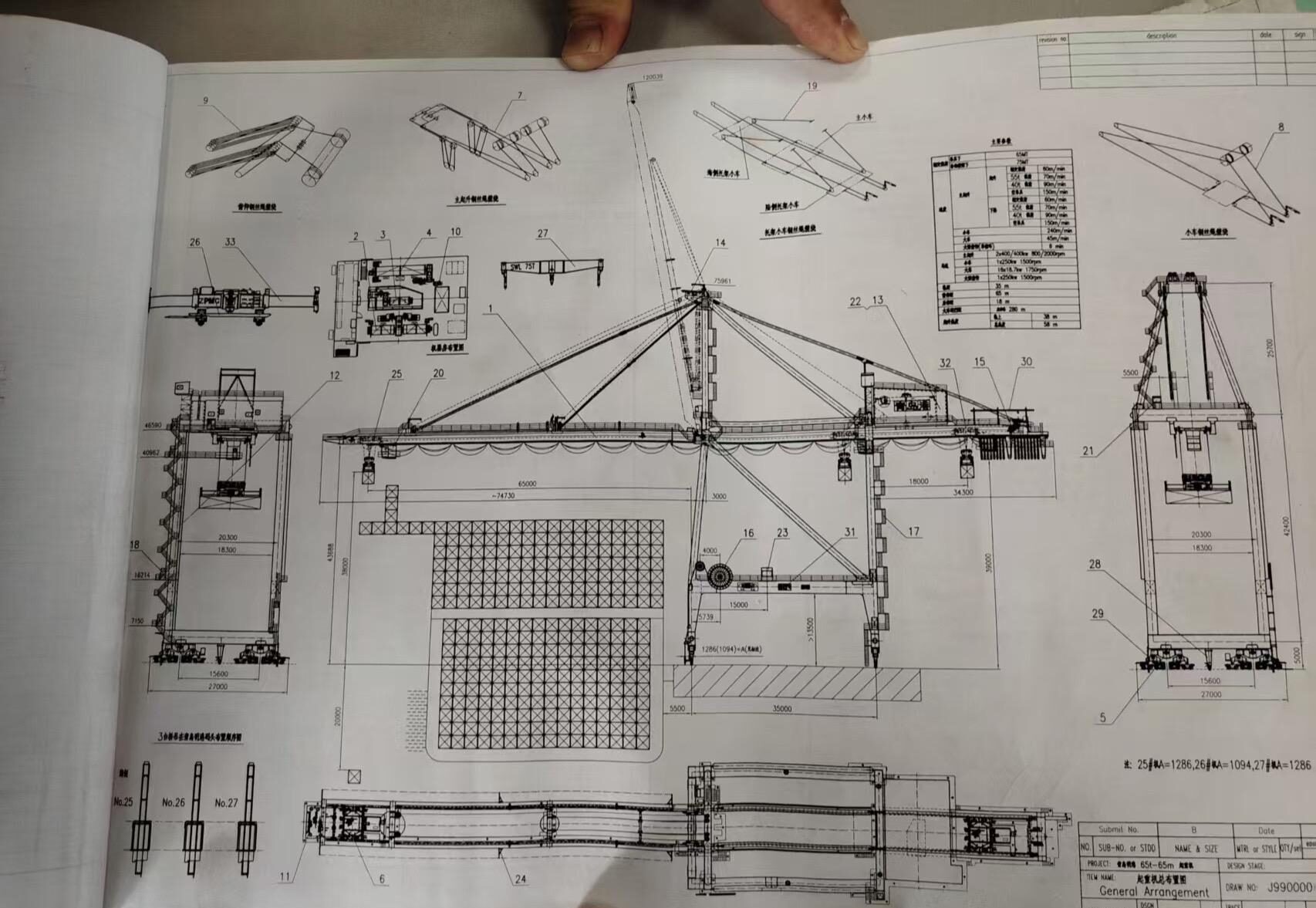
Different port berth conditions, scale of operation, planning and positioning of different, suitable for different models of shore-side Crane, according to the need to choose the type of balance between equipment investment and operational needs.
Standard Shore-side Container Crane
Adapted to conventional small and medium-sized container terminals, feeder ship operations, the parameters of the mainstream standard container handling needs. The equipment structure is mature, low failure rate, suitable for normalization and standardization of port operation process.
Small and medium-sized ports, general cargo terminals, the first choice of ship-to-shore Crane models, cost-effective and practical.
Large Ship Heavy Duty STS Crane
Designed for ocean-going ultra-large container ships and high throughput hub ports, with increased outreach, lifting height and rated load.
It can fully cover the multi-row container lifting needs of large ships, and is suitable for high-frequency, high-throughput hub port operations, effectively enhancing the terminal's navigability.
Low-profile STS cranes for height-restricted sites
Some ports are close to airports, urban areas or restricted construction areas with strict equipment height limitations, and conventional high type shore bridges cannot be installed on the ground.
Low-profile STS cranes optimize the structural layout of the whole machine and reduce the total height of the equipment, which is suitable for all kinds of restricted port projects under the premise of meeting the lifting parameters.
STS Cranes can be automated and upgraded.
Specialized model for smart ports and unmanned terminals, with its own electronic control upgrade interface, intelligent sensing module and data acquisition system.
It can realize remote control, semi-automatic operation and full automation docking at a later stage, which is suitable for the long-term intelligent upgrading of port development needs.
Customized STS Crane
For special berth layout, extreme wind conditions, non-standard power supply system, special container operation projects, to provide one-to-one non-standard customization.
The supplier can optimize the equipment structure, parameters and configuration according to the actual port environment, operating logic, civil construction conditions, and completely fit the project's exclusive needs.
STS Crane core technical parameters that must be verified by procurement
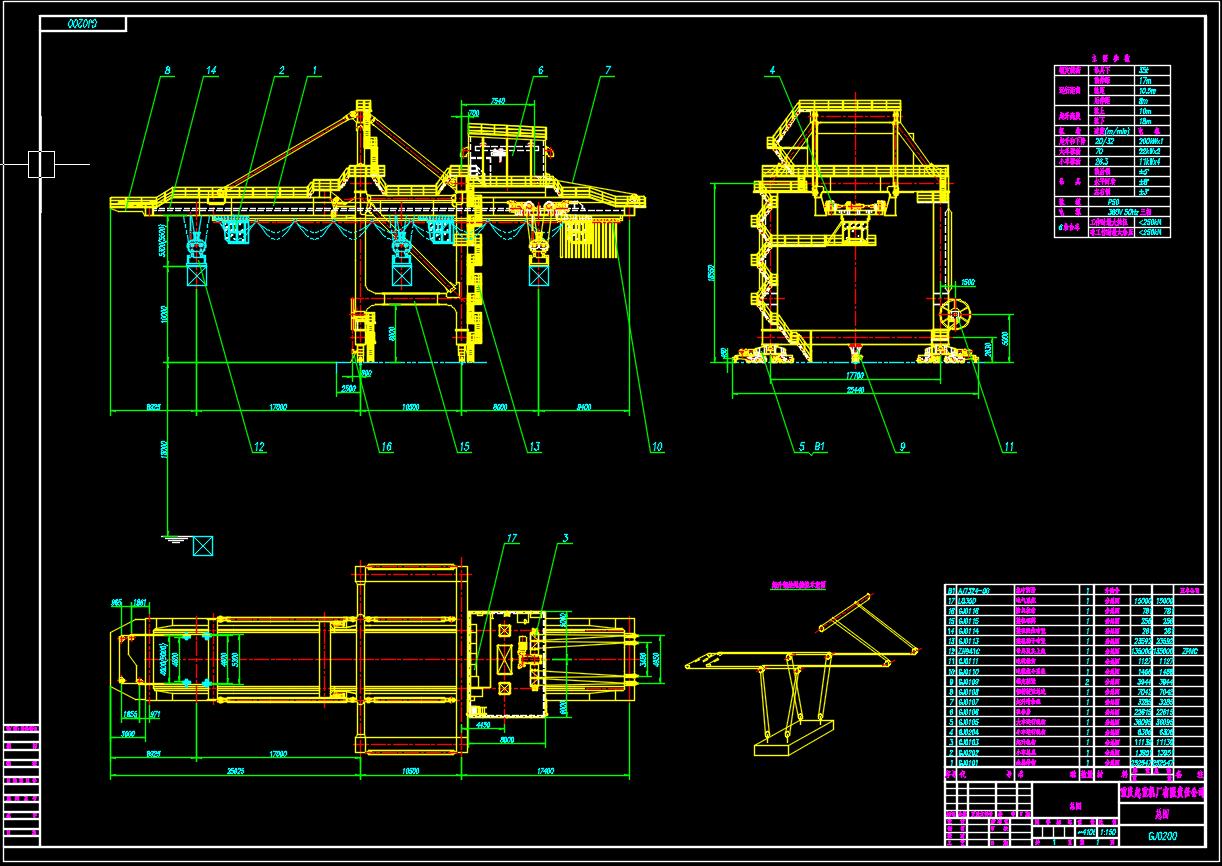
STS quay bridge belongs to large-scale non-standard port equipment, the parameters directly determine whether the equipment is suitable for dock conditions, the procurement stage must be verified one by one to avoid parameter inconsistencies leading to equipment can not be put into operation.
Rated lifting load
The rated lifting load is determined according to the mainstream container specifications of the terminal, the weight of the spreader, the need for double box lifting, and the demand for special box lifting. Adequate load capacity should be reserved to match all kinds of heavy-duty operation scenarios and eliminate the hidden danger of overload operation.
Equipment Outreach
This is the core parameter of the adaptable ship, which needs to completely cover the maximum number of container rows of the target ship. Insufficient outreach will result in the ship's outer containers not being able to be lifted, directly limiting the navigability of the terminal ship type.
Equipment rear reach
Rear reach determines the operating range of the land side of the quay bridge, which affects the arrangement of the quay truck channel, temporary stacking of containers, and the line of land-side transshipment. Reasonable rear reach design can make the shore operation flow smoother and avoid the conflict of moving line.
Lifting height on rail
It matches the height of fully loaded high level containers of the ship and the stacking height of the terminal to ensure that the high level containers can be lifted and transferred smoothly without the problem of height limitation.
Under-rail lifting depth
For the lifting operation of ship's internal cargo hold and low-level container, the sufficient under-rail depth can meet the demand of low-level lifting under different draught states of ship's empty load and full load.
Track gauge
It must strictly match the preset track spacing of the quay and the civil construction standard, the deviation of track gauge will lead to the inability of equipment installation, traveling jam, abnormal structural stress, which is the basic parameter of equipment landing.
Running and lifting speed
The speed of lifting, traveling of small car and traveling of big car directly determines the length of single operation cycle of container. The speed parameter needs to be matched with the throughput demand of the terminal to balance the operational efficiency and operational stability.
Power supply system parameters
Equipment voltage, frequency, power supply needs to be completely matched with the port's local power system, to avoid later circuit modification, equipment adaptation debugging additional costs.
Wind resistance and environmental adaptation parameters
Typhoons and gales are frequent in coastal ports, so the equipment needs to meet the local wind load design standards. At the same time, combined with the regional temperature and humidity, salt spray concentration, matching the corresponding anti-corrosion grade and environmental protection configuration.
Control and automation level
Select manual control, remote control or semi-automatic mode according to the operation requirements of the terminal, and at the same time confirm whether the equipment is reserved for automation upgrading interface to adapt to the future transformation of the smart port.
Full set of safety protection system
Must be equipped with anti-collision system, anti-shaking device, emergency braking, storm locking, machine anchoring device, real-time monitoring system, to ensure the safety of equipment and operation under high wind, high-frequency operation and unexpected working conditions.
STS Crane Quality Supplier Selection Criteria
There are a large number of suppliers of harbor cranes around the world, with a mixture of traders and physical manufacturers, and a huge gap in project experience and engineering capabilities. Screening reliable port Crane suppliers, you can start from these core dimensions.
Verify the supplier’s physical manufacturing capacity
Many docking port project companies are only trade intermediaries, no independent production, welding, assembly, commissioning capabilities, equipment quality and schedule can not be controlled.
Purchasers need to verify the production workshop, processing equipment, steel structure welding production line, the whole assembly site, to confirm that the manufacturer has the independent manufacturing capacity of large shore bridge.
Verification of similar port landing project cases
Large port equipment can not rely on the parameters of the paper, real container terminal project is the best proof of the manufacturer's technical capabilities.
Priority should be given to manufacturers with experience in domestic and international container terminals, large-scale port expansion and new port STS projects, and familiar with all kinds of sea conditions and terminal standards.
Evaluate the ability of exclusive engineering customization service
High-quality suppliers will not apply the common model template, but will study the terminal berth drawings, ship parameters, track standards and environmental conditions in advance.
Optimize the equipment parameters, structural design and protection configurations with the actual situation of the project, and provide exclusive STS bridge solutions to meet the individual needs of the project.
Verification of a full set of formal technical data
Regular manufacturers can provide a full set of information such as equipment assembly drawings, load calculation data, electrical schematic diagrams, list of core accessories, design standards, performance test reports, etc., to meet the needs of port acceptance, filing, operation and maintenance.
Confirmation of core parts brand and configuration
STS Crane motors, reducers, brakes, PLC control systems, spreaders, cables, bearings, anti-sway systems and other core accessories, directly determine the service life and stability of the equipment.
Procurement needs to be clear accessories brand, specifications, warranty standards, to eliminate low parts instead of high configuration, to protect the long-term operation of the equipment quality.
Verification of factory quality inspection and testing system
Before leaving the factory, the large shoreline bridge must complete a series of tests such as weld flaw detection, structural strength verification, no-load test run, full-load load test, full-function debugging and so on.
Manufacturers are required to provide complete testing records and test reports to avoid structural and functional hazards from the source.
Define the scope of delivery, installation and commissioning
Confirm in advance the scope of delivery, on-site installation services, machine commissioning, personnel training, completion and acceptance of the service content, to avoid the later emergence of service boundary ambiguity, additional charges for additional items.
Confirm the warranty and spare parts long-term support
Clarify the warranty period, after-sales response time, overseas spare parts delivery cycle, and on-site maintenance service standards. The long-term after-sales service of port equipment affects the operation cost of the project much more than the initial quotation.
Comprehensive assessment of the whole life cycle value
Don't compare the initial offer alone. Low-priced solutions often have problems such as reduced configuration, insufficient anti-corrosion grade, miscellaneous parts, and lack of after-sales service.
Combined with the quality of equipment, service life, operation and maintenance costs, after-sales protection comprehensive assessment, choose a more cost-effective solution.
Procurement and selection of high-frequency misunderstanding
STS shorebridge project investment is large, the cycle is long, any one of the selection errors, will bring long-term impact on port operations, these common problems need to be avoided in advance.
Simply selecting the supplier with the lowest quotation, ignoring the equipment configuration, anticorrosion standard and after-sales guarantee, the later operation and maintenance cost is far more than the price difference.
The equipment outreach is small and cannot be adapted to large ships, which leads to the limited navigability of the terminal and the inability to undertake ocean shipping routes in the later stage.
Neglecting the track gauge of the terminal, civil engineering foundation parameters, resulting in equipment and terminal infrastructure does not match, can not be installed on the ground.
Ignoring the problem of marine salt spray corrosion, choosing common industrial anti-corrosion standards, equipment short-term use of large areas of rust and aging.
Do not verify the manufacturer's similar STS project cases, choose suppliers with no experience in port equipment, poor equipment suitability, frequent failures.
The scope of supply is vaguely defined, and there is a lack of spare parts, commissioning services and technical information at a later stage, resulting in the equipment not being able to be properly accepted and put into operation.
Failure to clarify the responsibility of commissioning, acceptance, and personnel training, the operation and maintenance team could not operate the equipment skillfully after the project landed.
Neglecting long-term spare parts supply and overseas after-sales capability, the equipment could not be repaired in time after failure, resulting in long-term downtime of the terminal.
Incomplete terminal drawings, ship parameters, and working condition data provided during the inquiry stage, resulting in manufacturer's program adaptation deviation.
Frequently Asked Questions
What are the core parameters for choosing STS Crane suppliers?
The core is the overall adaptability of the equipment, of which the outer reach, gauge, marine corrosion protection grade, heavy duty continuous operation performance is the most important. At the same time, the supplier's port project experience and overseas after-sales capability are also irreplaceable core considerations.
How to determine the STS Crane reach required by the terminal?
According to the maximum width of the main navigable ships at the terminal, the maximum number of deck container rows, the draft depth of the ship, a reasonable margin is reserved to ensure the adaptability of large ships in the future.
Is it necessary to choose the upgradable model if there is no automation demand for the time being?
It is recommended to prioritize the choice of automation reserved models. The service life of port equipment can be up to several decades, and the reserved upgrade interface does not need to replace the whole machine at a later stage, so it can be adapted to the future trend of upgrading intelligent ports at a low cost.
What technical information do I need to request from the manufacturer before signing the contract?
Equipment assembly drawings, gauge adaptation parameters, load calculation report, electrical schematic diagrams, anti-corrosion process description, list of core parts, factory inspection reports, operation and maintenance manuals and other complete sets of information.
How important is marine anti-corrosion for STS Crane?
Critical. Seaside salt spray will continue to corrode the steel structure and electrical fittings, low standard anticorrosion equipment, 3-5 years will be aging failure, high standard marine anticorrosion can significantly extend the service life of the equipment, reduce operation and maintenance costs.
In addition to price, procurement also need to focus on what to verify?
Manufacturer's project experience, core parts configuration, anti-corrosion grade, factory testing standards, installation and commissioning services, overseas after-sales response speed, spare parts supply capacity, equipment upgrade space.
Can the same supplier provide a full range of STS, RTG, RMG port equipment?
Professional large-scale port equipment manufacturers can provide a full set of port lifting equipment solutions, one-stop supporting shore bridge, rail cranes, gantry cranes and other equipment, unified equipment standards and after-sales system to reduce overall project costs.
Summarize
Shore container cranes are the core assets of port terminals, the choice of supplier directly determines the quality of equipment operation, terminal operating efficiency and long-term operation and maintenance costs. Procurement selection is not a simple price comparison, but a systematic selection of comprehensive working conditions, technical strength, engineering landing, long-term service.
Suitable ship type and berth parameters, solid marine anticorrosion design, stable heavy-duty operational performance, and perfect factory inspection system are the basis of high-quality STS equipment. The reliable supplier can not only provide standardized and customized Crane equipment, but also provide technical guidance, on-ground commissioning, operation and maintenance training, and lifelong spare parts service.
Henan Mine Crane manufactured for many years in the global port large-scale lifting equipment research and development, has a wealth of experience in landing STS shore side cranes, can be customized for different sea conditions, wharf specifications, the type of ship, the exclusive shore side container crane solutions, services for all types of new construction, expansion, renovation of port projects around the world.
If you are not sure about the STS model and parameters of the project, you can provide berth drawings, ship parameters, operational requirements, our port engineering team will provide you with accurate selection and customization program.