
Inland Waterway Ports: Selection Criteria for Rubber-Tired Gantry Cranes
Inland river ports are becoming indispensable hub nodes in the global intermodal transportation system, and the selection decision of rubber-tired gantry cranes (RTGs) directly determines the operational efficiency and comprehensive costs of these ports in the next 10 to 25 years.
In this paper, we have systematically sorted out the eight core criteria for RTG crane selection in inland ports, from technical specifications and foundation conditions, to power systems and automation paths, to the whole life cycle cost analysis, to help port planners, procurement decision makers and logistics engineers to make the optimal choice of evidence.
Understanding RTG Cranes in the Inland Port Context
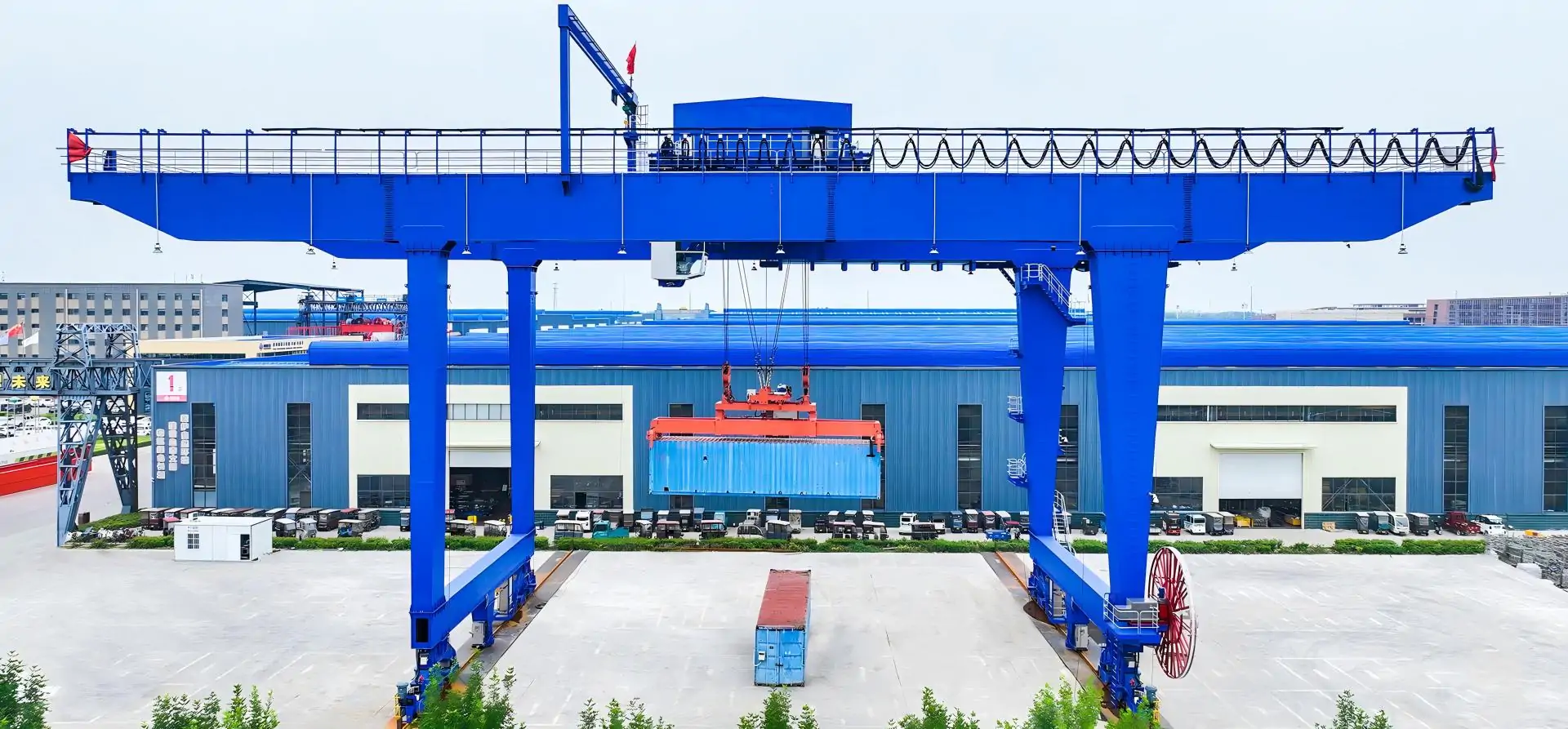
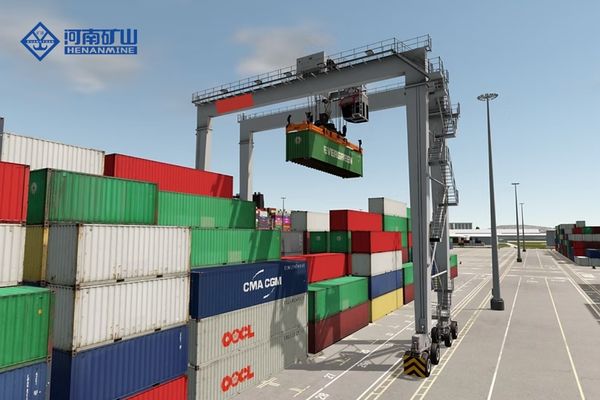
The core advantages of rubber-tired gantry cranes (RTGs) are their lack of fixed rails, mobility and ease of redeployment, making them the mainstream choice for medium throughput inland ports with limited land, variable cargo flows and uncertain expansion plans.
Compared with large coastal terminals, inland river ports have obvious differences in RTG application: small tonnage of connecting ships, different requirements for crane outreach distance and span; need to undertake multimodal transportation for loading and unloading, higher requirements for yard flexibility;
Being located in low-lying areas, it is necessary to pay attention to flood prevention and water resistance; weak power infrastructure, limiting the choice of power system.RTG service life of 20 to 25 years, the selection decision directly determines the risk of long-term operation, so it is necessary to fully grasp the selection of special standards.
Key Technical Selection Criteria
Rated lifting capacity
RTG crane rated lifting capacity is one of the core selection indicators, the mainstream port configuration range of 30 to 65 tons. Among them, 40 tons is the baseline configuration, which can meet the maximum gross mass of ISO standard containers (about 34 tons) demand; high-capacity ports commonly used 50 to 65 tons specifications, suitable for ultra-heavy cargo and double box operation.
Combined with the characteristics of inland river ports, where general industrial goods and agricultural products are the main cargo, the 30 to 40 tons configuration can meet more than 90% of the daily operation requirements, without paying additional equipment costs for rare overweight working conditions.
Span Width and Stacking Height
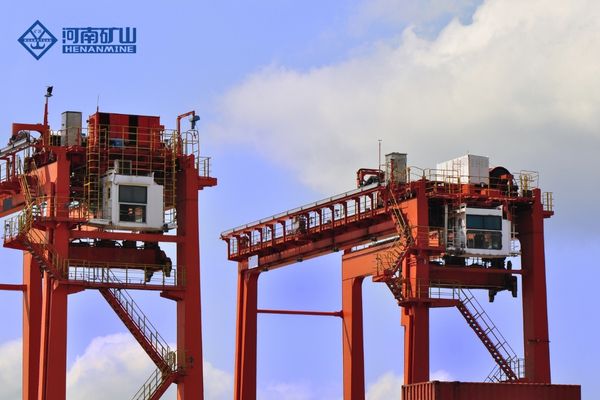
Span width determines the number of rows of containers to be covered by RTG at one time, and the mainstream configuration is 5 to 8 rows (including a trailer channel), corresponding to a span of 22 to 28 meters. Six-row width is a common choice, which can balance the utilization rate of the yard and equipment costs, and is suitable for small yards in inland ports, and can serve standard density yards with a capacity of about 1,000 TEU/ha.
The mainstream stacking heights are “1 on 3” to “1 on 6” (i.e., 4 to 7 storeys high), and inland river ports are recommended to choose “1 on 3” or “1 on 4”. Inland river ports are recommended to choose “1 on 3” or “1 on 4” for conservative configuration, which reduces the frequency of turning boxes and meets the needs of turnaround type operation with short cargo stay time (3 to 5 days).
Anti-sway system performance
Anti-swaying system is the key to ensure the accuracy and safety of operation. The inertial swaying of container lifting easily leads to cargo damage and safety accidents. Modern RTGs are generally equipped with Active Load Control, which can adjust the movement of the trolley through real-time calculations and control the swinging amplitude.
Considering the influence of wind in inland river ports, the performance index of anti-sway system should be included in the bidding technical specification when selecting the model, so as to clearly quantify the requirements.
Foundation Bearing Capacity
Foundation bearing capacity is an underestimated but costly consideration in the selection of RTGs for river ports.
RTG operation will produce static (own weight distribution) and dynamic (acceleration, braking and other operations) two types of load, dynamic load peak for the static 1.1 to 1.5 times, medium-sized RTG full load of a single tire pressure far more than the inland soft ground or old asphalt pavement bearing limit.
The pressure capacity of different road surfaces varies significantly: concrete pavement (5,000 to 10,000 psi) is the most suitable for RTG operations, while asphalt pavement (2,000 to 4,000 psi) is easily damaged by heavy loads. Inland river ports are located along rivers, and underground aquifers or weak interlayers can reduce foundation bearing capacity. Before selecting a model, it is necessary to commission a professional organization to conduct surveys and assessments, and to design reinforcement programs such as pile foundations and soil curing.
In addition, flood risk and ground settlement are challenges unique to inland waterway ports. Flood water will reduce the foundation's bearing capacity. When selecting an RTG, it is necessary to assess its adaptability to muddy roads and pay attention to anti-skid tires, chassis anti-corrosion and waterproofing of electrical control cabinets (IP55 and above is recommended).
Historical cases show that flooding can lead to long-term port shutdowns, such as the 2018 Mississippi River flooding that shut down the port for 67 days.
Power System Selection
RTG power system selection has a direct impact on operating costs and environmental compliance, and there are three main types of solutions in the market: pure diesel, hybrid (diesel-electric hybrid), and all-electric drive (cable reel or rail powered).
Pure diesel RTGs have low initial investment, flexible deployment, and no dependence on external power, making them suitable for inland ports with poor power grids and early expansion, but with high fuel consumption (about 38 liters per hour for high-intensity operations), an idling rate of 30 to 40%, and wasteful fuel and carbon emissions.
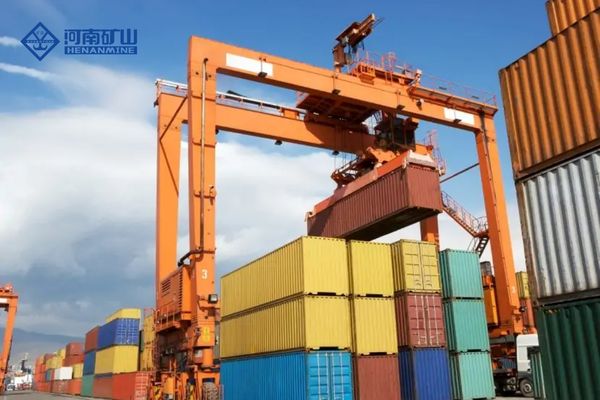
Hybrid RTGs combine a diesel genset with lithium batteries (or supercapacitors) to reduce fuel consumption by 30 to 50% without the need for fixed power facilities, providing significant economic advantages. The procurement case of the Port of Savannah in the U.S. confirms its mainstream status, and it is the optimal compromise between flexibility, energy efficiency, and compliance for inland ports with irregular yard layouts and un-expanded power capacity.
All-electric RTGs (e-RTGs) have the lowest energy costs, which is a clear advantage in whole-life costing for high-throughput ports. Cable reeled e-RTGs are typically powered by 13,800 volts and can travel up to a maximum distance of about 1,200 meters (about 4,000 feet).
The main constraints of an all-electric solution are:
- the need for a well-established high-voltage power supply infrastructure and the high initial investment;
- the cables limit the range of movement of the RTGs, which may affect flexibility in small yards where frequent repositioning is required.
However, from a long-term perspective, the TCO payback period for all-electric RTGs versus hybrid RTGs is typically 5 to 7 years, and the all-electric direction is becoming more and more strategically justified for port equipment with an expected service life of 20 years or more-especially in the context of increasingly stringent inland ports' carbon emissions regulation.
Yard Operational Efficiency
RTG operational efficiency is measured in terms of the number of trailers serviced per hour, with standard configurations capable of servicing 8 to 9 trailers per hour and completing 30 to 40 container movements. Although the throughput of inland river ports is low, the berth window is short and cargo flow is irregular, so the efficiency of a single RTG has a more significant impact on port operations.
Inland river ports, the problem of secondary overturning of containers is prominent, the cargo owner picks up cargo randomly, short detention time (4 to 5 days), easy to produce non-value-added operations. Selection should focus on RTG positioning accuracy, ensure its seamless integration with port TOS system, and reduce tipping through intelligent scheduling.
Inland river ports have many foggy days, low visibility, and uneven ground during flood season, all of which will affect RTG operation efficiency and equipment wear and tear. When selecting the model, the supplier should be required to provide relevant adaptability test data and speed reduction operation program.
Automation and Digitalization
Under the trend of port automation, RTG automation routes for inland ports need to be carefully selected. Fully automated RTG (ARTG) can realize continuous operation without stationary operators and improve yard efficiency, but the initial investment is high, and the requirements for TOS integration, network stability and maintenance capability are high, making it difficult for most small and medium-sized inland ports to meet the supporting conditions.
The pragmatic choice is the “semi-automation” strategy: the acquisition of intelligent RTGs that support remote operation, without the need for large-scale transformation of the yard and the highly integrated TOS system, which can improve operational safety, reduce driver fatigue, but also for the full automation of the interface reserved for the mainstream manufacturers to provide the relevant smart-ready architecture.
Digital integration capabilities cannot be ignored: real-time data exchange between RTG and TOS enables efficient container management and reduces tipping operations; equipped with remote monitoring and predictive maintenance interfaces, unplanned downtime can be reduced by 20-30%, which is suitable for inland ports with a long supply chain of spare parts.
Total Life Cycle Cost (TCO) Analysis
RTG procurement tends to fall into the misunderstanding of focusing only on the initial purchase price (CAPEX) and ignoring the whole life cycle operation cost (OPEX). Diesel RTG procurement price is lower, but fuel, maintenance and other long-term costs are high, 20-year TCO is at a disadvantage, of which fuel costs account for the largest proportion of RTG operating costs.
Hybrid and all-electric RTGs have significant TCO advantages, which are mainly reflected in three aspects: energy saving (30-50% fuel saving for hybrids, more efficient for all-electrics), low maintenance costs (low failure rate of the electrical system), and avoidance of compliance risks (adapting to the stringent emission standards and reducing retrofit expenditures).
The incremental investment in hybrid and all-electric RTGs is typically recouped in 5-7 years through fuel and maintenance savings, and with RTG lifetimes of 20-25 years, the long-term cumulative savings far exceed the initial premium. The residual value of the equipment, supplier service contracts, localization of spare parts, etc. should also be included in the TCO assessment when selecting a model.
Adaptation to Special Working Conditions
The selection of RTGs for inland river ports requires attention to two special conditions: flood protection and intermodal connections. Flooding will cause ground settlement, electrical moisture and other problems, the selection needs to require core electrical components IP55 and above, the traveling system can work on ≤ 2% gradient road surface.
Intermodal barging needs to be coordinated with RTG operation path and various transportation areas, railroad barging may require larger span or special configuration, and it is recommended to consider mixed configuration of RTG and RMG to optimize efficiency.
Inland waterway feeder push barge deck height floating with the water level, RTG sea-side lifting arm under the headroom needs to be sufficient, shoreline foundations need to be calculated according to the highest water level, to ensure the safe transfer of loads.
Conclusion
RTG selection for inland ports is a dynamic balance of technical feasibility, economic rationality and long-term strategic flexibility, with no uniform optimal solution, and needs to be combined with port geology, throughput, power facilities and other actual conditions.
The eight core criteria sorted out in this paper constitute the decision-making framework, the core of which is to adapt the technology to the demand, evaluate the foundation first, select the power based on TCO, promote automation according to the need, and take into account the special working conditions of inland waterways.