
How to Choose a New Electric Hoist Crane for Warehouse?
The service life of warehouse cranes is as long as 1525 years, and improper selection can easily lead to cost waste, premature aging of equipment and delay in production. With the continuous increase of storage, logistics and manufacturing load, electric hoist crane is the core equipment to improve the efficiency and safety of heavy load operation in the factory.
This guide summarizes the core factors of crane selection in all dimensions, covering load, lifting height, span, working level, equipment configuration, operating environment, safety configuration, control system, maintenance, energy consumption and compliance standards, helping enterprises to select lifting equipment suitable for current production conditions and long-term practical use.
What Is an Electric Hoist Crane?
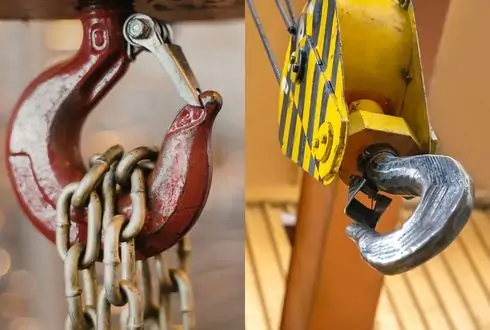
An electric hoist crane is a motorized lifting device that raises, lowers, and often horizontally repositions heavy loads using an electric motor rather than manual effort. At its core, the hoist consists of a motor, a gearbox, a braking system, a load-bearing chain or wire rope, and a control system .
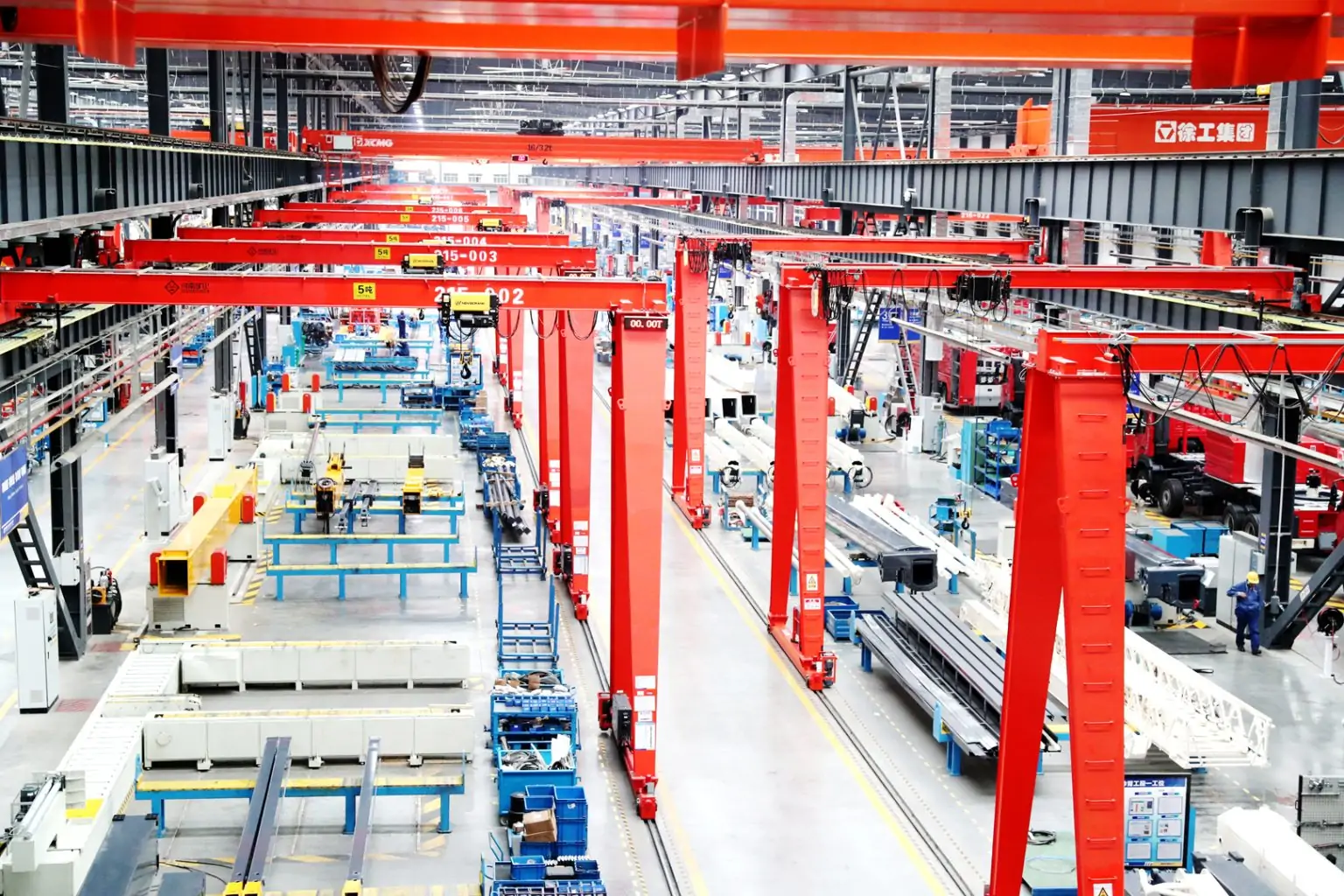
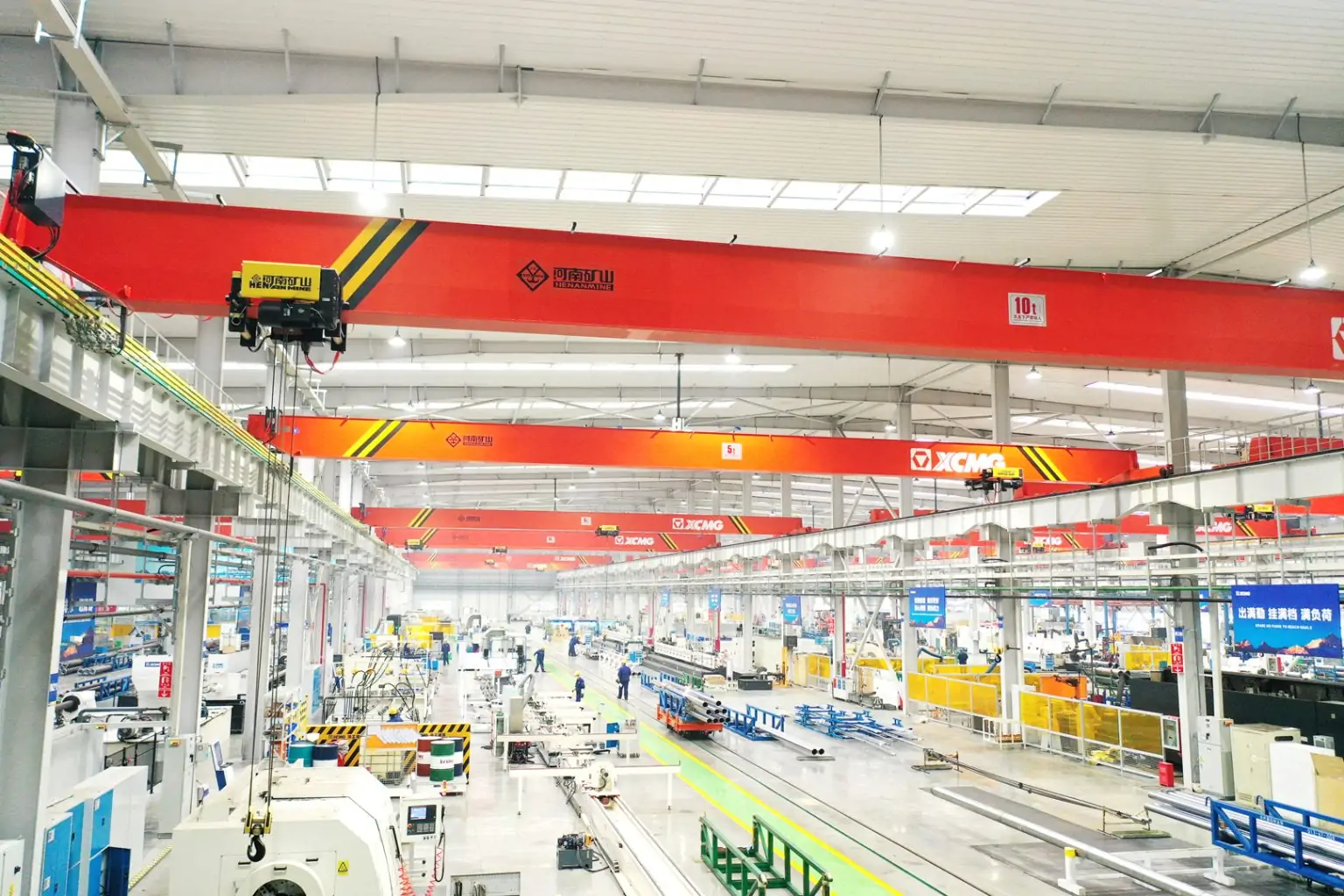
The hoist itself handles vertical lifting. To move loads horizontally across a warehouse bay, the hoist is mounted on a trolley that travels along a bridge girder, which in turn runs along runway beams fixed to the building structure or support columns. Together, these components let an operator position a load precisely in three dimensions up and down, side to side across the bay, and forward and back along its length.

Why Choosing the Right Warehouse Crane Matters
Getting this decision right pays off across the entire life of the equipment:
- Improve operation efficiency: accurately match the lifting speed and rated load of on-site handling conditions, solve problems such as insufficient equipment power and operation jam, reduce manual auxiliary intervention, and significantly improve storage turnover efficiency.
- Ensure operation safety: scientific matching of equipment load and working conditions, with standardized maintenance, can effectively avoid safety hazards such as heavy load failure and sudden failure, reduce lifting risks from the source, and stabilize the plant safety production system.
- Reduce downtime: the equipment working level conforms to the actual operation frequency, greatly reduces the probability of sudden failure and unplanned downtime, and ensures the continuous and stable operation of warehousing and production line handling operations.
- Reducemaintenance costs: the whole machine and accessories adapt to the real operation intensity, according to the original design standard normal loss, eliminate the selection mismatch, overload caused by abnormal wear, effectively save the late maintenance and replacement costs of accessories.
- Extendthe life of the equipment: according to the actual frequency of accurate selection of equipment operating conditions, to eliminate blind selection of equipment caused by premature aging, so that equipment wear fit the design life, effectively prolong the service cycle of the whole machine.
- Adapt to future expansion: Moderately advanced scientific selection can match the subsequent capacity upgrades and business expansion needs of the warehouse, avoid the high investment caused by equipment elimination and complete machine replacement in the short term, and improve the long-term cost performance of equipment.
Key Factors to Consider When Choosing an Electric Hoist Crane
Determine the Required Load Capacity
Lifting height refers to the vertical effective travel of the hook from the lowest position to the highest position. The selection needs to integrate three field conditions: the vertical lifting travel required for goods, the internal clearance height of the plant, and the storage height of the shelf.If you need to access goods to high shelves, sufficient safety margin should be reserved at the highest point of the hook to avoid scratch collision.
At the same time, pay attention to the clearance height parameter: when the hoist body rises to the top, it will occupy the upper space.For the scenario of limited plant height and compact top clearance, low clearance hoist can be selected to maximize the use of limited floor height and improve the effective lifting stroke.
Measure Lifting Height
Crane span selection can not only be limited to the current width of the operation, but also need to be combined with the long-term development planning of the enterprise.If there are upgrading requirements such as plant expansion, shelf densification, operation roadway widening, storage area expansion, etc. in the later stage, reasonable span allowance shall be reserved in advance in the selection stage.
Bridge crane span late transformation process cumbersome, high cost, reserve allowance in advance can avoid the late transformation, equipment replacement high expenses, adapt to long-term production needs, improve equipment investment cost performance.
Evaluate Crane Span
Service level is the core parameter that is most easily overlooked and most affects the life of the equipment.It is easy to cause equipment fatigue damage in advance or budget waste only by empirical estimation, which must be accurately calculated according to actual operation conditions.
The equipment working class follows FEM, ISO, ASME/CMAA international standards and measures structural fatigue resistance in terms of the number of life cycle operating cycles rather than single loads.Under the same load, the high-equipped model has stronger structure and technology, and its service life can reach 4 times that of ordinary models.
Combined with the intensity of storage and mining operations, the industry divides lifting conditions into three standard grades, corresponding to different equipment working levels, and accurately adapts to various operation scenarios:
- Light load condition (FEM 1Bm / ISO M3): suitable for storage low frequency operation, few lifting times in a single day, loose interval, no continuous operation requirements, meet the foundation sporadic lifting use.
- Medium load condition (FEM 2m/ ISO M5): adapt to the regular shift operation of logistics storage, the whole operation frequency is stable, and the start and stop frequency is frequent, which is the mainstream adaptation level of standardized storage circulation.
- Heavy load conditions (FEM 3m+ / ISO M6 and above): suitable for manufacturing workshop and other high-intensity scenarios, support nearly uninterrupted, 24 hours continuous cycle operation, strong fatigue resistance, long-term response to high-frequency heavy load conditions.
Understand Duty Cycle and Frequency of Use
- Single-speed mode: simple structure, economical and practical, low operation and maintenance cost, specially designed for low-frequency, conventional material lifting conditions, can efficiently meet the basic lifting operation requirements, suitable for general storage scenarios without precise alignment requirements.
- Two-speed mode: support fast and slow flexible switching, high-speed gear to achieve rapid material transfer, effectively improve operation efficiency; low-speed gear to ensure accurate alignment of the end, smooth material dropping, considering efficiency and accuracy, adapt to all kinds of fine lifting operations with positioning requirements.
- Frequency conversion speed regulation (VFD): adopts stepless smooth speed regulation technology, which can greatly reduce the mechanical impact of goods, equipment body and plant structure, eliminate shaking and collision, and is specially adapted to the safe and stable lifting operation of precision parts and high-value materials.
Working condition selection can be matched with speed control scheme according to needs: high-frequency, high-throughput storage operation, high-speed model is preferred to improve material turnover efficiency; precision assembly, high-level access, fragile high-priced material lifting scene, VFD frequency conversion speed control system is preferred to ensure the accuracy, stability and safety of the operation.
Choose the Appropriate Hoist Speed
In addition to vertical lifting speed, the traveling speed of crane track and the transverse speed of trolley girder are the key factors affecting the overall handling efficiency.According to the high-frequency circulation of fixed points in the warehouse, reasonably adapt the high-speed walking configuration, which can continuously improve the shift operation capacity and shorten the material turnover time.
For fine scenarios that pay attention to operation accuracy and gentle working rhythm, moderate operation speed and stable control system can effectively balance operation efficiency and operation safety, and avoid problems such as material shaking and positioning deviation caused by high-speed operation.
Consider Travel Speed
Beyond vertical lifting speed, both bridge traveland trolley travel speeds affect how quickly a load moves from pickup to placement. In warehouses where the crane cycles frequently between fixed points a receiving dock and a storage zone, for example faster travel speeds compound into meaningful productivity gains over a shift. In slower-paced or precision-sensitive operations, moderate travel speeds with better control may be the better trade-off.
Select the Right Crane Configuration
Single Girder vs. Double Girder
Procurement cost
Single-girder crane structure is simple, accessories configuration is simple, manufacturing and installation technology is mature, the overall pre-procurement and construction costs are lower, cost-effective, very suitable for enterprises with limited budget and only conventional lightweight lifting operations.
Double-girder crane adopts double-girder bearing structure, which has higher supporting configuration specifications, more manufacturing consumables, complicated installation and debugging process, and higher initial investment cost. However, its structural strength is high and redundancy is large, which can meet the requirements of heavy load and high frequency industrial lifting operations.
Bearing and span capacity
Limited by the single girder structure, the single girder crane has limited bearing capacity, only suitable for light and medium tonnage low load, low frequency operation, mostly used for general warehouse material transfer, light equipment loading and unloading, is a common basic lifting equipment for small and medium-sized enterprises.
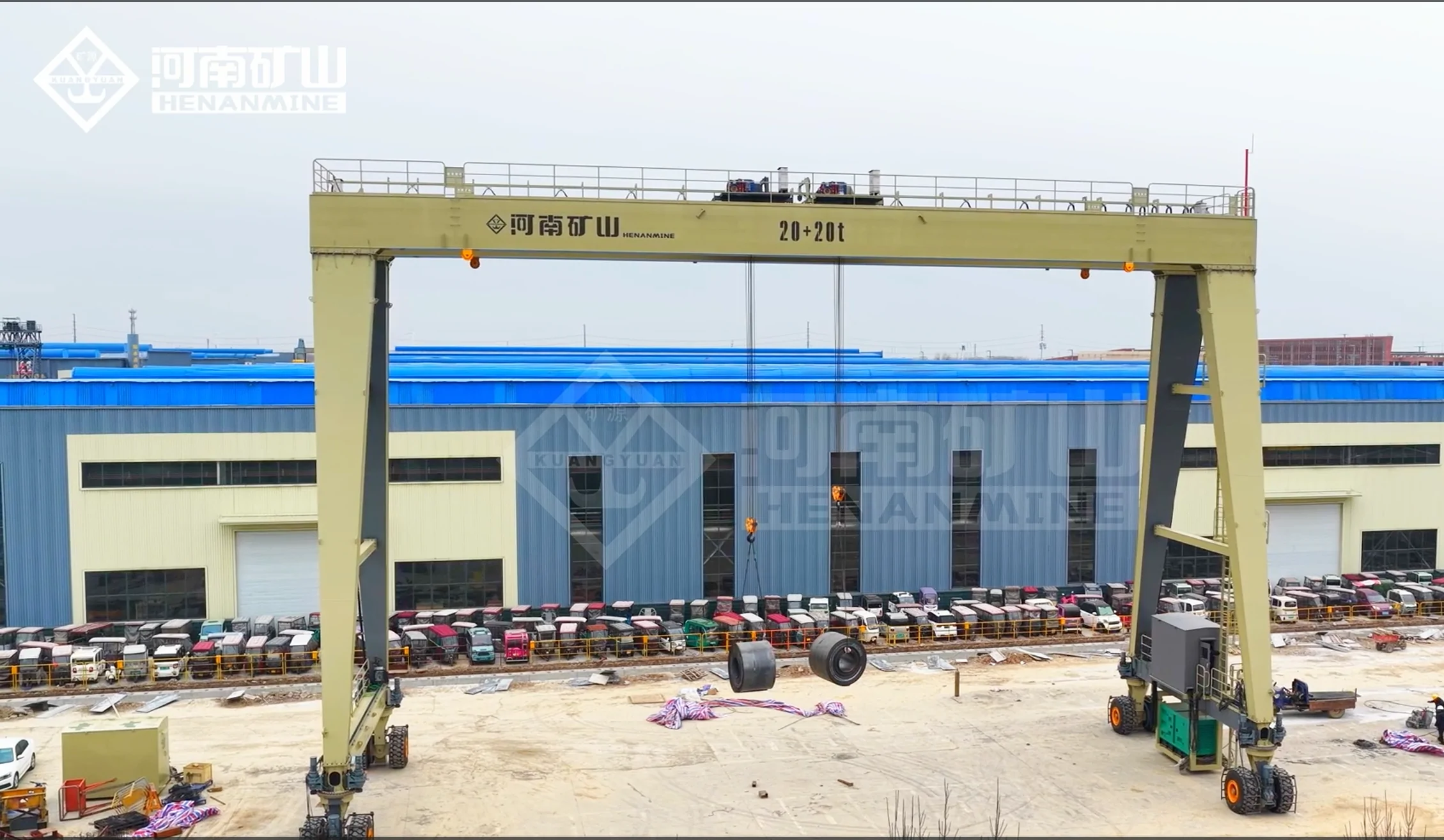
Double-girder crane relies on double main beams to carry load cooperatively, so its structural stability and bearing capacity are greatly improved. It can be competent for large-tonnage heavy-load lifting work, and support longer operation span. It can adapt to complex operation scenarios such as large-scale factory buildings, heavy industry production, heavy equipment installation, etc.
Suitability of building clearance
Single-girder crane trolley is a bottom-mounted structure, the operating parts occupy a large amount of vertical space, and the requirements for the clearance height of the workshop are relatively high. In the old workshop with insufficient floor height and low warehouse, the adaptability is poor, and the lifting height is easy to be limited.
Double-girder crane adopts overhead trolley design, which does not occupy the vertical space below the main beam. Under the same lifting height, the required workshop clearance is smaller, which can effectively improve the utilization rate of workshop space and adapt to the operation site with limited floor height.
Maintaining
Single-girder crane has simple structure, few parts, few fault points and stable operation. Daily maintenance only needs to check basic components, simple operation, no professional equipment, ordinary operation and maintenance personnel can complete, and the later maintenance cost is low.
Double-girder crane has complex structure, many linkage accessories, and relatively many wear points during equipment operation. The daily maintenance process is complicated, and many works such as clearance debugging, wear detection, lubrication and fastening need to be completed, which requires higher operation and maintenance professionalism, and the maintenance cost and difficulty are relatively high.
Comprehensive working condition adaptation principle: most ordinary warehouses, moderate load conventional operation scenarios, single-girder crane are sufficient to meet the needs, is the most cost-effective choice.
If there is a large tonnage load on site, an extra long working span, or a limited workshop clearance, the comprehensive use value and adaptation advantages of the double-girder crane will be more prominent, and it is a more appropriate selection scheme.
Evaluate Warehouse Environment
Indoor vs. Outdoor Operation
Standard electric hoists are engineered for stable indoor conditions normal temperature, humidity, and dust levels typical of a warehouse floor. If any part of the crane's operation extends outdoors or into an uncontrolled environment, you'll need additional corrosion protection and weather-resistant components rated for direct exposure to moisture.
Special Environmental Conditions
Environmental exposure should shape both the hoist's protective rating and, in some cases, the entire equipment category:
- Dust and humidity environment: high protection electrical enclosure shall be equipped for humid and dusty working conditions. IP54 protection is applicable to conventional dust and occasional humidity scenes; IP65 and above protection level shall be adopted for outdoor and direct water spraying conditions to ensure stable operation of equipment.
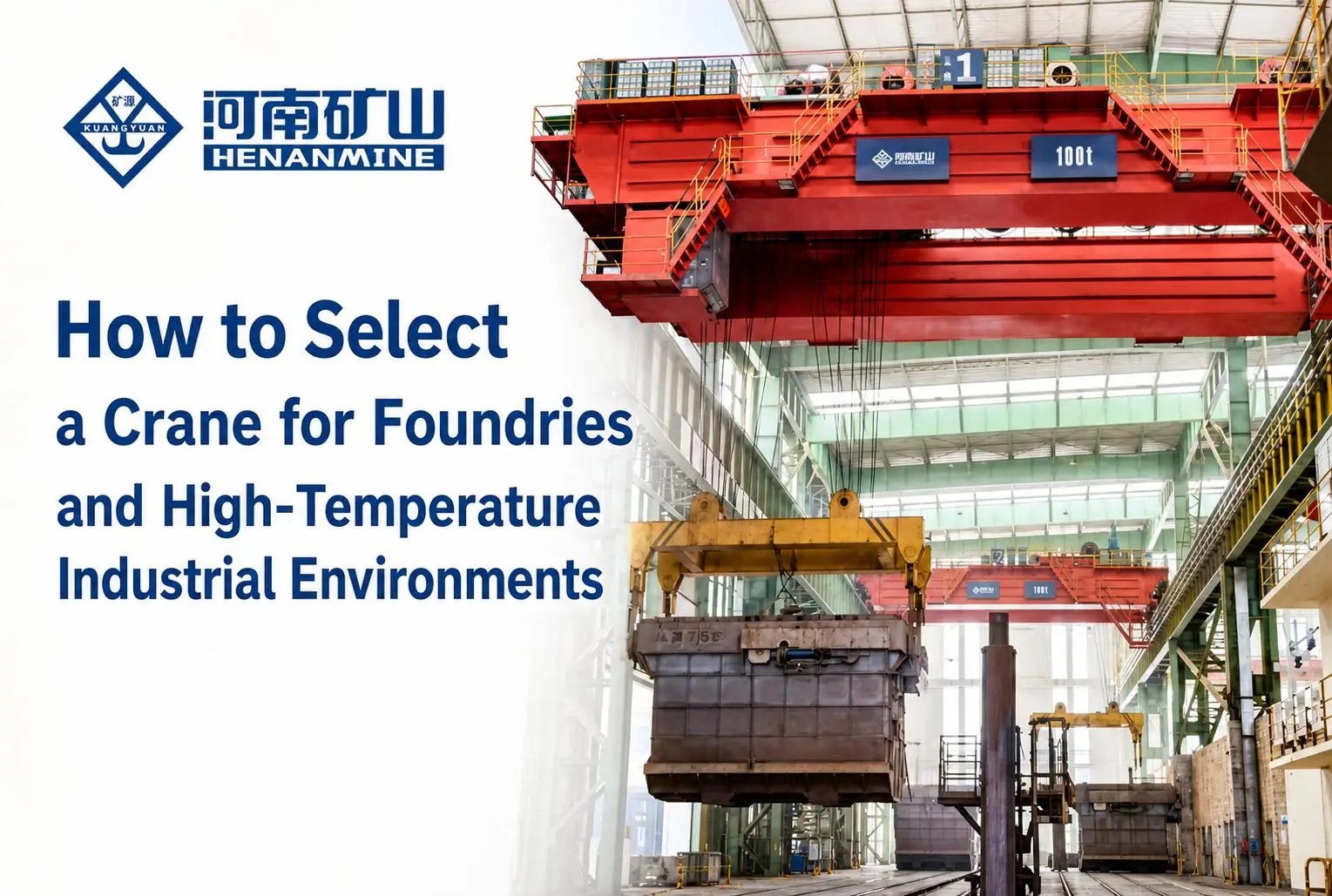
- High temperature operation environment: kiln, oven and other high temperature areas of operation, need to configure high temperature resistant parts, and match the appropriate working system, avoid high temperature caused by aging, overload problems, improve equipment heat stability.
- Low temperature cold storage environment: cold storage and other long-term low temperature conditions, need to select low-temperature special accessories, to ensure that the equipment in the continuous low temperature environment stable start and stop operation, to avoid common parts low temperature embrittlement, performance attenuation caused by failure and safety hazards.
- Chemical corrosion environment: in the presence of chemical medium corrosion conditions, the equipment needs to adopt appropriate anti-corrosion materials and protective coatings to effectively resist medium corrosion, prevent corrosion damage of components, and ensure long-term safe operation of the equipment.
- Explosion-proof high-risk environment: chemical plants, paint spraying, grain and oil processing and other dangerous places with combustible gases and dust must use compliant explosion-proof winches. Common equipment is easy to cause explosion risk, so it is necessary to select certified explosion-proof models according to regional grade. Cost reduction is strictly prohibited in this link, and the safety bottom line shall be adhered to.
Essential Safety Features
A warehouse crane should never be specified on lifting performance alone. Look for:
- Overload protection: strictly control the rated lifting capacity, eliminate overload operation, effectively prevent equipment damage due to overload, and avoid safety accidents such as heavy objects falling.
- Emergency stop button: In case of sudden failure or dangerous working conditions, emergency stop can be pressed to quickly cut off the power of the equipment and avoid sudden safety risks in time.
- Upper and lower limit switches: accurately limit the lifting limit travel of the hook, prevent the hook from over-travel, impact the equipment structure, and eliminate equipment damage and safety hazards.
- Anti-collision system: Adapt to multi-crane common rail operation scenario, can sense equipment spacing in real time, effectively avoid collision when multiple cranes are running, and ensure the safety of multi-equipment cooperative operation.
- Reliable braking system: equipped with automatic braking device, equipment can automatically lock the moment of power failure, prevent heavy objects from slipping and falling, and ensure the stability and safety of the whole operation.
- Load monitoring function: real-time collection, accurate display of real-time lifting load, convenient for operators to master the operating conditions in real time, standardize the operation, and eliminate illegal overload operation.
- Remote control function: support remote control, so that the operator away from the suspended operation area, completely avoid the safety hazards of close operation, improve the safety and flexibility of operation.
- Acousto-optic alarm device: during the operation of the equipment, the acousto-optic early warning prompt shall be started synchronously to remind the surrounding personnel to avoid in time, and the warning is strong, effectively ensuring the safety of the personnel and equipment on site.
Energy Efficiency and Operating Costs
The purchase price is only one part of what a crane costs over its working life. Consider:
- High-efficiency motors: which reduce electricity draw during frequent lifting cycles
- Variable frequency drives:which cut energy waste from abrupt starts and stops while also reducing mechanical wear
- Reduced power consumption:translating directly into lower utility costs at scale
- Lower lifecycle costs:from equipment properly matched to duty class, which needs less unplanned maintenance and fewer part replacements
- Total cost of ownership (TCO):weigh purchase price against expected maintenance, energy use, downtime risk, and service life before comparing quotes on price alone
Conclusion
Warehouse crane selection can not only look at the rated load, but also comprehensively consider the lifting height, working span, working mode, safety standard, energy consumption and later expansion requirements. Lifting equipment adapted to working conditions can effectively improve handling efficiency, reduce maintenance costs, and ensure long-term stable, economical and efficient operation.
Before inquiry, confirm plant layout, load characteristics, operation frequency and site environment. Accurate and complete project parameters, convenient for manufacturers to provide customized solutions, eliminate the problem of poor adaptability and unreasonable selection of general models.
Henan Mine Crane can provide electric hoist, bridge type, portal type, cantilever type and intelligent customized lifting equipment, suitable for all kinds of factory buildings, warehouses, logistics center scenes. Supporting to provide working condition analysis, selection, custom design and technical support, to help customers improve operation safety, efficiency and long-term benefits of equipment.