
What Lifting Capacity Is Needed for an STS Crane for Container Ships?
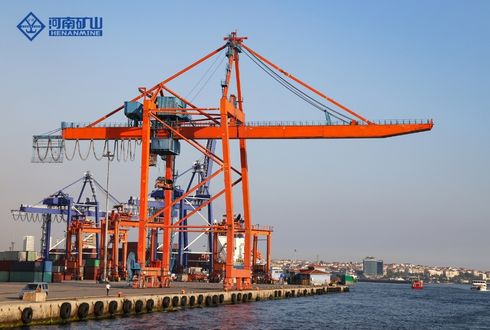
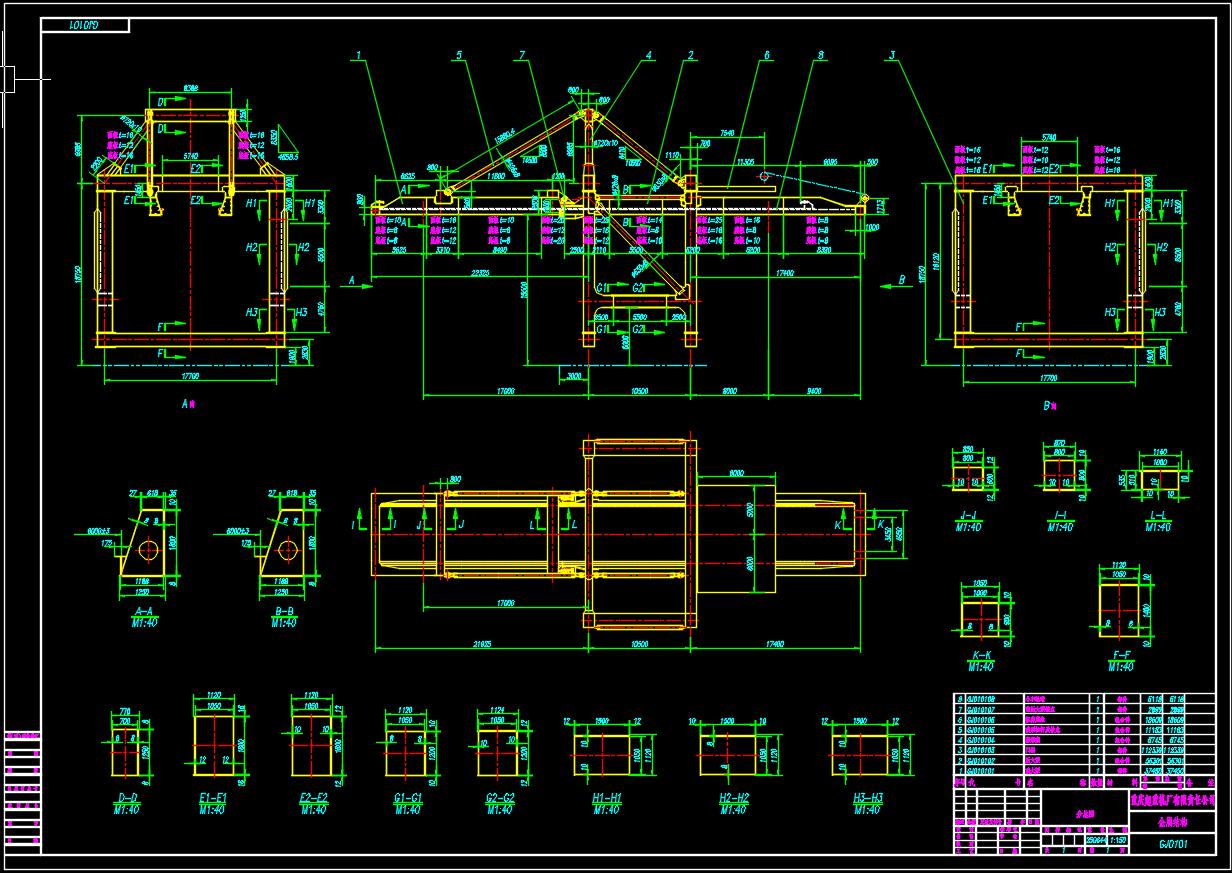
STS shore bridge Crane is the core of the main equipment for loading and unloading ships in container ports, the terminal's navigability, container turnover efficiency, berth utilization, are directly linked to the lifting parameters of the equipment. Many port operators, EPC contractors and procurement personnel, in the selection of only reference to the self-weight of a single container, it is easy to appear parameter matching deviation.
The real STS crane lifting capacity selection, can not only look at the basic load. It needs to be combined with the type of docking vessel, container operation mode, terminal throughput, and also take into account the self-weight of the spreader, dynamic load and safety margin. Accurately matching the container crane lifting capacity, in order to take into account the current operational needs and long-term terminal operation planning.
the core definition of STS Crane lifting capacity
The ship-to-shore crane capacity labeled by the port industry is mainly divided into two standards: the rated load under spreader and the rated load under hook, which have completely different purposes and are the most confusing key points for model selection.
The rated load under spreader is the core parameter of container operation, including container weight, special telescopic spreader weight, and at the same time, it is suitable for different operation modes, such as single container, double container and multi-consolidated container, etc. This is the daily container loading and unloading operation in the terminal. It is the core reference index for daily container loading and unloading operation in terminals, and also the core parameter of bidding documents and equipment contracts.
The rated load under the hook belongs to the auxiliary operation parameters and is not used for routine container lifting. It is mainly adapted to the sporadic operation of terminals, such as hatch cover dismantling, engineering large lifting, equipment maintenance and counterweighting, and other special working conditions, and most of the conventional terminals will not be used at high frequency.
Many project acceptance and later operation and maintenance disputes arise from confusing the two sets of parameters. At the stage of procurement and selection, it is necessary to clearly distinguish between container-specific loads and maintenance auxiliary loads, so as to avoid parameter mismatches that may cause the equipment to be unable to go into normal operation.
according to the docking ship type to determine the basic lifting parameters
Different container ship deck box layout, stacking height, hull width varies greatly, corresponding to the appropriate STS crane for container terminal lifting capacity is also completely different, which is the primary basis for selection.
Feeder vessels are the mainstream docking vessels in small and medium-sized ports, with small hull width, fewer rows of deck containers and lower number of stacking layers. This type of ship type operation pressure is small, the standard lifting tonnage of conventional single-box operation can meet the demand, without the need for high allocation of large load equipment.
Panama-type, super Panama-type ships, the hull size is larger, the deck box space is dense, the average daily throughput of the terminal is higher. In order to enhance the speed of berth turnover, this type of ship is generally adapted to double-box operation mode, which requires equipment with higher rated load under the spreader to ensure the stable operation of high-frequency loading and unloading operations.
Ultra-large super-Panamax vessel (ULCV) is the main ship type of ocean-going trunk line, with wide hull, many stacking layers and large single-carrying capacity, which requires high requirements for equipment operation efficiency and structural stability. These terminals usually use double or even multiple container operation configuration of the quay bridge, with a stronger structural load and stability control system.
the container mode of operation on the lifting tonnage impact
The mode of operation directly determines the STS crane rated load under spreader selection criteria, but also to distinguish between the terminal operation level, the upper limit of production capacity of the key factors, the load configuration of different modes of the difference is very obvious.
Single container operation is the basic operation mode, the equipment only lifts one 20-foot, 40-foot or 45-foot standard container at a time. This mode is suitable for small and medium-sized feeder ports and regional terminals with low throughput, with lower equipment procurement cost, simple operation logic and less pressure on operation and maintenance in the later stage. The corresponding lifting tonnage does not need to be too high to meet the standard full container lifting.
The double container operation relies on the special double container spreader, which can lift two 20-foot standard containers at the same time, and is the standard mode for medium and large mainstream terminals. This mode can greatly improve the work capacity of single equipment, shorten the port call time of ships, and meet the high-frequency operation demand of mainline routes. However, it has higher requirements on equipment load rating, steel structure strength and electrical control system.
Multi-tandem operation belongs to the high-end terminal configuration, which can lift two 40-foot or four 20-foot containers at the same time, and is only applicable to large-scale deep-water hub ports and transshipment home ports. This type of mode of operation on the lifting tonnage requirements are extremely high, the cost of equipment, terminal infrastructure bearing standards will also be synchronized to enhance only high throughput terminals are suitable for this configuration.
the mainstream STS Crane lifting tonnage range reference (English comparison table)
Combined with the various types of global dock conditions, sorted out different scenarios under the quay crane specification standard tonnage range, to facilitate pre-project parameter benchmarking and quotation reference:
| Terminal & Vessel Type | Operation Mode | Rated Capacity (Under Spreader) | Core Application Scenario |
| Small Feeder Port | Single-lift | 40–50 Ton | Regional small terminals, low daily throughput |
| Medium Container Terminal | Single / Twin-lift | 50–65 Ton | Mainline ports, standard Panamax vessel service |
| Large Deepwater Terminal | Twin-lift | 65–80 Ton | Super Post-Panamax & large vessel operation |
| Transshipment Hub | Tandem / Multi-lift | 80–120 Ton | High-volume automated container terminals |
Accurately calculate the required lifting capacity of STS Crane
Lifting tonnage selection can not only refer to the theoretical weight of the container, must be superimposed on the multiple working conditions coefficients, in order to meet the needs of long-term stable operation. All calculations need to reserve a reasonable margin to avoid the risk of dynamic operation.
The core calculation logic of single container operation is the maximum full container weight, superimposed with spreader weight, lifting dynamic inertia coefficient and safety margin. Offshore operation wind and waves, equipment start and stop shaking will produce additional loads, purely theoretical tonnage will lead to long-term overloaded equipment operation.
Double box operation needs to account for the total weight of two fully loaded 20-foot containers, with double box special spreader weight, and at the same time, consider the container offload, alignment deviation brought about by the eccentric load. This is also the core reason why the tonnage of equipment for double box operation is generally higher than that of single box equipment.
The calculation logic of multi-container operation is even more complex, requiring statistics of the total deadweight of all synchronized lifted containers, superimposed on the weight of large tandem spreaders, while adapting to the load fluctuations under high-frequency start-stop and windy conditions, with a higher standard of safety and redundancy.
In addition, we should also take into account the fatigue life of the equipment, the future container heavy-duty upgrading, terminal extreme weather operations and other hidden factors, to avoid short-term parameters to meet the standard, long-term working conditions do not match the problem.
lifting tonnage and terminal capacity, infrastructure and adaptive logic
Larger lifting tonnage, not directly equivalent to higher operating efficiency, the need for equipment and lifting speed, trolley operating speed, terminal collection and transportation system to match each other. Blindly high matching tonnage will only increase the cost of equipment and infrastructure.
Small and medium-sized low throughput terminals, high with large tonnage double box bridge can not play the capacity advantage, but will increase the equipment weight, wheel pressure and energy consumption, raise the later operation and maintenance costs. Large trunk terminals, transit hubs, a reasonable high allocation of tonnage and double box configuration, can effectively shorten the ship docking time, enhance the berth utilization rate.
Lifting tonnage will also directly affect the terminal infrastructure standards. Large tonnage STS Cranes have greater deadweight, higher wheel pressure, higher requirements for the track foundation, quay surface, load-bearing structure, the preliminary civil investment will increase simultaneously. Selection needs to balance the equipment parameters and infrastructure budget.
At the same time, the equipment outreach, lifting height must be matched with the tonnage. Large ocean-going vessels are not only large container capacity, hull width and deck height is also higher, only to enhance the tonnage, do not match the outreach and lifting height, still can not meet the operational requirements.
spreader configuration and safety standards on the constraints of tonnage selection
Spreader is the core component that directly carries the container, different spreader types correspond to the fixed tonnage fitness standard, which is a link that cannot be ignored in the selection.
Conventional telescopic single container spreader is suitable for 20-45 feet standard containers, matched with 40-50 tons class quay bridge to meet the basic terminal operation. Double box spreader is suitable for medium and large terminals, and requires 50-65 tons and above tonnage equipment to match. Multi-Container spreaders are only suitable for heavy-duty axles above 80 tons.
Safety system configuration also affects the actual use of tonnage. Qualified twin lift STS crane must be equipped with overload protection, anti-sway, off-load control, wind warning and other systems, through multiple safety protection to offset the risk of dynamic load, to ensure the stable output of rated tonnage.
The design of all the equipment follows the international common port equipment standards such as FEM, ISO, EN, etc. The strict safety margin design can effectively reduce the fatigue loss of the equipment and minimize the failure and downtime, and it is suitable for the acceptance specifications of the ports in different regions of the world.
The impact of tonnage selection on the whole life cycle cost of equipment
From the perspective of TCO of the whole life cycle, tonnage selection directly determines the terminal pre-investment and later operating costs, excessive low allocation and high allocation have disadvantages.
Higher tonnage equipment, preliminary procurement costs, steel structure materials, electrical configuration, infrastructure support costs are higher, daily energy consumption and spare parts maintenance costs will also rise slightly. However, the equipment is more adaptable to cope with the future upgrading of large-scale ships, to avoid short-term equipment elimination and transformation.
Low tonnage will significantly reduce the upfront cost, but can not be adapted to heavy-duty containers and double-box operation, terminal capacity constraints, ship turnover efficiency is low. In the long run, it will generate more berth vacancy cost and capacity loss, and the comprehensive cost performance is lower.
The optimal selection logic is to match the current situation of the terminal and the 3-5 years development plan, match the docking ship type, throughput and infrastructure conditions, and find a balance between the procurement cost and long-term operating income.
the industry’s common selection misunderstandings
Many purchasers only according to the maximum weight of a single container selection, ignoring the spreader weight, dynamic load and the impact of off-load, resulting in frequent triggering of overload protection in the actual operation of the equipment.
Some small and medium-sized terminals only focus on low price, choose low tonnage equipment, later can not be adapted to double box operation and large ships docking, limiting the terminal expansion and upgrading. There are also some projects that blindly allocate heavy-duty equipment, resulting in a waste of infrastructure and equipment resources.
Neglecting the wharf wheel pressure and infrastructure carrying capacity, simply raise the lifting tonnage, will lead to the wharf surface, track foundation can not carry the weight of the equipment, the need for secondary transformation, increase additional investment.
Frequently Asked Questions
What is the standard lifting tonnage of conventional STS Cranes?
The mainstream tonnage range is 40-120 tons (under the spreader), small feeder terminals are dominated by 40-50 tons of single-box equipment, medium and large trunk terminals are commonly used 50-65 tons of double-box equipment, and large transshipment ports use more than 65 tons of heavy-duty equipment.
Does 40 tons STS bridge meet the regular terminal operation?
It is only suitable for single container operation in small feeder terminals, can't support double container lifting and heavy-duty container operation, and is not suitable for future upgrading of large-scale ships.
Why are 65-ton STS cranes commonly used in mainstream terminals?
The 65-ton tonnage can be perfectly adapted to double 20-foot fully loaded container lifting, leaving enough safety margin, taking into account the capacity and cost, and adapting to the operation of most of the super-Panamax vessels, with the most versatility.
Henan Mine Crane Factory supply
Selecting the correct lifting capacity for STS cranes is not based on simple container weight data, but on comprehensive factors including vessel type, container handling mode, terminal throughput, quay infrastructure and long-term development plans.
A matched crane specification can balance initial investment and long-term operational efficiency, avoiding insufficient capacity or resource waste.
As a professional port crane manufacturer, Henan Mine Crane provides customized STS crane specification design for global container terminals. We can recommend the most suitable container ship crane capacity and complete technical solutions according to your berth conditions, vessel types and productivity goals.