
How to Choose Special Cranes for Aircraft Maintenance Workshops
Selecting the right crane for aircraft maintenance workshop requires comprehensive consideration of the hangar height, indoor limited space, lifting accuracy, fuselage protection standards, maintenance process adaptability and other dimensions.
This paper combines the global aviation maintenance bases, civil aviation hangars, aviation parts repair workshop landing experience, dismantling the application of special cranes, industry needs, suitable models, core parameters, supplier screening points and procurement of common problems.
The core application scenarios of specialized cranes for aircraft maintenance
Aviation maintenance system is divided into a variety of scenarios, different operating areas of the lifting load, operating space, precision requirements vary greatly, the corresponding aviation hangar lifting equipment selection standards are also different.
The whole hangar daily maintenance operations
Large civil aviation, navigation aircraft hangar, is the core application of specialized Crane scenes. Daily operation and maintenance, the equipment is mainly used for lifting maintenance equipment, auxiliary operating platforms, rack accessories and various types of hangar supporting maintenance equipment.
This type of scene is characterized by a wide range of operations, lifting points scattered, the need for cranes to adapt to the layout of the large-span hangar, while ensuring smooth operation, to avoid equipment shaking bumping the aircraft fuselage.
Aircraft engine disassembly operation area
Aircraft engine is the core high-value components of the aircraft, disassembly, replacement, overhaul operations on the lifting equipment requires high precision. Aircraft engine maintenance Crane is mainly responsible for the overall lifting of the engine, nacelle accessories, fairing components and special overhaul workpiece shifting operations.
This scenario eliminates any start-stop impact and load shaking, which requires the equipment to be equipped with exclusive functions such as micro-speed control, smooth braking, anti-sway, etc., to match the precision disassembly and assembly processes.
Landing gear maintenance workshop
Aircraft landing gear belongs to heavy airborne components, with large self-weight, replacement, overhaul, commissioning process requires lifting equipment to assist lifting and shifting, alignment and installation.
In the workshop, there are heavy jacks, maintenance stands, large spare parts and other heavy lifting needs, suitable for medium and heavy, stable aviation lifting equipment.
Aviation parts repair workshop
In addition to the maintenance of the whole aircraft, the independent spare parts repair workshop is responsible for the overhaul of APU auxiliary power unit, transmission actuator, control wing surface, and all kinds of precision airborne parts.
This kind of lifting operation has a small load, but the precision of the parts is extremely high, which requires the equipment to be precise in alignment, operate without jitter, and prevent the damage of the parts caused by the slightest shaking.
Aviation parts storage and logistics area
Aviation spare parts, maintenance toolboxes, large packaging accessories, maintenance equipment storage and transportation, lifting equipment is needed to complete the normalized handling, stacking, loading operations.
This scenario has moderate requirements for accuracy, but has certain requirements for the flexibility of equipment operation and the ability to adapt to the narrow aisle of the warehouse to ensure the efficiency of the warehousing flow.
Specialized tooling debugging and assembly area
Aviation maintenance of special fixtures, positioning fixtures, test benches, precision maintenance equipment assembly and debugging, lifting equipment is needed to assist the precise alignment of the installation.
The core requirements of the operation are low-speed and smooth, accurate point position, able to cooperate with the manual completion of the subtle alignment adjustment, and suitable for high-precision tooling assembly standards.
Aircraft maintenance workshop equipment core requirements
The lifting safety standards of aviation MRO scenarios are much higher than those of ordinary industrial scenarios. All equipment design and selection centers around high-value aircraft protection, precision work adaptation, and workshop process adaptation.
Exclusive safety protection for high-value assets
Aircraft fuselage, aviation core parts are extremely expensive, the slightest bump, impact, load shaking, will cause expensive maintenance losses and operation and maintenance accidents.
MRO workshop Crane must have a perfect anti-collision, buffer, anti-sway, overload protection design, minimize the safety risk of equipment operation on the aircraft.
Smooth operation and high-precision positioning
There is no rough lifting operation in aviation maintenance. Whether it is engine disassembly, fuselage parts replacement, or workpiece alignment, millimeter-level precision alignment is required.
The equipment needs to realize smooth start-stop, stepless speed regulation, micro-speed alignment, and no jitter or shaking throughout the whole process to meet the operation standard of precision maintenance.
Adapt to narrow space and limited floor height
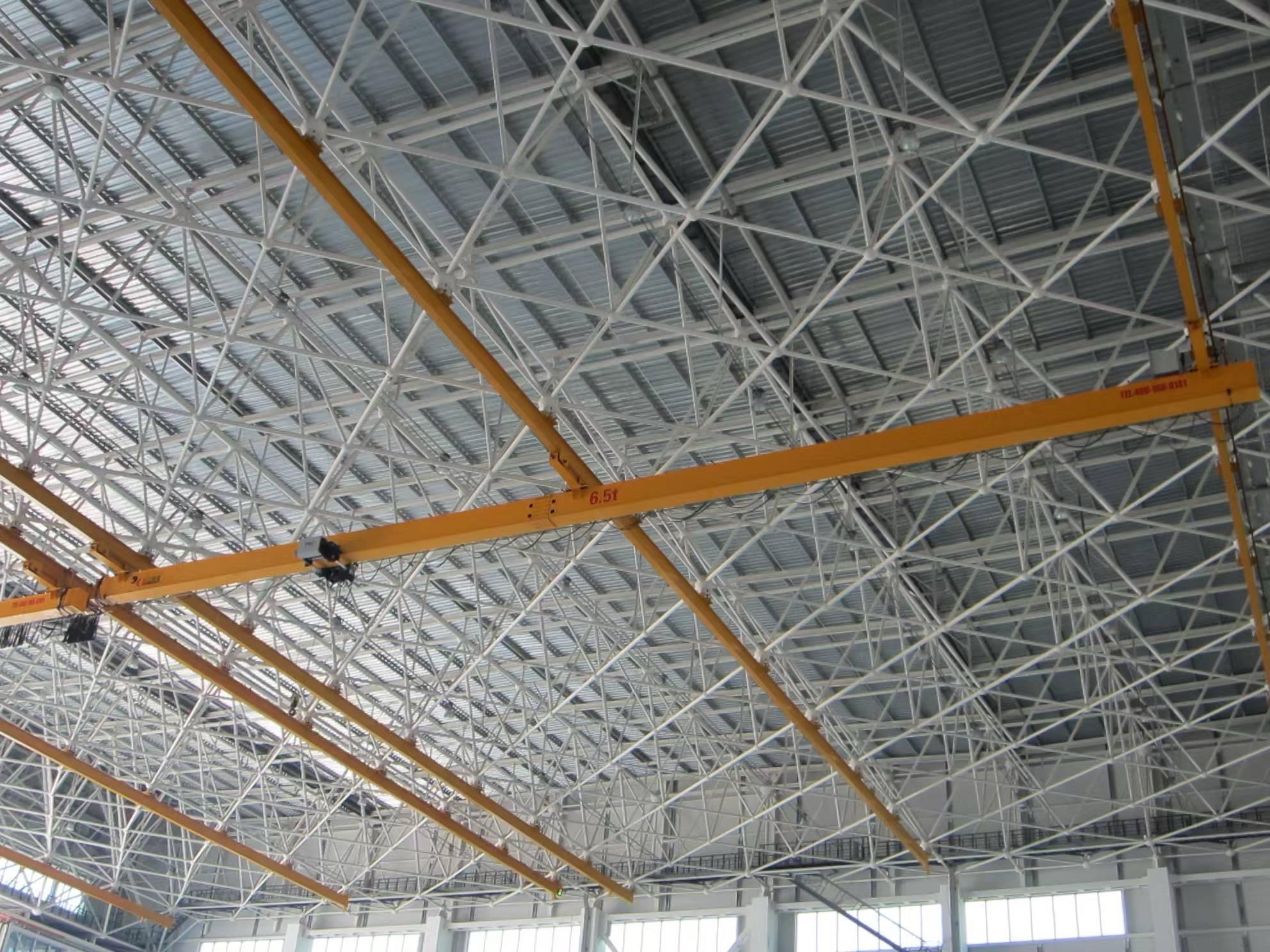
Most of the mature aviation hangars, old maintenance workshop roof structure, floor height, column layout is fixed, there are all kinds of pipelines, bridges, lighting facilities on the top, reserved lifting equipment operating space is very limited.
Selection must focus on the consideration of equipment headroom height, structural dimensions, to avoid equipment operation and plant structure, airborne equipment interference.
Clean and low-noise operation
Aviation precision maintenance workshop has clear requirements for environmental cleanliness, equipment operation can not produce oil dripping, dust fall off and other pollution problems.
At the same time, equipment start and stop, running noise needs to be controllable, smooth braking, will not produce violent rattles and shock vibration, suitable for fine maintenance operation environment.
Adapt to diversified load lifting needs
The same aviation maintenance workshop needs to take into account the lifting operations of heavy engines, medium-sized landing gear, lightweight precision parts, and various types of work equipment.
The equipment needs to be adapted to multi-load working conditions, taking into account the stability of heavy loads and the accuracy of light loads, to meet the diversified operational needs of the workshop.
Fitting the maintenance process flow
Lifting equipment is an auxiliary tool for aviation maintenance, which can not affect the technician's work, airframe overhaul channel and workshop flow process.
Equipment running track, coverage, control needs to be adapted to the site maintenance line, to improve the overall operational efficiency, rather than causing operational obstacles.
Recommended Crane Models for Aircraft Maintenance Workshop
Different aviation maintenance scenarios, load, precision, space conditions are different, suitable for aircraft maintenance crane models differ significantly, according to the need to balance the safety and practicality of selection.
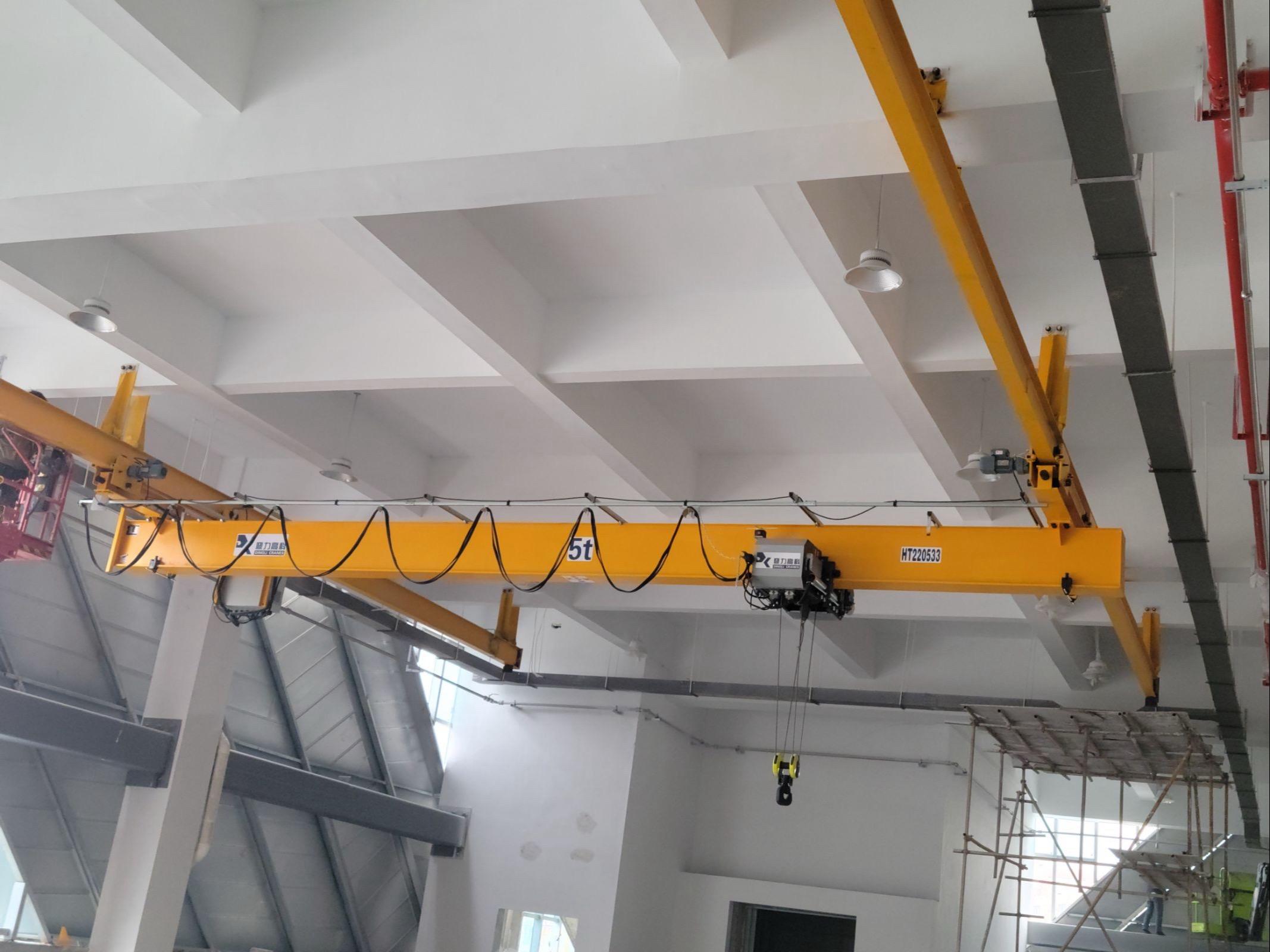
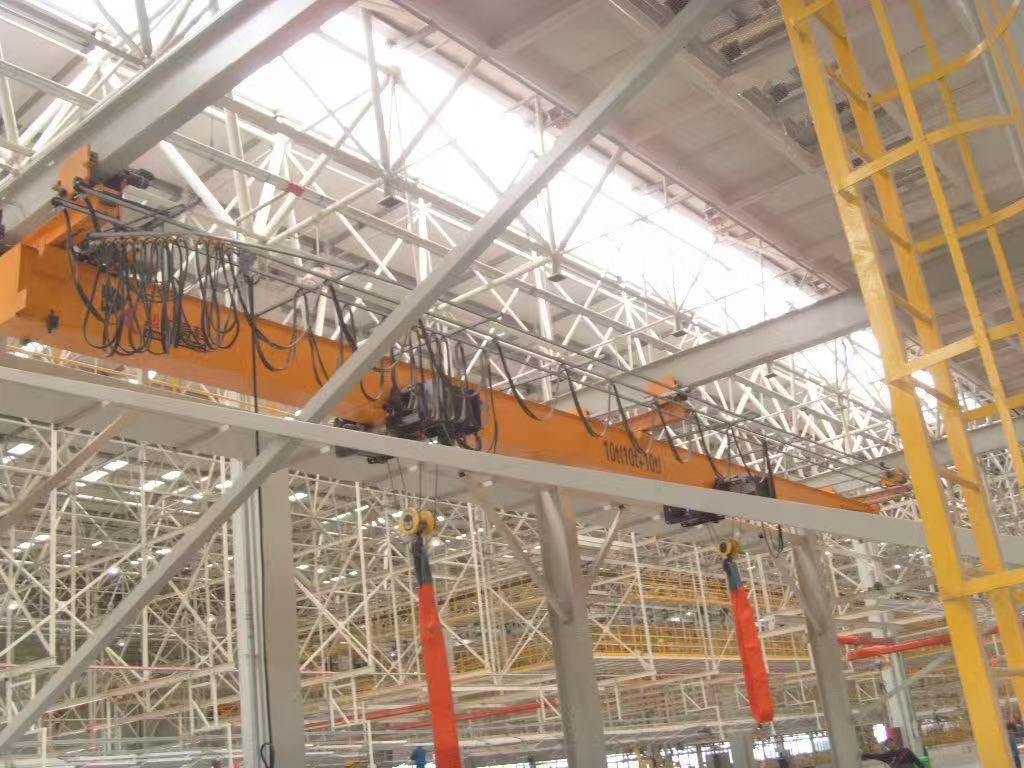
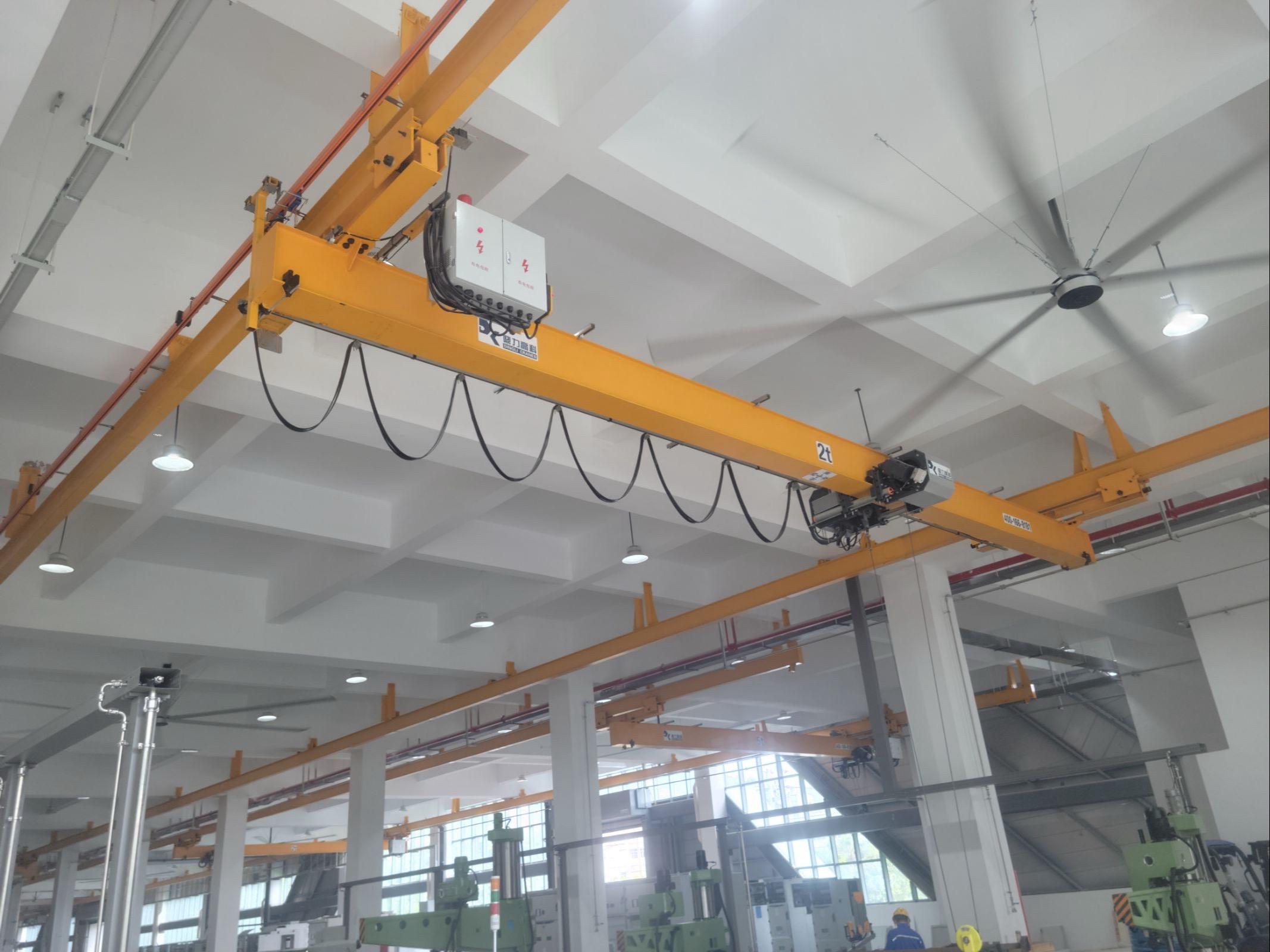
Single Girder Overhead Crane
Simple structure, light weight, small space occupation, suitable for small and medium-sized aviation maintenance workshop, spare parts storage area, light assembly area of light and medium load lifting operations.
With flexible operation and high cost performance, it can meet the basic operation requirements of daily parts transfer, small equipment overhaul, and routine tooling handling, and is a commonly used model in small and medium-sized MRO workshops.
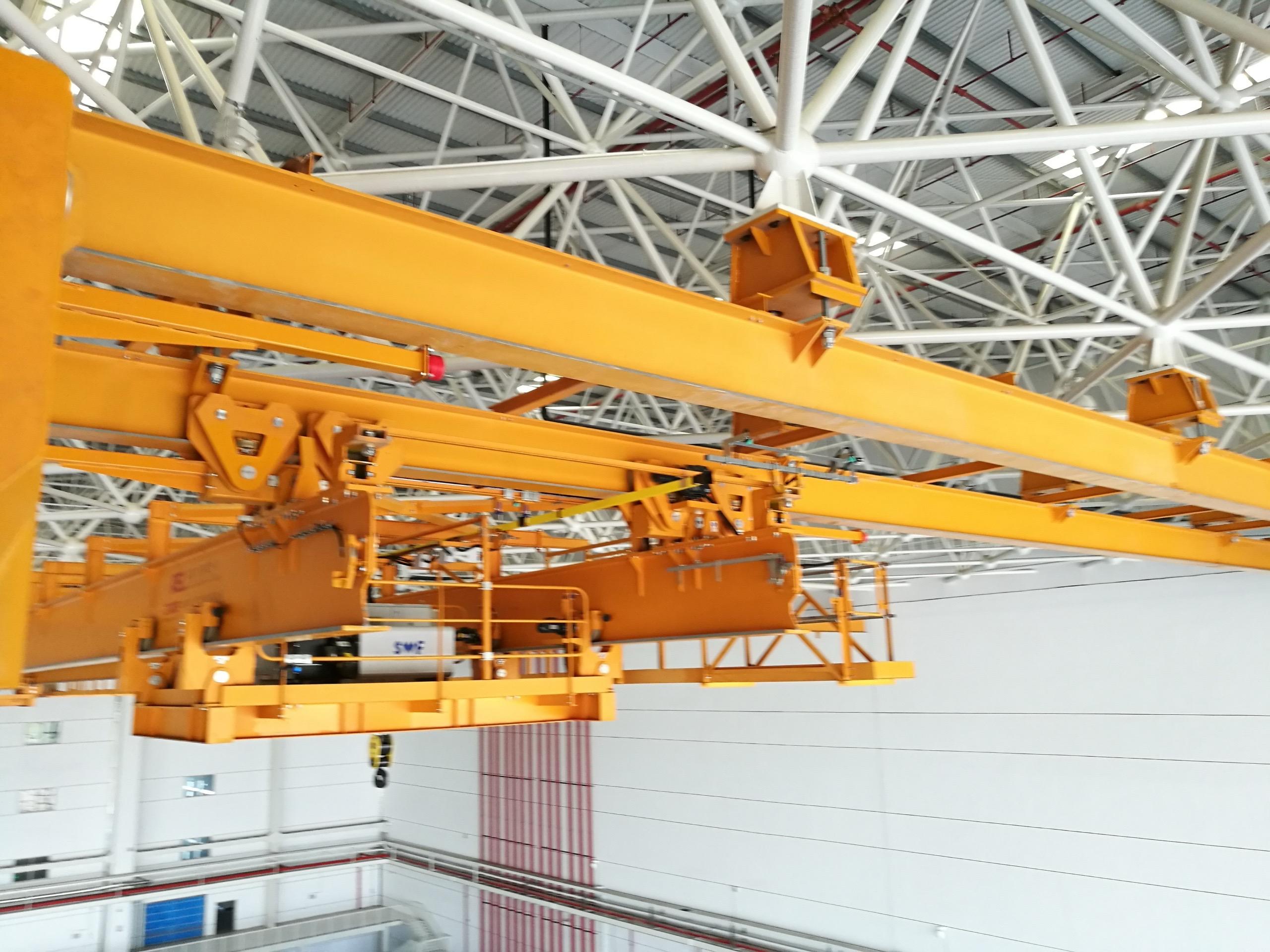
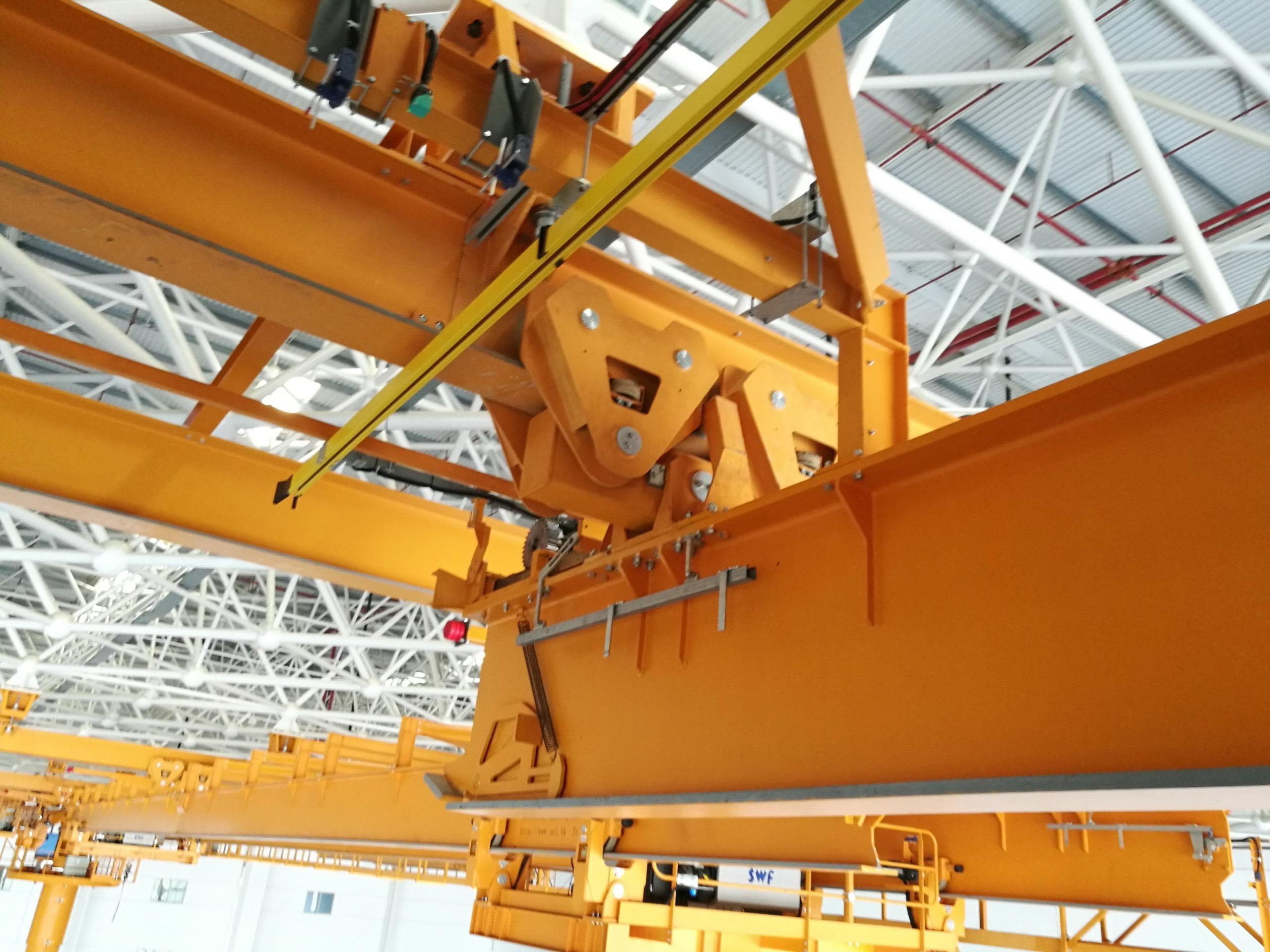
Double Girder Overhead Crane
With strong load carrying capacity, high structural stability and wide span adaptability, it is suitable for heavy-duty operation scenarios such as large hangar, heavy engine disassembly and assembly, landing gear overhaul, and large-scale workpiece lifting.
It can be equipped with frequency control, anti-swing and precise positioning system, which is suitable for aviation heavy-duty precision lifting needs, and is the main model for large aviation maintenance bases.
Suspension Crane
No need to occupy the ground and column space, directly mounted on the top structure of the plant, suitable for the lack of floor height, dense columns, ground space restrictions of the old maintenance workshop.
Flexible equipment coverage, can be adapted to the operational needs of local precision maintenance areas, does not occupy the body of the maintenance channel, perfectly adapted to the working conditions of the narrow space.
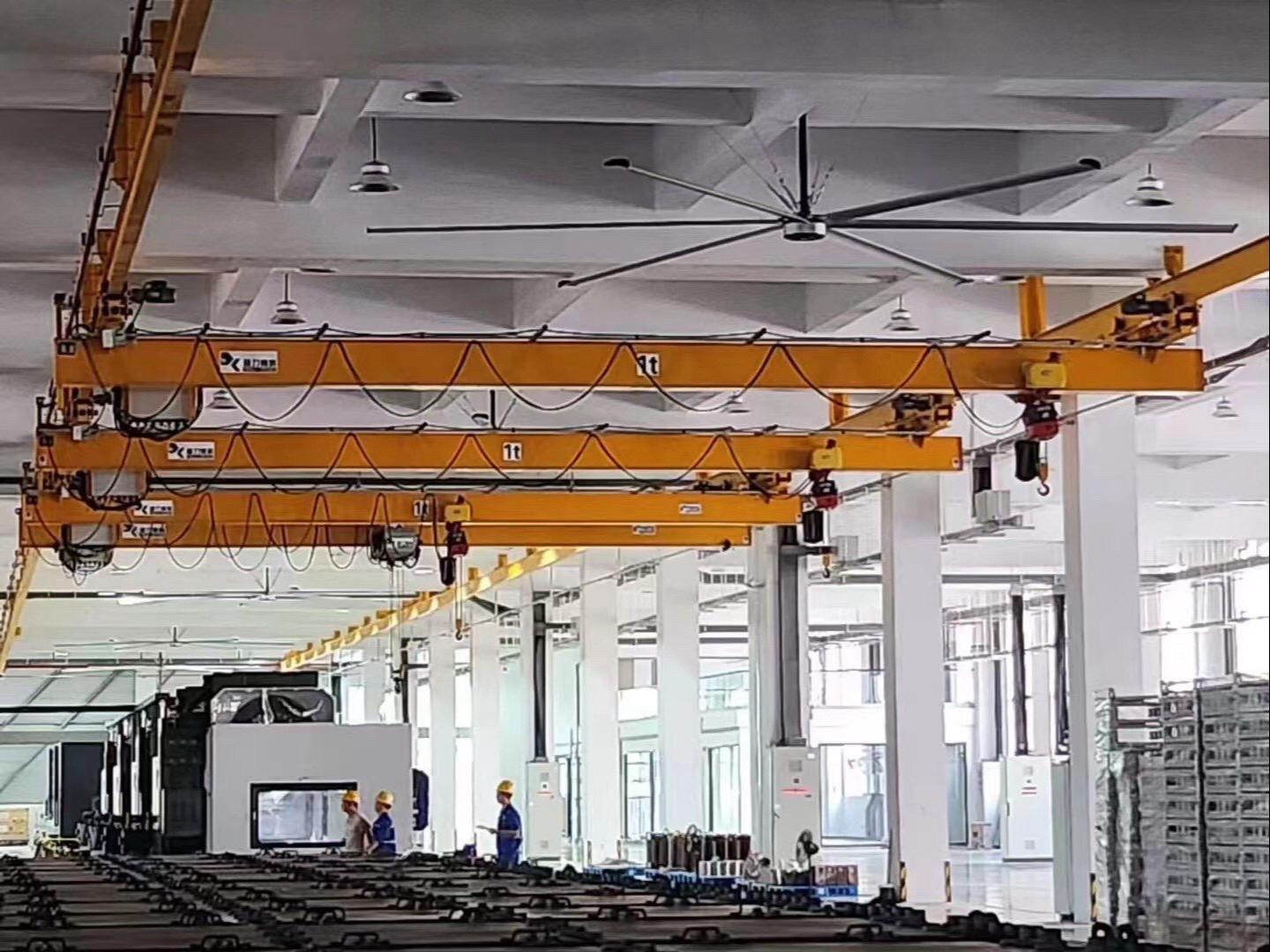
Workstation Overhead Crane
Specially designed for fine chemical work, with high positioning accuracy and ultra-smooth operation, it is mainly used for the repair of aviation precision parts, assembly of small components, debugging of precision tooling and other scenarios.
With strong coverage of single station, it can be targeted to meet the local high-precision lifting needs, avoiding the waste of resources caused by a wide range of equipment operation.
Monorail Crane System
With a fixed running track, it is suitable for aircraft engine special transfer, fixed process parts flow, assembly line maintenance operation scenarios.
With fixed equipment alignment and high precision of repetitive operations, it can form a standardized lifting process, which is suitable for the regular operation of fixed processes of aviation maintenance.
Customized Aviation Maintenance Crane
Customized for special hangar layout, ultra-high precision operations, synchronous lifting, ultra-low headroom and other special working conditions.
It can be equipped with exclusive functions such as soft start and soft stop, intelligent anti-sway, synchronized lifting and lowering, micro-speed precision control, etc., which can be adapted to the needs of all kinds of special aviation maintenance operations and solve the lifting problems of non-standard working conditions.
Procurement must verify the core technical parameters
The adaptability of the parameters of the aviation lifting equipment directly determines the operational safety and maintenance accuracy, the procurement stage needs to be checked one by one to avoid the parameters do not match the operation of the hidden danger.
Rated lifting tonnage
According to the aircraft engine weight, landing gear assembly weight, large-scale tooling, maintenance platform and spreader total weight accounting, reserve a reasonable load margin.
Eliminate full-load operation, ensure the stability of heavy-duty lifting, and avoid the long-term extreme load affecting the service life of the equipment and operational safety.
Equipment Span
Strictly match the width of the hangar opening, the center distance of the track, the safe operating range of the equipment, and the layout of the whole machine parking and maintenance channel.
Ensure that the equipment runs without any jamming, and will not interfere with the plant columns, fuselage and maintenance equipment.
Effective lifting height
Combined with the height of the aircraft fuselage, the height of the workpiece erection, the roof structure of the plant, the position of the top obstacles authorized.
It ensures that the accessories and fixtures will not collide with the fuselage and the structure of the plant during the lifting process, and meets the height requirements of all kinds of maintenance lifting.
Equipment Clearance Height
This is one of the core parameters of aviation hangar selection. Most hangars are densely populated with pipelines, suspended ceilings and structural beams on the top, and the effective floor height is limited.
It is necessary to confirm the structural height of the equipment itself and select the appropriate low headroom model to maximize the use of the limited space in the plant.
Equipment running length
Determined according to the operational coverage of the maintenance workshop and hangar, to ensure that the equipment can cover all the maintenance stations and meet the demand for multi-point maintenance of the whole machine and the transfer of spare parts throughout the region.
Positioning accuracy standard
Focus on checking the smoothness of starting and stopping of the equipment, the precision of traveling alignment, and the ability of load swing control. Precision maintenance scenarios require micro-speed alignment and zero-jitter operation to ensure the accuracy of parts disassembly and assembly and workpiece alignment.
Equipment control mode
Handle control, wireless remote control, cab control, electronic precision control and other modes can be selected according to the operation scene.
Precision lifting is prioritized to use wireless micro-speed remote control, which is convenient for technicians to observe the lifting status from a close distance and fine-tune the alignment in real time.
Running speed and speed control function
Aviation lifting equipment needs to have frequency conversion speed control capabilities, regular transit can run at a constant speed, precision alignment can be switched to micro-speed mode.
Fast and slow speed seamless switching, taking into account the operational efficiency and lifting precision, to adapt to the operational needs of different processes.
All-round safety configuration
It must be equipped with a full set of safety configurations such as overload protection, soft start/stop, mechanical anti-collision, travel limit, emergency brake, load anti-sway and so on.
Multi-protection avoids the risks of lifting overload, alignment shift, equipment collision, etc., and protects the aircraft and operating equipment in all aspects.
Plant structure adaptability
Check in advance the load bearing of rail beams, top loading conditions, and column support structure of the plant, and confirm that the equipment installation method and fixing points are fully adapted to the infrastructure conditions of the plant.
Avoid problems such as insufficient structural stress and operational shaking after equipment installation.
Reliable aviation Crane supplier screening criteria
The technical threshold of aviation-specific lifting equipment is much higher than that of ordinary industrial cranes, and the supplier's specialized experience and engineering capabilities are the core guarantee of equipment adaptability.
Verify the real production and R & D qualifications
Priority is given to manufacturers with independent R & D, production, processing, testing capabilities of the entity, to eliminate pure trade intermediaries.
Confirm that the manufacturer has a special technical team of aviation lifting equipment, with non-standard customization, working condition optimization, program design capabilities.
Verification of aviation MRO similar project cases
Focus on checking the manufacturer's landing projects in civil aviation hangars, navigation maintenance bases, aviation parts MRO workshop, engine overhaul workshop.
Rich aviation project experience, on behalf of the manufacturer is familiar with the aviation working conditions of precision, safety, cleanliness and other special requirements.
Evaluation of professional engineering adaptability
High-quality suppliers will recommend suitable models and protection programs according to hangar drawings, height restrictions, workstation layout, and maintenance processes.
Able to proactively avoid the interference between the equipment and the airframe, plant structure, workflow, rather than directly applying the general model.
Verification of a full set of professional and technical documents
Regular manufacturers can provide a full set of information such as equipment assembly drawings, headroom size drawings, wheel pressure load data, electrical schematic diagrams, parts lists, operating instructions, test reports, etc., to meet the needs of aviation project acceptance record.
Confirm the brand and quality of core parts
Focus on verifying the brand and quality of core accessories such as motors, reducers, brakes, inverter systems, wire ropes, hooks, end beams, and control systems.
High-end compliant parts are the basis for smooth operation, precise positioning and long-lasting durability of the equipment, and are suitable for aviation high-frequency precision work.
Strict factory inspection and quality control system
Before the equipment leaves the factory, it needs to complete weld inspection, size verification, no-load test run, full-load test, full functional inspection, safety configuration verification, and keep complete inspection records.
Guarantee that the precision, stability and safety of each ex-factory aviation specialized Crane are up to standard.
Define the scope of installation and commissioning services
Confirm the manufacturer's service mode in advance, including pure supply of equipment, on-site installation guidance, machine commissioning, personnel operation training, completion and acceptance of the service content, to ensure the smooth commissioning of equipment.
Verification of after-sales and spare parts security capabilities
Aviation maintenance downtime directly affects the aircraft service scheduling, the loss is great. Manufacturers need to have fast after-sales response, original spare parts, remote troubleshooting, on-site repair capability.
Comprehensive adaptability is prioritized over purchase price
Low-priced general-purpose models often lack precision speed control, anti-sway, low headroom adaptation and other aviation-specific configurations, and are prone to insufficient precision, unstable operation, interference with operations and other problems.
Selection needs to prioritize equipment suitability for working conditions, long-term stability and safety factor, rather than simply lowering the procurement cost.
Procurement selection of common misconceptions
Most of the problems in the selection of aviation Crane, are derived from the application of common industrial equipment procurement thinking, ignoring the specificity of aviation scenarios.
Focus only on the lifting tonnage of equipment, ignoring precision, headroom, smoothness and other core aviation needs, equipment can not be adapted to precision maintenance operations.
With the selection logic of ordinary factory cranes to adapt to the aviation hangar, ordinary equipment without precision control, anti-sway, low noise and clean design, there are potential safety hazards.
Ignoring the hangar height and layout restrictions, the size of the selected equipment does not match, resulting in the equipment can not be installed or running interference.
Do not pay attention to the smooth operation of the equipment and anti-sway performance, lifting precision parts are prone to shaking and bumping.
Failure to verify the running track of the equipment in advance, and the operating range of the equipment blocked the access channel of the fuselage, affecting the normal maintenance process.
Failure to accurately count the actual lifting load and workpiece weight, resulting in the selection of equipment tonnage does not match, unable to meet the operational requirements.
Choosing a supplier with no experience in aviation MRO projects, the equipment program is copied from common models, not suitable for aviation special working conditions.
Selection based on price alone, sacrificing equipment precision, safety configuration and structural adaptability, resulting in hidden risks in the later operation and maintenance.
Frequently Asked Questions
What is the most suitable crane model for aircraft maintenance workshop?
There is no uniform fixed model, small and medium-sized parts maintenance, storage areas suitable for single girder cranes and station cranes; large hangars, engine heavy-duty disassembly and assembly suitable for double girder Overhead Crane; height-restricted workshops give priority to the use of suspension cranes; the flow of fixed processes suitable for monorail cranes, according to the needs of the selection of the optimal program.
Overhead Crane or Monorail Crane for Aircraft Engine Maintenance?
Large-scale, multi-point, flexible disassembly and assembly work priority for inverter Overhead Crane, high precision, wide coverage, flexibility; fixed trajectory, standardized engine transfer process, monorail cranes are more suitable, fixed alignment, repeatability of the accuracy is higher, according to the mode of operation to choose.
Is there a general need for low headroom crane design in aviation hangars?
Most mature hangars and old maintenance workshops have the problem of limited floor height and many obstacles on the top, low headroom design can maximize the use of limited space to avoid problems such as equipment can not be installed, running interference, etc. It is the mainstream design scheme for aviation scenarios.
Why does aviation maintenance require high precision in equipment positioning?
Aircraft engines, fuselage fittings, precision components with extremely small clearance, lifting process of slight shaking, misalignment, impact, will cause wear and tear of the components, structural damage, not only increase the cost of maintenance, but also affect the safety of the aircraft flight, so it must ensure high precision, high smoothness lifting.
What technical documents do I need to request from the manufacturer before placing an order?
You can focus on requesting a full set of technical information such as the general drawing of the equipment, drawings of the headroom dimensions, track loading parameters, electrical control schematic diagrams, list of core accessories, equipment operation manuals, factory inspection reports, safety configuration instructions, etc., for the purpose of project design docking and acceptance filing.
Can the same supplier support the hangar and parts workshop Crane?
Professional aviation lifting equipment manufacturers can provide one-stop hangar main crane, workstation precision cranes, storage and transfer cranes, monorail systems and other full range of equipment, unified process standards, adaptive system and after-sales service, suitable for all workshop lifting needs.
In addition to the price of equipment, what else needs to be focused on verification?
Need to focus on verifying the manufacturer's aviation project experience, equipment precision parameters, headroom fit size, safety protection configuration, core parts quality, factory testing standards, installation and commissioning services and long-term after-sales support, these factors directly determine the effect of equipment landing and long-term stability.
Summarize
Selection of cranes for aircraft maintenance workshop is definitely not a simple tonnage matching. The core demand of aviation MRO scenarios is to complete all kinds of high-value aircraft lifting operation and maintenance work under the premise of safety protection, precise operation and space adaptation.
Procurement selection process, the need to jump out of the ordinary industrial equipment procurement thinking, giving priority to the consideration of the smoothness of the equipment, positioning accuracy, hangar space adaptability, process matching, combined with the actual maintenance conditions to match the model and parameters.
Reliable aviation lifting equipment suppliers, not only to provide compliant hardware equipment, but also relying on a wealth of aviation project experience, to provide condition surveys, program customization, technical docking, installation and commissioning, long-term operation and maintenance of the whole process of service, to avoid all kinds of selection and landing pitfalls.
Henan Mine Crane l specializes in the field of aviation lifting equipment for many years, focusing on the development and production of various types of special cranes suitable for hangars, MRO workshops, aviation parts repair workstations, can be customized for different heights, spans, precision needs, to serve the world's various aviation maintenance infrastructure projects.
If you need to adapt to the project's exclusive selection program, you can provide the workshop drawings, height limitations, lifting tonnage, maintenance type of operation, our professional engineering team will accurately match the optimal Crane program for you.