
Port Container Handling Solutions | Reduce Cost with Smart Equipment
In recent years, global container terminals have faced mounting pressure. Rising labour costs, persistent fluctuations in fuel prices, record-high container volumes, coupled with increasingly stringent environmental regulations and shorter vessel turnaround times, all mean that reducing container handling costs will directly impact a terminal's market competitiveness and profitability.
In terms of reducing costs and improving efficiency, most terminals believe that the top priority is to lower equipment procurement prices. However, when considering the long-term costs, the price difference for a single piece of equipment is negligible compared to the long-term costs resulting from improper equipment selection, poor scheduling, excessive energy consumption, and equipment downtime.
Henan Mine Crane is a professional manufacturer of port crane equipment, with a track record of delivering projects of various scales around the world. To achieve cost optimisation, improvements must be made at every stage of the process, from yard planning to equipment selection, energy structure, and maintenance systems. This article summarises some practical strategies that operators can implement to reduce long-term operating costs while ensuring the continued operation of their business.
Components of Container Handling Costs
The first category is capital expenditure (CAPEX), which includes ship-to-shore gantry cranes (STS), rubber-tired gantry cranes (RTG), rail-mounted gantry cranes (RMG), container stackers, and terminal tractors, as well as any related infrastructure investments.
The second category is operating costs (OPEX). The largest proportion of these costs is energy-related, including diesel, electricity, and charging fees. The next item for consideration is labour costs, including driver and maintenance personnel wages. Finally, there are day-to-day expenses to consider, including maintenance, spare parts and tyre wear costs. For wheeled equipment such as RTGs and container handlers, tyre wear represents a significant fixed cost that cannot be overlooked.
The third category consists of hidden costs that are often overlooked, such as demurrage fees for waiting container trucks, penalties for vessel delays, efficiency losses due to equipment idling or yard congestion, and downtime losses caused by unexpected breakdowns. These hidden costs frequently exceed the amounts shown on the company's financial statements.
Optimizing Yard Layout
Poor planning of the yard can lead to increased travel distances for equipment, higher fuel consumption and an increase in the number of container transfers, which in turn adds to the workload.
When planning container zones, the most effective approach is to divide the area based on container flow. It is recommended that import and export containers be stored separately. Dedicated areas should be designated for refrigerated and hazardous materials containers. Empty containers should be consolidated to minimise long-distance transfers between zones. Ideally, cold-chain container terminals and dangerous goods container yards would clearly demarcate their operational areas. This would reduce the extra travel distance caused by cross-zone transfer operations.
It is imperative to minimise container repositioning. In many yards, due to inadequate planning, retrieving a single container often requires the movement of two or three stacked containers – a process that is both labour-intensive and time-consuming. A well-planned yard layout reduces unnecessary movements, lowers the operational load on equipment, and, of course, reduces the handling cost per container. This is the core principle of optimising port yard layout.
Selecting the Right Equipment Configuration
Different handling equipment is suited for distinctly different scenarios. The selection of an inappropriate model has the potential to result in increased long-term operating costs. The selection of appropriate equipment for a container terminal is a key factor in achieving cost savings.
Rubber-Tired Gantry (RTG) Cranes are the primary equipment in many yards and offer the greatest potential for cost reduction. Existing diesel-powered equipment can be retrofitted with electric RTGs, or electric RTGs can be purchased. When equipped with hybrid systems, remote control, and automatic positioning capabilities, they can both reduce energy consumption and improve operational efficiency.
Rail-mounted gantry cranes (RMGs) are the ideal solution for large, fixed yards. They offer higher stacking density, lower labour requirements, lower electrification operating costs, and significant potential for automation upgrades. They are a popular choice for large hub ports and intermodal container terminals, and their long-term cost-effectiveness is further enhanced by automation upgrades.
Container transfer vehicles are well-suited for locations with frequent container movement, as well as small- and medium-sized container terminals and inland dry ports. There are a number of ways in which the efficiency of transfer vehicles can be improved and their costs reduced. These include optimising your fleet, switching to electric models and adjusting driving routes.
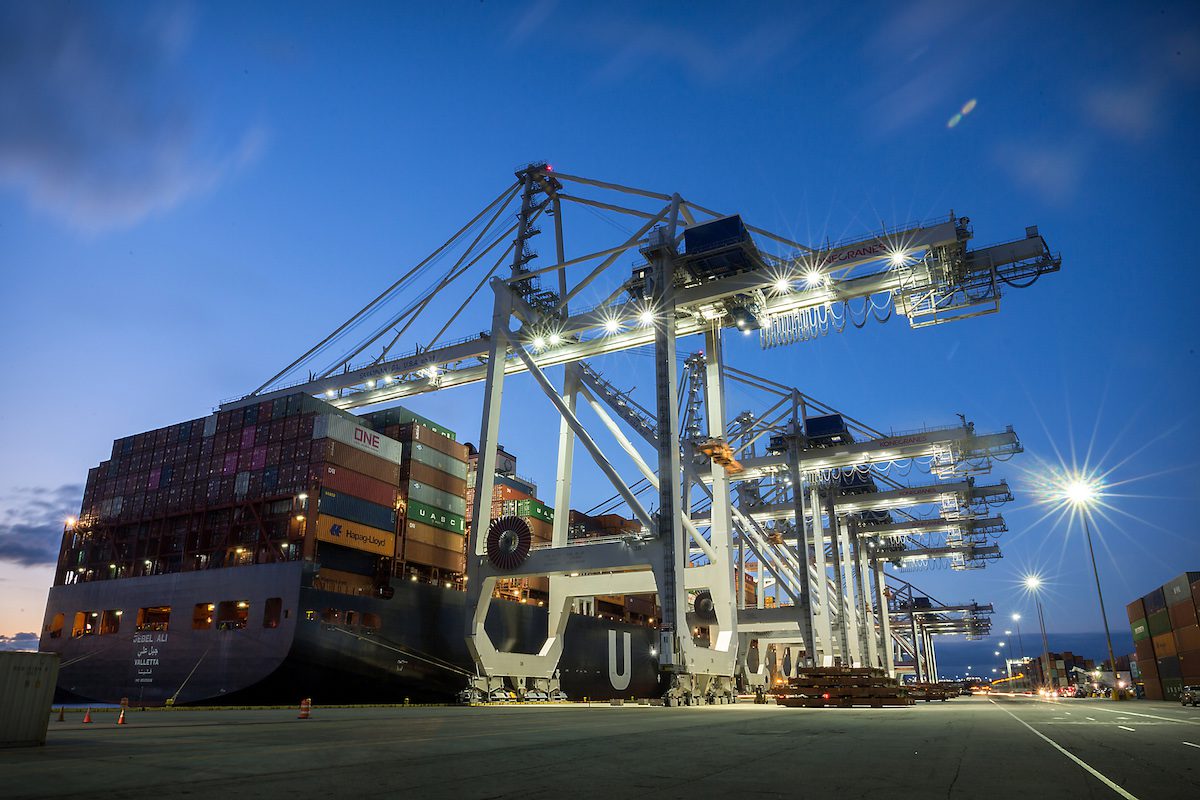
The efficiency of STS gantry cranes has a significant impact on a vessel's time in port. Upgrading to anti-sway technology, automatic crane positioning, and remote control capabilities can shorten the loading and unloading cycle for each vessel, reduce demurrage charges, and improve berth utilisation.
Common Container Handling Equipment Comparison
| Equipment Type | Initial Investment | Energy Cost | Labor Demand | Stacking Height | Flexibility | Best Application |
| Diesel RTG | Medium | High | Medium | 4-6 layers | Medium | Medium-sized conventional yards |
| Electric RTG | Medium-high | Low | Medium | 4-6 layers | Medium | Yards with stable power supply |
| RMG Crane | High | Very low | Low | 5-7 layers | Very low | Large fixed yards & rail terminals |
| Straddle Carrier | Medium | Medium | Low | 2-4 layers | Very high | High-turnover flexible yards |
Advancing the Transition to Electrification
Diesel prices are rising, and carbon emissions regulations are becoming more stringent in many regions. This has led to an increase in the cost of operating diesel-powered equipment and there is a risk of non-compliance with emissions standards. Electrification is the most effective way to reduce terminal energy costs.
The optimal solution is to retrofit diesel-powered rubber-tired gantry cranes (RTGs) to electric models. Following retrofitting, there is a significant reduction in energy costs per container, and equipment maintenance requirements are reduced accordingly. In situations where a fixed power supply is not available, hybrid port equipment can serve as a temporary solution to gradually reduce fuel consumption.
Lithium-ion battery-powered container stackers and terminal tractors are already widely used and are well-suited for short-distance, high-speed transport. When calculating energy-saving benefits, factors such as annual operating hours, fuel consumption, local electricity rates, and battery lifespan must be considered. This allows for precise calculation of the payback period.
This is also a key component of green port equipment solutions. Many regions offer policy subsidies for low-carbon ports, which can further offset the initial investment.
Improving Equipment Utilization
In the event of equipment being inactive, it is important to note that depreciation and fixed costs will continue to accrue, which will in turn naturally increase the handling cost per container. Maximise your investment in port equipment to streamline operations and avoid the need for costly new purchases.
Integrating a container equipment fleet management system for real-time scheduling and dispatch can reduce empty runs and waiting times. Should conditions allow, it is recommended that you consider integrating this system with an AI-based yard scheduling solution. This approach will ensure a balanced workload, preventing any issues arising from overloading or underutilisation.
Key performance indicators such as hourly throughput per piece of equipment, equipment availability, empty run rate, energy consumption per container and downtime should be monitored on a daily basis. This will help you to identify areas for improvement through data analysis and to gradually enhance operational efficiency.
Automation and Intelligent Maintenance
While the initial investment in automated container terminal solutions is substantial, they offer the potential to enhance operational efficiency over time. The implementation of these systems has been shown to reduce labour requirements and minimise equipment and cargo damage caused by human error. Furthermore, they ensure smoother business operations. It is not necessary to implement all changes simultaneously. Firstly, we recommend upgrading to remote port control and automated stacking. This will allow you to gradually expand your business in order to achieve cost savings through port automation.
In terms of maintenance, it is essential to transition from the conventional "repair after failure" approach to a proactive predictive maintenance strategy for port equipment. The incorporation of sensors to monitor motor temperature, vibration, brake status, and hydraulic pressure facilitates the early identification of failure, thereby enabling the scheduling of maintenance as required.
This approach ensures minimal downtime in the event of equipment failure, thereby extending the lifespan of the equipment and reducing maintenance costs. When used in conjunction with a remote equipment monitoring system, it can swiftly identify the causes of failures in overseas projects, thereby reducing the time and money spent on on-site service calls.
Common Misconceptions About Cost Reduction
Many terminals are not yet able to demonstrate a full understanding of how to cut costs effectively. The most common misconception is the focus on lowering purchase prices. Low-cost equipment often consumes more energy, has a shorter service life and is more prone to breakdowns, which can lead to increased costs over time.
It is also important to note that some terminals implement automation without first optimising operational workflows. As a result, automation cannot deliver the expected results if underlying process issues remain unresolved.
It has been noted that a significant number of projects fail to take long-term electrification plans into consideration, which in turn results in the purchase of diesel-powered equipment. However, due to subsequent changes in emissions regulations, they are obliged to allocate further funds to retrofitting.
Conducting a total cost of ownership (TCO) analysis for port equipment—which includes all expenditures over a period of approximately 10 to 15 years—is the only way to accurately assess whether a solution offers good value for money. Our port TCO analysis service assists clients in calculating long-term returns.
FAQ
How can ports effectively reduce container handling costs?
This can be achieved by addressing several areas simultaneously—including yard layout adjustments, equipment electrification, automation upgrades, predictive maintenance, and scheduling improvements. It cannot be achieved by relying on a single measure alone; systematic adjustments must be made based on the terminal’s specific operating conditions.
Do automated terminals have lower operating costs?
While the initial investment is higher, lower labor costs and more stable operational efficiency in the long term mean that the cost advantages over the full lifecycle will gradually become apparent. The specific payback period depends on the terminal’s throughput and labor cost levels.
Are electric RTGs more cost-effective than diesel RTGs?
While the purchase price is slightly higher, energy consumption and maintenance costs are lower. For terminals with sufficient operating hours, the price difference is typically recouped within a few years, making them more cost-effective in the long run.
Conclusion
Reducing container handling costs has never been about buying the cheapest equipment, but rather about making adjustments across the entire chain—from yard planning and equipment selection to operations and maintenance.
Future container terminals will evolve toward greater intelligence, lower energy consumption, and reduced manual intervention. Only by proactively implementing reasonable equipment solutions and operational systems can terminals maintain a cost advantage in the long-term competitive landscape.
Customized Terminal Cost Optimization Solutions
As a professional supplier of port lifting equipment, Henan Mine Crane can provide you with a cost optimization assessment for your container terminal. Simply provide your annual throughput, existing equipment status, yard layout, energy costs, and automation goals, and our engineering team will develop a tailored improvement plan covering RTG/RMG upgrades, straddle carrier selection, electrification route planning, smart port solutions, and more.
You can also contact us to receive a free copy of the “Self-Assessment Checklist for Reducing Costs in Modern Port Container Handling,” which will help you quickly identify areas for improvement in your current operations.