
Overhead Cranes for Power Plant Maintenance: How to Choose the Right Solution?
Overhead crane for power plant maintenance is never a dispensable equipment in power plant operation and maintenance work. It is not involved in power production, but every overhaul of the unit and every replacement of heavy parts can not be separated from its support.
I have been doing sales and technical support for power plant cranes in Henan Mine Crane for more than ten years, and I have come into contact with too many purchasing and operation and maintenance personnel of hydroelectric power plants and thermal power plants. One of their most common saying is: “Power plant cranes do not need to use every day, but once used, must be foolproof.”
This is true. Cranes in power plants are not the same as those in ordinary workshops, the frequency of use is really not high, but the requirements for lifting capacity, stability and reliability are harsh to the extreme.
Today I will take the identity of an old engineer, combined with these years of front-line experience, step by step to teach you to choose the right power plant maintenance overhead crane.
Step 1 - Mapping the lifting scenarios of power plant maintenance
1. Common lifting tasks in power plants
The lifting needs of power plants are very clear, all around the installation and maintenance of core equipment to start, there is no extra miscellaneous work. The most common is the generator stator lifting, which is also one of the most demanding tasks for cranes.
For example, in the Jinchang Peaking Coal Power Project, a generator stator net weight of 408 tons, requiring two cranes to lift to complete the lifting of such large parts, the crane's carrying capacity and synchronization requirements are extremely high.
In addition to the stator, turbine rotor handling is also a core task, turbine lifting crane (turbine lifting crane) needs to accurately control the strength and angle, to avoid damage to the rotor's precision structure. In addition, overhead cranes are indispensable for the maintenance and lifting of valves and pumps, as well as for the installation of heavy equipment in new power plants.
These tasks may seem infrequent, but each time is related to the normal operation of the power plant, no room for error. Especially large generator components, often require extremely high lifting capacity and coordinated lifting capacity, which is the core difference between power plant cranes and ordinary workshop cranes.
2. The core characteristics of power plant lifting loads
Power plant lifting load, and the load of the ordinary industrial scene is completely different, three characteristics are particularly prominent, but also the key basis for selection.
The first is extremely heavy, the load is usually in the 50 tons to 500 tons or more, large hydroelectric generator set rotor can even reach 1500 tons, far more than the lifting needs of the ordinary workshop, which requires the crane must have enough load-bearing capacity, there can not be the slightest reluctance.
Second is the high value, whether it is the generator stator, turbine rotor, or other core components, the cost is extremely high, once the lifting process of bumping, damage, maintenance costs are staggering, and may even affect the power supply of the entire power plant.
Finally, the positioning accuracy requirements are extremely high, especially the stator, rotor installation, the coaxiality, perpendicularity of the deviation requirements of 0.1mm or less, a slight deviation may lead to equipment can not operate normally, which requires the crane has accurate positioning capabilities.
Step 2 - Define the core technical parameters
1. lifting capacity (the core of the core)
Selection of power plant cranes, the first step must calculate the maximum lifting capacity, and must match the weight of the largest parts of the power plant, such as generator stator, which is absolutely no ambiguity.
Many power plants will choose the main and sub-hook configuration of the crane, the main hook is used to lift heavy parts, such as the stator, rotor; sub-hook is used to lift light parts, such as valves, pumps, so as to meet the needs of different loads, but also to improve operational efficiency.
There are many scenarios that require synchronized lifting of two machines, for example, when the load exceeds the carrying capacity of a single crane, as in the Jinchang Peak Coal Power Project, with two cranes working together, which requires cranes to have synchronized control to ensure that the two sets of equipment movements are consistent, to avoid tilting of the load.
Here to give a practical advice: when calculating the maximum load, be sure to spreader, the weight of the balance beam is also included, while reserving 10-15% of the safety margin, after all, the power plant lifting operations, safety is always the first place.
2. Span and Coverage
Power plant turbine halls are usually very large, the span of the crane must be able to cover the entire turbine hall, to ensure that all maintenance areas can be reached, there is no operational blind spot.
The span of the crane in the power plant is usually 20 meters to 40 meters or more, the specific size should be determined according to the actual width of the turbine hall. For example, the turbine hall of a large thermal power plant may have a span of 35 meters or more, which requires a customized large-span overhead crane.
If the span is small, it will lead to part of the area can not be lifted, such as the turbine components on both sides, can only be frequently adjusted to the position of the equipment, which is time-consuming and increases the risk of safety; choose a large span, it will increase the manufacturing cost of the equipment, and the stability of the operation will be affected, the need for accurate accounting.
3. Lifting height
The choice of lifting height mainly depends on two aspects: one is the height of the turbine and generator, and the other is the vertical dismantling requirement during operation.
The core equipment of the power plant is relatively tall, the lifting height of the crane must be sufficient to lift the heavy components vertically, but also reserve enough space for dismantling to avoid collision with the equipment and the roof during lifting.
For example, when lifting the turbine rotor, the rotor needs to be lifted vertically and then put into the base smoothly, which requires the lifting height not only to exceed the height of the rotor, but also to reserve space for operation, and it is generally recommended to reserve a safety gap of 1-2 meters, to ensure that the operation is carried out smoothly.
4. Accuracy requirements
The lifting operation of the power plant requires much higher precision than the common scene. Especially for the installation of generator stator and turbine rotor, the slightest deviation may lead to serious consequences.
This requires cranes to have high-precision positioning capability, and it is recommended to equip with an anti-sway system. For example, in the case of dual-machine cooperative lifting, the height difference of each lifting point is monitored in real time by a laser range finder, so that the tilt is controlled within the design permissible range (usually no more than 1/1000), and load swaying is avoided.
For overhead crane for generator maintenance, precise positioning is even more essential to minimize bumps during installation and protect high-value components.
Step 3 - Choosing the right type of crane
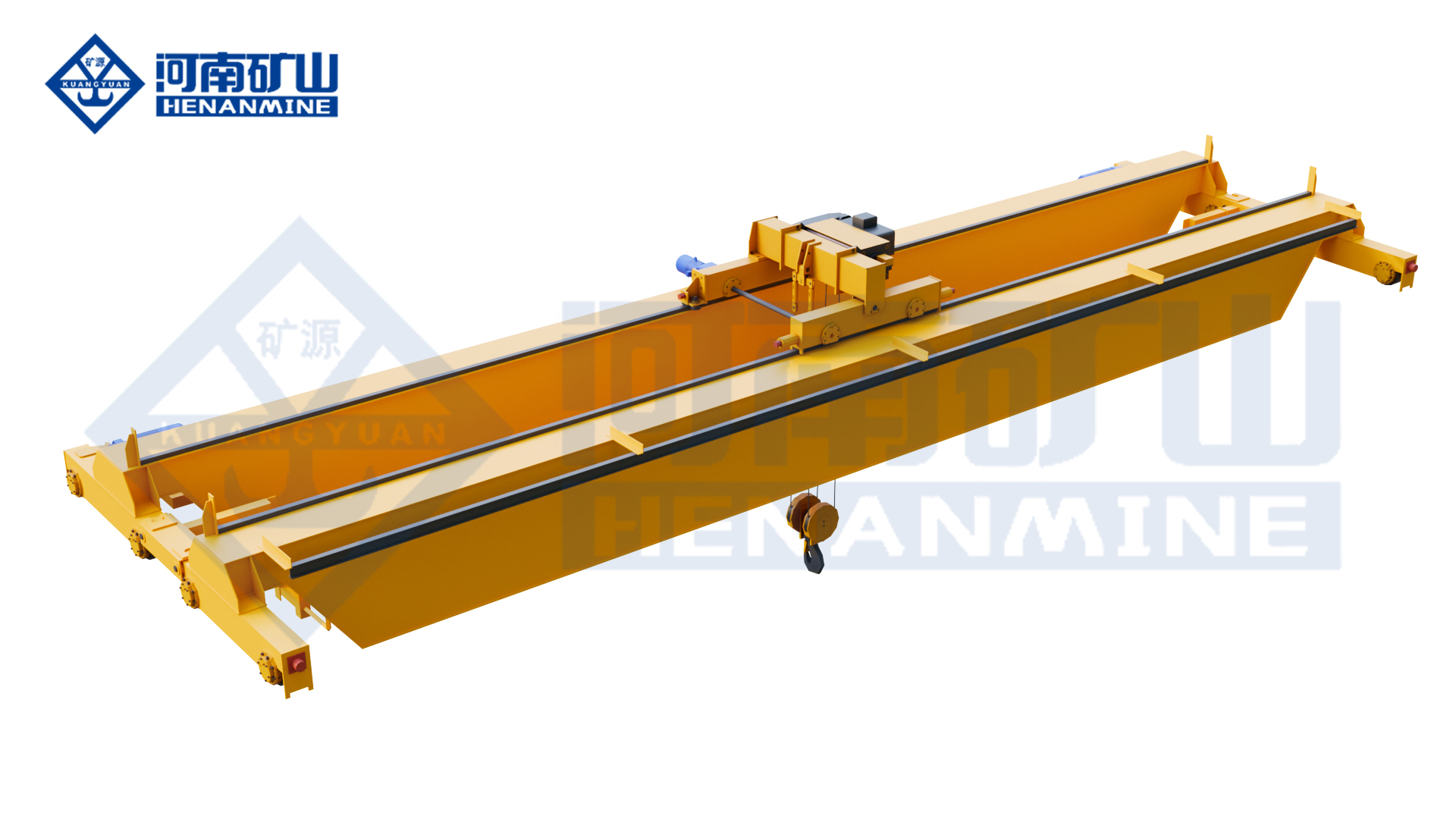
1. double girder overhead crane (most recommended)
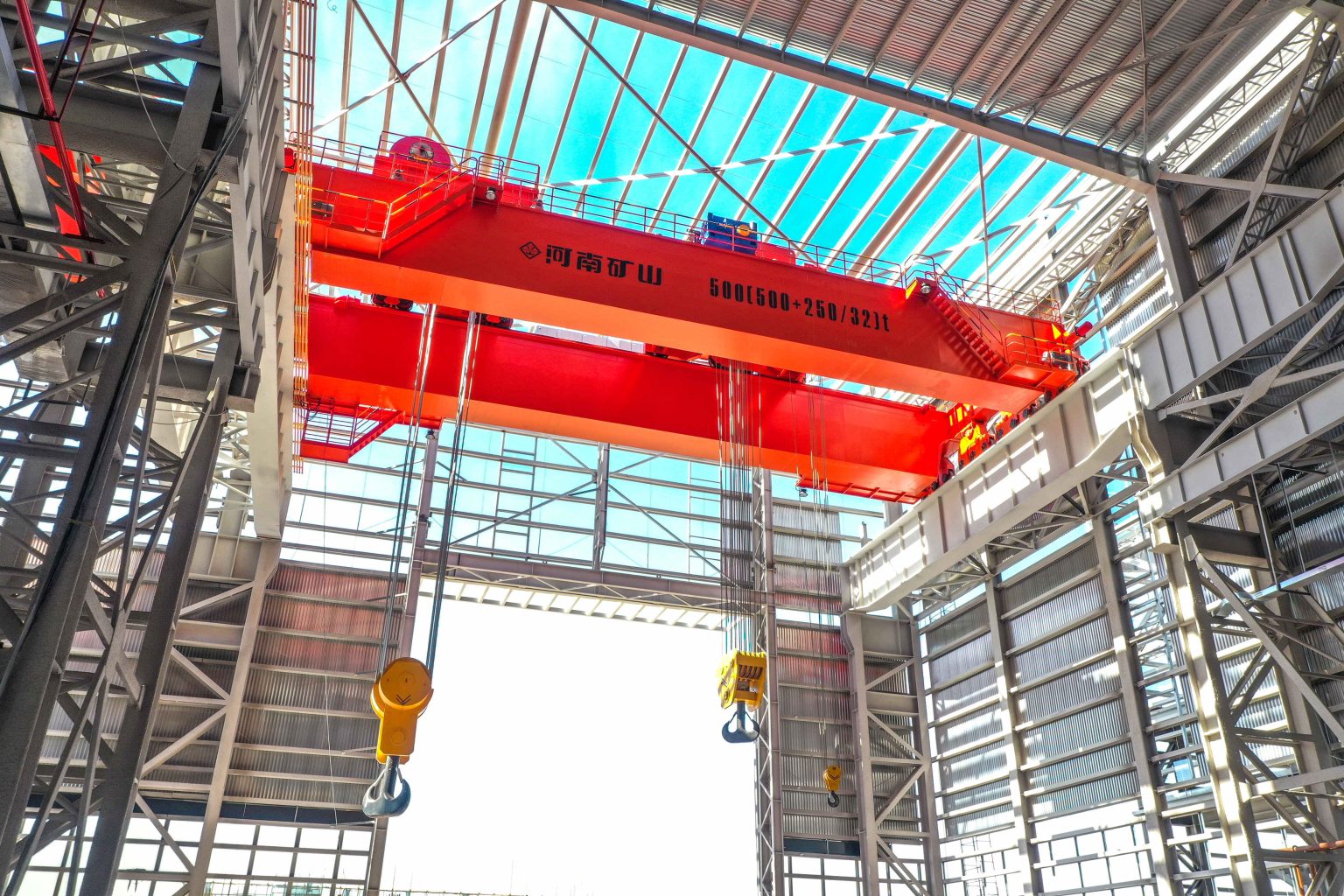
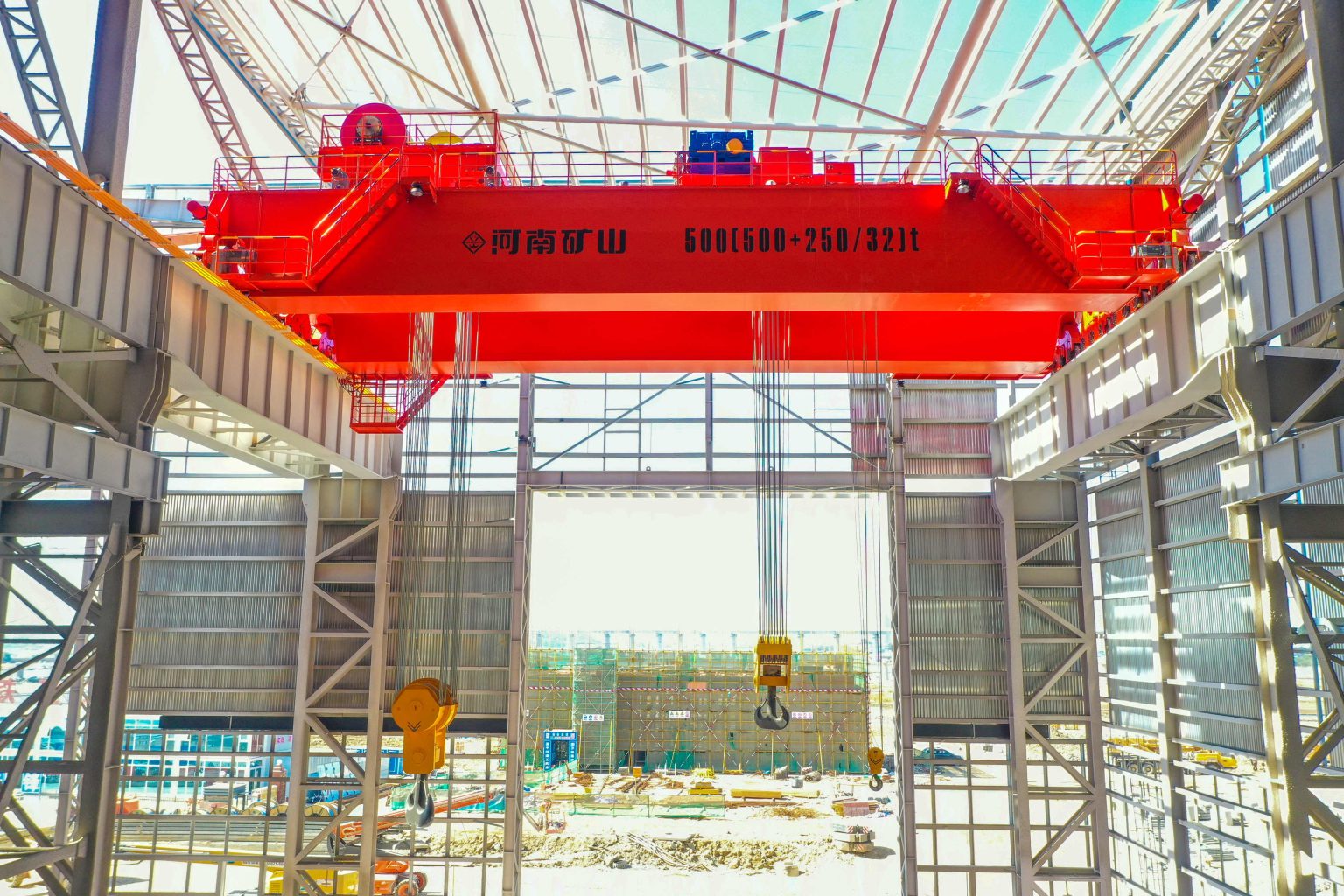
In power plant maintenance, double girder overhead crane is the absolute mainstream, and it is also the most often recommended model by Henan Mine Crane. It is indispensable for almost all core lifting tasks in power plants.
Its advantages are obvious: high load carrying capacity, can easily cope with heavy loads of more than 50 tons, and can even be customized for models of more than 500 tons to meet the lifting needs of large hydroelectric generator sets; good stability, double girder structural design, can effectively reduce the shaking of the operation, to ensure accurate positioning; higher lifting height, can be adapted to the tall turbine hall of the power plant.
The two box-type double girder overhead cranes put into operation in Liu Jiaxia Hydropower Plant, with a main lifting capacity of 400 tons and a secondary lifting capacity of 80 tons, have been in operation for more than 50 years and are still able to work stably, undertaking the task of lifting all kinds of generator overhauling parts, which is the best proof of the reliability of the double girder overhead cranes.
For power plants, double girder overhead crane can not only meet the demand of heavy parts lifting, but also adapt to the long-term low-frequency, high-load operation characteristics, which is the best choice for power plant maintenance.
2. Single girder overhead crane (auxiliary use only)
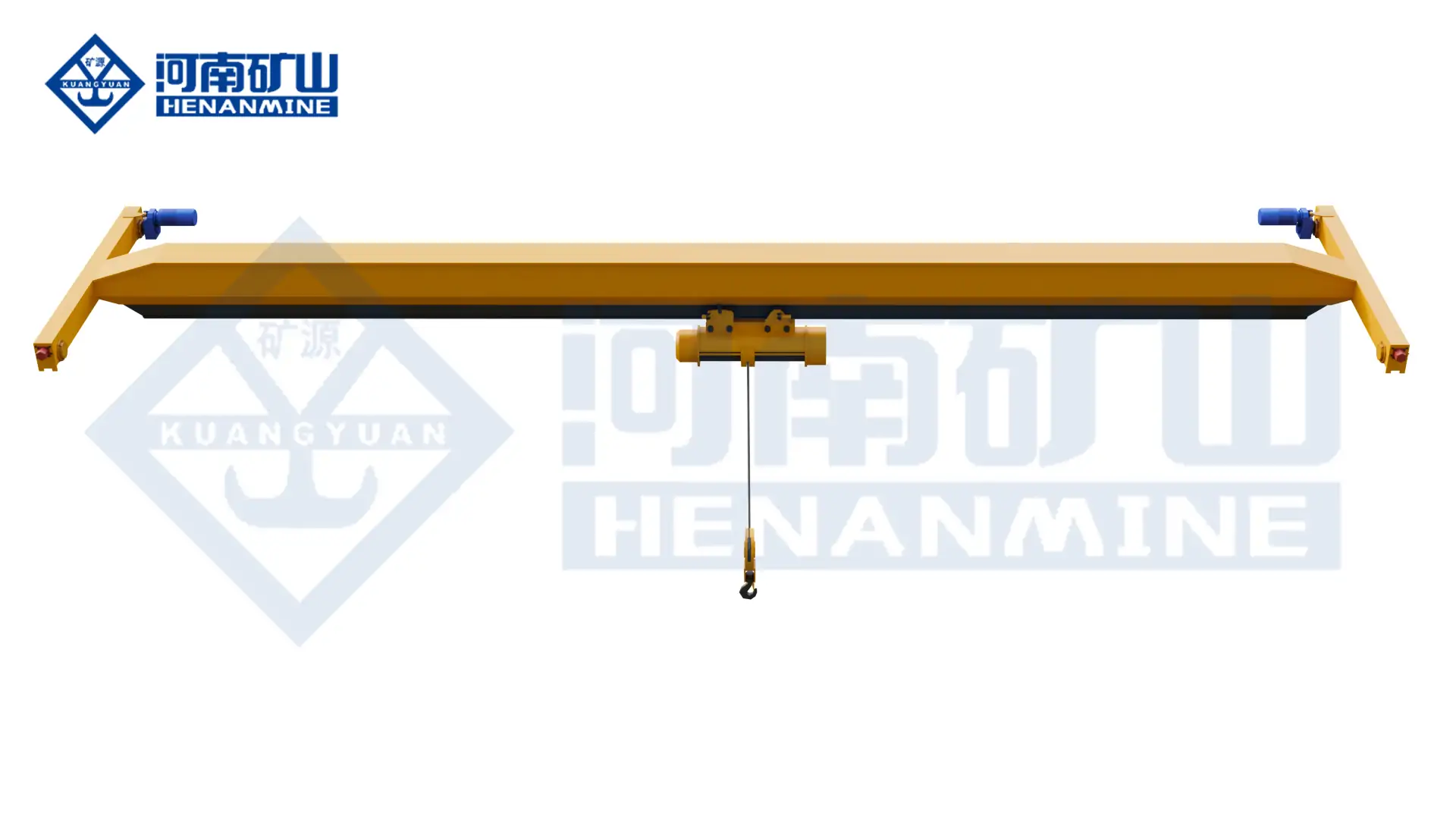
Single girder overhead crane can also be seen in power plants, but the use of the scene is very limited, and can only be used for auxiliary maintenance operations.
Its carrying capacity is limited, usually below 50 tons, and it can't undertake the task of lifting heavy parts such as generator stator and turbine rotor, and it can only be used to lift light items such as valves, pumps, tools, and so on.
If the power plant just needs an auxiliary crane to deal with some light lifting tasks, single girder overhead crane is a good choice with lower cost and simple operation; but if it is the core maintenance task, it absolutely can not be used with a single girder crane, otherwise it will bring great safety hazards.
3. Dual/linked lifting system
When the lifting load exceeds the carrying capacity of a single crane, it is necessary to use the dual-machine linkage lifting system, which is very common in large power plants.
For example, lifting more than 400 tons of generator stator, a single crane simply can not withstand, then you need two cranes to work together, through the synchronization control system, to ensure that the two sets of equipment lifting, running action is completely consistent with the load will be evenly distributed to avoid tilting, shaking.
The core of this system is synchronization control technology, our Henan Mine Crane's double machine linkage system, using full digital frequency control, with high-precision rotary encoder, can real-time adjustment of the speed and torque of the two cranes, to ensure that the synchronization deviation is controlled within 0.5%, to ensure the safety of lifting.
Step 4 - Working Levels and Usage Modes
Unique working characteristics of power plant cranes
The working mode of power plant cranes is very special and completely different from that of ordinary workshop cranes: low frequency of use, but high load intensity, and extremely high reliability requirements.
From the point of view of working class, power plant cranes usually belong to ISO A3-A5 class, because the frequency of use is not high, unlike workshop cranes that operate continuously every day. However, this does not mean that you can choose low-specification equipment, on the contrary, because of the extreme loads to be subjected to, the specifications and quality of the equipment must be up to standard.
Many customers will fall into a misunderstanding: “Since it is used less, just choose cheaper and lower specifications.” This idea is very dangerous, power plant lifting operations, a failure may lead to power plant shutdown, the loss is much higher than the difference in the price of the crane.
For example, Liu Jiaxia Hydropower Plant crane, although the number of annual use is not much, but each time to lift hundreds of tons of heavy components, low-specification equipment simply can not withstand this load, long-term use is also prone to failure, affecting the normal operation and maintenance of the power plant.
Frequency of use and model matching
Although the frequency of use of power plant cranes is low, but there are differences in the frequency of use of different power plants, the selection of models should also be combined with the actual situation.
For large power plants, the number of units, the number of annual maintenance is relatively high, it is recommended to choose A5 class double girder overhead crane, stability and durability is better, and can adapt to the relatively frequent high-load operations; for small power plants, the number of maintenance is small, you can choose A3-A4 class double girder cranes, which meets the demand, but also can reasonably control the cost.
Regardless of the frequency of use, the core principle is: do not look at the frequency of use, but only look at the load strength and reliability, would rather have a slightly higher specification, can not be forced to use low-specification equipment.
Step 5 - Precision and Control Requirements
1. Anti-sway technology
Anti-sway technology is not optional but mandatory for power plant cranes. Especially when lifting turbine rotors, generator stators and other high-value, high-precision components, once swaying, it may cause damage to the components.
Henan Mine Crane's power plant cranes are equipped with an anti-swaying system, which can automatically adjust the crane's operating speed and direction through real-time monitoring of the swaying amplitude of the load, so as to control the swaying in the smallest possible range and ensure a smooth lifting process.
In the case of dual-machine cooperative lifting, the anti-sway technology can also be used with synchronized control to avoid load tilting caused by inconsistent movements of the two cranes, which further improves the safety and precision of lifting.
2. Variable frequency speed control (VFD)
Variable frequency speed control (VFD) is the core technology to realize precise positioning, and is also the recommended configuration for power plant cranes. Ordinary single-speed speed control is not smooth enough for starting and stopping, which easily leads to load shaking and cannot meet the precision requirements of the power plant.
Variable frequency speed control can realize smooth start and stop, accurately control the crane's lifting and running speeds, and even realize millimeter-level positioning, which is crucial for the installation of generator stators and turbine rotors.
For example, in the stator installation, the stator needs to be accurately placed into the machine base, and the frequency conversion speed control enables the crane to move slowly and smoothly, avoiding knocking caused by excessive speed and ensuring that the installation accuracy meets the requirements.
3. Synchronized control (advanced configuration)
Synchronization control is mainly used for double machine linkage lifting, which is a necessary configuration for lifting heavy parts in large power plants. Without synchronized control, the movements of the two cranes can not be consistent, it is easy to load tilt, shaking, and even cause safety accidents.
Our Henan Mine Crane's synchronization control system adopts the master-slave control mode, setting one crane as the master and the other as the slave, with the slave's rotational speed and torque completely following the master, and at the same time with real-time encoder monitoring to ensure that the two devices are synchronized in their movements.
In addition, the system also has a torque following function, when one side of the crane encounters increased resistance, it will automatically increase the torque to maintain the same speed, avoiding runout due to uneven loads, and ensuring the balance of the lifting.
Step 6 - Safety and Reliability Requirements
1. Required safety devices
The safety requirements of power plant cranes are much stricter than those of ordinary industrial cranes. The following safety devices are indispensable and directly related to the safety of operators and equipment.
Overload protection is the basis to prevent the crane from carrying more than the rated load, to avoid equipment damage and safety accidents; double braking system, can be quickly braked in case of emergencies, to ensure that the load is stable, even if a set of braking system failures, the other set can also work normally.
Emergency stop button, in any position can quickly stop the equipment, to cope with unexpected situations, such as load shaking, equipment failure; limit switches, including lifting height limit and running stroke limit, can prevent the crane from exceeding the operating range, colliding with the equipment or building.
Our Henan Mine Crane power plant cranes, all safety devices comply with international standards, and will undergo strict quality testing to ensure that every component works properly for power plant lifting operations.
2. The importance of inspection and maintenance
Power plant cranes are used infrequently, but regular overhaul and maintenance still can not be ignored. Many failures are caused by long-term non-maintenance, resulting in aging and wear and tear of components.
Daily inspection should focus on the wire rope, hook, braking system and other core components, to see if there is wear and tear, corrosion; regular maintenance should be carried out in accordance with the standards, such as the Liu Jiaxia Hydropower Plant, will take advantage of the unit overhaul window, the crane for a comprehensive overhaul, and after the completion of the overhaul, but also to carry out the load test, to ensure that the performance of the equipment is up to standard.
It is important to know that crane failure in maintenance operations means power plant downtime and huge losses. Good preventive maintenance can effectively avoid failures, extend the service life of the equipment, and ensure that the crane can work properly when needed.
Step 7 - Structural and Installation Considerations
1. Integration with turbine hall design
When building a new power plant, the installation of cranes should be synchronized with the design of the turbine hall, and should not wait until the plant is built before considering the cranes, otherwise it is easy to have adaptation problems.
Crane track arrangement, support structure, and turbine hall equipment layout, building structure to match, to ensure that the running track of the crane can cover all maintenance areas, while not affecting the normal operation of other equipment.
We, Henan Mine Crane, will arrange professional engineers to cooperate with the architectural engineers and equipment engineers of the power plant to integrate the design of the crane into the plant design, to avoid the trouble of later modification, optimize the use of space and reduce the installation cost.
2. Wheel load and structural load
The load of the power plant crane is very large, the wheel load and structural load on the plant building is also a great impact, must be verified by professional engineering to ensure that the plant can withstand the crane load.
Especially large double girder overhead cranes with large wheel loads need to be reinforced on the track beams and columns of the plant building to avoid damage to the building structure at a later stage. If this is ignored, the crane may not be able to operate normally after installation, and may even cause safety accidents.
When selecting cranes, Henan Mine Crane will first survey the structure of the power plant and calculate the load-bearing capacity, and then design a suitable crane program according to the actual situation to ensure that the wheel load and structural loads meet the load-bearing requirements of the plant.
Step 8 - Life Cycle Cost Analysis
1. Cost Composition (CAPEX + OPEX)
When many power plants purchase cranes, they only focus on the initial purchase price, which is a big misunderstanding. The total cost of the crane, including the initial investment (CAPEX) and operating costs (OPEX) two parts, need to be comprehensive accounting.
Initial investment includes the price of the crane equipment itself, transportation costs, installation and commissioning costs, as well as the cost of reinforcement of the plant structure; operating costs include routine maintenance costs, spare parts replacement costs, maintenance costs, energy consumption and so on.
Henan Mine Crane will list all the costs in detail when giving the quotation to the customer, help the customer to account for the whole life cycle cost, avoid the hidden cost in the later stage, so that the customer is clear about what each sum of money is spent on.
2. Core knowledge: reliability is more important than cost
Power plant downtime costs are extremely high, a unit grounded for a day, the loss may be as high as hundreds of thousands of dollars, or even millions of dollars. The poor quality crane, although the initial price is cheap, but the quality is unreliable, prone to failure, resulting in downtime, this part of the loss is much higher than the difference in the price of the crane.
Our Henan Mine Crane's power plant cranes, although the initial investment is a little higher than the small manufacturers, but the use of high-quality components, such as high-strength steel, high-quality steel wire ropes, reliable braking system, low maintenance frequency, the spare parts are supplied globally, and can be quickly replaced to reduce downtime.
Moreover, our equipment consumes less energy and saves a lot of energy costs in the long run. For power plants, choosing a reliable crane may seem to invest a little more upfront, but in the long run, it is more cost-effective to avoid downtime losses.
Step 9 - Common Misconceptions in Power Plant Crane Selection
Combined with these years of experience, I summarized a few customers are most likely to step on the pit, we must avoid when selecting the type, you can take a lot less detours.
The most common is that “low frequency = low specification”, many customers feel that the crane is used less, choose cheap, low specification equipment, the result is that when lifting heavy parts, either can not carry, or failure, the loss is not worth it.
Neglecting the need for dual-machine lifting is also a common misconception. Some power plants did not take into account the lifting needs of large stators in the early stage, only the procurement of a single crane, the later need to lift heavy parts, can only temporarily increase the equipment, not only increase the cost, but also affect the maintenance schedule.
Underestimation of the lifting height, resulting in the crane lifting can not be vertically dismantled components, only to rebuild the crane; do not take into account future upgrades, such as the later increase in the unit, expanding the maintenance needs, the equipment can not be adapted to the equipment can only be replaced again; the lack of synchronization control system, the double lifting can not be guaranteed to synchronize the action, there are potential safety hazards.
Step 10 - Quick Selection Checklist
When selecting a model against this list, you can quickly clarify the needs, avoid missing key parameters, save selection time, and ensure that the right equipment is selected:
✔ Maximum lifting weight (weight of generator/turbine components with spreader)
✔ Span of the turbine hall (to the nearest centimeter)
✔ Required lifting height (with safety clearance)
✔ Whether double machine linkage lifting is required
✔ Lifting accuracy requirements (e.g. accuracy of stator and rotor installation)
✔ Working level (combined with frequency of use and load intensity)
✔ Required safety standards and compliance requirements
FAQ
What type of cranes are typically used in power plants?
Mostly double girder overhead cranes, which is a standard model for power plant maintenance, with high load capacity and good stability to meet the lifting needs of heavy components, such as Liu Jiaxia Hydroelectric Power Plant and Jinchang Peaking Coal and Power Project, are using double girder overhead cranes.
Why do power plants use two cranes?
Mainly for the safe lifting of heavy components such as large generator stators. When the load exceeds the carrying capacity of a single crane, two cranes are required to work together to ensure even load distribution and smooth lifting through a synchronized control system.
How much load capacity do power plant cranes need?
Depends on the size of the generator, usually need more than 100 tons, large hydro generator set lifting, and even need more than 500 tons of carrying capacity. For example, the stator lifting of Jinchang Peaking Coal Power Project requires two cranes of 140 tons or more to work together.
Power plant cranes need high working level?
It is not necessary to require high frequency working class, usually ISO A3-A5 class is enough, but must be able to withstand extreme loads. “Low frequency” does not mean “low specification”, reliability and load carrying capacity is the core.
Conclusion
Choosing overhead cranes for power plant maintenance is completely different from choosing ordinary cranes. It does not look at the frequency of use, but only three core: maximum load, accuracy, safety and reliability.
For power plants, overhead crane for power plant maintenance is not a simple equipment purchase, but an investment related to the long-term stable operation of the power plant. Choose the right one, can ensure that the unit maintenance is carried out smoothly, avoiding downtime losses!
Henan Mine Crane has been deeply engaged in the crane field for decades, focusing on the development, production and sales of overhead cranes for power plants. Whether it is a hydro power plant, thermal power plant, or a large EPC project, we can provide customized solutions.