
Automated Crane Systems: The Future of Smart Industrial Material Handling
With the full implementation of industry 4.0 and intelligent manufacturing, traditional manual control cranes have been unable to adapt to the efficient, safe and accurate operation needs of modern factories, intelligent warehousing, ports, heavy industries and other scenarios.
The automated crane system integrates a number of intelligent technologies to optimize the traditional handling mode and solve pain points such as inefficient and high-risk operations. It has become the core just-needed equipment for industrial intelligent upgrading and safe cost reduction.
What Is an Automated Crane System?
The automated crane system is an intelligent lifting equipment that integrates cutting-edge technologies such as artificial intelligence, machine vision, industrial sensing, automatic control, and the Internet of Things. It can independently complete the whole process of material handling operations such as grabbing, lifting, translation, positioning, and stacking of heavy objects with very little manual intervention or even unattended.
Compared with traditional lifting equipment, the system has realized a leap from “manual control” to “program automatic control, intelligent decision-making, and data operation and maintenance”, and is adapted to various complex, high-risk, and high-frequency industrial handling scenarios with standardized, high-precision, and high-stability operating capabilities.
After years of technological iteration, automated cranes have been upgraded from simple electronic control equipment in the early days to an integrated intelligent system that integrates frequency conversion drive, intelligent anti-swing, digital twin, and cloud monitoring. It is deeply connected to enterprise WMS warehouse management, MES production execution, ERP enterprise management and other systems, and has become the core supporting equipment of smart factories.
Core components
A complete set of automated crane system is an organic whole of multi-layer technical collaboration. Each component performs its own duties and cooperates in linkage to ensure the stable operation of the equipment. The core composition includes seven modules.:
- l The main structure and lifting mechanism of the crane: The core mechanical carrier of the equipment, including the bridge, trolley, lifting hoist, operating track and other structures, is responsible for heavy object carrying, lifting and translation operations, and is the hardware basis for automated material transfer.
- l PLC industrial control system: The “brain” of the intelligent crane, which is responsible for co-ordinating all operating logic, accurately controlling all actions such as lifting, trolley movement, and bridge operation, and executing instructions such as safety interlocking, action timing, and motion trajectory to ensure that the operation process is unified and the error can be controlled.
- l Sensor and positioning system: The “perceptual nerve” of the equipment, including encoders, laser rangefinder, RFID tags, load cells, proximity sensors, etc., collects data such as equipment location, load weight, operating distance, and surrounding environment in real time to provide accurate data support for intelligent control.
- l Frequency conversion drive system (VFD): realize flexible speed regulation, intelligent start-stop, automatic acceleration and deceleration of equipment, completely eliminate traditional equipment start-stop caton, mechanical impact, heavy object shaking and other problems, greatly reduce equipment wear and tear, while achieving energy-saving operation, adapt to the needs of continuous high-frequency operations.
- l Remote control and HMI human-computer interaction system: abandon the traditional wired handle control mode, equipped with wireless remote control, HMI touch screen, SCADA data kanban board, operators can remotely monitor the status of the equipment, issue operating instructions, and view operating data in real time, making the operation more flexible and intuitive.
- l Machine vision and AI intelligent technology: relying on high-definition cameras and AI algorithms to achieve load recognition, scene perception, autonomous obstacle avoidance, and balance calibration, it can independently judge the operating environment and optimize the operating trajectory without manual intervention, minimizing manual intervention.
- l Integrated warehousing/production management system: it can seamlessly interface with industrial systems such as WMS warehousing management, MES production execution, ERP enterprise management, AGV robots, etc. To achieve data exchange and equipment collaboration, so that lifting operations can be integrated into the closed loop of enterprise intelligent production.
How Automated Crane Systems Work
Automated load handling
The automated crane can independently complete the whole process of heavy object grabbing, lifting, translation, positioning, stacking, and palletizing according to preset procedures and production tasks, completely replacing manual repetitive operations.
Through load cell, RFID scanning, and visual recognition technology, the system automatically detects and identifies the load specifications, weights, and models, and starts the operation process after confirming that the material information is correct, effectively eliminating the problem of manual wrong moving and missing moving.
In scenarios such as intelligent warehouses and production workshops, the equipment can realize unmanned loading and unloading, transshipment, and stacking operations around the clock, greatly shortening the material handling cycle, and solving the problems of low efficiency and fatigue of traditional manual operations.
Intelligent positioning and navigation
In order to solve the pain points of large positioning deviations of traditional cranes and the need for manual and repeated calibration, automated bridge cranes are equipped with multi-dimensional positioning technology, integrating laser ranging, absolute encoder, RFID ground sensing tag, visual camera, inertial measurement unit and other equipment to accurately lock the real-time position of hooks, trolleys, and bridges in real time.
Relying on LiDAR LIDAR space surveying and mapping, ultrasonic ranging, inertial navigation and other technologies, the equipment can realize autonomous navigation and target position recognition under complex working conditions, and the positioning accuracy under high-end working conditions can reach ±5mm, which fully meets the requirements of high-precision operations such as steel processing, precision manufacturing, and high-end warehousing, without manual secondary correction.
Intelligent anti-swing and precise control
When operating traditional wire rope cranes, heavy objects are prone to sway drastically. Not only will it take up nearly one-third of the operating time for stabilizing the hook, reducing operating efficiency, it may also collide with peripheral equipment, damage materials, and even cause safety accidents. It is a key bottleneck restricting the automation upgrade of lifting operations.
The automated crane is equipped with intelligent anti-swing algorithm and motion control system, which can suppress the swing of heavy objects in real time, reduce the swing amplitude by 85%-95%, and run smoothly and controllably. The positioning accuracy is effectively improved, the operating cycle is shortened, and the safety and efficiency of the operation are guaranteed simultaneously.
Real-time monitoring and data collection
Through industrial Internet of Things sensors, automated cranes can collect core data of equipment operation around the clock, rely on the cloud platform to realize real-time visualization of equipment status, and support managers to remotely monitor equipment working conditions and query operation data.
The system combines big data analysis technology to accurately predict equipment failures and evaluate component life, upgrading traditional passive operation and maintenance to intelligent predictive maintenance.The system can reduce the unplanned downtime of the crane by 28% and increase the service life of the parts by 15%, effectively solving the problems of blind operation and maintenance and sudden failures.
Key Technologies Behind Smart Crane Automation
The efficient and safe operation of automated cranes relies on the integration and empowerment of a number of cutting-edge industrial technologies, and the core technology system covers all dimensions of control, interconnection, intelligence, and operation and maintenance.:
- l PLC automation control technology: As the core control unit of the equipment, it integrates modules such as frequency conversion drive, sensor acquisition, and safety interlocking to accurately execute the operation timing, motion trajectory, and safety protection logic to ensure standardized and zero-error operation of the operation.
- l Industrial Internet of Things (IIoT) interconnection technology: break the silos of equipment data, realize the data exchange of PLC, drive, sensor, and cloud system through standardized industrial protocols, and support multi-device collaborative operation, remote data transmission, and working condition monitoring.
- l AI and machine vision technology: realize material recognition, environmental perception, autonomous obstacle avoidance, and load balancing calibration, so that the crane has “vision” and “thinking ability”, adapts to complex and changeable operation scenarios, and improves automation adaptability.
- l Digital twin and simulation technology: build a virtual image of the equipment, which can simulate the operating status of the equipment, reproduce the historical operating process, test the control program, predict the operating risks, and provide accurate data support for equipment debugging, optimization, and troubleshooting.
- l Edge computing and cloud platform technology: edge computing realizes real-time processing and instant response of on-site data to avoid security risks caused by network delays; cloud platforms realize data storage, big data analysis, remote operation and maintenance, and equipment cluster management.
- l Wireless communication technology: relying on the advantages of 5G high-speed, low-latency, and multi-device parallel, it realizes real-time communication between cranes, terminal equipment, sensors, and cloud systems to ensure the stability of remote control, data transmission, and intelligent linkage.
- l Intelligent safety sensing and obstacle avoidance technology: equipped with radar and laser anti-collision sensors, it can accurately identify surrounding obstacles, personnel, and equipment, and automatically delineate virtual safety operating areas to achieve automatic deceleration and emergency shutdown to prevent collision accidents.
Key Technologies Behind Smart Crane Automation
Improve the safety level of operations
Automated cranes have completely changed the mode of manual near-height hazardous operations, stripping operators from dangerous operating environments such as high temperature, dust, heavy load, high altitude, flammable and explosive, and reducing personal safety risks from the source.At the same time, the equipment comes with multiple safety mechanisms such as collision protection, overload protection, emergency shutdown, and limit protection. It relies on sensors and software systems to realize the whole process of safety control, which can avoid more than 90% of safety accidents caused by human operation errors, and build an intelligent safety operation system.
Improve production efficiency
Compared with the randomness and hysteresis of manual operation, automated cranes rely on optimized motion trajectories and standardized operating procedures to operate faster and with shorter cycles. There are no problems such as manual fatigue, shift changes, and errors, and they support 24-hour uninterrupted continuous operation.The measured data show that after the enterprise replaces the intelligent lifting system, the material handling efficiency can be increased by 25%-35%, and the equipment downtime can be greatly reduced, effectively cracking the bottleneck of material transfer in the production line and helping to upgrade production capacity.
Millimeter-level high-precision operation
Traditional manual hoisting and positioning errors are large, which can easily cause material bumps and misplaced placement, causing material loss and production delays.Through intelligent algorithms and high-precision sensing and positioning, the automated crane realizes the whole process of automation and precise positioning. The positioning accuracy of high-end working conditions can reach ±5mm, and the operation is consistent and highly repeatable, greatly reducing material damage and operating errors, and ensuring the standardization of production processes. Advance.
Reduce long-term operating costs
Automated cranes greatly reduce the dependence on skilled lifting operators, and reduce labor wages, training, and management costs.At the same time, the frequency conversion drive system optimizes energy consumption and reduces power loss; the predictive maintenance mode avoids sudden equipment failures and large maintenance costs, and extends the service life of the equipment.Short-term investment and long-term throttling effectively reduce the overall production operation and equipment operation and maintenance costs of the enterprise.
Visual control of operational data
Relying on the Internet of Things and cloud monitoring systems, enterprises can grasp the operating status of equipment, job data, load parameters, and fault information in real time, and realize the visualization, traceability, and analysis of the whole process of the job.Through historical data re-disk and performance data analysis, the operation process can be accurately optimized, equipment resources can be allocated, data support can be provided for production decisions and equipment upgrades, and refined operation and management can be realized.
Automated Crane Systems vs. Traditional Crane Operation
In order to more intuitively show the differences between the two, a comprehensive comparison of traditional cranes and automated cranes is carried out from the core operation dimension.:
| Contrast dimension | Traditional crane | Automated crane |
| Operating mode | Purely manual control, strong randomness of operation | Fully automatic/semi-automatic procedural operation, high degree of standardization |
| Security | Relying on operator experience, high safety risk | Sensor + software dual protection, intelligent anti-collision, overload protection, controllable safety |
| Positioning accuracy | Manual positioning, large error, need to be corrected repeatedly | Millimeter-level high-precision automatic positioning without manual intervention |
| Data collection | Data is limited, relying on manual records, and data is seriously missing | IoT collects full-dimensional operation data in real time, and can be traced throughout the process |
| Working time | Limited by manual shifts, unable to work continuously for a long time | Support 7×24 hours of uninterrupted operation, suitable for high-intensity production |
| Operation and maintenance mode | Regular manual inspection, passive emergency repair of faults | Data-driven predictive maintenance, predict failures in advance, and reduce downtime |
| System integration | The equipment runs independently and cannot be connected to the intelligent production system | Seamless integration with WMS, MES, ERP, AGV and other industrial systems, integrated into the closed loop of intelligent production |
Industrial Applications of Automated Crane Systems
With the core advantages of safety, high efficiency, precision and unmanned, automated cranes have been widely adapted to complex industrial scenarios in multiple industries, covering warehousing, heavy industry, manufacturing, ports, energy and other fields:
Intelligent storage warehouse
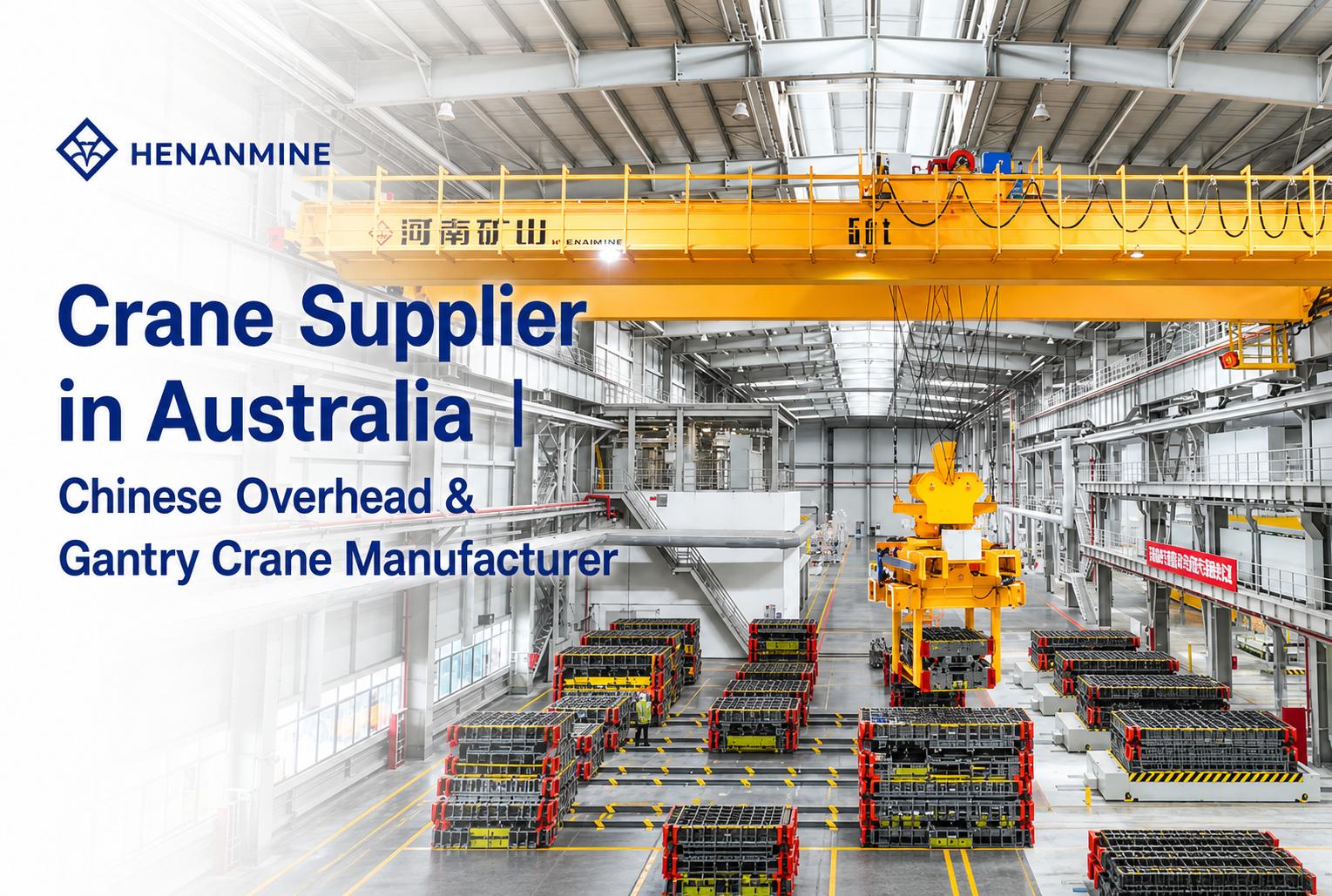
The automated crane is deeply integrated with the intelligent warehousing system to realize the unmanned operation of the whole process of automatic warehousing, stacking, retrieval, and outbound of goods. It is perfectly adapted to the intelligent warehouse scenarios of high-level shelves, intensive warehousing, and high-frequency turnover, so as to improve the efficiency of warehousing and circulation and space utilization, and help the intelligent upgrading of warehousing.
Steel and metal processing industry
For large-weight materials such as steel coils, billets, sheets, and heavy-duty profiles in steel and aluminum processing scenarios, automated cranes can operate stably under harsh working conditions of high temperature and high dust, and are suitable for continuous casting, rolling, finished product transportation, storage and stacking. It is the core supporting equipment of metal heavy industry production lines.
Modern manufacturing plant
In the fields of automobile manufacturing, machining, equipment manufacturing, etc., automated cranes can realize the automatic transfer of materials, parts, and large-scale equipment between the various stations of the production line, accurately connect the production beat, adapt to the punctual production mode, and can work with assembly lines and intelligent robots to open up the closed loop of production material flow.
Ports and container terminals
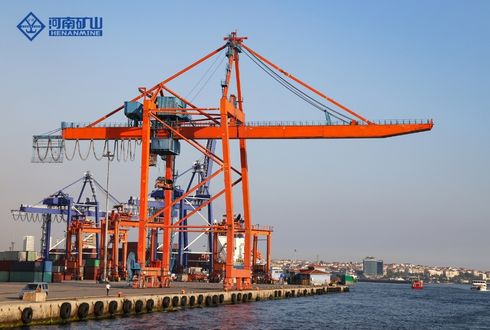
In the scenarios of ports, terminals, and logistics hubs, automated lifting equipment can realize the automatic loading, unloading, transshipment, and storage of containers and bulk cargo, support remote centralized control, greatly improve the throughput efficiency of port cargo, reduce labor investment, and adapt to the high-intensity operation needs of large logistics hubs.
Foundry and heavy industry
There are high-temperature, high-dust, high-load, and high-risk operating environments in foundry, mining, heavy industry and other industries. Automated cranes can replace manual completion of high-risk operations such as heavy-duty material transfer and equipment hoisting, reducing personnel safety risks from the source and ensuring the stability and continuity of operations under harsh working conditions.
Energy and high-risk special environment
In flammable, explosive, high-radiation, and high-hazard energy scenarios such as power plants, wind power, nuclear power, and chemical industry, special explosion-proof automated cranes can realize unmanned remote operation, meet the safety specifications and operating requirements of special working conditions, and solve the problems of manual operation in high-risk environments.
What to Consider When Selecting an Automated Crane System
Automated cranes are customized industrial equipment. The selection needs to be combined with the actual working conditions, production needs, and long-term planning of the enterprise. The core selection points are as follows:
- l Rated lifting weight and lifting height: select the type according to the maximum load of the material and the operating height to prevent insufficient load from restricting production, while avoiding unnecessary cost waste caused by redundant parameters.
- l Equipment span and operating distance: combined with the actual size of the workshop, warehouse and other work sites, match the crane span and operating stroke, and adapt to the site layout specifications.
- l Working level and operating frequency: According to the daily operating time, operating frequency and load rate of the equipment, the corresponding operating condition level is selected. High-frequency and heavy-duty scenarios need to be matched with enhanced mechanical structure and electronic control system.
- l Positioning accuracy requirements: match accuracy parameters on demand, adapt to ±50mm conventional accuracy for ordinary warehousing, and choose ±5mm high-precision systems for high-end scenarios such as steel processing and precision manufacturing.
- l Operating environment conditions: distinguish between indoor and outdoor operating scenarios, and select appropriate protection and explosion-proof equipment for special operating conditions such as high and low temperature, dust, humidity, flammable and explosive.
- l Existing system compatibility: Ensure that the equipment can be seamlessly connected to the enterprise's existing PLC, WMS, MES, ERP and other management systems to break through data silos and achieve global collaboration.
- l Safety and emergency configuration: Equipment needs to be equipped with emergency stop, limit, overload protection, intelligent anti-collision and other functions as standard, in line with ISO, FEM, OSHA and other international safety standards.
- l Remote operation and maintenance capabilities: Priority is given to equipment that supports remote monitoring, fault diagnosis, and online debugging to effectively reduce the difficulty and labor costs of late operation and maintenance.
- l Extensibility: Equipment reserves space for functional upgrades, capacity expansion, and module expansion, which can be adapted to the subsequent capacity upgrades and process iteration needs of enterprises.
Challenges of Implementing Crane Automation
Despite the significant advantages of automated cranes, enterprises still face a number of core challenges in the process of upgrading, which need to be avoided in advance and dealt with scientifically:
- l The initial investment cost is higher: the automation system includes high-end configurations such as electronic control, sensing, AI, and the Internet of Things. The initial investment in equipment procurement, system commissioning, and site transformation is much higher than that of traditional cranes, and there are certain requirements for the initial capital investment of the enterprise.
- l It is difficult to be compatible with old equipment: The existing traditional cranes of some enterprises are old equipment, the mechanical structure and electronic control system are old, and the adaptability to the new automation module is poor. There are problems of high difficulty and high cost of transformation.
- l Insufficient sensor stability under harsh working conditions: high temperature, high dust, strong vibration, and humid industrial environments can easily affect the accuracy and stability of sensors, cameras, and communication equipment. Industrial-grade reinforcement accessories are required.
- l Network and data security risks: After smart devices are connected to the Internet, there is a risk of network fluctuations, data leakage, and system intrusion. It is necessary to build a dedicated industrial network and improve the network security protection system.
- l The problem of personnel skill transformation: Automation equipment does not require manual operation, but professionals are required to be responsible for programming, debugging, operation and maintenance, and data analysis. Traditional operator skills cannot be adapted to new equipment, and special skills training is required.
- l Complex system debugging and operation and maintenance: the automation system integrates mechanical, electrical, software, and algorithm technologies in multiple fields, and the equipment debugging, troubleshooting, and daily operation and maintenance are extremely professional, relying on professional technical teams.
- l The scarcity of high-quality cooperative manufacturers: crane automation upgrading is not a simple addition of assembly parts, it requires the integration of multiple disciplines and technologies, and the selection of inexperienced manufacturers is prone to problems such as poor system adaptation, unstable operation, and unsecured after-sales service.
How to Maximize ROI From Crane Automation
In order to enable enterprises to achieve long-term and efficient returns on their investment in automation equipment, seven strategies can be used to optimize the landing effect and improve the ROI:
- l Give priority to upgrading high-value and high-risk processes: give priority to the automation and transformation of high-risk operations, high-frequency duplication, and efficiency bottlenecks in the handling process, so as to quickly realize safety upgrades and efficiency improvements, and quickly recover costs.
- l Formulate quantifiable automation assessment indicators: clarify core KPIs such as operation cycle, positioning accuracy, equipment utilization rate, production capacity improvement rate, and failure rate, accurately measure the effect of automation transformation, and continuously optimize the operating model.
- l Focus on the core improvement goals of safety and efficiency: relying on the safety protection and efficient operation advantages of automation equipment, give priority to solving safety hazards and production capacity bottlenecks, and consolidate core benefits.
- l Open up the factory-wide data linkage system: connect crane operation data to the factory-level intelligent management system to realize data sharing and collaborative work, and optimize the overall production scheduling efficiency.
- l Pre-planning scalable architecture: reserve space for expansion and upgrade during the equipment selection and system construction stages to adapt to the future production capacity expansion and process upgrade needs of the enterprise, and avoid waste of secondary transformation.
- l Choose modular automation technology: choose modular PLC, sensor, and communication modules to support step-by-step upgrades and partial replacements to reduce the cost of late iterative transformation.
- l Establish a long-term operation and maintenance guarantee system: formulate a standardized regular operation and maintenance plan, rely on predictive maintenance functions to check for faults in advance, reduce unplanned downtime, and ensure the long-term stable operation of equipment.
Conclusion
Automated cranes have become the core infrastructure of intelligent manufacturing material handling, which can effectively avoid operational risks, improve handling accuracy and efficiency, rely on intelligent control, data operation and maintenance capabilities to reduce long-term operating costs of enterprises, and help industrial handling digitize and upgrade safely.
The upgrade of an enterprise needs to combine working conditions, needs and long-term planning to select the type reasonably to avoid waste of high configuration.Henan Mine Crane, a professional manufacturer, can provide customized solutions for bridge, gantry and automated cranes to meet various production scenarios and intelligent transformation needs.If you have any project plans, you can consult at any time to obtain exclusive plans and quotations.