
Overhead Crane Price Guide Single Girder vs. Double Girder Cost Comparison
Bridge cranes are the core equipment in heavy industrial scenarios such as manufacturing, warehouses, and steel mills. They are responsible for key tasks such as heavy object handling and equipment installation, which directly affect production efficiency and operational safety.When purchasing, enterprises will find that the price difference between single girder and double girder overhead crane is very different. This is not a simple configuration issue, but a comprehensive reflection of structure, performance and applicable scenarios. It cannot only look at the initial purchase price.
The purchase of cranes needs to take into account the whole life cycle cost, and the equipment adapted to the working conditions can save operation and maintenance expenses in the long term.The core factors that affect its price include lifting weight, span, lifting height, working level, component customization and installation and maintenance requirements. These factors together determine the final quotation and cost of use of the equipment. The cost difference of the single double girder overhead crane will be compared in the future.
Single Girder vs. Double Girder Overhead Crane: Key Differences
Single girder overhead crane overview
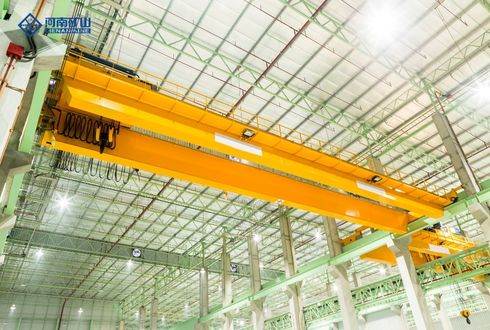
Henan Mine Crane Factory supply single girder overhead crane is a lifting equipment with a relatively simple structure. The core structure consists of a main beam, an end beam, an electric hoist and an operating track system. The electric hoist moves along the main beam to achieve vertical lifting and horizontal handling of heavy objects. The overall design is lightweight and the layout is compact.Its main components have a clear division of labor, a single main beam bears the main force, the end beam is connected to the main beam and drives the equipment to run along the track, the electric hoist is the core lifting component, and the operating track provides a stable operating path for the equipment.
The application scenarios of this type of crane are very wide. It is mainly suitable for small workshops, warehouses, maintenance workshops and light manufacturing environments. It is suitable for light-load and low-frequency material handling operations, such as hoisting small parts in the workshop and regular handling of warehouse goods.The core advantages of single girder overhead crane are very prominent. Not only is the initial investment cost low and the cost performance is extremely high, but the structure is lightweight. The bearing capacity of the supporting steel structure of the plant is low, and there is no need to strengthen the plant. At the same time, the installation process is simple, the construction cycle is short, and it can be put into use quickly. Transportation costs are also reduced because the lightweight structure is easy to transport and load and unload, and the overall adaptation is limited. Lifting requirements can meet the needs of most light-duty operation scenarios.
Double girder overhead crane overview
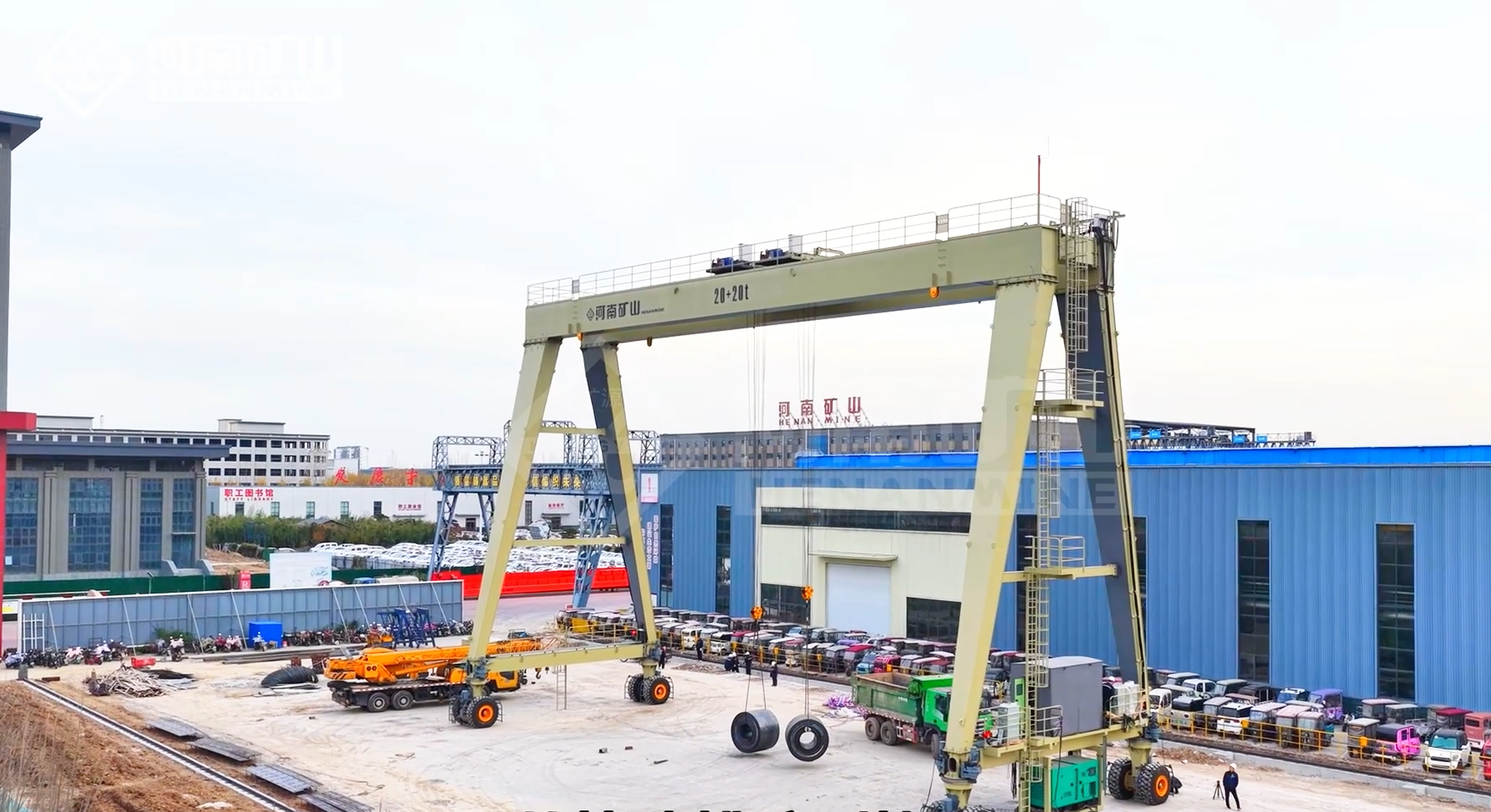
Double girder overhead crane adopts two parallel main beam structures. Compared with the single beam design, the force is more uniform and the carrying capacity is stronger. It can effectively improve the stability and service life of the equipment and adapt to more demanding operating scenarios.Its typical components include double main beams, trolley hoist system, heavy-duty end beams and advanced control systems. The double main beams work together to carry heavier objects. The heavy-duty end beams ensure the stability of equipment operation, and the advanced control system improves operating accuracy and safety.
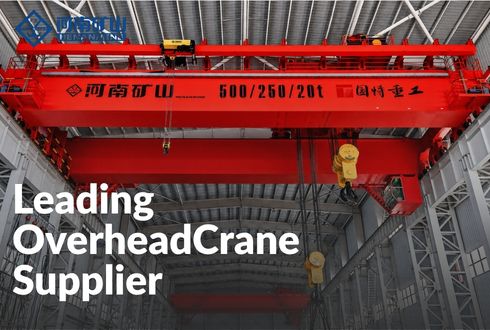
Henan Mine Crane Factory supply double girder overhead crane is mainly used in heavy industrial scenarios such as steel mills, foundries, power stations, and heavy machinery manufacturing. It undertakes core tasks such as heavy equipment installation, large-scale material handling, and high-frequency heavy-duty operations. It is the core support equipment for heavy industrial production.The advantages of double girder overhead crane are very outstanding. It not only has a large lifting weight, which can meet the needs of medium and heavy-duty and even super-heavy lifting, but also adapts to long-span scenarios, which can cover the operating range of large factories. At the same time, the lifting height is higher, which can be adapted to the needs of high-altitude heavy object handling, excellent stability under heavy loads, low shaking during operation, high safety, and long service life. It can adapt to high-frequency and high-intensity continuous operations, and long-term use is more cost-effective.
Single Girder vs. Double Girder Crane Price Comparison
Average price range comparison
In order to allow enterprises to more intuitively understand the cost differences between the two, we have compiled a comparison table of core indicators. It should be noted that the actual price will fluctuate according to specific technical parameters, customized needs and market conditions. The following is the reference range under conventional working conditions:
| Item
|
Single Girder Overhead Crane | Double Girder Overhead Crane |
| Initial Cost | Lower | Higher |
| Structure | Single main beam | Double main beams |
| Capacity Range | Light to medium loads (1-10 tons) | Medium to heavy loads (10-100+ tons) |
| Installation Cost | Lower | Higher |
| Maintenance Cost | Lower | Moderate |
| Working Environment | General industrial, light-duty & low-frequency operations | Heavy-duty, high-frequency & high-intensity operations |
Why single girder cranes cost less
The initial cost of single girder overhead crane is lower. The core stems from the multiple cost savings in the structure and manufacturing links. The design of a single main beam significantly reduces the amount of steel used and effectively reduces the cost of raw materials. At the same time, the end beam and other components are smaller in size, simpler in structure, and less difficult to process, which reduces manufacturing costs. The hoist system is also more concise, eliminating the need for complex transmission and control components, further reducing component procurement costs, coupled with simple manufacturing processes, short production cycles, and less labor and equipment investment, and the lightweight structure is easy to transport, the installation process is simple, and there is no need for large hoisting equipment and complex construction teams. Transportation And installation costs have also been effectively controlled, compressing the overall cost of equipment as a whole.
Why double girder cranes have higher prices
The price of double girder overhead crane is higher, mainly because it invests more in the structure, components and manufacturing links. The design of double girder requires more steel to ensure the carrying capacity, which makes the cost of raw materials significantly higher. At the same time, the structural components are larger in size and higher in strength. The processing difficulty and raw material cost of heavy-duty end beams, thickened main beams and other components are higher than that of single girder overhead crane, coupled with the larger capacity of the lifting mechanism, the procurement cost of hoist systems, motors and other components adapted to heavy-duty requirements is higher, and the manufacturing process is more complex, requiring higher machining accuracy and welding technology, labor More investment in equipment, in addition to higher engineering design requirements, special force analysis and structural optimization need to be carried out for heavy-duty and long-span scenarios, which further increases the design cost, and multiple factors together push up the overall quotation of Double girder overhead crane.
Factors That Influence Overhead Crane Prices
Lifting capacity and load requirements
Lifting weight is the core factor affecting the price of cranes. The larger the load, the higher the requirements for the structural strength of the equipment, motor power, and component bearing capacity, and the price will naturally rise.Generally speaking, the mainstream lifting weight of single girder overhead crane is 1-10 tons, which is suitable for light loads.The lifting weight of Double girder overhead crane covers more than 10-100 tons, which can meet the needs of heavy and even super heavy loads.In heavy-duty lifting scenarios, equipment requires stronger main beams, higher-power motors, and more durable transmission components, which will directly drive up equipment costs.Enterprises need to accurately calculate the actual load requirements when selecting models to avoid unnecessary cost waste caused by excessive pursuit of large lifting weights.
Span length and runway design
Span refers to the center distance of the crane's operating track. The longer the span, the higher the strength and stiffness requirements of the main beam. It is necessary to increase the size of the main beam and increase the amount of steel. At the same time, the design and construction costs of the track system will also rise.In addition, the layout of the plant will also affect the track design. If the plant structure is special, customized track transformation is required to further increase the overall cost.When purchasing, enterprises need to choose the appropriate Henan Mine Crane Factory supply crane based on the actual span of the plant to avoid additional cost investment due to mismatched spans.Accurately measure the span of the plant in advance and connect with the manufacturer to optimize the track design, which can effectively control this part of the additional expenses.

Lifting height and hoisting speed
The higher the lifting height, the higher the requirements for the length of the wire rope, the size of the reel, and the power of the lifting mechanism. Longer wire ropes, larger reels, and more powerful lifting systems will increase equipment costs.At the same time, the demand for lifting speed will also affect the selection of motors. If you need to lift quickly and locate accurately, you need to choose a higher-performance motor and transmission system to further improve the equipment quotation.Enterprises need to rationally choose the lifting height and speed according to the actual operating needs to avoid cost waste caused by over-allocation.Reasonable planning of lifting height and speed parameters can not only meet the needs of the operation, but also maximize the control of equipment procurement costs.
Duty class and working frequency
The working level of the crane (such as FEM rating and CMAA classification) directly reflects its working frequency and carrying strength. High-frequency and high-intensity operating scenarios require equipment to have more durable components and more stable performance to reduce wear and failure probability.For example, in the heavy industry scenario of continuous production, high-level cranes need to be selected. The material and processing technology of their components are better than ordinary-level equipment, and the price will be increased accordingly.For light-duty scenarios with low-frequency operations, the use of ordinary work-level single girder overhead crane can meet the needs and the cost is lower.Matching cranes of the corresponding working level according to the operating frequency is the key to balancing cost and equipment service life.
Crane components and customization options
Component selection and customization requirements are important variables that affect prices. The prices of components of different brands and properties vary significantly.For example, well-known brands of gourds, motors, and VFDs have higher prices than ordinary parts, but their performance is more stable and their service life is longer.Customized configurations such as remote control systems and safety protection devices, such as overload protection, limit protection, explosion-proof design, and outdoor protection systems, will also increase equipment costs.Enterprises need to combine the operating environment and safety needs, reasonably choose customized configurations, and balance cost and performance.Priority is given to the selection of core components with a high price ratio, and customized configurations are matched as needed, which can effectively control the overall quotation of the equipment.
How to Choose Between Single Girder And Double Girder Overhead Cranes
Choose a single girder crane when
- The load requirement is less than 10 tons, and there is no need for heavy-duty operations.The carrying capacity of single girder overhead crane is fully adapted to the needs of such light loads, which can not only meet the basic operations such as daily material handling and light equipment loading, but also will not cause waste of costs due to over-configuration, and has a significant cost-effective advantage.
- The working time is short, which is a low-frequency and intermittent operation.In such scenarios, the performance of Henan Mine Crane Factory supplysingle girder overhead crane is sufficient to meet the needs of operations without the need for high-frequency and high-intensity operation. Its lightweight structure and simple design can also reduce maintenance costs during inactivity and adapt to the rhythm of intermittent operations.
- The installation space is limited, and the lightweight structure is more suitable for small factories.The overall structure of Single girder overhead crane is compact and takes up little space. There is no need for additional reinforcement and transformation of the plant. The installation process is simple, and it can quickly adapt to the operating needs of small spaces without affecting the layout of other equipment in the plant.
- The project is cost-sensitive and pursues low initial investment.The initial procurement cost of single girder overhead crane is low, and the transportation and installation costs are relatively low, which can effectively control the early investment of the project, while the subsequent operation and maintenance costs are also at a low level, which is in line with the budget planning of cost-sensitive projects.
- In general material handling scenarios, there are no special accuracy and stability requirements.In the conventional material handling of ordinary workshops and warehouses, the ease of operation and basic performance of single girder overhead crane are sufficient to meet the needs, without additional investment in high-precision configuration, and can take into account practicality and cost control.
Choose a double girder crane when
- Heavy-duty lifting operations, with a load of more than 10 tons.The double girder overhead crane's double girder structure has a stronger carrying capacity and can stably carry heavy objects of more than 10 tons. It is suitable for heavy-duty scenarios such as heavy equipment installation and large-scale material handling to avoid equipment failure due to insufficient load and ensure operation safety.
- The scene of a large-scale factory building has a large span and high lifting height requirements.Double girder overhead crane can be adapted to long-span track design, and can meet the needs of high-altitude heavy object handling, without additional modification of the plant structure, it can not only cover the operating range of large-scale plants, but also improve the stability and safety of high-altitude operations.
- Continuous production environment, high-frequency and high-intensity operations.Double girder overhead crane has a strong structure and durable components, which can adapt to long-term continuous operation, reduce the probability of component wear and failure under high-frequency operations, ensure uninterrupted production processes, and improve overall production efficiency.
- The stability and safety requirements of the equipment are high, and heavy objects need to be accurately positioned.The double girder overhead crane has uniform force and stable operation. With an advanced control system, it can achieve precise positioning of heavy objects, reduce shaking and offset during operation, reduce safety risks, and adapt to the needs of high-precision operations.
- Heavy industry scenarios, such as steel mills, power stations, heavy machinery manufacturing, etc.The operating environment of such scenarios is harsh, the load is large, and the frequency is high. The high performance and high reliability of Double girder overhead crane can be effectively adapted to harsh working conditions and cost-effective for long-term use. It is the core support equipment for heavy industrial production.
Henan Mine Crane Factory Custom
Single girder and Double girder overhead crane have their own adaptation scenarios, the core difference lies in the carrying capacity and working condition adaptability.Single girder overhead crane focuses on light-load and low-frequency scenarios, and has become the preferred choice for small and medium-sized enterprises with the advantages of low cost and easy installation.Double girder overhead crane focuses on heavy-duty and high-frequency needs to support heavy industrial production with high stability and durability. Enterprises need to choose reasonably based on their own operating needs.
Don't just look at the initial price when purchasing a crane, the whole life cycle cost is the key.As a professional crane manufacturer, Henan Mine Crane Factory can provide customized services, professional engineering support and perfect after-sales service to accurately match your working conditions, and follow up the whole process from selection to installation and maintenance to help you control costs, improve the use value of equipment, and help enterprises produce efficiently.