
What Capacity Gantry Crane Do I Need for Wind Turbine Blade Installation?
Global wind capacity additions keep climbing every year, and the turbines behind that growth keep getting bigger. Rotor diameters that were considered large a decade ago are now the entry-level standard, and blades that once weighed a few tons now weigh dozens. That growth curve has a direct, unavoidable consequence for anyone planning a lift, the Henan Mine Crane manufactured gantry crane capacity for wind turbine blade installation is no longer a one-size-fits-all number.
Modern wind turbine blades are becoming longer, heavier, more expensive to replace, and harder to transport and position safely. Choosing the wrong crane capacity is not a minor procurement error, it creates real safety risks, causes costly installation delays, damages composite blade structures that can cost hundreds of thousands of dollars to replace, and inflates total project cost through rework or crane substitution mid-project.
Getting the number right depends on more than blade weight alone. You also need to evaluate the lifting method, the specific wind turbine model, the crane's working radius, the required lifting height, and the physical conditions of the site. This guide walks through each of those variables, gives you real blade-weight data to work from, and provides a step-by-step method for calculating the wind turbine lifting equipment capacity your project actually requires.
What Capacity Gantry Crane Is Required for Wind Turbine Blade Installation?
There is no single universal capacity figure for wind turbine blade installation, because turbine class, blade length, and lifting method all shift the requirement. That said, industry practice groups gantry crane capacity into three broad bands tied to turbine scale. Use these as a starting reference point, not a final spec.
Typical Gantry Crane Capacity Range for Wind Turbine Projects
Small wind turbines — 20 to 50 tons
This range typically covers smaller onshore turbines and maintenance-focused operations rather than full new-build installation. Cranes in this band are common at:
- Small onshore wind farms with lower rated-power turbines
- Component maintenance and replacement work
- Workshop or yard handling of blades before transport
Medium wind turbines — 50 to 150 tons
This is the working range for most mainstream commercial onshore wind farms. Typical applications include:
- Commercial-scale onshore wind farm construction
- Rotor component replacement on mid-size turbines
- Staging-yard handling ahead of on-site erection
Large wind turbines — 150 to 500+ tons
As turbine size and blade length increase, so does the structural demand on the crane. This band applies to:
- Large-scale onshore wind energy projects using longer blades
- Offshore wind turbine construction and port-side staging
- Purpose-built erection gantries, some of which scale well beyond 500 tons for the heaviest offshore projects
These bands are a useful starting filter, but the number you actually buy against should come from a calculation specific to your blades, your rigging, and your site, not from a generic table. The next section walks through that calculation.
How to Calculate the Required Gantry Crane Capacity?
Sizing a crane correctly means working through four linked variables: load weight, blade length, lifting height, and site environment. Skipping any one of these can leave you with a crane that is rated heavy enough on paper but still fails the actual lift.
1. Determine the Maximum Blade Weight
Start with the heaviest single component you will lift, not an average or a nameplate estimate. Crane capacity should be built from:
- Single blade weight:the actual mass of one rotor blade
- Complete rotor assembly weight:relevant if blades are lifted as a pre-assembled rotor rather than individually
- Lifting accessories:slings, spreader beams, shackles, and any lifting yoke add real mass to the hook load
- Safety margin:a buffer above the calculated load to account for dynamic effects during the lift
The standard formula used across the industry is straightforward:
Required Crane Capacity = Maximum Load × Safety Factor
Selecting a crane rated for exactly the blade's dead weight is not recommended. Wind gusts, sudden stops, uneven load distribution, and rigging weight all add stress beyond the static blade mass, and a crane running at 100% of rated capacity has no margin for error.
Worked example: Imagine a commercial onshore project using a blade that weighs 22 metric tons. Add roughly 1.5 tons for a spreader beam and slings, bringing the raw hook load to 23.5 tons. Applying a conservative 25% safety factor (a common margin for outdoor, wind-exposed lifts) gives a required crane capacity of approximately 29.4 tons — which, in practice, would push the buyer toward a 30-ton-rated crane rather than one rated closer to the raw load. This is exactly why the medium-turbine capacity band (50–150 tons) looks generous on paper: it's built to absorb rigging weight, safety margin, and some room for turbine upgrades within the same project lifecycle, not just the bare blade figure.
To put blade weight in perspective: onshore turbine blades in the 50–80 meter range typically weigh in the neighborhood of 15 to 30 metric tons each, while offshore blades exceeding 100 meters can weigh 50 to 60 metric tons or more. Blade mass does not scale in a straight line with length, it scales closer to the cube of blade length, which is why a jump from an 80-meter blade to a 120-meter blade produces a far larger weight increase than the length difference alone would suggest. This is the single biggest reason capacity requirements have grown so sharply as turbines have scaled up.
2. Consider Wind Turbine Blade Length and Size
Blade length affects far more than the raw weight figure. Modern blades can exceed 70 meters, and the largest offshore designs now push past 100 meters. Longer blades change the entire lifting profile:
- Higher lifting heightis needed to clear the hub and tower structure during positioning
- Greater stabilityis required because a longer blade has a longer lever arm, making it more sensitive to sway and wind loading during the lift
- Larger working spaceis needed around the crane footprint to maneuver a long, asymmetric load
- Stronger crane structureis required to resist the bending and torsional forces a long blade transmits back through the rigging
A crane sized purely on tonnage without accounting for blade length can be structurally rated correctly and still be unsafe or unworkable in practice.
3. Evaluate Lifting Height Requirements
Capacity and reach are only half the equation, height clearance is just as critical. Factors to confirm before specifying a crane include:
- Hub heightof the target turbine
- Tower height, which sets the vertical distance the blade must travel
- Blade installation position, since blades are typically installed at specific rotational angles relative to the hub
- Hook height, the crane's own maximum lift height under hook, which must clear the tower plus the blade's geometry with margin to spare
A high-capacity Henan Mine Crane manufactured crane with insufficient lifting height simply cannot complete the installation safely, the tonnage rating means nothing if the hook can't reach the working point. Height and capacity have to be verified together, not separately.
4. Consider Wind Conditions and Site Environment
Wind turbine installation sites are rarely forgiving environments. Typical conditions include:
- Strong and gusting wind, which is the single greatest operational hazard for a long, sail-like blade under lift
- Uneven terrain, especially at ridge-line onshore sites
- Remote locations with limited access for oversized crane transport
- Limited construction space around the tower base
Given these conditions, the crane itself needs specific features beyond raw tonnage:
- A stable structure that resists tipping and lateral load under wind pressure
- Precise positioning control for the final blade-to-hub alignment
- Weather-resistant design suited to prolonged outdoor exposure, and for offshore or coastal sites, corrosion resistance
- A reliable braking system that holds position safely if wind conditions require pausing a lift mid-operation
Different Types of Gantry Cranes for Wind Turbine Installation
Once you know the target capacity, the next decision is crane configuration. Wind projects generally draw from three categories.
Heavy Duty Gantry Crane
Heavy duty gantry cranes are the backbone of large-scale blade handling and wind power construction. They are best suited for:
- Large wind turbine components
- Heavy blade lifting on commercial and utility-scale projects
- Wind power construction projects with sustained, repetitive heavy lifts
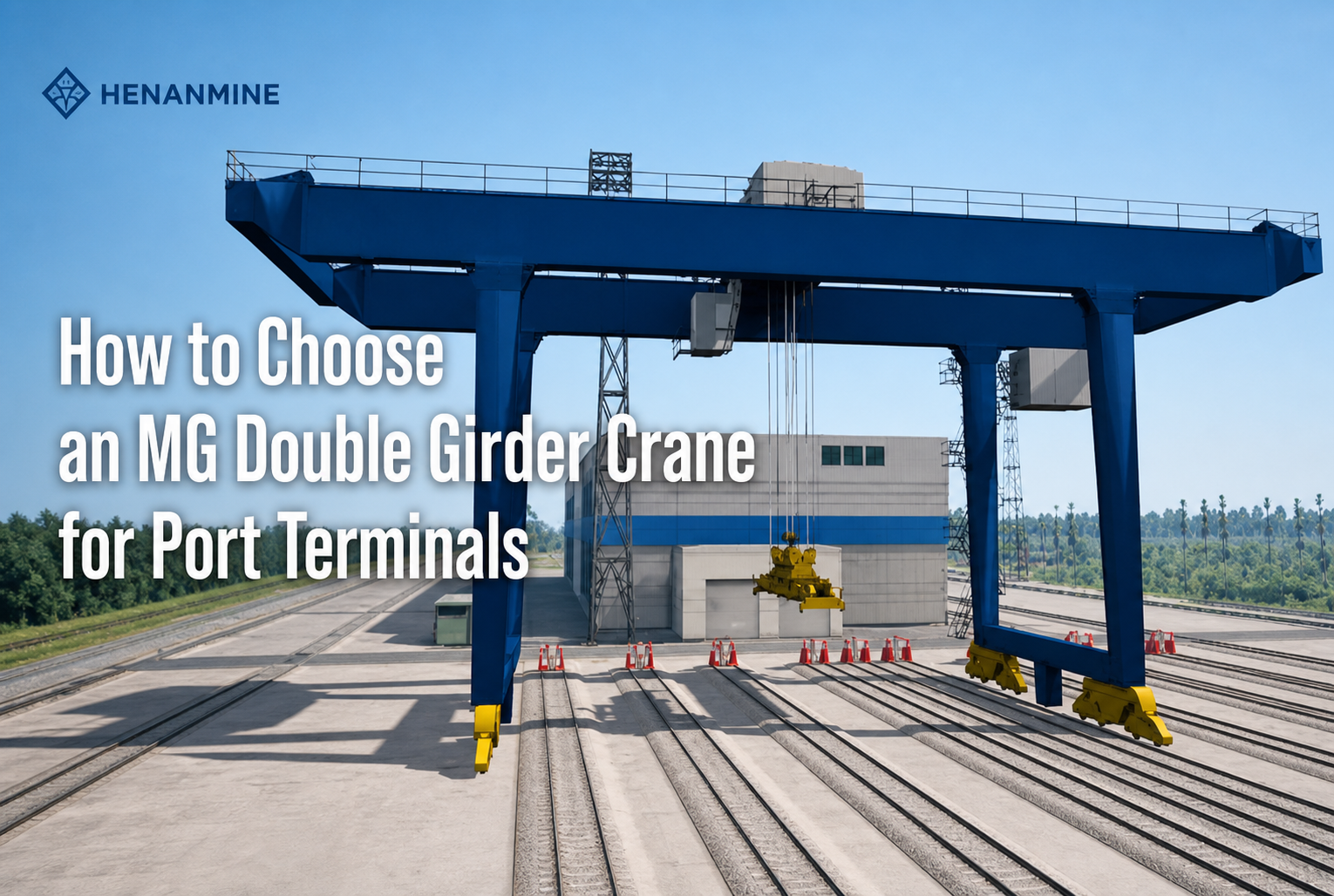
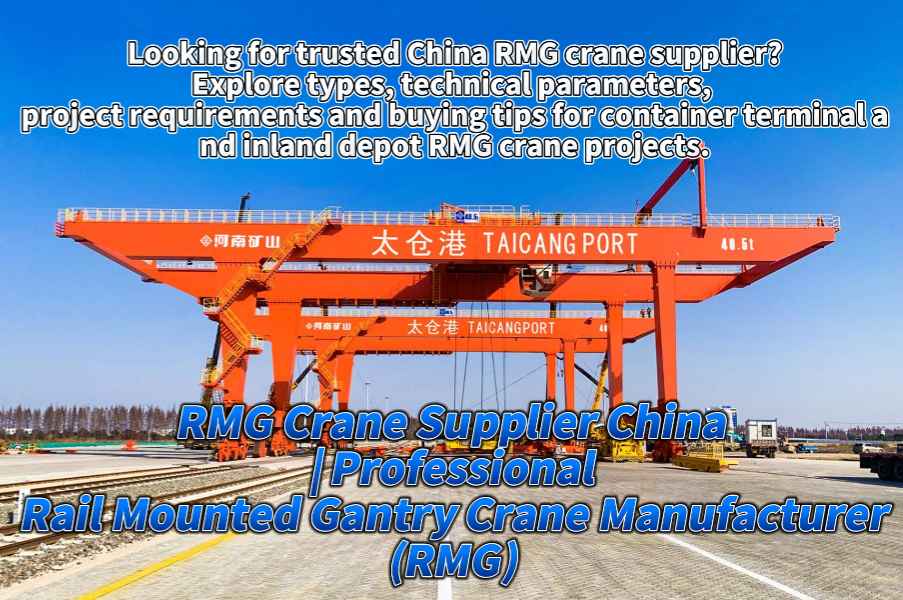
Their defining features are a high rated lifting capacity, strong structural stability under repeated heavy-duty cycles, and a long service life designed for continuous industrial use rather than occasional lifts. In production and staging environments, these are often configured as rail-mounted or rubber-tyred gantry (RTG) systems capable of tonnages that scale from the tens of tons for workshop and staging use up into the thousands of tons for the largest port-side and offshore erection gantries. RTG configurations in particular have become popular at ports and staging yards because they offer mobility across multiple berths and storage zones without the fixed infrastructure a rail system requires, useful for projects moving blades, nacelles, and tower sections through the same yard on different schedules.
Mobile Gantry Crane
Mobile Henan Mine Crane manufactured gantry cranes trade some structural capacity for flexibility, and they've become a common choice at sites without fixed runway infrastructure. They are best suited for:
- Remote wind farms where permanent crane infrastructure isn't practical
- On-site installation across multiple turbine positions
- Maintenance operations that need to relocate between turbines quickly
The advantages are clear: flexible movement across a site without dismantling the crane, reduced setup time compared to fixed installations, and lower transportation cost since the crane can reposition itself rather than requiring a full disassembly-and-haul cycle between locations. Some mobile gantry designs also incorporate dual load trolleys, which allow direct rotation of a blade within a work area, useful for positioning during manufacturing or pre-installation staging without additional handling equipment.
Customized Gantry Crane System
Standard, off-the-shelf configurations don't always fit wind projects, because every project differs in:
- Turbine model and blade geometry
- Blade size and weight
- Installation method (individual blade lift vs. pre-assembled rotor lift)
- Site conditions and available footprint
Because of this variability, customized solutions are common across the industry, typically including adjustable span to match staging or foundation layouts, special lifting devices engineered for a specific blade root or spreader configuration, automated control systems for repeatable precision, and remote operation capability for improved operator safety during large lifts.
Key Technical Parameters Besides Crane Capacity
Tonnage rating gets the most attention, but it is only one of several specifications that determine whether a crane will actually perform the job safely and efficiently.
Lifting Speed and Control Accuracy
Blade installation is a precision task, not a bulk-handling one. During the final positioning phase:
- Small movements matter,the margin for error at the hub connection point is measured in centimeters, not meters
- Precise positioning is required to align bolt patterns and pitch bearings correctly on the first attempt
Recommended crane features to support this include a variable frequency drive for fine speed control, smooth acceleration and deceleration to avoid inducing sway in a long blade, and anti-sway control systems that actively dampen pendulum motion during positioning.
Span and Working Area
The crane's span and working footprint need to be sized against the physical realities of the site, including the wind turbine foundation size, the blade storage or staging area layout, and the space required for assembly operations around the tower base. A crane with a technically sufficient tonnage rating but an undersized span will still struggle to maneuver a 70-meter-plus blade around a congested foundation area, so span and capacity should be evaluated together rather than treated as separate line items on a spec sheet. On constrained sites, this often pushes the decision toward a mobile or customized gantry over a fixed rail-mounted design, simply because the footprint can be adjusted as staging needs change through the project.
Duty Classification
Cranes are rated not just by capacity but by duty class, following classification systems such as FEM classification and ISO duty class standards. A higher duty class is required for:
- Frequent installation cycles across multiple turbines
- Heavy component handling on a sustained basis
- Long-term operation across an extended project timeline
Choosing a crane rated for light-duty, occasional use in a heavy-cycle production or installation environment is a common way projects end up with premature wear or unplanned downtime. It's worth asking a supplier directly which duty class a proposed crane carries and how that class was determined, since a tonnage rating on its own doesn't tell you anything about how the crane will hold up across hundreds of repetitive lifts over a multi-year installation program.
Safety Features
Given the weight and geometry involved in blade lifts, safety systems are not optional extras. Essential systems include overload protection, an emergency stop system, limit switches to prevent over-travel, load monitoring to track real-time hook load against rated capacity, and wind speed monitoring to halt lifting operations automatically if conditions exceed safe thresholds.
Gantry Crane Applications in Wind Energy Industry
Gantry cranes serve several distinct roles across a wind project's lifecycle, not just the initial blade lift.
Wind Turbine Blade Installation
This is the core application: blade lifting from ground or staging position, blade positioning at the hub connection point, and full rotor assembly where blades are joined to the hub before final hoisting.
Wind Turbine Component Replacement
Gantry cranes also support ongoing operations after commissioning, including blade replacement following damage or end-of-life retirement, gearbox maintenance on geared turbine models, and generator replacement inside the nacelle.
Offshore Wind Turbine Construction
Offshore projects impose additional requirements on top of standard capacity and height specs: corrosion resistance to withstand sustained salt exposure, high reliability given the cost and difficulty of unplanned offshore downtime, and extreme weather adaptability for sites exposed to open-water wind and wave conditions. Because offshore blades routinely fall at the upper end of the weight range, cranes serving these projects — whether at a port staging yard or on an installation vessel — are typically specified at the top of, or above, the 300-ton-plus band, and they're engineered from the outset for continuous outdoor marine exposure rather than adapted afterward from an onshore design.
Common Mistakes When Selecting a Gantry Crane for Wind Turbine Installation
Even experienced project teams make avoidable errors when specifying crane capacity. These four show up repeatedly across the industry.
Mistake 1: Choosing crane capacity only based on blade weight.
Blade weight is the starting point, not the finish line. You also need to account for lifting accessories, dynamic loads introduced by wind and motion, and an appropriate safety factor. A crane sized to the bare blade weight has effectively no operating margin.
Mistake 2: Ignoring future wind turbine upgrades.
Turbine sizes keep increasing across the industry, and blade lengths that looked ambitious five years ago are routine today. A crane purchased with additional capacity headroom beyond today's immediate need typically delivers a longer useful service life and better long-term investment value than one sized precisely to current requirements. This matters most for owners and contractors planning to service the same site, or the same class of equipment, over a multi-year or multi-project horizon, a crane that's already maxed out on a current-generation blade will need early replacement the moment the next turbine upgrade arrives.
Mistake 3: Selecting a standard crane without customization.
Wind projects frequently require special dimensions to match site layout, special lifting tools engineered for a specific blade or rotor configuration, and customized control systems for repeatable precision. Forcing a generic crane into a non-standard project usually shows up later as workarounds, added rigging, or reduced lifting speed.
Mistake 4: Buying without considering manufacturer capability.
Capacity rating on a spec sheet is only as good as the designer/manufacturer that produced it. Investigate that manufacturer‘s engineering practice, manufacturing location, testing ability and project references on similar wind machines.
How to Choose a Reliable Gantry Crane Manufacturer for Wind Energy Projects?
If properly engineered and manufactured, the rated capacities of the crane are just good information. Vet existing suppliers in three fields.
Check Manufacturing Capability
Henan Mine Crane Factory has proven heavy steel structure fabrication capability, quality welder performance according to accepted codes, ability to build according to the load on the crane, test equipment on-site for performance before delivery.
Verify Design and Engineering Support
Professional Henan Mine Crane Factory would also be happy and willing to give you load calculations suitable for your lift, drawings, not templates, to commission the lift on your site, and continued technical support after delivery.
Consider After-Sales Service
Crane ownership continues post delivery. Make sure that the manufacturer has easily available spare parts, remote troubleshooting, maintenance advice, and regular crane inspection services to ensure the crane remains within its rated safe working envelope for its entire anticipated lifespan.
Gantry Crane Capacity Selection Guide for Different Wind Turbine Sizes
The table below summarizes recommended starting points by turbine class. Treat these as a planning reference, always confirm with a full load calculation against your specific blade, rigging, and site conditions.
| Wind Turbine Type | Blade Weight | Recommended Crane Capacity |
| Small Onshore Turbine | Low weight blades | 20–50 tons |
| Medium Wind Turbine | Medium blades | 50–150 tons |
| Large Onshore Turbine | Heavy blades | 150–300 tons |
| Offshore Wind Turbine | Extra-large blades | 300+ tons |
Note: Actual capacity depends on project-specific requirements, including rigging weight, safety factor, and site conditions.
Henan Mine Crane Factory Custom
Picking the appropriate gantry crane capacity for wind turbine blade installation is not a matter of just selecting a top-heavy lifting tonnage, a trustworthy answer involves professional engineering, design, precise computation of load, and implementing QC to assure that each turbine‘s unique wind energy solutions deal with the appropriate wind loads. Whether it is dealing with blades, component lift-off, or ongoing maintenance operations, the crane should be durable, safe, and steady.
With the deep experience in manufacturing, high-end production facilities and tailor-made solutions for heavy duty lifting work, Henan Mine Crane Factory, the gantry crane manufacturer can certainly help wind energy enterprise to find the best solution to install the wind turbines efficiently. By selecting the most suitable crane partner, project owner and contractors definitely can enhance installation efficiency, minimize the installation operation risk and even exploit a more sound basis for the wind power development.
Frequently Asked Questions
Q1: What size crane is needed to install a wind turbine blade?
It varies by the class of the turbine. Small onshore turbines usually operating at 20 50 tons of capacity, medium commercial turbines are between 50 150 tons, large onshore or offshore turbines with longer blades are over 150 500+ tons, depending on actual blade weight and the rigging.
Q2: How much does a wind turbine blade lifting crane cost?
Again, this can be a wide variation depending on the capacity, span, duty-classification and standard or custom design of the crane. Custom engineered cranes of higher capacity, for use on offshore projects, are considerably more expensive than a standard yard or maintenance duty crane.
Q3: Can a gantry crane be used for offshore wind turbine installation?
Yes. But offshore applications impose much more requirements on application features, such as corrosion resistant, high reliability and structural design according to relatively extreme weather and marine conditions.
Q4: What is the lifting capacity of a wind turbine installation crane?
Lifting capacities depend on size and type of installation from approximately 20 tons for small turbine or maintenance work to 500+ tons for large offshore installations based on maximum blade weight, rigging weight and a suitable safety factor.
Q5: How do I calculate crane capacity for blade installation?
Begin with the maximum weight of a single blade, include supplementary equipment and increase by a safety factor. Required Crane Capacity = Maximum Load x Safety Factor, then compare to lifting height required and conditions at site.
Q6: Why choose a customized gantry crane for wind power projects?
Since turbine model, blade dimensions, installation procedure and site configuration vary from project to project, a custom crane having an adaptable gantry, dedicated lifting apparatus and machinery and a bespoke control system generally provides a more effective and efficient solution than an off-the-shelf design.