
What Safety Features Should You Look for in a Steel Mill Overhead Crane?
Anyone who has worked in a steel mill knows that the working conditions here are one of the most extreme in the industrial field - high temperatures and dust all year round, heavy loads are lifted day and night, and the slightest carelessness can lead to big problems.
I do metallurgical crane sales and technical support in Henan Mine Crane for almost twenty years, I have seen too many hidden dangers and even accidents caused by the lack of safety configuration or not in place. Overhead crane (overhead crane) in steel mills, unlike ordinary workshop equipment is only an auxiliary tool, it is responsible for molten metal transport (molten metal lifting), billet ingot transfer, each operation involves the safety of the entire production line.
Many customers will be torn when purchasing cost, but in the steel mill, crane safety is never optional, but the bottom line. Even a small safety device failure can lead to serious safety accidents, equipment damage, and even the entire production line shutdown - you know, the steel mill downtime for a day, the loss could be up to millions of dollars, far more than the initial investment in the safety costs are much higher.
Today I will take the identity of an old engineer, talk to you, choose steel mill overhead crane (steel mill overhead crane), which safety features must be looked at, which configuration can not be saved, to help you avoid those who seem to save money, actually buried mine selection of the misunderstanding, no matter what you are doing equipment procurement, EPC project technical assessment, or compliance review, after reading this can be Mind.
Why Safety Is Critical in Steel Mill Overhead Cranes
High-Risk Lifting Scenarios
Each type of lifting operation in a steel mill harbors a high risk, especially these three scenarios, where the safety requirements for cranes are at their peak.
The most dangerous is the ladle crane (ladle crane) operation. The temperature of the steel being lifted is as high as 1700℃, and once the crane breaks down and the steel leaks out, the consequences are unimaginable, which not only causes the equipment to burn down, but also may jeopardize the life safety of the operators.
Heavy billets, ingots transfer is not easy, these loads are often dozens of hundreds of tons, irregular shape, lifting once shaken, tilted, it is easy to collide with the workshop equipment, and even smashed production line, resulting in production stoppages.
There are also multiple cranes working together in the scene, such as a large steel plant steelmaking workshop, there are usually more than one crane running at the same time, track crossing, overlapping the scope of work, the risk of collision is extremely high, a little improper operation may lead to equipment damage.
Consequences of Failure
Any failure of steel mill crane is not a “small problem”, the consequences are often chained.
The most serious is the risk of personnel safety, high temperature, heavy load environment, once the load falls, steel leakage, the operator is difficult to evacuate in a timely manner, very easy to cause casualties.
Secondly, equipment damage, the crane itself is expensive, plus collision to the steelmaking furnace, continuous casting machine and other core production equipment, repair costs can easily be hundreds of thousands or even millions of dollars, and a long maintenance cycle, will seriously affect production.
The most headache is the loss of downtime, steel mills belong to the continuous production industry, a production line downtime for an hour, the loss may be tens of thousands of dollars, the loss of a day's downtime is incalculable, this cost, no one enterprise can easily afford.
Therefore, the safety of steel mill cranes is never “icing on the cake”, but “life preserver”, even if it costs a little more, we must put the safety configuration in place.
Core Safety Design Principles
Redundancy
Redundancy design, to put it bluntly, is “double insurance”, which is the core principle of steel mill crane safety design, but also to avoid catastrophic failures.
Simply put, it means that key components should be equipped with backup systems, even if one of them fails, the other one can be activated immediately to ensure the normal operation of the crane and avoid serious accidents such as falling loads.
For example, brake, hoisting mechanism, control system, these components directly related to safety, should be redundant design - like our Henan Mine Crane metallurgical cranes, equipped with dual drive, dual electronic control, dual brake, once the first set of failure, the second set of redundant institutions can independently take on the work, to protect the safety bottom line.
Many customers feel that redundant design is a “waste”, but in steel mills, one more set of backups is one more safety, and can avoid a possible catastrophic accident, which is actually very cost-effective.
Reliability Under Extreme Conditions
How extreme the environment of the steel plant, I do not need to say more - smelting workshop temperature is always above 60 ℃, close to the electric furnace, converter area can even reach 150 ℃, coupled with the pervasive dust, iron filings, as well as a strong electromagnetic interference, the ordinary crane components will not take long to fail.
Therefore, the safety of steel mill cranes, first of all, to ensure the reliability of such extreme environments, the core is three points: high temperature resistance, dust and iron filings, continuous operation.
High temperature resistance, motor, cable, control box should be designed to withstand high temperatures, such as motor with H-class insulation, cable with metallurgical special high-temperature resistant rubber cable, control box to do thermal sealing treatment to avoid high temperature damage to components.
Dust and iron filings is also very critical, crane bearings, gearboxes, electrical components, should be used to seal the structure, the sensor should also do the three anti-coating treatment, to ensure stable operation in a high dust environment, will not cause wear and tear of components due to dust into the short circuit.
At the same time, it also has to have the ability to operate continuously, the steel production line 24 hours a day, the crane must be able to adapt to this high-intensity operation, can not easily fail.
Compliance with Standards
Customers doing global business know that the safety configuration of steel mill cranes must comply with international standards, otherwise it will not only fail the local compliance review, but also leave hidden safety hazards.
There are three core international standards: ISO 4301, which is the global crane safety standard, stipulates the basic safety requirements and classification standards of cranes; FEM A7-A8, mainly for the European market, the safety factor of metallurgical cranes, redundancy design has more stringent requirements; CMAA Class E/F, is the U.S. standard for heavy-duty, continuously operating cranes. CMAA Class E/F, is the American standard for heavy-duty, continuously operating cranes, emphasizing the reliability and safety performance of the equipment.
All steel mill overhead cranes from Henan Mine Crane are strictly aligned with these three standards, and each piece of equipment has to go through strict compliance testing before leaving the factory.
Essential Safety Features to Look For
1. Dual Braking System
Dual braking system is the most core and non-negotiable safety feature of steel mill cranes, especially ladle crane, which is mandatory and non-negotiable.
It consists of two independent braking systems: the main brake is responsible for braking in daily operations, such as lifting, deceleration and stopping during operation; the safety brake is the “backup insurance”, once the main brake fails, the safety brake will immediately start to hold the drum to prevent the load from falling.
According to international standards, each set of brakes must be able to independently withstand 125%-150% of the rated load, to ensure that even if one set fails, the other set can still pull the heavy load stably. Our Henan Mine Crane's double brake system adopts the normally closed design, which can avoid the expansion of the accident to the greatest extent by braking at power failure and the reaction time is no more than 0.2 seconds.
Don't choose the single brake system to save money, in the steel mill, a brake failure may cause irreparable losses, how to calculate this account is not cost-effective.
2. Redundant Hoisting Mechanism
Redundant Hoisting Mechanism is the core of redundant design, which is mainly used in heavy lifting scenarios, such as steel ladle and large billet lifting, and can further enhance the reliability of the equipment.
There are two common designs: dual motor drive or dual gearbox system, through the load distribution design, so that two motors or two gearboxes work together to share the load.
In this way, even if one of the motors or one of the gearboxes fails, the other one can temporarily carry the load and land it safely on the ground without the load suddenly falling. Henan Mine Crane's heavy-duty metallurgical cranes are equipped with redundant hoisting mechanisms, and dual encoders are also installed at the reel end to realize the double checking of speed and displacement, which further enhances safety.
3. Overload Protection System
Overload is one of the most common safety hazards of cranes, especially in steel mills, workers may be in order to catch up with the schedule, illegal overweight lifting, long-term overload will lead to deformation of the crane structure, accelerated wear and tear of the wire rope, and even lead to breakage, load fall.
The role of the overload protection system is to monitor the lifting load in real time, once the rated load is exceeded, it will automatically cut off the power of the hoisting motor, and at the same time, sound and light alarms will be issued to remind the operator to stop the operation to prevent structural damage to the equipment and safety accidents.
Our Henan Mine Crane's overload protection system adopts a dual sensor design with an accuracy of ±2%, which can effectively avoid the misjudgment caused by the failure of a single sensor, and can also record the overload data, which is convenient for the enterprise to follow up to optimize the operation process and standardize the operation behavior.
4. Limit Switch System
Limit switch system, is to control the crane operating range of the “safety boundary”, to prevent the crane beyond the prescribed range, collision to the equipment, building or personnel, steel mill cranes must be equipped with a complete limit switch, you can not do without.
Mainly includes three kinds: hoisting height limit and descending depth limit, to prevent the hook rushing to the top of the damage to the drum, wire rope, and at the same time to ensure that the wire rope in the drum to retain at least 3 turns of the safety circle; trolley and trolley travel limit, to prevent the crane running to the two ends of the track or cross the area when the collision; there is also an emergency limit switch as a back-up, once the main limit switch failure, the emergency limit can be immediately triggered by the shutdown.
Our Henan Mine Crane limit switches adopt redundant design, each limit has two independent switches, even if one fails, the other can work normally, and also according to the high temperature and dusty environment of the steel mill, the limit switches will be equipped with a protective cover to extend the service life.
5. Anti-Collision System
For the steel mill workshop with multiple cranes running at the same time, the Anti-Collision System is an indispensable safety configuration, which can effectively avoid the collision between cranes and between cranes and workshop equipment.
This system through ultrasonic or laser sensors, real-time monitoring of the distance between neighboring cranes, as well as the distance between the crane and the workshop columns, equipment, when the distance is less than the safety value, it will automatically issue an early warning, followed by deceleration, and if it continues to be close to, it will be directly stopped to ensure safety.
Our Henan Mine Crane anti-collision system, strong anti-interference ability, can adapt to the steel mill dust, electromagnetic interference environment, but also according to the layout of the workshop, the flexibility to adjust the safety distance, suitable for multiple cranes working together scene, to avoid damage to equipment and shutdown caused by collision.
6. Emergency Stop System
Emergency stop system is the “last line of defense” to deal with emergencies, the core requirement is to “stop at any time, everywhere can stop”, to ensure that the operator finds danger in any position, can immediately cut off the power of the equipment.
This system can not only be set up in the operating room, but also in the ground operating station, remote control, and even the key parts of the crane (such as trolley, big car) are set up emergency stop button, the button should be eye-catching, easy to operate, even wearing gloves can also be easily pressed.
Henan Mine Crane's emergency stop system, using the “zero voltage protection” design, press the emergency stop button, the crane immediately cut off all the institutions, brake hold, while sound and light alarms to remind the surrounding personnel to pay attention to avoid the expansion of the accident. For cranes carrying molten metal, we also add the “Emergency Descent” function, which can safely lower the load to the ground through the backup power supply when the main power supply fails.
7. Heat-Resistant Electrical System
The high temperature environment of steel mills is a great test for the crane's electrical system. Ordinary electrical components can easily deteriorate and short-circuit under the high temperature, resulting in equipment failure and even causing safety accidents.
Therefore, heat-resistant electrical system (heat-resistant electrical system) is a necessary configuration for steel mill crane, mainly including three aspects: high-temperature cables, the use of metallurgical special rubber-coated cables, can withstand high temperatures of more than 150 ℃, stable insulation performance; insulation control panel, to do insulation, sealing, to prevent high temperatures and dust from entering the protection of internal Electrical components; motor cooling system, the motor is equipped with a forced cooling device to avoid motor damage due to high temperature overheating.
Our Henan Mine Crane's metallurgical cranes, the electrical cabinet adopts airtight, heat-insulated design, and also equipped with industrial air conditioning, which can maintain a constant temperature inside the cabinet, to ensure that the electrical system operates stably in the high temperature environment, and will not fail because of the high temperature.
8. Load Monitoring System
Load monitoring system, equivalent to the crane's “eyes”, can grasp the status of the lifting load in real time, to find out the abnormality in advance, to avoid potential safety hazards.
It can display the weight of the load in real time, the operator in the operating room can clearly see whether the current load in the rated range, but also monitor the load tilt angle, once overloaded, skewed slanting lifting and other abnormalities, it will immediately issue sound and light alarms to remind the operator to adjust in time.
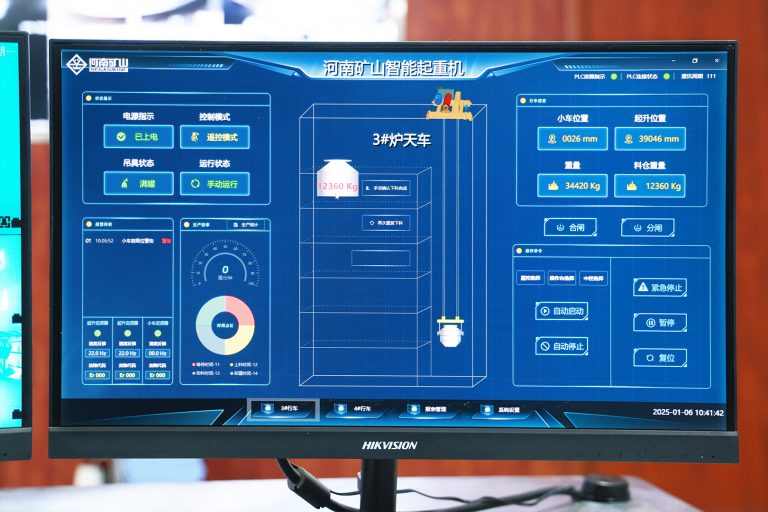
Our Henan Mine Crane load monitoring system can also upload real-time data to the cloud, which can be viewed remotely by the management through cell phone APP or PC, so that it is convenient to grasp the real-time operating status of the equipment, and at the same time, record the load data, so as to provide support for the subsequent maintenance of the equipment and the traceability of accidents.
9. Anti-Sway Control
When lifting billets, coils, ladles and other loads in steel mills, load swaying is a big safety hazard, especially for long loads. Once the swaying amplitude is too large, it is easy to collide with the workshop equipment and the steelmaking furnace, and even lead to the splashing of steel.
Anti-sway control system can monitor the swaying amplitude of the load in real time, and control the swaying amplitude to the minimum by automatically adjusting the running speed and direction of the crane, so as to improve the lifting precision and safety.
Our Henan Mine Crane's anti-sway system adopts laser distance measuring and acceleration sensors, with fast response speed and high control accuracy, which can keep the load stable even in high wind or fast operation, and is especially suitable for lifting ladle and large billet, which can effectively avoid accidents caused by load swaying.
10. Backup Power Supply
Occasionally, there is a sudden power failure in steel mills, if the crane is lifting heavy loads, especially molten metal, the load is hanging in the air, which will bring great safety hazards - once hanging for a long time, the wire rope may be fatigued and fracture, resulting in the fall of the load.
Backup power supply, is to cope with this unexpected situation, can be in the main power failure, immediately start, for the crane hoisting mechanism to provide power, the load will be safely landed on the ground, to avoid danger.
Our Henan Mine Crane's standby power supply adopts large-capacity battery packs, which can continuously provide enough power for the crane to ensure that the load can be successfully landed in a safe area after a power failure, and it will also be equipped with a power switching device, with a switching time of no more than 1 second, so that the load will not be suspended in the air.
Advanced Safety Features for Modern Steel Mills
Intelligent Monitoring Systems
With the enhancement of the level of intelligence in steel mills, intelligent monitoring systems (intelligent monitoring systems) has become an important safety feature for modern steel mills cranes, which can realize the transformation from “passive defense” to “active warning”. The system can realize the transformation from “passive defense” to “active warning”.
This system through the high-precision sensor array, real-time monitoring of the crane's 12 types of core parameters, including lifting height, operating speed, load weight, motor temperature, wire rope wear and tear, etc., once abnormal, it will immediately issue an early warning, and at the same time upload the data to the cloud platform.
Managers can use mobile APP or PC to remotely view the crane's operating status, fault information, and can also play back key parameter changes before the accident, providing data support for accident analysis, discovering potential faults in advance and avoiding accidents.
Our Henan Mine Crane's intelligent monitoring system also supports cluster management of multiple cranes, allowing managers to monitor the operating status of multiple devices at the same time, significantly improving management efficiency.
Predictive Maintenance
Predictive maintenance, the core is “find problems in advance, solve problems in advance”, to avoid sudden failure of cranes, reduce downtime, which is particularly important for continuous production of steel mills.
It analyzes the wear and tear of key components, such as wire rope, brake pads, gear box loss, through the equipment operation data collected by the intelligent monitoring system, and judges the remaining life of the components in advance, reminding the management to replace them in time, so as not to wait for the failure of the components to be repaired.
For example, a metallurgical enterprise in Hubei, after adopting a similar predictive maintenance system, the frequency of spare parts replacement has been reduced by 40%, saving more than 1.5 million yuan in annual maintenance costs, while significantly reducing the loss of downtime due to equipment failure. Henan Mine Crane will also equip every piece of equipment with predictive maintenance to help customers reduce maintenance costs and improve equipment reliability.
Remote Operation Systems
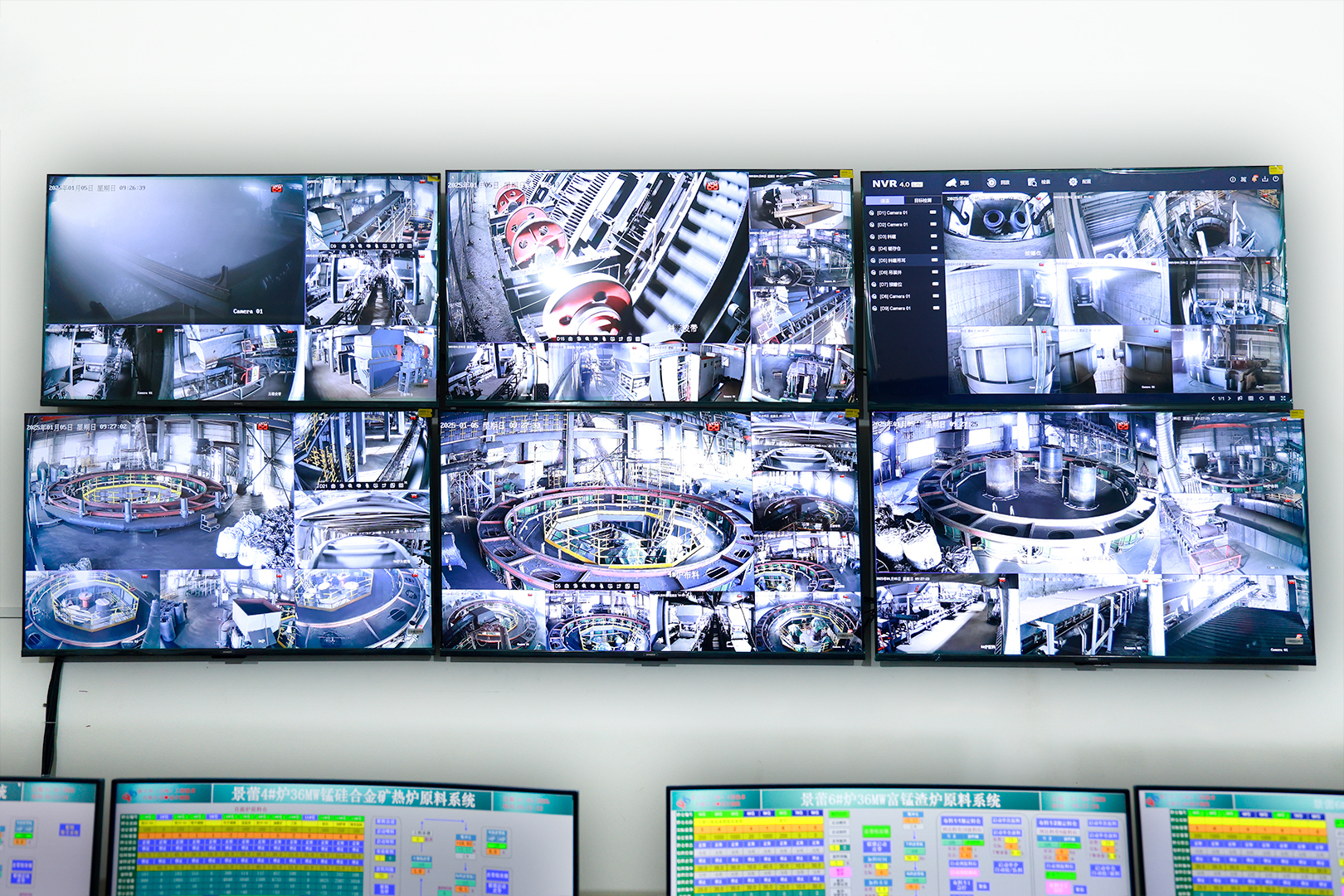
The smelting area of a steel mill is characterized by high temperature, high radiation, high dust, and high safety risks for operators working on site, and remote operation systems (ROS) can be a good solution to this problem.
Operators can be away from the dangerous area of the control room, through the remote console or remote control, control the crane to operate, do not have to be close to the high temperature, high radiation area, can protect the safety of the operator, but also does not affect the accuracy of the operation.
Our Henan Mine Crane's remote operating system adopts industrial-grade wireless communication system with strong anti-jamming ability, stable signal, precise operation, and real-time display of the crane's operating screen, so that the operator can clearly grasp the situation on the spot, to ensure that the operation is safe and smooth.
Safety Requirements by Application Type
Ladle Crane
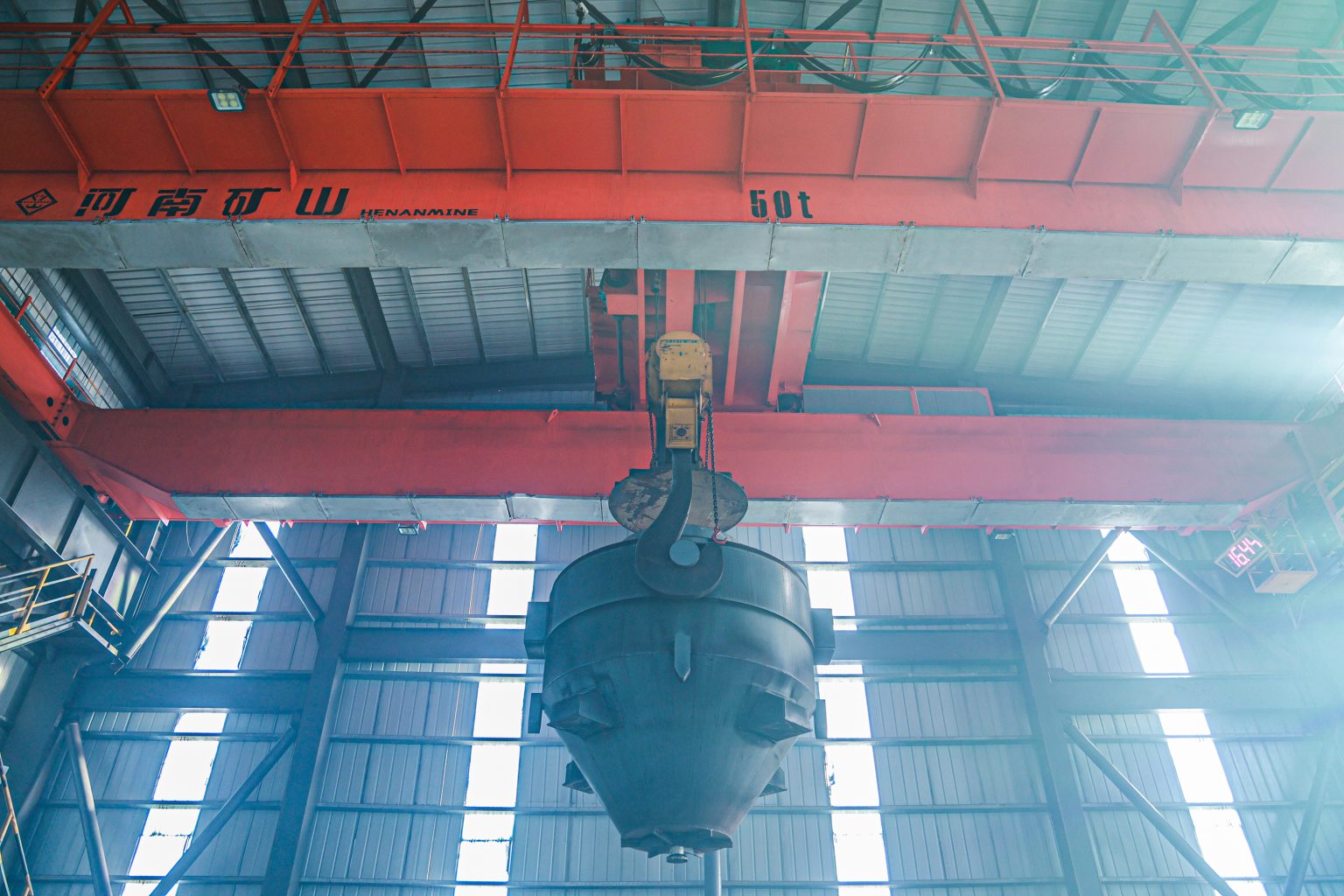
Ladle crane (ladle crane) is the crane with the highest safety requirements in steel mills, and there is no one of them, because it directly transports molten metal, and any hidden safety problems may cause catastrophic accidents.
It has three core safety requirements, one of which is indispensable: dual braking system, which is mandatory and must be equipped with two sets of independent brakes to ensure that nothing goes wrong; redundant lifting mechanism, using dual motor, dual gear box design, to avoid the failure of the lifting mechanism leading to the fall of the ladle; comprehensive high-temperature protection, including high-temperature-resistant electrical systems, heat insulation panels, radiation shielding plate, which can withstand the radiant heat of the steel at 1700 ℃, to protect equipment and operators. Protect the equipment and operators.
Our Henan Mine Cranes are also equipped with anti-splash devices to further enhance operational safety. All safety features are in strict compliance with FEM A8 and CMAA Class F standards to meet the stringent requirements of steel mills around the world.
Charging Crane
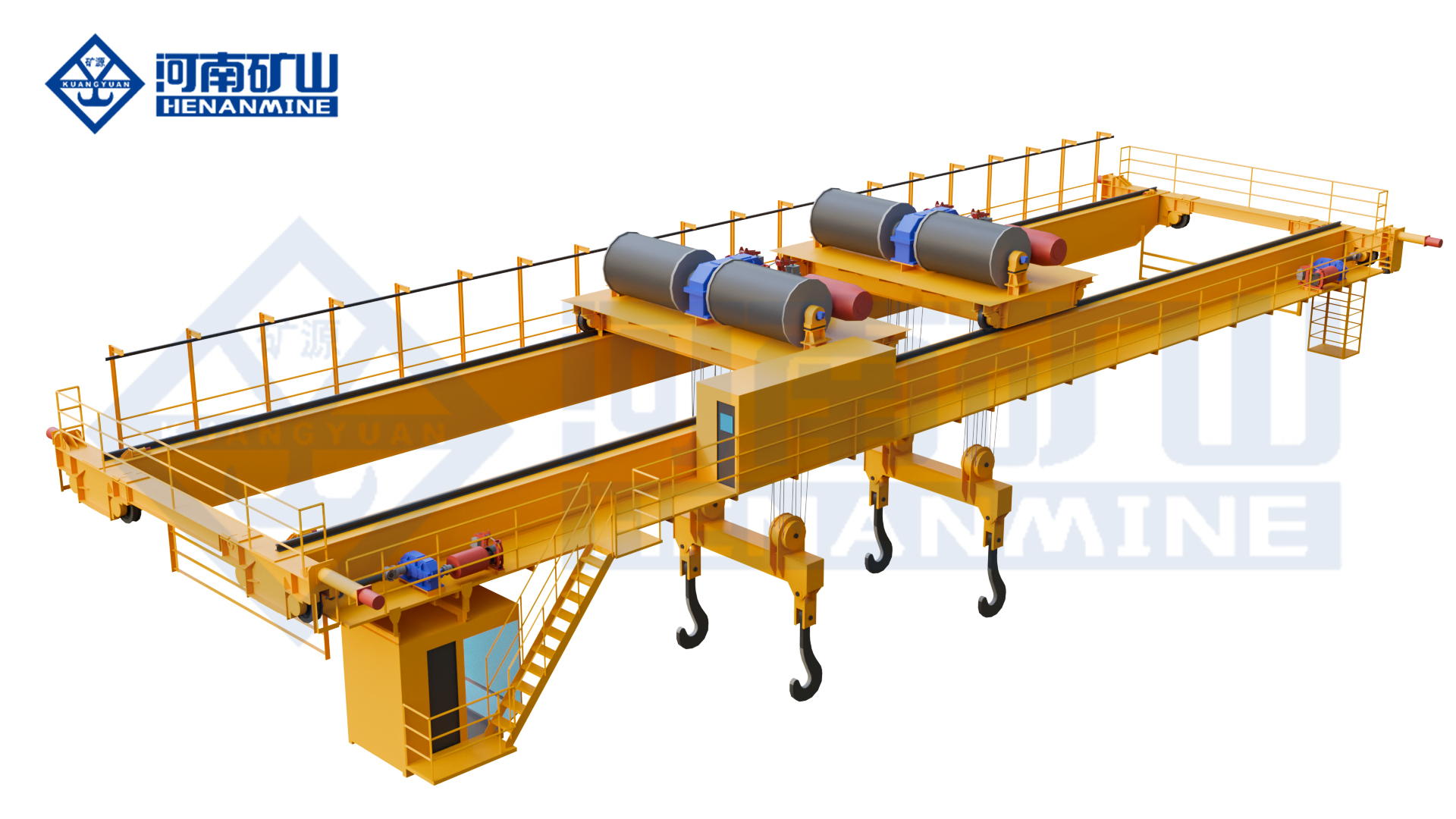
Charging crane (charging crane), mainly used to add raw materials to the steelmaking furnace, the operating environment is also harsh, high temperature, dusty, and charging will be material impact, the crane's safety requirements are also very high.
Its core safety requirements are anti-impact and overload protection: anti-impact design, can withstand the impact of the material when adding material to avoid deformation of the crane structure; overload protection system, can prevent overload caused by adding too much material to avoid equipment damage.
Our Henan Mine Crane will use high-strength steel to make the main beam and trolley frame to enhance the impact resistance, and at the same time, equipped with high-precision overload protection system, real-time monitoring of the load, to ensure the safety of the operation.
Slab/Billet Handling Crane
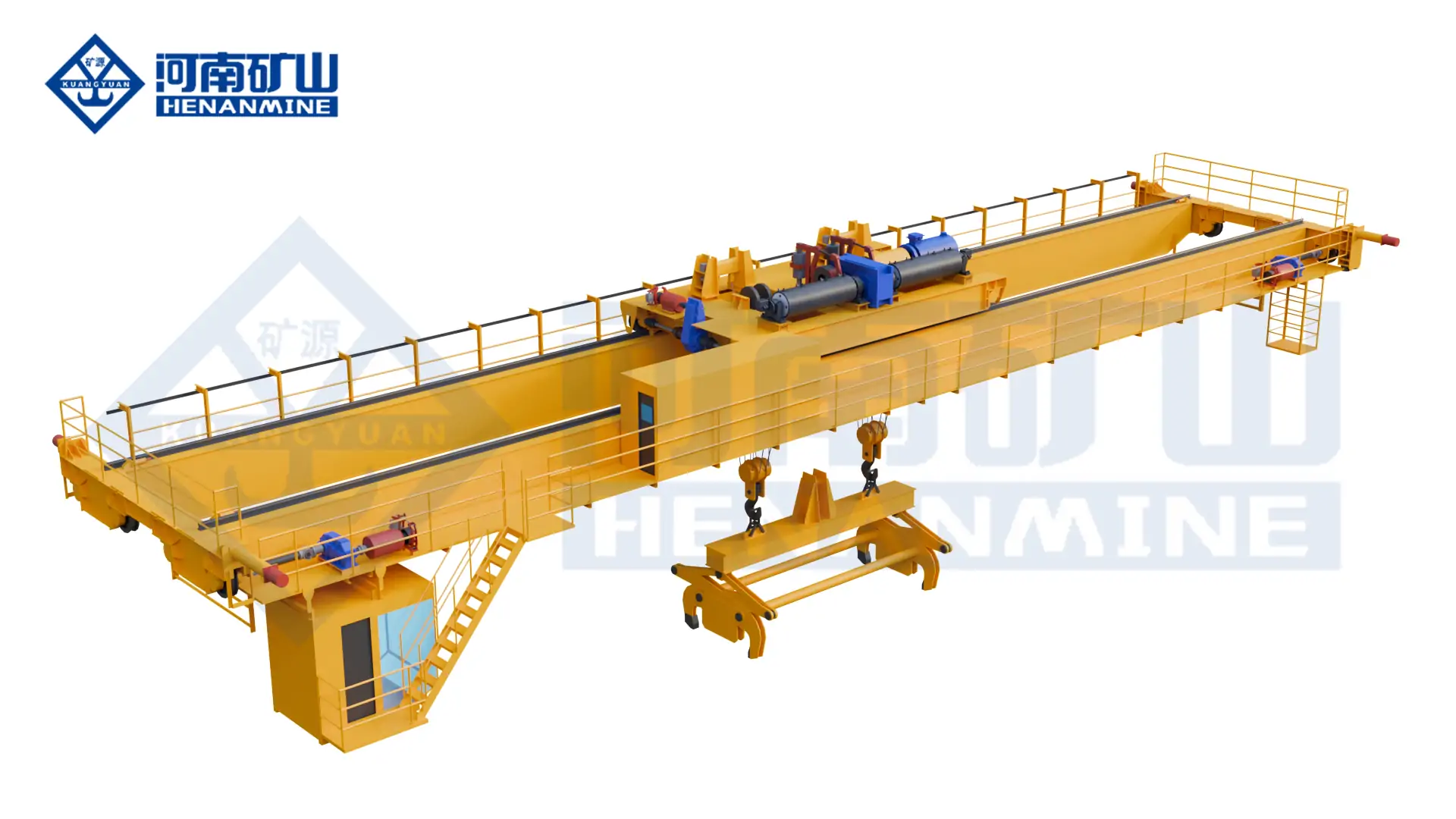
Slab/Billet Handling Crane is mainly responsible for the transfer and stacking of billets and ingots, which are heavy and irregular in shape, and easy to sway when lifting, so the requirements for safety mainly focus on anti-sway and durability.
Anti-sway control is a necessary configuration, can effectively reduce the billet, ingot swaying amplitude, to avoid collision equipment; at the same time, the structure of the crane should be durable to adapt to the long-term heavy load, frequent operations, wire rope, hooks and other components should be made of high-strength materials, to extend the service life.
Henan Mine Crane's billet handling cranes are equipped with high-precision anti-swaying system, and adopt full hardened gear reducer with high transmission efficiency and high torque, and the wheel set is made of alloy steel forging and surface hardening treatment, which is of high strength, and can adapt to the high-intensity operation requirements of the steel mills.
Safety Standards & Compliance
International Standards
For steel mills facing global customers, the safety configuration of cranes must comply with international standards, otherwise they cannot pass the local compliance review or be put into use.
The three core international standards have already been mentioned, and here we will talk about them in detail: ISO 4301, the global crane safety standard, provides for the classification of cranes, safety requirements and test methods, applicable to all types of cranes; FEM, the European Crane Manufacturers' Association standard, of which FEM A7-A8 is mainly for metallurgical FEM, is the European Crane Manufacturers Association standard, of which FEM A7-A8 is mainly for metallurgical cranes, with more stringent requirements for safety factor, redundant design, and high temperature resistance; CMAA, is the standard of the Crane Manufacturers Association of the U.S.A. CMAA Class E/F is for heavy-duty, continuously operating cranes, emphasizing the reliability of the equipment and safety performance.
All of our Henan Mine Crane steel mill overhead cranes are designed, produced and tested in strict accordance with these three standards, and each piece of equipment has a complete certificate of compliance, no matter it is exported to Europe, America, Southeast Asia or Africa, it can be successfully passed the local certification, so that customers can rest assured of use.
Special Metallurgical Requirements
Steel mill cranes, compared with ordinary industrial cranes, have some special metallurgical requirements, which are the key to ensure the safety of steel mill operations and cannot be ignored.
The first is a higher safety factor, ordinary cranes usually have a safety factor of 3-4 times, while metallurgical cranes, especially cranes lifting molten metal, have a safety factor of more than 5 times, to ensure that they can withstand extreme loads and emergencies.
Next is the mandatory requirement of redundant systems, for cranes lifting molten metal, double braking, redundant hoisting mechanism is a mandatory configuration, do not allow any omission, which is the key to avoid catastrophic accidents.
In addition, targeted environmental protection measures, such as high temperature protection, dust protection, radiation protection, to ensure that the crane can operate stably in the extreme environment of the steel plant, will not be due to environmental factors lead to the failure of the safety devices.
Common Safety Mistakes to Avoid
Combined with these years of front-line experience, I summarized a few customers are most likely to step on the safety mistakes, we must avoid when selecting the type, you can avoid a lot of detours, but also to avoid a lot of potential safety hazards.
The most common misconception is to use ordinary cranes instead of metallurgical crane (metallurgical crane). Many customers figure cheap, think ordinary cranes can be used in steel mills with a little transformation, the results can not be used for a long time, because of high temperatures, heavy loads lead to equipment failure, and even cause safety accidents - ordinary cranes, safety configuration, materials, can not adapt to the extreme environment of the steel mills, seems to save money, but buried a big hidden danger.
The second misconception is to ignore the redundancy requirements. Some customers feel that “double braking, redundant lifting is not necessary”, save that cost, the result is that once one of the system failure, resulting in load fall, resulting in equipment damage and production stoppage, the loss is far more than the money saved in the early stages.
There is also underestimation of the impact of high temperature, think ordinary insulation measures are enough, the result is that the electrical components are baked by the high temperature, control system failure, resulting in crane failure; lack of collision avoidance system, multiple cranes running at the same time, it is easy to collide; there is no perfect maintenance program, the equipment is not maintained for a long time, the gradual failure of the safety devices, and ultimately lead to accidents.
Safety Inspection & Maintenance Checklist
Daily Inspection
Daily inspection of steel mill cranes, although simple, but can find potential hidden dangers in time, to avoid the expansion of the fault, every day before the start, the operator must do these three checks.
First check the brake, check the brake pads are not worn, whether the brake gap is appropriate, manually test the braking effect, to ensure that the brake can work properly; second check the load limiter and load monitoring system, start the equipment, test the system whether the load can be displayed normally, issued by the early warning; and finally check the emergency stop system, press the position of the emergency stop button, to confirm that it can immediately cut off the power of the equipment, the acoustic and visual alarms can work properly. normal work.
These inspections may seem simple, but they can effectively avoid many safety accidents caused by aging and malfunctioning equipment, so be sure to develop the habit of daily inspection.
Periodic Inspection
In addition to daily inspection, periodic inspection is also very important, usually every six months or once a year, focusing on checking the core components of the equipment, to ensure that the equipment long-term stable operation.
Firstly, check the structural integrity, check the main beam, trolley frame has no deformation, weld has no cracks, wire rope has no wear and tear, broken wire, hook has no deformation, cracks; Secondly, check the electrical system, check the cable has no aging, breakage, electrical components have no loosening, overheating, control system has no faults; Lastly, check the mechanical components, check the lubrication of the gear box, the motor's operating status, limit switches, anti-collision system sensitivity. switch, the sensitivity of the anti-collision system.
After regular inspection, we should make records, replace worn and aging parts in time, do maintenance to prolong the service life of the equipment, and ensure that the safety devices are always in good condition.
Lifecycle Cost vs Safety Investment
Higher Safety = Lower Risk
Many customers when purchasing, will be entangled in the initial cost, think the safety configuration of the crane is too expensive, always want to save a little cost. But in steel mills, safety investment and risk are inversely proportional - the more investment, the higher the safety factor, the lower the risk.
Safety configuration of good cranes, the initial cost will indeed be a little higher, but can effectively avoid safety accidents and downtime losses. For example, cranes equipped with double braking, redundant lifting, intelligent monitoring system, although the initial period of more money, but can reduce the probability of failure, to avoid accidents resulting in casualties, equipment damage and downtime losses, in the long run, on the contrary, more cost-effective.
Although the initial investment of our Henan Mine Crane is a little higher than that of small manufacturers, we use high-quality components, complete safety configuration, low maintenance frequency, less replacement of spare parts, which can help customers to reduce long-term operating costs, and this is why many global customers choose us.
Downtime Cost
As mentioned earlier, the downtime cost of steel mills is extremely high, a production line downtime of one hour, the loss may be tens of thousands of dollars, the loss of one day of downtime is even more incalculable, and may even affect the orders and reputation of the enterprise.
The safety failure of the crane is one of the main reasons for steel mill downtime. A safety configuration is not in place of the crane, it is easy to fail, resulting in the entire production line shutdown, bringing huge economic losses.
Therefore, in the selection of steel mill cranes, “safety investment” is not a waste, but the most cost-effective investment - a little more cost, improve the safety configuration, you can avoid huge losses due to downtime, to protect the continuity of production.
Selection Checklist
With this checklist, you can quickly define the safety configuration requirements, avoid missing key devices, and ensure that you select a safe, compliant, and reliable overhead crane for your steel mill, without worrying about safety issues any more:
✔ Equipped with dual braking system (a must for steel ladle cranes)
✔ With redundant hoisting mechanism (essential for heavy-duty, molten metal lifting)
✔ Adequate high temperature protection (suitable for high temperature environments in steel mills)
✔ Equipped with anti-collision system (necessary for multiple cranes working at the same time)
✔ Installation of load monitoring system (real-time monitoring of load status)
✔ Comply with ISO/FEM/CMAA international standards (necessary for export and compliance)
✔ Equipped with standby power supply (to cope with sudden power failure)
✔ With anti-sway control function (necessary for billet and ladle lifting)
FAQ
What is the most important safety feature?
→ Dual Braking System. Dual Braking System is mandatory for ladle cranes, especially for lifting molten metal, to ensure that the load will not fall if one set of braking system fails, which is the bottom line for the safety of steel plant operations.
Are standard cranes safe for steel mills?
→ Not safe, must use metallurgical crane (metallurgical special cranes). The safety configuration, material and protection measures of ordinary cranes cannot adapt to the high temperature, heavy load and high dust environment of steel mills, and they are prone to failures and safety accidents.
Why is redundancy important?
→ Redundant design prevents catastrophic failures. The key components of steel mill cranes (such as brakes and hoisting mechanisms) are equipped with backup systems, so that even if one of them fails, the other can be activated immediately to avoid serious accidents such as falling loads and damage to the equipment, and to protect the safety bottom line.
Do steel mill cranes need special certification?
→ Yes, depending on local and international standards. For example, exporting to Europe requires compliance with the FEM standard, exporting to the USA requires compliance with the CMAA standard, and the globally accepted standard is ISO 4301, all of which our equipment meets, and for which we can provide full compliance certificates.
Henan Mine Crane Factory Custom
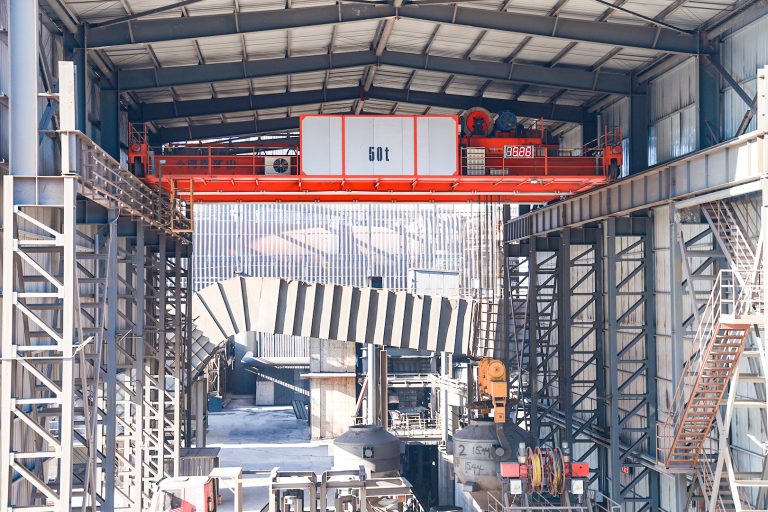
Safety always comes first when choosing overhead cranes for steel mills, and at the heart of safety lies redundant design, reliability in extreme environments, high temperature resistance and compliance.
With the extreme conditions in steel mills, every lifting operation is a matter of personnel safety, equipment safety and production continuity, and there is no room for error. steel mill overhead crane safety features are never “the more the merrier,” but rather “Configure according to the needs of the indispensable” - double braking, redundant lifting, collision avoidance, high temperature resistance, these core safety features, less one may be buried safety risks.
Henan Mine Crane has been plowing into the field of metallurgical cranes for decades, focusing on the research and development, production and sales of steel mill overhead cranes. Our products strictly comply with international standards such as ISO 4301, FEM A7-A8, CMAA Class E/F, etc., and are equipped with a full set of core safety configurations, which are able to meet the needs of different working conditions in steel mills around the world. Our products are strictly compliant with international standards such as ISO 4301, FEM A7A8, CMAA Class E/F, etc. They are equipped with a full set of core safety features, which can be adapted to the requirements of different steel mills around the world.
We provide free site survey, selection consultation, layout design, as well as global installation and commissioning and after-sales protection, no matter which country you are in, no matter whether it is a new steel mill or equipment renewal, as long as you send your steel mill scenarios and lifting needs, we will provide you with free technical solutions and quotations within 24 hours, to help you avoid selection errors, choose the most suitable crane, to guard your production safety and continuity!