
Automated Overhead Crane: The Key to Smart Warehousing
Over the years, the warehousing industry is quietly changing
As an old engineer in Henan Mine Crane sales and technical services for more than ten years, I have seen too many warehouses because of low material handling efficiency, high labor costs and headaches.
The automatic Overhead Crane system is the key equipment to solve these pain points, but also an indispensable part of modern intelligent warehousing and industrial logistics.
Today I will make the automatic Overhead Crane system clear, from its definition, working principle, to the advantages, application scenarios, and then to the procurement of what to pay attention to, to help you take a detour.
What is an automatic Overhead Crane system?
Basic Definition
Automatic Overhead Crane System, simply put, is based on the traditional Overhead Crane, integrated with intelligent control, sensors, software and communication technology, without too much human intervention, it can autonomously complete a series of tasks such as lifting, storing and handling of materials.
It is not like the traditional Crane, must rely on the operator to control the whole process, but through the preset program and real-time monitoring, to achieve unattended or semi-unattended operation, especially suitable for repetitive and regular material handling scenarios.
Difference with Traditional Overhead Cranes
Most of the traditional Overhead Cranes are operated manually or semi-manually, the operator has to sit in the cab or control it with remote control on the ground, every action needs manual judgment and operation, which is very dependent on the experience of the operator.
Automatic Overhead Crane system, on the other hand, relies on the program and the system to make decisions, the operator only needs to monitor in the background and occasionally deal with abnormal situations. The most obvious difference between the two is the difference between “human-controlled” and “self-controlled”.
Main System Components
The core components of the automatic Overhead Crane system are actually upgraded on the basis of the traditional Overhead Crane, mainly including these parts:
The Overhead Crane structure is still the core load-bearing part, which, like the traditional bridge crane, is responsible for supporting the weight of the entire equipment and the loads to be lifted
Sensors and positioning systems are the “eyes” of automation, such as laser positioning, encoders, limit switches, which can accurately locate the position of materials and Crane, and the error can be controlled in millimeter level
Warehouse management software (WMS) or central control system is the “command center”, all the actions of the Crane, the
Why Smart Warehousing Needs an Automated Overhead Crane System
The need for faster material flow
Nowadays, warehouses and production plants have higher and higher efficiency requirements for material handling. Especially in e-commerce warehouses and large logistics centers, thousands of pieces of goods have to be handled every day, and it is difficult to meet the short-cycle and high-frequency handling demand by manual or traditional cranes.
Automatic Overhead Crane system can realize continuous operation, no need to take a break, and will not be fatigued by the efficiency decline, can effectively shorten the material handling cycle, so that the flow of the entire warehouse speed up.
Reduce the pressure of labor dependence
In recent years, labor costs are getting higher and higher, and warehouse handling is repetitive physical labor, young people are not willing to do, resulting in many warehouses are faced with the problem of recruitment difficulties.
Automation equipment can replace most of the manual operations, such as automatic gripping of materials, transport, storage, do not need manual intervention, both to reduce the number of manual labor, but also reduce the intensity of manual labor, to solve the difficulty of recruiting and retention of the pain point. Many customers feedback, with the use of automated systems, warehouse labor costs can be reduced by more than 30%.
Demand for higher precision and traceability
One of the core needs of intelligent warehousing is to accurately manage inventory and reduce handling errors.
The automatic Overhead Crane system can accurately locate the goods position and materials through sensors and software, and every handling can be recorded in the system, realizing full traceability of materials. This makes inventory management clearer and reduces losses due to errors.
Demand for safer operations
Material handling in warehouses, especially for heavy materials, is prone to safety hazards when operated manually.
Overhead Crane systems can preset safety parameters, such as automatically stopping operations when overloaded, and anti-collision sensors can avoid collisions between equipment and between equipment and warehouse structures, reducing the chances of personnel being exposed to hazardous environments and making operations safer.
How the Automatic Overhead Crane System Works
Automatic positioning and operation
One of the core advantages of the Automatic Overhead Crane system is the precise automatic positioning.
During operation, after the system sends commands, the Crane automatically recognizes its own position through laser positioning, encoders and other equipment, and then moves along the preset route to the designated pick-up point accurately, the whole process does not require human intervention, and the positioning error can be controlled within 5 mm.
Load Recognition and Handling
The system can identify the weight and size of the material through sensors, and can also identify the type and batch of the material through barcode, RFID and other technologies to ensure that the correct material is lifted.
Integration with warehouse software
Overhead Crane systems do not operate in isolation, they integrate seamlessly with Warehouse Management Systems (WMS), Manufacturing Execution Systems (MES), Enterprise Resource Planning (ERP) systems and more.
Data Feedback and Monitoring
Managers can clearly see the operation of each Crane in the background. In case of malfunction, such as sensor malfunction or motor abnormality, the system will promptly issue an alarm and display the location and cause of the malfunction, which facilitates maintenance personnel to deal with it quickly. At the same time, the data can also provide a basis for subsequent maintenance and optimization, such as the development of a more reasonable maintenance plan based on the frequency of operation.
Key technologies behind the automatic Overhead Crane system
PLC and intelligent control systems
PLC (Programmable Logic Controller) is the “brain” of the automatic Overhead Crane system, which is equivalent to the nerve center of a human being, and is responsible for processing all the commands and logical judgments.
Sensor and Positioning Technology
Sensor and positioning technology is the foundation of automated operation, without accurate positioning, there is no reliable automation. Common positioning technologies include laser positioning, encoder positioning, and limit switch positioning.
Remote monitoring and IoT connectivity
Most of the automated Overhead Crane systems nowadays support remote monitoring and IoT connectivity. Managers don't need to be at the warehouse site, just through computers, cell phones and other devices, they can view the Crane's running status and operation data in real time.
Anti-Sway and Precise Control
Automatic Overhead Crane systems are equipped with anti-sway control technology, which can detect the magnitude of material sway in real time through sensors, and then automatically adjust the crane's operating speed and direction to offset the sway and ensure smooth lifting of materials.
AI and data-driven optimization
The application of AI technology in automatic Overhead Crane systems focuses on predictive maintenance, route optimization and job analysis.
However, it should be noted that the current application of AI in Crane automation is still being gradually improved, do not need to be overly deified, the core is still the basic automation function first, and then gradually upgrade and optimize.
The main advantages of automatic Overhead Crane systems in intelligent warehousing
Efficiency Improvement
Automatic Overhead Crane system can realize 24-hour continuous operation, no need to rest, and will not affect the efficiency because of artificial fatigue and operational errors.
Moreover, it can realize the cooperative operation of multiple cranes and reasonably allocate tasks to avoid the situation of one busy and one idle, so that the material flow of the whole warehouse is smoother.
Higher storage and retrieval accuracy
When manually handling, it is easy to misplace the cargo space and mix up the materials, especially in the warehouse with dense cargo space and many types of materials, the error rate is very high.
The automated system ensures that each batch of materials can be placed in the correct location through accurate positioning and material identification, and the target materials can be found quickly during retrieval, with an error rate of almost zero. This is very important for warehouses that require accurate inventory management, such as electronic parts warehouses and pharmaceutical warehouses.
Lower long-term operating costs
Many customers will initially think that the initial investment of an automatic Overhead Crane system is higher than that of a traditional crane, which is not very cost-effective. But in the long run, it has lower operating costs.
On the one hand, it can reduce the number of manual labor and lower labor costs; on the other hand, it operates more stably, with a lower frequency of failures than traditional Cranes and lower maintenance costs. And it can reduce the material damage and equipment failure caused by manual operation errors, and indirectly reduce the loss. Generally speaking, the invested cost can be recovered in 1-2 years by the saved labor and loss.
Safety Improvement
The automatic system can avoid the safety hazards brought by manual operation, such as overloading, collision and material falling. Its safety protection devices monitor the operation process in real time, and will automatically stop the operation and sound an alarm in case of any abnormality.
At the same time, the operator does not need to work in the dangerous area, which reduces the risk of personnel injury. Especially in hazardous environments such as high temperature, corrosion, explosion-proof, etc., the advantages of the automatic system are more obvious and can maximize the protection of personnel safety.
Better data visibility
The automatic system will collect all the operation data in real time, such as the number of lifting times, load weight, running time, fault records, etc. These data will be uniformly stored in the system, so that the managers can view and analyze them at any time.
Through these data, you can clearly understand the use of cranes, the efficiency of the material flow in the warehouse, and also find bottlenecks in the operation, such as a certain lifting route is congested, and the load of a certain crane is too high, and then optimize it in a targeted way, so that the warehouse management is more scientific.
More stable operation
Manual operation will be affected by emotions, fatigue, experience and other factors, inconsistent movements, which can easily lead to unstable operation of the Crane, such as shaking, running away.
All the actions of the automatic system are executed in accordance with the preset procedures, with a high degree of standardization, there will be no human error, and the operation is more stable. This reduces the wear and tear of the equipment, extends the service life of the Crane, and also avoids material damage caused by unstable operation.
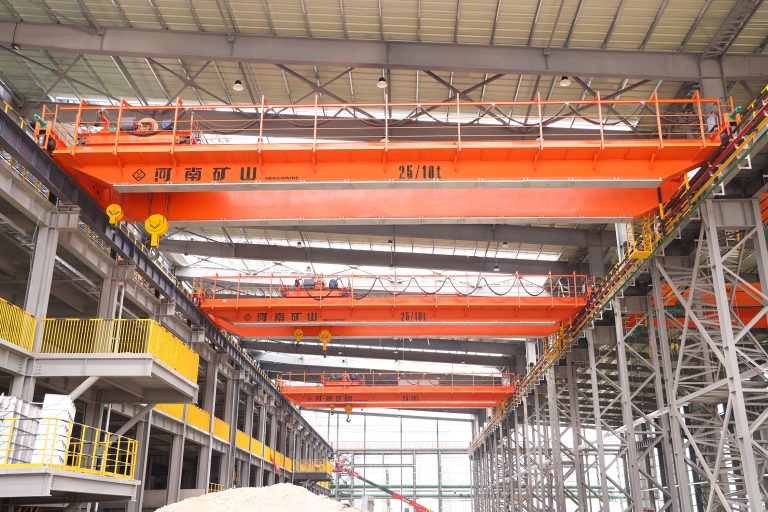
Common Applications of Automatic Overhead Crane Systems
Intelligent Warehouse
Intelligent warehouses are the most important application scenario for Overhead Crane systems, especially high density storage warehouses. These warehouses are densely populated, and manual handling is difficult and inefficient. The automatic system can make full use of the overhead space to realize automatic storage, retrieval and handling of materials.
For example, e-commerce logistics warehouses, cold chain warehouses, electronic parts warehouses, every day to deal with a large number of materials, automatic Overhead Crane system can be and AGV, conveyor and other equipment with the formation of a complete automated material flow line, significantly improve the operational efficiency of the warehouse.
Steel and Metal Handling
Steel mills and metal processing plants often need to lift heavy materials such as billets, steel plates, profiles, coils, etc. These materials are heavy and frequently handled, with harsh operating environments and high risk of manual operation.
Automatic Overhead Crane system can adapt to this heavy-duty, high-frequency operation needs, accurate lifting of various types of metal materials, but also with the production line, to realize the automatic feeding of materials, reduce manual intervention and improve production efficiency.
Manufacturing workshop
In machinery manufacturing, automobile parts manufacturing and other workshops, the production line requires a large amount of material supply, such as raw materials, parts, finished products and so on. Automatic Overhead Crane system can realize the automatic lifting and conveying of materials, transporting raw materials to the production line, and then transporting finished products to the warehouse, forming the automated closed loop of “Production - Handling - Storage”.
This not only reduces labor costs, but also avoids production line stoppages caused by untimely material supply and ensures a stable production rhythm.
Paper Mill and Roll Handling
Paper rolls in paper mills are heavy, bulky and easily damaged, making manual handling difficult and risky. The automatic Overhead Crane system accurately grabs the paper rolls, lifts and stores them smoothly, and avoids collision and damage to the paper rolls.
Precast concrete and heavy materials
Precast concrete plants and building materials plants need to lift heavy materials such as molds and finished concrete components, which are repetitive, labor-intensive and inefficient to handle manually.
The Automatic Overhead Crane system can adapt to the lifting needs of heavy materials, realize the automatic handling and storage of molds and finished products, reduce manual intervention, lower labor intensity, and at the same time improve the handling accuracy to avoid material damage.
Dangerous or high temperature environment
In hazardous or high-temperature environments such as chemical workshops, metallurgical workshops, etc., the risk of manual operation is high, and even normal operation is impossible. Automatic Overhead Crane system can realize unattended operation in these environments to avoid personnel exposure to danger.
For example, flammable and explosive materials in chemical workshop and high temperature steel ladle in metallurgical workshop can be lifted by automatic system, which not only ensures the safety of operation, but also does not affect the production progress.
Automatic Overhead Crane System vs Traditional Overhead Crane
Operation Mode
Traditional Overhead Crane is mainly operated manually or semi-manually, the operator needs to control every movement of the crane, relying on the experience and skills of the operator, the operation process is flexible, but the consistency is poor.
Automatic Overhead Crane system is based on program control, the operator only needs to monitor in the background and occasionally deal with abnormal situations, the operation process is standardized and automated, with strong consistency, and does not need to rely on the experience of the operator.
Labor Requirements
Traditional Overhead Cranes need to be equipped with specialized operators, a crane needs at least 1-2 operators, high labor costs, and subject to the difficulty of recruiting and the impact of personnel turnover.
The automatic Overhead Crane system does not require a dedicated operator for the whole operation, only 1-2 managers are needed, responsible for background monitoring and equipment maintenance, which can significantly reduce the number of labor, lower labor costs, and also avoid the impact of personnel turnover.
Efficiency and consistency
The efficiency of traditional Crane is greatly affected by the operator's experience and fatigue, for example, the efficiency of skilled operators is high, while the efficiency of novices is low, and is prone to operational errors, resulting in poor operational consistency.
Overhead Crane systems have stable efficiency, can achieve 24-hour continuous operation, and all actions are executed in accordance with the preset program, operational consistency is strong, and there will be no human error caused by fluctuations in efficiency.
Data and system visibility
The operation data of traditional Crane is difficult to collect and trace, such as the number of lifting, load weight, fault conditions, etc., all need to be recorded manually, which is not only cumbersome, but also prone to errors, and it is difficult for managers to understand the operation status of the equipment in real time.
The automatic Overhead Crane system can collect all the operation data in real time and feed back to the backstage monitoring panel, so that the managers can check the status of the equipment and the operation data at any time, and also analyze the problems in the operation through the data traceability, which can provide the basis for the management and optimization.
Initial investment and long-term return
The initial investment of traditional Overhead Crane is low, which is suitable for customers with limited budget and low operation frequency, but the long-term operation cost is high, which needs to bear high labor cost and maintenance cost.
Automatic Overhead Crane systems have a higher initial investment, 30%-50% higher than traditional cranes, but have low long-term operating costs and can achieve long-term savings through reduced labor and lower failure losses. long-term returns are more obvious for warehouses with high operating frequency and large scale.
Is the Overhead Crane system suitable for all warehouses?
The most suitable conditions
Automatic Overhead Crane system is not omnipotent, it is the most suitable for these scenarios: high frequency of operation, a large number of repetitive material handling every day; material flow rules, such as fixed pickup point, cargo position, fixed lifting route; high requirements for handling accuracy, the need for accurate inventory management and material traceability; digital warehouse management needs, want to realize the warehouse of intelligence, automation; warehouse scale, low handling efficiency and high cost. handling efficiency is low and high cost.
Traditional Crane is still sufficient for the situation
If the operation frequency of the warehouse is low, and only occasional lifting of materials is required every day, such as small spare parts warehouses and small processing plants, traditional Cranes are sufficient.
There are also warehouses with complex operating processes, many types of materials, different specifications, lifting routes are not fixed, the automation system is difficult to adapt, in this case, the flexibility of the traditional Crane is more advantageous. In addition, the budget is limited, can not afford the initial investment of the automated system customers, choose the traditional Crane more cost-effective.
Semi-automation as an intermediate option
If customers want to enjoy the advantages of automation, but do not want to bear the high initial investment, or the workflow has a certain degree of flexibility, semi-automated solutions are a good choice.
Semi-automated systems do not need to be completely unmanned, but on the basis of the traditional Crane, adding positioning assistance, anti-sway, remote control and other functions, such as the operator can remotely control the Crane on the ground, the system assists in accurate positioning, which not only reduces the intensity of manual labor, but also reduces the cost of inputs, and retains a certain degree of flexibility of operation.
This solution is suitable for those warehouses that want to gradually transition to full automation, or where there are certain changes in the operating process.
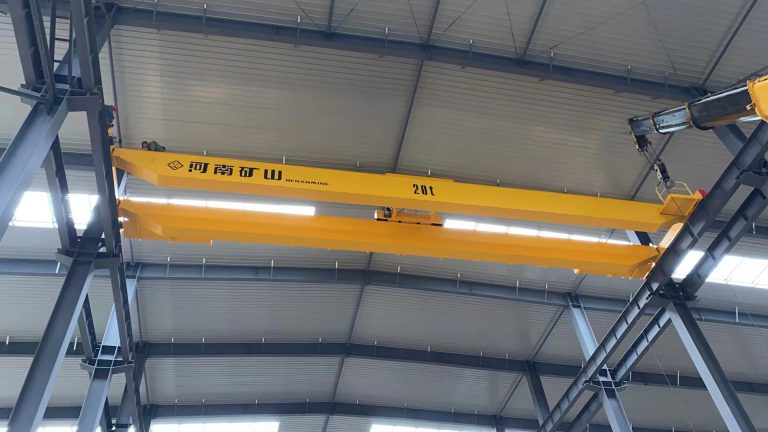
Key Factors to Consider Before Choosing an Automated Overhead Crane System
Material types and handling processes
First of all, it is necessary to clarify the type of material to be lifted in the warehouse, such as the weight, size and shape of the material, whether it is heavy or light, solid or liquid, and whether it is easily damaged. Different materials have different requirements for the lifting capacity and gripping method of the Crane.
Warehouse layout
Warehouse layout is an important basis for the selection of automated systems, you need to provide the warehouse span, Crane running length, lifting height, storage layout, channel width and other data.
Work level and cycle requirements
The working level of the Crane determines the durability and stability of the system. Different operating frequency, need to choose a different working level of the system.
Integration requirements
The automatic Overhead Crane system needs to be integrated with the existing systems and equipment in the warehouse to maximize the effect. Before choosing, it is important to clarify whether the system needs to interface with software such as WMS, MES, ERP, etc., and whether it needs to work with equipment such as AGVs, conveyors and stacker cranes.
Safety requirements
Safety is a prerequisite for automated operations, and different warehouses have different safety requirements. It is necessary to clarify the safety standards of the warehouse, such as whether it needs anti-collision, overload protection, emergency stop, explosion-proof, dust-proof and other functions.
Maintenance and technical support
The maintenance of the automatic Overhead Crane system is more complex than traditional cranes, which not only needs to maintain the mechanical components, but also needs to maintain the electrical system and software system. When choosing a supplier, it is important to consider the supplier's maintenance capability and technical support level.
Budget and return on investment expectations
Budget is the main concern of many customers, when choosing an automated system, it is necessary to balance the initial investment and long-term return. You can't just look at the initial cost, but also consider the long-term operating costs, labor costs, and failure losses.
Important Features of an Intelligent Automated Overhead Crane System
Automatic storage and retrieval capability
This is the most core function of the automatic Overhead Crane system, which can automatically grab materials and transport them to the designated cargo position for storage according to the system instruction, and also can automatically find the target materials and transport them to the designated position according to the retrieval demand.
This function can realize unmanned handling and storage of materials, reduce manual intervention and improve operational efficiency, especially suitable for high density storage warehouses.
Accurate Load Positioning
Accurate positioning is the basis of automated operations, the system can be laser positioning, encoders and other technologies to achieve accurate positioning of the Crane, materials, positioning error control in millimeters.
Whether storing or retrieving materials, the system can accurately place and grab them, avoiding misplacing and omitting, improving the accuracy of inventory management and reducing material damage.
Real-time fault diagnosis
The system can monitor the operating status of the Crane in real time and collect the operating data of the motor, sensors, electrical system and other components. In the event of a fault, such as sensor failure, motor abnormality, or wiring failure, the system will issue an alarm in time and display the location of the fault, the cause, and the treatment recommendations.
This helps maintenance personnel to quickly locate the fault and handle it in time, reducing downtime and ensuring stable system operation.
Remote Monitoring Panel
Managers can view the Crane's operation status, operation data, fault records, etc. in real time through the remote monitoring panel, which enables comprehensive monitoring of the equipment without the need to be at the warehouse site.
Predictive maintenance function
By analyzing the operation data collected by the system, the system can predict the wear and tear of the components in advance, such as the wear and tear of the wire rope, the running status of the bearings, and the aging of the motor, and then send out a maintenance reminder so that the maintenance personnel can carry out maintenance and replace the components in advance.
Energy-saving operation logic
The automatic Overhead Crane system is equipped with energy-saving operation functions, such as automatically adjusting the running power of the motor according to the size of the load; automatically reducing the running speed to minimize the energy consumption during no-load operation; and automatically entering into the dormant state to reduce the standby energy consumption when it is not in operation.
System Expandability
With the expansion of the warehouse scale and changes in business requirements, the automatic system needs to be scalable, able to upgrade the configuration and increase functionality according to subsequent needs.
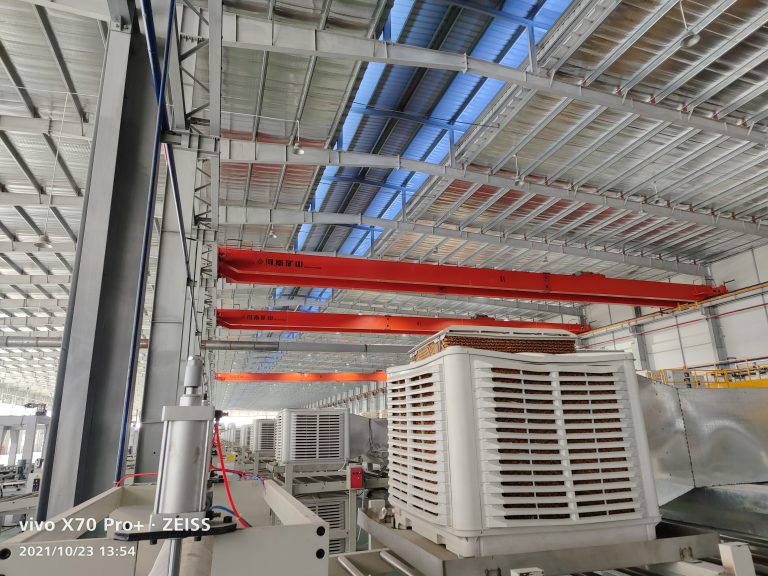
Challenges of Implementing an Automated Overhead Crane System
Higher initial investment
The initial investment of the automatic Overhead Crane system is quite higher than that of traditional cranes, mainly including equipment costs, installation costs, software integration costs, etc. For SMEs, they may face certain financial pressure.
Integration complexity
The automated system needs to be integrated with existing software such as WMS and MES in the warehouse, as well as equipment such as AGVs and conveyors, which is a complicated process and requires a professional technical team for planning and debugging.
Accurate site data and process planning
The installation and debugging of automated systems requires accurate warehouse site data, such as warehouse span, lifting height, cargo coordinates, track position, etc. If the data is inaccurate, it will lead to system positioning deviation and poor operation.
Personnel training and change management
After the automatic system is put into use, the operation mode of the warehouse will change, and the operators and managers need to adapt to the new way of working, such as learning the skills of backstage monitoring, system operation, and troubleshooting.
Many old employees are used to the traditional manual operation, and may be resistant to the automation system. It is necessary to do a good job of personnel training and change management, so that employees can understand the advantages of automated systems, master the operating skills and adapt to the new mode of operation.
Software and control system compatibility
The software and control system of the automated system needs to be compatible with the existing software and equipment in the warehouse, if the compatibility is not good, it will lead to the system can not run properly
Therefore, when selecting the system, to ensure the compatibility of the software and control system, it is best to choose a supplier that can provide customized integration services, according to the warehouse's existing equipment and software, targeted debugging.
Ongoing maintenance of mechanical and digital systems
Automatic Overhead Crane systems, with both mechanical components and digital components such as electrical and software, are more complex to maintain than traditional cranes. Mechanical components need to be regularly lubricated, inspected and replaced, and digital components need to be regularly upgraded and debugged to ensure stable operation of the system.
How Automated Overhead Crane Systems Support Smart Warehouse Strategies
Better inventory flow management
One of the core requirements of an intelligent warehouse is to realize accurate management and efficient flow of inventory. Overhead Crane system can be seamlessly integrated with WMS system to update inventory data in real time and realize full traceability of materials.
Higher Space Utilization
Overhead Crane system can make full use of warehouse overhead space to realize high-density storage, which can utilize more than 30% more space than traditional manual handling.
More reliable scheduling and throughput
The automatic system can realize the cooperative operation of multiple cranes, and reasonably allocate the work of each Crane according to the number of operation tasks to avoid idling or congestion. At the same time, the system can optimize lifting routes, reduce idle time and improve operational efficiency.
Enhance warehouse digitization level
Automatic Overhead Crane system can collect real-time operation data, which can provide the basis for the digital management of the warehouse. By analyzing this data, managers can identify bottlenecks in the operation, optimize the operation process, and improve the operational efficiency of the warehouse.
Laying the foundation for Industry 4.0 development
The core of Industry 4.0 is intelligence, automation and digitization, and the automatic Overhead Crane system, as the core equipment of intelligent warehousing, can realize the automation and digitization of material handling, and lay the foundation for the transformation of Industry 4.0 for enterprises.
It can be seamlessly integrated with the production system and management system to realize the whole process automation of “production - handling - storage”, improve the overall operational efficiency of the enterprise and enhance its competitiveness.
Common Misconceptions to be Avoided on the Purchasing Side
Focus only on equipment cost
When purchasing, many customers only focus on the initial cost of the equipment and choose whichever they think is cheaper, while ignoring the subsequent costs of software integration, maintenance, and spare parts.
Some of the initial cost of equipment is low, but the software integration is difficult, high maintenance costs, the supply of spare parts is not timely, in the long run, the operating costs are higher. Therefore, the procurement should consider the initial cost and long-term operating costs, not just look at the price.
Neglecting Software Integration Requirements
The core advantage of the automated Overhead Crane system lies in the integration with warehouse software and other equipment. If the integration needs are ignored and the selected system is not compatible with the existing software and equipment, the advantages of automation cannot be realized.
Select automation without analyzing the workflow
For example, the warehouse material handling process is complex, the route is not fixed, the automation system is difficult to adapt, in this case, the choice of traditional Crane or semi-automated system, but more cost-effective. Therefore, before purchasing, you should analyze your workflow and determine whether automation is suitable before choosing the right system.
Underestimating maintenance and support needs
The maintenance of automated systems is more complex than traditional Crane, requiring a professional maintenance team and timely technical support, but many customers underestimate the maintenance and support needs when purchasing, and choose a supplier without a perfect maintenance system.
Excessive automation of simple operations
Some customers feel that the higher the degree of automation, the better, even if it is a simple operation, but also forced to choose a fully automated system, resulting in over-investment and low cost-effective.
Not planning for future expansion
Many customers in the procurement, only consider the current needs, not planning for future expansion, the results of the warehouse scale, business needs increase, the existing system can not be adapted, only to re-purchase equipment, increasing costs.
Therefore, when purchasing, it is necessary to choose a system with scalability to ensure that the subsequent warehouse expansion, business upgrades, the system can be upgraded by upgrading the configuration, increase the functionality, to meet the new needs, to avoid repeated investment.
What information should be provided to the automated crane suppliers
Basic Crane Requirements
First of all, it is necessary to clarify the basic Crane parameters, such as rated lifting capacity, span, lifting height, running length, operating frequency, which are the basis for the supplier to design the program and select the equipment.
Warehouse and layout details
Need to provide the supplier with the architectural drawings of the warehouse, storage layout, distribution of cargo space, aisle width, track location and other details, it is best to provide on-site photos, so that the supplier is clear about the actual situation of the warehouse.
Material handling process
It is necessary to explain to the supplier the types, weights, sizes and shapes of materials to be lifted in the warehouse, as well as the material handling process, such as the location of pick-up points and cargo spaces, the planning of lifting routes, the number of lifts per day, and the sources and destinations of materials.
Automation expectations
Be clear about your automation expectations, such as whether to choose full automation or semi-automation, whether you need remote monitoring, troubleshooting, predictive maintenance, etc., whether you need to integrate with software such as WMS, MES, etc., and whether you need to work with equipment such as AGVs and conveyors.
Case: Automatic Overhead Crane in Intelligent Warehouse
A large e-commerce logistics warehouse: the biggest problem is the high labor cost, requiring 8-10 operators, and low operational efficiency, the number of lifting times per day can not meet the demand, but also often appear misplaced, material confusion, inventory error rate of up to 5% or more, affecting the delivery of orders.
Later, the customer contacted Henan Mine Crane, according to the actual situation of the warehouse, we designed a set of automatic Overhead Crane system program, equipped with 3 sets of 10 tons of double girder automatic Overhead Crane, docking the warehouse's existing WMS system, to achieve automatic storage, retrieval and handling of materials.
After the system was put into use, the number of laborers in the warehouse was reduced to 2 managers responsible for background monitoring and equipment maintenance, reducing labor costs by more than 70%; the number of lifts per day was increased to 1,200-1,500, increasing efficiency by 50%; the positioning accuracy was controlled to within 3 mm, and the error rate of the inventory was reduced to less than 0.5%, significantly improving the efficiency of order delivery.
At the same time, the system's real-time monitoring and predictive maintenance features reduce the frequency of failures, downtime has been reduced by 80%, and maintenance costs are 30% lower than traditional Crane. Customer feedback, after this system is put into use, the operational efficiency of the warehouse has been greatly improved, and the invested cost is fully recovered in 1.5 years.
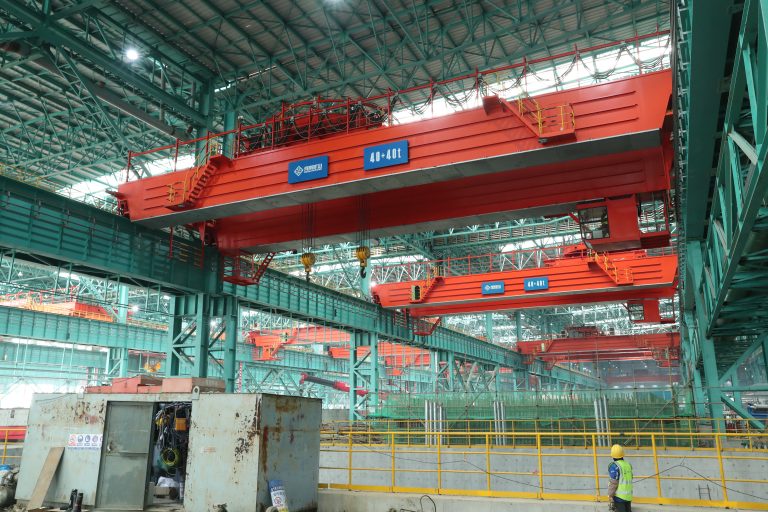
Frequently Asked Questions about Automatic Overhead Crane Systems
What is the difference between an Overhead Crane and a Standard Overhead Crane?
The core difference is the mode of operation and control: standard Overhead Cranes are mainly operated manually, relying on operator's experience, and the data cannot be traced in real time; automatic Overhead Cranes are mainly controlled by program, realizing unattended or semi-unattended, with real-time monitoring and tracing of data, and higher efficiency and consistency.
Can Overhead Crane interface with Warehouse Management System (WMS)?
Yes, and this is one of the core strengths of the Overhead Crane system. It can be seamlessly integrated with WMS, MES, ERP and other warehouse management software to realize the closed loop of order issuance and data feedback.
Is Overhead Crane only suitable for large warehouses?
No, it is not only suitable for large warehouses, but also for small and medium-sized warehouses, depending on the frequency of operation and demand.
Is the Overhead Crane system safe?
Yes, it is. It is equipped with complete safety protection devices, such as anti-collision sensors, overload limiters, emergency stop buttons, limit switches, etc. It monitors the work process in real time and automatically stops the operation and sends out an alarm in the event of an abnormality.
Is full automation always necessary, or is semi-automation sufficient?
Not necessarily, full automation is not the only option, it depends on your operational needs and budget.
What do I need to prepare before installing an automated Overhead Crane system?
First of all, it is necessary to organize the detailed data of the warehouse, such as the warehouse span, lifting height, running length, cargo space distribution, track position, etc.,.
Henan Mine Crane Factory Custom
Automatic Overhead Crane system, which is becoming the core equipment of intelligent warehousing, is not a panacea, nor is it suitable for all warehouses.
As a sales and technical expert of Henan Mine Crane, I suggest that before purchasing, you must dock with a professional crane supplier, provide detailed information about your needs, and let the Crane supplier design a customized program according to your actual situation.