
How to Calculate the Total Cost of Ownership (TCO) for a Factory Crane?
When most factories purchase bridge, gantry, and cantilever cranes, they generally fall into the selection misunderstanding of “only looking at the purchase reserve price”.The service life of the crane can reach 10-30 years, and the initial procurement cost accounts for only 10%-20% of the total cost of ownership. Long–term hidden costs such as energy consumption, operation and maintenance, and downtime are the main expenses.
TCO whole life cycle cost accounting is the key to optimizing crane investment and improving ROI.This article will explain in detail the definition, cost composition, step-by-step calculation method, influencing factors and cost-reduction strategies of factory crane TCO, so as to help enterprises abandon one-sided price comparison thinking and realize the optimal cost of the whole life cycle of equipment.
What Is Total Cost of Ownership (TCO) for a Factory Crane?
The TCO (Total Cost of ownership) of a factory crane refers to the sum of all direct and indirect costs in the whole life cycle of the crane from procurement and commissioning, daily operation, maintenance and overhaul, to final scrap disposal, covering the complete service cycle of the equipment for 10-30 years. The specific life span depends on the working conditions of the equipment, maintenance quality and design standards.
Unlike a single purchase price, TCO accounting completely breaks the one-sided thinking of “only looking at the initial investment”, and comprehensively includes hidden expenses that can easily be ignored such as energy consumption, labor, downtime, and compliance rectification.
Accurate TCO analysis can help companies scientifically compare the cost performance of cranes of different brands and configurations, and rationally adopt high-priced, high-quality, energy-saving and efficient equipment solutions to reduce the whole life cycle cost from the root cause and improve the economic efficiency of equipment operations.
Core Composition and General Calculation Formula of the TCO of Factory Crane
The industry's general crane TCO accounting formula integrates all income and expenditure items in the whole life cycle and is a standardized accounting basis:
TCO = initial acquisition cost + operating cost + maintenance and repair cost + downtime capacity loss + safety compliance cost + scrap disposal cost−equipment residual value
The proportion of each cost module is a common estimate in the industry, and it will fluctuate slightly with the crane tonnage, working condition intensity, use environment, and regional policies. The specific breakdown is as follows:
Initial acquisition cost
It is a one-time initial investment and is the most intuitive cost item. It includes all pre-production expenditures such as equipment procurement, transportation, installation, infrastructure transformation, qualification approval, acceptance testing, and initial personnel training. It is also the core reference item for market price comparison.
Operating costs
The cost module with the highest proportion of the whole life cycle is the core of long-term expenditure. It mainly includes equipment energy consumption, operator salaries, equipment insurance, and replacement of consumables. Among them, power consumption and labor costs account for the absolute dominance of operating costs.
Maintenance and repair costs
It covers daily preventive maintenance, regular compliance testing, replacement of wearing parts, emergency repair of faults, annual maintenance contracts and other expenses.The longer the service life of the equipment and the harsher the working conditions, the higher the maintenance cost, and unplanned maintenance of sudden failures will significantly increase additional expenses.
Loss of downtime capacity
The hidden costs that are most easily overlooked but have a great impact include planned maintenance shutdowns, production capacity stagnation caused by sudden failures and shutdowns, labor inactivity, order delays, and expedited production premiums. The loss of downtime in high-capacity assembly line factories far exceeds equipment maintenance expenses.
Safety compliance cost
Expenditures incurred to meet OSHA, ASME, CMAA and other industry standards and local regulatory requirements, including personnel certification training, safety equipment upgrades, compliance audits, annual inspections and records, emergency response to accidents, etc., Non-compliance will also result in high fines, further driving up costs.
Scrap disposal cost and equipment residual value
This item covers the finishing costs of disassembly, clearance and environmental protection disposal of the crane after the expiration of its service. At the same time, the remaining residual value of the equipment can offset the overall input. It is an indispensable last part of the TCO's full-cycle accounting, which directly affects the final net input cost of the equipment.
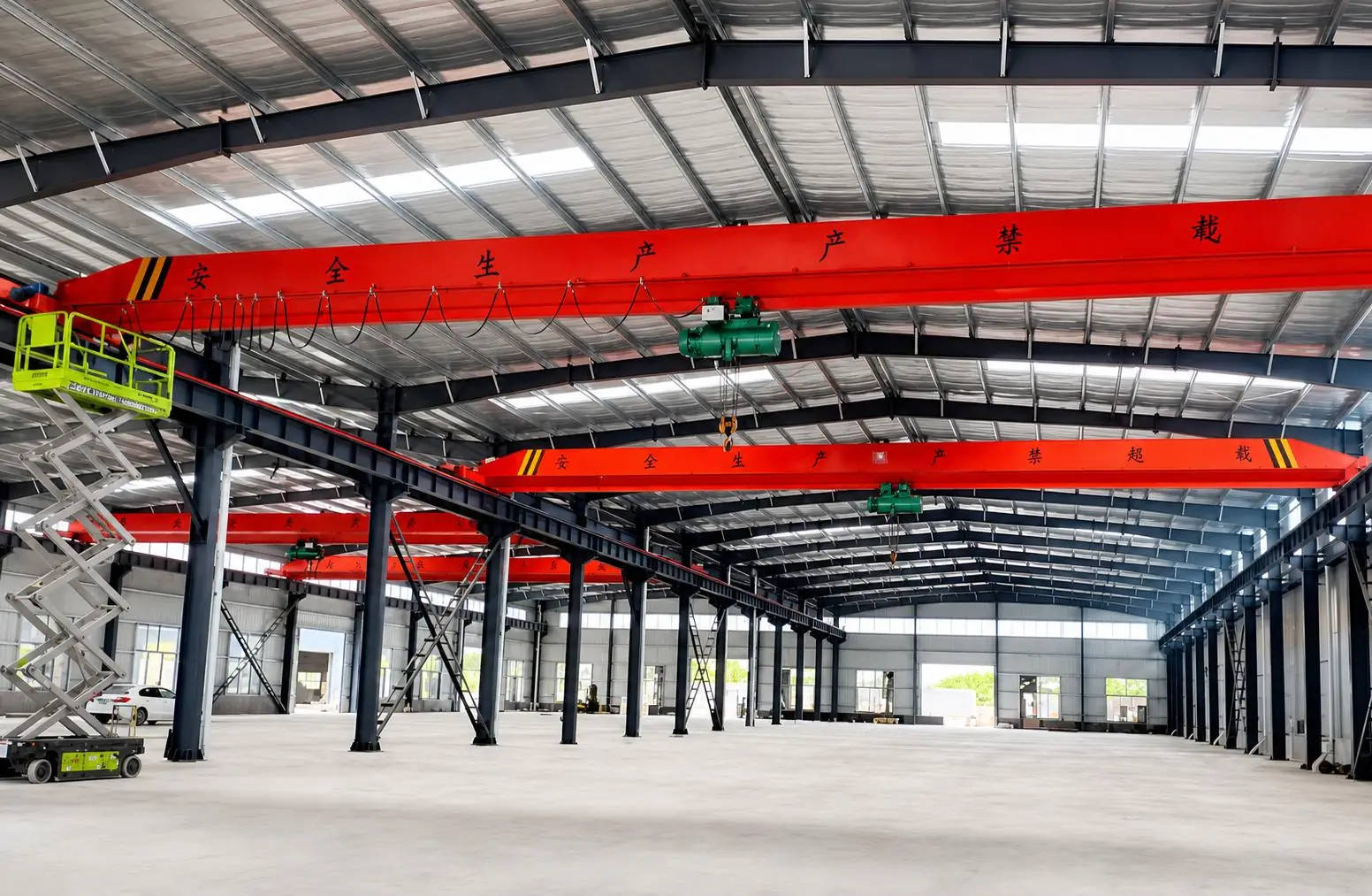
Step 1 — Calculate the Initial Investment Cost of a Factory Crane
The initial investment is all fixed expenditures before the crane is put into operation. The core formula: initial total investment = equipment purchase price + transportation fee + installation and commissioning fee + infrastructure renovation fee + approval and testing fee + initial training fee + emergency reserve fund (5%-15%)
Breakdown of costs and case accounting:
- Equipment purchase price: including core equipment such as hoists, carts, and electronic control systems, the standard model of a 50–ton double–girder bridge crane is US1180,000, and the configuration of variable frequency drive (VFD) and wireless remote control requires an additional premium of 10%-25%; the market price of a 5-10–ton single-girder crane is US330,000-80,000, and customized models for large tonnage, explosion-proof, and clean rooms can reach more than US4400,000-1000,000.
- Transportation and distribution costs: The industry routinely accounts for 5%-15% of the equipment purchase price. In this case, the accounting cost is US115,000. The specific cost fluctuates flexibly with the transportation distance, the tonnage weight of the equipment, and the mode of transportation (land/sea/railway).
- Installation and commissioning fee: it accounts for 15%-40% of the equipment purchase price, and the installation cost of indoor standard working conditions is US660,000; for special working conditions such as aerial work and outdoor complex scenes, the installation cost can reach more than US。100,000.
- Infrastructure renovation fee: it covers supporting projects such as crane track laying, foundation reinforcement, plant steel structure renovation, and circuit system upgrade.The cost of retrofitting the old plant will even exceed the equipment procurement itself. In this case, the cost of retrofitting is US995,000. The selection of compact low-clearance cranes can effectively reduce the cost of infrastructure retrofitting.
- Approval and testing fees: including project compliance reporting, structural load accounting, third-party load testing, equipment acceptance and filing and other compliance expenses, the total in this case is US113,000 (approval fee of US88,000 + testing fee of US55,000).
- Initial personnel training: it covers the pre-job compliance practical training of crane operators, engineers, and maintenance technicians. The training cost in this case is US44,000 to ensure that the equipment can be put into operation to standardize compliance operations.
- Emergency reserve fund: It is calculated at 10% of the overall initial investment and is used to cover unknown expenditures such as construction renovation changes, formalities additions, and sudden supporting rectification. In this case, the reserve fund totaled US336,700 to avoid the risk of budget overruns in the early stage.
Total initial investment in the case: US4403,700
Step 2 — Estimate Factory Crane Operating Costs
Operating cost is the annual fixed + floating expenditure during the service period of the equipment, and the cumulative expenditure in 20 years far exceeds the initial investment. The core formula: Annual operating cost = energy consumption + labor salary + equipment insurance + consumables expenses + other miscellaneous expenses
Accounting details based on case equipment (annual operation of 2,500 hours, medium working conditions, mid-West plant in the United States):
- Energy consumption: The average operating power of the equipment in this case is 25kW, which is calculated based on the US industrial electricity price of 0.12 US dollars/kWh and the annual working conditions of 2,500 hours, and the annual electricity consumption is 7,500 US dollars.Energy-saving cranes equipped with VFD frequency conversion control and regenerative braking system can effectively reduce power loss by 20%-50%, and have significant long-term energy-saving benefits.
- Labor cost: The equipment is equipped with 1.5 full-time operators, covering all labor expenses such as basic salary, employee benefits, and overtime subsidies. The total annual labor cost is US997,500, which is the core expenditure of the crane's annual operating cost.
- Equipment insurance: it includes crane-specific property insurance, third-party liability insurance and other necessary insurance types to avoid economic risks caused by equipment damage and operating accidents. The annual insurance premium is US44,000.
- Miscellaneous consumables: it covers daily consumables such as equipment grease, wireless remote control batteries, cleaning and maintenance consumables, and the annual comprehensive consumables cost is US11,500.
- Other expenses: including miscellaneous expenses such as supporting energy consumption in the work area, equipment intelligent monitoring system subscription, auxiliary operation and maintenance consumables, the total annual expenses are US11,000
Step 3 — Include Maintenance and Repair Expenses
The maintenance cost includes planned maintenance and sudden failure maintenance. After 5 years of use of the equipment, the wear and tear will intensify, and the maintenance cost will increase year by year. The core formula: Annual maintenance cost = preventive maintenance cost + compliance annual inspection fee + parts repair and replacement fee + emergency reserve fund
Case accounting details:
- Preventive maintenance: It includes standardized maintenance work such as regular lubrication and maintenance of equipment, commissioning and calibration of key components, and inspection of normalized equipment to reduce equipment wear and potential failures from the source. The annual maintenance cost is US33,500.
- Annual compliance inspection: strictly follow OSHA and ASME industry specifications, carry out annual comprehensive inspection of the whole machine, load performance testing and compliance ledger filing to ensure the legal and compliance operation of the equipment, and the annual inspection and compliance fee is US33,000.
- Repair and replacement of accessories: it covers the regular replacement of core wearing parts such as wire ropes, braking devices, and limit switches, as well as the daily minor troubleshooting and maintenance of equipment. Based on years of working condition data, the average annual expenditure is US44,500.
- Emergency reserve fund: Used to deal with unexpected expenses such as sudden equipment failures and emergency overhauls. It is calculated at 10% of the total annual fixed maintenance cost, and the annual reserve amount is US11,100, which effectively avoids the risk of sudden cost overruns.
Step 4 — Calculate Downtime and Productivity Losses
Downtime loss is the most easily overlooked high cost. It is divided into planned maintenance downtime and sudden failure downtime, which directly affect factory production capacity and order revenue. The core formula: Annual downtime loss = (Planned downtime time + unplanned downtime time) × (Unit hour capacity loss + unit hour labor idle cost) × Capacity utilization rate + sudden accident premium loss
Case accounting parameters: the hourly production capacity loss of the factory area is US11,200, the labor idle cost is US880/hour, the capacity utilization rate is 80%, the annual planned shutdown is 12 hours, the unplanned shutdown is 20 hours, and the annual emergency amortization reserve is US55,000.
Total annual downtime losses in the case: US337,768, a total of US7755,000 in 20 years (in continuous production plants, the hourly production capacity loss can reach US55,000–20,000, and the downtime loss will become the largest proportion of TCO)
Step 5 — Consider Crane Safety and Compliance Costs
Compliance cost is the basis for the legal and safe operation of equipment, which can effectively avoid high fines and safety accident losses. The core formula: Annual compliance cost = personnel certification training + safety equipment upgrade + compliance audit filing + protective consumables + accident emergency reserve fund
Case accounting details: annual personnel retraining is US33,500, safety equipment upgrade and replacement is US22,000, compliance audit and ledger management is US11,500, protective equipment and identification are US8800, and the reserve for accidents and policy adjustments is US22,000.
Total annual safety compliance cost of the case: US99,800, cumulative US1196,000 in 20 years
Step 6 — Evaluate Crane Lifespan and Residual Value
Equipment service life, maintenance status, and market conditions directly determine the residual value, and the final accounting is completed based on the full cycle data. The core formula: net residual value = second-hand residual value of equipment−scrap disposal cost, final TCO = initial total investment + annual cumulative long-term cost−net residual value
Case accounting parameters: equipment design and service life of 25 years, medium working conditions, complete maintenance records, second-hand residual value of 12% of the original purchase price (US221,600), equipment disassembly, clearance, environmental protection disposal costs of US112,000, net residual value of US99,600.
Long-term cumulative cost of the whole cycle (20 years):(111500+12100+37768+9800)×25 = US 44,279,200
The final 25-year full life cycle TCO:403700 + 4279200 − 9600 = 4673,300 US dollars, the average annual TCO is about 186,932 US dollars
Core Key Factors Affecting the Crane TCO
The TCO of the whole life cycle of the crane is not a fixed value, and it will fluctuate dynamically with the equipment usage conditions and management methods.To accurately control costs and scientifically optimize investment benefits, enterprises need to accurately grasp the core influencing factors, and systematically optimize from the dimensions of equipment selection, on-site working conditions, operation and maintenance management, and supply chain services.
Equipment operating conditions and load utilization rate
The higher the frequency of equipment hoisting, the greater the rated load, and the longer the continuous operation time, the faster the wear rate of mechanical structure and transmission components, which directly pushes up the comprehensive costs of energy consumption, maintenance and downtime losses.Enterprises need to strictly select models based on CMAA and FEM international working conditions, match the real production load, eliminate the mismatch of “small machine overload, large machine low load”, and control invalid losses from the source.
On-site operating environment conditions
Harsh working conditions such as dust, acid-base corrosion, high temperature exposure, and outdoor humidity will accelerate the aging and failure of core components such as wire ropes, braking systems, and main beam steel structures.Such scenarios require special models with anti-corrosion, dust-proof, and high temperature resistance, and at the same time need to encrypt the maintenance frequency. Compared with standard indoor working conditions, the overall TCO can be increased by 30%-100%, which is an important cost variable that cannot be ignored.
Design specifications and accessories versatility
A modern crane equipped with VFD frequency conversion speed regulation, lightweight main beam structure, and general standardized accessories has the advantages of low energy consumption, low failure rate, easy purchase of accessories, and convenient maintenance, which can sustainably compress long-term operating costs.On the other hand, niche customized models and non-standard design equipment generally have problems such as scarcity of accessories, high maintenance thresholds, and serious maintenance premiums, and the TCO of the whole life cycle will be significantly higher.
Maintenance management system and operation and maintenance strategy
A scientific predictive and preventive maintenance system can effectively reduce unplanned downtime by 50%-80%, and greatly improve equipment attendance.The traditional passive operation and maintenance mode of ”emergency repair after failure" can easily cause problems such as sudden major repairs and long-term shutdowns, which continue to increase equipment maintenance costs and production capacity losses, which are the core management incentives for the high TCO.
Brand after-sales and supporting service system
The layout of the supplier's local service outlets, the inventory of standing parts, and the timeliness of emergency response directly determine the length of equipment failure and downtime and maintenance costs.A perfect localized after-sales support system can quickly deal with equipment failures, shorten the shutdown cycle, and reduce hidden losses in operation and maintenance. It is a key external factor in controlling the long-term TCO of the crane.
Factors That Can Reduce Factory Crane TCO
Based on the TCO cost structure, priority is given to optimizing the high proportion of operation, downtime, and maintenance costs, which can achieve significant cost reduction throughout the life cycle.:
- Scientific selection and rejection of low-price traps: match tonnage and working condition levels as needed, and do not blindly match high and low; give priority to low-headroom, lightweight, and energy-saving models to reduce infrastructure transformation and long-term energy consumption costs; optimize standardized accessory models to reduce follow-up maintenance premiums.
- Equipped with energy-saving intelligent configuration: the installation of VFD frequency conversion drive, regenerative braking, and intelligent load monitoring system can reduce power consumption by 20%-50%; the operating status of the equipment is monitored in real time through IoT devices to achieve early warning of failures and avoid sudden shutdowns.
- Implementation of standardized preventive maintenance: establish an electronic maintenance ledger for equipment, carry out regular inspections, lubrication, and replacement of accessories; sign a long-term maintenance contract with a manufacturer, lock in low-cost maintenance resources, enjoy priority after-sales response, and greatly reduce the probability of failure.
- Strengthen personnel compliance training: regularly carry out certification retraining of operators and maintenance personnel, standardize operating procedures, reduce equipment damage and safety accidents caused by human operation errors, and reduce compliance fines and maintenance costs.
- Optimize one-stop delivery suppliers: choose suppliers that can provide one-stop procurement, installation, training, and lifetime after-sales service to avoid coordinated costs and hidden price increases caused by multi-party docking, and ensure the stable operation of the equipment throughout the cycle.
Conclusion
Many factory cranes have a service life of more than 20 years. Under this premise, the initial purchase price of equipment is no longer the key to the selection decision, and it only accounts for a very low proportion of the total cost of the whole life cycle.To judge the investment value of a set of lifting equipment, the core lies in the comprehensive control ability of long-term energy consumption, maintenance, shutdown and shutdown losses, and compliance-related costs.
Relying on a perfect intelligent manufacturing system and advanced energy-saving technology, Henan mine crane meet the requirements of cost reduction in the whole life cycle of factory equipment, and solve common problems in the industry in a targeted manner: high energy consumption of equipment, frequent failures, complex maintenance processes, large losses caused by downtime, etc., and continuously optimize the total cost of ownership (TCO) of equipment.