
Double Girder Overhead Crane Cost: Factory Direct vs. Local Dealer
In the field of industrial lifting equipment procurement, the price difference of double-girder bridge cranes has always been the core issue that buyers are most concerned about.For double-girder bridge cranes of the same specifications, the quotation of different procurement channels may vary by 30% or more. This is not simply inflated pricing, but is affected by multiple factors such as product configuration, procurement model, and service system.For enterprises with lifting needs such as factories, workshops, logistics and warehousing, it is necessary to sort out the root causes of price differences in order to accurately control procurement costs and choose the procurement plan with the best price ratio.
Double Girder Overhead Crane Cost Breakdown
Price factors
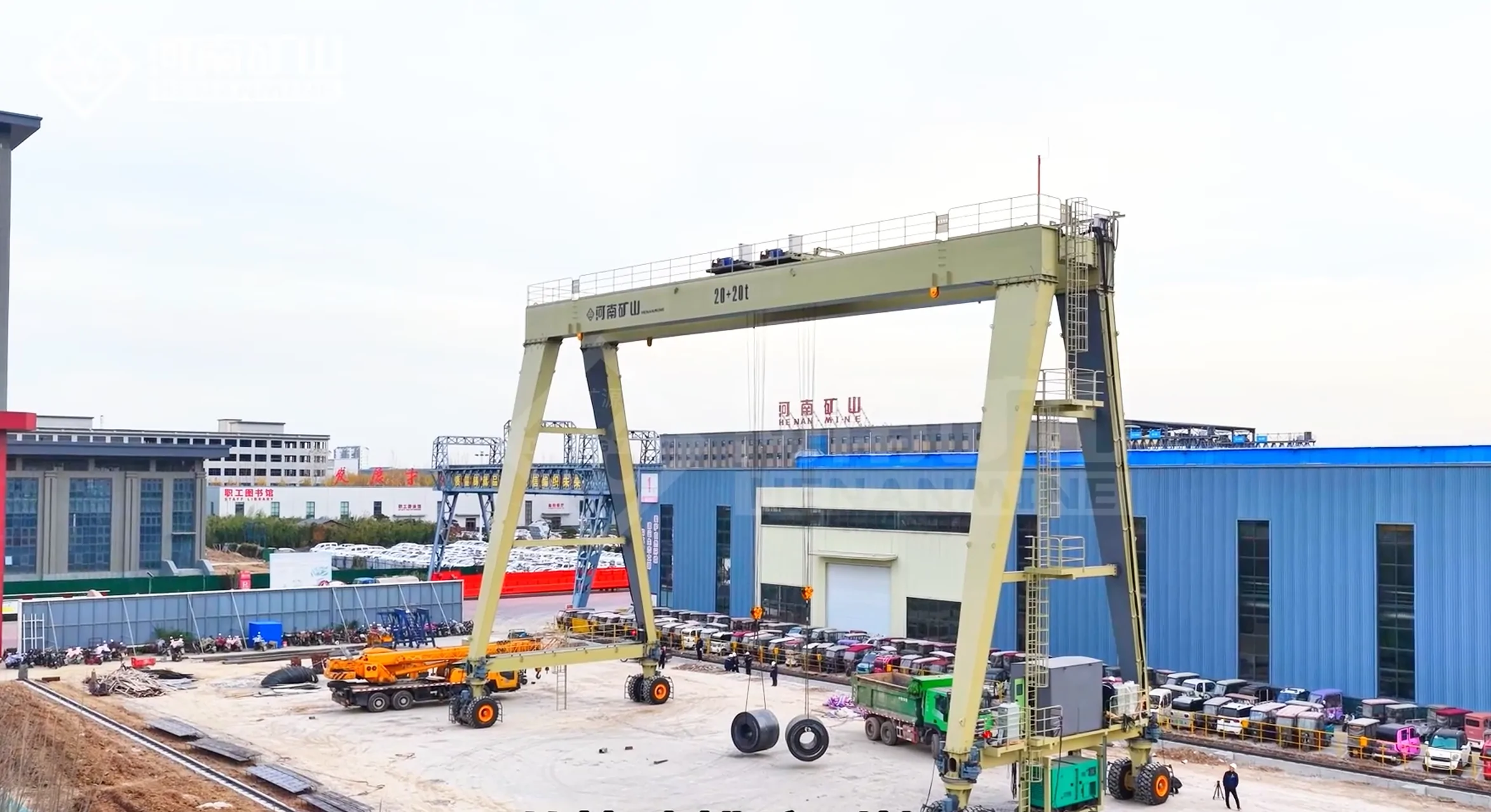
The basic pricing core of the Henan Mine Crane manufactured double-girder bridge crane is determined by the hardware configuration and technical parameters of the product itself, which is the core part of the cost composition.The first is the rated lifting weight. The larger the lifting weight, the higher the grade of core components such as the thickness of the main beam steel plate, motor power, and wire rope specifications required, and the cost will rise. For example, the cost of a 50-ton double-girder crane is much higher than that of a 10-ton model.The second is the span and lifting height. The larger the span, the higher the bending resistance of the main beam. Higher-quality steel and reinforced structural design are required, which directly increases material costs.The higher the lifting height, the corresponding increase in the length of the wire rope and the torque requirements of the motor.
In addition, the level of work is also a key factor. High-level cranes (such as A6-A8) that operate frequently need to be equipped with more durable parts and frequency conversion control systems, and the cost is 15%-20% higher than ordinary working-level (A1-A3) models.Finally, brand differences in core components will also affect pricing. Models with imported motors, frequency converters, and brakes are usually 20%-30% higher in price than domestic models with high-quality components, but they have more advantages in performance and service life.
Hidden costs
When calculating costs, many buyers often only pay attention to the quotation of the equipment itself, but ignore many hidden costs, which eventually leads to actual expenditures far exceeding the budget.First, transportation costs. Double-girder bridge cranes are large-scale equipment. Transportation requires special vehicles and professional loading and unloading. The farther the distance and the larger the equipment, the higher the transportation costs. Some long-distance transportation also requires additional insurance costs, accounting for 5%-15% of the total equipment cost.
Second, the cost of installation and commissioning. The crane is a special equipment. The installation requires a professional team to operate, and it also needs to cooperate with civil construction, track laying and other work. If the purchaser does not meet the relevant conditions, additional installation fees and civil renovation fees will be required. This part of the cost may be as high as tens of thousands of yuan.Third, the cost of acceptance and compliance, special equipment needs to be accepted by a professional testing agency before it can be put into use, and the cost of acceptance and qualification processing can easily be ignored.Fourth, the cost of late maintenance and spare parts, the supply price of spare parts and the cost of maintenance services in different procurement channels vary greatly. In the long run, this part of the hidden cost will directly affect the whole life cycle cost of the equipment.
Factory Direct Double Girder Overhead Crane Cost
Direct purchase benefits
The factory direct supply model refers to the purchaser directly docking procurement with the crane manufacturer, eliminating intermediate links, and the core advantages are concentrated on cost and product control.First of all, the price advantage is significant. There is no intermediate price increase link for distributors. Buyers can purchase equipment at a price closer to the ex-factory price, which usually saves 10%-25% of the purchase cost. For large-volume purchases or large-scale crane purchases, the cost savings are more considerable.
Secondly, product quality is more guaranteed. Buyers can directly connect with manufacturers to understand production processes and raw material procurement channels, and even go to the factory for on-site inspections to ensure that the equipment meets their own needs and quality standards, so as to avoid shoddy dealers.In addition, customized services are more flexible, and manufacturers can tailor equipment parameters according to the actual working conditions of the purchaser to meet individual use needs.Finally, the after-sales docking is more direct. When there is a quality problem or technical failure, the manufacturer's technical team can be directly contacted without going through the dealer's transit, and the response efficiency is higher.
Direct purchase challenges
Although the advantages of the factory direct supply model are obvious, there are also certain challenges, and buyers need to be prepared in advance.First, the early communication cost is high, and the purchaser needs to have certain professional knowledge and understand the technical parameters and selection criteria of the crane, otherwise it is prone to selection errors and affect the use effect.Second, it is difficult to coordinate transportation and installation. Manufacturers are usually only responsible for equipment production. Transportation, installation and other links require the purchaser to connect with third-party institutions on its own. Improper coordination may lead to delayed delivery of equipment, irregular installation and other problems.
Third, the geographical restrictions are obvious. If the purchaser is far away from the manufacturer, the transportation cycle will be extended, and the response speed of on-site maintenance in the later stage may be affected, and some remote areas even need to pay additional on-site service fees.Fourth, the payment terms are relatively strict. Manufacturers usually require a certain percentage of the payment in advance. Some manufacturers may also require the full payment to be shipped after the account arrives, which has certain requirements for the purchaser's financial liquidity.
Local Dealer Double Girder Overhead Crane Cost
Dealer pricing factors
The pricing of local distributors is not simply the ex-factory price of the equipment, but the final quotation after combining multiple factors.First of all, the purchase cost of the dealer and the price of the dealer's goods from the manufacturer are affected by the purchase volume and the cooperative relationship. The larger the purchase volume, the lower the price of the goods, and the quotation is relatively more advantageous.Secondly, for operating costs, local distributors are required to bear operating costs such as store rent, personnel wages, and storage costs. These costs will be apportioned to the quotation of each equipment.
Third, service costs, dealers usually provide one-stop services such as transportation, installation, commissioning, and after-sales. These service costs will be included in the quotation system, especially the on-site service costs of local dealers are relatively low, and the service response is more timely.Fourth, the relationship between market supply and demand, if the local market has strong demand for double-girder bridge cranes, the dealer may appropriately increase the quotation.Conversely, in order to seize market share, certain discounts may be given.In addition, the brand positioning of the dealer will also affect the pricing. The quotation of the dealer acting for a well-known brand is usually higher than that of the dealer acting for an ordinary brand.
Dealer advantages
The core advantages of the local distributor model lie in convenience and service assurance, especially suitable for small and medium-sized enterprises that lack professional procurement teams and technical support.First, one-stop service saves worry and effort. Dealers usually provide full-process services from selection, quotation, transportation, installation to after-sales. Buyers do not need to connect multiple entities, greatly reducing communication and coordination costs.
Second, the geographical advantages are obvious. Local distributors are closer to the purchaser, the transportation cycle is shorter, the equipment delivery speed is faster, and the late on-site maintenance and replacement of spare parts can also achieve rapid response, reducing the losses caused by equipment downtime.Third, the payment method is more flexible. Some distributors support payment in installments and cash on delivery to ease the financial pressure on buyers.Fourth, professional selection guidance, dealers are usually equipped with professional technical personnel, who can provide reasonable selection suggestions based on the actual working conditions of the purchaser, so as to avoid selection errors and reduce procurement risks.
Factory Direct vs. Local Dealer Cost Comparison
Initial price
Judging from the initial purchase price, the factory direct supply model is generally lower than that of local distributors.Since the intermediate price increase link of the dealer is eliminated, the direct supply price is usually 10%-25% lower than the dealer's quotation. For large-scale and high-configuration Henan Mine Crane manufactured double-girder bridge cranes, the price gap may be even greater.For example, for a 10-ton standard double-girder bridge crane with a span of 20 meters, the factory direct supply price may be 120,000-150,000 yuan, while the quotation from a local dealer may be 140,000-180,000 yuan.However, it should be noted that some distributors may drain through low prices, and charge additional fees for installation, spare parts, etc. In the later stage. Buyers need to carefully check the quotation details to avoid being misled by low prices.
Service cost
Service cost is one of the core differences between the two procurement models.Under the direct supply model of the factory, the basic after-sales service is usually provided by the manufacturer, but the purchaser shall bear the transportation, installation, commissioning and other services. If the manufacturer is required to provide on-site service, additional travel and labor costs will be paid. In the long run, the service cost may increase year by year.Local dealers usually include transportation, installation, commissioning and other services in the quotation. Some dealers will also provide free regular inspection and maintenance services. The supply price of spare parts in the later stage is relatively transparent. Although the initial quotation is higher, the long-term service cost is more controllable.Especially for companies that lack a professional maintenance team, the dealer's one-stop service can effectively reduce late operating costs.

Delivery time
In terms of delivery time, local distributors have more advantages.Dealers usually reserve a certain amount of standard model inventory. After the purchaser places an order, transportation and installation can be quickly arranged. The delivery cycle is usually 7-15 days.In the factory direct supply mode, manufacturers need to arrange production according to the purchaser's order. The production cycle is usually 15-30 days. In addition to the transportation time, the overall delivery cycle may be as long as 30-45 days. If the purchaser has urgent needs, it may affect the production schedule.However, for equipment with high customization requirements, although the production cycle directly supplied by the factory is long, it can better meet individual needs, while distributors usually only provide standard models, and the customization ability is relatively weak.
How to Calculate Total Crane Cost
Total ownership cost
Accounting for the cost of Henan Mine Crane manufactured double-girder bridge cranes should not only focus on the initial purchase price, but should fully account for the total cost of ownership (TCO) throughout the life cycle, which is the core basis for judging the cost performance of the procurement plan.The total cost of ownership mainly includes four parts, one is the initial procurement cost, that is, the quotation of the equipment itself.The second is the cost of installation and commissioning, including transportation costs, installation costs, civil renovation costs, acceptance and compliance fees, etc.The third is the operation and maintenance costs, including electricity, lubricating oil, regular maintenance, spare parts replacement, etc., which usually account for 3%-5% of the original value of the equipment/year.The fourth is the cost of scrap disposal, that is, the cost of disassembly and disposal after the service life of the equipment expires.The purchaser needs to comprehensively account for these four parts of the cost and compare the total cost of ownership of different procurement models, rather than simply comparing the initial quotation.
Supplier evaluation
Choosing the right supplier is the key to controlling the total cost of ownership.The purchaser needs to evaluate the supplier from multiple dimensions. First, the qualification and strength, verify whether the supplier has the special equipment production/operation qualification, the manufacturer needs to have the corresponding production license, and the distributor needs to have formal agency authorization and business qualification.The second is product quality. Check the supplier's product cases and customer evaluations to understand the performance, service life, failure rate, etc. of the equipment.The third is the service capability, which evaluates the supplier's after-sales response speed, service coverage, spare parts supply capacity, and whether it can provide one-stop service.The fourth is price transparency, which requires suppliers to provide detailed quotation details, clarify the composition of various fees, and avoid hidden charges.The fifth is the reputation of cooperation. Through industry reputation and feedback from old customers, we can understand the integrity and cooperation experience of suppliers.
When to Choose Factory Direct Purchase
The factory direct supply model is suitable for buyers who meet the following conditions. First, they have a certain professional procurement knowledge and technical team, and can independently complete the selection, docking, transportation and installation links.The second is that the procurement scale is large, or customized equipment is required, and there are special requirements for product parameters and configuration.The third is to pursue the ultimate procurement cost control, and be able to accept long delivery cycles and relatively complex coordination processes.Fourth, the area is closer to the manufacturer, or has the ability to solve transportation, installation and other problems on its own, so as to reduce the service shortcomings caused by the region.For example, for large-scale production enterprises and factories with professional equipment management teams, choosing the factory direct supply model can minimize procurement costs while meeting individual use needs.
When to Choose a Local Dealer
The local distributor model is more suitable for the following buyers, one is the lack of professional procurement and technical teams, hoping to obtain one-stop service, worry-free and labor-saving.The second is that there is an urgent need for use, and the equipment needs to be delivered and installed quickly.Third, the area is far away from the manufacturer, transportation and on-site maintenance are inconvenient, and local service providers are required to provide a quick response.Fourth, the liquidity of funds is limited and flexible payment methods are required.Fifth, the late service requirements are high, and we hope to obtain stable and convenient maintenance and spare parts supply.For example, for small and medium-sized enterprises and project parties with temporary lifting needs, choosing a local distributor model can effectively reduce communication costs and operational risks, and ensure that the equipment is put into use quickly.
Henan Mine Crane Factory Custom
In summary, the procurement cost of double-girder bridge cranes is not a single quotation, but a comprehensive system covering product configuration, procurement model, hidden costs and full life cycle services.The factory direct supply model relies on the advantages of price and customization to adapt to buyers with professional capabilities, cost control and personalized needs.The local distributor model focuses on convenient service and rapid response. It is more suitable for buyers who lack a professional team and pay attention to delivery efficiency and post-service. Buyers need to calculate the total cost of ownership based on their own needs and choose suppliers on the best basis.
As a professional large-scale crane manufacturer, Henan Mine Crane Factory directly supplies double-girder bridge cranes, eliminating the need for intermediate price increases, which can not only ensure product quality and customized needs, but also strictly control procurement costs.We have formal special equipment production qualifications, provide professional selection guidance and perfect after-sales guarantee, and can tailor equipment according to your working conditions to help enterprises carry out lifting operations efficiently and in compliance. Welcome to consult and connect.