
Electric Chain Hoist vs. Pneumatic Air Hoist: Industrial Selection Criteria
The key to the selection of industrial hoists is to match the driving mode, working intensity and on-site conditions.Electric chain hoists are usually suitable for manufacturing, storage, and assembly stations with convenient power supply; pneumatic hoists can reflect advantages in situations where there is sufficient air source, continuous operation requirements, or specific environmental requirements.Both must meet the corresponding load, control and safety conditions.
The same rated tonnage does not represent the same production adaptability.The lifting frequency, the number of jog movements, the energy supply capacity at the lifting point, and the consequences of downtime often affect long-term performance more than the purchase price.The goal of the selection is to find a configuration that can stably complete the actual handling tasks and has a reasonable overall cost among the compatible and available solutions.
What Is an Electric Chain Hoist?
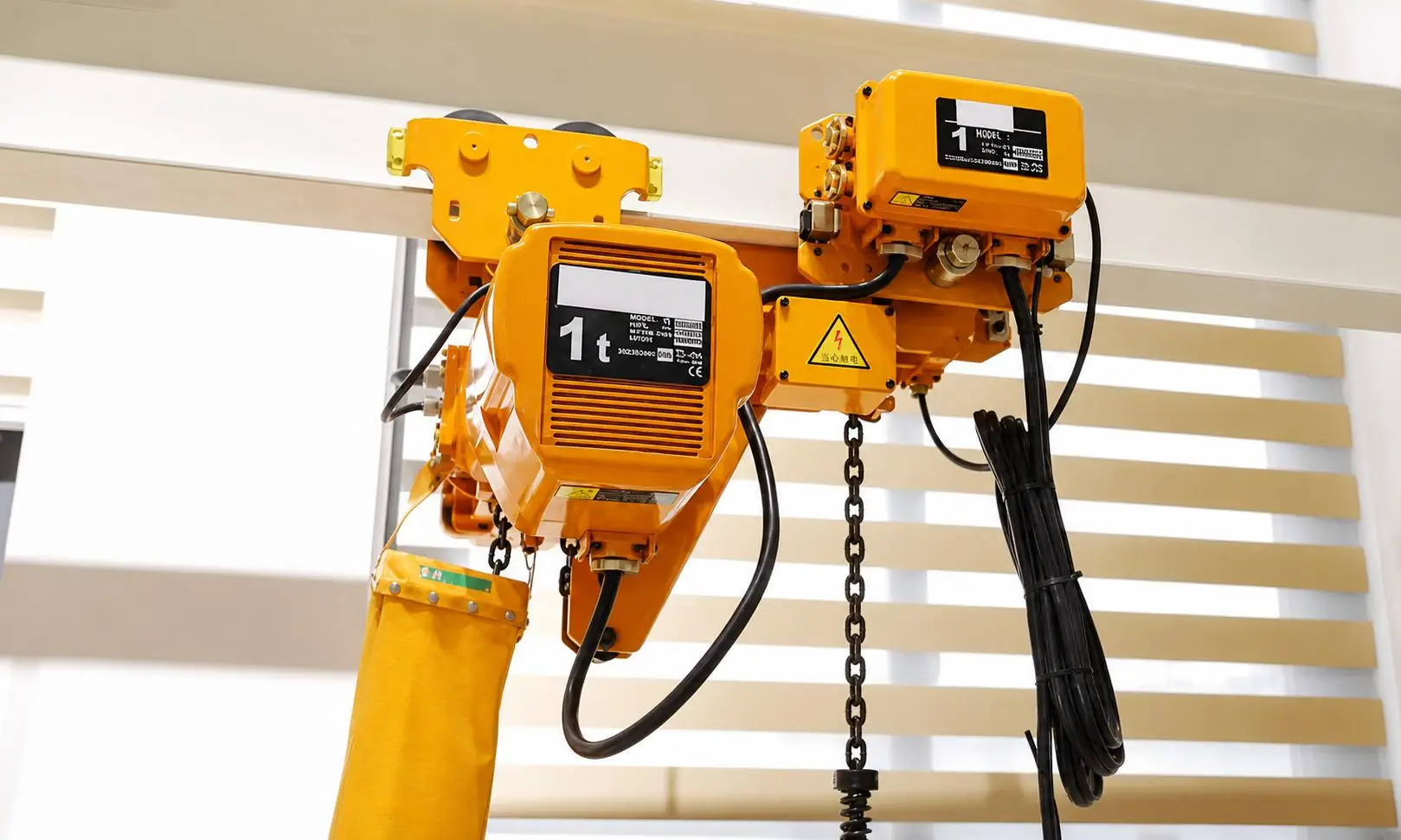
Electric Chain Hoist consists of a motor, a deceleration mechanism, a lifting sprocket, a bearing chain, a brake and a control system.The motor is decelerated by the gear to increase the output torque, and the sprocket is driven to engage with the chain to lift the lower hook; the control system coordinates the operating direction, speed and braking action.The chain is driven by a sprocket and is not wound and stored on a reel like a wire rope.
After the operation button issues the lifting command, the drive and brake mechanisms cooperate in the designed order.When stopped, the holding brake is responsible for fixing the load, and the limiting device is used to prevent over-travel.Common speed configurations include single-speed, two-speed, and frequency conversion or other speed control schemes provided by some models; different control configurations will perform differently when approaching the workpiece at low speeds.
Key Advantages of Electric Chain Hoists
In workshops with stable power supplies, electric hoists are easy to match with cantilever cranes, bridge cranes and workstation systems.The power supply and control interface are easier to incorporate into the factory's existing maintenance system, and it is easy for operators to master button control.For repeated handling, suitable low-speed and slow-start and slow-stop functions can reduce the impact of sudden acceleration and deceleration.
For example, the Harrington NER/ER technical page lists the frequency conversion drive and soft start and soft stop functions of the two-speed model, indicating that the electric solution can provide detailed speed control.However, this is a specific product configuration, and it cannot be determined that all electric hoists have the same positioning performance.
Potential Limitations
The electric scheme depends on the matching voltage, phase number, frequency, and line capacity.Frequent start-up, long-term operation, or high temperature environments may cause the motor to accumulate heat, which will affect the availability after exceeding the allowable operating conditions.The protection and certification of ordinary industrial models cannot automatically cover the explosive environment; applications in hazardous areas must adopt special configurations suitable for on-site conditions.
What Is a Pneumatic Air Hoist?
The pneumatic hoist feeds compressed air into the air motor through a control valve, and the motor drives the sprocket and the bearing chain through the transmission mechanism.The operation handle or air control button changes the intake direction and flow rate to achieve lifting and corresponding speed regulation; the braking mechanism is responsible for maintaining the load after stopping.Its basic lifting function is similar to that of an electric hoist, the main difference is the power conversion and control method.
The quality of the air source directly affects this conversion process.The inlet pressure affects the available torque, and the flow rate affects the continuous operation ability; filtration, drying and applicable lubrication measures are related to the state of the valve parts and the motor.Just looking at the pressure gauge of the air compressor station, it is impossible to tell how much air is obtained when the hoist is running, because the pressure loss will occur in the pipelines, joints and filters.
Key Advantages of Pneumatic Air Hoists
A properly designed pneumatic hoist can undertake high-frequency and repetitive lifting tasks, and the air flow through the motor also helps to take away heat.J.D. The Neuhaus PROFI product information clearly lists the continuous working capabilities of this series.Such capabilities are still premised on the specified air source, environment and maintenance conditions, and cannot be extended to all pneumatic models for unlimited continuous operation.
The hoist body adopts pneumatic drive, which can reduce some of the installation requirements caused by the electric drive system of the body.For specific hazardous areas or environmental conditions, this provides convenience for special design; suitable valve control configuration can also achieve sensitive operation.The actual advantages depend on the design, certification and air source stability of the whole machine, not only the power medium.
Potential Limitations
The pneumatic hoist must be equipped with a compressed air system with sufficient capacity.Long hoses, thin pipe diameters, or increased gas consumption equipment at the same time may cause the carrying speed to decrease.Exhaust noise, condensate and air path leakage will also increase the management burden; some models require air path lubrication, while others have different design requirements, and maintenance methods must be subject to the corresponding manual.
Electric Chain Hoist vs. Pneumatic Air Hoist: Key Differences
When comparing Electric Chain Hoist with pneumatic hoist, the source of power is only the starting point.A truly meaningful comparison is to check the complete configuration and supporting facilities under the same load, lifting height, operating beat and acceptance requirements.
| Selection factor | Electric chain hoist | Pneumatic air hoist |
| Power source | Electrical supply | Compressed air |
| Infrastructure | Wiring, protection and controls | Compressor, piping and air preparation |
| Lifting control | Motor and drive dependent | Air motor and valve dependent |
| Repetitive operation | Duty rating and thermal limits | Duty rating and available air delivery |
| Hazardous environments | Suitable certified configuration | Suitable certified configuration |
| Energy cost | Electrical input and operating duty | Air use and compressor system efficiency |
| Maintenance | Motor, controls, brake, gears and chain | Air motor, valves, brake, air lines and chain |
| Best-fit scenario | General lifting with accessible power | Tasks benefiting from pneumatic operation |
The rated speed, the response when the load changes, and the service life cannot be directly inferred from this table.They are also affected by the selected model, load spectrum, environment, maintenance and actual energy supply conditions. The final comparison should be based on the manufacturer's parameters and the verification results under clear operating conditions.
7 Industrial Selection Criteria to Evaluate Before Buying
Load Capacity and Lifting Height
The load calculation starts from the total weight borne under the actual hook, including the workpiece, hanging beam, fixture and other accessories.Assuming that the workpiece weighs 800 kg and the fixture weighs 100 kg, the working load when comparing the equipment is 900 kg, not the net weight of the workpiece.This example only shows the calculation boundary, and does not mean that the working condition check is allowed to be omitted, nor can the structural design safety factor be regarded as the overload margin.
In addition to the lifting height, it is necessary to distinguish the upper limit position, the minimum headroom, the effective stroke of the lower hook, and the space occupied by the chain bag.Increasing the chain length cannot compensate for the height loss caused by excessive headroom of the body.When installed in a crane, the beam body, trolley, suspension connection and support structure also need to withstand the weight and corresponding effects of the hoist and trolley, and the rated carrying capacity must be coordinated.
Duty Cycle and Lifting Frequency
The work intensity must also describe the running time, the number of starts, and the load distribution.Multiple short-range jog movements per hour, and a small amount of long-range lifting, even if the cumulative running time is the same, different heat loads and brake wear may form.The statistics should also include descent, return and positioning actions, as well as working hours per shift and daily shifts.
When selecting Electric Chain Hoist, the work level, allowable operating ratio, and the number of starts per hour should be checked together.Harrington's above series lists configurations such as H4 and motor thermal protection, indicating that electric hoists are also designed for higher-intensity work; the grades in different standards cannot be directly equivalent by number alone.The pneumatic model also needs to be judged based on the actual air consumption and continuous air supply capacity.
Taking a hypothetical station as an example, the workpiece is raised and then lowered, and several fine-tuning is performed when approaching the fixture. A handling actually includes multiple starts.Only record how many pieces are moved per hour, and the burden caused by jog will be missed.At the same time, stations that are often close to the rated load and light load most of the time, even if the number of moving parts is the same, the same life or work level cannot be directly used to judge.
Operating Environment and Safety Requirements
Dust, humidity, corrosive media and ambient temperature can affect sealing, lubrication, materials and control components.The waterproof and dustproof rating describes the protection of the shell under specific test conditions and cannot replace the evaluation of corrosion resistance, cleaning applicability or explosion-proof.The configuration of braking, limit and overload protection must also correspond to the actual operation and applicable requirements.
The selection of hazardous areas should first clarify combustible gases or dust, regional division and temperature restrictions, and then check the equipment identification and certification scope.J.D. Neuhaus' ATEX description also uses the partition and device identification as the basis for matching.Pneumatic drive reduces some electrical ignition sources, but mechanical friction, collision and static electricity must still be included in the evaluation, and ordinary pneumatic products cannot be directly regarded as explosion-proof equipment.
Available Power Infrastructure
The power supply verification of Electric Chain Hoist includes voltage, phase number, frequency, line capacity and control power supply, as well as mobile power supply, cable layout, grounding and isolation protection.The fact that the factory has a socket does not mean that it can directly meet the power supply requirements of the selected equipment; the same series of equipment sold in different markets may also use different electrical specifications.
The pneumatic system focuses on the pressure and flow of the hoist inlet during load operation, rather than the static pressure of no-load.The standard volumetric flow rate in the selection data and the actual volumetric flow rate under working pressure must be clearly determined.If multiple equipment starts at the same time and the pressure drop is caused, the production beat may not be guaranteed if the individual test machine is qualified, and the pipe diameter, air supply branch, and air compressor adjustment ability all affect the results.
For example, the pressure of a certain station is normal when the equipment is stopped, but the inlet pressure drops significantly during lifting. The problem may be the air supply capacity or branch resistance, not the insufficient rated tonnage.Simply replacing a larger gourd may not solve the problem, and it may also increase the demand for air consumption.Only by ascertain the location of the pressure drop and the simultaneous gas consumption conditions can it be determined whether the pipeline should be adjusted or the gas supply system should be re-configured.
Lifting Speed and Load Positioning
The production cycle usually consists of two stages: fast transportation and low-speed placement.For molds, machined parts, or assembled parts, the final approach to the positioning surface is often more critical than the maximum speed of the whole process.When evaluating control performance, observe the load start, low-speed stability, stop response after releasing the button, and the difference between light load and heavy load.
Two-speed or frequency conversion Electric Chain hoist can take into account the transportation and approach speed, and the pneumatic hoist can also be carefully adjusted by suitable valve control.Neither can rely on the speed regulation function alone to ensure the assembly accuracy; the stiffness of the spreader, the center of gravity, the length of the suspension, and the acceleration and deceleration of the trolley also affect the swing.Stations with strict requirements should verify the final positioning effect through representative loads.
Maintenance and Equipment Reliability
Both types of gourds have inspection requirements for chains, hooks, brakes and transmission mechanisms.The electric scheme also involves contactors, drives, circuits, and motor status; the pneumatic scheme adds valves, hoses, joints, and air source handling inspections.OSHA 1910.179 in the applicable scenarios in the United States involves projects such as chains, hooks, air routes, and brakes. Specific projects must still be arranged in accordance with local rules and equipment manuals.
Reliability comparison should be extended to the fault recovery process.Some equipment has a long maintenance interval, but the delivery time of key spare parts is long, and the actual downtime loss may still be greater.The skills of existing maintenance personnel, spare parts inventory, service response and safety maintenance space will affect the recovery speed; air path condensate and leakage may also cause equipment with intact body to perform abnormally.
The behavior after the energy supply is interrupted is also a reliability evaluation.Stop-hold, emergency stop, limit, and restart after resuming energy supply are different functions, and they cannot be considered to be all satisfied just by the presence of brakes.Delivery verification should check these states in accordance with the manufacturer's procedures, paying special attention to the load retention after power failure or air failure, and whether unexpected actions will occur when the energy supply is restored.
Total Cost of Ownership
The whole life cycle cost includes procurement, installation and transformation, energy, maintenance inspection, spare parts and downtime losses.The electric scheme can be combined with representative operation records to measure electricity consumption; the pneumatic scheme needs to convert the air consumption into the power consumption of the air compressor system, and consider drying, filtration pressure drop, leakage and partial load operation.The fact that there is already a compressor does not mean that there is no cost for new gas.
The U.S. Department of Energy's compressed air data emphasizes the heat loss of the compression process, as well as the impact of leakage, system pressure, and control on efficiency.Shared gas sources can be reasonably apportioned according to the amount of gas used and the energy consumption of the system's gas supply, and the expansion costs caused by the new equipment will be recorded separately; when comparing independent plans, they should be included in their own complete infrastructure to avoid mixed cost boundaries.
For high-value production lines, the risk of downtime may change the order of simple energy consumption.The same set of annual operating hours, number of operations, electricity prices and maintenance assumptions can be used to establish benchmarks, and then adjust the observation results of the unit price of gas or the length of downtime.If the conclusion is particularly sensitive to an unknown parameter, this parameter is worth measuring on-site, rather than directly applying a fixed energy-saving ratio.
The configuration range in the quotation must also be the same.One plan includes a trolley, a controller, and installation and commissioning, while the other has only the gourd body, and its price is not directly comparable.For expansion projects with existing gas sources, additional investment analysis can be done separately, but the operating gas cost should still be retained; in this way, the short-term budget and long-term use costs can be clearly seen at the same time.
Which Hoist Is Better for Different Industrial Applications?
Manufacturing Plants and Assembly Lines
If the power supply is stable and the load is clear in ordinary manufacturing and assembly stations, Electric Chain Hoist is usually a candidate for easy integration.High-frequency production can also adopt electric configurations that meet the working level; if there is sufficient air source and the pneumatic operation can solve specific beats or environmental problems, the pneumatic model is also worth comparing, and the power mode cannot be determined by the industry name alone.
Automotive and Machinery Manufacturing
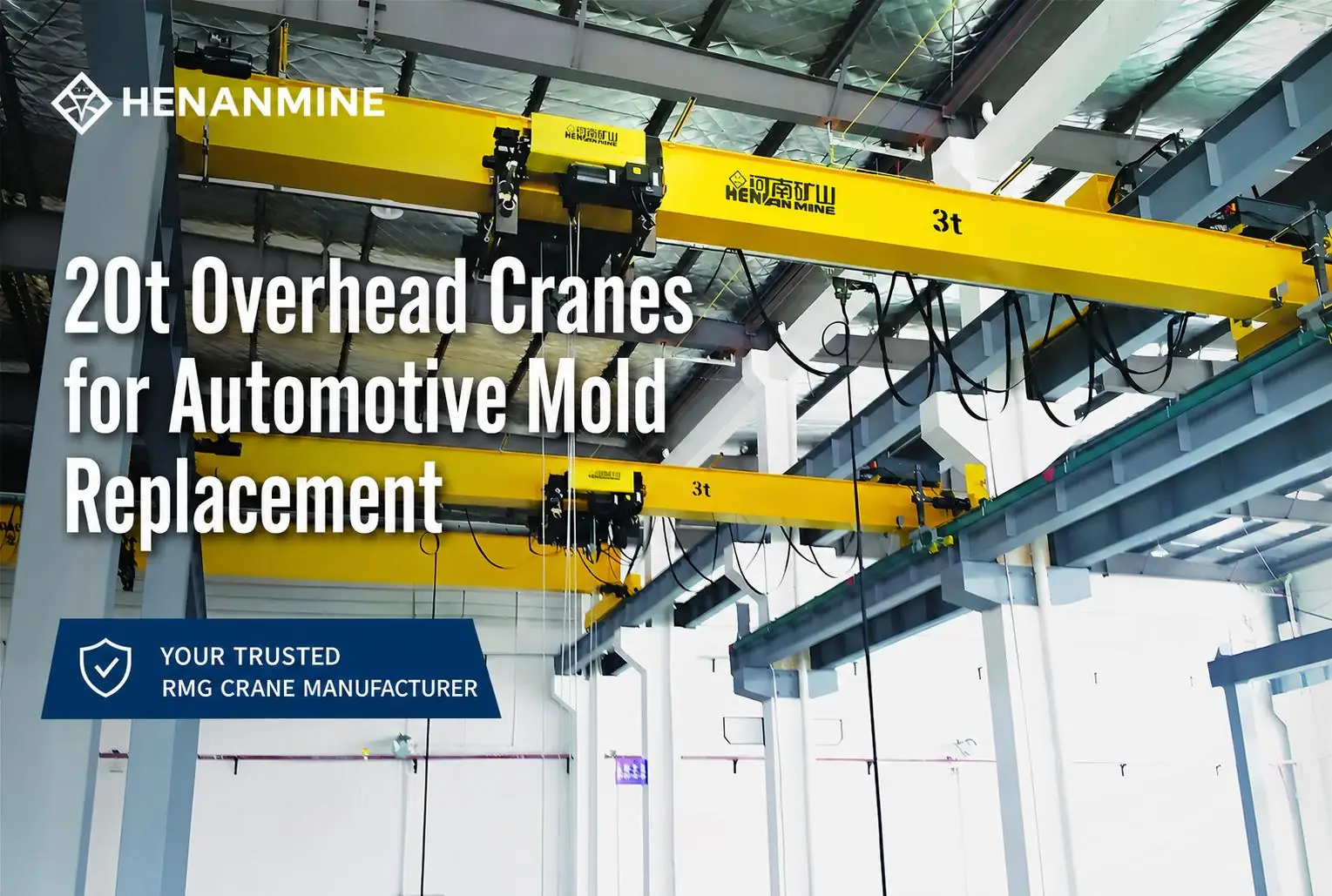
Automobile and machinery manufacturing often pay attention to frequent start and stop, component posture and production availability at the same time.The handling of engines, gearboxes or machine tool accessories also involves special spreaders and workstation coverage.The selection should revolve around the total weight of components and accessories, low-speed proximity performance, trolley movement and control linkage, so as to avoid repeated adjustments in the final position stage when the speed is increased quickly.
Chemical Plants and Hazardous Areas
Chemical plants should first identify the hazardous area conditions of the specific installation location, and then compare the electric and pneumatic equipment that match the certification range.Conditions such as regional division, media group, and allowable surface temperature will limit the available configurations.Corrosive atmospheres may also put forward independent material requirements, and qualified explosion-proof does not mean that it automatically has corrosion resistance.
Foundries and Heavy-Duty Industrial Workshops
The radiant heat, dust and high-frequency hoisting in the foundry will work together on the equipment, and the temperature of the nearby air may not necessarily represent the heat exposure of the chain or the body.The heat dissipation characteristics of pneumatic drive cannot replace the verification of the temperature applicability of the whole machine; when it comes to molten metal handling, special lifting and braking requirements must also be verified, and ordinary workshop configurations cannot be directly used.
Food Processing and Washdown Environments
Food processing should also consider corrosion resistance, detergent compatibility, lubricants and pollution control.Pneumatic equipment may also cause exhaust and lubrication management problems, while electric food-grade equipment has corresponding protection designs.For example, JDN mini Food Grade clearly lists the characteristics related to cleaning and lubrication for food. These are specific product attributes. The complete set of gourds, controllers, trolleys and accessories still need to match the actual cleaning method.
Electric vs. Pneumatic Hoist: A Practical Decision Framework
The effective screening sequence is to first exclude equipment that does not meet the load, environment, and compliance requirements, and then compare the control performance and cost of feasible solutions.This avoids locking the model according to the price first, and then discovering that the energy supply is insufficient or the installation space is not enough.
- Clarify the load and space: record the maximum total weight of the workpiece and spreader, the lifting height and the available headroom, and incorporate the independent suspension or crane integration method into the same working condition description.
- Describe the intensity of work: combine the number of lifts, descents, and jog movements per hour, as well as shift arrangements and common loads, to form operating conditions that can be checked by the manufacturer.
- Identify environmental boundaries: record hazardous areas, temperature, dust, corrosion and cleaning conditions, and take certification and material applicability as prerequisites for entering the comparison range.
- Verify on-site energy supply: confirm the power supply specifications or the inlet air pressure and flow rate when carrying, and evaluate the impact of other production equipment on the available capacity when running at the same time.
- Clear control performance: write the transportation speed, low-speed approach, stop response, and operation mode as verifiable conditions, so as to avoid only fast speed or accurate control to summarize the requirements.
- Compare complete costs: calculate installation, energy, maintenance and downtime costs under the same operating volume and service cycle, and measure unknown parameters that affect the conclusion.
- Complete technical confirmation: check the configuration, certification and applicable regulations in accordance with the manufacturer's documents, and include the necessary installation inspections, functional verification and delivery records in the acceptance.
Quick Selection Guide
Frequently Asked Questions
Is an electric chain hoist better than a pneumatic air hoist?
There is no type that is better for all working conditions.Electric Chain Hoist is usually easy to apply in general stations where electricity is convenient; the value of pneumatic solutions depends on the air source, working intensity and environment.In the end, the specific configurations that meet the same task should be compared.
Are pneumatic air hoists suitable for explosive environments?
Only models designed, certified and marked to cover the conditions of the hazardous area on site can be included in the selection.The pneumatic drive itself cannot replace the explosion-proof compliance judgment, and the supporting trolley, control and accessories must also meet the complete set of application requirements.
Which type of hoist is more energy-efficient?
Electric hoists usually avoid the additional energy conversion loss of making compressed air, but the actual cost still depends on the amount of work, equipment efficiency and on-site system.The pneumatic scheme should use a comparison of the gas supply cost that includes the loss of the relevant system.
Can an electric chain hoist be used with an overhead crane?
can.Electric Chain Hoist can be matched with suitable trolley and crane systems, but the beam body, suspension interface, rated load, headroom, power supply and control must be coordinated.The replacement of a larger tonnage hoist does not mean that the rated capacity of the original crane can be increased accordingly.
Conclusion
The selection of Electric chain hoist and pneumatic hoist should comprehensively consider the load, operating frequency, operating environment, energy supply conditions and life cycle costs.When inquiring, provide lifting weight, lifting stroke, number of actions per hour and on-site energy supply data to help suppliers formulate plans that match working conditions and ensure that equipment performance is consistent with production requirements.Henan Mine Crane Can provide lifting equipment selection and customized solutions according to actual operating requirements.