
What Is Included in a Complete Overhead Crane Supply Package?
A complete set of Overhead Crane supply packages usually cover bridges, lifting and operating mechanisms, electrical controls, safety devices, and technical documents; installation, on-site testing, and after-sales service depend on the contract.Complete has no unified commercial boundaries: the equipment can be delivered in complete sets, but the buyer still needs to prepare the load-bearing structure, power supply and installation resources.
What Equipment Is Included in an Overhead Crane Supply Package?
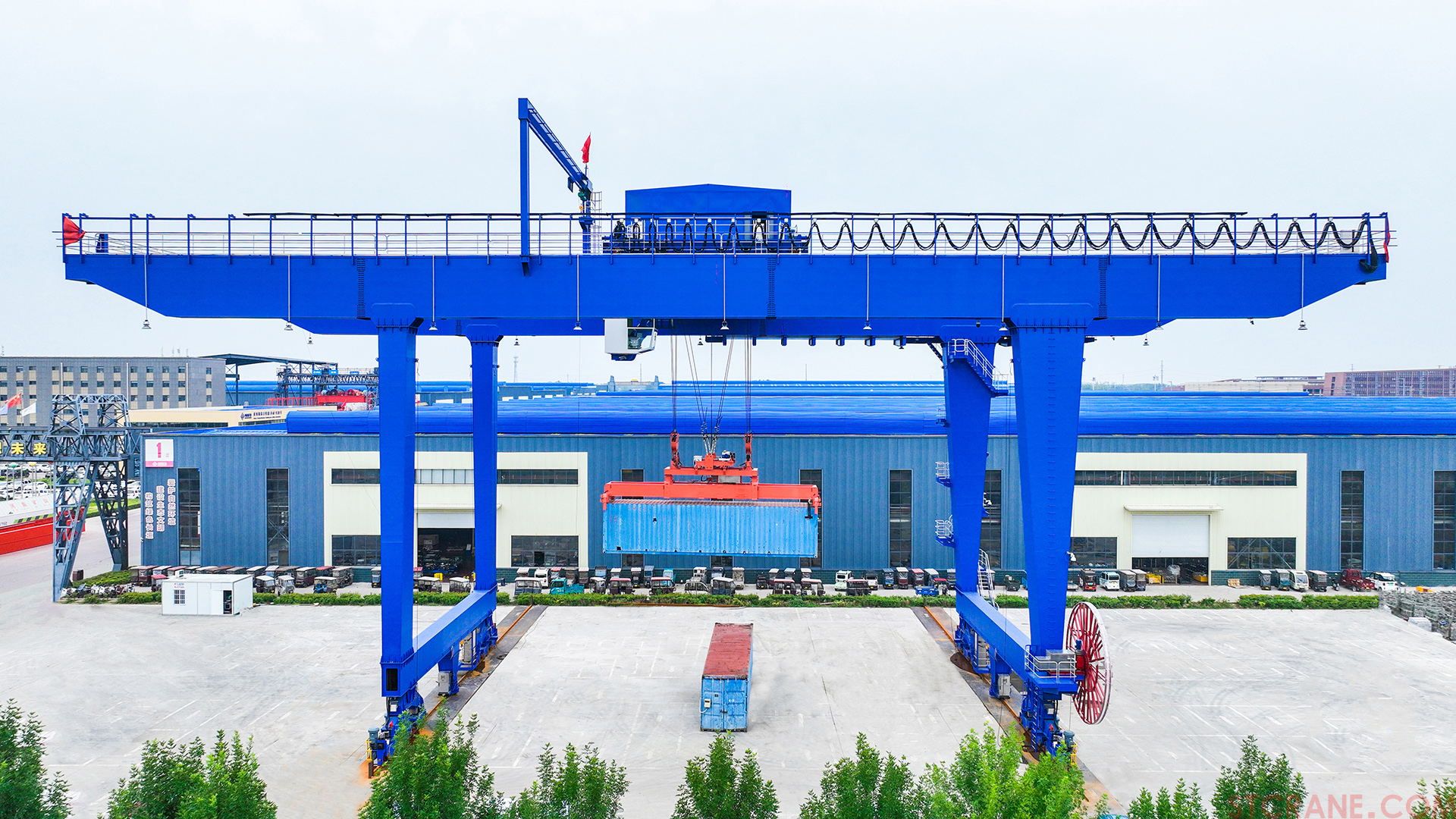
Main Crane Structure
The bridge frame usually includes the main beam, the end beam and the connecting parts, which transmits the lifting load and the weight of the equipment to the load-bearing system through the wheels.The design is also affected by the rated load, span, duty class and environmental impact; equipment of the same tonnage does not necessarily have the same structure, wheel pressure or use strength adaptability.
Surface treatment, anticorrosive coating and structural inspection are also important contents of the manufacturing scope, but the coating system, weld inspection method and acceptance documents need to be clarified in the technical agreement.
Hoisting and Trolley System
The lifting configuration can use Electric Wire rope Hoist or Electric Chain Hoist, or a specially designed lifting trolley, which usually involves a motor, reducer, brake, wire rope or chain, and hook set.The choice depends on the load, effective lifting height, operating frequency and available space, and cannot be judged only by tonnage.
The hanging beam, fixture or electromagnetic suction cup below the hook may not be delivered with the host, and its weight will also take up the available load.The dual lifting mechanism or auxiliary lifting mechanism belongs to the project configuration; the joint lifting capacity must be determined by the design of the whole machine and cannot be directly added.
Crane Travel and Drive Systems
The cart runs along the factory building, and the trolley moves laterally along the bridge. The relevant configurations include motors, reducers, wheels and transmission mechanisms.The matching relationship between the wheels and the track belongs to the equipment interface, but the physical supply of the cart track may be priced separately.
VFD can adjust the acceleration, deceleration and operating speed according to the configuration to reduce the impact of sudden movement and facilitate access to the target position.However, VFD itself is not equivalent to automatic positioning or active anti-shake. The latter two require corresponding sensors, control logic, and debugging.
Electrical Control System
The electrical system usually includes a control cabinet, on-board wiring, cables, and protection devices. The operation method can be a handle, wireless remote control, or a cab.PLC automation, positioning and production line linkage are functions determined by application, and cannot be inferred from the “complete electronic control system”.
Sliding contact wires, cable carts or reels may be used for power supply.The scope of on-board wiring, power supply along the rail, and building incoming lines needs to be distinguished, and the quotation needs to clarify the power supply parameters and the end point of the wiring.
What Safety Devices and Protective Features Are Included?
Standard Lifting and Travel Protection
Common protection configurations involve overload limit, upper lifting limit, operating limit, emergency stop, braking, short circuit and electrical overload protection. The actual configuration is determined by the design and applicable requirements.Motor overload protection is aimed at electrical or thermal loads and cannot directly replace the lifting overload limit; the upper limit cannot be used as a means of daily parking.
The lifting brake assumes the task of maintaining the load after stopping, while the speed regulation and descent control handle the speed during movement.The two functions are different, and it cannot be determined that the required load holding capacity is available just by configuring the VFD.
Collision Prevention and Operational Safety
When multiple devices share a track, the Anti-collision system can trigger deceleration or stop according to the distance, and the buffer is used to absorb collision energy. The two cannot replace each other.Sound and light alarm, load display, laser positioning and area protection can be configured according to risk and process.
The effect of area protection depends on the detection coverage, braking distance, and interlocking logic.Only configuring ranging components does not mean that personnel protection has been achieved, nor can it replace on-site channel isolation and operation management.
Safety Standards and Compliance
There are three levels of manufacturer standard configuration, destination regulatory requirements, and optional upgrades.References such as CMAA, FEM, or EN 15011 need to be implemented in specific documents, versions, and scope of application, and the Duty Class logos of different systems cannot be directly regarded as equivalent.
For example, the U.S. OSHA stipulates requirements for applicable equipment such as lifting upper limit, inspection, and functional testing before initial use, but it cannot summarize the delivery obligations of all countries accordingly.Inspection records, test certificates, and applicable declarations of conformity should also be agreed on a case-by-case basis.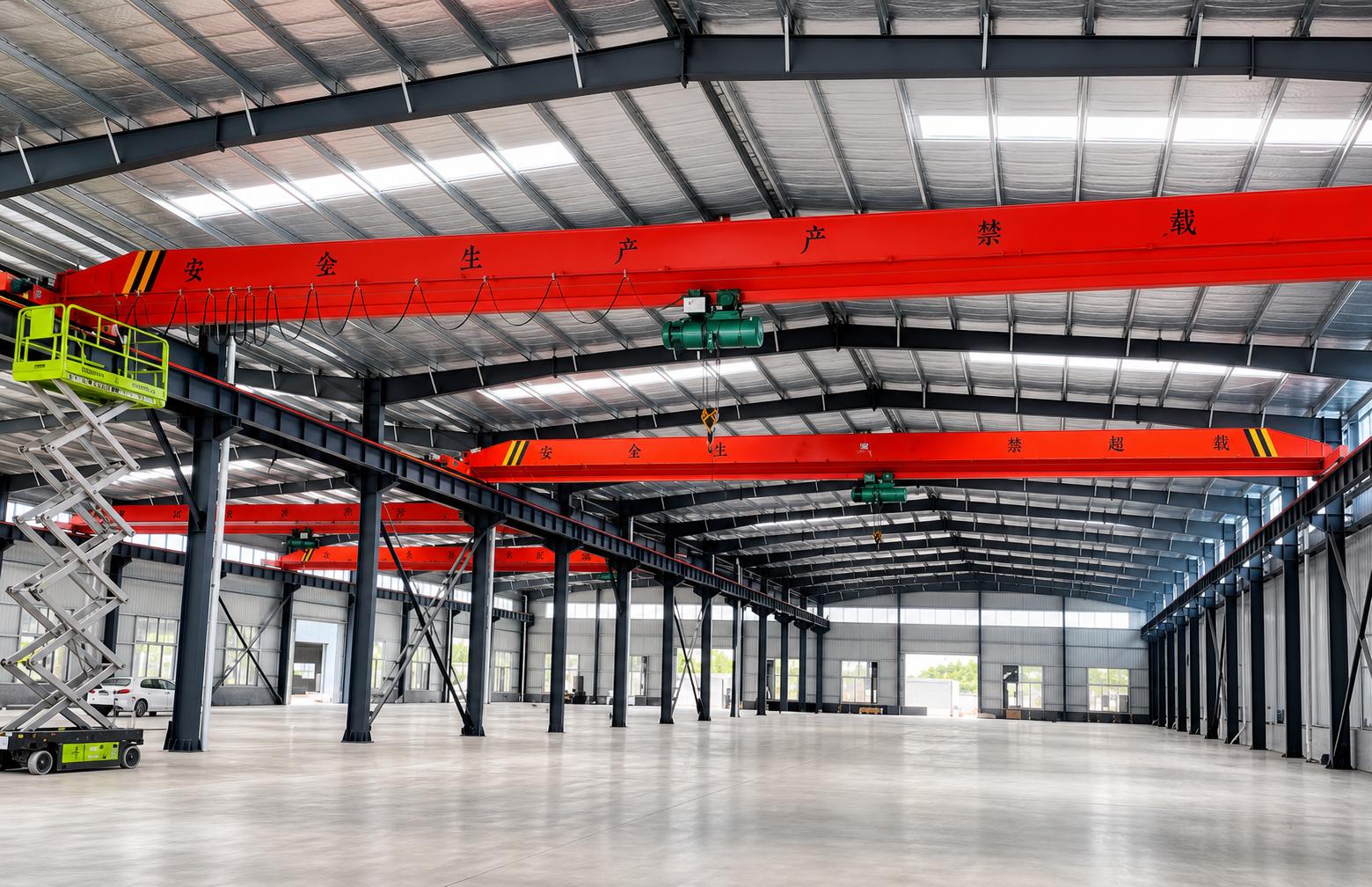
What Engineering and Technical Documentation Should Buyers Receive?
Crane Design and Layout Drawings
The general layout plan should express the span, lifting height, dimensions and hook coverage, and provide wheel pressure, wheel spacing, end proximity size and headroom interface.Civil engineering designers verify the load-bearing and space conditions accordingly; the fact that the plant can accommodate the bridge does not mean that the hook can cover all operating points.The electrical schematic diagram and control diagram are used for wiring, diagnosis and subsequent transformation.
Technical Specifications and Material Records
The technical specifications should record the rated capacity, duty class, speed of each institution, motor parameters, power supply and environmental restrictions.Material certificates, key component information, and manufacturing inspection records are delivered in accordance with applicable requirements and contracts. It cannot be assumed that all original records are automatically included.The file version should correspond to the physical object.
Operation and Maintenance Manuals
The manual needs to cover operating restrictions, safety procedures, lubrication, preventive maintenance, troubleshooting and spare parts identification.The replacement cycle should be combined with the manufacturer's requirements, actual working conditions and inspection results, and all wearing parts cannot be set to a unified age.Complete documents support on-site preparation, training and maintenance, and reserve the basis for the upgrade.
Are Installation, Testing, and Commissioning Included?
Installation Scope
Installation may include mechanical assembly, electrical wiring, control integration, and power connection, but the supply contract may also only include remote guidance or engineer supervision.Sending engineers is not equivalent to providing installation teams, hoisting equipment and aerial work platforms.
The person responsible for track installation or transformation, building load-bearing verification, and civil construction coordination must be clarified.Turnkey Solution also needs to clarify on-site conditions, work boundaries, and subcontracting management.
Inspection and Load Testing
On-site inspections usually involve mechanical connections, electrical functions, lifting and operation, braking and safety devices.The load, method, witness and record requirements of load testing are determined by applicable rules and contracts. The rated load test and the additional verification test should be stated separately, and a global general ratio cannot be applied.
Factory testing can verify the factory status, but it cannot fully verify the on-site track, power supply, and installation interface.Who provides the test load, spreader, third-party inspection and rectification retest is also part of the actual cost and construction period.
Commissioning and Operator Training
Commissioning combines parameter adjustment, action verification and on-site process convergence, and forms commissioning records and handover documents after completion.The training should cover the boundaries of operation, daily inspection, and fault handling, and distinguish between operators and maintenance personnel; the training itself does not automatically replace local qualifications or authorization requirements.The responsibilities for supply, installation, inspection and commissioning shall be confirmed in writing.
What Services and Support Can Be Part of the Package?
Custom Crane Design and Manufacturing
Single-beam or double-beam solutions can be customized around load, span, headroom and duty class.Low headroom design will affect the structure layout and maintenance space; high temperature, corrosion or continuous operation may involve materials, protection, electrical heat dissipation and mechanism selection, and all applicability problems cannot be solved only by adding coatings.
Delivery, Logistics, and Spare Parts
Packaging, transportation, export documents and customs clearance responsibilities depend on the agreed delivery terms.The size of the main beam, the channel and the unloading conditions affect the transportation plan.Initial spare parts, consumables and special tools are negotiable items, and random installation of parts cannot be equivalent to maintenance spare parts packages.
Warranty and After-Sales Service
The warranty should specify the starting point, time limit, mechanical and electrical coverage, and how to bear labor, travel, and transportation costs.Remote diagnosis, on-site response, spare parts supply and long-term maintenance agreements are different services; commitment to technical support does not automatically mean free on-site or long-term maintenance.
What Is Usually Excluded From a Complete Overhead Crane Package?
Common exclusions are concentrated in construction, on-site and external procedures: plant reinforcement, load-bearing beams and columns, foundation and civil engineering renovation, and building power distribution upgrades.The trolley track and the power supply system along the track may also be excluded, even if the on-board electrical has been delivered in a complete set.
Unloading, on-site hoisting equipment, installation labor, engineer travel, local permits, third-party inspection and certification fees may all be priced separately.Taxes, duties and import fees are divided according to transaction arrangements, and cannot be judged only on the basis of including transportation.
Exclusions need to clarify the contractor, technical input and completion node: for example, the buyer undertakes the construction of the load-bearing beam, and the supplier still needs to provide the wheel pressure and interface information on time, otherwise the equipment delivery date is determined and there is no guarantee that it can be installed on site.
How to Compare Overhead Crane Supply Quotations
Compare Technical Specifications First
The premise of comparable quotation is that the load, span, lifting height, duty class, speed and environmental conditions are consistent.The number of hoisting times per hour and the proportion close to full load affect the selection of the mechanism. The same 10t may also be applicable to different production beats.Then check the mechanism, electronic control, safety configuration and implementation standards.
Compare the Full Project Cost
The total cost of the project includes equipment, transportation, installation, commissioning, testing and related taxes, as well as spare parts, maintenance and downtime arrangements.Assuming that one quotation only includes equipment, and the other includes on-site installation and Load Testing, a direct comparison of the total price will mask the range difference.It is of practical significance to fill in the same delivery boundary first, and then compare the prices.
Use a Supply Scope Checklist
The same scope table may require each supplier to indicate the inclusion, selection, exclusion and responsible party, and include the confirmation result in the attachment to the contract.
| Package item | What buyers should confirm |
| Crane structure | Bridge, end trucks, capacity, span |
| Hoisting system | Hoist type, lift height, speed, duty class |
| Electrical system | Controls, wiring, power supply, drives |
| Safety devices | Load limiter, limits, collision protection |
| Documentation | Drawings, manuals, required certificates |
| Installation | Assembly, wiring, site responsibilities |
| Testing | Load tests, inspection, commissioning |
| After-sales | Warranty, spare parts, technical support |
How to Choose the Right Overhead Crane Supplier
The matching degree of suppliers is reflected in the experience of similar working conditions, engineering capabilities, manufacturing quality control and on-site support, not just the production of the same tonnage equipment.Similar projects, sample drawings and delivery records can be used as the basis for evaluation.
When choosing, it is also necessary to clarify whether it is responsible for the delivery of the equipment or the Turnkey Solution, and write the itemized quotation, scope list, drawing approval, delivery node, acceptance conditions and Warranty into a consistent contract document.The person in charge of service coverage, spare parts delivery and communication also needs to be clear.
Conclusion
When choosing a crane supplier, it should comprehensively evaluate similar project experience, engineering capabilities, manufacturing quality and on-site support, and verify relevant cases and delivery records.At the same time, it is necessary to clarify the scope of responsibility for equipment delivery or Turnkey Solution, and write the quotation, delivery node, acceptance standard, warranty and after-sales service into the contract to reduce the risk of project execution.Henan Mine Crane can provide customized crane solutions according to project needs, and assist customers in clarifying equipment configuration and delivery requirements.