
20t Overhead Cranes for Automotive Mold Replacement
Automobile stamping mold change requires heavy-duty molds to leave the position smoothly, transfer and sit accurately.The 20t Overhead Cranes combine the rated carrying capacity with VFD frequency conversion speed regulation to support this process. The weight of the spreader, the center of gravity and the interface of the press also affect the efficiency.
What Is a 20t Automotive Stamping Crane?
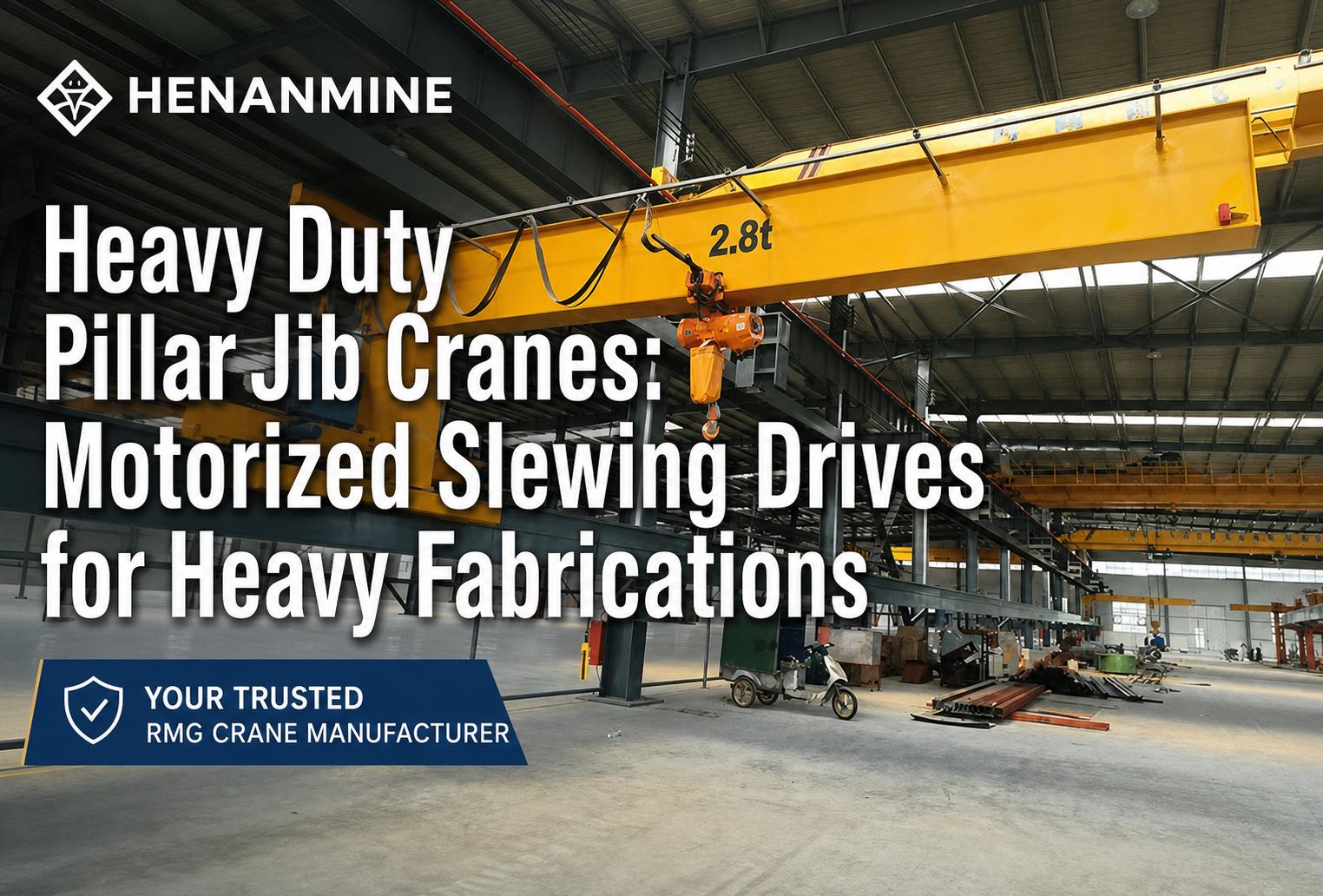
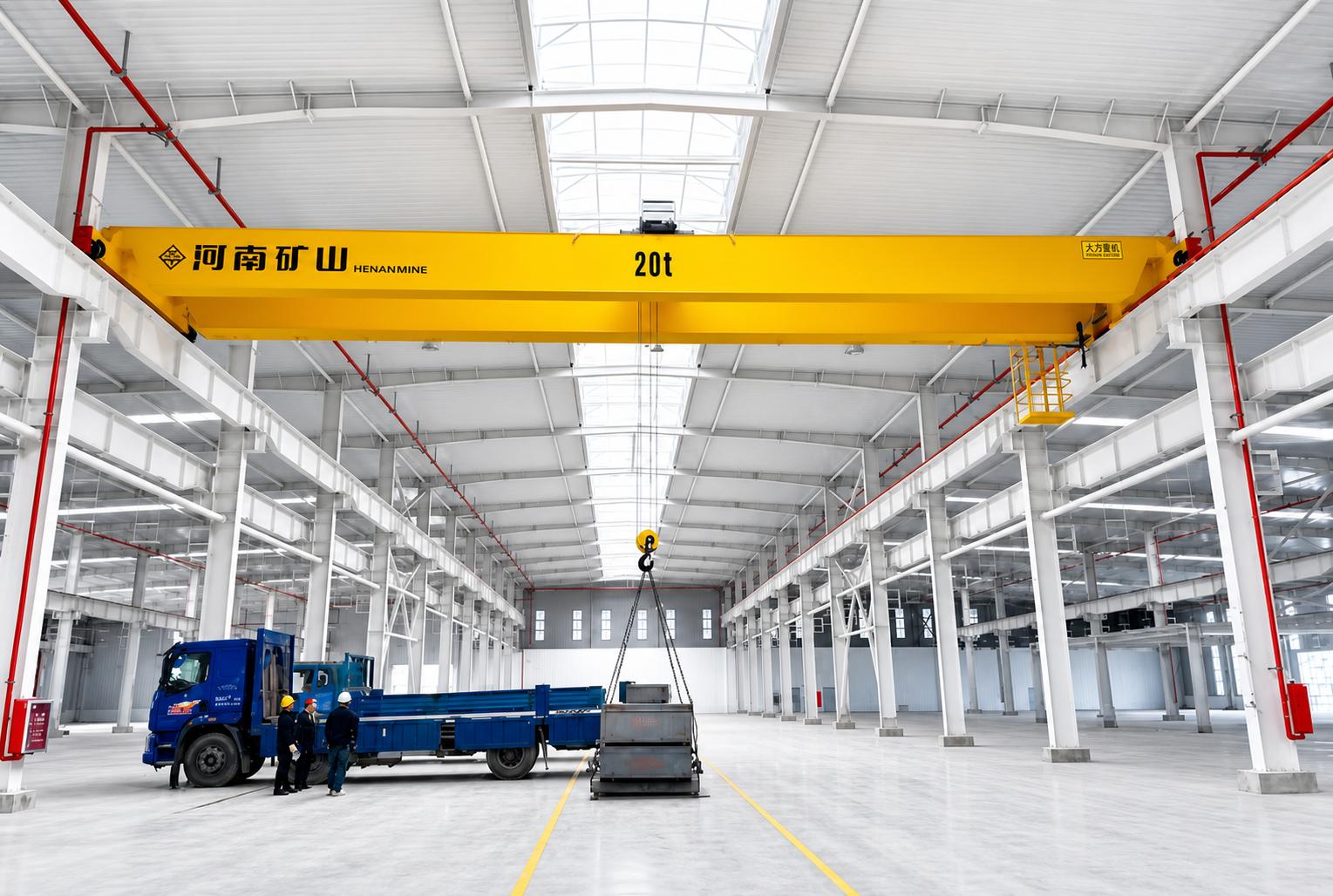
The 20t Overhead Cranes used in automobile stamping workshops are bridge-type lifting equipment with a rated lifting weight of 20 metric tons and configured around the handling of stamping molds.Its task is to connect the mold library, maintenance station and press line.The 20t here refers to the rated load under the specified conditions, and does not mean that the hanging beam, sling or other device under the hook can withstand any additional weight.
The common scheme adopts a double-beam bridge frame, with an electric hoist or hoist trolley.The main beam and end beam bear the structural and operating loads, the lifting mechanism is responsible for the vertical movement, and the trolley and the bridge frame complete the movement in the two horizontal directions respectively; VFD adjusts the corresponding motor speed, Pendant Control or Radio Remote Control transmits operating instructions, Overload Protection and Limit Switches provide corresponding protection.
Die is usually used to describe molds in the stamping field, and this article corresponds to its mold change scenario.
How Smooth Inverter Drives Improve Heavy Mold Replacement
Stepless Speed Control for Controlled Lifting
By adjusting the motor power supply frequency and cooperating with appropriate voltage and torque control, VFD enables the mechanism to change the speed within the design range.When the sling is tensioned, the mold leaves the support surface and approaches the seat, the low speed makes it easier to observe the force and gap; when the load is stable, the route is clear and the conditions permit, the higher speed can shorten the intermediate stroke.
Smooth operation also depends on the timing of the drive and brake.When the lifting starts, the motor establishes the carrying torque and then releases the brake; when it stops, the deceleration and braking are coordinated to avoid the load from getting out of control.Low-speed operation is still limited by motor cooling, drive control and working system.
Reduced Load Swing During Crane Travel
When the bridge or trolley changes speed, the suspension mold lags due to inertia, forming a pendulum-like movement.Sudden acceleration, emergency stop, and continuous reverse operation may all stimulate swing; even if the trolley has stopped, the mold may continue to move, increasing the risk of collision when approaching the press column and peripheral equipment.
A reasonable acceleration and deceleration curve helps to reduce excitation, but ordinary VFD is not equivalent to dedicated Anti-Sway.The actual effect is affected by the rope length, motion parameters, initial swing and operation mode.Some Anti-Sway systems adjust the instructions according to the swing model, and the active scheme can also use rope angle measurement feedback.This function cannot replace route isolation and safety spacing.
More Accurate Mold Positioning
Low-speed lifting and trolley operation make the process of approaching the target more controllable, leaving observation time for the alignment of the mold base, press table and positioning structure.However, the motor speed control, bridge position control and the actual seating accuracy of the mold are different concepts: the elasticity of the wire rope, the load swing and the mechanical clearance will all affect the final position.
For repeated fixed site handling, encoder, laser ranging or target positioning functions can be evaluated; for working conditions with high suspension load stability requirements, Anti-Sway can be combined.During acceptance, it is necessary to clarify the measurement object, load, rope length and allowable deviation, rather than just relying on frequency conversion to estimate a certain position accuracy.The final seat still depends on the guidance, positioning and support structure of the press and mold, and cannot be forced to the hole by pulling the hook sideways.
Lower Mechanical Stress and More Consistent Operation
Controlled start and stop can reduce the dynamic load caused by sudden acceleration, ease the impact of the transmission gap, and reduce the mutation of some braking and operating mechanisms.However, mechanical wear is also related to wheel and rail status, lubrication, brake adjustment and load cycle. VFD cannot eliminate fatigue or replace maintenance.
The intensity of use of occasional hoisting is significantly different from that of continuous multi-shift mold change.Duty Classification takes the load spectrum and degree of use into the design considerations, so the smooth control and matching work level should be evaluated at the same time, and the soft start alone cannot promise a longer life.
How a 20t Stamping Crane Supports Rapid Die Changes
Streamlining the Mold Replacement Workflow
The typical process starts with the crane entering the designated lifting location, then checking the weight of the mold, the lifting point and the approved spreader, slowly tensioning after connection and performing a controlled test lifting.After confirming the balance and braking state, the mold is transported along the planned route to the press or storage location, and the alignment and seating are completed at low speed; the spreader can only be released after the support is stable and the load has been transferred.
The press must first be shut down according to on-site procedures, isolate hazardous energy sources, and lift relevant constraints.When using a mobile workbench, the crane may only be responsible for external loading and unloading, and the workbench will complete the entry into the machine; a clear junction point can reduce waiting and repeated handling.
Balancing Lifting Speed and Positioning Accuracy
Long-distance transportation and terminal seating have different speed requirements.VFD allows a higher speed to be used in the appropriate stroke, and a lower speed to be switched when approaching an obstacle or positioning structure; in order to take into account time and controllability.
In a short stroke, acceleration and deceleration may take up most of the time; if you still have to wait for the swing to decay after it is in place, the speed advantage will be offset.The evaluation object should be the complete time from stable lifting to stable sitting and the consistency of repeated operations.
Reducing Production Downtime
More predictable lifting can help arrange the press shutdown window, but the whole line mold change also includes the release of the old mold clamping, pipeline disconnection, the fixing of the new mold, parameter confirmation and trial production.Any link that becomes a bottleneck may limit the benefits of increasing the speed of the crane.
If most of the waiting comes from looking for spreaders or molds that are not ready, it is more targeted to improve preparation and scheduling.The mold change performance should adopt consistent boundaries, such as from the last qualified product in the previous batch to the first qualified product in the next batch, and the lifting, waiting and adjustment time should be recorded separately.
Key Technical Specifications to Consider When Selecting a 20t Automotive Stamping Crane
The technical specifications are derived from the mold list and workshop layout.The span determines the coverage, the limit position of the hook determines whether it can approach the target, and the lifting height must also accommodate the mold, spreader, and obstacle-crossing space.
| Selection factor | Evaluation focus |
| Rated capacity | Die plus below-the-hook equipment |
| Span and lift | Coverage, headroom and transfer route |
| Hoisting speed | Transport and final approach |
| VFD configuration | Controlled axes and speed range |
| Duty classification | Load spectrum and operating cycles |
| Positioning | Tolerance and feedback requirements |
| Safety systems | Overload, brakes, limits and interlocks |
| Power and controls | Plant supply and control interfaces |
| Maintenance access | Inspection space and component access |
Assuming that the mold weighs 19t and the total weight of the hanging beam and sling is 1.5t, the total load under the hook is 20.5t, which has exceeded the 20t rating.The actual plan must also check the spreader capacity, center of gravity, force distribution and on-site conditions, and the design safety factor cannot be used as the daily overload margin.
The existing plant also involves crane beams, rails, support structures and wheel pressure verification.Duty Classification cannot be directly equivalent by similar names in different standard systems, and the technical agreement needs to clarify the standards, the level of the whole machine and the organization.
Essential Safety Features for Heavy Automotive Mold Handling
Overload Protection and Reliable Braking
Overload Protection restricts lifting operations that exceed the allowable load according to the equipment design, and its thresholds and calibration should meet the equipment requirements.It cannot identify all dangerous hoisting states, such as incorrect hoisting points or partial clamping of the mold, nor can it replace the weight verification before hoisting.
The lifting brake assumes the holding function of the suspension load, and the electrical deceleration control of VFD cannot replace the reliable mechanical holding.The brake status, brake timing and power loss response need to be included in the inspection and debugging; the test crane when approaching the rated load should also verify the braking performance.
Limit Switches and Travel Protection
Limit Switches are used to limit the lifting or operating mechanism beyond the set range.The rising limit helps to prevent the hook group from hitting the upper mechanism; the falling limit and the travel protection of large and small vehicles are configured according to the equipment design and applicable requirements, and cooperate with the buffer, end stop and other measures.
The protection limit cannot be used for daily precise parking.When multiple cranes are operating on common rail or close to fixed facilities, anti-collision and area restriction functions may also be required, and their parking distance and fault response must be verified on-site.
Mold-Specific Lifting Attachments
The hanging beam, sling, shackle and lug must be compatible with the mold design and approved hoisting scheme.The angle of the sling and the offset of the center of gravity will change the force of each branch. Multiple sling points do not mean that the load is evenly shared; the carrying capacity of the connecting piece is also limited by the allowable force direction.
A suitable hanging beam can help control the geometric relationship of the sling, but it will increase its own weight and take up headroom.Large-scale mold flipping usually involves double lifting coordination, cable-stayed control and special hoisting design, and ordinary hoisting schemes cannot be directly used for flipping.
Operator Visibility and Control
Pendant Control is suitable for arrangements where the operating position is more concentrated and the following path is clear; Radio Remote Control facilitates the operator to choose the observation angle and reduces the restriction of cable movement, but it is still necessary to verify the safe stop function after the signal is lost.
The press column, mold shape and adjacent equipment may block the line of sight.Trainees, unified command and regional isolation can help reduce command confusion; remote control operations cannot allow personnel to enter the suspension mold or squeeze the area.
Common Applications in Automotive Stamping Workshops
20t Overhead Cranes can serve the replacement of stamping molds for car doors, engine covers, car roofs, etc., and can also be used for progressive mold handling, press line product switching, and transfer between maintenance stations that meet the load conditions.The applicability is determined by the actual weight and lifting requirements.
The multi-pressure locomotive workshop is particularly dependent on route design: the proximity of the hook affects the coverage of the edge station, the height of the spreader affects whether the mold can cross the obstacle, and the operating range of the bridge determines whether the storage area and the maintenance area can be connected.Stations within the span may also be unable to complete the transfer due to local interference.
How to Improve Mold Changeover Efficiency Beyond the Crane
Before shutdown, the status of the next set of molds can be verified, the spreader can be prepared, and the storage location can be confirmed, but the safety constraints that are still in production cannot be lifted in advance.Reasonable storage close to the point of use, clear mold identification and route arrangement help reduce searching and no-load round trips.
Each position needs to clarify the handover status such as can be hoisted, can be entered and supported.Rapid clamping, interface standardization and transfer devices will also affect the mold change beat.
Preventive maintenance covers VFD, brakes, motors, wire ropes and safety devices.Combine fault and mold change records to identify bottlenecks, and then evaluate the investment value of semi-automatic positioning and Anti-Sway based on the number of repetitive tasks, positioning requirements and actual waiting.
Why Choose a Customized 20t Automotive Stamping Crane?
Customization adapts the structure, control and interface to working conditions.The span, lifting height and hook proximity distance are determined around the layout of the plant; the VFD control axis, duty classification, safety interlocking and positioning functions are derived from the load cycle and accuracy requirements.
Effective delivery also includes installation condition verification, commissioning, acceptance of representative working conditions, operation training and maintenance support.The existing workshop may involve structural transformation, and on-site measurement and engineering verification are still required.The speed-up range of mold change must be verified by the project data.
Conclusion
20t Overhead Cranes improves the efficiency and stability of mold replacement through reasonable bearing configuration, VFD frequency conversion control and safety protection.When selecting the mold, the weight of the mold, the layout of the workshop, the frequency of mold change and the positioning requirements should be combined to ensure that the equipment is adapted to the actual production cycle.Henan Mine Crane can provide customized bridge crane solutions according to workshop conditions.