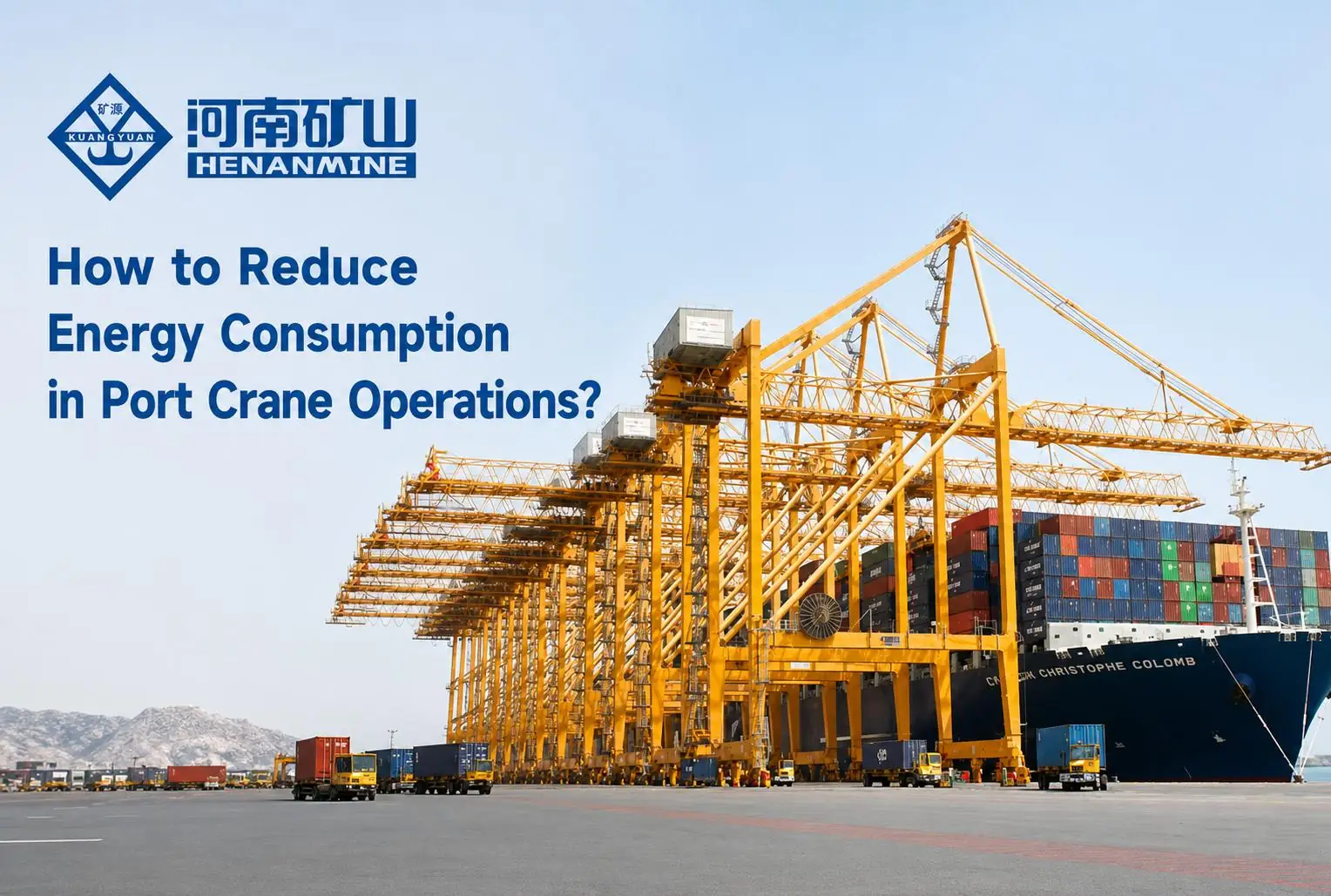

What Are Container Cranes? Types, Applications and Container Gantry Crane Systems Explained
The operation benefit of port, inland depot and railway terminal depends on the adaptability of container crane to a great extent.Many operators often cause operation congestion, waste of resources due to wrong model selection, or old equipment, unable to adapt to intelligent upgrade, increasing operating costs in vain.STS, RTG and RMG mainstream models on the market are very different, which is also the main difficulty in purchasing and selecting models.This article relies on the first-line manufacturing experience, explains in detail the characteristics, scenarios and selection skills of various equipment, helps you accurately avoid pits, and selects the crane system suitable for the station.
Understanding Container Cranes And Their Importance
Definition and role
Henan Mine Crane Factory supply container crane is specially designed for ISO standard container lifting equipment, adapt to 20 feet, 40 feet, 45 feet and other mainstream container specifications, different from ordinary industrial cranes, equipped with special telescopic spreader, automatic lock, anti-swing stability system, accurate positioning control system, can efficiently complete the container lifting, translation, stacking, loading and unloading, transfer and other full-process operations.Its core role is to break down logistics barriers between shipping, railways, highways, and warehousing, and achieve standardized, large-scale, and safe circulation of containers. It is the core hub equipment of the multimodal transport system.
Importance in ports
As the core node of global trade, the performance and configuration of container cranes directly determine port throughput, operation efficiency, operation cost and industry competitiveness, and are the core equipment of modern ports.
- Container cranes support large-scale port throughput operations. The annual throughput of large-scale hub ports can reach tens of millions of TEU. Relying on high-performance crane clusters, rapid loading and unloading of ships and efficient turnover of storage yards can be realized, problems such as ship stagnation and storage yard congestion can be avoided, and berth utilization rate can be greatly improved.
- Standardized container lifting operation can avoid the risks of box deviation, cargo damage and safety accidents caused by manual lifting and ordinary equipment operation, and comprehensively improve the standardization and safety of port operation.
- Container crane is the basic carrier of intelligent and automatic upgrading of port. All automatic dispatching, unmanned stacking and intelligent transfer functions of unmanned wharf and intelligent storage yard are realized by automatic container crane system.
- High-quality container lifting equipment can greatly reduce labor dependence, reduce long-term operation and maintenance costs, and help ports realize cost reduction, efficiency improvement and green and low-carbon operation. It is the core symbol to measure the modernization level of ports.
Different Types Of Container Cranes Explained
RTG cranes
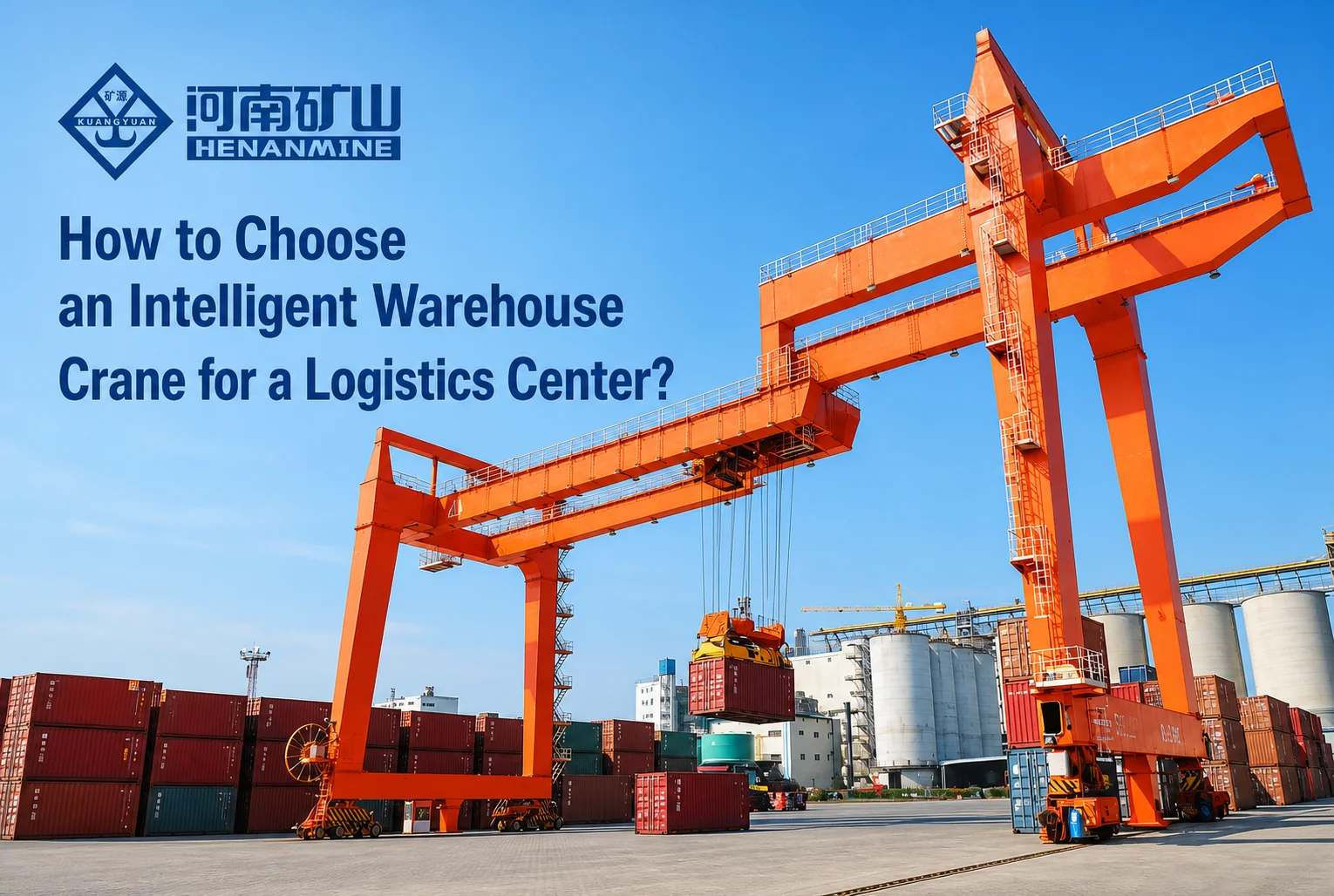
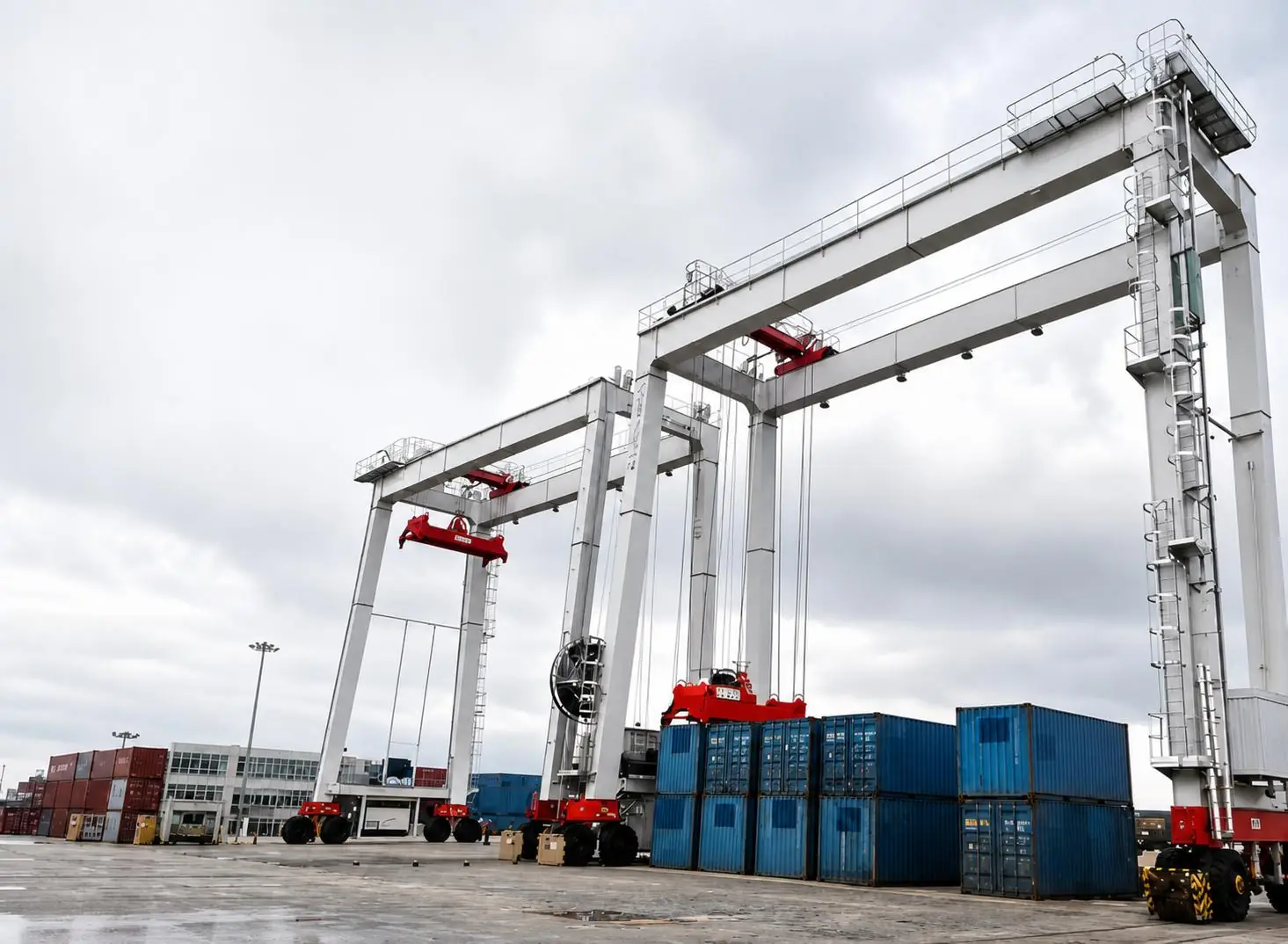
RTG (Rubber-Tyred Gantry) is the mainstream core equipment of port container yard. It relies on rubber tires to walk without laying fixed rails. It has strong site flexibility and scheduling mobility. It is the first choice equipment for small and medium-sized ports, multifunctional yards and dynamic layout parks.The equipment is mainly used for stacking, sorting and stacking of container yard, and transfer and loading and unloading operations between containers and collection cards.
RTG crane conventional lifting capacity of 30 to 50 tons, can achieve 1 over 5, 1 over 6 layers of container stacking, flexible and adjustable operation span, suitable for multi-row container stacking scenarios.Compared with track-type equipment, RTG's biggest advantage is freedom of movement, strong site adaptability, arbitrary switching of operation areas according to yard operation requirements, no need to modify ground infrastructure, lower deployment cost and higher flexibility of transformation.The equipment supports diesel and electric dual power modes, and is suitable for open storage yard scenarios without fixed power supply. At the same time, it can be transformed into an automated RTG to achieve remote control and automatic stacking.Its limitations lie in slightly lower walking accuracy, general stability of high-speed operation, wear of tires for long-term operation, and weaker adaptability of high-density automatic storage yard than RMG crane.
RMG cranes
RMG (Rail-Mounted Gantry) rail-mounted container gantry crane is a high-end storage yard lifting equipment relying on fixed rails on the ground. It mainly focuses on high-precision, high-speed, high-density and fully automated operations. It is the core equipment of large-scale automatic terminals, high-throughput hub storage yards and railway container central stations.The equipment is mainly used for high-density container stacking, precise homing, unmanned transfer, and adaptation to large-scale, standardized and intelligent high-end logistics hub scenarios.
RMG crane has stronger structural rigidity, high walking positioning accuracy, working speed and stacking density far exceeding RTG equipment, which can realize 6 to 7 layers of super high stacking, maximize the use of yard space and improve throughput per unit area.The equipment is fully powered, with no exhaust emissions, lower noise, lower operation and maintenance costs, and is suitable for long-term uninterrupted high-intensity operations.Relying on fixed track constraints, RMG can perfectly interface with terminal intelligent dispatching system to realize fully unmanned automatic operation without manual attendance.The disadvantage is that it needs to lay special track infrastructure in the early stage, the one-time investment cost is high, the site is fixed and cannot be moved flexibly, and it is only suitable for professional container yards and railway terminals with fixed layout and large-scale operation.
Container Gantry Crane Systems and Features
Main components
Henan Mine Crane Factory supply container gantry crane system is a set of integrated, modular heavy intelligent equipment system, the core consists of mechanical structure, lifting operation, walking drive, intelligent control, safety protection five core modules, all parts work together to ensure efficient and stable operation of equipment.The core main structure includes high-strength steel structures such as main beam, end beam, portal frame and supporting leg, which bear the heavy load operation pressure of the whole machine and have strong stability and anti-deformation ability.The core components of lifting operation include lifting mechanism, telescopic container spreader, automatic locking device and anti-swing mechanism, which are responsible for accurately grasping, lifting and aligning containers to prevent shaking and deviation of containers.
The walking drive system is divided into tire drive (RTG) and track drive (RMG) according to the model. It is equipped with variable frequency speed motor to realize smooth start and stop and accurate positioning.The intelligent control system includes PLC main control system, frequency conversion control system, positioning induction device and data transmission module, which is responsible for coordinating the operation logic of the whole machine and accurately controlling the operation parameters.The safety protection system includes anemometer, anti-collision device, emergency braking system, overload protection, limit protection and fault alarm device, which can monitor the operation status of equipment in real time, avoid safety risks such as overload, offside and gale operation, and comprehensively guarantee the safety of equipment and goods.The modular design of the whole system is convenient for later operation and maintenance, replacement of accessories and intelligent upgrading.
RTG vs RMG
RTG and RMG are the two most commonly used gantry cranes in container yards.The differences in site flexibility, operation performance, input cost and automation capability directly affect the yard operation efficiency and long-term return on investment.The following clear comparisons help users quickly match models to their site:
| Comparison Item | RTG Crane | RMG Crane |
| Mobility & Foundation
|
Rubber tire travel, no track required, flexible movement, zero foundation renovation | Fixed rail travel, immovable, needs early track infrastructure investment |
| Operation Performance | Moderate speed and positioning accuracy, suitable for general stacking tasks | High precision and fast speed, supports high-density container stacking |
| Operation Cost | Low initial cost, high long-term maintenance and fuel consumption | High upfront investment, low daily maintenance and power consumption, longer service life |
| Automation Level | Only semi-automatic upgrade available, limited intelligent operation | Fully automatic compatible, ideal for unmanned smart terminals |
| Applicable Scenarios | Small & medium ports, inland yards, temporary logistics parks | Large automated ports, railway terminals, high-throughput yards |
Automated systems
Container crane automation system is the core configuration of modern intelligent logistics hub. Relying on Internet of Things, PLC intelligent control, satellite positioning and big data dispatching technology, it realizes unmanned, precise and intelligent control of container operation.At present, mainstream automation systems are divided into two types: semi-automation and full-automation. Semi-automation systems are mostly used for automated RTG equipment, supporting remote control, automatic anti-swing, accurate alignment, automatic fault warning, manual remote assistance to complete complex working conditions, giving consideration to flexibility and efficiency.
The full automation system is mainly equipped with RMG and high-end STS cranes, which can interface with TOS yard management system of the terminal to realize automatic container dispatching, automatic picking, automatic stacking, automatic loading and fault diagnosis. The whole process does not require manual intervention and can operate 24 hours without interruption.The automation system has the functions of intelligent error correction, precise positioning and path optimization, which can effectively reduce manual operation errors, control stacking accuracy to millimeter level, and greatly improve the utilization rate and operation efficiency of storage yard space.At the same time, the system can record operation data in real time, provide data support for station operation scheduling, capacity optimization and equipment operation and maintenance, and completely solve the pain points of low efficiency, large error, high safety risk and high labor cost of traditional manual operation.
Common Applications of Container Cranes
Port terminals
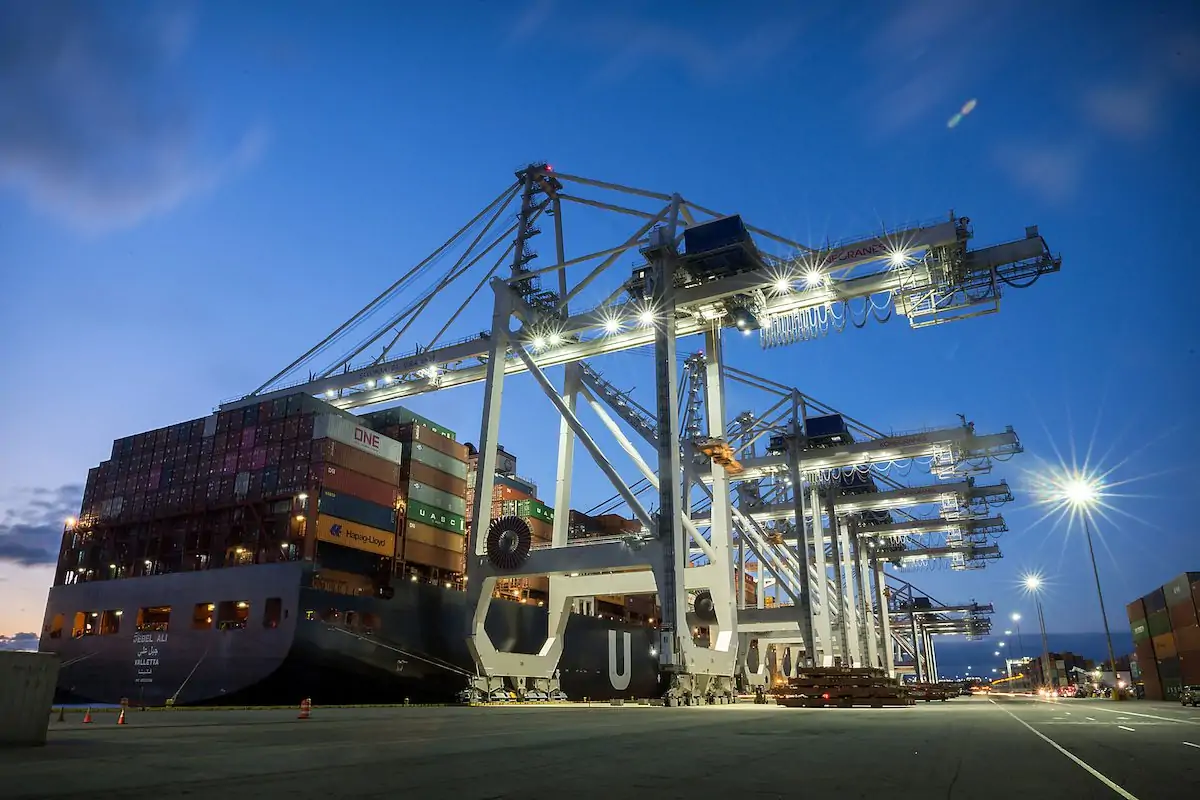
Port terminal is the most core and main application scenario of container crane, forming the standard operation configuration of "STS quayside crane +RTG/RMG yard crane", supporting the whole process of container circulation in port.STS shore cranes focus on ship-shore loading and unloading operations at dock berths, quickly complete unloading and warehousing operations of ocean-going containers, and ensure rapid turnover of ships.RTG and RMG gantry cranes are equipped in the yard area to complete the stacking, stacking and sorting of containers, as well as the transfer and handover of containers and trucks.Large-scale hub ports mostly adopt automatic RMG cluster with intelligent STS equipment to realize full-process unmanned operation and meet the throughput demand of tens of millions of levels; small and medium-sized ordinary ports mostly adopt RTG equipment with higher cost performance, giving consideration to operation efficiency and operation cost.The whole set of equipment covers all container operation scenarios in seaports and river ports, which is the core support for port logistics operation.
Inland yards
Inland container yards, logistics industrial parks and storage and transfer stations are important application scenarios of Henan Mine Crane Factory supply container cranes, mainly relying on RTG tire gantry cranes to complete core operations.The inland storage yard does not need large-scale ship loading and unloading. The core requirements are temporary storage, distribution, transit and land loading and transshipment of containers. The requirements for equipment flexibility are higher and the requirements for ultra-high density automatic operation are lower.RTG equipment does not need track infrastructure, rapid deployment, flexible movement, can adapt to irregular sites in inland storage yards, dynamic operation layout, and quickly complete container stacking, vehicle loading and unloading, and cargo sorting operations.At the same time, RTG can adapt to diesel power dual power, solve the unstable power supply problem of inland sites, adapt to remote inland logistics parks, temporary transit yards, cross-border inland ports and other scenarios, and greatly reduce the equipment investment and infrastructure cost of inland logistics hubs.
Railway terminals
Railway container terminals, freight stations and railway-railway intermodal transport bases use RMG rail-mounted container cranes as core equipment to meet the requirements of railway standardization, high density and high timeliness.Railway terminal operation has the characteristics of fixed line, centralized operation, large throughput and high timeliness requirements, which require accurate alignment of equipment, high-speed operation and stable and continuous operation.RMG crane relies on fixed track to realize millimeter level accurate positioning, which can quickly complete loading, unloading, stacking and transshipment operations of containers and railway freight trains, and adapt to multi-modal transportation scenarios of large-batch containers revolving iron and iron-to-public.At the same time, the automatic RMG system can be connected to the railway freight dispatching system, realize automatic sorting and accurate storage of train goods, greatly improve the transit efficiency of railway containers, solve the pain points of slow loading and unloading, serious congestion and high labor cost of traditional railway freight, and widely used in national railway container center stations and regional freight hubs.
How to Choose the Right Container Crane
Capacity requirements
Operation tonnage and throughput capacity are the primary core indexes of container crane selection, which directly determine whether the equipment can adapt to the station operation load.First of all, it is necessary to clarify the specifications of conventional operation containers. Ordinary 20-foot and 40-foot standard containers can meet the demand by selecting 30-50 ton lifting equipment; if overweight containers, cold chain containers and double containers are involved in synchronous lifting operations, 80-120 tons of large tonnage models shall be selected.Secondly, it is necessary to determine the equipment operation efficiency and stacking capacity in combination with the annual throughput and daily average operation volume of the station. RTG equipment with conventional stacking height shall be suitable for small inland storage yards and low throughput stations; RMG and high-end STS equipment with high stacking layers and high speed operation shall be selected for large ports, railway hubs and high throughput stations.At the same time, 10%-20% load margin needs to be reserved to avoid excessive equipment loss caused by long-term full-load operation and ensure long-term stable operation of the equipment.
Automation level
Automation grade selection should be combined with station operation scale, long-term development planning and labor cost budget comprehensive judgment.Small temporary storage yard, county logistics site, low-frequency sub-operation scenario, no need for high automation configuration, manual, semi-automatic RTG equipment can be selected, higher cost performance, simpler operation and maintenance.Medium-sized conventional ports and inland logistics hubs can be equipped with semi-automatic equipment, equipped with remote control, automatic anti-swing and fault warning functions to balance labor cost and equipment investment.For large-scale hub ports, intelligent terminals, railway core stations and long-term large-scale operation projects, fully automated RMG and automated STS cranes shall be preferred to meet the unmanned operation and 24-hour continuous operation requirements, greatly reduce long-term labor costs, improve the intelligent level and throughput efficiency of stations, and conform to the future development trend of intelligent logistics.
Power options
Power mode selection shall be comprehensively selected in combination with site power supply conditions, operation scenarios, environmental protection requirements and operation costs. The main mode is divided into pure electric drive mode and diesel electric hybrid mode.Pure electric mode is suitable for ports, railway hubs and fixed standardized storage yards. The site has stable power supply. It has the advantages of low carbon and environmental protection, zero emission, low noise, low operation and maintenance cost and stable operation. It is the standard power of automatic high-end equipment and conforms to the green port development policy.Diesel-electric hybrid power is mainly suitable for inland temporary storage yards, remote non-fixed power supply sites and mobile operation scenarios. It relies on diesel generators for power supply, which is not limited by power grid. It is flexible in deployment and highly adaptable, which can meet the normal operation requirements of sites without electricity.Users can flexibly select models according to site power supply stability, local environmental protection policies and daily operation time. Large-scale long-term operation gives priority to pure electric power and temporary mobile operation gives priority to hybrid power.
Smart Technologies And Future Trends
Smart operation
Intelligent operation technology is the core development direction of container crane industry, completely subverting the traditional manual operation mode and realizing the intelligent upgrading of the whole operation process.The current mainstream intelligent operation technology includes intelligent automatic alignment, adaptive anti-swing, intelligent path planning, unmanned automatic stacking, remote centralized control and other functions.Relying on high-precision satellite positioning, visual identification and sensor sensing technology, intelligent crane can independently identify container position, size and state, automatically plan optimal operation path, and independently complete the whole process operation of grabbing, lifting, translation, stacking and loading without manual intervention.At the same time, multiple equipment can realize cluster intelligent scheduling, the system automatically allocates operation tasks, avoids equipment conflict and operation congestion, maximizes the overall operation efficiency of the station, and adapts to the large-scale operation requirements of large unmanned terminals.
Digital monitoring
The digital monitoring system relies on Internet of Things, big data and cloud monitoring technology to realize intelligent operation and maintenance and status monitoring of container cranes throughout their life cycle.The system can collect core parameters such as lifting load, running speed, fuselage inclination, motor temperature, braking state and energy consumption data in 24 hours in real time, and monitor the health status of equipment in real time.Once overload, fault, abnormal wear, high temperature and other problems occur, the system automatically alarms, emergency braking, and generates fault reports and operation and maintenance suggestions to avoid equipment faults and safety accidents in advance.At the same time, the cloud platform can store long-term operation data of equipment, predict equipment loss law through big data analysis, realize preventive operation and maintenance, reduce equipment downtime, prolong equipment service life, greatly reduce station operation and maintenance cost, and realize digitalization, refinement and intelligence of equipment management.
Green solutions
Green low-carbon, energy-saving efficiency is the core development trend of global port crane equipment, green solutions have become the standard attributes of new container cranes.Green technologies in the current industry mainly include energy-saving power system, energy recovery technology, low-carbon structure design, and environmental protection and noise reduction technology.The new Henan Mine Crane Factory supply container crane is equipped with a frequency conversion energy-saving system, which can automatically adjust the power according to the operating load and reduce the ineffective energy consumption; equipped with an energy recovery device, the excess energy in the process of lifting and lowering and braking can be recycled, and the energy saving rate can reach 20%-30%.At the same time, the pure electric drive mode is fully popularized to replace the traditional diesel power and realize zero exhaust emission and low noise operation.In addition, the equipment adopts lightweight and high-strength structure design to reduce the weight and energy consumption of the whole machine, match with environment-friendly anti-corrosion coating, reduce pollutant emission, fully conform to the industry development policy of green port and low-carbon logistics, and help the port realize the carbon neutral operation goal.
Henan Mine Crane Factory Custom
A set of container crane system suitable for site conditions is the key to reduce cost and increase efficiency and enhance core competitiveness of logistics stations, which directly affects the overall operation efficiency, operation and maintenance cost and long-term upgrading space.The core advantages and application scenarios of different models have their own emphases. The loading and unloading of seaports depends on professional STS quayside crane equipment, the flexible inland storage yard is more suitable for RTG gantry crane with high cost performance, while the high-density automatic operation of large intelligent terminals and railway hubs cannot be separated from the support of high-precision RMG equipment.
Many station operation difficulties stem from idle equipment, high energy consumption or inability to keep up with capacity demand caused by blind selection.Henan Mine Crane Factory believes that the truly scientific equipment configuration is never blindly pursuing high configuration parameters, but combining its own operation volume, power supply conditions, automation planning and long-term operation objectives to accurately match.Whether it is the flexible operation requirements of small and medium-sized storage yards or the unmanned and high-throughput operation standards of large smart ports, our customized container lifting solutions can perfectly adapt to working conditions and reduce operation and maintenance costs.Under the general trend of intelligent and green port upgrading, Henan Mine Crane Factory can provide an iterative, high-performance, low-carbon and energy-saving crane system, which can not only solve the pain points of current operation, but also build core advantages for the long-term development of the station