
Casting Crane Safety Manufacturer | Custom Ladle Crane for Steel Plants
Steel plant converter, refining, continuous casting process, casting crane safety is the core of the entire production line safety control. As the core equipment for steel transportation, steel lifting cranes are exposed to high-temperature heat radiation, metal dust and slag splash above 1600℃ all year round, with high work intensity and high risk level. Once there is brake failure, wire rope breakage, hook delocking, will not only cause equipment damage and production line shutdown, but also may cause casualties and major fires.
Landing reliable molten metal lifting safety measures, can not just rely on the experience of the operator, from the equipment design, operating norms, maintenance system, emergency disposal of the whole chain to build a protective network. As a professional manufacturer of customized metallurgical casting cranes, Henan Mine Casting Crane Industrial combined with more than a hundred metallurgical projects at home and abroad, collated the whole process of safety control guide, covering standards compliance, hardware configuration, operating norms to intelligent upgrading, to help steel mills build a strong safety line of defense for high temperature and high risk operations.
Applicable regulations and standards
Compliance is the bottom line of the safety specification of ladle cranes, all design and operation and maintenance should correspond to clear regulations and standards, and can not be downgraded based on experience.
In the international lifting safety standards for the metallurgical industry, such equipment is usually designed according to FEM A7-A8, ISO M7-M8, CMAA F-E working level, matching the high-frequency and heavy-duty working intensity of metallurgical scenes. Domestic to comply with TSG 51 “lifting machinery safety technology supervision regulations”, GB 6067.5 Overhead Crane safety regulations, as well as JB / T 7688.5 Foundry Crane exclusive technical conditions, “Steelmaking Safety Regulations” also have special requirements for steel transfer operations.
Metallurgical Crane safety certification standards for hooks, wire ropes, braking systems, limit devices, heat-resistant protection have hard requirements, such as the main hoist must be equipped with a double secondary limit, the spreader must be with an anti-dislodgement mechanism, and heat-resistant components to meet the life of the long-term high-temperature working conditions.
The operating side should also meet the requirements of regular inspection of casting cranes, enterprises complete at least one comprehensive self-inspection every month, and annually commission a third-party organization to do the statutory full inspection, all inspection and maintenance records should be archived and retained, which is also the basic requirements of the metallurgical crane safety management system.
Design features and key safety devices
Reliable molten metal lifting Crane, from the structural design stage to put the safety redundancy in the first place, all the core risk points to do double protection, do not put the safety on a single component.
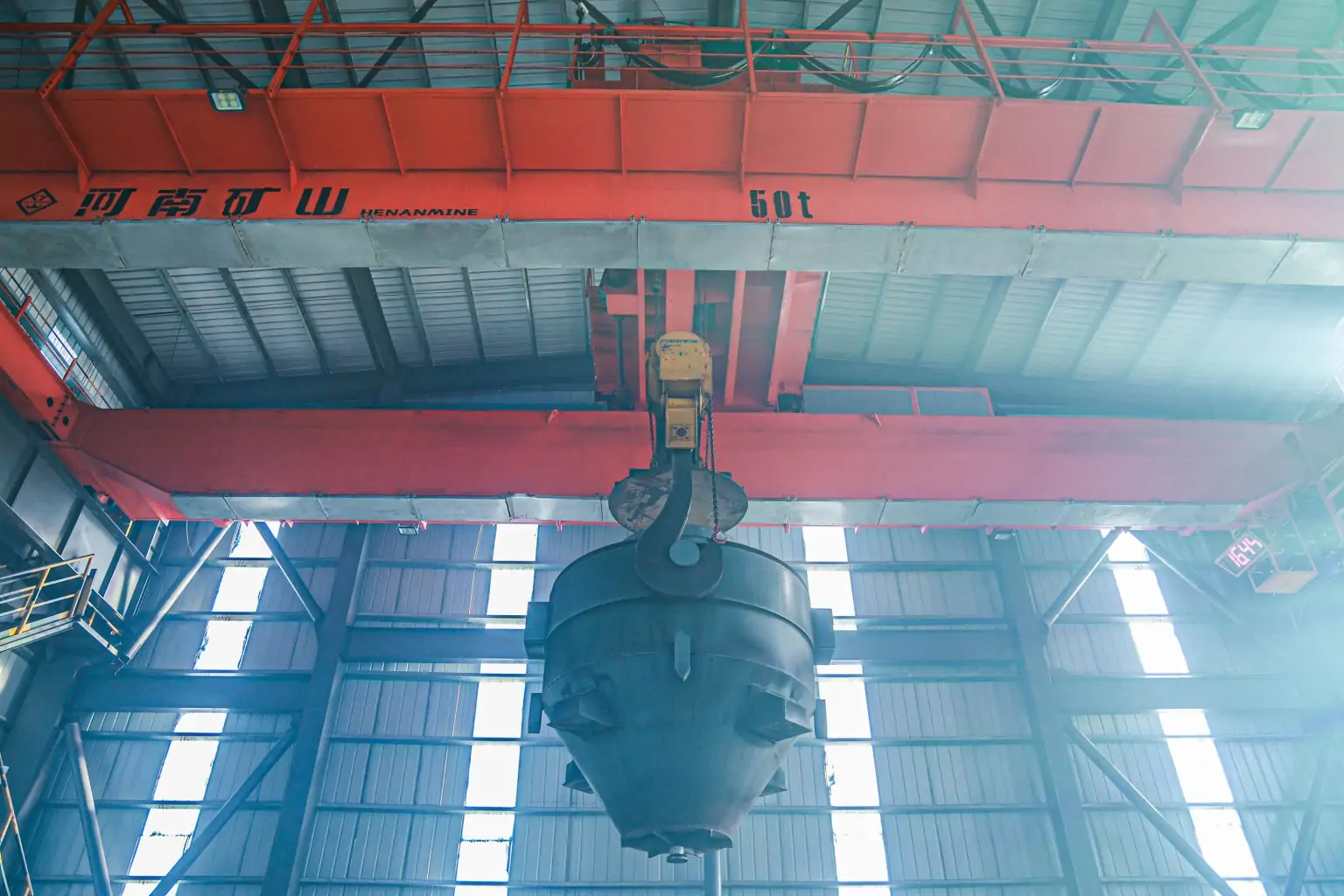
The main structure mostly adopts double girder and double trolley wide box girder design, with stronger overall rigidity and carrying capacity. For high-temperature conditions to do special steel lifting crane thermal protection, the bottom of the main girder, the hook area, the trolley frame below the multi-layer casting Crane thermal protection shield, blocking the strong heat radiation from the steel, to protect the steel structure, steel wire ropes and electrical components, to prolong the life of the core components.
Casting Crane double brake safety design is the core safety barrier, that is, casting Crane double braking system. The main hoisting mechanism is equipped with two sets of completely independent braking system, the conventional brake is responsible for the daily start-stop speed regulation, and the emergency brake immediately locks the drum when the overspeed switch is triggered. Under the extreme working condition of single brake failure, the other set can independently carry the rated load to eliminate the risk of falling ladle, which is the core component of the casting Crane fall protection system.
The wire rope system adopts multiple high-temperature resistant steel core ropes, and the balance pulley is disabled, so that the rest of the rope set can still carry full load when a single one breaks, which guarantees the safety of steel ropes of ladle cranes. Hooks are forged as a whole, prohibit welding repair, hook mouth with anti-wear saddle and insurance locking mechanism, large tonnage models at both ends of the drum with crane fall protection devices, to deal with the extreme conditions of broken shafts, improve the whole set of casting Crane safety redundancy design.
The driver's room and electrical room are fully enclosed and double-layer heat insulation, with temperature control cooling system, electrical wiring all metallurgical crane high-temperature resistant cables, housed in a sealed and heat-insulated electrical cabinet, to avoid high-temperature dust erosion.
Supporting auxiliary safety devices covering the whole scene: casting crane double limit protection, secondary limit trigger directly cut off the total power supply; casting crane overload protection device automatically locks the lifting action; metallurgical crane wind speed alarm device to cope with outdoor high wind conditions; casting crane emergency stop protection system to cut off all the power of a single key; molten metal lifting collision avoidance system with the same span of the risk of collision with multiple vehicles. Steel ladle lifting safety protection device configuration, according to the actual working conditions of the workshop to make targeted adjustments.
Pre-operation preparation and checklist
Landing ladle lifting safety operating procedures, the first step is to do a solid pre-shift inspection, many hidden accidents can be detected before the start.
Operators must be licensed, after special safety training, familiar with the performance parameters of the corresponding models and emergency disposal procedures, master the ladle hoisting safety operation guide all the requirements. Clear the site before operation, confirm that the operation area is free of unrelated personnel and obstacles, pull a good safety cordon, complete with fire and emergency protective equipment.
To check against the casting crane safety checklist item by item, not a formality. First check the steel structure, the main beam, rail, platform railing without weld cracking, deformation, hooks, insulation boards, shields intact. Then check the wire rope, broken wire, wear and tear, corrosion does not reach the end-of-life standard, reel winding neatly, anti-desludging slot device is normal.
Braking system is the focus of the inspection, regular braking and emergency braking should be tested action sensitivity, brake pad wear within the allowable range. Electrical part of the emergency stop, limit, overspeed switch, grounding protection all test effective, control cabinet without unusual temperature rise and abnormal noise. Instruments, alarm devices, height indicators are all calibrated and verified to ensure that the signal response is normal.
Safe Operation Procedures
Daily operation should strictly follow the safe operation procedures of ladle lifting, each action should be in line with the norms, and should not be illegal operation to save trouble.
Strictly card quota load operation, overloading, partial load lifting is strictly prohibited, overload protection device will automatically alarm and lock the lifting action when the load is overloaded. Rise and fall are smooth and slow, to avoid violent start and stop leading to violent shaking of the ladle, the normal turn to use the cruising speed, to maintain a safe driving distance.
Traveling process hooks remain directly below the body, prohibit diagonal side hoisting, turning, crossing in advance to slow down the horn, avoiding other equipment and personnel. Converter workshop casting Crane operation path is fixed, strictly according to the planning route, do not arbitrarily travel through the non-operational area.
Refining furnace ladle transfer safety control is strict workshop, but also additional verification of the ladle number and transfer station, to avoid the wrong lifting and misplacing.
Maintain clear communication with ground commanders throughout the process, and turn on sound and light warnings under poor visibility conditions to remind the surrounding personnel to avoid.
At the end of the operation or when the equipment is abnormal, drop the ladle to the designated safe location, cut off the power, disconnect the main power supply, lock the controller. Maintenance and repair work strictly implement the power outage license plate system, double check confirmation, to eliminate the risk of false start.
Thunderstorms, gusty winds and other extreme weather directly stop operations, unlicensed personnel are strictly prohibited from operating equipment, but also can not enter the lifting safety management control area of the continuous casting workshop. Casting workshop high temperature lifting operations should also be avoided in the midday high temperature hours, to prevent the equipment and personnel for a long time in a high temperature environment.
Preventive inspection and maintenance
Hardware is the foundation, regular maintenance is a guarantee of long-term safety, reference to the steel foundry Crane maintenance guide to build a hierarchical maintenance system, much lower than the cost of repair after the fact.
After daily operation of each shift, clean up the steel chips and dust accumulated on the surface of the equipment, check the oil level of lubricant and hydraulic oil, replenish the oil on the key articulation points, and visually inspect the appearance of the main beam, bolts and bearings for abnormalities.
Weekly focus on verifying brake clearance, reel winding layers, wire rope wear, reducer leakage; monthly do a full-scale inspection, tighten electrical wiring, measure insulation resistance, replace gear box lubricating oil, do hook crack detection.
Every year with the statutory inspection agency to complete the full test, including load test, non-destructive testing, structural strength test, according to the test results to arrange overhaul.
Conditional steel mills can match the Crane predictive maintenance system, based on operational data to prejudge the life of the components, more in line with the actual wear and tear of the equipment than the fixed cycle maintenance.
To establish a complete maintenance file, track the failure history and parts replacement records, always have wire rope, brake pads, limit switches, such as wearing parts, to reduce the failure downtime waiting time. Henan Mine Crane, as a metallurgical workshop lifting equipment maintenance service provider, can also provide customers with a full cycle of maintenance technical support and supply of original spare parts.
Do molten steel lifting equipment selection, we must take the subsequent maintenance convenience into account, modular design of the equipment later maintenance costs are lower.
Emergency response process
High-risk operations must be accompanied by a perfect casting Crane accident emergency response process, encountered anomalies in the first time to prioritize the protection of personnel safety, and then do the disposal of equipment and materials.
Once the ladle tilt, mechanism stalled, fire and other emergencies, immediately press the emergency stop switch to cut off the total power supply of the equipment, and at the same time start the sound and light alarm, evacuate the surrounding personnel to a safe area.
After the safety officer confirms that all the personnel on site have been evacuated, then according to the type of fault to do disposal, such as isolating the faulty system, closing the pipeline valves, blocking the path of molten steel overflow. If there is a risk of decoupling the ladle hook, the safety brake will be triggered immediately, the protective curtains will be used to block the molten steel splash, and the backup equipment will be dispatched to recover the molten steel in a stable manner.
Immediately after the accident, we investigate the cause of the accident, issue an accident report, and do a comprehensive overhaul and test of the equipment to confirm that there are no hidden problems before resuming production.
All the molten metal lifting safety measures ultimately have to land on the emergency response capabilities, regularly organized emergency drills, in order to ensure that the process is not chaotic when the danger appears.
Intelligent monitoring and safety technology upgrade
Now more and more steel mills choose to do casting crane safety transformation and upgrading, with digital means to make up for the blind spot of manual inspection, to improve the granularity of safety control, but also the core direction of the lifting safety upgrading program for steel mills.
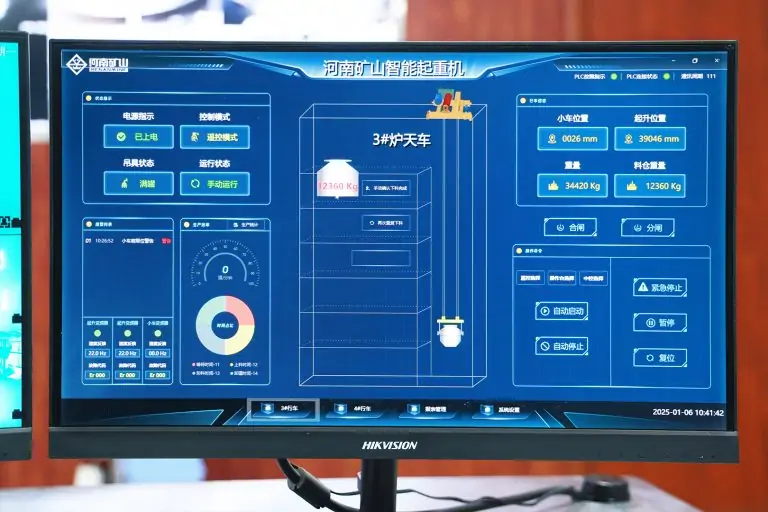
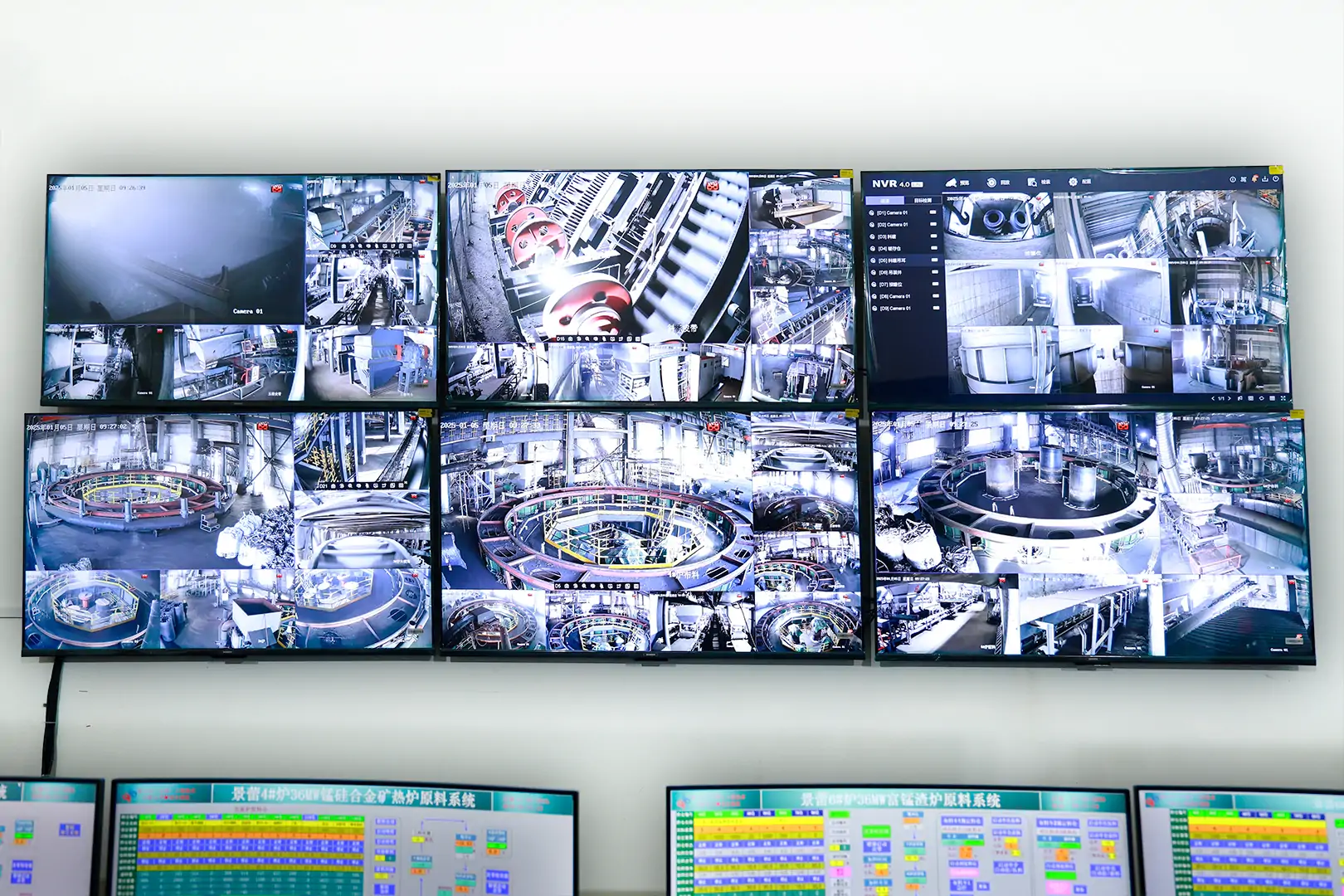
Mainstream casting Crane intelligent safety monitoring system, with Internet of Things sensors 24-hour monitoring of wire rope tension, main beam stress, braking temperature, ambient temperature, parameter abnormalities immediately automatic warning, all data automatically retained traceable.
With lifting equipment structural stress monitoring and ladle attitude real-time monitoring technology, can be timely detected structural fatigue, weld cracks, ladle tilting such hidden hidden dangers that are difficult to detect manually. High-order configuration can also ride the Crane digital twin safety monitoring model, based on operational data to project the remaining life of core components, and arrange maintenance in advance.
Part of the high-temperature workshop will also be equipped with Crane remote safety control program, the operator does not have to be on duty in the high-temperature cab, in the control room can complete the lifting operation, completely away from high-risk environments, but also to enhance the steel mill steel lifting safety control level.
For steel mills, the investment of steel mill intelligent safety lifting transformation, in exchange for the accident risk reduction, downtime reduction, equipment life elongation, the long-term benefits are very clear.
Traditional Safety Measures vs Intelligent Upgrades
| Feature | Traditional Safety Measures | Intelligent Safety Upgrade |
| Safety Redundancy | Relies on dual brakes and two-stage limit hardware | Adds multi-sensor monitoring on top of hardware protection |
| Fault Warning | Depends on operator observation and fixed alarms | Real-time data analysis with automatic early warning |
| Maintenance Mode | Scheduled manual inspection, breakdown repair | Predictive maintenance via data calculation |
| Operator Exposure | Operators work in high-temperature cabin | Remote control available, away from hazardous areas |
| Data Traceability | Manual paper logs | Automatic digital records for full traceability |
Common Safety Negligence
Many safety accidents are caused by daily negligence of details. The most common are not checking hook cracks and wire rope wear according to the cycle, not testing the effectiveness of emergency brakes, and making pre-shift inspections a formality.
Violations at the operational level are also common, such as speeding, sharp turns and stops, overloading, not obeying ground command signals, and trying to save time by slanting the crane sideways.
Maintenance side of the problem is mostly the use of wear and tear over the standard brake pads, aging cable, safety guards are missing after not timely replacement, in order to save trouble short limit switch.
Management-level omissions include safety gates, warning signs are not complete, maintenance records are not updated, emergency drills are not carried out for a long time, personnel safety training is not in place.
There are also some factories that modify equipment privately, replacing original parts with substandard hooks and pulleys, instead of planting greater safety hazards.
Conclusion
Steel lifting safety in steel mills is the result of the combined effect of compliant design, redundant devices, standardized operation, and system maintenance, and the shortcomings of a single link may trigger risks.
The introduction of intelligent safety monitoring and predictive maintenance can further improve the level of safety control and reduce the probability of accidents.
Steel mills should take into account their own working conditions, choose compliant equipment that corresponds to the level of work, and build a safety management system for the whole process, in order to ensure the stability and safety of molten metal lifting operations from the root.
Why choose our casting crane safety program?
Henan Mine Crane is a professional molten metal lifting equipment supplier, can provide casting crane safety solutions in line with ISO, FEM, CMAA, GB and other types of standards, covering the steel foundry crane customization, safety upgrade of old equipment, maintenance system to build the whole chain of services, to meet the needs of different sizes of metallurgical workshop.
Our high-temperature workshop lifting safety solutions, from structural design, multiple safety configurations to intelligent monitoring systems, are optimized for metallurgical high-temperature and high-risk working conditions, taking into account the safety and reliability and long-term operation and maintenance costs.
If you have the need for steel lifting crane procurement, old equipment safety upgrade, maintenance system construction, welcome to contact our engineering team, we will be based on your workshop conditions to provide an exclusive safety program.