
How to Protect Port Cranes from Saltwater Corrosion
Port cranes are exposed to harsh marine working conditions with high salt spray, high humidity, and seawater splashing for a long time. Chloride ions can easily cause metal electrochemical corrosion, and their corrosion rate is 3 to 5 times that of ordinary industrial environments.Corrosion will cause the coating of the equipment to fall off and the parts to become stuck. In severe cases, it will also lead to cracking of the steel structure, electrical short circuit, and hydraulic leakage, which will greatly increase the maintenance cost of the equipment and shorten the service life of the equipment, which directly affects the stability and operational efficiency of the port.Seawater anticorrosion is not a simple rust removal and painting, but a system engineering that runs through the whole life cycle of equipment components, design, coating, and operation and maintenance.
Which Port Crane Components Are Most Vulnerable to Corrosion
Not all components of port cranes have the same corrosion risk. The degree to which components of different structures, materials, and operating modes are eroded by seawater salt spray varies greatly.Accurate identification of highly corrosive and fragile parts is a prerequisite for targeted anti-corrosion protection and elimination of invalid operation and maintenance.The following six core components are areas with high incidence of seawater corrosion, and they are also the key objects of anti-corrosion control of port cranes.
Steel structures
The steel structure is the main load-bearing frame of the Henan Mine Crane manufactured port crane, including the main beam, end beam, gantry, tower body, walking bracket, etc., and it is also the core component with the largest exposure to salt spray and the most serious corrosion impact.In the marine environment, steel structures made of ordinary carbon steel can easily absorb salt-containing moisture on the surface, forming an electrochemical corrosion circuit.Especially in welds, edges and corners, and stress-concentrated areas, the coating can easily crack and peel. Chloride ions will continue to penetrate into the interior of the substrate, causing dot-like corrosion and layered peeling. Long-term corrosion will lead to thinning of the wall thickness of the steel structure and a decrease in carrying capacity, which directly threatens the structural safety of the crane.At the same time, poorly ventilated areas such as the bottom of the steel structure and the shady dead corners are prone to condensation and salt accumulation, and the corrosion rate is much higher than that of the exposed surface of the equipment. It is the hardest-hit area of corrosion that can be easily missed during daily inspections.
Mechanical parts
Mechanical moving parts are the core execution unit of crane operations, including reels, pulleys, gears, bearings, brake components, walking wheels, etc. Such parts are in dynamic friction and vibration conditions for a long time, and corrosion hazards are extremely hidden and destructive.Salt spray is attached to the mechanical fit gap, which will destroy the surface smoothness of the parts, cause slight corrosion and increased wear, and cause equipment operation to stall, abnormal noise, and brake failure.Once bearings, gears and other precision transmission components are corroded, the gap will become larger and the accuracy will be offset, which not only reduces the operating stability, but also causes overload failure and component stagnation, greatly increasing the probability of downtime and maintenance.Moreover, corrosion of mechanical parts mostly occurs inside the equipment, which is difficult to visually detect with the naked eye, and it is often only discovered after failure, and the maintenance cost is extremely high.
Electrical systems
The electrical system is the core control unit of Henan Mine Crane manufactured port crane, covering precision components such as control cabinets, cables, terminal blocks, sensors, limit switches, and motors, which are extremely sensitive to seawater salt spray corrosion.The high humidity and salt-containing air in the port will invade the interior of electrical equipment and form a salt film on the surface of circuit boards and wiring contacts, causing problems such as aging of the insulating layer, leakage, short circuit, and poor contact.Minor corrosion can cause abnormal signal transmission and equipment start-stop failure. In severe cases, it will cause motor burning, electrical fire, power failure and shutdown of the whole machine, causing port operations to be interrupted.Compared with mechanical corrosion, electrical system corrosion has no obvious appearance signs and is extremely sudden, which is a major invisible hidden danger in the safe operation of port cranes.
Hydraulic components
The hydraulic system is responsible for the core actions of crane lifting, luffing, expansion and contraction, including hydraulic cylinders, oil pumps, oil pipes, hydraulic valves, seals and other components, which are prone to corrosion and failure when exposed to salt spray for a long time.The piston rod of the hydraulic cylinder is a high-precision polished metal surface. Salt spray erosion will cause surface rust and pitting, which directly destroys the sealing of the seal, causing hydraulic oil leakage, insufficient pressure, weak lifting and other failures.At the same time, the metal corrosion of the hydraulic valve body and pipeline joints will produce rust impurities, which will be mixed into the hydraulic oil, causing blockage of the oil circuit and wear of components, accelerating the aging of the entire hydraulic system, greatly shortening the service life of hydraulic equipment, and frequently causing lifting operation failures.
Corrosion Protection Design for Port Cranes
Source design is the core key of seawater anticorrosion of port cranes. High-quality anticorrosive structure design can fundamentally reduce the cause of corrosion and reduce the pressure of late operation and maintenance.Unlike ordinary industrial cranes, port cranes need to make special anti-corrosion designs from the dimensions of material, structure, sealing, and drainage for high-corrosion marine conditions, so as to avoid core problems such as salt spray, stagnant water, and crevice corrosion in advance, and realize the upgrade from passive anti-corrosion to active anti-corrosion.
Material selection
The corrosion resistance of materials is the basis of anticorrosion. The choice of materials adapted to marine working conditions can reduce the probability of corrosion from the root cause and greatly improve the long-term protection ability of equipment.In view of the differences in working conditions of different components in the port, precise material selection is required. Marine weather-resistant steel and low-alloy anticorrosive steel are preferred for the main steel structure. The substrate has the ability to resist chloride ion erosion and is suitable for long-term salt spray exposure. Environment.Precision mechanical parts, fasteners, and pins are made of ordinary carbon steel, and stainless steel and alloy anticorrosive materials are used to improve the dual properties of wear resistance and corrosion resistance.The electrical shell and hydraulic joints are made of anticorrosive aluminum alloy and modified plastic materials to avoid electrochemical metal corrosion.The seals and oil pipes are made of fluorine rubber and polyurethane materials that are resistant to salt spray and aging to prevent corrosion, aging and failure.Scientific material classification and selection can directly reduce the risk of native corrosion by more than 60%.
Sealed components
Sealing design is the core means to block salt spray and seawater from invading the interior of the equipment, focusing on the electrical system, hydraulic system, and precision moving parts to do full sealing protection.All electrical control cabinets, junction boxes, and motor end caps are made of waterproof and dustproof sealing tape, with a closed structure design to prevent salt spray and moisture from invading the interior.The hydraulic cylinder and hydraulic valve body adopt a combined sealing structure, and a dust-proof protective sleeve is added to the outside to isolate the attachment of seawater splashing and salt spray.Precision transmission components such as bearings and gears are designed with a closed box, filled with long-lasting anticorrosive grease, and the corrosive medium is blocked from contacting the metal substrate.At the same time, all equipment interfaces, cable perforations, and pipeline joints are sealed and blocked to completely cut off the penetration channel of corrosive media and protect the safety of internal precision components.
Drainage design
Stagnant water and salt accumulation are the core inducement to accelerate the corrosion of port equipment. Static saline stagnant water will continue to cause electrochemical corrosion of metals, so scientific drainage structure design is essential.Henan Mine Crane manufactured crane steel structure box, main beam, end beam, base and other closed cavities, standardized drainage holes and ventilation holes need to be reserved to prevent the accumulation of rainwater, seawater, and condensate.The equipment platform, walking bracket, and flange contact surface are designed with an inclined diversion structure to ensure that the stagnant water is quickly discharged from the flow and there is no residual dead angle.A diversion channel is added to the water-prone area at the bottom to avoid long-term attachment of salt spray condensate.At the same time, the drainage holes are designed to be anti-clogging to prevent debris and rust residues from clogging the drainage channels, ensure unobstructed drainage around the clock, and reduce the problem of stagnant water corrosion from the root cause.
Crevice reduction
Crevice corrosion is the most common type of concealed corrosion in port cranes. Component splicing gaps, welding gaps, and connection gaps can easily accumulate salt dust and water, forming a local highly corrosive environment, and the internal ventilation of the gaps is poor, difficult to clean, and the corrosion rate is much higher than that of the exposed surface.In the equipment design stage, it is necessary to minimize structural gaps. The full welding process is used for steel structure splicing to replace spot welding and lap welding, and the welds are polished and smoothed to eliminate welding gaps.The connection of the components adopts an integral structure to reduce the splicing points.After the bolts and pins are installed, they are blocked and wrapped to eliminate the connection gap.All edges, corners and splicing gaps should be rounded and polished to avoid salt and water accumulation in the stress gaps, and reduce the risk of crevice corrosion in all directions.
Choosing the Right Anti-Corrosion Coating System
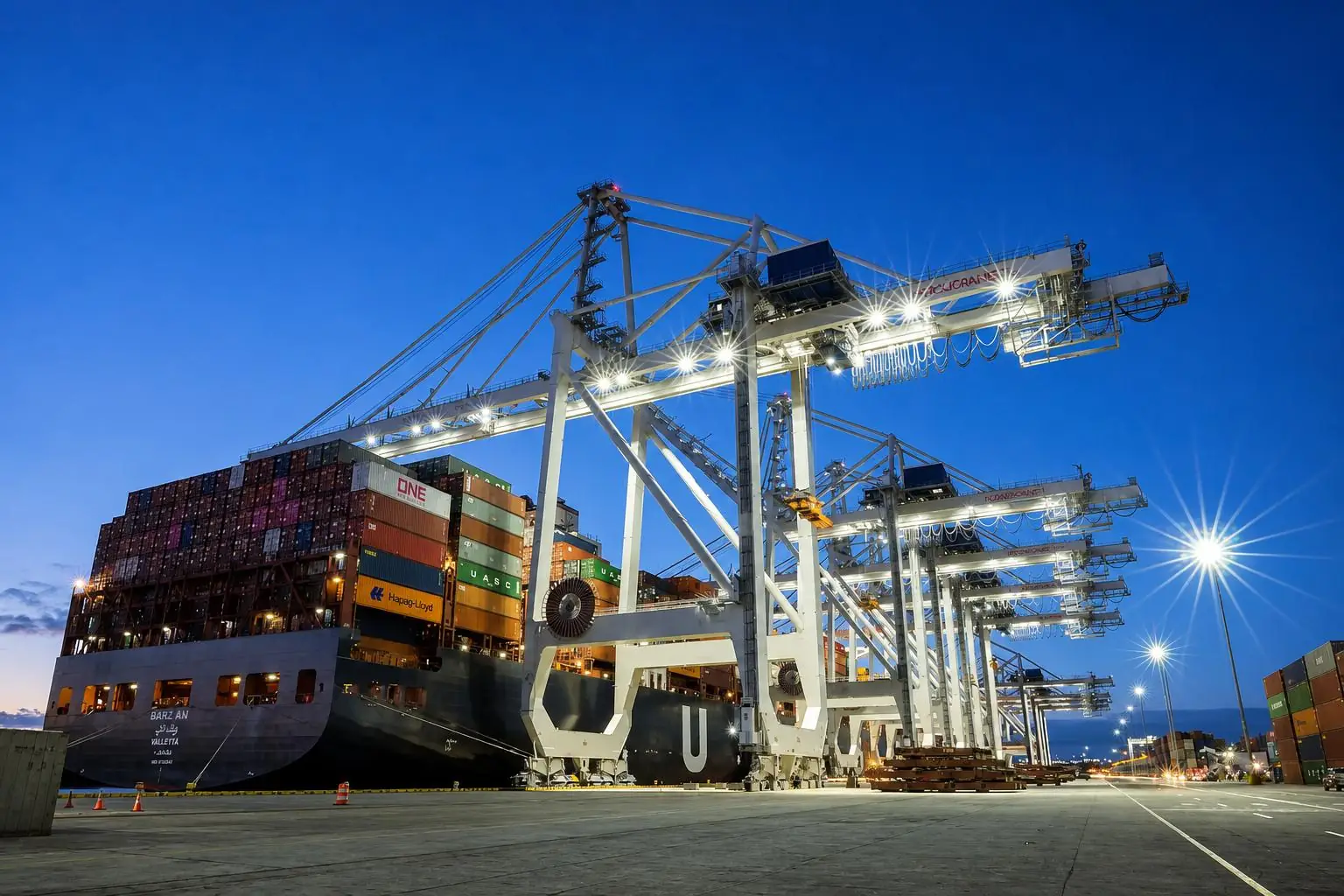
Anticorrosive coating is the core and most commonly used external protective barrier for port cranes. The high-quality multi-layer coating system can form a dense protective film on the surface of the metal substrate to isolate the erosion of chloride ions, moisture, and oxygen.Under the high corrosion conditions of port C5-M, ordinary single-layer coatings cannot meet the long-term protection needs at all. A multi-layer professional anticorrosive coating system of surface pretreatment, primer, middle paint, and top paint must be used for layer-by-layer construction, with standardized construction and testing technology to achieve long-term anticorrosive effects.
Surface preparation
The surface treatment of the substrate is the basis for the protective effect of the coating. Data show that more than 80% of the coating shedding and anticorrosive failure problems are due to substandard surface treatment.Before the coating construction of Henan Mine Crane manufactured port crane, the substrate must be pretreated to a high standard. First, the rust, oxide skin, old coating, oil, salt and dust impurities on the surface of the steel must be completely removed by sandblasting and shot blasting. The cleanliness of the substrate must reach the Sa2.5 level standard, and the surface forms a uniform rough surface to enhance the adhesion of the coating.For key areas such as welds, dead corners, edges and corners, manual polishing and refinement are used to eliminate residual impurities.The treated substrate needs to be primed and coated within 4 hours to avoid secondary oxidation and salt accumulation, ensure that the coating is closely integrated with the substrate, and eliminate the problem of stratification and shedding.
Zinc-rich primer
Epoxy zinc-rich primer is the core underlying protection of the port's anticorrosive coating system. It mainly has the function of cathodic protection and is the first line of defense for anticorrosive steel structures.The primer contains a high content of zinc powder, the zinc metal activity is higher than that of steel, and the oxidation reaction can occur first, sacrificing itself to protect the steel substrate from corrosion, while forming a dense protective layer to block the penetration of corrosive media.Under high corrosion conditions in ports, special marine epoxy zinc-rich primers need to be selected. The dry film thickness is controlled at 70-100µm, which is suitable for the long-term erosion environment of salt spray and seawater. For high-corrosion areas such as welds, corners, fasteners, etc., the primer coating can be appropriately thickened to strengthen key protection and prevent substrate corrosion from the bottom.
Epoxy coating
The epoxy middle layer paint is the barrier core of the coating system, which undertakes the primer and topcoat, and plays a key role in thickening protection, blocking chloride ions, and improving the strength of the coating.The middle layer of epoxy cloud iron paint is commonly used, which contains mica iron oxide particles inside, which can form a multi-layer dense shielding structure, which effectively prevents salt spray, moisture, and chloride ions from penetrating the coating to reach the substrate, greatly improving the overall anticorrosive performance.At the same time, the middle layer of paint can fill the fine pores and construction defects of the primer coating, smooth the surface of the substrate, and improve the adhesion and flatness of the topcoat.The thickness of the standard construction dry film is controlled at 100-150µm, and the multi-layer brushing is superimposed, which can significantly improve the coating's permeability, wear resistance, and aging resistance, and adapt to the harsh working conditions of the port.
Marine topcoat
Marine special topcoat is the outer protection of the coating system, facing outdoor salt spray, ultraviolet light, and wind and rain erosion, which determines the appearance durability and long-term anticorrosive stability of the equipment.Aliphatic polyurethane topcoat or fluorocarbon topcoat are preferred for port cranes. They have super UV aging resistance, salt spray resistance, scouring resistance, and self-cleaning properties. They can resist extreme marine environmental erosion for a long time and are not easy to change color, pulverize, and crack.The thickness of the dry film of the topcoat is controlled at 60-100µm, and the surface is smooth and dense after molding, which can effectively block the intrusion of external corrosive media. At the same time, it has dust-proof and salt-proof effects, greatly reducing the difficulty of late cleaning and maintenance, and ensuring the long-term stable operation of the coating system.
Coating inspection
Standardized coating inspection is a key link to ensure the quality of anticorrosive construction and avoid late anticorrosive failure, which runs through the whole process of coating construction.During the construction process, the dry film thickness of the primer, middle paint, and top paint needs to be tested one by one to ensure that the thickness is up to standard, the coating is uniform, and there are no leakage, thin coating, and accumulation problems.After the coating is cured, an electric spark detector is used to detect the integrity of the coating and investigate hidden defects such as pinholes, bubbles, and cracks.The adhesion tester is used to detect the binding strength of the coating to eliminate the hidden dangers of coating shedding.At the same time, the salt spray resistance and aging resistance of the coating are regularly sampled, construction and testing data are recorded, and a complete quality traceability system is formed to ensure that the entire anticorrosive coating system meets the port's long-term protection standards.
Maintenance Strategies for Saltwater-Exposed Cranes
High-quality design and coating are the foundation, and normalized and standardized operation and maintenance are the key to prolong the anti-corrosion life of the crane and eliminate the hidden dangers of corrosion.Port equipment has been in a dynamic corrosion environment for a long time, and coating aging, salt accumulation, and component wear cannot be completely avoided. Only by establishing a normalized maintenance mechanism, removing corrosion triggers in a timely manner, and repairing minor damage can small corrosion be prevented from turning into major failures, and the long-term stable operation of the equipment can be guaranteed.
Salt removal
Salt accumulation is the core source of continuous corrosion. Salt accumulation on the surface, crevices, and inside the equipment of port cranes will continue to precipitate chloride ions, accelerating metal corrosion and coating aging.Therefore, regular desalination is the basic work of daily operation and maintenance. After the daily operation is over, high-pressure water is used to rinse the exposed surfaces of the equipment, steel structure gaps, and mechanical parts gaps to remove surface salt dust and sea water residues.Every week, the dead corners of electrical equipment, hydraulic components, and fasteners are finely wiped and desalinated to avoid salt accumulation.After the rainy season, typhoons, and high tides of seawater, all-round desalination and cleaning should be carried out immediately to eliminate the residues of saline stagnant water and cut off the causes of corrosion from the source.After cleaning, it is necessary to ensure that the equipment is completely dry to avoid the humid environment from exacerbating corrosion.
Coating inspection
The coating is the protective coat of the equipment. The normal inspection can detect the hidden dangers of aging and damage of the coating in time, and repair it in advance to avoid corrosion of the substrate.Formulate a hierarchical inspection system, visually inspect the exposed coating of the equipment daily, and investigate the problems of peeling, cracking, shedding, chalking, and discoloration.Focus on inspecting the coating of high-incidence areas such as welds, corners, bases, and the periphery of moving parts every month.Professional instruments are used every quarter to test the thickness, integrity and adhesion of the coating.For minor scratches and paint spots, do local patching and repair in time.For large-area aging and failed coatings, timely polishing and re-coating are used to prevent the expansion of the damaged area of the coating and protect the substrate from erosion.
Component lubrication
Precise lubrication is the core means of anticorrosion and wear reduction of moving parts. Grease can form a protective oil film on the moving surface of the metal to isolate salt spray and moisture erosion, while reducing friction and wear of parts.For bearings, gears, pins, pulleys, guide rails and other moving parts, special marine anticorrosive greases are selected, which have the characteristics of salt spray resistance, water erosion resistance, and long-term stability.Formulate a standardized lubrication cycle, add grease to high-frequency operating parts every month, and fully change oil to low-frequency parts every quarter.Before lubrication, the surface area of the parts must be thoroughly cleaned of salt, rust, and impurities to avoid impurities from mixing into the lubricating layer and causing wear and corrosion, so as to ensure that the oil film completely covers the metal surface, and realizes the dual effects of anti-corrosion and wear reduction.
Damage repair
Timely repair of corrosion damage is the key to curbing the spread of diseases. If minor corrosion is left alone, it will quickly spread into structural corrosion failures.Enterprises should establish an equipment operation and maintenance mechanism for timely maintenance, complete rust removal and desalination operations in time for dot-like rust and surface oxidation problems on the surface of the equipment, and install matching anticorrosive coatings.In view of problems such as component wear and abnormal mating gaps, timely equipment maintenance and parts replacement will be carried out.In view of hydraulic leakage, oxidation of electrical contacts and other faults, clean and repair equipment in time, replace aging accessories and sealing structures.For steel structure wall thickness loss, weld corrosion and other issues, through structural reinforcement, welding and re-anticorrosive treatment, the development of corrosion diseases is controlled, and the overall structure of the equipment is guaranteed to be complete and the operation is stable.
How to Build a Long-Term Corrosion Protection Strategy
The seawater anticorrosion of port cranes is not a one-time construction or short-term maintenance work, but a system engineering that runs through the whole life cycle of the equipment.Short-term anticorrosion can only solve surface problems. Only by building a long-term anticorrosion strategic system that adapts to the working conditions of the port and meets the needs of the equipment can long-term equipment protection, the lowest life cycle cost, and the highest operating safety factor be achieved, and the stable production of the port can be escorted.
Site assessment
Site working condition assessment is the basis of a long-term anticorrosive strategy. The salt spray concentration, humidity, seawater tides, and wind working conditions of different ports vary greatly, and the corrosion risk level is completely different.It is necessary to carry out a comprehensive normalization assessment of the equipment operation site, detect the concentration of salt spray chloride ions, air humidity, and seawater corrosion levels in the area, and divide the C5-M high corrosion core area and the ordinary coastal area.Count the frequency of extreme working conditions such as seasonal climate change, typhoons, heavy rains, and high tides at the site.Investigate additional corrosion causes such as site dust, sewage, industrial impurities, etc.Based on the measured data of the site, accurately match the anticorrosive design, coating system, and operation and maintenance frequency to eliminate insufficient protection or waste of resources caused by the unified protection plan.
Protection levels
Combined with the evaluation results of on-site working conditions, port cranes need to adopt a differentiated and hierarchical anti-corrosion control model to avoid waste of resources or insufficient protection caused by unified protection.For the core load-bearing and operating components such as steel structures and main control electrical systems, high-standard anti-corrosion configuration and high-frequency inspection and monitoring are implemented.For key components such as hydraulics, transmissions, and key fasteners, special anticorrosive structures and regular special maintenance are used.The auxiliary structure of the equipment implements conventional anti-corrosion standards.This hierarchical protection method can rationally allocate operation and maintenance resources, while stabilizing the anticorrosive effect, it can effectively improve the overall economy of equipment operation and maintenance.
Integrated protection
Integrated and comprehensive protection is the core logic of long-term anticorrosion. It breaks the limitations of single coating and single maintenance, and builds an all-round integrated anticorrosion system covering structural design, material selection, coating protection, daily operation and maintenance, and intelligent monitoring.Complete the optimization of the anticorrosive structure in the equipment research and development stage to avoid the hidden dangers of corrosion from the source.Through anticorrosive materials and multi-layer protective coatings, a stable static protective barrier is formed, and dynamic operation and maintenance protection is realized by combining normalized cleaning, lubrication, and repair.With the help of intelligent monitoring system, real-time risk early warning is realized.Multi-dimensional protection cooperates with each other, complements each other and enhances efficiency, completely solves the limitations of a single protection method, and realizes a long-term anticorrosive effect with all-round and no dead ends.
Crane customization
Customized anti-corrosion solutions are adapted to different types and working conditions of port cranes to improve the accuracy and adaptability of protection.Different models of port gantry cranes, gantry cranes, shore bridges, tire cranes, etc. have large differences in structural layout, operating scenarios, and exposure levels, and different areas with high corrosion incidence.Special anti-corrosion customization is made for different models, and the design of salt spray protection and stagnant water drainage is strengthened for offshore operating models.The operating models in the tidal zone are thickened for underwater and tidal zone coating protection.High-frequency operating models strengthen the wear-resistant and anticorrosive design of moving parts.At the same time, according to the customer's operation intensity and service life requirements, customized differentiated anti-corrosion configurations can be maximized to adapt to actual operation scenarios.
Lifecycle cost
The whole life cycle cost control is the core goal of the long-term anticorrosive strategy. The core value of anticorrosive protection is not simply to reduce the initial investment, but to significantly reduce the loss of late maintenance, replacement, and downtime.Short-term low-cost anti-corrosion solutions often have short-term protection, coating failure and component corrosion will occur in 1-2 years, and the comprehensive cost of frequent maintenance and replacement is extremely high.The standardized and systematic long-term anticorrosive program has a moderate increase in early investment, but it can extend the anticorrosive life of the equipment to 8-15 years, significantly reduce the failure rate, maintenance frequency, and component replacement costs, and reduce the loss of downtime and missed work.Through the whole life cycle cost accounting, balance the early anti-corrosion investment and the later operation and maintenance costs to maximize the economic and safety benefits of the equipment.
Henan Mine Crane Factory Custom
Seawater salt spray corrosion is the main cause of aging of port crane equipment, frequent failures, and rising operation and maintenance costs.Equipment anticorrosion cannot rely on a single touch-up paint or post-mortem maintenance. It needs to combine the characteristics of easily corroded components, equipment anticorrosive structure design, multi-layer protective coating technology, normalized maintenance and maintenance, and full-cycle protection strategies to form a complete anticorrosive system.Multi-dimensional collaborative control can effectively resist corrosion and damage in marine working conditions and stabilize the operating state of the equipment.
Henan Mine Crane Factory is a professional port crane manufacturer. We provide customized anticorrosive equipment and complete protection solutions for marine high-salt corrosion conditions.From the selection of raw materials, the optimization of structural anticorrosion, to the construction of professional marine coatings, and the guidance of late operation and maintenance, the whole process is tailored to the port operating environment to create high-corrosion-resistant equipment.Help users significantly reduce equipment failure rates and maintenance costs, extend equipment service life, and ensure long-term stable and efficient operation of terminal lifting operations.