
How to Choose an Overhead Crane for Continuous Production Lines
For 24-hour continuous operation of assembly line production, bridge cranes will be deeply embedded in the production process, directly affecting the operating efficiency and safety level of the production line.The continuous carrying capacity and fatigue resistance of the crane under such working conditions are much higher than that of conventional intermittent operating environments.Many companies only pay attention to basic specifications when purchasing, and do not combine the actual working condition assessment of long-term high-frequency operations. After being put into use, they often encounter unstable operation and frequent failures, which not only disrupt the rhythm of production, but also bring about continuous increase in maintenance expenses. Therefore, the selection should be based on the actual operating status of the entire production line, and a comprehensive assessment should be completed starting from the job requirements.
What Makes Overhead Cranes Different for Continuous Production Lines
The core difference between Henan Mine Crane manufactured bridge cranes for continuous production lines and ordinary workshop cranes is that the operating logic is fully adapted to the uninterrupted production mode of the mass production line.Ordinary cranes are mainly intermittent, on-demand start-stop, and low-frequency operations, with high fault tolerance.The continuous production line crane needs to fit the fixed beat of the production line, high-frequency cycle operation, and long-term continuous operation, and the requirements for equipment stability, response speed, wear resistance, and safety redundancy have been greatly improved.The following explains the basis for differentiated selection from the four core dimensions.
Production demands
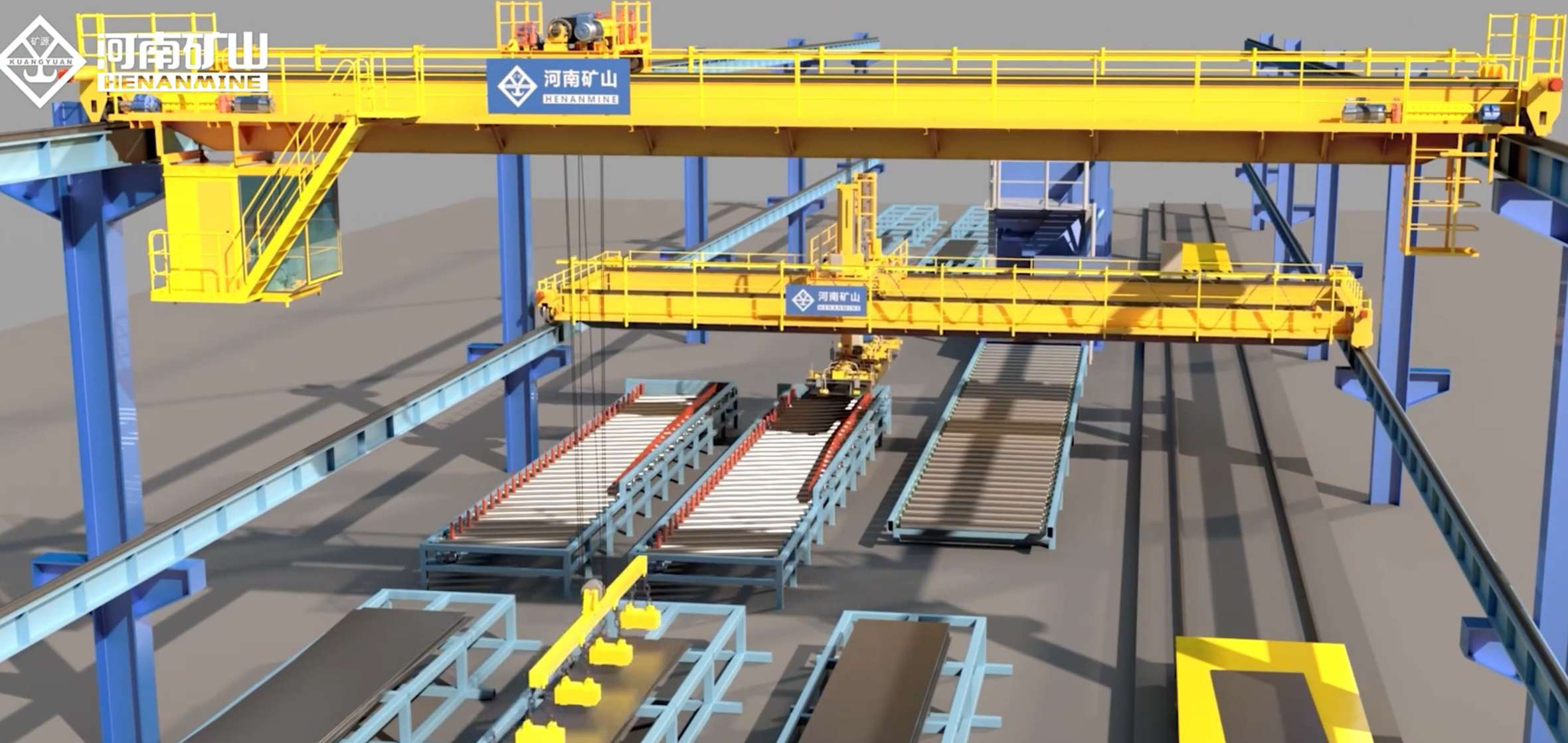
The core production requirements of continuous production lines are standardization, beat-based, and uninterrupted mass production, which requires the crane to be fully adapted to the production rhythm of the production line and cannot become a bottleneck in production capacity.In scenarios such as automobile manufacturing, steel structure processing, warehousing assembly lines, heavy industry mass production, food and chemical automation production lines, material handling, workpiece loading and unloading, and finished product transportation are all deeply bound to the production line.Ordinary cranes can only meet the needs of scattered and temporary handling, with slow start-stop response and poor operating stability, and cannot match the beat of a fixed production line.The bridge crane adapted to the continuous production line can design a fixed operating trajectory and start-stop rhythm according to the production line capacity, so as to achieve accurate synchronization with the assembly line process, and ensure that every material transfer is in line with the production schedule, and there will be no waste of energy consumption by idling equipment, nor will there be problems of material accumulation and process caton. It is fully adapted to the core needs of large-scale continuous production.
Load frequency
The frequency of load operation is the key indicator to distinguish between ordinary cranes and continuous production line cranes.The average number of daily operations of ordinary workshop cranes is small and the interval is long, and the equipment has sufficient heat dissipation, cushioning, and fatigue recovery time.The cranes of continuous production lines are high-frequency circulating operating equipment, with an average number of lifting, transshipment, and blanking times of hundreds or even thousands of times per day, and they are in a state of repeated start-stop and continuous force for a long time.High-frequency operation will cause continuous fatigue loss to the main beam, walking mechanism, hoist system, motor, brake and other core components of the crane.Therefore, cranes for continuous production lines must adopt thickened main beams, strengthened transmission structures, high-temperature motors and wear-resistant brake accessories to eliminate component deformation, overheating, brake failure and other problems under high-frequency operations, and ensure long-term stable operation under high-frequency load conditions.
Workflow needs
The workflow of a continuous production line has the characteristics of closed loop, automation, and coherence. Cranes are an indispensable part of the production line process, not independent operating equipment.Traditional cranes rely on manual control, their operating efficiency varies from person to person, and their operating errors are large, and they cannot be adapted to standardized assembly line processes.The Henan Mine Crane manufactured bridge crane adapted to continuous working conditions can customize the operating logic according to the production line process, support fixed-point start-stop, fixed-point blanking, and fixed-track operation, and can perfectly connect the upper and lower processes.Whether it is the warehousing and transportation of raw materials, the loading and unloading of processed workpieces, the handling of finished products out of the warehouse, or the flow of materials between processes, it can accurately match the assembly line operation process, open up the closed loop of material handling on the production line, and avoid process caton and production delays caused by manual operation errors. Adapt to an automated and standardized continuous production workflow.
Key Specifications to Check Before Choosing an Overhead Crane
The selection of cranes for continuous production lines cannot be judged by experience alone, and must rely on accurate equipment parameters to match working conditions.The core technical parameters directly determine the operating capacity, adaptability, service life and operating stability of the equipment, which is the basis for avoiding selection errors and ensuring the continuous operation of the production line.The following six core parameters are the key indicators that must be checked when selecting a company.
Load capacity
The rated load is the basic core parameter of the crane, but it is strictly forbidden to accurately match the maximum material weight for the selection of continuous production lines.Due to continuous operation, there are problems such as material weight fluctuations, instantaneous impact loads, and long-term fatigue loss of equipment. If the rated load is the same as the actual load, the long-term full-load operation of the equipment will accelerate aging and can easily cause safety failures.For continuous mass production conditions, it is recommended to reserve 1.2~1.5 times the load redundancy when selecting the model.For example, the conventional maximum hoisting weight of a production line is 5 tons, and a 6-ton or 7.5-ton crane needs to be selected to effectively buffer the instantaneous load pressure of high-frequency operations, avoid long-term full-load and overload operation of equipment, and extend the service life of equipment. At the same time, it should meet the needs of fine-tuning material specifications and temporary heavy-duty operations in the production process.
Lifting height
The lifting height determines the vertical space of the crane's operation, which directly affects the flexibility and adaptability of the material transfer of the production line.When selecting the type, you cannot only refer to the headroom height of the workshop. It needs to be calculated comprehensively in combination with the height of the production line equipment, the height of the material stacking, the height of the workpiece processing, and the safe reserved distance.
Material transfer in continuous production lines is frequent. If the lifting height is insufficient, there will be problems such as material bumping equipment, inability to complete cross-process transfer, and limited working space.If the lifting height is too redundant, it will increase the weight of the equipment and operating energy consumption, and reduce operating efficiency.The precisely matched lifting height can ensure the rapid lifting and smooth transfer of materials, and adapt to the compact and efficient operation rhythm of the assembly line.
Crane span
Henan Mine Crane manufactured crane span refers to the distance from the center of the cart track at both ends, which determines the horizontal operation coverage of the equipment and is directly adapted to the overall layout of the production line.Continuous production lines are mostly long strips and large-scale layout, and the selection of span directly affects whether there are no dead ends in the global material handling of the production line.When selecting the type, it must be determined strictly based on the track spacing of the workshop, the area covered by the production line operation, and the maximum horizontal distance of material transfer.If the span is too small, part of the production line area cannot be covered, and secondary transportation is required, interrupting the continuous production cycle.If the span is too large, the deflection of the main beam will increase, the stability of the equipment will decrease, and the operation and maintenance costs will increase.The precisely matched span can realize efficient handling of the whole production line without dead ends and ensure production continuity.
Travel speed
The operating speed includes the walking speed of the cart, the operating speed of the trolley and the lifting speed, which are the core parameters that match the production beat of the production line.Ordinary cranes are slow and non-adjustable, and are only suitable for low-speed and intermittent operations.The continuous production line has extremely high requirements for handling efficiency and beat synchronization.The high-speed adjustable operating speed can be dynamically adjusted according to the production line capacity: the transportation can be accelerated during the peak period of mass production to avoid material accumulation.The precision workpiece processing stage can run smoothly at low speed to prevent material shaking and offset.At the same time, it is equipped with frequency conversion and speed control technology to achieve stable start-stop and stepless speed change, avoid inertial shocks caused by high-speed start-stop, protect equipment and workpieces, and perfectly adapt to the rhythmic operation needs of continuous production lines.
Duty class
The working level is the core index of crane selection in continuous production lines, and it is also the most easily overlooked parameter.The working level directly defines the crane's operating frequency, continuous working time, and fatigue tolerance.Ordinary low-level cranes are only suitable for occasional operations and intermittent operation conditions, and cannot be adapted to 24-hour continuous mass production scenarios at all.Continuous production lines must use medium and high-level working-level cranes, which can withstand high-frequency, long-term, and cyclic operations, effectively resist equipment fatigue and loss, and reduce the probability of failure and shutdown. It is the key to ensure the long-term continuous and stable operation of the production line.
Control system
The control system determines the operating accuracy, operating stability and automation adaptation capabilities of Henan Mine Crane manufactured cranes, and is the core hub connecting cranes and continuous production lines.The traditional manual control system is cumbersome to operate, has low accuracy, and relies on labor, and cannot be adapted to automated continuous production.Cranes adapted to continuous production lines mostly use frequency conversion control systems and PLC intelligent control systems, which support manual control, semi-automatic fixed-point operation, and fully automatic program operation in various modes.It can accurately control the start and stop, speed, and positioning, and the error is controlled at the millimeter level. At the same time, it can be connected to the production line automation system to realize the automation of the whole process of material transfer without manual intervention, which is perfectly adapted to the unmanned and continuous production needs of the assembly line.
How to Match Crane Duty Class to Production Workload
The precise matching of crane work level and production load is the core of avoiding equipment overload and aging, frequent failures, downtime and missed work.The working level is not up to standard, even if the basic parameters such as load and span are all matched, the equipment cannot withstand the high-intensity operation of a continuous production line.Below, the load matching method is explained in detail from the four dimensions of working condition classification, operating cycle, working time, and downtime risk.
Duty classifications
The working level of domestic bridge cranes is divided into eight levels A1~A8 according to national standards. The higher the level, the stronger the fatigue resistance, high-frequency operation, and continuous operation ability of the equipment.A1-A3 are light-grade working conditions, suitable for scattered workshops, occasional hoisting, and low-frequency operation scenarios, and are not suitable for continuous production lines at all.A4-A5 are intermediate working conditions and are suitable for production lines with conventional mass production and regular daily operations.A6-A8 are heavy-duty and extra-heavy-duty working conditions, and are specially adapted to 24-hour uninterrupted, high-frequency circulation, and heavy-duty continuous production lines.For high-load continuous working conditions such as mass production of auto parts, continuous processing of steel structures, automated warehousing assembly lines, and mass production of heavy industry equipment, high-level cranes of A6 and above must be selected to adapt to the needs of high-intensity operations in terms of equipment structure, accessory material, and transmission system.
Operating cycles
The number of operation cycles is the core basis for determining the matching of working conditions, and refers to the complete number of lifting-transshipment-blanking-resetting operations of the crane every day and month.The operating cycle of the continuous production line has the characteristics of immobility, high frequency and uninterrupted, and the number of daily cycles far exceeds the operating standards of ordinary workshops.Low-level cranes are designed to withstand low cycle times, and long-term high-frequency cycle operations will quickly cause structural fatigue, wear of accessories, and motor aging.The high-level crane has been strengthened and designed to withstand more than one million stable operating cycles, and can be adapted to the high-frequency cycle conditions of continuous production lines for a long time to ensure the long-term accuracy and stability of the equipment.When the enterprise selects the type, it can accurately correspond to the crane work level according to the average number of daily operation cycles of the production line.
Working hours
The effective daily working time is an important reference for matching working conditions.Ordinary workshop cranes work for no more than 4 hours a day, and there is a lot of standby and idle time.The continuous production line is divided into long-term operating modes such as 12-hour two-shift reversal and 24-hour three-shift reversal, and the equipment has almost no downtime and rest time.A1-A3 class cranes are only suitable for short-term intermittent operations.A4-A5 is suitable for regular operations of 8-12 hours a day.A6-A8 class cranes are designed for 24-hour uninterrupted continuous operation. The core components are optimized for high temperature resistance, fatigue resistance, and continuous load resistance. They can maintain stable operation for a long time without overheating, caton, failure and shutdown due to long-term work. Problems.
Downtime risks
The biggest hidden danger caused by the mismatch of working conditions is that high-frequency downtime and failures directly interrupt the continuous production cycle.If the low-level crane is forcibly adapted to high-intensity continuous working conditions, there will be a series of failures such as motor burning, brake failure, deformation of the main beam, wear and fracture of the wire rope, and frequent downtime for maintenance.For continuous production lines, every equipment shutdown will cause the entire production line to shut down, material backlog, order delays, labor and energy consumption waste, and bring huge invisible economic losses.High-level cranes with accurate matching working conditions have extremely low failure rates and long maintenance cycles, which can minimize the risk of downtime and ensure continuous and stable mass production of production lines around the clock.
Which Overhead Crane Configuration Fits Your Production Line?
Different production line layout, material specifications, and operation requirements correspond to different crane configuration plans.The differentiated combination of main beam structure, operation mode, hoist configuration, and automation scheme directly determines the operating efficiency, adaptability, and cost performance of the equipment.The following four core configuration options cover the adaptation scenarios of most continuous production lines.
Single vs. double girder
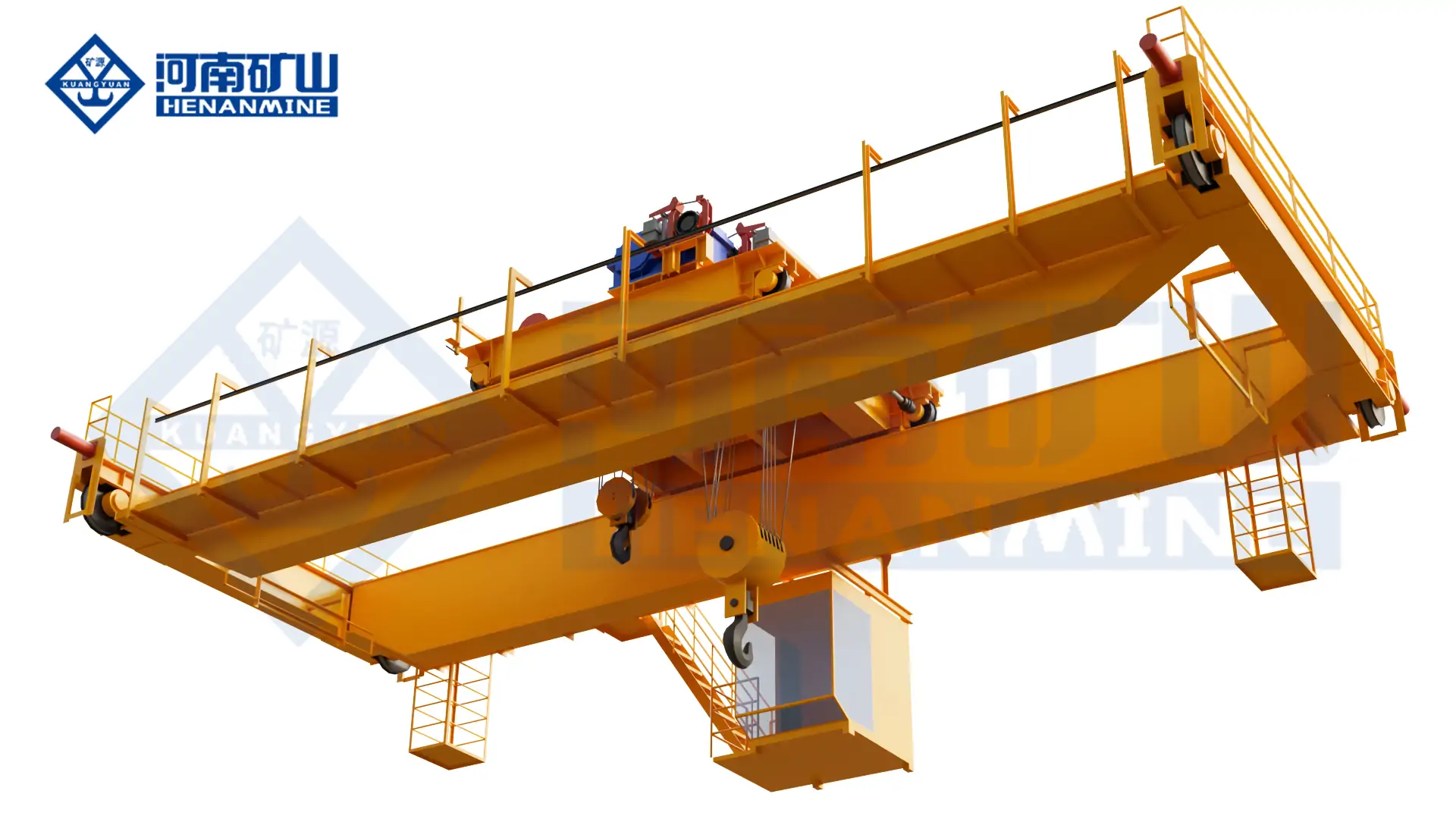
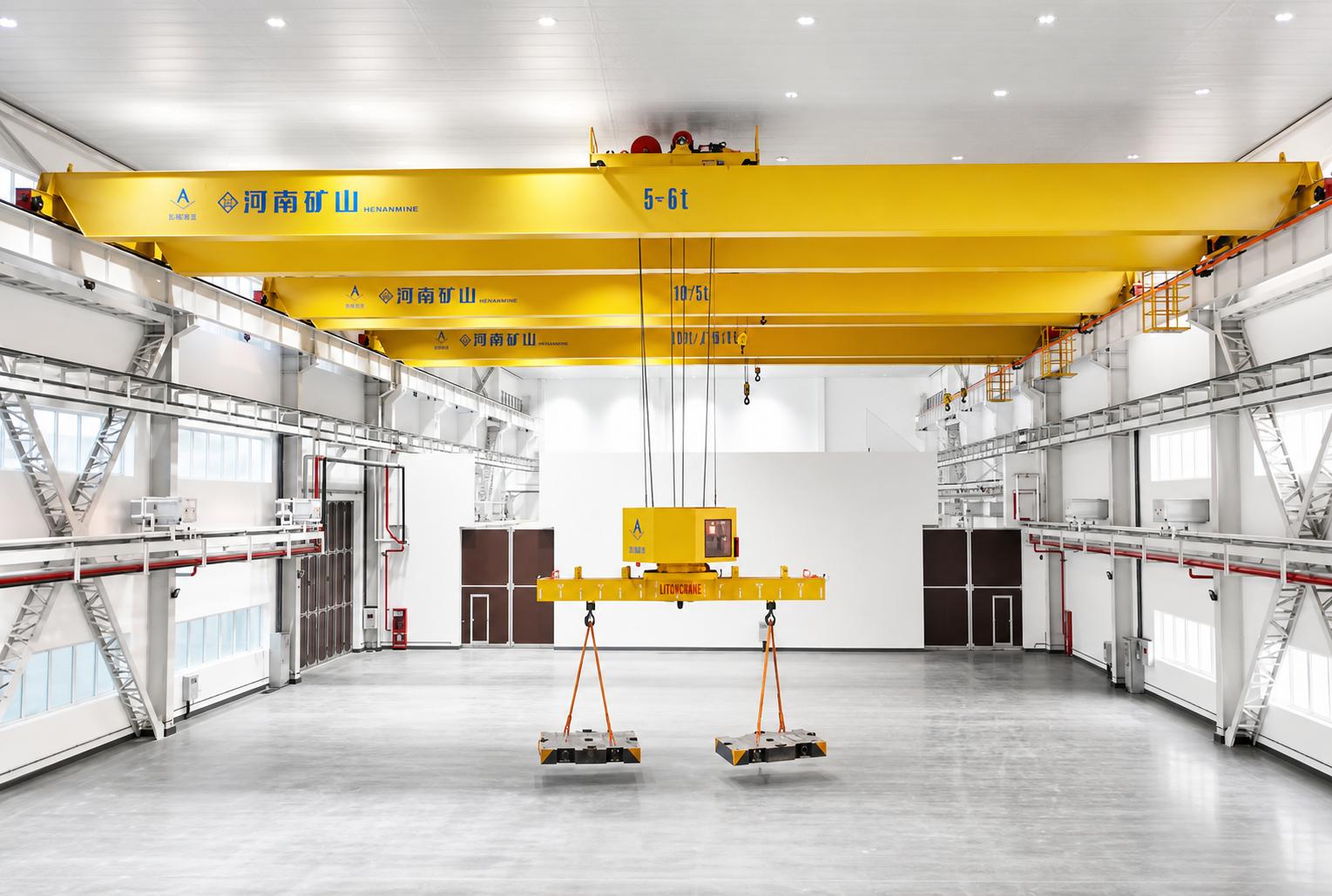
Henan Mine Crane manufactured single-girder bridge crane has a lightweight structure, lower cost and lower energy consumption. It is suitable for light-load, medium-load, medium- and small-span continuous production lines. It is commonly used in mass production lines of light industry, electronics, and small parts. The frequency of operation is medium, the load weight is low, and the cost-effective advantage is significant. It can meet the needs of conventional continuous handling, simple operation and maintenance, and low cost.The double-girder bridge crane adopts a reinforced structure with double main beams, which has stronger bearing capacity, higher stability and better fatigue resistance. It is suitable for heavy-duty, long-span, and ultra-high-frequency continuous production lines, such as heavy-duty manufacturing, steel structure processing, large-scale mold mass production, heavy-duty material transfer and other scenarios.The double-girder structure can be equipped with a larger tonnage hoist and a higher configuration automation system. It does not deform or shake during long-term high-intensity operations, and its stability far exceeds that of single-girder cranes. It is the first choice for heavy-duty continuous production lines.
Top vs. under running
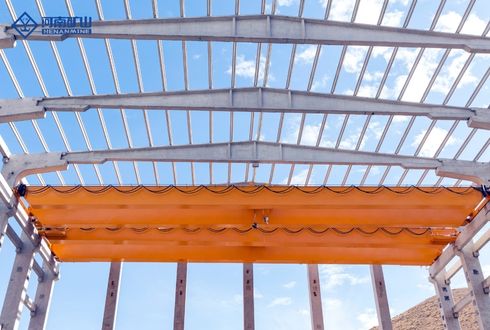
The up-running crane track is installed on the top of the main beam of the plant. It has strong load-bearing capacity, large working space, and is suitable for large-span and heavy-duty continuous production lines. It has a stable structure and strong impact resistance. It is suitable for large-scale factories and high-load mass production conditions. It is the mainstream configuration of industrial continuous production lines.The track of the down-running crane is suspended under the ceiling of the plant, with a lower overall height and a smaller footprint. It is suitable for continuous production lines with low headroom and light material transfer in the plant, such as precision machining, food and medicine, and light storage assembly lines.The equipment is lighter in operation and less noisy, and is suitable for compact workshop layout, but the load and span are limited, making it unsuitable for heavy-duty and high-intensity operations.
Single vs. multiple hoists
The single hoist crane has a simple structure, easy control and low failure rate. It is suitable for continuous production lines with single material and single process transportation. It can meet the needs of conventional one-to-one material handling, low operation and maintenance costs, and stable operation. It is the basic configuration of small and medium-sized continuous production lines.The multi-hoist crane can be equipped with two or more electric hoists, supports two modes of synchronous operation and independent operation, and can simultaneously complete multi-station material transfer, multi-point hoisting of large workpieces, and partitioned handling of light and heavy materials. It is perfectly adapted to multi-process, multi-station, and complex continuous production lines.It can greatly improve the handling efficiency, match the production capacity requirements of high-yield lines, and solve the problems of insufficient efficiency and lagging production capacity of single hoist operations.
Automated options
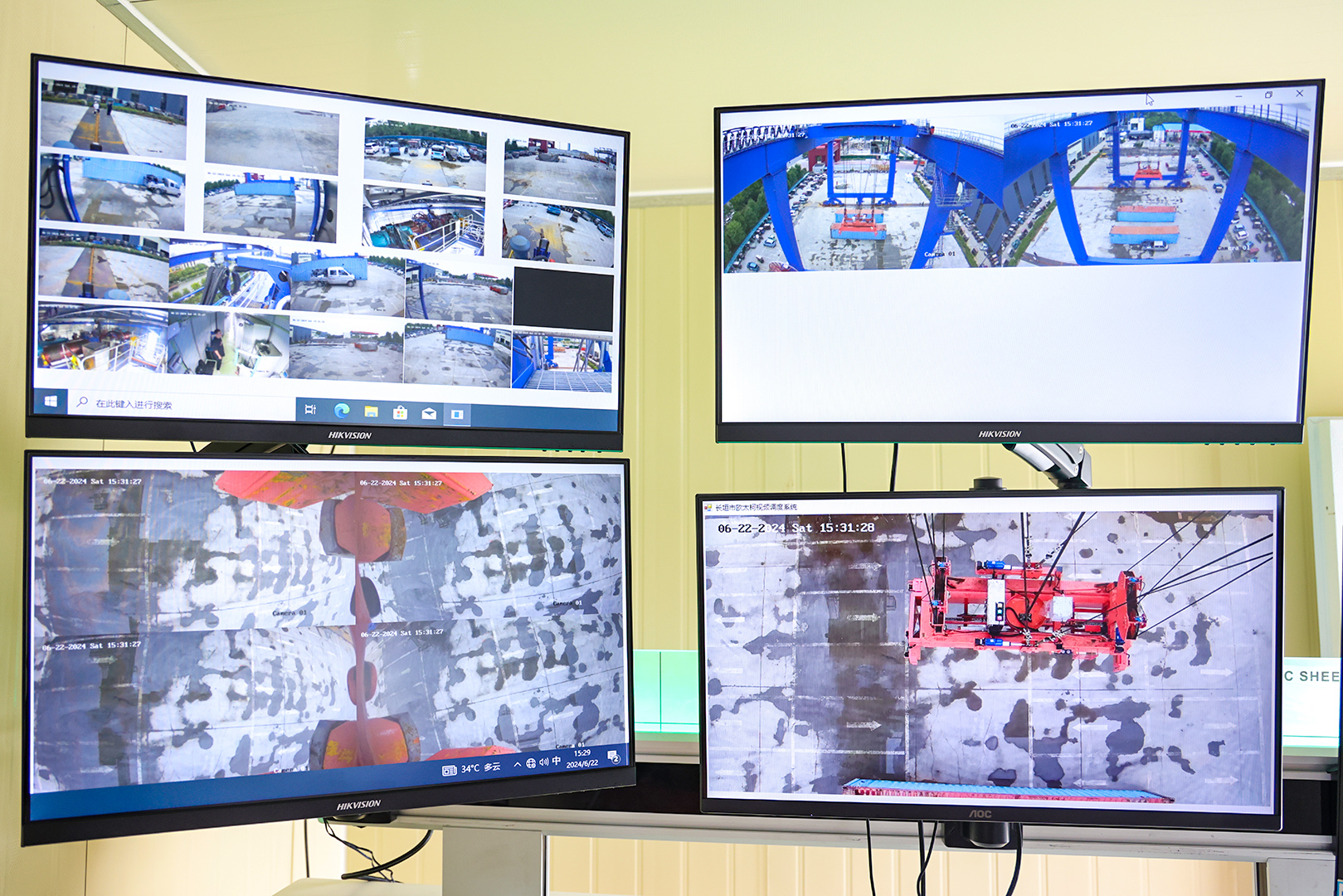
Automated configuration is the core upgrade direction of modern continuous production line cranes, completely getting rid of the limitations of manual control, and realizing unmanned, precise, and beat-based operations.The basic automation configuration is frequency conversion speed regulation + fixed-point start and stop, which can realize standardized operations on fixed trajectories and adapt to conventional assembly line production.The high-end automation configuration includes functions such as PLC intelligent control system, scan code positioning, trajectory memory, automatic correction, remote monitoring, and unattended operation. It can be connected to production line management systems such as MES and ERP, and automatically adjust the work rhythm according to the production plan to realize the automation of the whole process of material transfer.Greatly improving production efficiency, reducing labor costs, and avoiding human operation errors are standard for intelligent continuous production lines.
Safety and Reliability Requirements for Continuous Crane Operation
Continuous production line cranes operate at high frequency and for a long time, and the risk of safety hazards and equipment loss is much higher than that of ordinary intermittent operation equipment.Safety protection configuration and reliability design are the bottom line to ensure the continuous operation of equipment without failure and zero accidents.A perfect safety system can effectively avoid hoisting accidents, equipment damage, and production line shutdowns. The following six core safety configurations are essential.
Overload protection
Overload protection is the core safety protection device, which can monitor the lifting weight of the crane in real time.In the continuous production process, it is inevitable that the material is overweight and the loading error will occur. If there is no protection, the instantaneous overload will directly cause the main beam to deform, the wire rope to break, the motor to burn down, and even cause hoisting accidents.The high-precision overload protection device can provide real-time early warning, automatic power failure, and forced stop of operations to eliminate overload operation, avoid the risk of overload from the source, protect the core structure of the equipment and the safety of production line operations, and adapt to long-term uninterrupted operation scenarios.
Limit switches
The travel limit switch includes lifting limit, cart walking limit, and trolley walking limit, which is used to limit the maximum operating range of the crane.In the continuous automated operation mode, the equipment runs in a long-term cycle, which is prone to problems such as over-stroke operations, material collisions, and equipment bumps.The limit switch can automatically stop and reset in reverse when the equipment is running to the safety boundary, so as to prevent out-of-range operations, avoid collision damage to equipment, workpieces, and production line equipment, and ensure that every cycle operation is completed within a safe range to achieve safe and stable operation around the clock.
Anti-collision systems
Multiple cranes operating in parallel, intensive workshop equipment, and compact production line layout are common scenarios for continuous production lines, and collisions between cranes and cranes and plant equipment are extremely prone to occur.The collision will not only damage the crane equipment, but also directly disrupt the production cycle and cause the production line to shut down.The anti-collision system uses infrared sensing, laser detection and other technologies to monitor the distance of peripheral equipment in real time, automatically slow down and stop urgently at close range, effectively avoid the risk of collision, adapt to multi-equipment, high-density continuous production conditions, and ensure the stable operation of the equipment cluster.
Variable frequency drives
The frequency conversion drive system is the core configuration to ensure the stability of continuous operation.Traditional cranes start and stop stiffly and have a large inertial impact. Long-term operation will exacerbate structural wear and material shaking and offset, affecting production accuracy.Frequency conversion drive can achieve stepless variable speed, soft start, soft stop, smooth start and stop without impact, effectively reduce equipment mechanical fatigue, reduce accessories wear, and extend equipment service life.At the same time, it can accurately match the running beat of the production line, take into account the operating efficiency and operating stability, and adapt to long-term high-frequency continuous operation.
Maintenance needs
Low maintenance cost and easy maintenance design are important manifestations of the reliability of cranes in continuous production lines.Continuous production conditions do not allow long-term downtime for maintenance, so when selecting models, priority must be given to equipment with modular structure, universal accessories, and convenient maintenance.High-quality special cranes for continuous production lines, the core components can be disassembled and independently overhauled, the maintenance process is simple, the cycle is long, and the failure rate is low. The production line can be used for short-term material replacement and rest time to complete rapid maintenance without long-term downtime.At the same time, the equipment comes with a fault self-inspection system, which can monitor the operating status in real time, warn of faults in advance, realize preventive maintenance, completely avoid sudden failures and shutdowns, and ensure continuous and efficient production of the production line.
Henan Mine Crane Factory Custom
The selection of bridge cranes for continuous production lines should not only focus on basic indicators such as load and span, but also fit the actual working conditions of high frequency, continuous and fixed rhythm of the production line.The stability of the long-term operation of the equipment directly determines whether the production line can produce smoothly and continuously, and it is also related to the overall operating cost.Choose the right adapted model, the material transfer is smoother, the production beat is no longer dragged down by the hoisting link, the order loss caused by sudden downtime is greatly avoided, and the long-term maintenance expenditure is also reduced.Henan Mine Crane Factory is deeply engaged in the field of lifting equipment. It can customize highly durable, high-safety and redundant bridge cranes according to the actual situation of the on-site production line, and use stable and reliable handling hardware to escort enterprises to mass production on a large scale around the clock.