
When Do You Need a Custom Crane? 10 Warning Signs to Check
In conventional working conditions such as industrial hoisting, heavy-duty production, and port logistics, standard industrial cranes can meet most of the basic operation needs with the advantages of high cost performance, fast delivery, and easy maintenance.However, many companies blindly choose standard models, ignoring the particularity of site structure, operating load, and operating environment, and are prone to problems such as poor equipment adaptability, low efficiency, frequent failures, and high operation and maintenance costs.For all kinds of non-standard and complex special working conditions, customized cranes can be accurately adapted to the needs of the site, effectively reduce the cost of the whole cycle, and build a strong production safety line of defense. It is a high-quality choice that is more suitable for special operating scenarios.
What Is a Custom Crane and When Is It Needed?
Customized cranes are non-standard industrial lifting equipment specially designed, individually configured, and optimized by crane manufacturers based on the actual working conditions, site conditions, load parameters, operating requirements, and environmental characteristics of the user's site.Different from mass-produced standard lifting equipment, customized bridge cranes and gantry cranes are not limited to fixed parameters, fixed structures, and fixed configurations. They can be adapted to various special, extreme, and complex industrial hoisting scenarios, and are widely used in high-end fields such as new energy, chemical industry, metallurgy, ports, heavy industry manufacturing, and special engineering.
Standard vs. custom crane
Standard industrial cranes are general-purpose mass-produced models in the industry. The parameters, structure, configuration, and dimensions are all standardized. The span, lifting height, rated load, operating speed, and protection level are all fixed and unified. They are mainly suitable for conventional factories, ordinary material hoisting, and low-frequency operation scenarios.Its core advantages lie in sufficient stock, short delivery cycle, low initial procurement cost, universal accessories, and convenient maintenance. It is suitable for the general hoisting needs of most small and medium-sized enterprises.
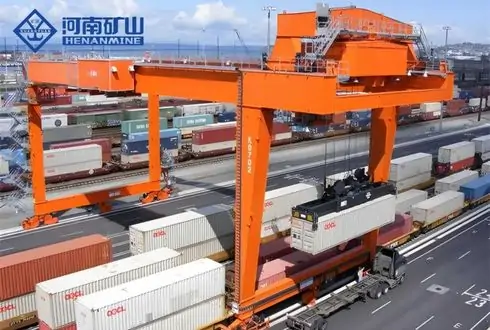
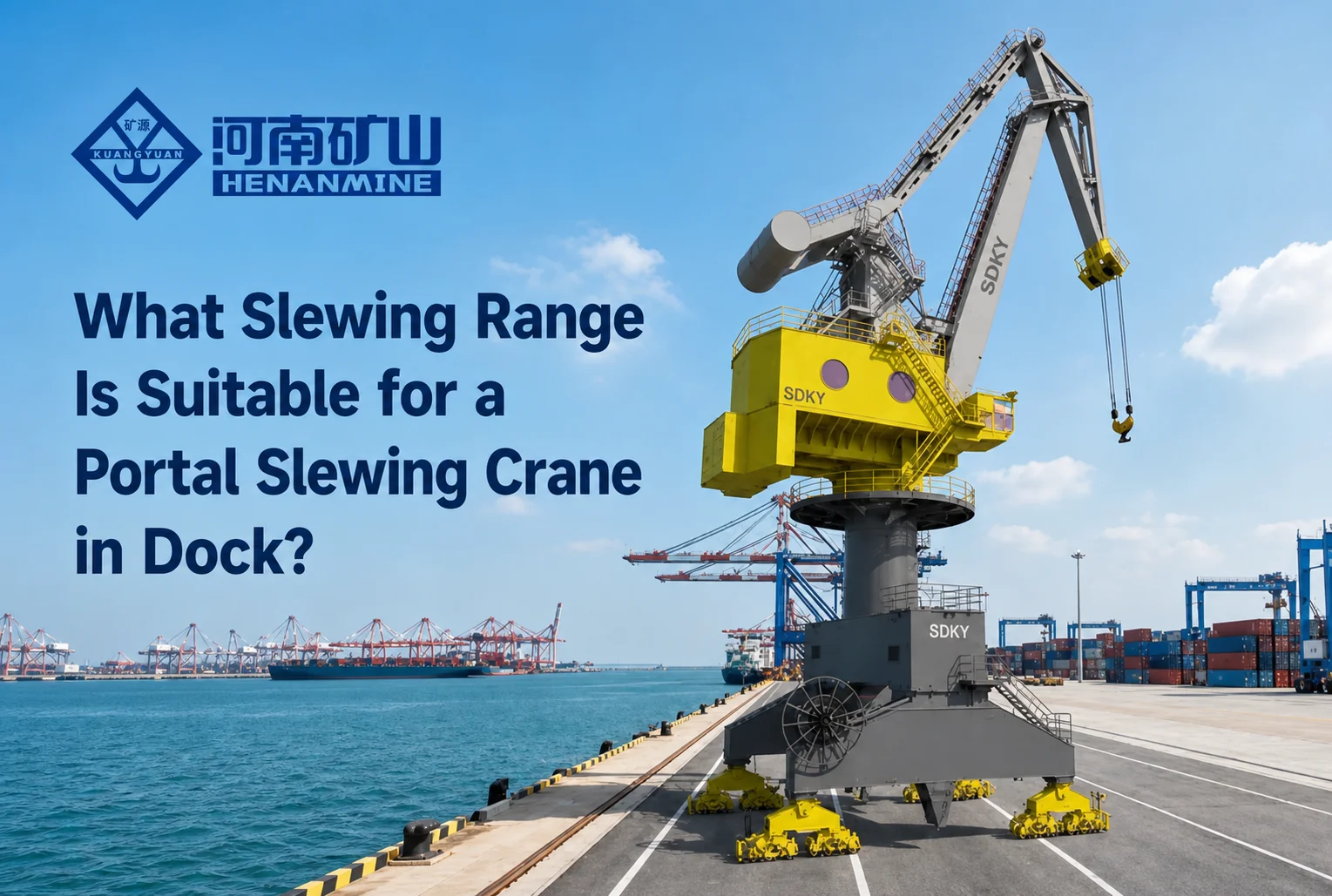
Henan Mine Crane manufactured customized port cranes are one-to-one exclusive design models, all parameters can be adjusted as needed, and the structure, material, control system, protection configuration, and operating logic can be adapted to on-site working conditions.Although the initial procurement cost is slightly higher and the design and production cycle is longer, the fit, operating stability, operating efficiency, and safety factor of the equipment far exceed the standard model, which can solve the problems of various working conditions that cannot be adapted to standard lifting equipment, and eliminate the problems of idle equipment, retrofit and rework, failure and shutdown from the root cause.
When customization adds value
Crane customization is not a blind upgrade, but a targeted selection method to solve production pain points and create long-term value.When enterprises face the needs of restricted sites, special loads, harsh environments, high-frequency operations, and automated production, the value of customized transformation and exclusive industrial cranes will be fully highlighted.
The core value of customization is reflected in four dimensions. One is the adaptation value, which fits 100% of the plant structure, runway conditions, and working space without the need to transform the on-site infrastructure.The second is the value of efficiency, matching exclusive operating parameters, adapting to high-frequency, heavy-duty, and special material hoisting, greatly improving production efficiency.Third, the safety value, targeted configuration of explosion-proof, anti-corrosion, high temperature resistance, anti-overload and other special functions, to avoid safety hazards in extreme working conditions.The fourth is the cost value, which reduces the hidden costs of long-term downtime, maintenance, transformation, and replacement of lifting equipment, and lengthens the service life of the equipment.
10 Warning Signs You Need a Custom Crane
Many equipment selection errors in enterprises are essentially ignoring the special signals of working conditions and forcibly adapting standard lifting equipment to non-standard scenarios.The following 10 core warning signals, as long as any one is met, it means that your working conditions are no longer suitable for standard models. Customized industrial cranes are a more scientific, economical and safer choice.
Required capacity exceeds standard models
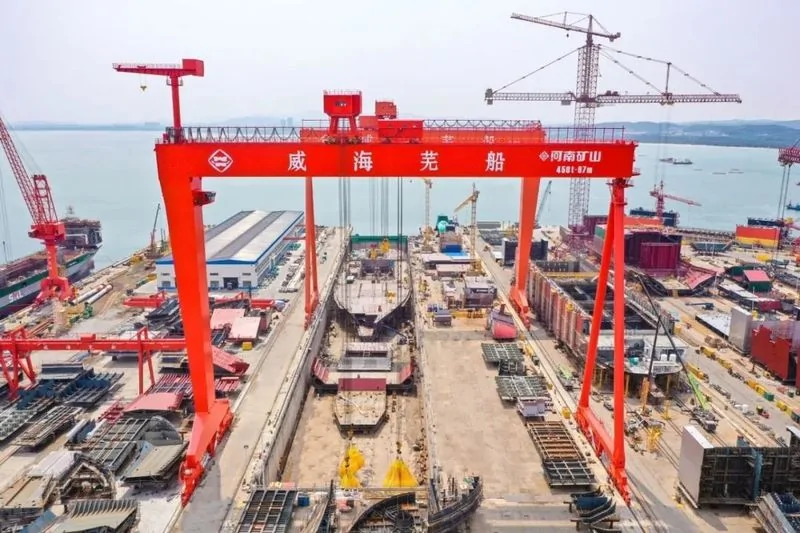
The rated load of standard cranes has strict industry fixed gears, covering conventional light, medium and heavy lifting needs, but for oversized tonnage and unconventional heavy-duty lifting scenarios, the upper load limit of standard models cannot meet the operating requirements.If the weight, combined load, and dynamic load of the materials that need to be hoisted in your production operation exceed the parameter range of all standard lifting equipment, forced use of standard equipment will cause overload operation, structural deformation, insufficient safety factor, etc., which can easily cause safety accidents.At this time, it is necessary to optimize the main beam structure, walking mechanism, and lifting system through customized design to create a large-tonnage exclusive industrial crane to match the needs of heavy-duty operations.
Span or lift height is unusual
The span and lifting height of the standard crane are all fixed standardized dimensions, which are suitable for general plant construction specifications.However, many old factories, customized production workshops, and outdoor engineering sites will have non-standard spans and ultra-high/ultra-low lifting requirements.For example, in scenarios where the span of the plant is between two standard gears, ultra-high lifting and hoisting of high-altitude equipment is required, and the height of the fuselage needs to be reduced in low-rise plants, the standard equipment either cannot be installed or the scope of operation is limited.Customized cranes can accurately customize the span and lifting height on demand, adapt to non-standard size scenarios, and maximize the use of working space.
Working space has clearance limits
Some production workshops have space limitations such as dense beams and columns, narrow top space, limited passages on both sides, and compact equipment layout.The size of the standard crane fuselage, the reserved clearance for operation, and the fixed end beam structure are very prone to colliding with the structure of the plant, unable to pass normally, and the blind area of the operation is too large.Customized special cranes for small spaces can optimize the fuselage structure, compress the end size, adjust the layout of the lifting mechanism, reduce the safety gap, and complete the complete hoisting operation in a limited space. It is perfectly adapted to small and complex work sites and solves the equipment adaptation problems caused by space constraints.
Crane duty cycle is extremely high
Ordinary standard cranes are designed for low-frequency, intermittent hoisting operations, and cannot be adapted to the high-load conditions of assembly line matching, continuous production, and 24-hour uninterrupted operation.In heavy industry manufacturing, assembly line production, port loading and unloading scenarios, cranes start and stop frequently, run continuously, and switch loads frequently. Standard equipment will quickly experience wear and aging, motor overheating, component fatigue, frequent failures and shutdowns.Henan Mine Crane manufactured customized high-work port cranes, which can be upgraded with high-strength wear-resistant parts, high-power adapted motors, enhanced transmission and braking systems, and adapted to ultra-high operating frequencies to meet the needs of continuous operation around the clock, greatly reducing the probability of failure and shutdown.
Loads require special handling
Standard spreaders and standard operating logic can be used for hoisting conventional steel, materials, and boxes, but for special loads such as flammable and explosive, precision instruments, high-temperature castings, ultra-long and ultra-wide special-shaped components, and vulnerable materials, standard lifting equipment cannot achieve safe and stable hoisting.Customized cranes under special working conditions can be equipped with exclusive spreaders, fine-tuning the lifting speed, adding anti-swing, precise positioning, and smooth start and stop functions, supporting slow alignment, micro-speed fine-tuning, and anti-impact hoisting, and adapting to the refined and safe operation requirements of special materials to avoid material damage, hoisting offset, and falling risks.
Operating environment is challenging
Conventional workshops at room temperature, dryness and dust-free are suitable scenarios for standard cranes, while harsh environments such as chemical industry, metallurgy, mines, ports, alpine, high temperature, dust, humidity, and corrosive gases can quickly corrode and damage the electrical and metal structures and transmission components of standard cranes.Customized anti-corrosion and explosion-proof cranes can be targeted for protection according to environmental characteristics: high-temperature-resistant materials and heat dissipation systems are used in high-temperature environments, low-temperature environments are adapted to low-temperature-resistant electrical components and lubrication systems, and corrosive environments are multi-layer anti-corrosion spraying and sealing treatment. The explosion-proof area is equipped with a full set of explosion-proof electrical equipment, which is fully adapted to complex and harsh working conditions.
Existing runway cannot fit standard cranes
The crane runways, leg load-bearing, track spacing, and installation benchmarks of many old factories and retrofit workshops are built in the early years, and the size and load-bearing parameters do not meet the installation requirements of the current standard cranes.If standard equipment is forcibly installed, it will require large-scale renovation of the runway and reinforcement of the plant structure, resulting in high renovation costs and downtime losses.The customized adaptable crane can be adapted to the existing runway parameters in reverse, and the walking mechanism, wheel track, load-bearing structure, and installation size can be adjusted. There is no need to transform the plant infrastructure and directly adapt to the original runway system, greatly saving transformation and construction costs.
Multiple mechanisms need synchronization
Scenarios such as hoisting of large-scale equipment, handling of ultra-long components, and synchronous operation of assembly lines require dual-beam synchronization, dual-machine linkage, and multi-mechanism collaborative operation, which require synchronous and accurate alignment of lifting, walking, and trolley operation throughout the process.The standard crane is an independent operating system, which cannot realize the precise linkage of multiple equipment and multiple mechanisms, and it is prone to problems such as uneven force, tilt of hoisting, and offset of components.Customized linkage synchronous cranes can be equipped with synchronous control systems to accurately control the rhythm of multi-mechanism operation, realize synchronous start and stop, synchronous operation, and precise alignment, and meet the needs of complex collaborative hoisting operations.
Automation or remote control is required
With the upgrading of industrial intelligence, more and more enterprises need intelligent lifting equipment with unattended, remote control, automatic positioning, intelligent hoisting, and data monitoring.Most standard cranes are manually operated and basic electronic control systems, which are not compatible with automation and intelligent transformation.Customized intelligent automated cranes can be equipped with intelligent control systems, remote control modules, PLC precision control systems, data acquisition and monitoring systems, and unattended operating systems on demand. They can be connected to intelligent production lines in factories to realize automated hoisting, intelligent operation and maintenance, and fault early warning, and adapt to the production needs of modern intelligent factories.
Standard cranes create costly compromises
If the selection of standard cranes requires sacrificing operating efficiency, reducing the scope of hoisting, compromising safety standards, frequent downtime for maintenance, and retrofitting plant sites, it means that standard equipment can no longer be adapted to working conditions, which will generate a lot of hidden costs.Long-term equipment failures, production shutdowns, material losses, manual operation and maintenance, and site renovation costs are much higher than the initial price difference of customized industrial cranes.When standard equipment requires layers of compromise to be used, customized solutions can solve all pain points at once and achieve long-term cost reduction and efficiency gains.
Custom Crane vs. Standard Crane: Which Is More Cost-Effective?
Most buyers believe that standard industrial cranes are more economical. The core is to only focus on the initial purchase price and ignore the whole life cycle cost of the equipment.In fact, the core of cost-effectiveness lies not in the single purchase price, but in adaptability, stability, operation and maintenance costs, service life and production gain.For non-standard complex working conditions, the comprehensive price ratio of customized lifting equipment is much higher than that of standard models.
Initial cost vs. lifecycle cost
At the initial procurement cost level, standard cranes are mass-produced in bulk, the technology is mature, and there is no need for exclusive design. The purchase price is lower and the delivery speed is faster.Customized cranes require exclusive design, customized production, and special testing. The initial procurement cost is slightly higher and the delivery cycle is relatively longer.At the cost level of the whole life cycle, customized non-standard lifting equipment has significant advantages.Customized equipment adapted to working conditions has an extremely low failure rate, slow wear rate, and longer service life, without frequent maintenance and replacement of accessories.At the same time, there is no need to transform the factory building, no need to compromise the production process, and the production efficiency is steadily improved.For forcibly adapted standard equipment, the hidden cost of long-term maintenance, shutdown, transformation, and replacement will far exceed the initial price difference of customized equipment, and the long-term use is more cost-effective.
Downtime and maintenance considerations
Standard cranes operate under non-standard operating conditions, and the speed of component loss will increase exponentially. Motors, brakes, main beams, and walking mechanisms are prone to failure. Frequent downtime and maintenance will directly interrupt the production process, resulting in high production losses.Moreover, under non-standard working conditions, the loss of standard equipment accessories is special, the adaptability of general accessories is poor, the maintenance is difficult, and the waiting period is long.Customized industrial cranes are specially designed based on working conditions, with component selection, structural strength, and operating parameters that exactly match the requirements of the operation, uniform wear, extremely low probability of failure, and greatly reduced frequency of operation and maintenance.At the same time, manufacturers will support exclusive maintenance plans and customized accessories systems, which are efficient and convenient for maintenance, minimize downtime and ensure production continuity.
When partial customization is enough
Not all non-standard working conditions require a customized crane for the whole machine.If the site, load, and basic operating parameters meet the requirements of the standard model, there are only local functional shortcomings, and local customization can meet the needs, taking into account cost performance and adaptability.Common local customization includes: installing explosion-proof, anti-corrosion, anti-swing, intelligent monitoring modules, upgrading the electronic control system, replacing exclusive spreaders, fine-tuning the operating speed, and optimizing the protective structure.Local customization has low cost and fast delivery, and can quickly fill the functional shortcomings of standard lifting equipment, which is suitable for scenarios with small differences in working conditions.
How to Specify a Custom Crane
The selection specifications of customized cranes directly determine the adaptability, safety and practicality of equipment.The scientific customized selection process can effectively avoid problems such as design deviations, inconsistent parameters, and functional redundancy, and ensure that customized industrial lifting equipment accurately matches on-site working conditions.
Define load and duty requirements
The first step in customizing the design of Henan Mine Crane manufactured crane is to accurately define the load and operating condition parameters, covering key indicators such as rated lifting weight, maximum dynamic impact load, material shape and size, daily lifting frequency, equipment working system level, daily operating time and start-stop frequency.Accurately defining the load range and operating intensity is the core basis for equipment structure design, core component selection, and motor power matching. It can effectively avoid the cost waste caused by insufficient load and inability to put into production or excessive design, and ensure the long-term stable adaptation of customized lifting equipment to the production rhythm.
Measure site and runway conditions
In the pre-survey stage of customized cranes, it is necessary to accurately measure the site and runway working condition data in all directions, including the effective span of the plant, the maximum lifting height, the top clearance size, the overall length and width of the site, the runway track gauge, the load-bearing limit of the track, the structural parameters of the cow leg, the installation point of the equipment and the scope of the blind spot of the operation.Accurate and comprehensive site data can provide reliable support for fuselage size optimization, walking mechanism configuration, installation plan and span customization to ensure smooth on-site installation of customized industrial cranes, no caton operation, and full adaptability.
Identify environmental requirements
Comprehensive investigation and combing of the environmental conditions of the operation site is a key part of custom-made cranes. It is necessary to verify the environmental temperature and humidity, dust concentration, whether there are corrosive gases, flammable and explosive media, and take into account the special working conditions such as open-air rain and snow, seaside salt spray, high cold and high temperature.According to different environmental characteristics, the equipment protection level, main material, anti-corrosion spraying process, explosion-proof configuration and high and low temperature resistance structure design are determined in a targeted manner to effectively resist environmental erosion, greatly extend the service life of customized lifting equipment, and ensure stable operation around the clock.
Confirm controls and safety functions
It is necessary to combine the actual production process and operation needs of the enterprise to determine the control mode of the crane, covering various methods such as ground operation, wireless remote control, manual control, automated operation and remote linkage.At the same time, it is equipped with a complete set of safety protection functions on demand, including overload protection, travel limit, anti-collision, anti-swing, emergency braking, fault alarm, intelligent monitoring and lightning protection devices.The perfect control system and safety configuration can avoid hoisting risks in all directions and ensure the safe, efficient, intelligent and stable operation of customized industrial cranes.
When Should You Choose Custom Engineering?
There is no need to blindly follow the trend in crane selection, the core is to fit its own working conditions.Combining the adaptation scenarios of standard equipment and customized equipment, the selection plan can be accurately judged, so that the selection of industrial lifting equipment can maximize cost performance and practicality.
Standard crane fits the application
For standardized plant scenarios that are dry at room temperature, dust-free and corrosion-free, light, medium-load, low-frequency intermittent hoisting of ordinary steel and finished materials, and when enterprises pay attention to budget control and pursue rapid equipment delivery and commissioning, standard cranes are preferred. It is most suitable.This type of mass-produced industrial crane has mature technology, stable technology, high market penetration rate, convenient procurement of general accessories, simple and worry-free daily operation and maintenance, and can meet the basic hoisting needs. Under the premise of saving procurement and operation and maintenance costs to the greatest extent, and adapting to conventional industrial production conditions.
Custom crane is technically necessary
When there are special needs such as oversized loads, non-standard span and lifting height, narrow working space, high-frequency continuous operation, special material hoisting, harsh working conditions, etc. on the site, or when multi-mechanism synchronous linkage and intelligent unmanned control functions are required, standard cranes cannot be fully adapted.Forced use will cause a series of problems such as equipment failure, production downtime, and safety hazards, resulting in high hidden costs. At this time, the customized crane of the whole machine has the technical necessity to fully fit the exclusive working conditions, solve the problem of equipment adaptation from the root cause, and ensure the safe and efficient operation of production.
Partial customization is the better option
If the plant site, hoisting load, and basic operating parameters are fully adapted to the standard crane model, there are only local shortcomings such as protection performance, intelligent control, and exclusive operating functions, and there is no need for customized transformation of the whole machine.It is most reasonable to choose a locally customized optimization method. Anti-corrosion, explosion-proof, anti-swing, and intelligent monitoring modules can be installed in a targeted manner, and the electronic control system and special spreaders can be upgraded to make up for equipment shortcomings with extremely low transformation costs and extremely fast delivery speeds, taking into account the adaptability and economy of the equipment. It is a cost-effective lifting equipment upgrade plan optimized for small and medium-sized working conditions.
Henan Mine Crane Factory Custom Custom
Henan Mine Crane has been deeply engaged in the field of lifting equipment for many years, and has mature non-standard customized R&D and production capabilities. It can be accurately adapted to various complex and extreme industrial hoisting conditions, and perfectly solves the problems of poor adaptation, many failures, and high operation and maintenance costs of standard industrial cranes.Henan Mine Crane Factory can provide a full range of customized bridge and gantry cranes and one-stop landing services, covering multi-industry production scenarios, professional survey and design, precision production, on-site installation and maintenance throughout the process, to help enterprises produce efficiently and safely. If you need it, you can get exclusive customized solutions and quotations for free.