
How to Purchase Multifunctional Loading Crane for Electrolytic Aluminum Plant?
Aluminum electrolysis plant is one of the most demanding industrial scenarios. Many overseas aluminum plants and new pre-baked anode electrolysis projects are prone to step on the pitfalls in equipment procurement, because they confuse the special lifting equipment for electrolytic aluminum with ordinary workshop Overhead Cranes.
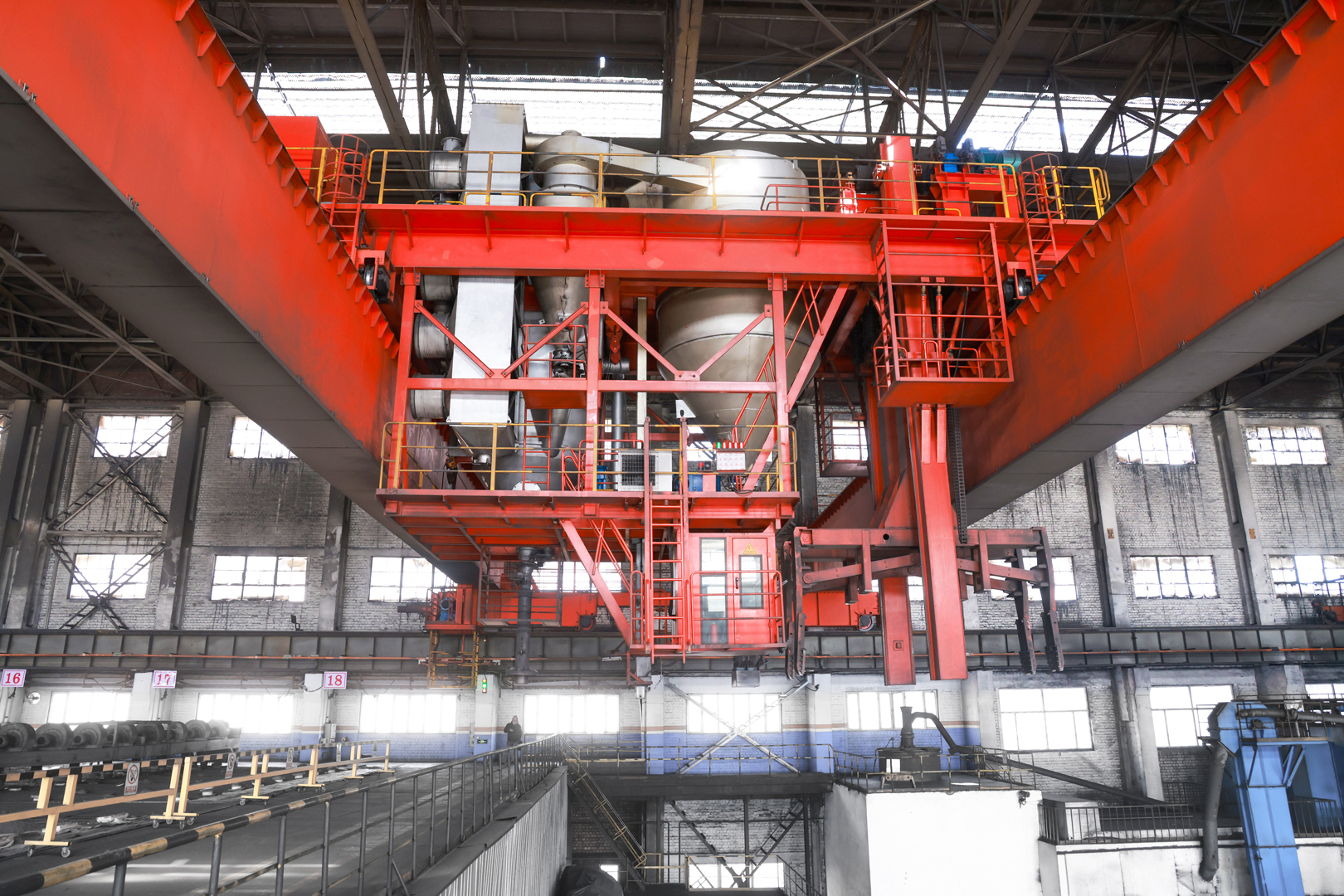
Electrolytic aluminum multifunctional cranes, also often called PTM electrolytic aluminum multifunctional units, pole changing cranes, multi-purpose tank cranes in the industry, is the core process equipment of the pre-baked anode electrolytic aluminum production line, rather than ordinary auxiliary lifting equipment. The whole set of equipment undertakes the key process of electrolysis production, and the stability of the equipment directly determines the capacity and safety of the whole aluminum electrolysis production line.
Unlike conventional lifting equipment, multifunctional crane for electrolytic aluminum plant needs to be adapted to the harsh environment of high temperature, strong magnetic field, hydrofluoric acid corrosion and high dust for a long time. When purchasing this kind of equipment, we should not only look at the tonnage and span, but also match the production process, environmental protection, automatic control system and long-term operation and maintenance requirements.
Combined with many years of service global aluminum plant, EPC turnkey project hands-on experience, I put together a complete set of procurement selection logic, covering the process verification, parameter definition, functional configuration, environmental adaptation, supplier screening and other processes, to help procurement and engineering personnel to accurately select the type, to avoid the industry's common misconceptions.
what is a multi-function crane for electrolytic aluminum plants
Basic definition
Electrolytic aluminum multifunctional crane is specially designed for large pre-baked anode electrolytic aluminum production line customized special overhead cranes, but also aluminum electrolysis workshop exclusive aluminum smelter Crane, which is different from the general lifting equipment, the core positioning of the process equipment, not just for handling materials, but the depth of participation in the whole process of electrolytic production.
Many professional names in the industry refer to the same kind of equipment, including Pot Tending Machine (PTM), Multi-Purpose Pot Crane (MPPC), Tank Work Unit, Pole Changing Unit, which are used interchangeably in the drawings and bidding documents of different oversea projects, but the core functions of the equipment are identical with the adapted scenarios.
Core Process Functions
A qualified electrolytic aluminum multifunctional crane can complete most of the core processes in the electrolysis plant without the need for multiple auxiliary equipment. This is the core reason why modern large-scale aluminum electrolytic workshop is generally equipped with integrated multifunctional Crane as standard.
The regular integrated functions of the equipment include electrolysis tank crust crushing, alumina and fluorine salt dosing, old anode dismantling, new anode accurate replacement, tank slag cleaning, aluminum water package lifting and running, and anode busbar lifting and debugging. At the same time, it can cover the daily maintenance of electrolyzer, track cleaning, workshop auxiliary lifting and other supporting work.
All operational aspects of the high concentration of carbon powder, alumina dust, asphalt fumes, hydrofluoric acid corrosive gases, high temperature molten salts and ultra-strong magnetic field under the composite environment to complete, which is the core reason why ordinary Cranes can not replace it.
the first step: check the electrolysis production process fit requirements
Confirmation of pre-baked anode electrolyzer parameters
Each aluminum plant electrolysis production line parameters are not uniform, directly determines the overall design of multi-functional cranes. Pre-procurement must accurately sort out the basic data of the production line to avoid mismatch of the process and failure to put into operation after the equipment is on site.
The basic information that needs to be focused on checking contains the capacity of a single electrolytic tank, the layout of the entire inter-tank column, the anode size and weight of a single piece, the center spacing of the tank, the width of the workshop operating channel, and the form of busbar structure. These data are the core basis for subsequent equipment spans, lifting heights, and tooling configurations.
Defining the required integrated processes
Different production capacity, different process positioning of the aluminum electrolysis workshop, the functional requirements of the Crane varies greatly. Some small and medium-sized aluminum plants only need basic pole changing and maintenance functions, while large intelligent aluminum plants need to integrate a full set of automated work processes.
Before purchasing, you need to confirm one by one whether the equipment needs to be integrated with the functions of crust crushing, automatic charging, slag cleaning, aluminum water discharge, busbar lifting, and full tank overhaul. The more integrated functions, the higher the requirements for the structure of the workpiece trolley, control logic, precision and stability of the hydraulic system, but also to reserve sufficient space for later maintenance.
the second step: the definition of the core technical parameters
Rated lifting capacity
Calculation of the lifting capacity of the multifunctional crane for aluminum electrolysis can not only refer to a single load weight, but also need to integrate a number of weight parameters accounting, while leaving a safety margin, suitable for long-term high-frequency operating conditions.
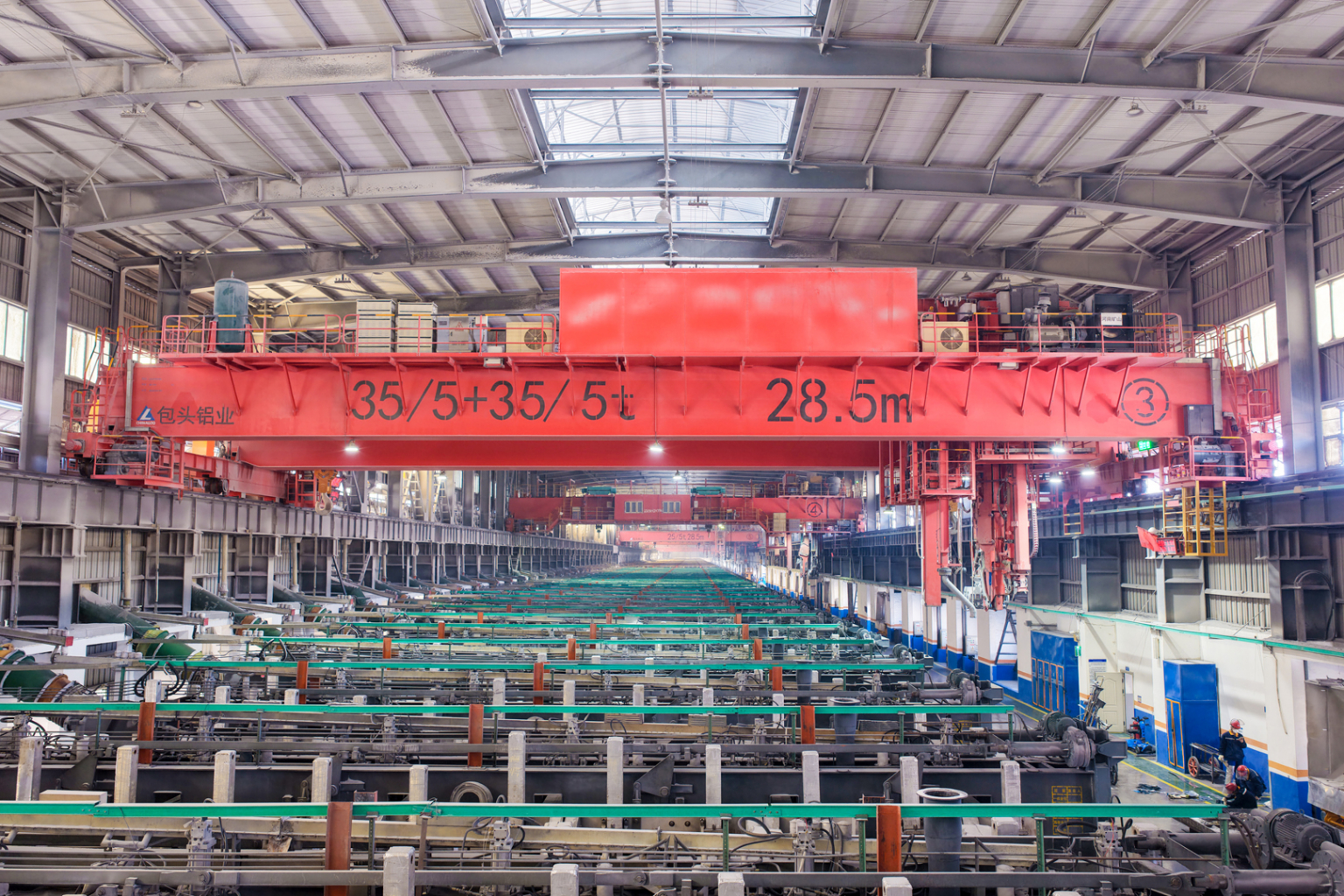
The scope of calculation includes the self-weight of anode assembly parts, the full load weight of aluminum water package, the self-weight of assembly trolley and the weight of all kinds of auxiliary lifting equipment. The mainstream configurations in the industry range from 10t+10t to 40t+40t, and Henan Mine Crane can provide fully customized tonnage configurations according to the specifications of the tanks and operational requirements of overseas projects.
Equipment Span
The span is determined by the overall layout of the electrolysis workshop, and the core reference is the width of the workshop building, the center distance of the track, the way of arranging the tanks and the width of the maintenance access. At the same time, it is necessary to match the maximum operating range of the tooling trolley to ensure that the equipment can cover all the electrolyzer operating points.
The conventional span of the industry ranges from 22.5 m to 34.5 m. For large-scale new aluminum plants and expansion projects overseas, larger spans can be customized to fit the site layout without changing the plant structure.
Lifting height
The core of the design of lifting height is to avoid obstacles in the workshop and ensure safe operation under all working conditions. It is necessary to reserve sufficient clearance for anode lifting and lowering, aluminum water package lifting height, busbar operation height, and maintenance operation space above the electrolytic tank.
At the same time, it is necessary to accurately calculate the limit approach distance of the hook, so as to avoid collision with the tank, pipeline and workshop structure when lifting anode and aluminum water package, and to eliminate the risk of equipment interference.
Working level
Different from ordinary auxiliary cranes, aluminum electrolysis crane belongs to continuous operation process equipment, the working level must match the intensity of production line operation, and can not be applied to general equipment standards.
When selecting a crane, it is necessary to make a comprehensive judgment based on the daily operating hours of the tank column, the number of electrolysis cells to be served, the frequency of single-process operation, the cycle of production and the maintenance load. For large-scale mass production aluminum electrolysis workshop, it is necessary to choose high working level configuration, which is suitable for uninterrupted high-frequency operation throughout the year and reduces the probability of failure and downtime.
Selection of core functional modules
Tooling trolley
Tooling trolley is the core operating unit of the electrolytic aluminum multifunctional Crane, which directly determines the equipment's ability to work on the process, and is also the core component that distinguishes it from ordinary cranes.
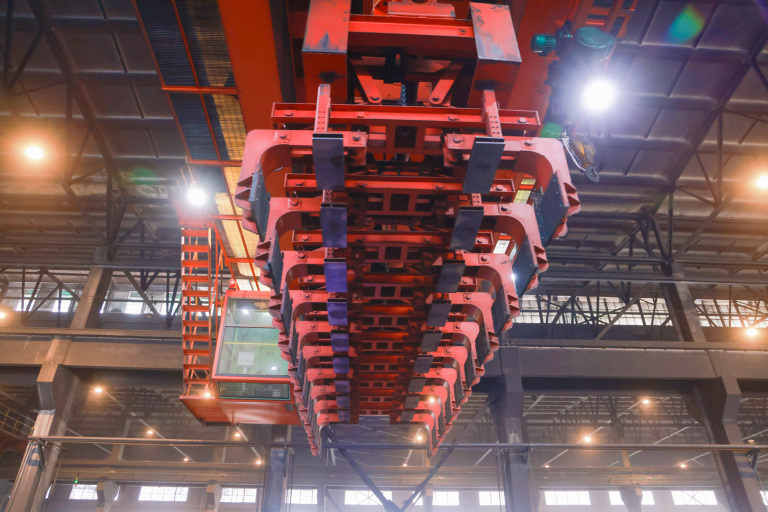
The complete tooling system can integrate the crust crushing mechanism, automatic pole changing mechanism, slag cleaning mechanism, material dosing and feeding mechanism, 360-degree rotating mechanism and cab rotating mechanism. The whole set of structure and hydraulic system work together to complete all electrolysis process operations.
Aluminum Lifting Trolley
The trolley module is specially used for the transfer of aluminum water ladle and aluminum discharge operation, which is the necessary configuration for mass production aluminum plants. The selection focuses on the rated lifting tonnage, weighing accuracy, suitability for vacuum aluminum discharge, and the design of an exclusive safe transport path.
Meanwhile, the structure of the trolley should be equipped with a heat-insulating protection design to resist the high-temperature radiation of aluminum water, avoid the aging and deformation of components caused by long-term high-temperature operation, and ensure the stable operation of the aluminum discharge process.
Material Charging System
The dosing system is mainly responsible for the accurate supply of electrolysis raw materials such as alumina and fluorine salt. When purchasing, it is necessary to confirm the dosing method, material particle size suitability, dust control program and automatic/manual switching mode.
High quality dosing system can realize quantitative and uniform feeding, reduce the waste of raw materials, and at the same time, it is equipped with sealing and dust-proof structure to reduce the concentration of dust in the workshop, which is suitable for the harsh production environment.
Automatic pole changing system
Pole changing is the most frequent core process in the electrolysis workshop, and the automatic pole changing system can greatly reduce manual intervention and improve operational precision. The equipment should be equipped with the functions of automatic loosening and tightening of clamps, smooth lifting of old anodes, precise installation of new anodes, and auxiliary functions of cleaning residual electrodes.
Stable pole changing system can effectively reduce the error of manual operation, avoid the deviation of anode installation affecting the production condition of electrolyzer, and ensure the smooth operation of the production line.
Adaptation to the design of protection against harsh working conditions in aluminum plant
Adaptation to high-temperature environment
The operation area of the electrolyzer is in high temperature for a long time, and the ambient temperature around the tank is much higher than that of a common industrial workshop, and there is also high temperature heat radiation from molten salt. Ordinary lifting equipment cables, hydraulic piping, electrical components, will be quickly aging and failure.
Specialized crane for aluminum smelting plant will use high-temperature resistant cables, insulated electrical cabinets, protective hydraulic piping layout, all components near the high-temperature area are heat-insulated and flame retardant treatment, suitable for long-term high-temperature operating scenarios.
Strong magnetic field anti-interference design
Aluminum electrolysis production relies on high-current DC operation, the workshop will form a strong and stable magnetic field, which will seriously interfere with sensors, weighing systems, PLC control modules and precision electrical components, resulting in positioning deviations and data distortion.
Professional aluminum multifunctional cranes will do a full set of anti-magnetic design, electrical cabinets, control systems, testing components to do shielding protection, from the root to avoid magnetic interference, to protect the positioning accuracy and stability of equipment operation.
HF corrosion and dust protection
Hydrofluoric acid corrosive gas, fluorine salt particles, alumina dust, carbon powder and asphalt fumes are the main causes of aging and failure of aluminum workshop equipment. Dust buildup can clog drive structures, and corrosive gases can eat away at steel structures and electrical connections.
Standard protective configurations include fully sealed electrical cabinets, specialized heavy-duty anticorrosive coatings, dust-proof enclosed drive components and anticorrosive cable systems to provide all-round protection against corrosion and dust, and extend the service life of the equipment.
the fifth step: confirm the automation and control system configuration
PLC integrated control system
The whole set of multifunctional Crane bridge operation, trolley walking, workpiece operation, charging, pole changing, aluminum output and all other processes, need to rely on PLC control system collaborative linkage.
Integrated PLC control can realize the synchronous and coordinated operation of each mechanism, avoid action conflicts caused by individual operation, and guarantee the orderly landing of complex processes, which is the standard for multifunctional cranes in modern aluminum factories.
Variable frequency speed control (VFD)
VFD frequency conversion control can realize smooth starting and stopping of equipment, and alleviate load shaking and mechanical impact during operation. In high-precision operation scenarios such as pole changing, aluminum output and busbar lifting, it can accurately control the operation speed and enhance the stability of operation.
This configuration can effectively reduce the mechanical wear and tear of the equipment, lower the cost of operation and maintenance in the later stage, and is suitable for high-frequency and continuous production operations.
Matching of control modes
The mainstream control mode suitable for aluminum plant working conditions is the rotating cab + wireless remote control dual mode. The cab can meet the normalization and refinement of the operation, and the remote control can keep the operator away from the high temperature, corrosion, strong magnetic high-risk work area, to enhance the safety of the operation.
The equipment is also equipped with emergency manual operation mode, which can be used manually when the automatic control system fails to avoid the whole production line shutdown.
Data recording and weighing function
High-end configuration includes weighing of aluminum water package, weighing of single batch materials, cumulative data statistics, data export and production data linkage functions. These data can be connected to the factory production management system to facilitate production capacity statistics, material accounting and production traceability, which is suitable for the management needs of modern intelligent aluminum factories.
step six: verify the exclusive safety configuration
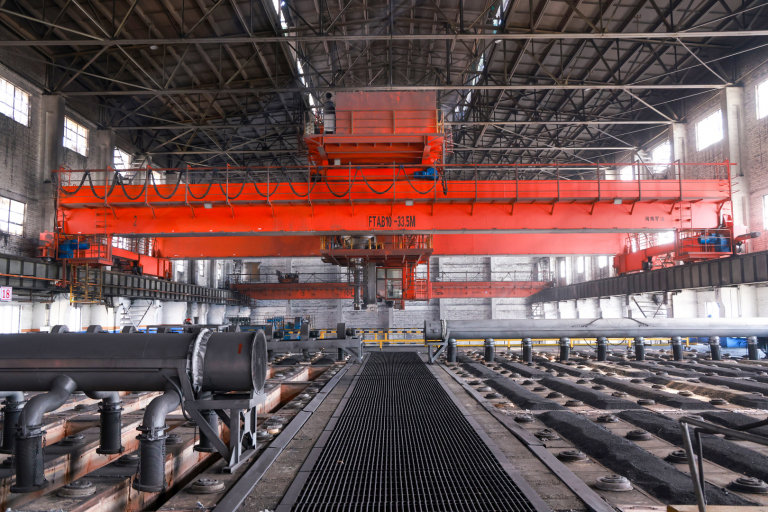
Aluminum electrolysis Crane belongs to high-risk process equipment, the safety configuration can not follow the standard of ordinary vehicles, must be adapted to the special working conditions of the aluminum plant, all-round avoidance of operational risks.
Overload protection device
When changing poles, lifting aluminum water packages, tank maintenance and other heavy-duty operations, the overload protection device can monitor the load in real time, and automatically lock the lifting action when it exceeds the rated tonnage, so as to eliminate the risk of damage to the equipment and fall of materials caused by overloaded lifting.
Multiple Limit Protection
The equipment is equipped with upper and lower lifting limits, trolley traveling limits, trolley running limits, and slewing mechanism limits, which all-roundly restrict the equipment running boundaries, avoiding over-traveling and collision with workshop frames, troughs and pipelines.
Anti-collision system
Large electrolysis workshop will be arranged within the same span of more than one lifting equipment, anti-collision system can be real-time monitoring of equipment spacing, automatic warning, deceleration, shutdown, to avoid collision accidents occurring in the cross operation of multiple equipment.
Emergency stop system
Emergency stop button covers the driver's cab, remote control terminal, electrical cabinet, maintenance platform at multiple points, when a sudden failure can be cut off at any time, anywhere, the power supply of the equipment, rapid shutdown to avoid danger.
Fire insulation and hydraulic protection
The high temperature area adopts flame retardant cables, heat insulated cabinet and fireproof piping layout. The hydraulic system is equipped with pressure protection, anti-leakage structure, and emergency reset function, while reserving sufficient space for maintenance to avoid safety hazards caused by hydraulic leakage.
Verification of structural design and track adaptation
Main bridge structure
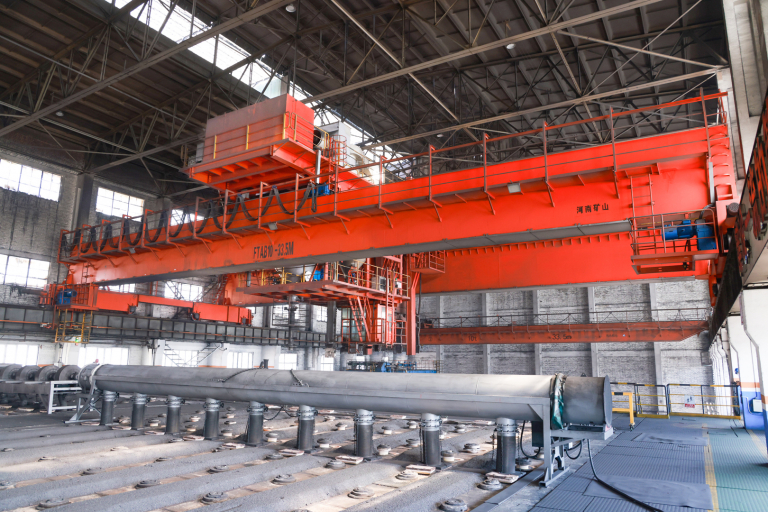
Aluminum electrolysis multifunctional Crane adopts box-type double or triple girder reinforced structure, with reinforced rail and high-strength steel, adapted to heavy-duty, high-frequency, bumpy operating conditions. The overall structure is more rigid, not easy to deform, and can withstand the wear and tear of harsh environments for a long time.
Wheel Pressure and Track Adaptation
Suppliers are required to provide accurate maximum wheel pressure parameters, suitable track model, track foundation interface data and end beam layout program. Wheel pressure data is the core basis for structural checking of the plant. Many overseas projects fail to check the wheel pressure in the early stage, resulting in the plant not being able to carry the equipment, and the cost of reworking and rectification is extremely high.
Design of maintenance access
Considering the harsh environment of high corrosion and dust in the aluminum plant, the equipment must be reserved for standardized maintenance platforms, safety ladders, access ports for tooling trolleys, electrical cabinets, and hydraulic system operation space, which is convenient for daily inspection, maintenance, and replacement of spare parts, and reduces the difficulty of operation and maintenance in the later stage.
step eight: supplier strength assessment checklist
Aluminum electrolysis multifunctional crane belongs to the customized high-end process equipment, equipment quality, adaptability, after-sales protection is completely dependent on the supplier's industry accumulation, ordinary general-purpose crane manufacturers can not meet the demand.
Aluminum plant project hands-on experience
Priority is given to suppliers with experience in pre-baked anode aluminum plants, PTM units in electrolysis shops, and automated pole-changing Crane projects. Focus on verifying overseas aluminum plant cases, experience in supporting equipment for the entire tank column, and confirming that the manufacturer is familiar with the process standards and compliance requirements of international projects.
Professional engineering capability
Reliable suppliers can provide complete process adaptation solutions, tooling structure diagrams, workshop layout matching diagrams, wheel pressure calculations, electrical control logic and hydraulic system design instructions, and can optimize customized solutions according to on-site working conditions instead of applying standard models.
Production and Testing Capability
We need to have the ability of large-scale steel finishing, complete machine assembly, PLC and hydraulic system integration and debugging, and complete a full set of load test, electrical test and hydraulic pressure test before leaving the factory, so as to ensure that the equipment meets the standard and reduce the on-site debugging failures.
Full process after-sales support
Overseas projects focus on spare parts supply, remote troubleshooting, on-site commissioning guidance, operator training and regular maintenance guidance. One day of equipment downtime in aluminum plant will cause huge capacity loss, and a perfect after-sales system is the guarantee for long-term stable production.
the ninth step: procurement of essential documents verification
Overseas project acceptance, customs clearance, production verification, all need a complete set of documents, procurement must clearly require suppliers to provide all.
Technical documents
Containing equipment assembly diagrams, workshop layout matching diagrams, tooling structure diagrams, wheel press drawings, electrical schematic diagrams, hydraulic schematic diagrams, PLC control instructions, safety configuration lists and complete technical parameter tables.
Business documents
Contain quotation details, delivery period, installation and commissioning scope, spare parts list, warranty terms, training content and payment method description.
Acceptance documents
Contain factory test report, load test record, electrical test report, hydraulic system test report, weld flaw detection report, anti-corrosion coating test report, equipment operation and maintenance manual, spare parts catalog.
Full Life Cycle Costing
Front-end input (CAPEX)
In addition to the main structure of the equipment, it also contains a full set of pre-inputs, such as tooling trolley, aluminum system, charging equipment, hydraulic unit, automatic control system, on-site installation and debugging, etc. When purchasing, it is necessary to account for the overall cost of the complete set, not a single equipment offer.
Post-operation and maintenance costs (OPEX)
Long-term operation and maintenance includes the replacement of hydraulic parts, replacement of electrical wear parts, wheel track maintenance, replacement of wear parts of work equipment, spare parts inventory reserves and other costs. High-quality equipment has a high investment in the early stage, but the failure rate in the later stage is low, and the operation and maintenance cost is more controllable.
Downtime risk cost
Crane is the core equipment of the production line, once the failure of the production line stops, it will directly lead to the stagnation of the pole changing, charging, and aluminum process, and the whole production line will be reduced or even shut down. Selection of priority consideration of equipment reliability and maintainability, far more important than the low price.
aluminum plant multifunctional crane procurement common misunderstandings
A lot of procurement mistakes, are derived from the cognitive bias of the equipment attributes and working conditions. The most common mistake is to equate the process-type multifunctional Crane with ordinary Overhead Crane, according to the general equipment standard selection and procurement, and ultimately the equipment can not be adapted to the production conditions.
Neglect of HF corrosion, strong magnetic interference, high temperature protection and other special design requirements, is a high frequency of overseas projects to step on the pit. Lack of anti-magnetic, anti-corrosion, high-temperature resistant configuration of the equipment, put into operation within a short period of time will be electrical failures, structural corrosion, positioning inaccuracy and other problems.
In addition, screening suppliers only by price, not specifying the functional list of tooling, not checking the wheel pressure data, ignoring the convenience of hydraulic system maintenance, and not planning the spare parts reserve in advance will lead to project delays and soaring operation and maintenance costs.
procurement RFQ quotation preparation list
Before launching RFQ to suppliers, organize complete information in advance, which can greatly improve the accuracy of the program and avoid repeated communication and rewriting. The core information to be prepared is as follows:
Workshop tank layout drawings, electrolytic tank model specifications, the number of service tanks, anode size and weight, residual electrode processing requirements, aluminum water package rated capacity, equipment span, lifting height, track gauge, site operating temperature, corrosion and dust conditions, power supply parameters, control modes, automation level, tooling functional requirements, certification standards, installation and commissioning requirements.
Frequently Asked Questions FAQ
What is the core difference between electrolytic aluminum multi-function crane and ordinary traveling crane?
Ordinary traveling crane is only used for simple material lifting, belonging to auxiliary equipment. Aluminum electrolysis multifunctional Crane is an integrated process equipment, which integrates a full set of production processes, such as pole changing, crust crushing, charging, aluminum discharge, slag clearing, maintenance, etc. Meanwhile, it is equipped with special protection capabilities of high temperature resistance, anti-magnetic and corrosion resistance, which is suitable for the extreme working conditions of the aluminum plant.
Are the PTM unit and the Aluminum Multi-function Crane the same equipment?
Yes, they are. In the global aluminum electrolysis industry projects, Pot Tending Machine (PTM), MPPC multi-purpose tank crane, electrolytic aluminum multi-purpose cranes all refer to the same type of special equipment, only the industry called different.
Is tonnage the most important parameter for selection?
No. Tonnage is only the basic parameter. Tonnage is only a basic parameter, the real decision of whether the equipment can be put into operation is the ability to adapt to the process. Including pole changing, charging, aluminum and other functional matching, as well as anti-magnetic, anti-corrosion, high temperature protection design, which is the core attributes of general-purpose cranes do not have.
Why anti-corrosion, anti-magnetic design is essential?
Hydrofluoric acid gas, fluorine salt dust, strong magnetic field in aluminum electrolysis workshop will continue to erode the steel structure, interfere with the electrical system, loss of precision components. Equipment that lacks special protection has an extremely high failure rate and a greatly shortened service life, making it impossible to ensure continuous production.
Do I have to use PLC and VFD control systems?
This is basically standard in modern aluminum plants. The whole set of equipment and multiple organizations work together, need PLC to realize the logic of linkage, VFD frequency conversion to ensure smooth and accurate operation, not only to improve production efficiency, but also to reduce equipment loss and safety risks.
Henan Mine Crane Factory Custom
Procurement of multifunctional crane for electrolytic aluminum plant, the essence is to choose a set of core process solutions to adapt to the aluminum electrolysis production line, rather than simply purchasing a lifting equipment.
A quality multifunctional Crane for electrolytic aluminum plant needs to fully match the tank layout, electrolysis process, extreme working conditions and automated production requirements, while providing stable performance and convenient operation and maintenance conditions. Highly adaptable equipment can effectively simplify the workshop workflow, reduce labor costs, and ensure the long-term stability of the production line and mass production.
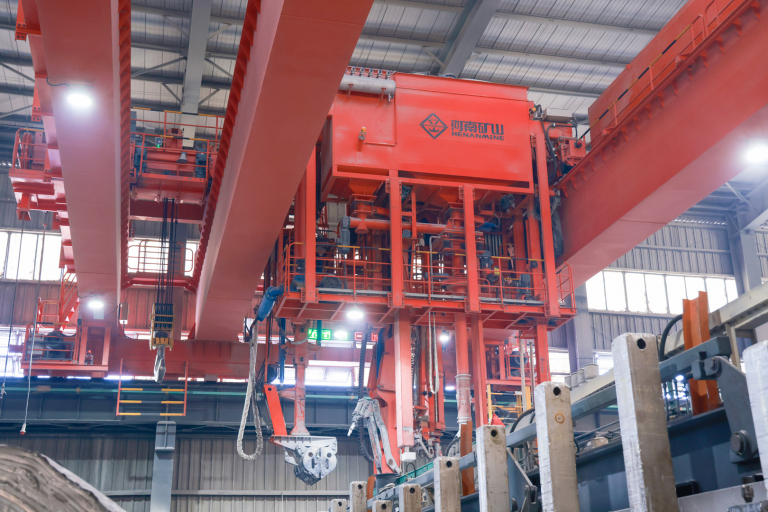
Henan Mine Crane, as a crane supplier, we have been plowing into the global aluminum industry for many years, with a wealth of experience in customization and landing of PTM cranes and aluminum multifunctional units, and are familiar with the standards of aluminum plants in various countries and project acceptance requirements.
According to the customer's site parameters, we can provide one-on-one customized solutions, a full set of technical documents and perfect overseas after-sales support to avoid the risk of selection and commissioning.
If you need accurate equipment selection, parameter checking and project quotation, please feel free to provide the workshop working condition data, and we will provide you with professional customized solutions.