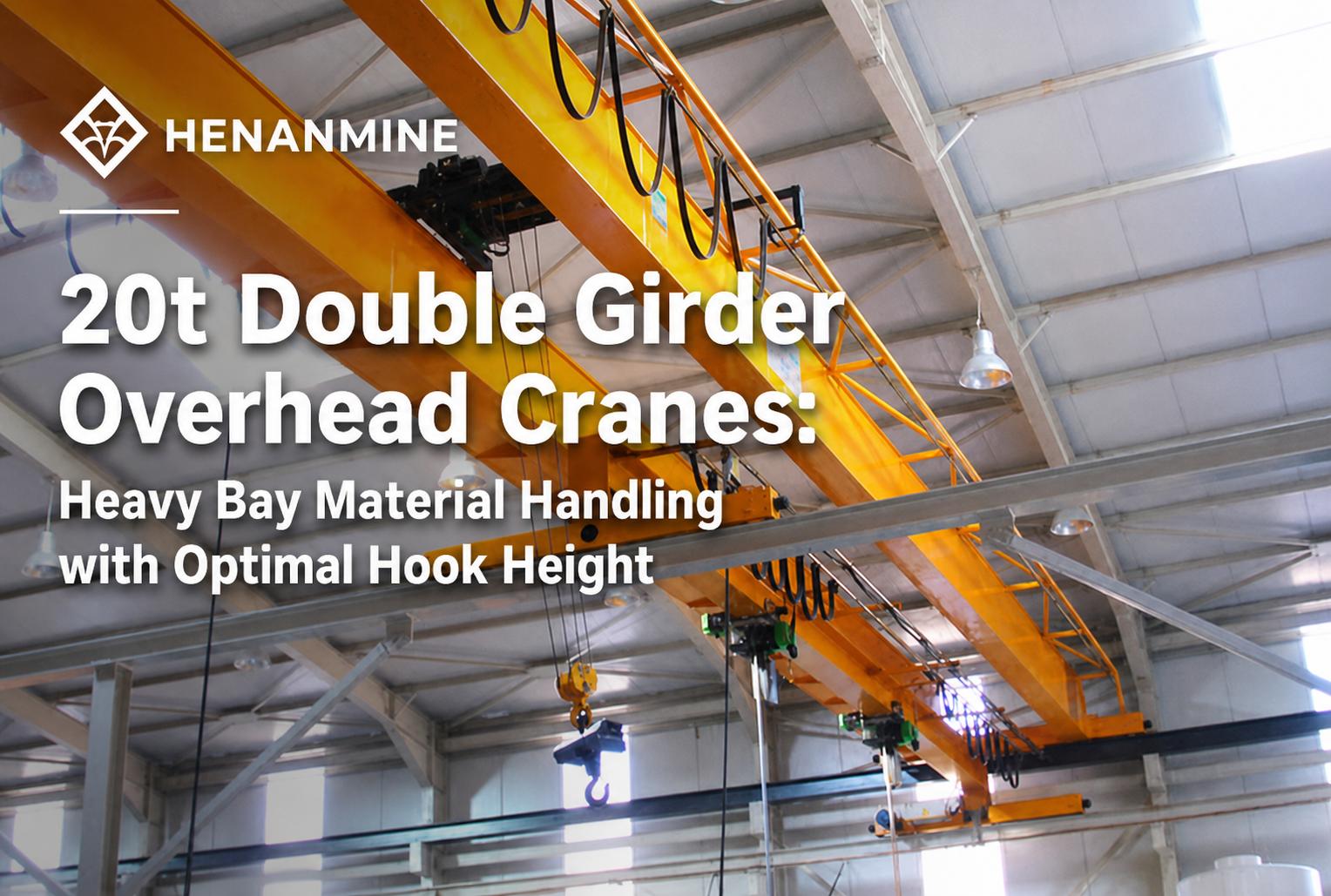

Heavy Industry EOT Cranes: Selecting Soft-Start and VFD Control Modules
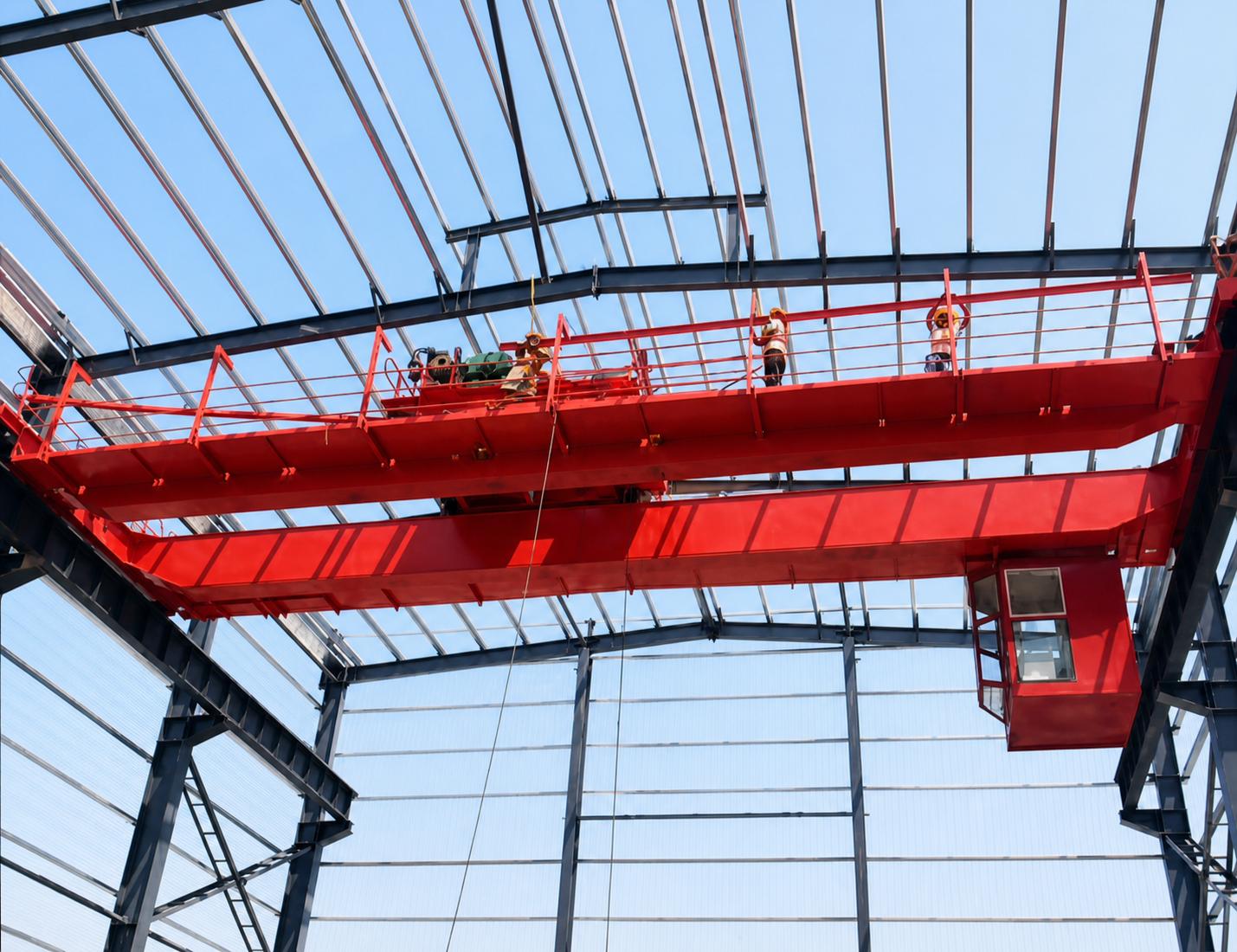
Bridge cranes (EOT cranes) are the core handling equipment of heavy industries such as steel, casting, machining, logistics and warehousing. Their operating safety, stability and service life are directly related to factory production efficiency and operation and maintenance costs, and the motor control system is the core key to determining the operation quality of the crane.
Soft start and VFD frequency conversion are the two mainstream electronic control solutions for heavy industry EOT cranes, and the two are adapted to different working conditions.Improper selection can easily cause load shaking, inaccurate positioning, accelerated wear of components, and increase failure rate and operation and maintenance costs.
This article analyzes the working principle, core differences and adaptation working conditions of the two control modules in depth, explains the application value of high-end motion control in detail, organizes a full set of selection standards, pit avoidance points and operation and maintenance plans, and provides professional and landing selection reference for industry engineers, equipment managers and purchasing personnel.
What Are Soft-Start and VFD Control Modules?
Both soft start and VFD frequency conversion control are intelligent control solutions for crane motors. The core role is to replace the traditional direct start mode and avoid the electrical and mechanical shocks caused by hard start, but there are essential differences in the control logic, functional range, and operating capabilities of the two.
Soft-Start Control for EOT Cranes
The soft-start controller is an electronic control equipment optimized for the start-up phase of the motor. The core adopts thyristor (SCR) voltage regulation technology, which does not change the power supply frequency, but only adjusts the motor input voltage step by step, gently increasing the motor torque and operating speed, completely abandoning the traditional start-up mode of full pressure and full torque at the moment of direct start.
During the start-up process of the equipment, the soft starter will start from a preset initial voltage (usually 30%-60% of the rated voltage), and gradually boost to the rated voltage within an adjustable time of 1-30 seconds, allowing the motor to speed up smoothly to the rated speed.
This working mode brings two core improvements: one is to significantly reduce the start-up current, reducing the traditional direct start 6-8 times the rated current to 2-4 times, avoiding power grid voltage fluctuations and impact on the precision electrical equipment in the plant; the second is to eliminate instantaneous torque shocks and significantly reduce the mechanical vibration and shock of the crane transmission structure.
The soft-start control structure is simple, the operation is stable, and there is no need for complex programming. It is mainly suitable for standard EOT cranes with simple motion logic and fixed speed operation to meet the needs of basic smooth start and stop operations. It is a cost-effective control solution for lightweight and conventional cranes.
VFD Control for EOT Cranes
VFD inverter drive is a high-end motor control equipment for all working conditions and all periods of time, with a control dimension far beyond soft start.Its working principle is: first convert the power frequency alternating current into direct current, and then synthesize the adjustable frequency and adjustable voltage alternating current through inverter technology. By synchronously adjusting the voltage and frequency, the motor's speed, torque, acceleration and deceleration are accurately controlled, and the crane's full operating cycle is refined and controlled.
Compared with the soft-start technology that only optimizes start-up, VFD frequency conversion control can fully cover the entire operating process of the crane. With the advantages of stepless speed regulation, precise positioning, and intelligent braking, it is adapted to the three major motor mechanisms of the whole machine, effectively eliminating equipment shaking, positioning offset, start-stop caton and other working conditions. Problems.
With the decline in the cost of frequency conversion technology and the upgrading of industrial production accuracy, VFD has become the standard configuration of EOT cranes for heavy-duty, high-frequency and high-precision operations, and is widely used in high-end heavy industry scenarios such as steel smelting, precision casting, and heavy machinery assembly.
Why Heavy-Duty EOT Cranes Need Advanced Motion Control
EOT cranes in heavy industry scenarios generally have the characteristics of large tonnage, high load, and high frequency operation. Frequent start and stop, heavy-duty movement, and precise hoisting are the norm. Traditional hard start and simple control modes can easily cause safety hazards and equipment loss.Equipped with soft start and VFD high-end motion control system, it is the core means to ensure the safe, efficient and long-term operation of heavy industry cranes.
Improve job safety
When the crane starts, stops, and shifts speed, it is easy to produce a load pendulum effect. The shaking of heavy objects will not only slow down the rhythm of the operation, but may also collide with equipment and workpieces, causing safety accidents.Under conventional control mode, instantaneous torque mutation is the core cause of load shaking.
The controllable acceleration and deceleration functions of soft start and VFD can completely avoid instantaneous power shocks. Among them, VFD can further optimize the motion curve through a programmable anti-shake algorithm, minimize load swing, and allow heavy objects to start and stop smoothly and move smoothly, thereby reducing the safety risks of heavy lifting operations from the root cause.
Buffer mechanical impact
Crane gears, brakes, wire ropes and other core components are affected by the instantaneous torque of start and stop for a long time, and they are easy to wear and age.The traditional direct start method will exacerbate mechanical stress loss, increase the probability of component damage and equipment operation and maintenance costs.
The high-end motion control system can realize a smooth transition of torque, evenly disperse the mechanical stress to the transmission structure, greatly reduce the wear strength of each component, effectively extend the service life of the crane's mechanical structure and core accessories, and reduce the frequency of downtime and maintenance.
Improve positioning accuracy
Heavy loads such as steel coils, molten metal ladles, large molds, heavy machinery and equipment have extremely high requirements for hoisting and positioning accuracy. Small positioning deviations can lead to workpiece damage, assembly errors, and even major production accidents.
Relying on the VFD stepless low-speed fine-tuning function, the crane can achieve precise alignment at the end, solve the problems of high-speed start-stop and inertial offset of traditional equipment, and perfectly adapt to high-end heavy industry scenarios such as precision pouring, heavy-duty assembly, and precise steel palletizing, greatly improving the operation pass rate.
Optimize the operating environment
Cranes without intelligent control are frustrated when starting and stopping, and the load is shaking violently. The operator needs to frequently correct the position, the labor intensity is high, and the operating stability of the equipment is poor, which can easily cause misoperation.Soft start and VFD control can achieve smooth and controllable operation of the equipment, no sudden start and stop, no uncontrolled shaking, greatly reducing the probability of operator errors, and ensuring the safety of on-site personnel and equipment.
Soft-Start Control Modules: When Are They the Better Choice?
With the advantages of simple structure, high cost performance, and convenient operation and maintenance, the soft-start controller is still the mainstream choice for EOT cranes under standard operating conditions, and it is accurately adapted to conventional, lightweight, and fixed-speed hoisting operations.
Core advantage
- Suppress the start-up inrush current: effectively suppress the instantaneous high current of the motor start-up, avoid the voltage fluctuations of the power grid, protect the stable operation of precision electrical equipment in the factory, and reduce the load impact of the power grid.;
- Weaken the impact of mechanical start and stop: realize the gentle output of motor torque, buffer the instantaneous stress of crane transmission system, significantly reduce the fatigue and wear of mechanical components, and reduce the frequency of equipment failures;
- The system is simple and stable: the control logic is simple, no complex program debugging is required, the equipment failure rate is low, and the adaptability is strong, which greatly simplifies the daily operation and maintenance work.;
- The comprehensive cost advantages are obvious: the cost of equipment procurement, installation and commissioning is lower, and the matching of new machines and the transformation of old equipment adapted to most standard working conditions take into account performance and economy.
Adapt to crane working conditions
- It is suitable for light and medium-sized EOT cranes under standard working conditions, and is mainly suitable for conventional handling and intermittent operation scenarios in the workshop.The frequency of equipment operation is low, the load fluctuation is small, and the start-stop interval is long. There is no need for long-term continuous high-intensity operation. The soft start is sufficient to meet the needs of stable start-stop and conventional handling.
- The equipment adopts a constant speed operation mode throughout the process, and the operation process is fixed and single. There is no need for refined speed control functions such as stepless speed regulation, low-speed fine-tuning, and variable-speed switching. Conventional uniform speed start and stop can complete all the moving procedures.
- The hoisting and positioning accuracy requirements are moderate, and the fault tolerance space is large. There is no need for precision processes such as precise alignment and fine-tuning of the end at low speed. Relying on manual operation and mechanical braking, the conventional positioning standards can be met, and there is no high-precision assembly, precision pouring and other demanding working conditions.
- It is suitable for the basic control of the walking mechanism with simple motion logic and stable load such as cart walking and trolley running horizontally. It only needs to start and stop smoothly and move at a uniform speed. There is no need for complex curve control and anti-swing speed regulation functions, and the degree of matching of working conditions is extremely high.
Core limitations
- Lack of speed regulation ability throughout the process: soft start is only responsible for the voltage regulation during the start-up phase, and the motor will run at constant full speed after the start-up is completed. It does not have the ability to adjust the speed and deceleration in the middle of the process, and the operating mode is single.;
- Insufficient flexibility of motion control: it only supports fixed start-stop logic, cannot adapt to complex variable-speed operation curves and dynamic operating condition adjustments, and can only meet the basic and simple start, restart and stop operation requirements.;
- The positioning accuracy of the operation is limited: the low-speed precise fine-tuning function is missing, and the final alignment of the equipment is completely dependent on manual experience operation and mechanical braking. It is prone to inertial offset and positioning deviation, which cannot meet the needs of precision hoisting.;
- Weak adaptability to heavy-duty and high-frequency operating conditions: For high-frequency start-stop and continuous heavy-duty operating modes in heavy industry scenarios, soft-start cannot continuously and stably control the temperature, which can easily cause motor overheating and equipment overload failure. It is not suitable for high-intensity and high-load continuous production conditions.
Selection conclusion: Soft start is the best cost-effective solution only when the crane does not require variable speed, low positioning requirements, and general operating intensity; once precision, heavy-duty, and high-frequency operations are involved, soft start cannot meet production needs.
VFD Control Modules: When Should You Choose a VFD?
VFD frequency conversion control is the core configuration of heavy-duty, high-precision and automated EOT cranes. With the ability of refined control of the whole process, it solves many pain points of traditional control solutions and adapts to the complex working conditions of high-end heavy industries.
Global precision speed regulation
VFD supports stepless speed regulation in all dimensions of crane lifting, descending, traversing, and walking. The speed can be customized according to the operation stage: long-distance handling adopts high-speed operation to improve efficiency, and the end alignment is switched to low-speed fine-tuning to ensure accuracy, which perfectly matches the operation needs of different loads and processes, taking into account efficiency and safety.
Programmable smooth acceleration and deceleration
The equipment supports custom acceleration and deceleration slope curves, and can debug exclusive operating parameters according to the crane's tonnage, load weight, and structural characteristics, completely eliminating the impact and shaking during start-stop and variable speed, not only protecting the crane's steel structure and transmission components, but also avoiding heavy objects from shaking and bumping the workpiece.
High-precision load positioning
VFD's ultra-low steady-speed operation ability can achieve millimeter-level precise alignment, completely solving the problems of inertial sliding and load offset.In scenarios such as steel smelting, casting mold hoisting, heavy equipment assembly, and steel structure finishing, the hoisting accuracy and operation pass rate can be greatly improved, and the operation efficiency of ordinary control equipment can be increased by more than 60%.
Optimize motor performance
VFD can dynamically match the output power of the motor according to the real-time load, avoiding the waste of energy in the no-load and light-load operation of the motor at full speed.It should be emphasized that the energy-saving effect depends on the operating conditions of the equipment: cranes with frequent variable speed and intermittent operation have a significant energy-saving effect, and equipment with long-term constant operation at full speed has limited energy-saving space. The core value of VFD is still focused on control performance rather than energy saving.
Intelligent diagnosis linkage
Modern industrial VFD has perfect fault monitoring, overload protection, abnormal voltage protection, and motor overheating protection functions. It can monitor the operating status of equipment in real time, quickly investigate faults and warn of hidden dangers.At the same time, it supports PLC system linkage, industrial communication docking, and programmable parameter storage, which can be seamlessly integrated into intelligent factory automation production lines and adapted to the needs of modern heavy industry intelligent manufacturing.
Soft-Start vs. VFD for EOT Cranes: Key Comparison
In order to facilitate quick selection, the following intuitively compares the core differences between the two control schemes of soft start and VFD frequency conversion from the dimensions of core performance, operating performance, system characteristics, input cost and adaptability to working conditions:
- Start-up current suppression ability: Both soft start and VFD can efficiently suppress the motor start-up inrush current, effectively avoid sudden drops in the power grid and electrical disturbances, and ensure the stable operation of the plant's power distribution system. The performance of the two is comparable.
- Full speed regulation and control performance: Soft start only supports voltage regulation during the start-up phase, and the equipment runs at a constant speed after steady speed, without speed regulation capability; VFD has the function of stepless speed regulation throughout the process, which can dynamically match various operating speed requirements to achieve refined speed control under all working conditions.
- Acceleration and smooth performance: soft start can achieve smooth start, effectively weakening the start-up impact; VFD supports custom programmable acceleration curves, which can flexibly speed up according to load and equipment characteristics, and the operation is smoother and more controllable.
- Smooth deceleration performance: Soft start relies on power failure to decelerate naturally, which can only meet the basic stability; VFD supports controllable slope deceleration, accurately controls the deceleration rhythm, and completely eliminates inertial sliding, load shaking, and structural impact.
- Hoisting positioning accuracy: soft-start positioning accuracy is medium, the final alignment is highly dependent on manual operation and mechanical braking, and the fault tolerance rate is low; VFD supports low-speed fine-tuning and precise position control, which can meet high-precision processes such as heavy industry precision hoisting and end alignment.
- System adaptation flexibility: the soft-start control logic is fixed, the function is single, and the system is generally scalable; VFD supports programmable parameters and customizable operating modes, which can be adapted to multiple conditions and multi-device linkage, and the system is extremely flexible and compatible.
- System control complexity: the soft-start architecture is simple, the debugging is simple, the operation and maintenance threshold is low, and the adaptation to basic working conditions is quickly implemented; the VFD functional system is comprehensive and rich, and targeted parameter debugging and working condition adaptation are required, and the overall control complexity is higher.
- Initial input costs: soft-start procurement, installation, and commissioning costs are low, cost-effective, and suitable for standardized projects with controllable budgets; VFD hardware costs, system integration, and commissioning costs are higher, and the initial investment in equipment is relatively larger.
- Intelligent diagnosis and protection: soft start only has the basic fault warning function, and the monitoring dimension is limited; industrial-grade VFD integrates a full set of intelligent systems such as fault self-inspection, overload protection, abnormal voltage protection, and equipment status early warning, which has higher operation and maintenance safety.
- Adaptability to heavy-duty working conditions: soft start is only suitable for light and medium-load conventional working conditions, and cannot be adapted to harsh production scenarios with high-frequency start-stop and continuous heavy loads; VFD is specially designed for heavy-duty and complex working conditions, which can be stably adapted to the continuous operation requirements of large tonnage, high precision and high load.
In summary, there is no absolutely optimal control scheme, and the scheme adapted to the working conditions is the best choice. It needs to be combined with the crane's working level, load characteristics, motion requirements, and operating environment to make a comprehensive determination.
How to Select the Right Control Module for a Heavy-Industry EOT Crane
Selection needs to abandon the thinking of single-parameter judgment, and comprehensively evaluate equipment working conditions, motion mechanism, hardware matching, operating environment, and safety standards in multiple dimensions to avoid selection errors.
Approved tonnage and work grade
First of all, clarify the rated load of the crane, FEM/ISO working level (A3 light load, A5 medium and heavy load, A7/A8 heavy load), the number of starts and stops per hour, and the continuous/intermittent operating mode.For light-load and low-frequency A3/A4-level cranes, soft-start can be fully adapted; for medium- and heavy-duty and high-frequency start-and-stop equipment A5 and above, VFD frequency conversion control must be used to avoid equipment overload and aging and frequent failures.
Differentiated selection of extension institutions
The working conditions of the three major mechanisms of crane lifting, trolley traversing, and cart walking are different, and there is no need for unified configuration. A hybrid selection scheme can be used to reduce costs and increase efficiency.:
- Lifting mechanism: carrying the core heavy load, the torque, braking, and positioning requirements are extremely high, and VFD must be equipped as standard to ensure stable, safe and accurate lifting of heavy loads.;
- Trolley rampant: VFD is selected for precision operation scenarios, and soft start can be selected for conventional fixed-speed handling.;
- Cart walking: ordinary workshops move at a uniform speed over long distances, and soft start can be satisfied. It is recommended to configure VFD for high-precision workshop transportation.
- Motor and controller parameter matching
The selection cannot only refer to the motor power, but must fully match the rated current of the motor, the motor type, the rated voltage frequency, and the braking requirements.Focus on verifying the compatibility of the controller with the motor, brake, and control cabinet. In heavy-duty lifting scenarios, more than 150% of the overload torque needs to be reserved to adapt to the heavy-duty start-up requirements to avoid failures caused by small cars.
Clarify the requirements for speed and positioning accuracy
Fixed speed, ordinary handling, no need for precise alignment, priority is given to soft start; variable speed operation, terminal fine-tuning, precision alignment, and anti-shaking operations are required, and VFD frequency conversion control must be selected to give full play to its speed regulation and positioning advantages.
Adapt to complex heavy industry operating environments
There are harsh working conditions such as high temperature, dust, metal particles, high humidity, equipment vibration, and electromagnetic interference in heavy industry scenes such as steel mills and foundries.Conventional ordinary control cabinets cannot be adapted, and special electrical cabinets with up-to-standard protection, high temperature resistance, anti-vibration, and anti-interference must be selected for VFD and soft-start modules to avoid the failure and shutdown of the electronic control module caused by harsh environments.
Verify safety and brake configuration
The electronic control module is only an auxiliary control device and cannot replace the safety protection device.When selecting the model, it is necessary to match the core safety mechanisms such as emergency shutdown, overload protection, stroke limit, fail-safe braking, and emergency braking to ensure that the control system and the safety system complement each other and linkage to ensure the safety of lifting operations in all directions.
Practical Selection Guide: Which Control Method Fits Your Crane?
Select the soft start scenario
If the following four types of working conditions are met, the soft-start control scheme can be preferred, taking into account practicality and economy.:
- The operating conditions are fixed and single: the crane runs at a constant and uniform speed throughout the process, and the operating process is standardized. There is no need for refined control functions such as stepless speed regulation, low-speed fine-tuning, and dynamic variable speed. The basic start-stop and uniform speed operation can meet the production needs.;
- The hoisting and positioning standards are loose: only smooth start-stop and conventional material placement need to be completed, and the hoisting fault-tolerant space is sufficient, and there is no need for rigorous and high-precision operations such as precision alignment, high-precision assembly, and refined pouring.;
- Low operating load intensity: the equipment is mainly in intermittent and low-frequency operating modes, with few starts and stops, small load fluctuations, and no continuous heavy-duty, high-frequency start-and-stop high-intensity heavy-duty operation scenarios.;
- Focus on equipment cost performance: The project adopts standardized equipment configuration, giving priority to electronic control solutions with simple structure, simple commissioning, convenient operation and maintenance, and low failure rate, so as to effectively control equipment input and operation and maintenance costs under the premise of meeting production needs.
Choose the scene of VFD frequency conversion
If any of the following working conditions are met, it is recommended to give priority to the VFD frequency conversion control scheme to adapt to the needs of high-precision, high-strength, and intelligent heavy industry operations.:
- Variable speed is required for refined operation: the operation process requires high and low speed switching, low-speed fine-tuning at the end, and stepless speed regulation control. It is impossible to rely on a fixed speed to complete the precision hoisting process.;
- The positioning accuracy requirements are strict: it involves high-precision scenarios such as heavy-duty mold assembly, precision pouring, and precise steel alignment, and the control standards for hoisting drop point error and load offset are extremely high.;
- High-frequency heavy-duty operating conditions: the crane has a high working level, intensive equipment start-stop frequency, long-term continuous heavy-duty operation, and strict requirements for motor torque output, heat resistance and compression resistance of the equipment, and continuous stability.;
- Anti-shaking safety standards are high: hoisting precious, vulnerable, and high-precision workpieces, load shaking is not allowed, and it is necessary to rely on frequency conversion and smooth curve control to suppress the swing to avoid collision loss and safety risks.;
- Adapt to intelligent automation upgrade: the workshop layout is intelligent production line, the equipment needs to be connected to PLC control system, industrial communication and automation linkage, and supports digital operation and maintenance scenarios with programmable parameters and traceable data.;
- Complex scenarios of high-end heavy industry: suitable for harsh heavy industry operating environments such as steel smelting, casting processing, heavy equipment assembly, and large-scale steel structure finishing.
- Scenarios for optimal hybrid solutions
In view of the differences in the operation of different crane mechanisms, a VFD+ soft-start hybrid scheme can be used to accurately adapt to differentiated conditions and balance performance and cost. It is a cost-effective choice for small and medium-sized heavy industry workshops. The specific adaptation criteria are as follows:
- The lifting mechanism is equipped with VFD frequency conversion: The lifting mechanism undertakes the core heavy-duty lifting tasks, and has extremely high requirements for smooth operation, braking safety, and positioning accuracy.Equipped with VFD, it can realize flexible start and stop of heavy loads, stepless speed regulation and precise alignment of the ends, effectively eliminate the hidden dangers of heavy-duty shaking, offset, and impact, and ensure the safe and precise operation of the core processes.
- The walking mechanism is equipped with soft start: most of the walking mechanisms of carts and trolleys are for long-distance transportation at uniform speed, the working conditions are fixed, the control requirements are simple, and there is no requirement for high-precision fine-tuning.Adapt to soft start to achieve a smooth start and stop, meet the basic operation needs, and significantly reduce the overall equipment procurement and commissioning costs.
- Outstanding comprehensive application advantages: The hybrid scheme distinguishes the core heavy-duty precision mechanism from the conventional walking mechanism in a targeted manner, which not only guarantees the safety and accuracy of key operating links, but also avoids the performance redundancy and cost waste caused by the configuration of the whole machine VFD, and is perfectly adapted to the complex operation scenarios of conventional heavy-duty and standard transportation in small and medium-sized factories.
Conclusion
There is no distinction between soft start and VFD frequency conversion. It needs to be scientifically selected in combination with the crane's operating condition level, control accuracy, and operating frequency.Soft start is suitable for light load, fixed speed, and standardized routine operations;
VFD is more suitable for harsh working conditions with heavy loads, high frequencies, high precision and high stability.The selection and upgrading of enterprise equipment needs to abandon the misunderstanding of blindly high-allocation and low-cost allocation, and rely on scientific electronic control solutions to balance equipment operation safety, operating efficiency and input costs.
Henan Mine Crane can customize professional crane electronic control solutions such as soft start and VFD frequency conversion according to equipment tonnage, work level and operation requirements to help the equipment operate efficiently and stably.If you need selection guidance and project quotation, welcome to consult and connect.