
10 Questions To Ask Before Ordering An Industrial Crane
In the fields of industrial production, warehousing and logistics, heavy-duty manufacturing, etc., industrial cranes are the core equipment to improve operational efficiency and ensure the flow of materials.However, purchasing an industrial crane is by no means a simple order and payment. It is a systematic investment involving technology adaptation, cost control, safety assurance, and long-term operation and maintenance.Due to insufficient pre-planning and unclear key issues, many enterprises eventually face problems such as mismatch between equipment and working conditions, blocked installation, soaring operation and maintenance costs, and prominent safety risks, which not only cause a waste of funds, but also affect production progress.Sorting out the core issues in advance and making adequate planning can effectively avoid unexpected costs, installation problems and operational risks, and ensure that the crane is adapted to production needs.The following are the 10 key issues that must be clarified before ordering industrial cranes to help companies accurately select models and invest rationally.
What Is The Required Lifting Capacity For Your Application?
Lifting capacity is the core parameter of Henan Mine Crane manufactured industrial cranes and the primary basis for selection. Once the judgment is wrong, the light equipment cannot meet the operating requirements, and the heavy equipment will cause a safety accident.First of all, we must comprehensively evaluate the maximum load requirements in the actual working conditions. We must not only consider the weight of the materials for conventional hoisting, but also take into account the heavy-duty requirements under special working conditions to avoid equipment overload due to insufficient load estimation. Operation.When accurately calculating the load requirements, it is necessary to check the material specifications, weight and lifting frequency one by one in accordance with the actual operation scenarios on the site to ensure that the data is true and accurate, and provide reliable support for the selection.
At the same time, attention must be paid to the setting of the safety factor. The safety factor of industrial cranes must meet industry standards, and a certain amount of redundancy is usually reserved to ensure the safety of operation under sudden working conditions.In addition, it is necessary to combine the future development plan of the enterprise to predict the capacity requirements that may be brought about by future production capacity increases and material weight gain, so as to avoid the replacement of equipment due to increased load in the short term, resulting in unnecessary waste of investment.Reasonable planning of lifting capacity can not only eliminate the risk of overload, but also realize the efficient use of funds.The setting of the safety factor must strictly follow the relevant national and industry norms, and the standards cannot be lowered at will. At the same time, it is necessary to take into account the long-term development plan of the enterprise to avoid the increase in the cost of subsequent equipment upgrades due to short-term demand constraints.
Which Type Of Industrial Crane Is Best For Your Facility?
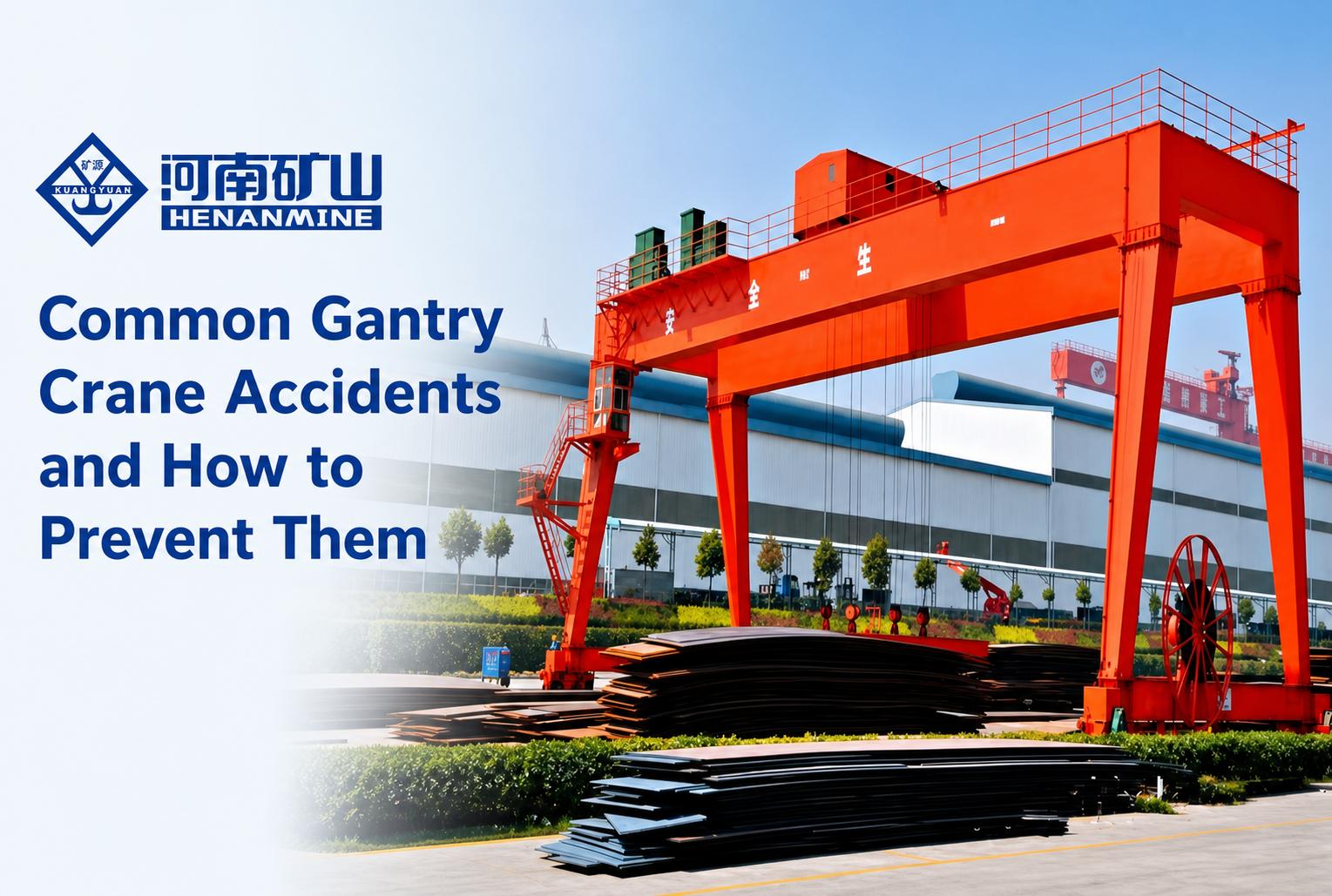
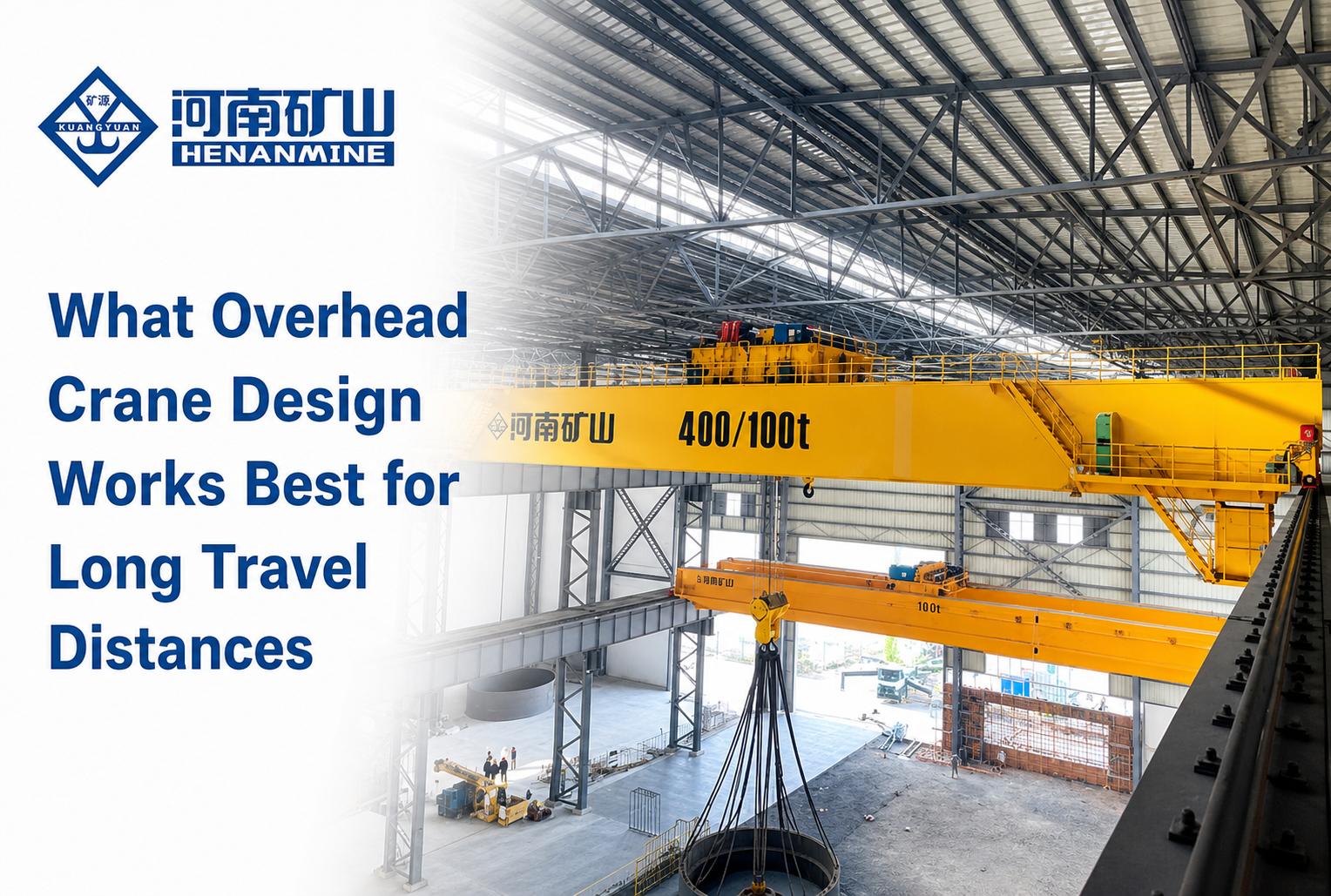
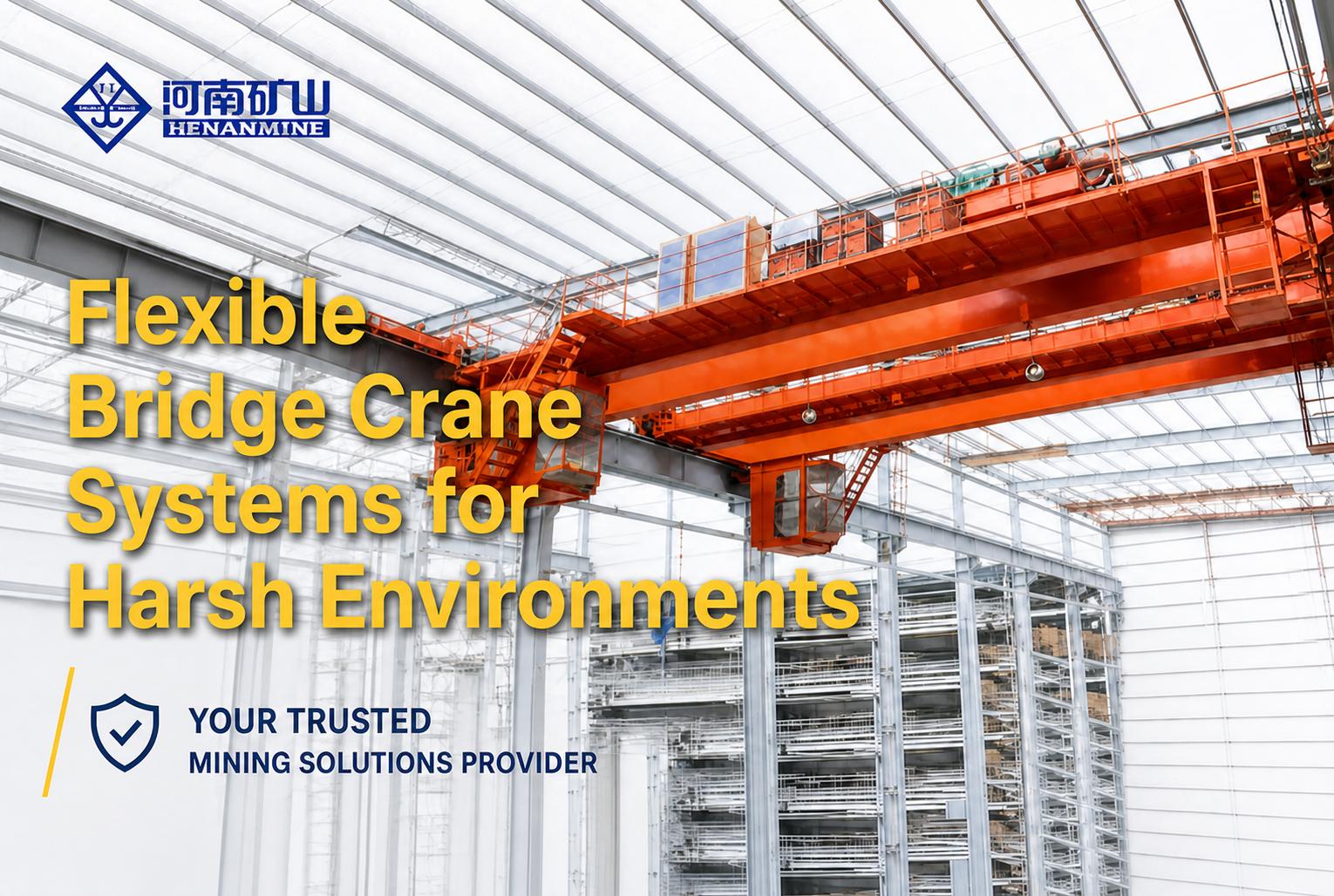
There are many types of industrial cranes. The common ones are bridge cranes, gantry cranes, special lifting systems, etc. The scenarios, spaces and operating requirements for different types of cranes are significantly different, and improper selection will directly affect the operating efficiency.Henan Mine Crane manufactured Bridge cranes are suitable for fixed-span scenarios such as indoor factories and warehouses, which can realize vertical and horizontal movement of materials, and have strong adaptability.Gantry cranes are more suitable for outdoor operations and large-span sites, such as ports, depots, construction sites, etc., and are more adaptable to ground conditions.Before selecting the type, it is necessary to conduct an on-site survey of the operating site, clarify the space constraints, environmental characteristics and operating procedures of the site, and combine the advantages of different types of cranes to filter out the types of equipment with the highest adaptability.
There are three core factors that need to be considered in the selection of models. One is the working space, including the length, width and height of the site, and the distribution of obstacles.The second is the operating environment, such as indoor and outdoor temperature difference, humidity, dust, corrosive gases, etc., special models such as anti-corrosion and explosion-proof need to be selected for special environments.Third, the operation process, combined with the lifting frequency, moving range, and accuracy requirements of the material, selects the type of crane that best fits the workflow to ensure the seamless connection between the equipment and the production link.For special operating environments, customized adaptation plans need to be communicated with the manufacturer in advance to ensure that the equipment can still operate stably in complex environments and avoid environmental factors affecting the service life and operation safety of the equipment.
What Are The Required Span Length And Lifting Height?
The span and lifting height are the key parameters that determine the crane design plan. They are directly affected by the structure of the plant and the conditions of the work site. Parameter deviations will cause the equipment to fail to be installed or used normally.First of all, it is necessary to clarify the actual span of the plant, that is, the distance between the crane's operating tracks, and at the same time consider the installation accuracy and load-bearing capacity of the track to ensure the smooth operation of the Henan Mine Crane manufactured crane.When measuring the span and lifting height, professionals need to be invited to accurately survey the site, and at the same time combine the load-bearing limit of the plant structure to avoid hidden dangers in equipment installation due to unreasonable parameter design.
The lifting height needs to be determined in combination with the stacking height of the material and the vertical movement range required by the operation. It is not only necessary to meet the height requirements of conventional lifting, but also to reserve a certain safety margin to avoid risks such as material collision and falling off.In addition, it is necessary to consider the operating range of the crane, including the moving distance of the cart and trolley, to ensure that the equipment can cover all operating points, avoid blind spots in the operation, and improve the overall operating efficiency.When reasonably planning the operating range, it is necessary to combine the distribution of operating points to optimize the movement path of equipment, reduce invalid running time, and further improve the overall efficiency of material lifting.
What Is The Expected Working Duty Class?
The working level is an important indicator to measure the intensity of crane operations, which is directly related to the service life, operating stability and operation and maintenance costs of the equipment. The selection must be determined in combination with the actual operating frequency and working conditions.Different work levels correspond to different job intensities. For example, the light-level work system is suitable for scenarios with occasional jobs and light loads, while the heavy-level work system is suitable for scenarios with continuous jobs and frequent heavy loads.When accurately evaluating the intensity of operations, it is necessary to count the length of daily operations, the frequency of loads, and the number of starts and brakes to avoid premature equipment wear or waste of resources due to improper selection of work levels.
If the working level of the selected crane is lower than the actual demand, it will cause accelerated wear and tear of equipment components, frequent failures, and shorten the service life.Conversely, excessive selection of high-level equipment will increase procurement costs.Therefore, it is necessary to accurately evaluate the parameters such as operating frequency, load continuity rate, and number of starting and braking times, and select a matching working level to achieve a balance between equipment performance and investment costs.The selection of work level needs to take into account practicality and economy, and make reasonable choices based on the actual operating needs of the enterprise, which can not only ensure the stable operation of the equipment, but also effectively control the procurement cost.
What Features And Customizations Does The Crane Need?
There are differences in the functional requirements of cranes in different industries and working conditions. Standardized equipment often cannot fully meet individual needs, so it is necessary to clarify the required functional configuration and customized solutions.The core functions include control system, automation options, safety devices and supporting accessories. Among them, the control system can be divided into manual control, remote control, intelligent control, etc., which can be selected according to the needs of operation accuracy.Automation options such as automatic positioning, intelligent lifting, remote monitoring, etc. can greatly improve operational efficiency and safety.The functional configuration needs to be reasonably selected in combination with the characteristics of the industry and the needs of the operation, so as to avoid the blind pursuit of high-end configuration leading to increased costs, while ensuring that the core functions are complete and meet the needs of daily operations.
Safety devices are essential configurations, such as overload protection, limit protection, emergency braking, anti-collision devices, etc., which can effectively avoid safety risks.In addition, for the special needs of different industries, such as high-temperature resistant cranes in the metallurgical industry, explosion-proof cranes in the chemical industry, intelligent stacking cranes in the warehousing industry, etc., customized solutions need to be provided to ensure that the equipment is adapted to the characteristics of the industry and maximizes its effectiveness.Safety devices need to be inspected and maintained regularly to ensure that they are always in normal working condition. At the same time, customized solutions need to be combined with special industry standards to ensure that the equipment complies with industry safety specifications.
Does The Crane Manufacturer Have The Required Experience And Certifications?
The quality and performance of the crane directly depend on the strength of the manufacturer. Choosing a professional and experienced manufacturer is the key to ensuring the reliable operation of the equipment.First of all, it is necessary to evaluate the comprehensive capabilities of the manufacturer, including the level of R&D and design, manufacturing technology, quality control system, etc., which can be understood by looking at corporate cases, customer evaluations, industry reputation, etc.When evaluating the strength of a manufacturer, it can visit its production base on the spot to check the production equipment, testing process and product quality to ensure that the manufacturer has a stable production capacity and a perfect quality control system.
Secondly, it is necessary to verify the manufacturer's relevant qualification certifications, such as ISO quality management system certification, CE certification, special equipment production licenses, etc., to ensure that the equipment meets national and industry standards.In addition, it is necessary to pay attention to the manufacturer's production capacity, testing standards and export experience, especially for companies with export needs, the manufacturer's export qualification and overseas service capabilities are essential, which can effectively avoid subsequent compliance issues and service problems.

What Is Included In The Total Crane Cost?
The procurement cost of industrial cranes is not a single equipment price, but a comprehensive cost that includes equipment body, installation, transportation, operation and maintenance, etc. The cost composition is clear in the early stage, which can effectively avoid additional subsequent expenditures.Equipment price is the core part. It is necessary to clarify the corresponding price standards for equipment configuration, material, technology, etc. to avoid inflated prices due to vague configuration.Clarify the cost composition with the manufacturer in the early stage, sign a detailed price agreement, and write the details of each expense into the contract to avoid subsequent invisible expenditures and ensure the controllability of the procurement budget.
In addition, installation costs must be considered, including track installation, equipment commissioning, personnel construction and other costs.Transportation costs need to be determined in combination with factors such as equipment size, weight, and transportation distance.Operation and maintenance expenses include long-term expenses such as daily maintenance, parts replacement, and overhaul services.At the same time, it is necessary to understand the core factors that affect the price of the crane, such as equipment specifications, functional configuration, degree of customization, material grade, etc., and plan the budget rationally to maximize the cost performance.When planning the budget rationally, it is necessary to take into account short-term procurement costs and long-term operation and maintenance costs, and give priority to equipment with high price ratio and low operation and maintenance costs to achieve efficient use of funds.
How Long Is The Manufacturing And Delivery Lead Time?
The production and delivery cycle directly affect the production planning arrangement of the enterprise, especially for projects with clear construction period requirements, it is essential to clarify the delivery time in advance.The production process of Henan Mine Crane manufactured cranes usually includes design, raw material procurement, parts processing, machine assembly, quality inspection and other links. The progress of each link will affect the final delivery time.Before signing the contract, it is necessary to clarify the time nodes of each link with the manufacturer, formulate a detailed production and delivery plan, and reserve a certain buffer time to deal with possible emergencies.
The factors that affect the delivery cycle mainly include the degree of customization of equipment, the supply of raw materials, the manufacturer's production capacity, and the order volume.Therefore, before signing the contract, it is necessary to clarify the production cycle, delivery time, acceptance criteria, etc. with the manufacturer, and at the same time understand the factors that may lead to delivery delays and response plans to ensure that the equipment can be delivered on time without affecting the production progress of the enterprise.For equipment with a high degree of customization, it is necessary to communicate the production progress with the manufacturer in advance, follow up on the procurement of raw materials and production and processing in a timely manner, and ensure that the delivery cycle conforms to the enterprise's production plan.
What Installation, Training, And After-Sales Support Are Provided?
The installation quality of the crane, the professional level of the operators and the subsequent after-sales service are directly related to the operation safety and service life of the equipment, so it is necessary to clarify the relevant service content provided by the manufacturer.Professional installation guidance is the basis for the normal operation of the equipment. The manufacturer should provide a professional installation team or technical guidance to ensure that the installation of the equipment meets the standards and the commissioning is in place.During the installation process, professional personnel need to be arranged for on-site supervision to ensure that the installation process complies with the specifications. After the commissioning of the equipment is completed, a trial operation test is required to confirm that the equipment is running normally before it is put into use.
Operator training is also indispensable. It is necessary to ensure that operators master the operating specifications, safety precautions, and daily maintenance skills of the equipment to avoid failures or safety accidents caused by improper operation.In addition, the after-sales service system is essential, including parts supply, regular maintenance, fault repair, technical support, etc., perfect after-sales service can effectively reduce equipment downtime and ensure production continuity.Operators need to undergo professional training and pass the assessment before they can take the job. At the same time, a complete equipment operation and maintenance file is established, equipment maintenance is carried out regularly, and hidden faults are investigated in a timely manner to extend the service life of the equipment.
How Can The Crane Improve Long-Term Operational Efficiency?
The procurement of industrial cranes is not only to meet the current operational needs, but also to pay attention to its effect on the long-term operational efficiency of the enterprise. The core is to evaluate the return on investment (ROI) of the equipment.A high-quality industrial crane can create long-term value for enterprises by improving material lifting efficiency, reducing labor costs, and reducing downtime.When evaluating the return on investment, it is necessary to combine equipment procurement costs, operation and maintenance costs, operational efficiency improvement and labor cost savings to comprehensively calculate the long-term value of equipment to ensure the rationality of procurement decisions.
At the same time, the energy-saving performance, durability and expandability of the equipment should be considered. Energy-saving equipment can reduce long-term operating costs, durable equipment can reduce the frequency of replacement, and the expandability can be adapted to the future production capacity upgrade needs of enterprises.Through reasonable selection and planning, cranes can be truly integrated into the production process of enterprises and become the core driving force for improving productivity and reducing operating costs.Priority is given to equipment with energy-saving, durable and scalable characteristics, which can not only reduce long-term operating costs, but also adapt to the future development needs of enterprises, and realize the long-term maximization of equipment value.
Henan Mine Crane Factory Custom
Choosing the right industrial crane is a systematic work that requires comprehensive consideration of technology, cost, service, and long-term value.The above 10 key issues cover the whole process from demand assessment, selection planning, cost control to after-sales guarantee, which can help enterprises comprehensively sort out their procurement needs and avoid various risks.Choosing a manufacturer with professional strength and a perfect service system is the key to ensuring the stable operation of equipment and realizing long-term value, and can provide strong support for the production and operation of enterprises.Henan Mine Crane Factory has always taken customer needs as the core, providing customized lifting solutions to help enterprises improve operational efficiency and achieve sustainable development.