
Industrial Crane Buying Guide for Industrial Operations
As the core heavy-duty equipment for factory production, warehousing, logistics and heavy industry manufacturing, industrial cranes have a direct impact on production efficiency, operation safety, operating expenses and subsequent production capacity expansion due to their adaptability and safety performance.It is easy for many enterprises to ignore the details of working condition assessment, parameter verification, etc. in the procurement stage, and blindly select the model, resulting in limited equipment installation, mismatched loads, prominent safety risks, and high operation and maintenance costs, which interfere with daily production.Before purchasing, it is necessary to consider comprehensively, check the indicators one by one, and select lifting equipment that is suitable for working conditions, safe and reliable, and takes into account the long-term use value.
Key Factors to Consider Before Buying an Industrial Crane
Check load capacity
The rated load is the most core and basic procurement index of industrial cranes, and it is also the first line of defense to ensure the safe operation of equipment. It is absolutely impossible to estimate or blindly purchase large-tonnage and small-tonnage equipment based on experience alone.Before purchasing, it is necessary to accurately count the maximum lifting weight of the company's daily operations, the conventional lifting weight, and the peak weight of occasional heavy-duty operations.It should be noted that the rated load of the crane is a static standard load, and the actual operation will be affected by factors such as lifting inertia, wind influence, material eccentricity, and lifting angle, resulting in dynamic loads.
Therefore, sufficient load margin must be reserved when selecting the type. It is recommended to reserve 10%-20% load redundancy for conventional working conditions. High-frequency heavy-duty, bumpy operations, and outdoor working conditions need to reserve more than 20% of the margin to strictly prevent overload operations.At the same time, it is necessary to distinguish the difference between the load of the crane, the load of the hoist, and the rated load of the trolley, so as to avoid the problem of the host meeting the standards and the insufficient load of the core lifting accessories, eliminate the safety hazards of overload from the root cause, and ensure the long-term stable operation of the equipment.
Confirm lifting height
The lifting height directly determines the effective working space of the crane and is a key indicator of whether the equipment can be adapted to the plant and construction site. Many procurement errors are due to inaccurate height calculations.During procurement verification, it is not only necessary to refer to the headroom height of the plant. It is necessary to comprehensively measure the vertical distance from the ground to the roof beams, roof trusses, lighting equipment, ventilation pipes, fire-fighting facilities and other obstacles of the plant, and calculate the actual available effective lifting height.
At the same time, it is necessary to combine the material hoisting requirements, confirm the placement height, stacking height, and equipment installation height of the material after hoisting, and reserve a safe space for the material to float up and down.In addition, it is necessary to consider the height occupied by the crane's own hooks, pulleys, and wire ropes to avoid situations where the hooks cannot reach the preset lifting height and the high-level hoisting operation cannot be completed after the equipment is installed.For high- and low-span factories, special-shaped construction sites, and layered operation scenarios, it is necessary to customize and adapt the lifting height to ensure full coverage of the operation.
Evaluate working conditions
Operating conditions are the core basis for determining the configuration, material, and protection level of the crane. Failure to evaluate the working conditions can easily lead to short-term corrosion, aging, and frequent failures of the equipment, greatly shortening the service life of the equipment.Before purchasing, it is necessary to sort out the details of the site's working conditions in all directions, covering indoor/outdoor operations, room temperature/high temperature and low temperature operations, wet and dry environments, dust concentration, corrosive media, explosion-proof requirements, operating frequency and other core conditions.
In the conventional dry and clean conditions of the indoor plant, standard industrial cranes can be selected.Outdoor open-air operations need to focus on windproof, rainproof, sunscreen, and rust-proof configurations, and are equipped with special windproof anchoring devices, waterproof electrical systems, and anticorrosive coating processes.For chemical, electroplating, and salt spray environments, anticorrosive cranes need to be selected, with stainless steel fittings, anticorrosive motors, and closed electrical control cabinets.For dust, flammable and explosive workshops, explosion-proof cranes must be selected to meet explosion-proof standards in all aspects of electrical and mechanical structures.At the same time, it is necessary to confirm the ground load-bearing and track foundation conditions of the work site to avoid the inability of the foundation to carry the equipment after installation, causing safety issues such as equipment tilting and shaking.
Define duty requirements
The work system is a key indicator that many buyers can easily ignore, which directly affects the durability, failure rate and service life of the crane.Henan Mine Crane manufactured industrial cranes have a clear division of work levels, corresponding to different operating frequencies and load continuity rates, and are mainly divided into four categories: light, intermediate, heavy, and extra heavy.The light-level work system is suitable for low-frequency and intermittent work scenarios, such as small warehouses and equipment maintenance.The intermediate work system is suitable for the daily production operations of conventional factories, with moderate daily working hours and uniform load fluctuations.
The heavy-duty and extra-heavy-duty work systems are aimed at heavy-industry manufacturing, high-frequency hoisting of assembly lines, 24-hour uninterrupted operation, and frequent start-stop of heavy loads. The wear-resistant, heat-resistant, and fatigue-resistant properties of core accessories such as motors, reducers, wire ropes, and brakes are extremely demanding.Before purchasing, it is necessary to clarify the average daily operating time, number of starts and stops, and proportion of heavy-duty operations of one's own equipment, accurately match the crane of the corresponding working level, and prohibit the use of light-grade equipment instead of heavy-grade equipment, otherwise there will be motor overheating, accelerated wear of accessories, frequent failures and shutdowns, which will seriously affect the production progress.
How to Choose the Right Industrial Crane Type
Compare crane types
There are many types of industrial cranes, and the structural characteristics, operating range, carrying capacity, and applicable scenarios of different models are greatly different. When purchasing, it is necessary to compare the core advantages and adaptation shortcomings of various models in advance to avoid model mismatches.Mainstream industrial cranes on the market include core categories such as bridge cranes, gantry cranes, cantilever cranes, single-girder cranes, double-girder cranes, and electric hoist cranes.
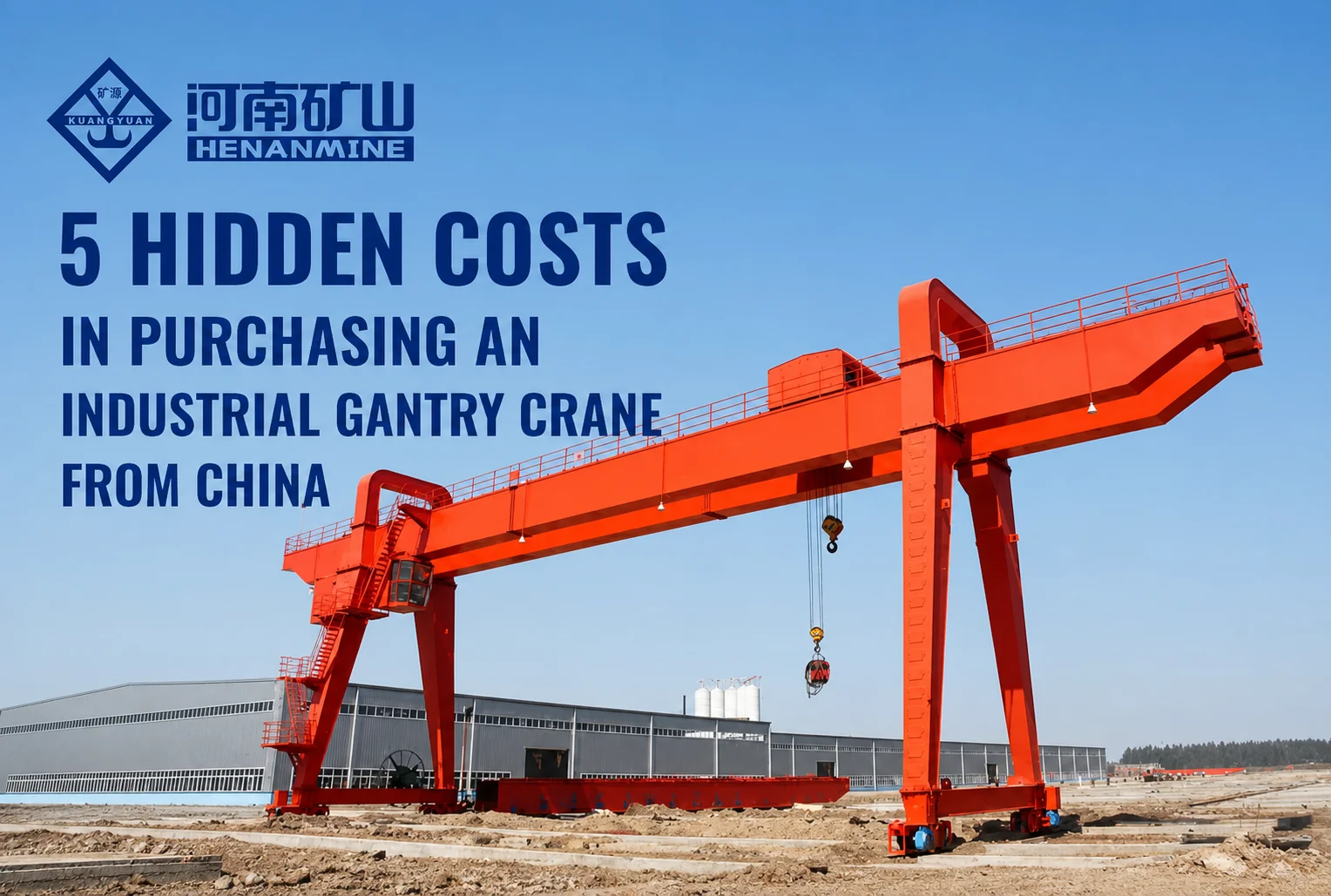
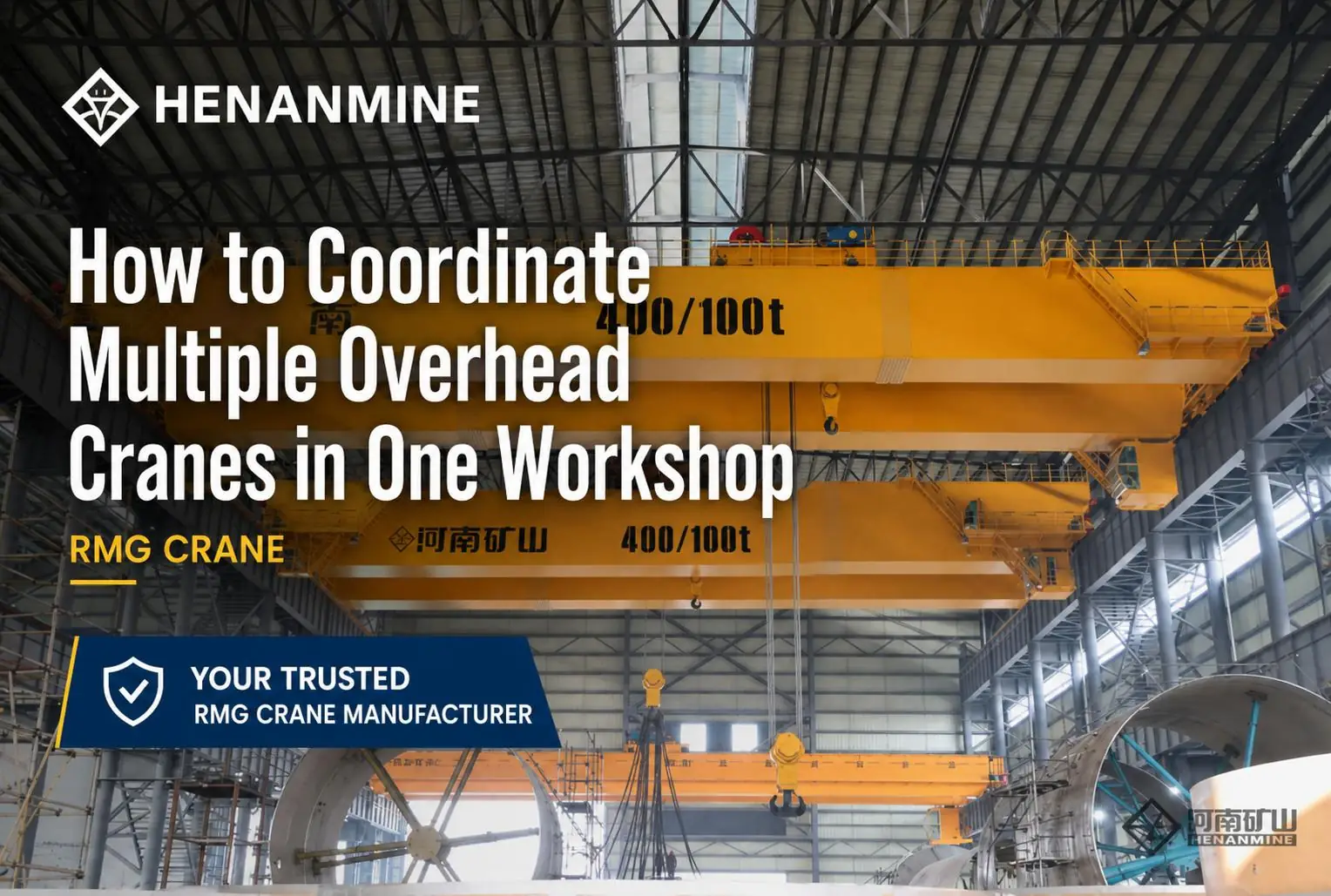
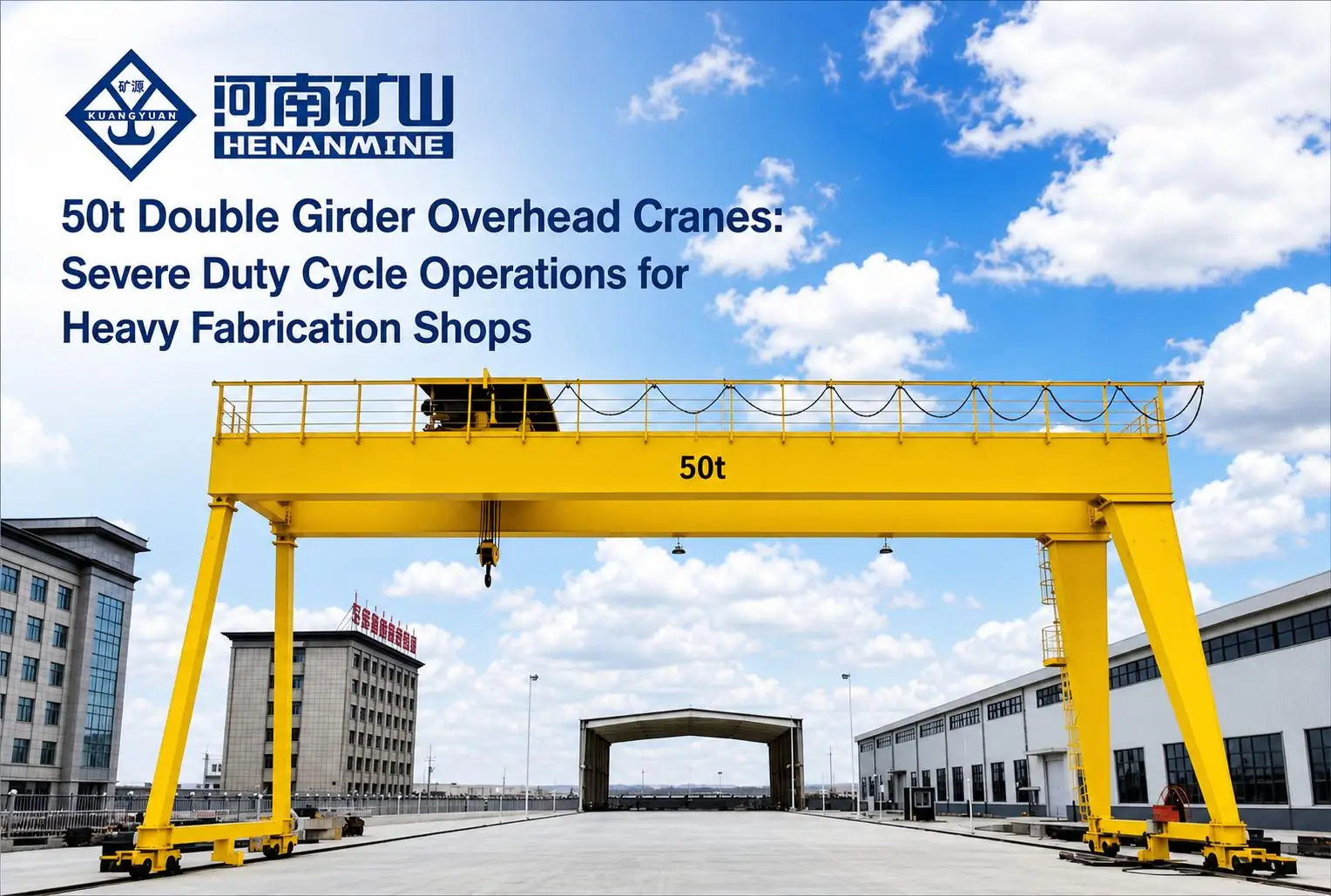
Single-girder cranes are cost-effective, lightweight in structure and easy to install, and are suitable for light and medium-sized loads and conventional indoor plant operations.The double-girder crane has strong carrying capacity, high stability and stable operation, and is suitable for large-tonnage, high-frequency, and heavy-duty heavy-duty operations.The bridge crane is installed on the track of the plant, which is suitable for fixed-point hoisting of large indoor areas.Gantry cranes have no dependence on factories and are suitable for outdoor sites, depots, and construction sites for open-air operations.Cantilever cranes have a small footprint and flexible operation, and are suitable for fixed-point hoisting and small material handling at stations.A comprehensive comparison of the characteristics of the model is the basis for precise selection, which can effectively avoid the waste of procurement and hidden dangers of overkill and overuse of small materials.
Match application needs
The core principle of model selection is to adapt on demand, combining the industry, operation scenario, and material type of the enterprise to accurately match the equipment.In the machining, hardware manufacturing, and light-duty warehousing industries, light and medium-sized materials are mainly hoisted. Single-beam bridge cranes and small cantilever cranes can be selected to take into account cost performance and practicality.In the steel structure, heavy industry equipment, and mold manufacturing industries, large-tonnage materials are frequently hoisted, and double-girder cranes and large-tonnage bridge cranes are preferred to ensure operational stability and safety.
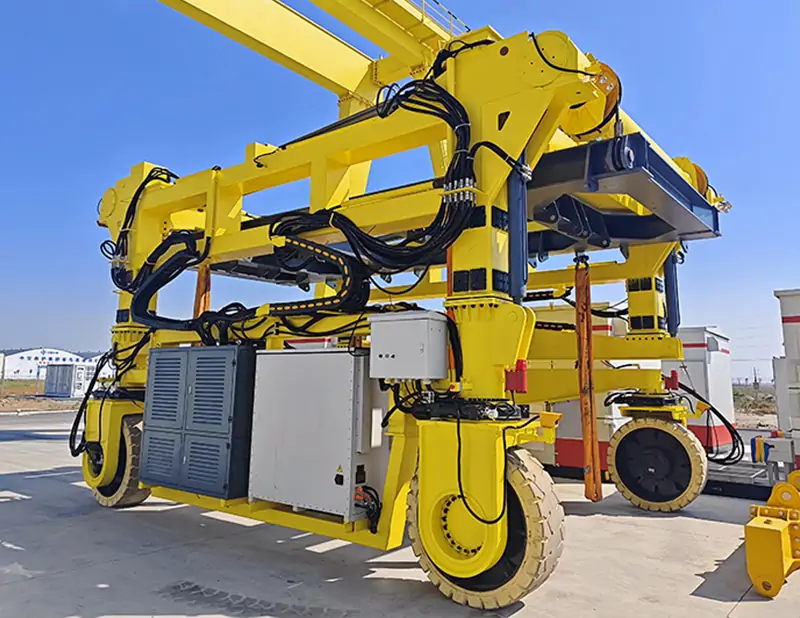
Outdoor scenes such as construction site construction, material yard, port loading and unloading are suitable for gantry cranes and mobile gantry cranes.Precision equipment installation and refined hoisting of small stations are suitable for cantilever cranes and miniature electric hoist cranes.At the same time, for special industry needs, such as dust-free operations in food workshops, clean operations in pharmaceutical workshops, and explosion-proof operations in chemical workshops, special customized models need to be matched to eliminate the problem that general-purpose models cannot meet special operating standards, so that the equipment can fully meet the needs of production and application.
Check installation space
The verification of installation space is a key prerequisite for the smooth installation and normal operation of equipment. After purchasing equipment, many companies cannot install it due to insufficient space and inconsistent dimensions, resulting in waste of funds and delays in construction.Before purchasing, it is necessary to accurately measure the width, length, headroom height, track installation distance, safe reserved space on both sides and other key data of the site.
For indoor cranes, it is necessary to confirm the size of the track beam, beam spacing, wall obstacles, and column position of the plant to ensure that the crane is running without collision and unobstructed, and safe maintenance space needs to be reserved on both sides.For outdoor gantry cranes, it is necessary to calculate the openness of the site, the space for laying the walking track, and the rotation space of the equipment, while considering the shelter of surrounding buildings, trees, and equipment.For special spaces such as small workshops, special-shaped sites, and low-rise factories, there is no need to force the selection of standard models. Special cranes for lightweight, narrow-gauge, and low-clearance can be customized to maximize the adaptation to site conditions.
Consider future expansion
Henan Mine Crane manufactured industrial cranes are large-scale fixed asset equipment with a service life of up to 10-30 years. The procurement selection cannot only meet the current production needs. It must take into account the company's future development plans for capacity expansion and business upgrading to avoid short-term equipment elimination and additional costs of secondary procurement.When selecting models, it is necessary to predict the needs of increasing production capacity, upgrading material tonnage, and expanding the scope of operations in the next 3-5 years.
Reserve reasonable upgrade space in terms of load, span, lifting height, operating coverage and other parameters, and give priority to expandable and retrofitable model structures.For example, conventional workshops can reserve tonnage upgrade margin, and the track design is adapted to the later span expansion.The automation upgrade interface can be reserved for assembly line operation scenarios to facilitate the subsequent installation of intelligent control systems and remote monitoring systems.Considering future expansion needs in advance can effectively extend the service cycle of equipment, improve the long-term utilization rate of equipment, and reduce the input cost of fixed assets of enterprises.
What Crane Specifications Should You Review
Check lifting speed
Lifting speed directly affects the efficiency of enterprise hoisting operations and is one of the core performance parameters. Different operating scenarios have different requirements for lifting speed.During procurement verification, it is necessary to distinguish the adaptation scenarios of slow, medium, fast, and two-speed lifting modes.Rapid lifting is suitable for light-duty materials and high-frequency conventional handling operations, which can greatly improve operational efficiency.Slow lifting is suitable for hoisting large-tonnage heavy objects, precision equipment, and fragile materials, which can effectively avoid material shaking, offset, and collision, and ensure the accuracy and safety of hoisting.
At present, mainstream high-quality industrial cranes support two-speed frequency conversion lifting, low-speed precise alignment, high-speed and efficient handling, taking into account efficiency and safety.At the same time, the stability of the lifting speed needs to be checked, and the high-quality equipment will start and stop without caton, impact, and jitter, so as to avoid material falling off and equipment damage due to rapid and slow speeds.For synchronous assembly line operation and precision hoisting scenarios, it is necessary to focus on confirming the performance of frequency conversion and speed regulation to ensure controllable speed and stable operation.
Review travel speed
The operating speed includes the operating speed of the crane cart and the operating speed of the trolley, which determines the horizontal and vertical movement efficiency of the equipment, and directly affects the overall operation rhythm.When purchasing, the parameters need to be reviewed according to the radius of the operation, the handling distance, and the frequency of the operation: short-distance, fixed-point and high-frequency hoisting scenarios, no need to run too fast, and priority is given to ensuring the stability of the operation.Long-distance, large-scale site handling, and batch material turnover scenarios need to be adapted to high-speed operation configurations to improve overall operating efficiency.
At the same time, attention must be paid to the speed regulation performance and buffer configuration of the equipment. High-quality industrial cranes are equipped with frequency conversion speed regulation systems, which operate smoothly and start and stop softly to eliminate inertial sliding and emergency stop shaking problems.Both ends of the equipment need to be equipped with special buffers and limit devices to avoid high-speed operation colliding with the end points of the track, causing equipment failures and safety accidents.It is forbidden to blindly pursue high speed and ignore stability, balance speed and safety, and adapt to one's own work rhythm.
Confirm span and reach
The span and operating radius determine the operating coverage of the crane, and are the key parameters to ensure that there are no dead ends in the whole operation.The span is mainly for bridge and gantry cranes. It refers to the distance between the center lines of the tracks on both sides. It needs to exactly match the width of the plant or work site to ensure that the equipment can cover the entire work area.The operating extension distance and radius of gyration are for cantilever cranes and mobile cranes, which determine the coverage of fixed-point hoisting of equipment.
During procurement verification, it is necessary to accurately measure the maximum working width and the farthest hoisting point of the work site to ensure that the crane span and extension distance can completely cover the core work area, while retaining a small amount of safety margin to avoid blind spots in marginal operations.For irregular sites and multi-area segmented operation scenarios, non-standard span and lengthened extension models can be customized, and flexible walking mechanisms can be used to achieve global no-dead-angle hoisting operations, eliminating operational limitations caused by insufficient coverage.
Evaluate control systems
The control system is the core brain of industrial cranes, which directly determines the ease of operation, accuracy, safety and intelligence of equipment.At present, the mainstream crane control system is divided into three types: traditional handle control, wireless remote control, and intelligent frequency conversion control system.The traditional wired handle has low operating cost and strong stability, and is suitable for basic conventional operations.The wireless remote control operation is flexible and cable-free, and can be controlled from a long distance to avoid personnel from approaching high-risk operating areas, which is safer and suitable for various high-end operating scenarios.
The high-end intelligent control system is equipped with frequency conversion speed regulation, precise positioning, one-key start and stop, fault self-diagnosis, and data recording functions, and can be adapted to automated assembly lines, precision hoisting, and unattended operation scenarios.When purchasing, the control system needs to be evaluated according to operation accuracy, safety requirements, and intelligent planning, focusing on verifying the sensitivity, stability, anti-interference ability, and fault alarm functions of the system to ensure accurate operation, timely response, and safe and controllable, while taking into account the convenience of operators.
How to Ensure Industrial Crane Safety and Compliance
Check safety features
Safety configuration is the core guarantee of Henan Mine Crane manufactured industrial cranes and the key to eliminating safety accidents in operations. Safety configuration cannot be simplified or omitted in any scenario.Formally qualified industrial cranes must be equipped with a full set of basic safety devices, including overload limiters, height limiters, stroke limiters, cushioning devices, emergency stop buttons, brake protection devices, wire rope anti-release devices, etc.
The overload limiter can monitor the lifting weight in real time, automatically alarm the overload and force the shutdown to eliminate the risk of overload operations.The height and stroke limiter can prevent the hook from rushing to the top and the equipment from colliding over the range.The emergency stop button can instantly power off and stop in the event of a sudden failure, avoiding sudden safety hazards.For special working conditions such as outdoor, heavy-duty, and explosion-proof, additional windproof anchoring devices, lightning protection devices, explosion-proof electrical protection, fall protection, sound and light alarm devices, etc. are required.When purchasing, it is necessary to verify the integrity, sensitivity, and reliability of the safety configuration one by one, refuse to reduce the allocation or low-allocation equipment, and build a strong operational safety line of defense in all directions.
Verify industry standards
Industrial cranes are special equipment, and there are strict national industry standards for production, manufacturing, installation, and acceptance. Compliance is a prerequisite for the legal entry into use of equipment, and it is also the core to avoid the risk of unqualified annual inspections, sealing and deactivation.Before purchasing, it must be confirmed that the equipment is manufactured in strict accordance with national special equipment standards such as "Lifting Machinery Safety Regulations" and "General Technical Conditions for Bridge Cranes".
All equipment must have complete special equipment production qualifications, product certificates, factory inspection reports, and type test reports to eliminate three-free equipment and non-standard modified equipment.For special models for explosion-proof, anti-corrosion, and outdoor use, the corresponding special compliance certifications need to be verified to ensure that the equipment is adapted to industry-specific standards.At the same time, the installation and acceptance of equipment must be completed by a qualified professional team, successfully passed the annual inspection and receipt of the special equipment testing institute, and obtained the legal use qualification to ensure the compliance operation of the equipment.
Review protection systems
A perfect protection system can effectively resist environmental erosion and equipment loss, greatly reduce the probability of failure, and extend the service life of equipment.The industrial crane protection system mainly includes three major sectors: electrical protection, mechanical protection, and environmental protection.The electrical system needs to be equipped with waterproof, dustproof, anti-short circuit, anti-overload protection, closed electric control cabinet, insulated cables, and overheating protection devices to avoid electrical failures that cause downtime and fire hazards.
The mechanical structure is equipped with wear-resistant protection, anti-loosening protection, and lubrication protection. The core transmission components are made of wear-resistant materials, and the key connection parts are equipped with anti-loosening devices. A centralized lubrication system is standard to reduce mechanical wear.In terms of environmental protection, indoor equipment adopts conventional anti-rust coating, outdoor and corrosive environments adopt multi-layer anti-corrosion coating and stainless steel accessories, and low-temperature environments are equipped with low-temperature antifreeze and anti-cracking protection devices.A comprehensive protection system can adapt the equipment to complex working conditions, reduce the frequency of failures, and reduce operation and maintenance pressure.
Confirm inspection requirements
Regular inspection and daily inspection of special equipment are necessary links for compliance operations. Before purchasing, the testing standards, annual inspection requirements, and daily inspection points of the equipment need to be confirmed in advance to facilitate the establishment of a perfect equipment management system in the later stage.Industrial cranes need to complete regular annual inspections, quarterly special inspections, and daily inspections in accordance with special equipment management requirements.
When purchasing, you need to confirm with the manufacturer the inspection focus of the equipment, the inspection cycle of wearing parts, and the troubleshooting standards, and obtain the official inspection instruction manual.At the same time, confirm whether the equipment structure design is convenient for later testing and maintenance, and reserve sufficient maintenance space and testing interface to avoid complex equipment structure, difficult maintenance, and high testing costs.Compliance and implementation of daily inspections and annual inspections can not only ensure the stable operation of equipment, but also avoid risks such as administrative penalties and equipment deactivation.
How to Choose a Reliable Industrial Crane Manufacturer
Check factory experience
Manufacturers' industry experience is the basic guarantee of equipment quality and service capabilities. Industrial cranes are heavy-duty special equipment, and long-term industry accumulation is required for production research and development and process polishing.When purchasing and screening manufacturers, priority should be given to source manufacturers with more than 10 years of experience in the production of lifting equipment and focusing on the research and development and manufacturing of industrial cranes, so as to eliminate small workshops, middlemen, and new entrants.
Senior manufacturers have mature production technology, perfect technical system, and rich experience in adapting to working conditions. They can accurately match the customized needs of various industries and complex scenarios, and can avoid all kinds of hidden dangers in selection, production, and installation in advance.At the same time, established manufacturers have a large number of real landing cases, and they can conduct on-site inspections of factory equipment and cooperative customer cases to verify the strength and equipment stability of manufacturers. Compared with new manufacturers, product maturity and after-sales stability are more guaranteed.
Review manufacturing capability
The manufacturing capacity directly determines the process accuracy, structural stability and quality upper limit of the equipment. When screening manufacturers, it is necessary to focus on verifying the manufacturer's production scale, production equipment, production process, and production capacity strength.Regular high-quality manufacturers have standardized production plants, a full set of CNC processing equipment, and precise testing equipment, from steel cutting, welding, finishing, assembly, coating to factory inspection, to achieve independent production in the whole process, and strictly control the accuracy of each process.
It can focus on the welding technology of manufacturers, the machining accuracy of the fuselage structure, the assembly standards of accessories, and the coating technology. The welds of the fuselage of high-quality equipment are flat and uniform, the structure is stable, the size is accurate, and the anticorrosive coating is uniform and durable.However, most of the small manufacturers are outsourced processing and simple assembly. The process is rough and the accuracy is insufficient, and the equipment is prone to deformation, shaking, and frequent failures.Priority is given to source manufacturers with independent production in the whole process, sufficient production capacity and mature technology to ensure uniform and reliable equipment quality.
Verify quality control
A strict quality control system is the core guarantee for the long-term stable operation of the equipment, and special equipment cannot tolerate the slightest quality defects.Reliable crane manufacturers must establish a full-process quality control system, from raw material procurement, warehousing inspection, production and processing, semi-finished product inspection, finished product inspection to factory acceptance, to control the quality layer by layer.
Raw materials need to be made of national standard high-quality steel and brand core accessories to eliminate inferior materials and refurbished accessories.During the production process, many special inspections were carried out on the fuselage structure, welding quality, transmission system, and electrical system.Before the finished product leaves the factory, it must complete the full-load test hoisting, no-load test operation, safety device testing, and performance testing of the whole machine to ensure that the parameters of the equipment are up to standard and the performance is stable.When purchasing, manufacturers can be required to provide raw material inspection reports, production quality inspection records, and factory test reports, verify the quality control process, and prevent inferior equipment and defective equipment from leaving the factory.
Evaluate customization support
The work sites, working conditions, environments, and production needs of different enterprises vary greatly. Standard models often cannot meet the personalized work needs, and the customization capabilities of manufacturers have become important screening criteria.High-quality source manufacturers have strong non-standard customization capabilities, and can tailor exclusive industrial cranes according to customers' site size, load requirements, working conditions, intelligent requirements, and special industry standards.
Whether it is a low-rise factory building with low headroom, a lightweight model in a small space, an outdoor large-tonnage gantry model, a chemical explosion-proof model, a special anti-corrosion model, or an intelligent automatic hoisting equipment, personalized design, production and adaptation can be realized.At the same time, equipment parameters, operating modes, and protection configurations can be optimized according to customer capacity planning and operating habits.The strong customization ability can completely solve the procurement problems of restricted sites, special working conditions, and unsuitable standard models, and realize the precise matching of equipment to production needs.
How Much Does an Industrial Crane Cost
Compare initial costs
The initial purchase price of equipment is the most intuitive cost expenditure of an enterprise, and it is also the core dimension of procurement comparison, but it is important not to simply compare prices and give priority to low prices.The initial price of Henan Mine Crane manufactured industrial cranes is affected by multiple factors such as tonnage, model, span, height, configuration, material, and degree of intelligence, and the price of equipment with different configurations is greatly different.
When purchasing and comparing the initial cost, when comparing the price, the price should be compared under the premise that the configuration, standards and quality are consistent.Compare the raw material materials, core accessory brands, safety configuration, control systems, and process standards of the equipment to eliminate low-cost and inferior equipment.Many low-cost equipment compresses costs by reducing safety configurations, using inferior accessories, and simplifying production processes. It seems to be cost-effective, but in fact there are many hidden dangers.A reasonable initial procurement budget should match one's own operating needs, and on the basis of quality compliance, complete configuration, and safety compliance, high-cost models should be selected, and high-priced models should not be blindly matched, nor deliberately low-priced models.
Estimate installation costs
Equipment procurement costs are not all pre-investment, and installation costs are important expenses that cannot be ignored, including track laying, embedded parts construction, equipment hoisting, manual installation, commissioning, acceptance and testing and many other expenses.The installation difficulty of different models and different sites varies greatly, and the installation of small indoor cranes is simple and the cost is low.Large-tonnage double-girder cranes, outdoor gantry cranes, and explosion-proof customized models have complex installation processes, higher labor costs, accessories costs, and testing costs.
Before purchasing, the manufacturer needs to provide a complete installation quotation details, and clearly include the service items, accessories, materials, and labor standards to avoid invisible charges and price increases in the later stage.At the same time, priority is given to one-stop services for factory package installation, package commissioning, and package acceptance. The installation team has a higher degree of professionalism, which can ensure installation accuracy and compliance, reduce installation rework and rectification costs, and save enterprises time and capital investment.
Calculate maintenance costs
The operation and maintenance cost is the continuous expenditure of the long-term use of the equipment, including daily maintenance, replacement of wearing parts, fault repair, lubricating oil, annual inspection costs, etc., which directly determines the long-term use cost of the equipment.Low-quality and low-cost equipment accessories wear out quickly, have high frequency of failures, and frequent maintenance, and long-term operation and maintenance costs far exceed high-quality equipment.The high-quality regular cranes, with durable accessories, low failure rate and long maintenance cycles, can significantly reduce late operation and maintenance expenses.
When purchasing, it is necessary to calculate the average annual operation and maintenance cost of the equipment in advance, and to understand the replacement cycle of wearing parts, the price of accessories, and the daily maintenance cost from the manufacturer. Priority should be given to models with general standardized accessories. The accessories are versatile, convenient to purchase, and the prices are transparent, so as to avoid the problems of high prices and difficult procurement of niche customized accessories.At the same time, choose mature models with simple maintenance and low failure rate to reduce downtime and maintenance losses and reduce long-term operating costs of enterprises.
Consider long-term value
To evaluate the cost of cranes, we must not only look at the short-term investment, but also focus on the long-term use value. The service life, stability, operating efficiency, value preservation rate, and adaptability of the equipment are the core values.The service life of high-quality industrial cranes can reach 20-30 years, long-term stable operation, low failure rate, high operating efficiency, can continue to power the production capacity of enterprises, and the equipment preservation rate is high.However, poor-quality equipment has a short service life and frequent failures and shutdowns, which not only affect the production schedule, but also require continuous investment in a lot of maintenance funds, and even need to replace equipment in just a few years, the overall cost is extremely high.
When purchasing, it is necessary to weigh short-term investment and long-term value, and give priority to equipment with reliable quality, mature technology, strong adaptability, and scalable capacity.An industrial crane with high adaptability, high stability and long life can continuously improve the hoisting efficiency of enterprises, reduce safety risks, reduce operation and maintenance investment, and create long-term economic benefits for enterprises. It is far more cost-effective than low-cost and inferior equipment.
What After-Sales Support Should You Expect
Check spare parts supply
The ability to supply accessories directly affects the speed of equipment failure and maintenance and the length of downtime, which is the core link of after-sales guarantee.Before purchasing, it is necessary to confirm the manufacturer's spare parts reserve capacity, the timeliness of spare parts supply, and the versatility of spare parts.Reliable manufacturers have large-scale parts warehouses, which reserve commonly used wearing parts and core accessories such as motors, reducers, wire ropes, brakes, and limiters, which can achieve rapid delivery and rapid replacement.
At the same time, it is necessary to confirm that the equipment accessories are general standard parts in the industry, which can be purchased at any time in the later stage, and the price is transparent, so as to avoid the exclusive customization of accessories by manufacturers, and the problems of after-sales monopoly, high prices of accessories, and long delivery cycles.High-quality manufacturers can provide original authentic accessories for a long time to ensure the adaptability and compatibility of accessories, avoid equipment failure and performance degradation caused by the use of alternative accessories, and minimize equipment downtime losses.
Review warranty service
Perfect quality assurance service is the basic guarantee for enterprise procurement, which can effectively avoid the maintenance costs of short-term equipment failures.When purchasing, it is necessary to clarify the manufacturer's warranty period, warranty scope, and warranty service standards, and refuse vague verbal promises.The warranty period of the whole machine from regular manufacturers is usually not less than 1 year, and the warranty period of key components such as the core motor, reducer, and control system is longer.
It is necessary to clarify the specific items of free maintenance, free replacement of accessories, and free maintenance within the scope of the warranty, and distinguish the division of responsibilities for man-made failures, natural losses, and quality problems.At the same time, confirm the on-site service standards and response timeliness during the warranty period, so as to avoid situations where failures are left unattended and repairs are delayed during the warranty period.High-quality manufacturers can provide long-term warranty and lifetime maintenance services, and preferential repair and maintenance services can still be provided after the warranty expires to ensure the stable operation of the equipment in all directions.
Confirm technical support
Professional technical support is the key to the normal use and efficient operation and maintenance of equipment, especially for non-standard customized models and intelligent equipment, professional technical guidance is indispensable.When purchasing, it is necessary to confirm that the manufacturer provides full-process technical support, including pre-selection technical docking, site survey, program customization, installation technical guidance, equipment commissioning, operator training, late-stage fault technical troubleshooting, upgrade technical support and other complete services.
High-quality manufacturers are equipped with a professional technical team, which can provide 7×24 hours remote technical guidance to quickly investigate equipment failures and solve operational problems.Engineers can be arranged for on-site maintenance, debugging, and rectification of complex faults.At the same time, it will provide enterprises with free equipment operation training and maintenance training to help operators quickly master equipment use and daily maintenance skills, reduce the probability of failure caused by operating errors and improper maintenance, and make enterprises feel at ease and worry-free.
Henan Mine Crane Factory Custom
The procurement of industrial cranes involves multiple professional considerations. Working condition adaptation, parameter verification, safety compliance and manufacturer services will all affect the effectiveness of equipment use and the long-term benefits of the enterprise.Simply chasing low prices can easily bury safety risks and increase subsequent downtime and maintenance expenses.Combined with on-site operating conditions, current production capacity and future expansion planning to comprehensively evaluate, only then can the lifting equipment that meets the needs be selected.With a mature and reliable source manufacturing solution, Henan Mine Crane Factory takes into account the quality of the whole machine, safe configuration and continuous after-sales support to ensure stable and efficient hoisting operations, effectively control the operating costs of the whole cycle, and help the factory's production advance smoothly.