
How Does an RTG Crane Achieve Flexible Movement in the Yard?
Modern ports and logistics yards are generally characterized by low site utilization, insufficient turnover efficiency and high transformation costs. Traditional RMG rail cranes are restricted by the fixed rail, the operation area is solidified, weak flexibility, unable to adapt to the dynamic operational needs, easily triggered by operational stagnation, cargo accumulation.
RTG tire gantry cranes completely get rid of the rail bondage, with excellent yard flexibility, widely used in ports, logistics and construction sites, can be freely moved, cross-area operations, to adapt to various types of complex working conditions.
This article from the hardware structure, intelligent technology, automation upgrades in three dimensions, dismantling the core principle of flexible movement of RTG cranes in the yard, combined with practical scenarios to analyze its operational value, for equipment selection and yard upgrades to provide reference.
What Is an RTG Crane?
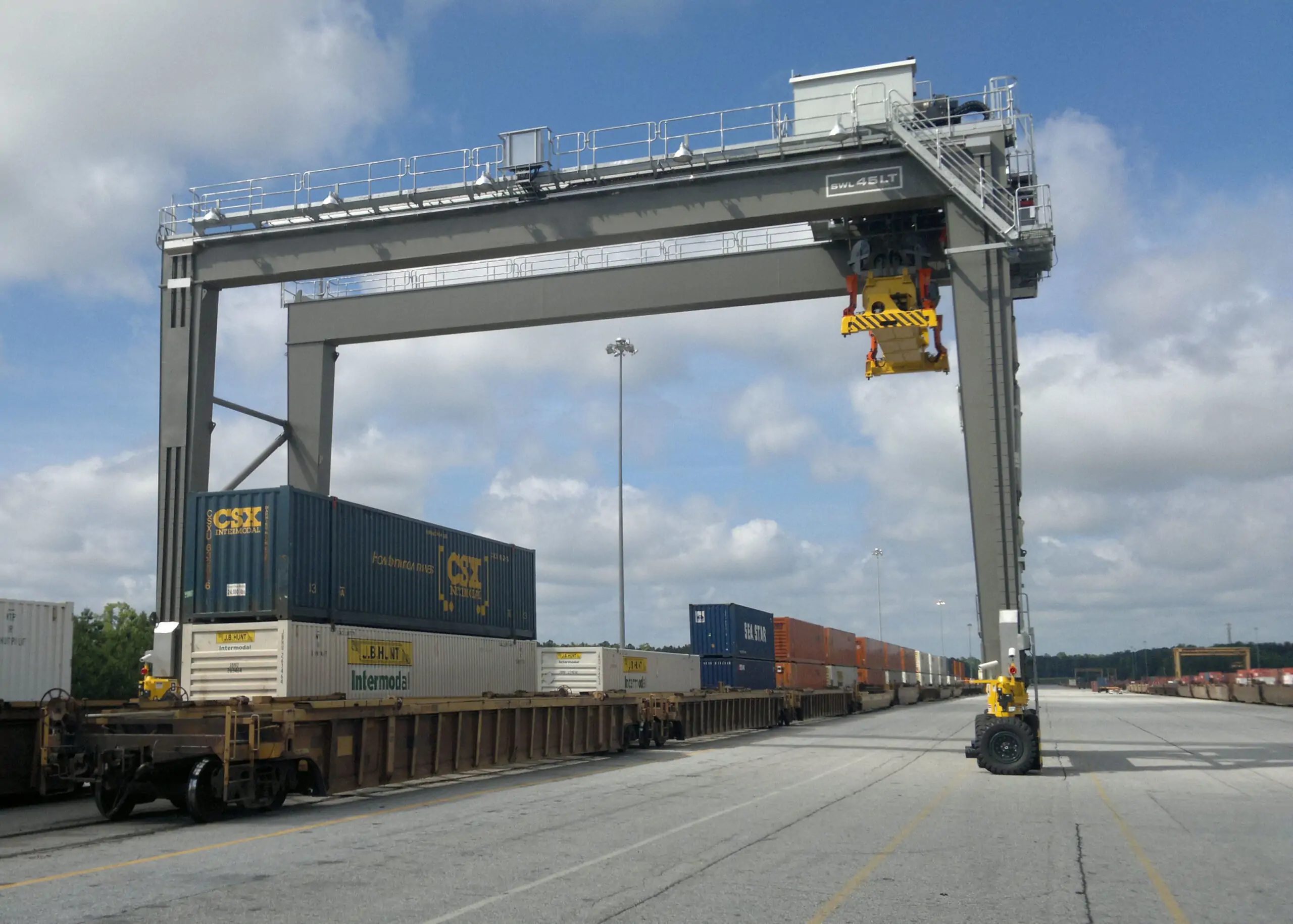
RTG (Rubber Tire Gantry Crane) is a trackless mobile lifting equipment, relying on rubber tires to walk, without the need for a fixed track. It is mainly used in container terminals, logistics yards, assembly sites, wind power and steel plants, responsible for lifting, stacking and transferring containers, heavy components and large equipment.
Compared with traditional lifting equipment, RTG has four core features, which are also the core foundation of its flexible operation:
- Trackless free movement: equipped with heavy-duty rubber tires, no need for tracks, can walk freely in the hardened field, changing lanes, changing positions, breaking through the limitations of the fixed operating area;
- Large-span operation structure: the large oversized rack span can cover 5-10 columns of container stacks and truck passages, with a wide operation coverage, and a single operation can take care of multiple columns of stacking area;
- High stacking and heavy load capacity: supports 4-6 layers of container stacking at high level, rated load can reach 35-65 tons, stable operation and excellent load capacity under heavy load condition;
- Diversified power adaptation program: standard with diesel, pure electric, hybrid three power modes, can be flexibly adapted to indoor and outdoor, with or without utility power and other different operating scenarios, environmental adaptability is very strong.
With the above advantages, RTG completely solves the shortcomings of RMG rail cranes, which are fixed in the area and can not be flexibly dispatched. RTG can be freely repositioned and operated across the area according to the working conditions of the yard, and it is the core equipment of the modern flexible intelligent yard.
Why Flexible Movement Matters in Container Yards
Port and logistics yard operations are highly dynamic, high intensity, and the volume, schedule, and type of cargo change at any time, making it difficult for traditional fixed equipment to adapt. RTG's flexible mobility can effectively solve all kinds of operational pains in the yard, and is the key guarantee for efficient operations.
Adaptation to Dynamic Demands
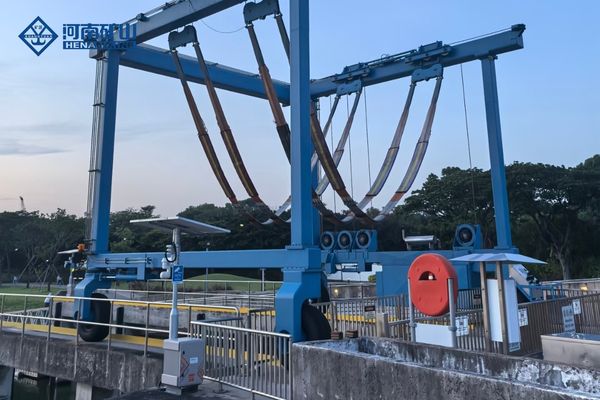
Container yard operation conditions are complex and random, and there are large differences in the operational needs of various types of container zones. Traditional rail equipment operating range is fixed, can not cross-regional flexible scheduling, it is difficult to cope with sudden cargo transfer, emergency stacking and other temporary operational needs.
RTG cranes can be based on real-time operational priorities quickly moved to fill the position, flexible disposal of various types of unexpected tasks, accurately adapt to the dynamic and variable operational rhythm of the yard, effectively make up for the shortcomings of the traditional equipment operations.
Better Space Utilization
Port yard land resources, the traditional rail cranes need to be preset fixed operating channel, the site layout is highly solidified, can not flexibly adjust the stacking area, it is difficult to achieve high-density stacking of containers, resulting in a serious waste of space resources in the yard, the overall utilization rate is low.
On the contrary, RTG cranes, relying on the advantages of trackless flexible operation, can be freely adjusted to the operating blocks, flexible planning access and stacking area, support for high-density, intensive container stacking, to maximize the revitalization of the yard's limited land resources, and significantly enhance the storage capacity and cargo throughput.
Reduced Congestion and Faster Turnaround
The yard is a multi-equipment cross-cooperation operation scene, transportation vehicles, lifting equipment to and from frequent, very prone to channel congestion, vehicle queuing and other problems, directly slowing down the overall cargo turnover rhythm, restricting the yard to improve operational efficiency.
RTG cranes with flexible cross-area shifting, rapid replenishment capabilities, on-demand deployment of the operating area, effectively clearing the yard operation congestion, significantly reducing the length of standby time of transportation vehicles, shorten the cargo detention cycle, and enhance the overall efficiency of the yard turnover and smoothness of operations.
Lower Infrastructure Costs
Traditional rail cranes need to lay special tracks, large infrastructure investment, high maintenance costs, and difficult to change after the track layout is finalized, resulting in yard expansion, block reconfiguration and functional upgrades are extremely limited, the overall flexibility is extremely poor.
In contrast, RTG cranes do not need to rely on track infrastructure, relying only on leveling the hardened ground can be stable operation. In the face of yard expansion, reconfiguration of the layout and adjustment of working conditions, only flexible changes in the scope of operation can be quickly adapted to the low difficulty of transformation, fast landing, the overall operating costs are better, with significant economic and site adaptation advantages.
Resilience and Redundancy
During the operation of the yard, equipment failure, site maintenance, bad weather, operational accidents and other emergencies, it is very easy to cause local operation area blocking restrictions. Traditional rail crane operation path is fixed, can not be detoured, once the area is blocked will be directly shut down, triggering the paralysis of the entire operation block, seriously affecting the overall operating rhythm of the yard.
RTG cranes, with the core advantage of flexible movement without rails, can easily bypass the obstructed area. At the same time, the equipment can be quickly replaced, seamless succession of operations, effectively avoiding a single point of failure triggered by the whole operation stagnation, and significantly improve the fault-tolerance ability of the yard operation, stability and emergency anti-risk level.
How Rubber Tyred Gantry Cranes Enhance Mobile Lifting Flexibility
RTG's flexible operation ability comes from a full set of special hardware configuration, the walking system, steering structure, operation parameters and power system synergistically, to realize the trackless stable and flexible operation.
Rubber Tyre without Rails
Trackless rubber tires are the core configuration that distinguishes RTG from traditional cranes. The equipment is equipped with 8-wheel/16-wheel heavy-duty rubber tires, integrating wear-resistant, load-bearing and shock-absorbing, which can drive smoothly on hardened sites such as concrete, asphalt, gravel, etc., and is suitable for slightly undulating ground without damaging the site, and is suitable for various scenarios such as harbors, prefabricated factories, and construction sites.
The equipment can run smoothly on concrete, asphalt, gravel and other types of hardened sites without relying on the track to fix the limit. At the same time, the rubber tires have good shock absorption performance, which can be adapted to slightly uneven ground, and will not crush or damage the ground, which is perfectly suitable for port yards, prefabricated component factories, construction sites and other scenes that require ground protection.
360° Maneuverability
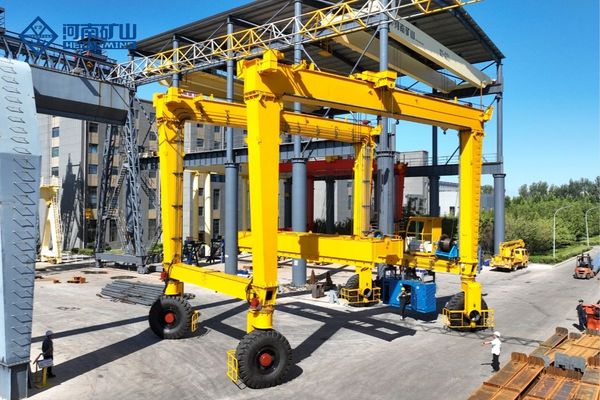
Equipped with high-precision intelligent steering system, RTG realizes 360° full-area steering without dead angle. With extremely small turning radius, RTG can flexibly complete the change of direction, turnaround and obstacle avoidance operations in narrow yard passages and dense container cargo areas, with strong adaptability to the site.
Different from traditional lifting equipment, RTG can accurately reach any point of operation in the yard, perfectly combining ultra-high operational flexibility and high-precision lifting and positioning capabilities, fully adapted to the complex, narrow, high-density modernization of the yard operating conditions.
Adjustable Span and Height
The gantry span and lifting height of RTG cranes can be adjusted according to individual needs. The flexibly adjustable span of the gantry can be adapted to the different number of container rows and the width of the site aisle, greatly expanding the coverage of the equipment for a single operation;
The adjustable lifting height is perfectly adapted to differentiated operational requirements such as multi-layer container stacking and overhead component lifting, which is compatible with all kinds of cargo specifications and complex working conditions, further expanding the flexible operational boundaries of the equipment and comprehensively enhancing the adaptability of the site.
Diversified Power Adaptation Solutions
RTG provides three power modes: diesel, pure electric and hybrid.
- The diesel-powered version has a long range and strong independent operation, and does not require external power supply, so it is perfectly adapted to outdoor operation scenarios in the field and without utility coverage;
- The pure electric version is energy-saving and environmentally friendly, with low noise and zero emission, which is highly suitable for the low-carbon operation standard of green and intelligent harbor;
- The hybrid version can intelligently switch power modes according to the operating conditions, taking into account the long range and low energy consumption, and guaranteeing the continuous, stable and flexible operation of the equipment in the complex and changeable site environment.
The Role of Technology in Enhancing Flexibility
While the hardware realizes the basic flexible movement, the intelligent system upgrades the RTG operation into precise, efficient and controllable flexible operation, which solves the pain points of trackless equipment such as easy to deviate, weak synergy and poor positioning.
- GPS positioning and fleet management system: high-precision GPS positioning can upload real-time equipment position, speed and operation status, and the supporting fleet management system can intelligently check operation bottlenecks, dynamically dispatch equipment, plan optimal driving routes, avoid congestion and forbidden zones, reduce ineffective movement, improve overall dispatching efficiency, and at the same time, accumulate operation data for operation optimization.
- Anti-sway and automatic steering system: equipment movement, acceleration and deceleration, and steering easily cause the load to sway, which affects safety and efficiency. RTG intelligent anti-sway system can monitor and offset cargo sway in real time, supporting faster and smoother movement of the equipment. With the automatic steering function, it can accurately travel along the preset path, reduce labor intensity and improve the stability of complex site operations.
- Obstacle Detection and Collision Avoidance System: Dense equipment in the yard, many blind spots in the field of vision, and high risk of collision, RTG is equipped with multiple detection devices such as radar, camera, and LIDAR, which can identify obstacles for personnel, vehicles, and cargo in real time, and automatically decelerate, avoid obstacles, and apply emergency braking to ensure the equipment operates flexibly and safely in the complex and dynamic site.
- Remote Monitoring and Predictive Maintenance System: RTG is equipped with sensing devices in the whole area, uploading real-time data such as position, load and working condition to the remote platform. Managers can remotely monitor the status, timely dispatch maintenance, and rely on predictive maintenance to detect hidden faults in advance, reduce downtime, and ensure continuous and stable flexible operation of the equipment.
Operational Advantages of Enhanced Flexibility
Relying on the multiple empowerment of hardware, intelligent technology and automation, RTG's flexible mobility can realize multiple values of cost reduction, efficiency improvement and quality improvement for yards and projects.
Efficiency Improvement
Compared to traditional rail cranes, which are fixed and cannot be flexibly dispatched, RTG cranes are completely free from the shackles of the rail, have the advantages of free shifting throughout the region, dynamic and rapid replenishment, and can be flexibly deployed according to the real-time operating load of the yard, congestion in the cargo area and the priority of the operation.
This feature completely avoids the problems of traditional equipment standby, inter-area operation obstruction, cumbersome and time-consuming transfer, and significantly compresses the ineffective time-consumption of equipment standby waiting and inter-area scheduling.
In the core operations such as container lifting, stacking and transshipment, RTG can realize seamless and continuous operation, accelerate cargo turnover efficiency, shorten the time spent in the cargo yard, ease the congestion and backlog of cargo in the yard, and effectively increase the daily operation volume and overall cargo throughput of the yard.
Flexible Adaptation Layout
With the fluctuation of freight market demand, cargo specifications diversification and upgrading, the traditional fixed equipment supporting the curing of the site layout, very easy to adapt to the lag, site rigidity, transformation difficulties and other issues, seriously restricting the upgrading and development of the yard.
RTG cranes get rid of the rail infrastructure and the exclusive operation of the boundaries of the channel, no special transformation requirements for the site. In the face of yard expansion, layout adjustment, cargo update and other types of upgrading needs, the equipment can be quickly adapted to the new site planning, without the need for high transformation costs and a long construction cycle, can be efficiently adapted to the dynamic upgrading of the yard and modular reconfiguration, for the flexible iterative development of the yard to provide strong support.
Multi-scene Adaptation
RTG crane scene adaptability is extremely strong, breaking the limitations of the traditional lifting equipment operating scene, can be in the port yard, logistics hub, steel factory, assembly site, wind power site, large civil engineering and other types of complex sites stable operation.
The equipment is suitable for a wide range of categories, not only to complete the stacking and transfer of standard containers, but also capable of heavy steel components, prefabricated building modules, large-scale wind power equipment, construction machinery parts and other types of heavy-duty bulky cargo lifting and shifting operations.
With excellent heavy-duty performance and trackless flexible operation capability, a single RTG can cover the core lifting needs of multiple industries and working conditions, truly realizing multi-purpose and cross-scene generalization, and significantly improving equipment utilization to meet the diversified and comprehensive operational needs of enterprises.
Reduce Operating Costs
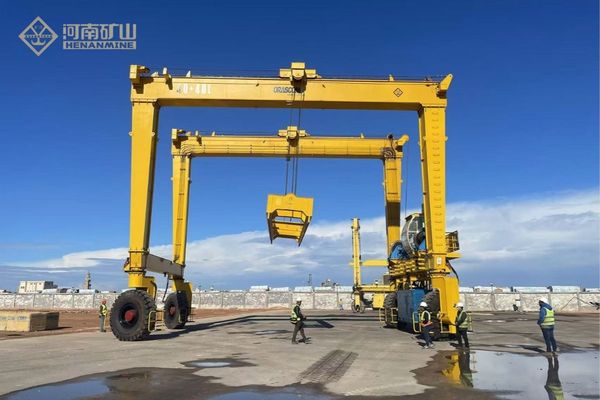
RTG all-in-one machine integrated lifting, shifting, stacking, transferring and other multi-functional in one, revolutionized the traditional yard of multiple equipment division of labor mode of operation. Traditional operation requires multiple auxiliary equipments, high investment in procurement, labor and maintenance, complicated operation process and high operation cost.
However, RTG can cover most of the core operation processes in the yard with a single device, significantly reducing the procurement and deployment needs of forklifts, trailers and other auxiliary equipment, effectively streamlining the on-site operation chain, and avoiding the redundancy of processes and efficiency loss brought about by the cross-operation of multiple devices.
At the same time, the reduction in the total amount of equipment can significantly reduce the subsequent maintenance of equipment, parts replacement, fuel and power consumption and labor payroll and other ongoing expenses, significantly compressed the overall operating costs of the yard, effectively improve the site operational efficiency and resource utilization, optimize the yard's input/output ratio in all aspects, and achieve refined cost reduction and efficiency for the enterprise.
Enhance Operational Safety
RTG cranes are equipped with a full set of intelligent safety configurations such as intelligent anti-sway, automatic obstacle avoidance, precise positioning and remote monitoring, which builds up an all-round and three-dimensional safety operation protection system. Intelligent anti-sway system can inhibit the swaying of cargo during lifting in real time, and eliminate the risk of cargo shifting when moving, turning, starting and stopping heavy loads;
The automatic obstacle avoidance device relies on multi-dimensional sensing recognition to accurately avoid the safety hazards brought by the blind area of the site, cross operation equipment and personnel; the high-precision positioning system ensures that each lifting and stacking operation is accurately aligned to reduce operational errors;
Remote monitoring can monitor the working condition of the equipment in real time and warn of failures in advance. Multiple intelligent configurations collaborate to avoid all kinds of safety hazards, making RTG flexible operations safer and more stable, perfectly adapting to the high-intensity, complex operating conditions in the yard, and enhancing the overall operational safety factor and operational stability in an all-round way.
RTG Flexibility Application Cases
- Port Container Yard: The cargo area of the comprehensive port yard is complex, covering general containers, cold containers, hazardous chemical containers and other divisions. Traditional rail equipment can't work across zones, which is easy to cause congestion and lagging, RTG can freely shuttle between various cargo zones, quickly arrive at the target point, efficiently complete loading and unloading transshipment, and ensure the rapid turnover of port cargo.
- Industrial production plants: there are a lot of oversized and heavy steel components and machine tool parts in heavy plant areas, which need to be transferred frequently across workshops. RTG can independently complete cross-area heavy-duty transportation by virtue of its heavy-duty capacity and trackless mobility, which simplifies the production process and improves the efficiency of transferring in the plant areas.
- Construction projects: There is no fixed lifting infrastructure at assembly and civil construction sites, and the operation area changes dynamically with the project, so traditional rail equipment cannot be used. RTG does not need special rails, and can work directly on the hardened ground, and flexibly lift all kinds of building materials and prefabricated modules, which is suitable for the dynamic construction scenarios and ensures the progress of the project.
Conclusion
RTG cranes have a solid structure, flexible mobility and high degree of intelligence, and can safely and efficiently complete container loading and unloading operations by relying on multi-directional travel, adjustable parameters, multi-mode power supply and positioning, anti-swing, anti-collision and other intelligent technologies.
Compared with traditional equipment, RTG has high site utilization rate, low infrastructure demand and wide adaptability, which can help users optimize the layout, reduce costs and stabilize operations. Electric and unmanned RTGs are in line with the trend of intelligent and low-carbon development of ports, and are the key equipment for the construction of smart ports, which will help the upgrading and development of many industries.
Henan Mine Crane is deeply engaged in the field of crane manufacturing, and can provide customized RTG solutions for ports, logistics yards, industrial handling and other scenarios, helping customers to improve quality and efficiency, safe operation, and enhance long-term operational value.