
What Overhead Crane Design Works Best for Long Travel Distances
In industrial scenarios such as large-scale factories, warehousing and logistics centers, heavy industrial production workshops, and port depots, long-stroke bridge cranes are the core equipment for material handling and heavy equipment hoisting.Unlike conventional short-stroke cranes, long-distance operating conditions have extremely high requirements for the stability, accuracy, durability and operating efficiency of the crane.Many companies often face difficult problems in equipment selection. Which bridge crane design is most suitable for long-stroke operation?What are the hidden dangers of equipment caused by long-distance operation?How to improve the performance of crane operations under long track paths through design optimization and selection adjustment?
What Makes Long Travel Distance Challenging for Overhead Cranes
Travel distance
Most of the operating travel of conventional bridge cranes is concentrated within 50 meters, while the operating distance of Henan Mine Crane Factory supply long-travel overhead crane can usually reach 100 meters or even hundreds of meters.The long operating path will directly amplify the mechanical loss and operating deviation of the equipment, which is the core source of all working conditions problems.First of all, the main beam, end beam, and walking mechanism of the crane need to be continuously operated for a long time, and the fatigue and wear rate of the metal structure will be greatly accelerated. Compared with short-stroke equipment, the probability of deflection deformation of the main beam and loosening of components is significantly increased.Secondly, long-distance operation will accumulate positioning errors, and the small walking deviations that can be ignored in the short stroke will be continuously magnified in the 100-meter stroke, which will eventually lead to inaccurate alignment of the hook and reduced operating accuracy, which cannot meet the needs of precision hoisting.At the same time, long-stroke operations will extend the single handling cycle. If the equipment design adaptability is insufficient, it will directly reduce the operating efficiency of the entire production line.
Runway alignment
The crane operating track is the basis for the equipment to walk, and the installation accuracy, flatness, and straightness of the track directly determine the stability of long-stroke operations.Under short-stroke conditions, the slight high-low deviation, left-right offset, and gap error of the track will not have a significant impact on the operation of the equipment, but in the long-distance track system, small deviations will form a cumulative effect.Local unevenness of the track will cause bumps and catons when the crane is walking, and long-term operation will wear out the wheels, reducers, and walking motors.The deviation of the left and right alignment of the track exceeds the standard, which will cause the crane to gnaw the rail. Not only will the wheels and the sides of the track be quickly worn, but it will also produce severe noise and vibration. In severe cases, it will cause equipment to deviate and derail. Safety hazards.In addition, long-distance tracks are affected by plant sedimentation, temperature, thermal expansion and contraction, and long-term load extrusion, which are prone to deformation and dislocation, which further exacerbates operating failures and greatly increases the equipment failure rate.
Load stability
Heavy object shaking and load offset are common problems in long-travel overhead crane operations.During the long-distance walking of the crane, the inertial force will continue to act on the lifting of heavy objects during the whole process of starting, running at uniform speed, decelerating and stopping.Short-stroke operations start and stop frequently but the stroke is short, and the shaking amplitude is controllable.During the long-stroke uniform speed operation phase, the inertia generated by the continuous movement of the equipment will cause the heavy objects to swing continuously. Once the track bumps, wind speed interference, and motor speed fluctuations are encountered, the load shaking will intensify sharply.Unstable loads will not only reduce the accuracy of hoisting, which is likely to cause material collisions and workpiece damage, but also increase the force load on the equipment, resulting in uneven force on the core components such as the main beam, wire rope, hook, etc., accelerate the aging of the components, and even cause safety accidents caused by heavy objects falling, which greatly limits the safety and stability of long-travel overhead crane operations.
Travel frequency
Most of the production scenarios adapted to long-stroke working conditions are continuous and large-volume operations. The daily operating frequency and continuous operation time of the crane are higher than that of ordinary equipment.High-frequency and long-distance reciprocating operation will keep the walking mechanism, transmission system, and electrical control system in a high-load working state for a long time.The transmission components such as motors, frequency converters, and reducers continue to heat up, which is prone to overheating protection and performance attenuation.The high-frequency friction of mechanical components such as wheels, bearings, and brakes doubles the wear speed, and it is extremely prone to problems such as brake failure and walking caton.At the same time, the continuous vibration caused by high-frequency operation will lead to loose equipment bolts, aging lines, and poor contact with electrical components, which will greatly shorten the service life of the equipment, increase the probability of downtime and maintenance, and affect the continuous production of enterprises.
Which Overhead Crane Design Is Best for Long Travel Distances?
Single-girder cranes
Henan Mine Crane Factory supply single-beam bridge crane is widely used in light and medium-sized long-stroke operation scenarios with the advantages of light structure, low cost and easy installation.This model adopts a single main beam structure, with light overall weight, small walking load, lower energy consumption during long-distance operation, stable operating speed, and is suitable for long-distance material handling within 10 tons, low frequency and light load.In long-stroke and low-load working conditions such as light-duty factories, small storage workshops, and assembly line auxiliary hoisting, the cost-effective advantages of single-girder cranes are extremely prominent.However, it is limited by the rigidity and bearing capacity of the single-beam structure, the span and deformation resistance of the main beam are limited, and the main beam is prone to deflection and equipment shaking during long-distance heavy-duty operation. Therefore, it is only suitable for light-load, low-frequency, medium- and small-span long-stroke conditions, and cannot meet the needs of heavy-duty industrial operations.
Double-girder cranes
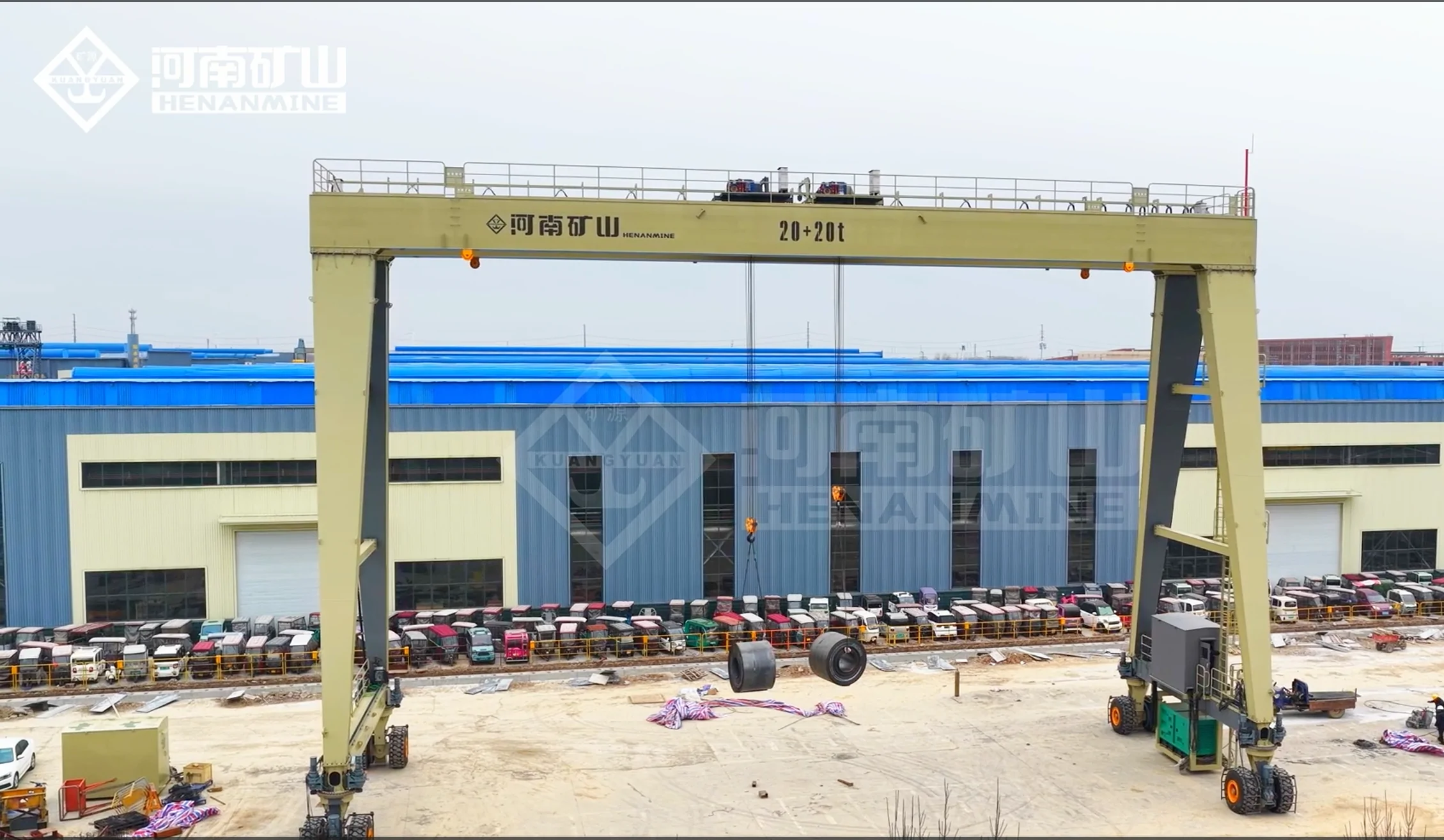
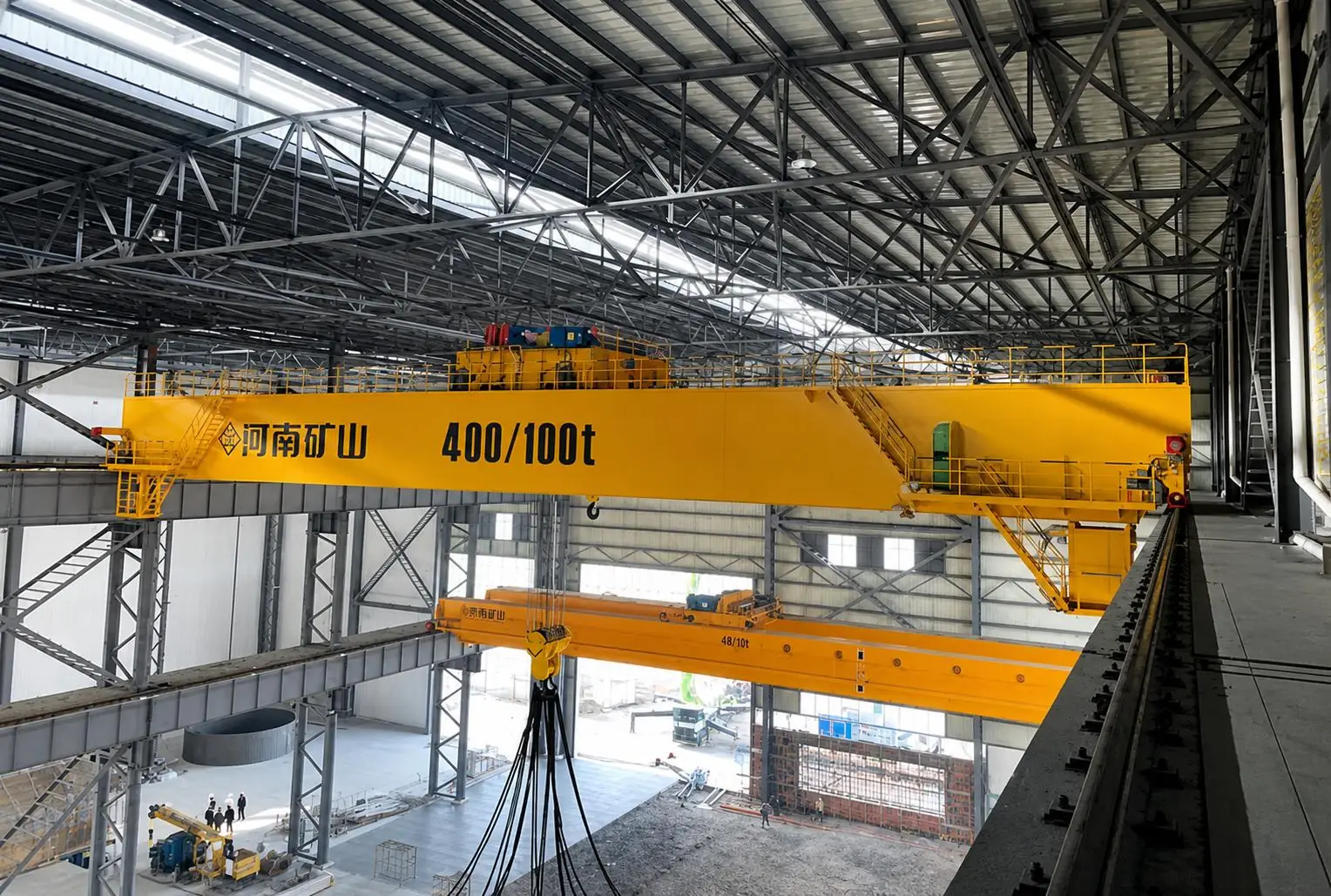
Double-girder bridge crane is the optimal core model for long-stroke, medium- and heavy-duty working conditions.The equipment adopts a symmetrical structure of double main beams, with strong overall rigidity, good load-bearing performance and excellent deformation resistance, which perfectly solves the pain points of long-distance heavy-duty single-girder cranes that are easy to deform and have poor stability.The double-beam structure can evenly disperse the vibration, inertial force and load pressure generated during long-stroke operation. The deflection deformation of the main beam is very small, and the whole process runs smoothly, greatly reducing the probability of heavy objects shaking and equipment deviation.At the same time, the double-girder crane can be equipped with a higher-power drive system, precision control module and anti-shake device, which is suitable for ultra-long travel above 100 meters, high-frequency continuous operation, and wide load coverage, which can meet the needs of heavy lifting from 10 tons to hundreds of tons.In long-stroke heavy-duty scenarios such as heavy industrial plants, large-scale processing workshops, and heavy equipment transshipment, the stability, durability, and operating efficiency of double-girder cranes far exceed that of single-girder models. It is the preferred design for industrial long-travel overhead crane.
Top-running cranes
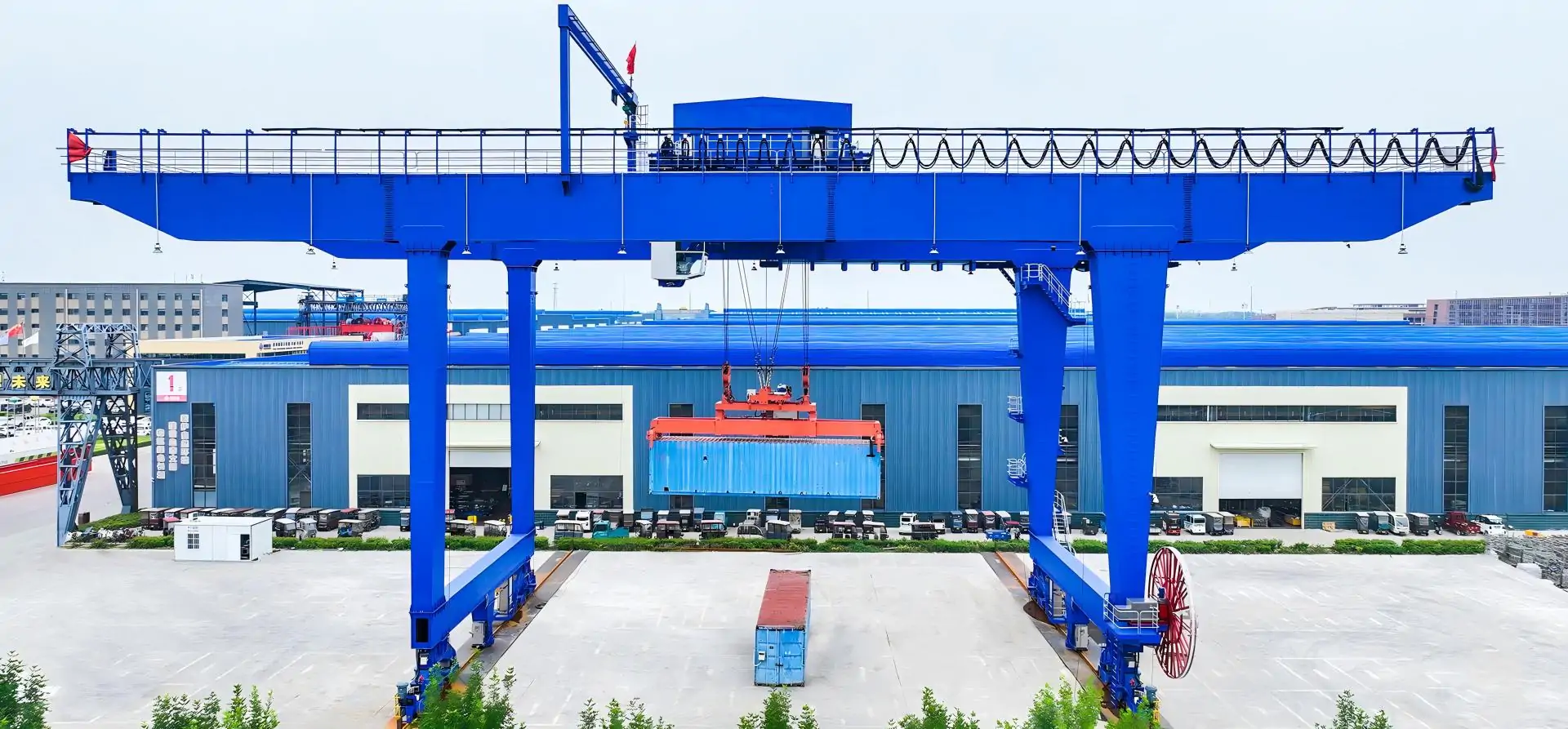
Henan Mine Crane Factory supply upper rail crane is a classic rail design model adapted to long-stroke operation. Its walking wheels are directly laid on the top of the crane beam track, and the track has strong load-bearing capacity, uniform force, and low operating resistance.Compared with side-mounted and bottom-mounted cranes, the overall stability of the upper rail structure is higher, and it is not easy to offset and caton during walking, and the probability of gnawing the rail is extremely low.The core advantage of this design is that it has excellent smoothness and high fault tolerance for long-distance operation, can adapt to small deformation of long-distance tracks, and continuously maintains stable walking.At the same time, the drive system of the upper rail crane is reasonably arranged, the transmission efficiency is high, it supports long-distance high-speed and smooth operation, and the equipment maintenance is convenient, which is suitable for long-term high-frequency and long-stroke operations.Whether it is a single-beam or double-beam structure, with the upper rail design, the performance of long-stroke operations will be greatly improved, which is the mainstream track configuration scheme for long-stroke conditions.
Long-span applications
Long-travel working conditions are often accompanied by the needs of long-span operations. The long-span long-travel overhead crane is specially designed for the operation scenarios of wide factories and long passages.This type of model is based on the double-beam upper rail structure. By optimizing the cross-section of the main beam, strengthening the end beam structure, and upgrading the walking balance system, it solves the problems of equipment shaking, deformation, and deviation under long-span and long-distance dual working conditions.The track adaptability of the long-span long-travel overhead crane is stronger, and it can be adapted to a large working space with a stroke of 100 meters and a span of tens of meters. At the same time, it is equipped with an enhanced walking drive and stabilization system, which can maintain accurate, stable and efficient hoisting operations in a wide range of working areas. It is widely used in large steel structure factories, power equipment workshops, large-scale warehousing in ports and other large-space industrial scenes.
Key Design Features for Long Travel Cranes
Travel drive system
The walking drive system is the core power core of long-travel overhead crane, which directly determines the smooth operation and battery life of the equipment.Long-travel overhead crane must adopt a two-sided synchronous drive system to replace the traditional one-sided drive structure to ensure that the power output of the walking mechanism at both ends of the crane is balanced, and the problems of deviation and rail gnawing caused by power deviations are effectively avoided.The drive system needs to be equipped with a hard tooth surface reducer with a reasonable reduction ratio, which has high transmission efficiency, wear resistance and wear resistance, and can be adapted to high-frequency and long-distance continuous operation to reduce transmission loss and the probability of failure.At the same time, the integrated drive module can achieve stable power output, start and stop without impact, reduce equipment vibration and load shaking from the source of power, and adapt to ultra-long-distance stable operation.
Wheel configuration
Reasonable wheel configuration is the key to solving the serious problems of long-stroke deviation and wear.Conventional short-stroke cranes use a four-wheel basic configuration, while long-travel overhead cranes need to optimize the wheel structure according to the stroke length, equipment weight, and load capacity, and adopt a balanced multi-wheel configuration.By increasing the auxiliary walking wheels, the contact pressure between the equipment and the track is dispersed, and the problems of excessive wear and track pressure loss caused by excessive pressure on a single wheel are avoided.At the same time, it is equipped with accurate wheel positioning technology to ensure that the parallelism and verticality of the wheels are up to standard, and the phenomenon of rail gnawing and deviation is eliminated structurally.Some ultra-long-stroke heavy-duty cranes will also adopt an adjustable wheel structure, which can fine-tune the wheel spacing and angle according to the deformation of the track, adapt to the slight deviation of the long-distance track, and greatly improve the fault tolerance rate and service life of the equipment.
Motor and VFD control
Long-travel overhead crane must not use ordinary fixed-speed motors, it must be equipped with a dedicated frequency conversion motor + VFD frequency conversion control system.The frequency conversion control system can realize stepless speed regulation, accurately control the whole process of starting, acceleration, uniform speed, deceleration, and parking of the crane, and completely solve the problem of large start-stop impact and unstable speed of the fixed-speed motor.Speed up slowly at the beginning to avoid the sharp shaking of heavy objects caused by the sudden increase in inertia.Keep the speed constant during operation to ensure smooth long-distance walking.When parking, it descends at a uniform speed, with precise alignment and no offset.At the same time, the VFD system has overload protection, overheating protection, and fault self-test functions, which can effectively avoid motor overload and electrical failure caused by high-frequency and long-distance operation, improve equipment operation safety and stability, and reduce energy consumption and operation and maintenance costs.
Anti-sway system
The anti-swing system is the core configuration of long-travel overhead crane to improve the accuracy and safety of operations.Inertial shaking and orbital bumps caused by long-distance walking are the main problems that affect the operation effect.The intelligent anti-swing system can collect equipment operating speed, displacement, and load swing data in real time, accurately correct the start-stop rhythm and operating speed through algorithms, actively offset the inertia of heavy objects, and control the swing amplitude of hoisted heavy objects to a very small range.Even in the working conditions of ultra-long stroke, high-speed operation, and frequent start and stop, the load stability can be guaranteed, and the problems of material collision and workpiece damage can be eliminated.At the same time, the anti-swing system can greatly improve the alignment efficiency, reduce manual fine-tuning time, and significantly improve the overall operating efficiency of long-distance handling.
Runway design
The track design adapted to long-stroke working conditions is the basis for the long-term stable operation of the equipment.The long-travel overhead crane track needs to use high-strength special steel rails, which have strong load-bearing capacity, wear-resistant and deformation-resistant, and can withstand the weight and heavy-duty pressure of the equipment for a long time.Track installation needs to strictly control the straightness, level, and parallelism, and accurately calibrate the whole process to eliminate local height differences and left-right offsets.At the same time, the temperature expansion joints need to be reserved to adapt to the thermal expansion and contraction of the track caused by seasonal temperature differences, so as to avoid deformation and extrusion of the track.In addition, long-distance tracks need to be equipped with special track fixtures and cushioning devices to prevent long-term force loosening and displacement of the track, avoid deviation, caton, derailment and other failures from the hardware level, and ensure the smooth operation of the crane over long distances.
How to Improve Crane Performance Over Long Runways
Travel speed
The speed setting of Henan Mine Crane Factory supply Long-runway overhead crane needs to take into account efficiency and stability, and must not blindly pursue high speed.According to different job scenarios, the hierarchical speed mode needs to be optimized. The no-load return journey can appropriately increase the operating speed, shorten the no-load time, and improve work efficiency.Heavy-duty walking needs to reduce the uniform speed, reduce inertial shaking, and ensure stable load.The low-speed fine-tuning mode is used in the close-range alignment stage to improve accuracy.Through the frequency conversion system, exclusive speed parameters are customized to realize the differentiated operating mode of “high-speed rush, low-speed alignment, and stable heavy-duty travel”, and the efficiency of long-stroke operations is maximized under the premise of ensuring equipment safety and stable load.
Positioning accuracy
The accumulation of positioning errors in long-track operation is the main problem in precision operations, and the positioning accuracy can be improved through multiple technical optimizations.First of all, it is equipped with an intelligent positioning sensor system to accurately collect crane walking displacement data in real time and automatically correct the position deviation caused by long-distance operation.Secondly, optimize the logic of frequency conversion and speed regulation, and automatically slow down and buffer at the end of the parking stage to eliminate the alignment deviation caused by inertial sliding.Finally, with the dual protection of mechanical limit + electronic limit, the operating point is accurately locked.Through the optimization method of combining hardware and software, the problem of long-stroke cumulative error is completely solved, so that the alignment accuracy of long-distance operation of 100 meters is stable and controllable, and it meets the needs of precision hoisting and precise docking of assembly lines.
Smooth acceleration
Sudden acceleration and rapid deceleration are the core causes of heavy objects shaking and equipment loss.Long-runway overhead crane needs to optimize the acceleration curve and set a flexible start-stop program through the VFD frequency conversion system to achieve gradual acceleration and buffered deceleration.Abandon the instantaneous start-stop mode of traditional equipment, let the speed transition smoothly, no impact, no setbacks, and greatly reduce the impact of inertial forces on the load, equipment structure, and transmission components.Stable acceleration and deceleration control can not only completely improve the problem of heavy object swing and improve operation safety, but also reduce the fatigue and wear of mechanical components, reduce the probability of equipment failure, and extend the service life of the crane.
Rail alignment
Orbital deviation is the main source of long-travel overhead crane failure, and regular orbital calibration is the key to maintaining the high-performance operation of the equipment.Enterprises need to establish a normalized orbit detection and calibration mechanism, regularly use professional instruments to detect the straightness, level, and spacing deviations of long-distance orbits, and correct orbital deformation, offset, and height inequality in a timely manner.Strengthen, repair, and replace the parts of the track that are loose, have too large gaps, and are severely worn in time to prevent small deviations from accumulating into large-scale failures.At the same time, in view of the problems of foundation settlement and temperature deformation of the plant, the overall track leveling and calibration are regularly carried out to ensure the precise alignment of the long-distance track throughout the process, and to solve the problems of rail gnawing, deviation, and caton from the root cause.
Maintenance planning
Long-runway overhead crane operates at high frequencies and long distances for a long time, and the loss of components is faster. Scientific operation and maintenance planning is the core of ensuring the continuous high performance of the equipment.It is necessary to formulate a maintenance plan for exclusive long-stroke equipment, and check the operating status of the walking motor, reducer, wheel, and brake system daily.Weekly detection of track flatness, drive synchronization, and anti-swing system sensitivity.Lubricate the transmission components, tighten the wiring, and calibrate the positioning system every month.Do quarterly structural flaw detection of the whole machine, comprehensive track calibration, and in-depth inspection of the electrical system.Investigate potential faults in advance, replace worn parts in time, avoid small problems accumulating into downtime failures, reduce operation and maintenance costs, and ensure long-term stable and efficient operation of equipment.
How to Select a Long-Travel Overhead Crane
Load capacity
Load is the core and primary basis for selection, and it needs to be accurately selected in combination with the actual maximum lifting weight and the long-term average operating load.For light-load conditions (3-10 tons) and low-frequency long-distance operations, single-beam bridge cranes are preferred, which are more cost-effective.For medium and heavy-duty working conditions (more than 10 tons) and high-frequency continuous long-stroke operations, double-girder cranes must be selected to ensure structural stability and bearing capacity.When selecting the type, it is necessary to reserve 10%-20% of the load margin to avoid accelerated aging, deformation and damage of the equipment caused by long-term full-load operation, and to adapt to the needs of long-term long-distance and high-intensity operations.
Travel distance
According to the actual track running stroke, the configuration of the model is matched, and the short and medium stroke within 50 meters can be adapted to the conventional standard model.For a medium-to-long stroke of 50-100 meters, synchronous drive, frequency conversion control, and basic anti-shake configuration need to be upgraded.For ultra-long travel of more than 100 meters, an enhanced double-beam upper rail crane must be selected, with a multi-wheel balance configuration, an intelligent anti-swing system, and a high-precision positioning module to solve the problems of long-distance error accumulation, deviation, and shaking in a targeted manner to ensure the stability of ultra-long-distance operations.
Span and lift height
The span of the plant and the lifting height of the material directly determine the structural design and configuration level of the Henan Mine Crane Factory supply crane.When large-span factories are equipped with long-stroke working conditions, high-rigidity double-beam structures need to be preferred to strengthen the main beam and end beam to avoid structural deformation and equipment shaking caused by long-span and long-distance operation.At the same time, the hoist lifting system is matched according to the maximum lifting height to ensure stable lifting operation and accurate positioning, taking into account the dual stability of horizontal long-distance walking and vertical lifting, and adapting to the needs of complex space operations.
Duty class
The working level represents the working load and durability level of the crane. It is strictly forbidden to use low-level equipment under long-stroke working conditions.Low-frequency, intermittent long-distance operation, you can choose A3-A4 working level.For high-frequency, continuous 24-hour long-distance cycle operations, and heavy-duty scenarios in heavy industry, A5-A7 high-level cranes must be selected.The structural strength, motor power, wear-resistant components, and electrical systems of high-level equipment have been strengthened and designed to be adapted to long-term, long-distance and high-load operations, with lower failure rates and longer service lives.
Operating environment
Different operating environments need to match the long-travel overhead crane with exclusive protection design.For ordinary indoor drying plants, you can choose the standard configuration model.Workshops with high temperature, dust, humidity, and corrosive gases need to be equipped with dust-proof, moisture-proof, and anticorrosive protection systems, motors and electrical components should be sealed, and metal structures should be anticorrosive sprayed.In outdoor and high-altitude windy scenes, anti-swing and wind-proof braking configurations need to be strengthened to improve the wind-resistant stability of the equipment.Targeted environmental adaptation design can avoid environmental factors exacerbating equipment loss and ensure the stable operation of long-travel overhead crane in various scenarios.
Henan Mine Crane Factory Custom
The core of the selection of long-stroke bridge cranes lies in relying on a mature double-beam upper rail structure, with frequency conversion control, intelligent anti-shake and optimized walking system, while doing a good job in track construction and normalized operation and maintenance, so as to resolve common problems such as track deviation, load shaking, and rapid loss of components in long-distance operations. Problems.There is no need to blindly pile up the configuration, nor can you blindly compress the budget. Customization that fits the on-site working conditions is the best idea.Henan Mine Crane Factory is deeply engaged in the manufacture of lifting equipment, relying on rich project experience to create long-stroke lifting solutions on demand, taking into account stable operation, operating efficiency and equipment life, to help the factory reduce costs and increase efficiency in the long term.