
How to Choose an Electromagnetic Crane for Automated Metal Handling?
Steel mills, scrap yards, metal fabricators are always pushing harder to get more material through quicker, with less experience on the shop floor. The answer is automation, and the electromagnetic crane is the component that allows automated ferrous metal handling to happen at all. However if you get the spec wrong this will end up being a crane that can‘t keep pace with your line, drops material where it shouldn‘t or refuses to communicate with your automation system.
What‘s an electromagnetic crane, why is it the backbone of automated metal handling, and 10 factors that REALLY influence if a crane will be successful in your facility are covered in this guide. Where you should go wrong when buying a crane, questions to ask a supplier before buying a quote, and where you should customize are in here too.
What Is an Electromagnetic Crane?
An electromagnetic crane is an overhead or gantry crane that has an electromagnetic lifting head as opposed to the usual hook, sling, grab, etc. The magnet has a coil through which you send direct current; the resulting magnetic field has enough pull to hold ferrous material. Remove the current and the magnetic field collapses and you drop whatever you had clamped. That simplicity is an advantage when automating repetitive operations, such as separation.
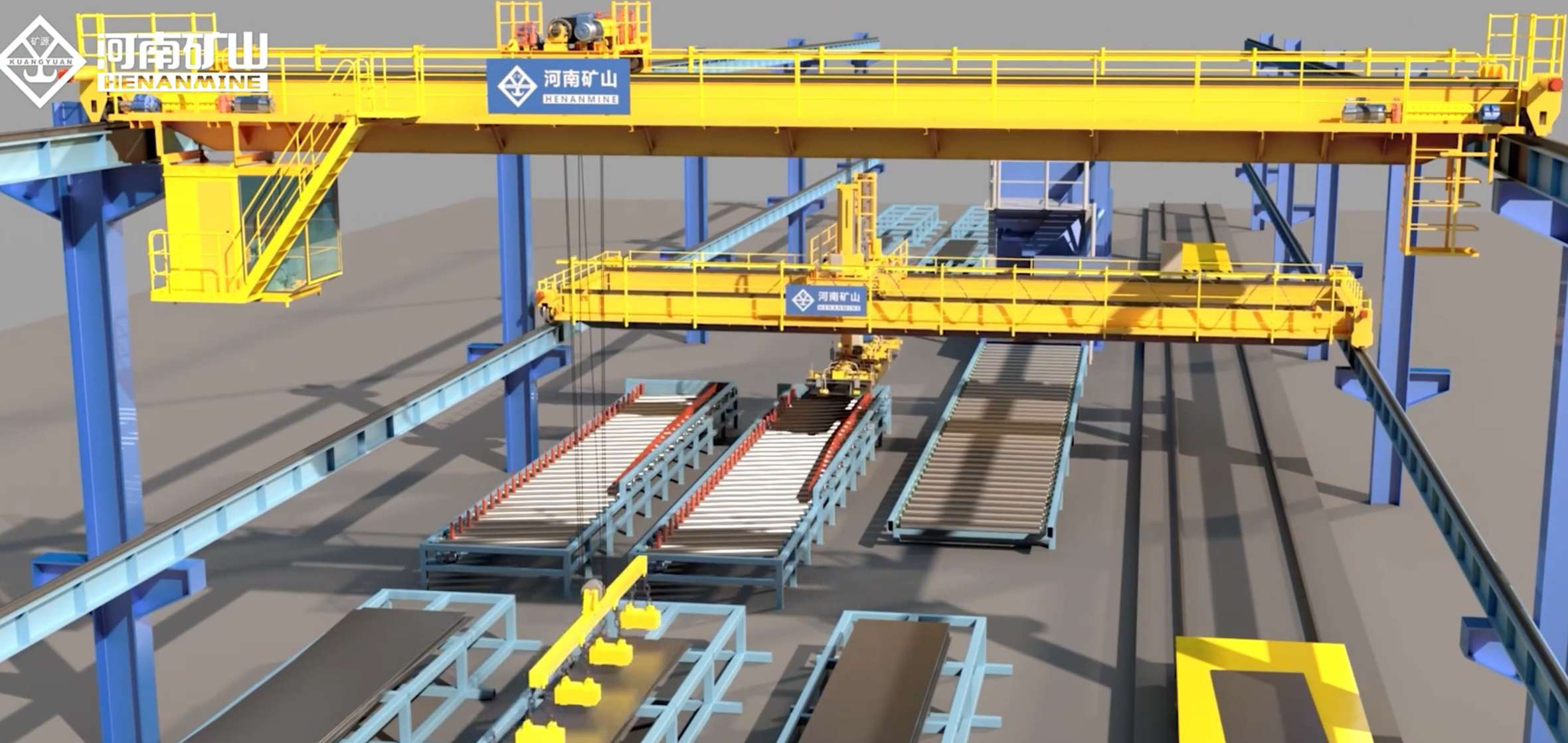
A complete system has four main components:
- Electromagnetic lifting chuck: It is a supporting operation device at the lower end of the hook, which can directly contact and absorb various loads. It is the core executive component to realize material grabbing operation.
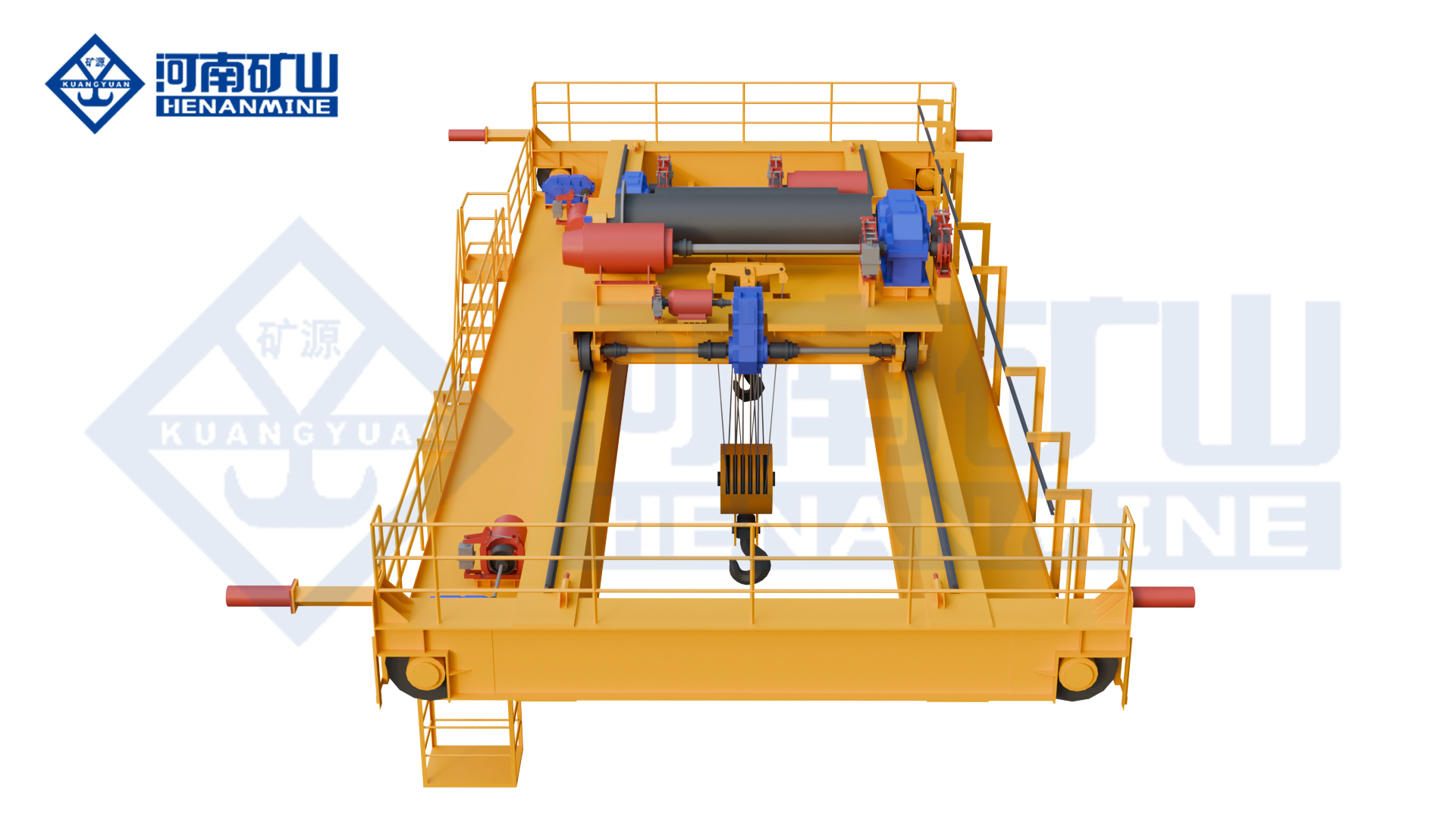
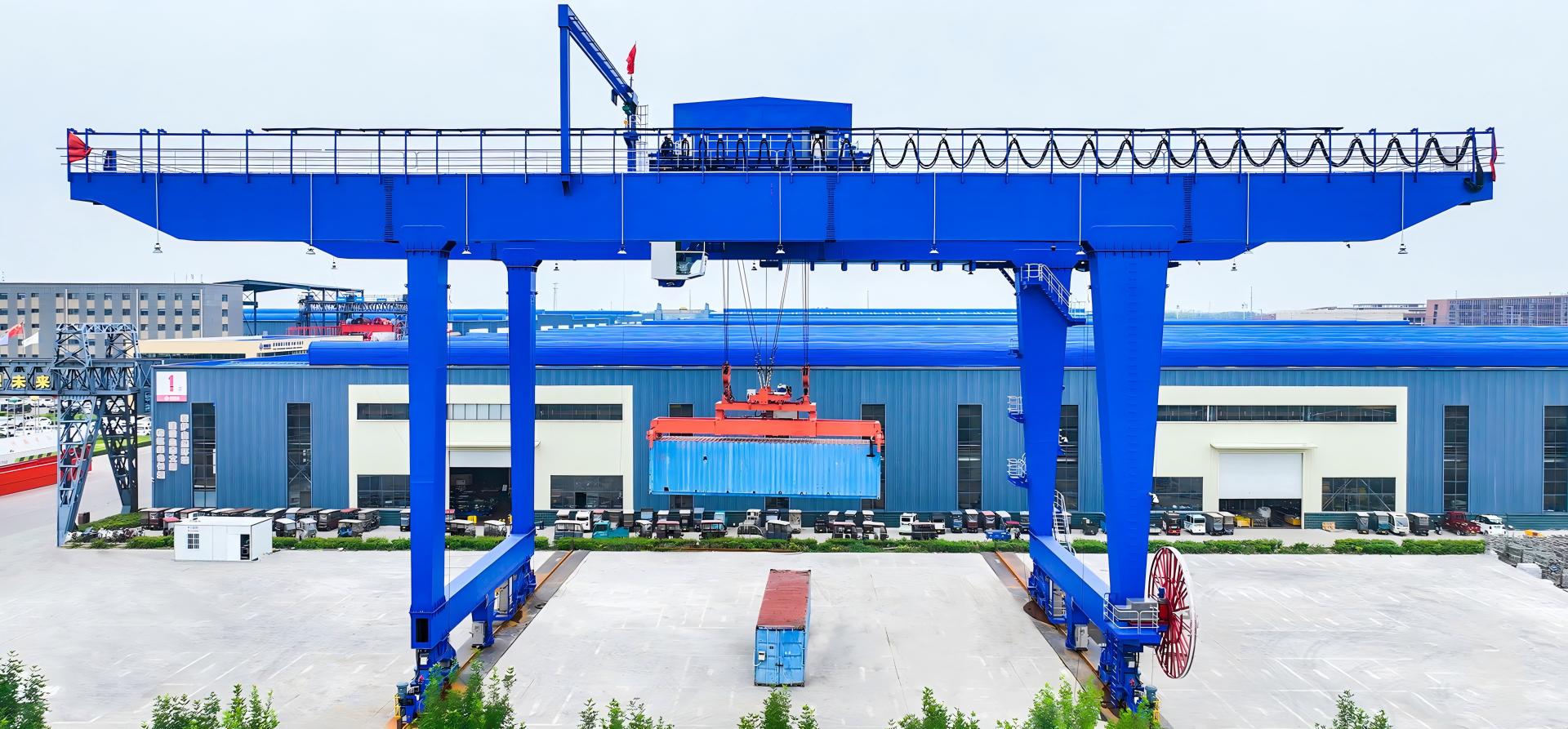
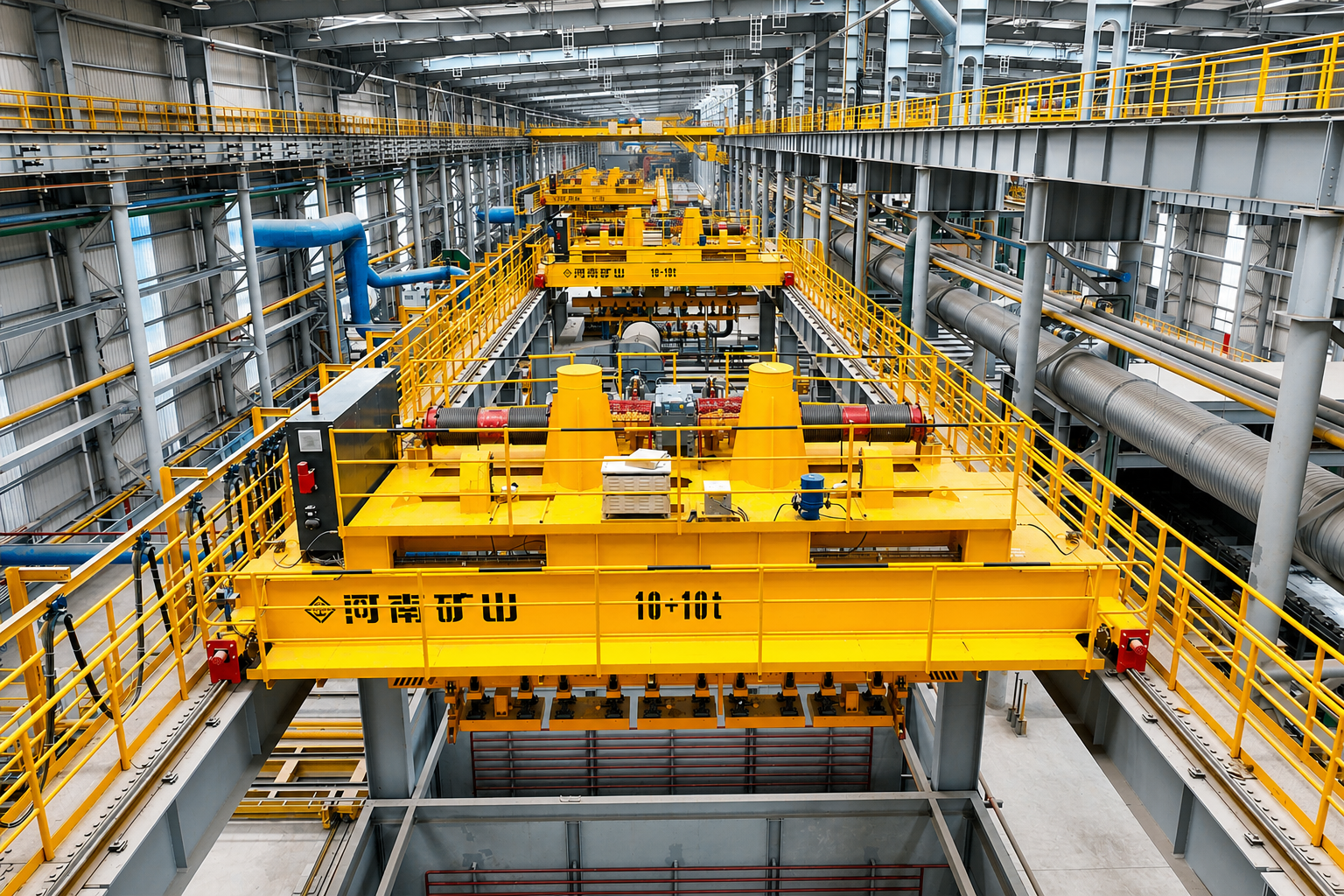
- Bridge/gantry crane: composed of bridge, hoist and walking trolley, mainly used to accurately adjust the operation position of electromagnetic chuck, complete the translation, alignment and positioning of load.
- Control system: the core function is to control the excitation and demagnetization of electromagnet, and at the same time, it can coordinate the whole set of control logic of equipment operation and accurate positioning under automatic working conditions.
- Power supply and cable reel device: stable supply of DC power for the electromagnetic chuck moving dynamically throughout the whole process, accurate control of current transmission status, to ensure continuous power supply and reliable operation during dynamic operation of the equipment.
This, compared to a mechanical grab crane, is the contact and control. A grab crane is a grab against a load with hydraulic or mechanical jaws, requires force and is slow and imprecise, an electromagnetic is an instant grip across a wide, even contact zone and as quick to release, however, only works on ferrous metal and load release is wholly dependent on power quality.
Why Electromagnetic Cranes Are Ideal for Automated Metal Handling
Increased Productivity
Since the magnet engages and releases in less than a second automated electromagnetic cranes significantly reduce cycle time when compared to the slower, manually rigged slings or grabs. When incorporated into a controlled sequence such a crane can operate non-stop loading, conveying and stacking product without operator intervention feeding upstream and downstream processes at a consistent rate.
Improved Workplace Safety
Automation also removes operators away from suspended loads and away from hot or sharp or unstable material. A properly specified magnet will also hold more securely and evenly than a man-handedly rigged sling, again allowing a more controlled transportation and less risk of load movement or dropping provided the magnet is properly sized and supported by the safety systems discussed later in this guide.
Lower Operating Costs
Less manual rigging steps means less man hour cost per lift. Even, hands-off contact lessens surface damage to plate & coil products which can be important where material finish has greater eventual resale or downstream processing value. Ultimately, the speed, less damage and less staffing help justify the added cost of an automated electromagnetic crane.
Key Factors to Consider When Choosing an Electromagnetic Crane
Type of Material to Be Handled
Choosing a magnet begins by considering the workpiece; what you are lifting are steel plates, billets, scrap, coils, pipe, beams, rebar, pig iron, ore? The shape of the workpiece determines the shape of the magnet.
Regular, flat workpieces like plates, coils and slabs require large, flush, even contact points rectangular or square magnets are ideal in this application. Dodge irregular or loosely piled loads, such as mixed scrap or cast ingots by using a circular magnet that extends into the spaces and clutches uneven surfaces. Rectangular or square magnets are suitable for long, round materials such as coiled rebar or pipe.
Material Weight and Load Capacity
Define capacity in terms of three figures: the maximum single load you expect to lift, an average load per shift, plus a safety margin above each. Under-sizing leads to a limit and a safety problem; over-sizing leads to capital sitting idle on capacity you never need. Allow for growth in planned production levels if higher capacity is needed it is much easier to add an extra gear or two later than upgrade the crane structure.
| Material | Typical Unit Weight | Recommended Crane Capacity |
| Steel plate (single sheet) | 1–15 tons | 5–20 tons |
| Steel billet (bundle) | 2–10 tons | 10–20 tons |
| Scrap steel (mixed pile) | 0.5–5 tons per lift | 5–15 tons |
| Steel coil | 5–25 tons | 15–32 tons |
| Pig iron / ingots | 0.5–2 tons per lift | 5–10 tons |
Figures are general planning ranges, always confirm exact load data with your crane supplier before finalizing capacity.
Material Temperature
Cold-rolled and ambient temperature material can run on standard (room-temperature) magnets. Hot steels direct from the rolling mill or furnace require special high-temperature electromagnets using heatable coil insulation and materials rated for sustained operation far above ambient. These magnets will usually require forced-air or even water cooling to run in a safe coil temperature range and to prevent early coil insulation destruction. If you have any portion of your process that handles hot material, temperature rating is not and should not be optional: it is the first filter step for your magnet choices.
Lifting Frequency and Duty Cycle
Duty cycle is the percent of time the magnet can remain energized safely within a constant cycle (often 10-minute, generally) without over-heating.For example, a magnet rated at 60% duty cycle can operate energized for 6 minutes of 10 minutes without overheating.
Heavy-duty, high frequency assembly lines in manufacturing require magnets rated for higher duty cycles some high frequency designs operate 75% or more while intermittent, lower-volume operations can operate using standard duty magnets at a lower cost.The crane duty rating (see safety section below) should be relative to the operation frequency, not only the peak lifting capacity.
Automation Compatibility
An electromagnetic crane bought for automated handling has to function as one node in a larger control system, not a standalone machine. Confirm the crane and its control system can integrate with:
- Industrial robot: It can carry out parallel cooperative operation with cranes, and can undertake the connection and supporting processing tasks of upstream and downstream processes.Through signal interaction, equipment linkage interlocking is realized to avoid action conflict and meet the continuous automation operation requirements of assembly line.
- MES and ERP management platform: It can collect and monitor on-site inventory and material flow data in real time, and dynamically update the production and operation status of the whole line.Relying on data linkage, closed-loop management of production planning, material scheduling and warehousing information is realized, and fine control of factories is supported.
- Automatic production line: strict synchronization and coordination requirements for equipment action sequence, operation rhythm and start-stop logic.Electromagnetic crane shall match the overall rhythm of production line to complete synchronous start and stop and accurate alignment, so as to ensure continuous and stable operation of the whole line.
- Remote monitoring system: Support operators to complete remote monitoring, status viewing and fault warning of multiple cranes in the central control room.It can realize centralized and unified dispatching of equipment and remote start-stop control, greatly reduce on-site duty intensity and improve operation and maintenance efficiency.
- Smart Factory and Industry 4.0 Infrastructure: Complete data acquisition, log storage, status archiving, and intelligent analytics capabilities.It can upload equipment operation parameters, operation records and fault data in real time, providing data support for equipment operation and maintenance, capacity optimization and digital upgrading.
If the electromagnetic crane can not communicate with the existing industrial system to achieve control signals and data interaction, it will form an automatic island.Even if the peripheral equipment has been fully automated, the equipment still needs to rely on manual trigger operation, which seriously restricts the automation level and production efficiency of the whole production line.
Magnet Type Selection
| Magnet Type | Best Suited For | Key Characteristic |
| Circular lifting magnet | Scrap, ingots, irregular piles | Even field spread; grips loose, uneven material |
| Rectangular/plate magnet | Steel plate, slab, sheet | Flat, concentrated contact for regular surfaces |
| Billet lifting magnet | Billets, blooms, square/round bar | Deep-penetration field for stacked or bundled bar stock |
| Coil lifting magnet | Steel coil | Vertical, horizontal, or dual-orientation lift |
| Scrap handling magnet | Mixed ferrous scrap | High penetration depth to reach material below the surface pile |
Other suppliers can provide magnet beams, a row of magnets mounted along a spreader to lift multiple items or spread magnetic force across a long load. First match the type of magnet to the main material, then confirm it is rated for the secondary materials; don‘t assume one magnet does the full job.
Power Supply Requirements
Electromagnetic cranes use DC power to drive work, so the whole system must be equipped with rectifier devices to convert the AC power into DC power available to the equipment.In the process of power supply system selection and configuration, it is necessary to focus on the following core indicators and functional design:
- Power-off protection and standby power supply system: battery backup power supply or equivalent power-off protection device shall be equipped to construct reliable emergency power supply guarantee mechanism.This configuration can continuously supply power when the main power supply is interrupted suddenly, effectively prevent the material from falling during the lifting process, and avoid major safety accidents.
- Rectifier specification matching electromagnet peak current:rectifier selection needs to be matched according to the peak current of electromagnetic chuck, not only refer to the average working current.This can meet the large current demand of the equipment for instantaneous absorption, avoid overload failure, and ensure stable operation of the crane under full load conditions.
- Energy-saving operation function configuration: electromagnetic chuck long-term load operation will continue to consume current, energy consumption accumulated loss is large.The system shall be equipped with energy-saving regulation function, which can optimize current output under stable load maintenance condition and effectively reduce energy consumption cost of equipment for long-term operation.
The stability of power supply is not only related to the operation efficiency of equipment, but also the core safety guarantee of electromagnetic crane operation.The fixing reliability of electromagnetic chuck depends entirely on the stability of power supply system. Stable and reliable power supply system is the core premise of safe operation of equipment.
Working Environment
Indoor and outdoor applications have different requirements. If the HMI is outdoors, look for something protected from rain and dampness while also resistant to corrosion. In dusty environments sealed enclosures are crucial to prevent dust from the coil or control cabinet. Environments at high temperature also add to the cooling needs we‘ve already mentioned. Finally, if there is a chance your operation will be considered an explosive environment , explosion-protected electrical components are needed to be declared with the vendor.
Crane Structure
| Structure | Advantages | Best Suited For |
| Single-girder overhead crane | Lower cost, lighter structure | Lighter loads, smaller spans |
| Double-girder overhead crane | Higher capacity, greater stability | Heavy, high-frequency magnetic lifting |
| Gantry crane | Doesn't require overhead runway; works outdoors | Yards, ports, outdoor storage |
| Semi-gantry crane | Combines runway-mounted and floor-supported legs | Facilities with partial building coverage |
A gantry crane is helpful, comparable in a way to the double-girder to achieve the extra stability and margin of capacity often needed. Gantry or semi-gantry overhead cranes are though ideally used in outside yards where an overhead run way is not cost-appropriate or feasible.
Safety Features
Automatic electromagnetic crane relies on magnetic field to absorb tons of iron materials, and the safety of operation highly depends on magnetic stability.Therefore, the safety system must preset the risk of magnetic field failure, supporting multiple protection mechanisms, and the specific safety configuration requirements are as follows:
- Standby battery power supply system: able to maintain electromagnetic adsorption force continuously under instantaneous power failure conditions, effectively prevent falling materials in the air, and ensure the safety and stability of automatic operations.
- Magnetic real-time monitoring function: real-time acquisition and monitoring of suction disc adsorption magnetic parameters, once the load holding magnetic force is lower than the safety threshold immediately trigger early warning, avoid the risk of loss of load caused by magnetic attenuation in advance.
- Load real-time display device: real-time detection and visual display of the actual weight of the lifting material, accurate check of the operating load, to ensure that the whole process in the equipment rated safe load range.
- Overload protection mechanism: equipped with intelligent overload protection logic, it can automatically limit over-limit lifting behavior, strictly prohibit operation beyond rated load, and eliminate equipment failure and safety accident caused by overload from the root cause.
- Emergency stop device: Considering the field operators and automatic control scenarios, equipped with convenient emergency stop trigger channel, it can quickly stop under sudden abnormal conditions and terminate dangerous operations in time.
- Anti-swing control technology: through dynamic algorithm to suppress the swing deviation in the process of material lifting, effectively improve the stability, accuracy and operation efficiency of automatic handling.
- Travel limit switch: accurately restrict the operation travel and lifting height of the crane, effectively avoid over-hoisting, over-travel and other illegal actions, avoid equipment structure collision and mechanical damage.
- Remote fault diagnosis function: support real-time online monitoring and data analysis of equipment operation status, predict potential faults in advance, realize fault pre-treatment, and reduce the risk of equipment shutdown and sudden failure.
Common Mistakes When Selecting an Electromagnetic Crane
In the selection process of automatic electromagnetic crane and electromagnetic chuck, most of the problems such as equipment failure, low efficiency and high cost of transformation originate from unreasonable decision-making in the selection stage.The following are the most common mistakes in the industry:
- Price alone as the selection criteria: blindly choose low-cost equipment, will lead to electromagnetic chuck specifications are too small, the working load rate is not up to standard, can not adapt to the actual working conditions
- Neglecting the working cycle adaptation requirements: not matching the equipment load duration according to the working condition standard, it is easy to cause problems such as overheating of the chuck and unplanned shutdown of the equipment, which greatly shortens the service life of the electromagnetic chuck.
- Underestimating future production expansion demand: only referring to the current production capacity selection, without reserving equipment performance margin, the equipment cannot meet the demand for production increase after several years of use, and is forced to invest high costs for equipment upgrading and transformation.
- Electromagnetic chuck type selection error: different structures of electromagnetic chuck adapt to the type of material there are differences, adapt to the plate lifting chuck can not efficiently grab loose waste, and vice versa, mismatch will directly lead to a significant decline in operating efficiency.
- Ignoring automation compatibility performance: The system integration capability of the equipment is not considered when selecting, resulting in the crane being unable to interface with the factory automation control system, and the subsequent high cost of equipment modification is required to achieve intelligent linkage.
- Disregard the convenience of equipment operation and maintenance: The selection of electromagnetic chuck and control system with great difficulty in maintenance and maintenance will significantly increase the difficulty of daily operation and maintenance of equipment and increase the long-term operation cost of production line.
- Neglecting the environmental conditions of the site working conditions: failure to select equipment with corresponding protection level according to outdoor, high temperature, corrosion and other special working conditions will lead to accelerated aging of the electromagnetic chuck, premature failure, and greatly reduced stability and service life of the equipment.
Maintenance Considerations Before Purchasing
- Routine Inspection: Ongoing reliability depends on regular checks of the magnet surface for wear or damage, electrical cables for insulation breakdown, brake systems for wear, and control panels for fault codes or loose connections.
- Preventive Maintenance: A sound maintenance program includes periodic coil resistance testing , power supply inspection, mechanical lubrication of crane moving parts, and regular verification of every safety system listed above.
- Expected Service Life: Magnet and crane service life depends on operating hours, load frequency, environmental conditions, and the quality and consistency of maintenance. Ask any supplier for realistic service-life expectations under your specific operating profile, not just a generic figure.
Conclusion
Electromagnetic crane selection not only depends on lifting tonnage, but also needs to integrate multiple indicators such as material characteristics, operation frequency, automation adaptation, safety protection and operation and maintenance to ensure efficient and stable operation of the system.There is no general selection standard for different plant conditions. Equipment schemes can be customized according to actual parameters on site, which can effectively reduce costs and improve efficiency and realize safe standardized operation.
Henan Mine Crane focus on heavy lifting field, can provide steel, metal processing, waste recycling and other industries with a full range of lifting equipment and intelligent customized solutions.We provide working condition analysis, automation integration, customized design and full-process technical support to help customers improve production safety, efficiency and equipment operation stability.