
Choosing the Best Gantry Crane for Outdoor Stockyards & Material Handling
The demand for outdoor heavy-duty handling in steel depots, docks, shipyards, construction sites and logistics hubs continues to rise.Under the demand of the industry to improve quality, reduce costs and increase efficiency, traditional equipment cannot be adapted to high-intensity open-air operations, and harsh working conditions such as wind, rain, sand, dust, corrosion, etc. can easily cause equipment failures and affect operating efficiency, and there are safety risks.
Relying on an independent floor-to-ceiling support structure, outdoor gantry cranes are perfectly adapted to open-air operation scenarios. They have core advantages such as wide coverage, strong carrying capacity, and stable operation. They are the core equipment for material handling in outdoor depots, which can effectively improve the operating capacity, construction safety and overall operating efficiency of enterprises.
The model parameters of gantry cranes are complicated, and blind purchase is prone to problems of poor adaptability, idle equipment, and high operation and maintenance costs.This article systematically explains the relevant knowledge, applicable scenarios, selection methods, procurement misunderstandings and industry trends of outdoor gantry cranes, so as to help enterprises accurately select models and purchase cost-effective products.
What Is an Outdoor Gantry Crane?
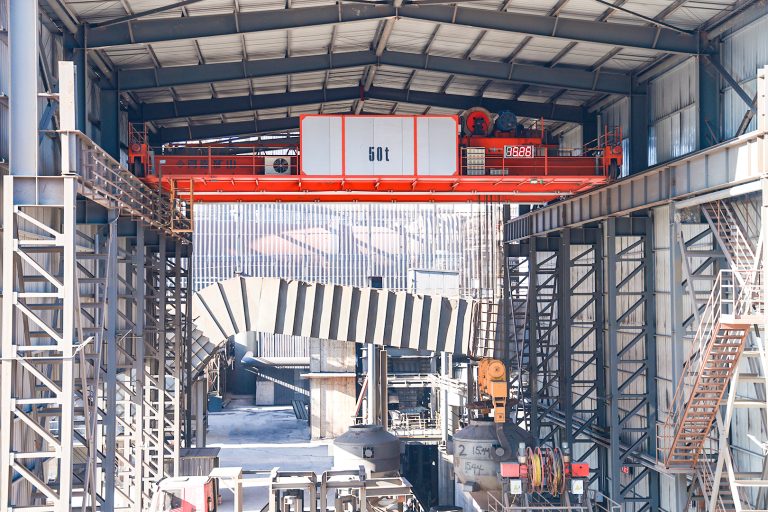
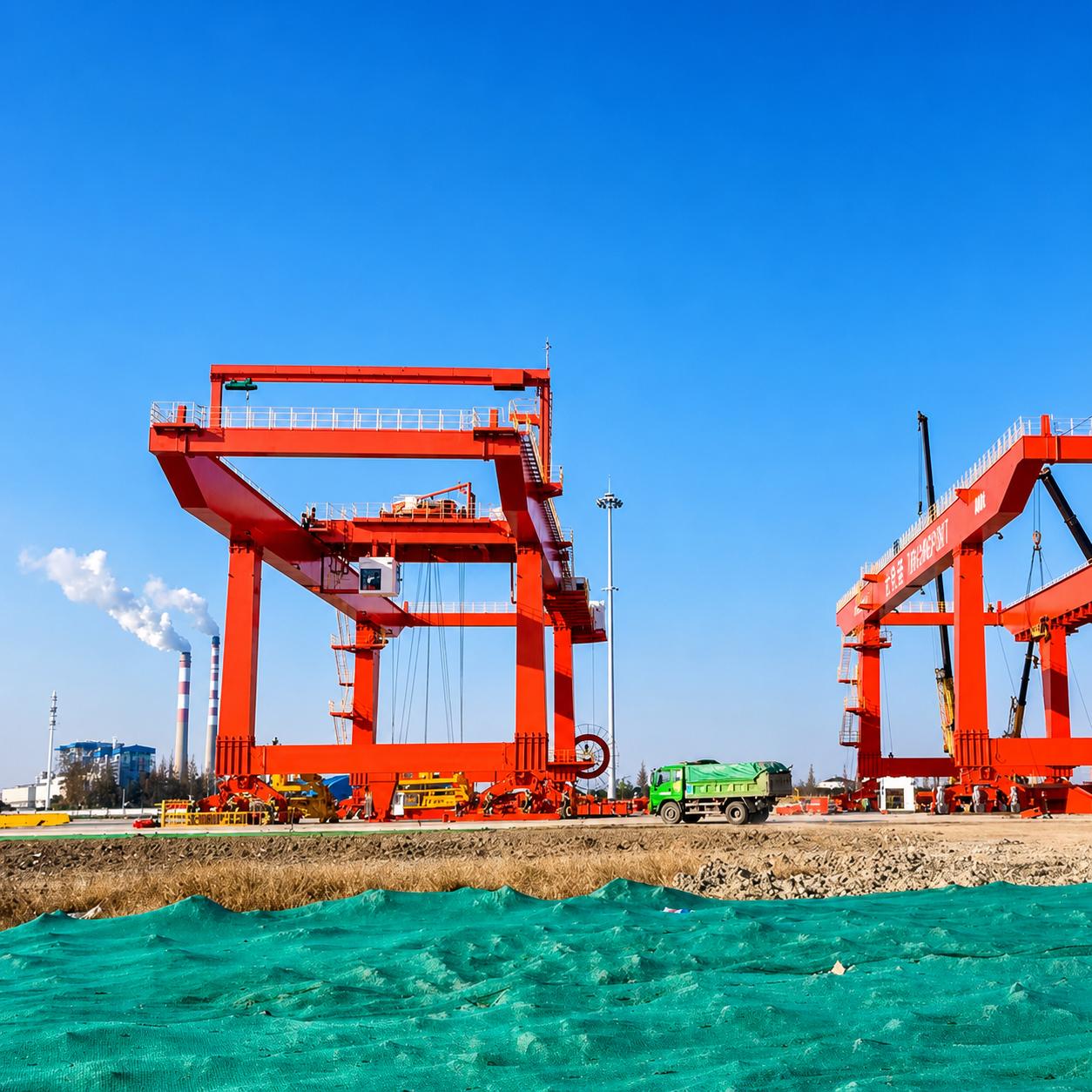
Outdoor gantry crane is a ground-supported open-air lifting equipment. It does not need to rely on the building structure of the factory building. It relies on its own outriggers to land firmly. It can stand across the outdoor work area to complete the three-dimensional handling of heavy materials. It is an efficient lifting equipment exclusive to the outdoor yard.
Its core structure is simple and precise, and the five core components work together to complete the operation.:
- Main beam: The core load-bearing beam spans the operating area and carries all the loads of the trolley, lifting mechanism and cargo. It is divided into two mainstream structures, single beam and double beam.
- Support legs: vertical steel structure brackets, connecting the main beam and the ground walking mechanism, are the basis for the independent operation of the equipment and ensure the stability of the operation of the whole machine.
- Lifting mechanism: it consists of electric hoist, wire rope reel, hook and other components. It is responsible for the vertical lifting of goods and is the core power component.
- Trolley operating mechanism: A walking trolley mounted on the top of the main beam can drive the goods to move laterally along the main beam, covering the horizontal working area.
- Cart operating mechanism: A walking device installed at the bottom of the outriggers drives the entire crane to move vertically along the ground track or the ground to expand the vertical operating range.
Relying on the linkage operation of the three dimensions, the gantry crane can realize vertical lifting, horizontal translation, and vertical walking of cargo, covering the outdoor yard operation area in all directions, and accurately completing the loading, unloading, transshipment, and stacking of various heavy materials.
The core difference between gantry cranes and bridge cranes
It is easy for many users to confuse gantry cranes with bridge cranes. The operating principles of the two are similar, but the structural support, installation scenarios, and applicable environments are greatly different. They are the core distinguishing points of the selection. The specific comparison is as follows:
| Contrast dimension | Gantry crane | Bridge crane |
| Support structure | Independent outrigger support on the ground, no need for building support | Relying on the track system of the plant building, the supporting building structure is required |
| Installation adaptability | Designed for outdoor scenes, open-air installation without pressure | Only suitable for indoor use, relying on closed plant structure |
| Core application scenarios | Outdoor yard, port terminal, open-air construction site, steel material yard | Indoor workshop, factory production line, closed processing site |
| Environmental adaptability | Weather-resistant, corrosion-resistant, and suitable for complex outdoor working conditions | Only suitable for indoor constant temperature, dry, no exposure to rain and rain environment |
In summary, gantry cranes are the only suitable professional equipment for outdoor and open-air material handling scenarios. There is no need to transform the factory building, the infrastructure cost is lower, and the scene adaptability is stronger.
Common Applications of Gantry Cranes in Outdoor Stockyards
With its strong outdoor adaptability and heavy-duty operation capabilities, gantry cranes are widely used in various outdoor heavy-duty material handling scenarios, covering many industries such as industry, logistics, infrastructure, and shipbuilding.
Steel and metal raw material yard
The heavy weight, miscellaneous types and dense stacking of materials in the steel yard are the core application scenarios of gantry cranes.The equipment can accurately handle all kinds of heavy metal materials, including steel coils, steel plates, steel pipes, I-beams, channel steel and other profiles, and is suitable for the whole process of steel storage, transportation, loading and unloading.
With special spreaders (C-type spreaders, magnetic cranes, balance beams, etc.), steel deformation and surface wear can be effectively avoided, labor and forklift operations can be greatly replaced, and yard regularity and operating efficiency can be improved. It is the core standard equipment of steel processing and warehousing enterprises.
Container and logistics terminal
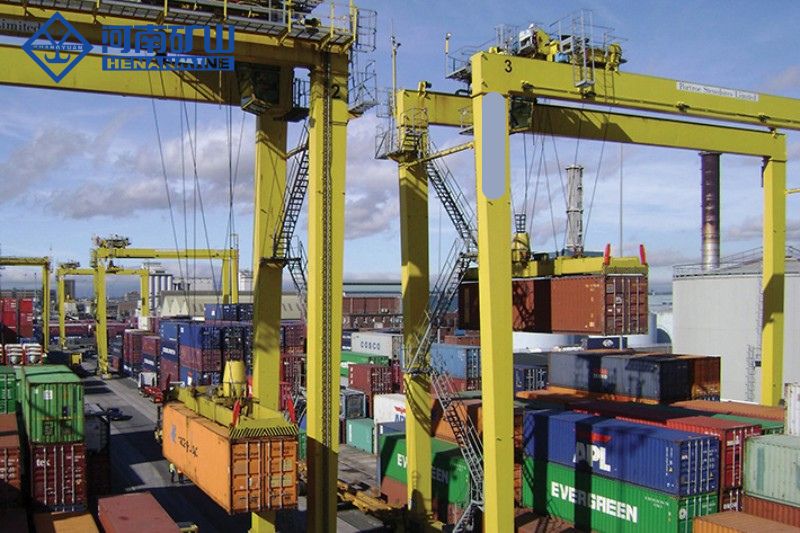
In container terminals and large logistics hubs, gantry cranes undertake the core container loading, unloading, stacking, and transshipment work.The equipment can efficiently complete the cargo transfer between containers and trucks, ships, and depots, increase the density of container stacking through standardized operations, maximize the use of yard space, and solve the pain points of traditional logistics depots with large footprint, low storage capacity, and slow turnover.
At present, the modern intelligent terminal has realized the automated operation of gantry cranes, connected to the terminal operation and maintenance system, and completed unmanned, high-frequency and high-precision container handling operations.
Material handling on construction sites
The working conditions of the infrastructure construction site are complex and the operating area is dynamically changing. With the advantages of mobility and adaptability, the gantry crane is perfectly adapted to the construction scene.It is mainly used for handling materials such as precast concrete components, steel structure frames, large machinery parts, and heavy construction equipment.
The equipment can flexibly adjust the operating position according to the construction progress, and the installation and disassembly are convenient, and it is suitable for all kinds of large-scale infrastructure projects, road and bridge projects, and assembled building construction scenarios.
Shipyard and port operations
The shipyard has the industry's top heavy-duty operation requirements. The weight of materials such as hull segments, ship main engines, and deck equipment can reach hundreds of tons, and the carrying capacity, stability, and accuracy of lifting equipment are extremely demanding.Heavy-duty gantry cranes (gantry cranes) are the core equipment of shipyards, which can complete the hoisting, splicing, and transshipment of ultra-large components.
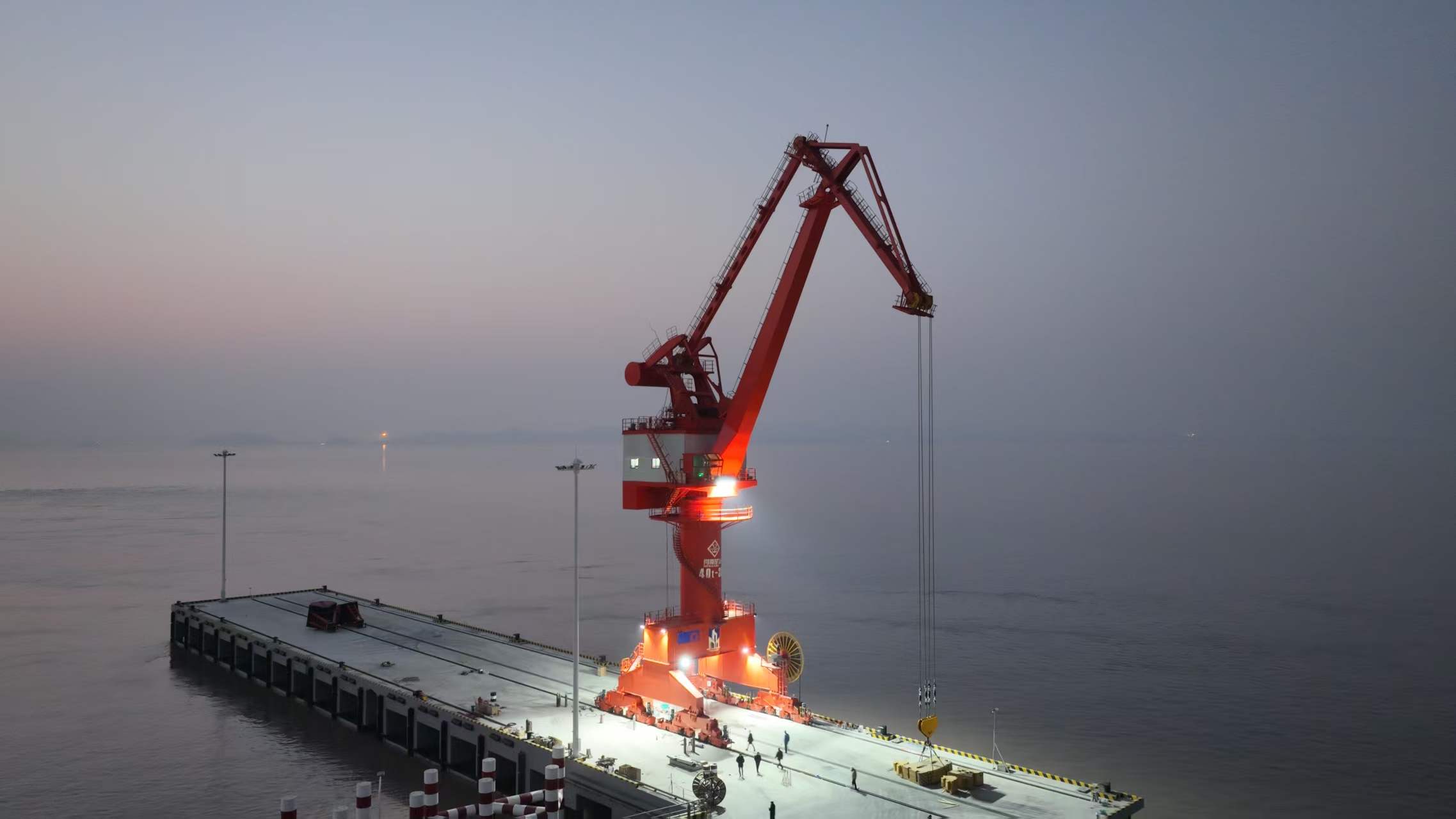
At the same time, port bulk cargo and heavy equipment loading and unloading operations also rely on heavy-duty gantry cranes to complete all-weather, high-intensity outdoor heavy-duty operations.
Key Factors When Choosing the Best Gantry Crane for Outdoor Use
Selection is the core link that determines the operating efficiency, service life, and safety of equipment. Enterprises need to combine their own working conditions to accurately match the four dimensions of load, span, model, and operating parameters to avoid selection errors.
Determine the rated lifting load
Lifting tonnage is the first core parameter of selection. Insufficient load will cause safety hazards, while excess load will cause equipment to be idle and costs to be wasted.According to the operating load, it can be divided into three categories:
- Light-load type (1-10 tons): Suitable for light-load, low-frequency outdoor operation scenarios such as small outdoor depots, equipment maintenance, and light material handling.
- Medium-load type (10-50 tons): suitable for small and medium-sized factory depots, ordinary logistics transshipment and conventional steel storage, and can stably cope with daily high-frequency medium-load operations.
- Heavy-duty type (more than 50 tons): Designed for large steel mills, ports, docks, shipyards, and key infrastructure projects, it can be competent for large-tonnage, high-load, and all-weather continuous heavy-duty operations.
When selecting the type, it is necessary to focus on the three indicators of rated lifting weight, maximum cargo weight, and safety factor. When calculating the load, it is necessary to include the weight of spreaders, beams and other accessories. It is recommended to reserve 15%-25% of the load margin to adapt to the needs of future production capacity upgrades, strictly follow industry safety standards, and eliminate hidden dangers of overload operations.
Adapt to span and work site size
The shape parameters of the crane directly determine the coverage of the operation, and it needs to be fully adapted to the layout of the yard, the material stacking method, and the operation movement line to avoid blind spots in the operation.The core parameters include:
- Span: Refers to the distance between the centers of the tracks on both sides, which needs to match the maximum working width of the yard, taking into account the material stacking and vehicle passage space, and eliminating the problem of restricted operations.
- Lifting height: For the maximum vertical lifting stroke of the hook, it is necessary to meet the height requirements of material stacking and vehicle loading and unloading, and reserve sufficient safe avoidance distance to ensure the safety of operations.
- Hook coverage: That is, the effective operating area of the equipment, it is necessary to fully cover the material stacking and loading and unloading points in the stacking site, and completely eliminate the blind spots in the operation.
- Track operation length: Determine the vertical operation coverage of the crane, it is necessary to completely cover the core operation area of the yard, and reserve a safety buffer zone at both ends of the track.
Before selecting the type, it is recommended to survey the site on the spot, and customize the exclusive size parameters based on the layout of the yard, the height of the material stacking, and the operation movement line to ensure full coverage of the equipment operation, no dead ends, and no redundant waste of performance.
Optimal adaptation model
The mainstream outdoor gantry cranes on the market are divided into four major models. The structure, performance, and adaptation scenarios of different models are significantly different, and the working conditions need to be accurately matched.:
Single beam gantry crane
Using a single main beam structure, the structure is simple, the cost is low, and the maintenance is convenient. It mainly focuses on light and medium-load operations.Suitable for 1-20 tons of light material handling, suitable for outdoor depots with limited budgets, medium operating frequencies, and small loads, small processing plants, and equipment maintenance scenarios.The core advantages are high cost performance, convenient installation, and low late operation and maintenance costs.
Double girder gantry crane
The symmetrical structure of the double main beam has stronger bearing capacity, higher stability, greater lifting height and longer service life. It mainly focuses on heavy-duty and high-frequency operations.Suitable for heavy-duty material handling of more than 50 tons, it is widely used in high-intensity operation scenarios such as large steel depots, ports, heavy industry manufacturing, shipyards, etc., and can cope with 24-hour continuous operation with excellent safety and stability.
Rail gantry crane (RMG)
Relying on fixed track operation, it has extremely high positioning accuracy, stable operating efficiency, supports automated control, and focuses on standardized and high-turnover operations.It is mainly used in container depots, large-scale logistics hubs, and standardized storage parks. It is suitable for large-scale, intelligent, and high-frequency batch material transfer operations. It is the core standard equipment of intelligent terminals.
Tire gantry crane (RTG)
It uses rubber tires to walk without laying a fixed track, can move freely and flexibly, and has strong adaptability to the site.It is suitable for outdoor scenes where the operating area is not fixed and the operating points need to be switched frequently. It is mostly used for temporary container transshipment and material handling in scattered depots. There is less investment in infrastructure and full operating flexibility.
Outdoor Gantry Crane Features for Harsh Environments
Outdoor harsh environments such as wind, rain, exposure, dust, corrosion, and strong winds require much higher weather resistance, safety, and stability of cranes than indoor equipment. Special outdoor configuration is the key to the long-term operation of the equipment.
All-weather weather protection design
- Anticorrosive steel structure: high-grade weather-resistant steel is used, and it is equipped with hot-dip galvanized and multi-layer anticorrosive coating technology for corrosion scenarios such as seaside and chemical industry to eliminate rust, aging, and structural deformation.
- Waterproof electrical system: electrical components such as motors, control cabinets, junction boxes, etc. adopt IP55/IP65 advanced waterproof and dustproof protection levels to prevent rain and dust intrusion and avoid circuit failures.
- Wind-resistant and stable design: equipped with special windproof rail clamps and anchoring devices, the structure has been verified by wind load, which can withstand strong winds and weather, prevent equipment from slipping and overturning, and adapt to open-air windy conditions.
A full set of intelligent security protection system
Outdoor heavy-duty operations have complex working conditions and high safety risks. A full set of intelligent safety protection systems can avoid hidden dangers in operations in all directions and ensure the safety of personnel, goods and equipment. The core configuration functions are as follows:
- Overload protection device: real-time dynamic monitoring of heavy loads, once the rated load is exceeded, the equipment will automatically be powered off and shut down immediately, and equipment damage and safety accidents caused by overload operations will be eliminated from the source.
- Emergency stop system: The whole machine is equipped with an emergency stop button in the whole area. When encountering emergencies such as sudden failures and personnel hazards, the power of the equipment can be cut off with one key, and the equipment can be stopped quickly to avoid risks and minimize operating risks.
- Stroke limit switch: accurately control the limit operating stroke of the hook lifting and walking of the whole machine, effectively eliminate equipment collisions, structural deformation, damage to accessories and other problems caused by over-range operation, and ensure the safety of the operation boundary.
- Anti-collision device: adapted to multi-device collaborative operation scenarios, real-time identification of equipment spacing through intelligent sensing, automatic deceleration, limit, and shutdown operations, effectively avoiding equipment collision failures and secondary safety hazards.
Intelligent electronic control and operating system
- Wind speed monitoring system: monitor the wind speed of the outdoor environment in real time 24 hours a day. When the wind speed exceeds the safe operating threshold, the system automatically alarms and locks the equipment, prohibits illegal operations, and effectively protects against the risk of overturning and slippage caused by strong winds.
- The modern outdoor gantry crane is equipped with an intelligent electronic control system, which is upgraded from multiple dimensions of control accuracy, operation convenience, and operation stability, and is fully adapted to the needs of efficient and safe intelligent yard operations. The core configuration advantages are as follows:
- Frequency conversion drive system (VFD): To achieve smooth start and stop of equipment and stepless speed regulation, to eliminate job shocks and material shaking, and to accurately control the operating speed, not only to protect the integrity of equipment and goods, but also to effectively reduce energy consumption.
- Remote control + ground operation dual control mode: compatible with wireless remote control and ground operation, operators can avoid blind spots in the operation, stay away from high-risk operation areas, and improve the construction safety factor in all directions.
- PLC intelligent automation system: supports custom preset operating processes, can realize standardized semi-automatic and fully automatic operations, and is suitable for large-scale, normalized and efficient operation scenarios of smart depots.
- Real-time intelligent monitoring system: continuously monitor core data such as equipment load, temperature, vibration, and operating status 24 hours a day, accurately predict potential failures, and realize early investigation of hidden dangers.
The complete set of intelligent electronic control system can effectively reduce the intensity of manual operation, avoid human operation errors, and greatly improve the accuracy and operating efficiency of material hoisting. At the same time, it reduces equipment loss and extends the service life of the whole machine, helping enterprises to achieve efficient, stable and low-cost normalized outdoor lifting operations.
Gantry Crane Specifications Buyers Should Compare
When comparing the quotations and plans of various manufacturers, it is important not to only look at the total price. It is necessary to check the parameters one by one and the specifications one by one, so as to effectively avoid the procurement pitfalls such as low-price allocation, false parameter bids, and shrinking configuration.The following is a checklist of the core parameters necessary for procurement acceptance:
Mechanical core parameters
During the procurement verification phase, it is necessary to focus on checking a number of core mechanical parameters, including the rated lifting weight, the span of the whole machine, the maximum lifting height, the working level of the equipment, the operating work system, the effective walking length of the track and the weight of the whole machine.
Among them, the rated lifting weight determines the upper limit of carrying capacity, the span and lifting height determine the coverage of the operation, and the working level and working system are adapted to the needs of outdoor high-frequency heavy-duty operations.Accurate verification of various parameters can ensure that the performance of the equipment fits the on-site working conditions, and effectively avoid problems such as restricted operations, equipment overload and wasted performance.
Electrical core parameters
The verification of electrical parameters covers the rated power of the motors of various institutions, the control method, the adaptation voltage of the equipment, the electrical protection level, the frequency conversion speed regulation configuration and the brake system specifications.The full set of electrical configuration needs to match the power supply conditions of the factory area to ensure that the whole machine has stable control, accurate response, and insulation protection up to standard, and fully meets the safe electricity consumption specifications for complex outdoor working conditions.
Structural process parameters
During the procurement phase, it is necessary to strictly verify the main steel specifications, anti-corrosion process system, coating thickness standards, equipment design specifications and welding process parameters, and review the complete factory quality inspection report and certificate of conformity one by one to ensure that the whole machine has solid structural strength, excellent outdoor corrosion and weather resistance, and all technical indicators are strictly in line with industry standards and safety specifications.
Common Mistakes When Buying an Outdoor Gantry Crane
Most companies are prone to falling into low-cost misunderstandings when purchasing, which leads to frequent failures in the later stage, soaring operation and maintenance costs, and security risks. The four high-frequency misunderstandings must be avoided:
Ignore cost performance
Low-cost equipment generally has problems such as thin steel materials, poor-quality accessories, rudimentary technology, and lack of safety configuration.Short-term procurement costs are low, but long-term problems such as high failure rate, frequent downtime, high maintenance costs, and short service life will occur. The comprehensive operating cost far exceeds that of high-quality equipment, and there are great safety risks.Procurement needs to focus on the whole life cycle cost, rather than a single purchase price.
Ignore the on-site working conditions and environment
The temperature, wind, humidity, dust, and degree of corrosion in different regions vary greatly.Seaside docks need to strengthen anti-corrosion and windproof configurations; industrial and mining dust scenes need to strengthen dust-proof seals; low-temperature areas need to be adapted to cold-resistant steel and lubricants.Ignoring the customization of working conditions will lead to rapid aging of equipment and frequent failures.
Improper selection of lifting tonnage
Small tonnage selection will lead to long-term overload operation of equipment, resulting in structural deformation, wear and tear of accessories, and sudden loss of life, which can easily cause safety accidents; excessive tonnage selection will cause equipment to be idle, energy consumption is too high, and funds are wasted.It is strictly forbidden to select the type according to the average load, and it must be accurately configured according to the maximum load + safety margin.
Ignore after-sales supporting services
Gantry cranes are large-scale industrial equipment, and lifetime operation and maintenance, parts replacement, and fault repair are essential.Some small manufacturers do not have a perfect after-sales system, and accessories are difficult to find and no one repairs after equipment failure, and the loss of long-term downtime far exceeds the equipment price difference.Be sure to verify the manufacturer's technical support, parts supply, and on-site service capabilities before purchasing.
How to Choose a Reliable Gantry Crane Manufacturer
High-quality equipment comes from reliable manufacturers. After the selection is over, the strength of the manufacturer is the core of ensuring the quality, after-sales and service life of the equipment. It can be assessed from four dimensions.:
Manufacturing strength
Inspect the manufacturer's production plant, CNC processing equipment, welding technology, and quality inspection system, and confirm that the manufacturer has an independent design, production, processing, and testing team, with the ability to mass produce and customize large-scale gantry cranes, and eliminate OEM and small workshop manufacturers.
Authoritative qualification certification
Regular manufacturers must have authoritative qualifications such as lifting equipment production qualification, ISO quality system certification, and CE certification. The equipment strictly follows industry standards such as FEM, ISO, and national standard, and has a complete factory inspection report and certificate of conformity to ensure equipment compliance, safety, and compliance.
Customized design ability
High-quality manufacturers can provide one-stop services for free site survey, working condition analysis, personalized program customization, drawing design, and installation guidance. Non-standard equipment can be customized for special sites and special working conditions, rather than forcibly applying standard models.
Perfect after-sales system
Reliable manufacturers provide a full set of services such as equipment commissioning, operator training, regular maintenance, lifetime parts supply, and 24-hour technical support. They have the ability to quickly repair on-site and minimize equipment downtime.
Conclusion
Outdoor gantry cranes are widely used in ports, depots, engineering construction and other scenarios. The selection is directly related to the operating efficiency, production safety and operating costs of enterprises.Enterprise procurement cannot only value low prices. It needs to take into account the actual working conditions, and comprehensively consider the lifting weight, span, working level, weather resistance, safety configuration and later expansion needs.
Gantry cranes adapted to outdoor working conditions need to have reliable structural performance and operating stability, while adapting to complex environments such as wind and rain, corrosion, and temperature differences.Choosing a manufacturer with professional design capabilities and a perfect service system can reduce the equipment failure rate, ensure stable production, and improve the cost performance of the whole life cycle of the equipment.
Henan Mine Crane specializes in providing gantry, bridge, port lifting equipment and intelligent lifting solutions. It can combine customer site, handling and industry needs to provide integrated customized services for program design, equipment manufacturing, and technical support, relying on mature project experience and strict quality control to ensure that the equipment is adapted to various working conditions.