
How to Choose a Port Crane for Future Expansion
Terminal procurement of port cranes often focuses only on current loading and unloading conditions and prioritizes the selection of low-cost equipment, ignoring the long-term expansion needs of the terminal.The large investment and long service cycle of port cranes, as well as the high cost of replacement, transformation or migration after installation, will directly restrict the terminal's throughput capacity and operational efficiency.In the stage of terminal upgrading and foreign trade business expansion, the selection of port lifting should take into account the business development of the next 3 to 10 years, plan the expansion plan in advance, reduce the repeated investment caused by the early scrapping of equipment, calmly cope with the increase in cargo volume, the berthing of large ships, the update of operating standards and other changes, and rely on reasonable planning to achieve long-term stable and efficient operation of equipment.
Why Future Expansion Matters When Buying a Port Crane
Growing cargo throughput
With the recovery of global cross-border trade and the upgrading of the domestic logistics industry chain, the cargo throughput of most coastal and inland ports is on a steady upward trend.Whether it is mainstream freight categories such as containers, bulk groceries, ore, grain, etc., the increase in annual loading and unloading volume year by year will put forward higher requirements for the operating efficiency, single-day processing capacity, and continuous operation capacity of Henan Mine Crane Factory supply port cranes.If the equipment is purchased only in accordance with the current throughput matching parameters, in just 2-3 years, the crane will be saturated with production capacity and overloaded, which will directly lead to terminal congestion, reduced loading and unloading timeliness, ship stagnation and other problems, seriously affecting the customer cooperation experience and terminal revenue.Planning equipment parameters based on future throughput growth in advance allows the crane to match the pace of terminal capacity upgrading for a long time, continuously guarantee efficient operations, and build a solid equipment foundation for terminal business expansion.
Changing vessel requirements
The large-scale development of the shipping industry has promoted the continuous upgrading of transportation ships to large-scale and heavy-duty.In the early years, port cranes adapted to small and medium-sized freighters and container ships were no longer able to meet the current loading and unloading needs of ultra-large ships and wide-body ships.The continuous changes in the hull width, draft depth, deck operating range, and cargo stacking height of the ship have put forward new standards for the core parameters of the crane's operating radius, lifting height, and extension distance.The type of ship docking at the terminal will not be fixed for a long time. With the expansion of the business, it is highly likely that the company will undertake larger tonnage and more categories of shipping orders.If the parameters of the purchased port crane are solidified and the adaptability is single, it will not be able to operate normally in the face of new types of ships, directly limiting the scope of the terminal's business and missing a lot of cooperation opportunities.Predicting the iteration trend of ship specifications in advance is the key to the long-term adaptation of port cranes to the needs of operations.
Avoiding early replacement
Port cranes are heavy-duty industrial equipment. Procurement costs, installation costs, commissioning costs, and operation and maintenance costs are all high, and the equipment relocation, scrap, and replacement cycle is long, and the process is complex. It will also cause the terminal to shut down and stop production, resulting in high indirect losses.Many terminal companies lack expansion thinking due to initial procurement, and the equipment is forced to be eliminated and replaced due to insufficient production capacity, inconsistent parameters, and unsuitable working conditions after 3-5 years of use, resulting in serious waste of funds and idle resources.Purchasing equipment based on future expansion needs can maximize the service life of port lifting, allow cranes to cover multiple stages of terminal development, and completely avoid the pain points of “short-term procurement, rapid elimination, and repeated investment” in the industry.At the same time, the lifting preservation rate of ports adapted to the needs of expansion is higher, and subsequent retrofits, subleases and resales are required, which also have stronger flexibility and cost performance.
What Should You Consider Before Buying?
Future handling capacity
Before purchasing cranes from the Henan Mine Crane Factory supply in the port, companies must combine their own development plans, industry market trends, and regional freight increments to accurately calculate the carrying capacity of terminal operations in the next 3-10 years.The core needs to clarify two core data. One is the growth range of annual cargo throughput and single-day peak loading and unloading volume, and the other is the trend of changes in the weight, category, and stacking form of the main operating cargo. Many traditional procurement plans only match the current peak production capacity, and there is no reserved production capacity margin at all. Once the terminal business expands and orders skyrocket during the peak season, the port lifting will operate at full load, speeding up the wear of parts, increasing the probability of failure, and shortening the service life of equipment.In the early planning, it is necessary to reserve 15%-30% of the future operating margin to ensure that the equipment can still maintain a stable, efficient and safe operating state under long-term high-load operations and capacity expansion scenarios, and calmly cope with business increments.
Vessel size and reach
The size of the ship is the core index that determines the selection of port cranes, and directly determines the extension distance, lifting height, and operating coverage of the equipment.In the procurement research stage, it is not only necessary to refer to the current normalized ship specifications, but also to combine port planning, shipping route upgrading, and business development directions to predict the parameters of large-scale ships that will be docked in the future.It is necessary to focus on the maximum width of the ship, the maximum draft depth, the maximum stacking height of the deck cargo, and the operating coverage of the cabin to ensure that the operating extension of the crane can completely cover the whole area of the ship's deck, and the lifting height can meet the high-level loading and unloading of heavy-duty cargo and the operating requirements of changing tide levels.Adapting to larger ships in advance can help the terminal break operating restrictions, expand more large-scale shipping cooperation business, and enhance the core competitiveness of the terminal.
Wharf and yard layout
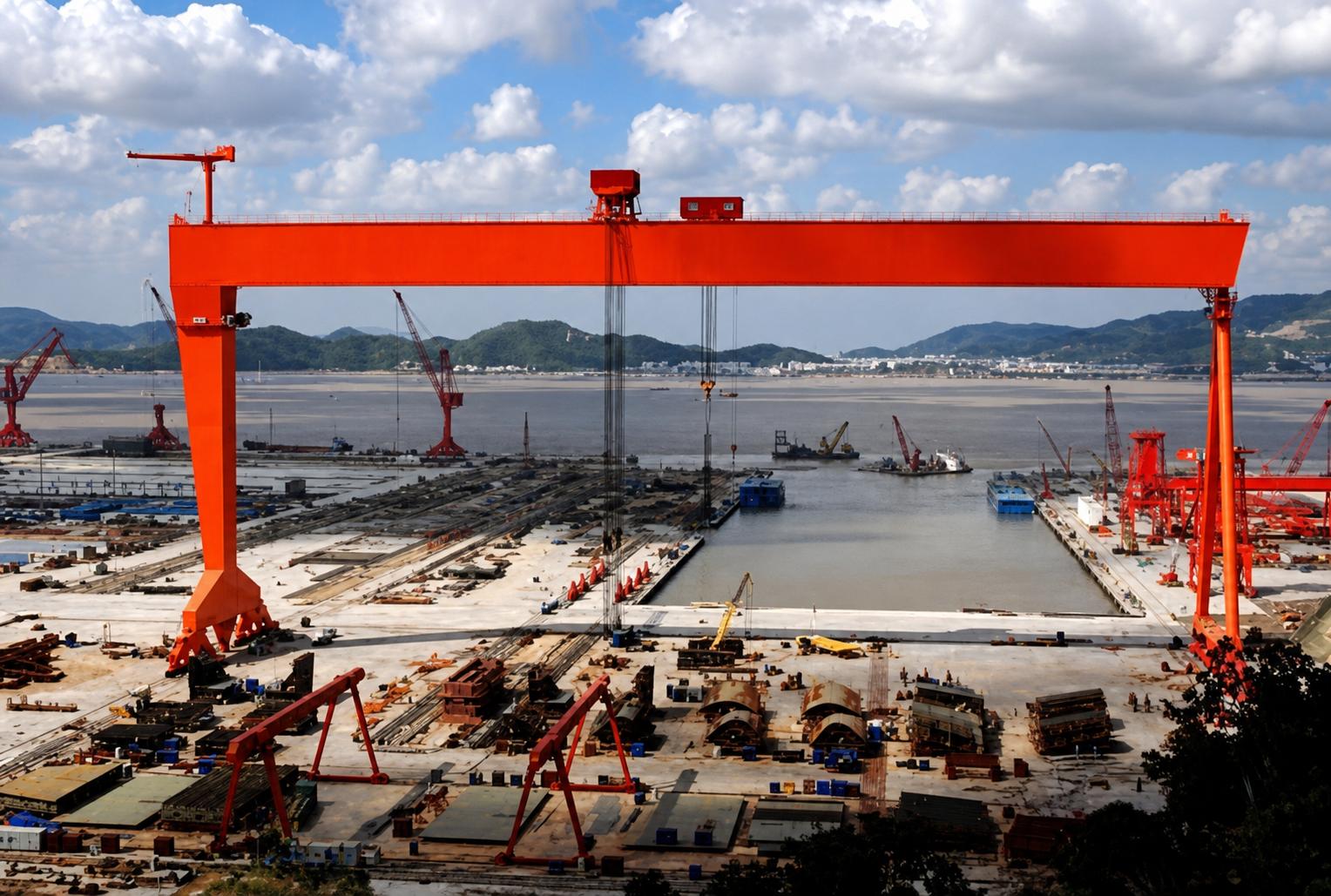
The size of the terminal berth, the length of the shoreline, the load-bearing of the ground, the range of track laying, as well as the layout of the rear yard, the cargo stacking area, and the planning of the transportation channel directly determine the installation size, operating range, and expansion space of the port crane.Many terminal companies want to expand their capacity and upgrade their equipment in the later stage, but they are limited by the solid site layout, insufficient track spacing, and insufficient ground load-bearing. They cannot be retrofitted and upgraded. They can only re-purchase equipment and retrofit the site, and the cost has increased significantly.In the early stage of procurement, it is necessary to comprehensively survey the existing site parameters of the terminal, and at the same time, combined with the overall expansion plan of the terminal, reserve space for port lifting operation, track extension, and yard expansion.For the renovation projects of old docks, it is necessary to focus on verifying the load-bearing capacity of the ground foundation and the bearing capacity of the shoreline to ensure that the newly purchased cranes are not only adapted to the current site, but also match the needs of future site transformation and layout optimization, so as to avoid site restrictions and equipment expansion and upgrading.
Operating conditions
The operating environment of different ports is very different. Seaside ports face corrosion conditions of high salt spray, strong winds, and high humidity. Inland ports have problems such as large water level gaps, large winds and waves during the flood season, and low temperature and frost in winter. Some terminals also have 24-hour uninterrupted operation, high-frequency start-stop, and heavy-duty continuous operation. Working conditions are required.Operating conditions directly affect the material selection, protection configuration, working level, and wear-resistant and anticorrosive design of the crane.If equipment is only purchased in accordance with conventional standards, in the future, as the operating time increases and the working conditions and environment deteriorate, the equipment will be prone to corrosion, aging, frequent failures, etc., and will not be able to support high-intensity operations after expansion.Therefore, the pre-procurement must be combined with the current and future long-term working conditions to customize the adapted port lifting protection plan and operation configuration to ensure the long-term stable operation of the equipment.
How to Choose a Port Crane for Future Capacity
Lifting capacity
Lifting load is the core parameter of Henan Mine Crane Factory supply port crane, which directly determines the heavy-duty operating capacity of the equipment and the upper limit of future expansion.In the selection process, it is necessary to accurately match the maximum weight of the current cargo, and sufficient load margin must be reserved.With the upgrading of terminal business, heavy-duty operation scenarios such as heavy-duty cargo, large containers, and complete sets of equipment will continue to increase. If the load margin is insufficient, the equipment will not be able to undertake heavy-duty orders, directly limiting business expansion.The selection of professional expansion cranes will be combined with the needs of future heavy-duty operations, and on the basis of meeting existing operating standards, 10%-25% of the rated load margin will be reserved.At the same time, it matches the configuration of high-strength main beams, wear-resistant lifting trolleys, thickened wire ropes, etc. to ensure the stability and safety of heavy-duty operations, so that the equipment can be adapted to the development trend of heavy-duty cargo for a long time.
Outreach and span
The outer extension distance determines the operating range of the crane extending to the sea surface, which is the key to adapting to the loading and unloading operations of large ships and wide-body ships.The span determines the coverage of the port's lifting along the dock track, which directly affects the efficiency of loading, unloading and transshipment of goods in the yard.In the future, under the development trend of terminal expansion and large-scale ships, cranes with small outstretched and small spans will inevitably be gradually eliminated by the market.When selecting the type, it is necessary to combine the terminal shoreline planning, the maximum width of mainstream ships, and the coverage area of the yard to choose a port crane that can be adapted to a large span and a large extension distance.At the same time, priority is given to equipment models that can fine-tune the span and expand the scope of operation in the later stage. Without the need to significantly transform the main structure, it can be adapted to the needs of future terminal layout optimization and ship specification upgrading, greatly improving the flexibility of port lifting adaptation.
Lifting height
The lifting height of port operations is affected by multiple factors such as the draft depth of the ship, changes in tide level, the height of cargo stacking, and the height difference of the dock floor.Many terminal cranes have operational limitations in the late stage. The core reason is that the lifting height is insufficient, the high-altitude position cannot load and unload high-altitude cargo, the large-scale ship stacking cargo cannot be hoisted, and the deep-water berth operation is limited.The selection of expanded equipment needs to comprehensively consider the extreme tide level, the maximum deck height of the ship, and the maximum stacking size of the cargo, and reserve sufficient lifting height margin to ensure that the full range of loading and unloading operations can be completed under various complex water levels and ship working conditions.Adequate lifting height redundancy can completely solve the problems of restricted operations caused by future ship upgrades and water level changes, and extend the effective service cycle of equipment.
Duty cycle
The work level is the core index to measure the continuous operation capacity and wear-resistant and consumption-resistant performance of Henan Mine Crane Factory supply port cranes, which directly determines whether the equipment can be adapted to high-intensity operations after future expansion.After the expansion of the terminal, the most important changes are a significant increase in the frequency of operations, an extension of the length of single-day operations, and a doubling of the number of starts and stops.If the level of port lifting work is low and it is only suitable for intermittent conventional operations, long-term high-intensity operation will quickly cause structural fatigue, aging of parts, frequent failures and other problems.For terminals with expansion needs, priority must be given to port cranes with high working levels and long operating cycles. The equipment structure, motor, reducer, braking system, and electrical control system are all configured in accordance with the standard configuration of high-frequency continuous operation, which can be adapted to 24-hour uninterrupted operation and peak season overload operation scenarios to ensure the stable improvement of terminal operation efficiency after expansion.
How to Make a Port Crane Ready for Expansion
Reserve capacity
The redundant carrying capacity of equipment is the core foundation for low-cost expansion in the future, covering the three core dimensions of structural carrying capacity, power system margin, and electrical system load margin.In the equipment manufacturing stage, by optimizing the main beam structure, thickening key load-bearing components, upgrading the power motor, and reserving the electrical load, the main structure and core system of the equipment have a carrying capacity that exceeds the current demand.Reserve sufficient redundant cranes. In the future, when the terminal capacity is expanded and the operating conditions are upgraded, there is no need to replace the main structure or retrofit the basic power system. Only by fine-tuning the parameters and upgrading auxiliary accessories, the operating capacity can be improved and the new operating requirements can be quickly adapted.This kind of pre-redundant design can avoid the high cost of large-scale transformation in the later stage and greatly improve the efficiency of equipment expansion.
Plan for automation
Port intelligence and automation are the inevitable development trends of the industry. Automation systems such as fully automatic loading and unloading, unattended operations, intelligent dispatching, and automatic correction have become the core standard for the expansion and upgrading of modern ports.The old manual cranes not only have low operating efficiency and high labor costs, but they are also unable to adapt to the operating standards of future smart ports, and they can easily be eliminated by the industry.When purchasing new port hoisting, priority needs to be given to port cranes that support automation upgrades, and the equipment reserves intelligent control system interfaces, sensor installation points, and data transmission modules, which are compatible with subsequent intelligent dispatching systems, automatic positioning systems, and remote monitoring systems. Installation and upgrade.The layout of the automation expansion space in advance can allow the equipment to be seamlessly connected to the transformation of smart ports in the future, realize a smooth transition from manual operation to intelligent and efficient operation, and seize the competitive advantage of the industry.
Upgrade electrical systems
The electrical system controls all operating processes such as start-stop, speed regulation, braking, and safety protection of port cranes, and is also the key carrier for later equipment expansion and functional upgrading.Ordinary low-distribution electrical systems have limited load and single functions, and cannot support the upgrading of port lifting parameters, automation transformation, and high-frequency and high-intensity operations.In order to meet the future expansion needs, the procurement phase needs to directly upgrade the high-configuration modular electrical system, and choose well-known brand frequency conversion control system, overload protection system, intelligent monitoring system, and anti-collision system.The modular electrical system has strong compatibility and high expandability. In the later stage, various intelligent modules can be quickly installed, control procedures can be upgraded, and operating parameters can be optimized according to the operation needs. There is no need to replace the electrical equipment as a whole, which greatly reduces the difficulty and cost of expansion and transformation.
Allow future modifications
There is no static demand for terminal operations. In the future, the iteration of cargo categories, the update of ship specifications, the adjustment of terminal layout, and the upgrade of industry policies and standards will all put forward new requirements for cranes.Therefore, the purchased port crane must have a flexible space that can be modified and adjusted to avoid complete curing of equipment parameters and structure.In the equipment design stage, space for structural transformation, accessory installation, and parameter adjustment needs to be reserved to support late-stage extension distance fine-tuning, lifting height optimization, load parameter upgrading, auxiliary operating equipment installation and other transformation operations.At the same time, the equipment adopts modular assembly design, various parts are standardized and generalized, and it is more convenient to replace and upgrade accessories in the later stage. It can quickly adapt to various new operating requirements, so that the equipment can maintain high adaptability for a long time.
How to Control Expansion Costs
Compare expansion and replacement
When many companies upgrade their terminal capacity, they will blindly choose to directly replace the lifting of the new port, resulting in a great waste of funds.In fact, for port cranes that reserve expansion space and are in good working conditions, the cost of capacity expansion through local transformation, parameter upgrading, and accessory updates is much lower than the cost of brand-new equipment.In the expansion planning stage, enterprises need to fully account for the comprehensive costs of the two options, including equipment procurement/transformation costs, installation and commissioning costs, downtime losses, operation and maintenance costs, equipment depreciation, etc.Priority is given to the expansion and transformation plan to revitalize existing equipment resources, and only when the equipment structure is aging, there is no room for transformation, and it is seriously behind the industry standard, then consider brand-new replacement to maximize the savings in capital investment and improve the utilization rate of funds.
Plan infrastructure early
The expansion and upgrading of port cranes is not only the transformation of the equipment itself, but also the support of the basic supporting facilities of the terminal, including the track foundation, ground load-bearing, power supply system, drainage system, security facilities, etc.If the infrastructure cannot be matched after the equipment upgrade is completed, it will directly cause the expanded equipment to fail to operate normally, and the infrastructure will need to be retrofitted twice, resulting in repeated costs.In the early stage of purchasing equipment and planning expansion plans, it is necessary to complete the infrastructure upgrade planning and transformation simultaneously.According to the parameter standards, operating loads, and operating requirements of future port lifting, strengthen the ground foundation in advance, upgrade power supply lines, optimize track laying, and improve security supporting facilities, so as to realize the simultaneous landing of equipment upgrades and infrastructure upgrades, avoid secondary transformation, effectively control the overall expansion cost, and shorten the project landing cycle.
Consider modular designs
Modular design is one of the best solutions for adapting port cranes to long-term expansion and controlling transformation costs.Unlike traditional integral curing equipment, the modular Henan Mine Crane Factory supply port crane splits the main beam, lifting system, power system, electrical system, and protection system into independent standard modules, which can be flexibly combined, individually upgraded, and quickly replaced according to operating needs.In the future, when the terminal is expanded and upgraded, there is no need to transform the overall structure of the equipment. Only the core components such as the load module, the extension distance module, and the intelligent control module can be upgraded in a targeted manner to quickly improve the port's lifting operation capacity.This upgrade method has a short construction period, low cost and high stability. At the same time, the modular accessories are versatile and the procurement cost is low, which can minimize the comprehensive investment in long-term operation and maintenance expansion.
Calculate long-term costs
The procurement of port cranes cannot only look at the initial purchase price. Low-cost and low-configuration port cranes seem to save the initial cost, but the late failure rate is high, the operation and maintenance cost is high, the service life is short, and the capacity cannot be expanded and upgraded. On the contrary, the long-term comprehensive cost far exceeds that of high-configuration and expanded equipment.A truly cost-effective procurement plan must be based on the whole life cycle cost accounting.Accounting for long-term costs needs to cover equipment procurement costs, installation and commissioning costs, annual operation and maintenance costs, fault maintenance costs, energy consumption costs, depreciation costs, late expansion costs, equipment residual value and other dimensions.Priority is given to port cranes with moderate initial investment, sufficient expansion space, convenient operation and maintenance, lower energy consumption, and longer service life. Although the initial investment is slightly higher, it can achieve stable operation for more than ten years, no repeated purchases, no frequent retrofits, and a long-term comprehensive price ratio far exceeds that of low-profile port hoisting.
Henan Mine Crane Factory Custom
Purchase a port crane, look at the adaptation in the short term, and look at the expansion in the long term.The core of competition in the terminal industry is the competition for equipment efficiency, production capacity reserves, and upgrade flexibility.The port lifting procurement model that simply meets the current operating needs has long been unable to adapt to the rapid development of the port. It will only cause rapid equipment elimination, repeated investment in procurement costs, and the inability to increase terminal production capacity. Many problems seriously restrict the long-term development of the terminal.
Relying on systematic expansion procurement planning, from early demand research and evaluation, on-site working conditions research, accurate equipment selection, to reserved upgrade margin and strict control of expansion costs, Henan Mine Crane Factory allows port cranes to fully match the full-cycle development rhythm of the terminal, and calmly undertake business iterative needs such as cargo volume growth, large-scale ship operations, and intelligent upgrades.Through scientific and forward-looking procurement, the terminal can effectively reduce the cost of equipment iteration, improve the throughput of operations, expand the scope of business undertaking, and steadily maintain the long-term competitive advantage in the industry.