
How Environmental Conditions Affect Gantry Crane Design
As the core heavy-duty hoisting equipment for ports, construction sites, mines, steel mills and other scenes, gantry cranes have been deeply bound to the environmental conditions of the site from the beginning of the design. The stability, service life, operating safety and operating efficiency of the whole machine.The root cause of the problems of premature corrosion of gantry cranes, frequent failures of components, downtime in extreme weather, structural deformation and even overturning in many enterprises is not equipment quality defects, but the inability of general standard models to adapt to special working conditions. Environment.For large crane manufacturers, environmental adaptability design is the core prerequisite for equipment to operate in compliance, reduce operation and maintenance costs, and ensure long-term safety.This article comprehensively disassembles the core influence of environmental conditions on the design of gantry cranes, and provides professional reference for project selection, equipment customization, and technical reform and upgrading.
How Temperature and Weather Affect Gantry Crane Design
High-temperature environments
Long-term high-temperature environments (ambient temperature ≥40℃, steel mills and smelters can reach more than 60℃ in summer) will completely lose the performance of gantry cranes from the three major mechanical, electrical and hydraulic systems, forcing targeted special designs.High temperature will accelerate the thermal expansion and contraction of steel, resulting in thermal stress deformation of the main beam and outrigger structure. Long-term accumulation will cause the main beam to flex and the structural welds to crack, reducing the structural stability of the whole machine.At the same time, high temperature will cause the oil temperature of the hydraulic system to soar, the seals will age and fail, and the viscosity of the hydraulic oil will decrease, resulting in weak hoisting, oil leakage, and movement.
The electrical system is the most vulnerable core module in a high temperature environment. Conventional motors, frequency converters, and control cabinets have difficulty dissipating heat at high temperatures, and their insulation performance decays rapidly. They are prone to overload, burn-out, short-circuit tripping, program disorders, etc. Faults.Therefore, the design of gantry cranes under high temperature conditions must increase the forced heat dissipation system, choose F-class and H-class high-temperature insulated electrical components, use high-temperature hydraulic oil and sealing materials, and optimize the ventilation structure of the whole machine to avoid heat accumulation and ensure the stability of continuous operation of the equipment.
Low-temperature environments
The core influence of the low temperature environment (-10℃ to -40℃ cold area) on the gantry crane is the cold brittleness of the material and the failure of the mechanical transmission, which is also the main cause of equipment failure in the northern alpine areas.Ordinary carbon steel has a significant decrease in toughness and a surge in brittleness in a low temperature environment. When it is subjected to hoisting shock and wind vibration, it is prone to structural cracks and weld fractures, causing major safety accidents.At the same time, low temperature will cause general lubricating grease to solidify and agglomeration, gears, bearings, walking wheels and other transmission components to lose lubrication protection, the wear rate will accelerate sharply, and the equipment will be stuck when walking and lifting, and abnormal noises will occur frequently.
In terms of electrical systems, low temperature can cause the sensitivity of batteries, sensors, and control modules to decrease, the cables to harden and brittle, and the insulation layer to crack, causing problems such as leakage and signal failure.For the customized design of low-temperature working conditions, special weather-resistant steels for low-temperature such as Q345D/E need to be selected, and the welds of the whole machine should be reinforced with low-temperature flaw detection, antifreeze and low-temperature long-lasting lubricating grease should be replaced, and electrical preheating and thermal insulation devices should be configured to ensure that the equipment can start normally and operate stably in a cold environment.
Heavy rain and humidity
The core hazards of rainy and high-humidity environments (coastal and southern rainy season sites, relative humidity ≥80% all year round) are metal corrosion and electrical moisture failure.The open-air gantry crane is exposed to rain and condensation for a long time, and the surface of the steel will continue to oxidize and rust, gradually developing from the surface coating to deep rust, weakening the carrying capacity of the structure.High humidity condensation will also accumulate water vapor in the control cabinet, motor junction box, and sliding contact line interface, resulting in a significant reduction in electrical insulation resistance. After falling below the national standard, it can easily cause interphase short circuit, ground failure, motor burning and other problems.
At the design level, the protection level of equipment needs to be comprehensively upgraded in high-humidity and rainy conditions. The electrical system of the whole machine adopts IP55 and above sealing protection, and the wiring ports are waterproof and sealed.The steel structure adopts a multi-layer anticorrosive coating process to increase the waterproof primer and moisture-proof topcoat.The mechanical transmission parts are equipped with waterproof and dustproof covers to prevent rainwater intrusion.At the same time, optimize the drainage structure of the whole machine to avoid stagnant water on the main beam and base, and eliminate equipment failures caused by humid environments from the source.
Snow and ice conditions
The influence of snow and ice covering environment on gantry cranes is concentrated in the three dimensions of structural load, walking safety, and braking performance.Snow covering the roof, main beam, and outriggers will increase the weight load of the whole machine. After exceeding the design load, it will intensify structural deformation and the main beam will flex, and long-term snow will even damage light structural components.Track icing will greatly reduce the friction between the wheels and the track, causing the gantry crane to slip, shift, and chew the track when walking, and there is a risk of derailment in severe cases.
At the same time, the ice will wrap the brake mechanism and the rail clamping device, causing the brake to fail, the windproof device to get stuck, and the equipment cannot be locked normally, which can easily cause slippage accidents in windy weather.According to the design of ice and snow conditions, the streamlined structure of the whole machine needs to be optimized to reduce the accumulation area of snow.Standard equipment is equipped with track deicing and snow melting auxiliary devices for the whole machine.The braking and windproof components are optimized for antifreeze and anti-stagnation, and the non-slip track design and low-temperature wear-resistant walking wheels are used to ensure the normal operation of the equipment's walking, braking, and windproof functions in ice and snow weather.
Designing Gantry Cranes for Wind and Outdoor Loads
Wind load and structural stability
Wind load is the core control index of Henan Mine Crane Factory supply outdoor gantry crane design, and it is also the primary external factor that causes equipment to capsize and slip.The gantry crane has a large span and a wide windward area. It is like a giant wind carrier. Continuous cross winds and gusts of wind will produce huge lateral thrust, which will change the balance of the force of the whole machine, causing structural deformation, orbital offset, and slippage of the whole machine. Problems.In strong wind weather, the lateral torque of a standard gantry crane that has not been designed for wind resistance will exceed the carrying limit of the structure, which will directly cause the outriggers to deform and the whole machine to capsize, causing major equipment and personnel losses.
In the structural design, manufacturers need to accurately calculate the wind load parameters according to the site limit wind speed and industry specifications, optimize the gantry frame structure, and adopt a lightweight, high-rigidity beam body and hollow wind-resistant structure to greatly reduce wind resistance.Increase the rigidity of the outriggers and the counterweight of the base to improve the anti-overturning torque of the whole machine.For large-span gantry cranes, a transverse reinforced support structure is added to disperse the wind impact load and ensure the structural stability of the whole machine under windy conditions.
Storm protection and parking systems
The outdoor gantry crane has been unattended for a long time, and the protection design of extreme storm weather such as typhoons and storms is essential. The special windproof parking system is the core configuration of the equipment safety pocket.Conventional models do not have special storm protection. In stormy weather, the equipment will slip with the wind and collide with the track buffer device, causing derailment and structural damage.The core of customized storm protection design is to build a systematic parking protection system to adapt to different levels of storm conditions.
In the design, according to the maximum storm level of the site, the fixed parking card position and the limit buffer device of the whole machine will be matched to limit the maximum slip range of the equipment.Optimize the layout of the center of gravity of the whole machine, reduce the height of the center of gravity, and improve the stability of the storm resistance.For strong storm areas in ports and coasts, adjustable windproof support structures have been added. The outriggers can be quickly strengthened when the equipment is parked to offset the lateral impact of the storm and prevent equipment safety accidents in extreme weather.
Rail clamps, wheel brakes, and storm anchors
The rail clamp, wheel brake, and storm anchoring device are the three core hardware of the windproof brake of the gantry crane, which directly determines the windproof safety of the equipment parking, and the design needs to be differentiated according to the environmental wind level.The track clamp clamps the track by mechanical locking to prevent the slip and offset of the equipment under windless operation and breeze conditions, and is suitable for daily gale protection.The high-performance wheel brake can quickly lock the walking wheel set to achieve precise braking and avoid the deviation of the walking position caused by force interference during operation.
The storm anchoring device is the ultimate protection configuration for extreme weather. It is rigidly connected to the equipment through embedded anchors on the ground, and the whole machine is firmly fixed on the basis of the track, which can withstand the impact of super typhoons and storms.In terms of design and selection, a manual simple rail clamp can be configured according to ordinary working conditions.Fully automatic hydraulic rail clamps and reinforced brakes are selected for windy and windy conditions.In areas with frequent coastal storms and typhoons, heavy-duty storm anchoring devices must be equipped as standard to form a triple windproof protection system of braking, rail locking, and anchoring.
Wind sensors and automatic safety systems
Intelligent wind monitoring and automatic safety system are the core upgrades of the modern Henan Mine Crane Factory supply outdoor gantry crane environment adaptation design, realizing the transition from passive protection to active early warning and automatic protection.Traditional gantry cranes rely on manual judgment of wind speed and manual protection. There are hidden dangers of lagging response and untimely protection, which can easily cause accidents due to sudden high winds.In the customized design, it will be equipped with a high-precision wind speed sensor to monitor on-site wind speed and wind changes in real time 24 hours a day, and the data will be transmitted to the control system and the operating terminal in real time.When the wind speed reaches the early warning threshold, the system automatically issues a sound and light alarm to remind the operator to stop the hoisting operation.When the wind speed exceeds the safe operation threshold, the system forcibly locks the lifting and walking mechanisms, triggers automatic braking and rail locking, and linkage the parking protection system to complete the equipment fixation.Some high-end models are also equipped with remote monitoring function, which can upload wind data and equipment status in real time, realize automatic wind protection under unattended working conditions, and improve the safety of outdoor operations in all directions.
Special Design Requirements for Extreme Environments
Desert and high-dust applications
Desert, Gobi, and high-dust mining areas are extremely harsh working conditions. The core characteristics are continuous sand, strong sunlight, large temperature difference between day and night, and extremely high dust concentration. The dust-proof, anti-aging, temperature-resistant, and wind-resistant properties of gantry cranes are extremely demanding.Strong desert winds carry a large amount of sand particles, which will wear and tear exposed parts of the equipment at high speed. Long-term exposure to ultraviolet rays will accelerate the aging of the coating and the brittleness of the rubber seals. Large temperature differences between day and night will cause the structure to repeatedly expand and shrink, causing fatigue cracking of the welds.
Targeted special design needs to focus on four core elements, one is to strengthen the dust-proof seal of the whole machine, all transmission and electrical components are fully enclosed and protected, and it is equipped with an automatic dust removal system.The second is to adopt a heavy anticorrosive coating that is resistant to ultraviolet rays and wind and sand wear to delay the aging and wear of the equipment.The third is to choose steel that is resistant to temperature difference and fatigue, and is suitable for severe fluctuations in temperature day and night.Fourth, optimize the wind-resistant structure, improve the rigidity and windproof level of the whole machine, resist the continuous strong winds in the desert, and ensure the stable operation of the equipment all year round.
Coastal and port environments
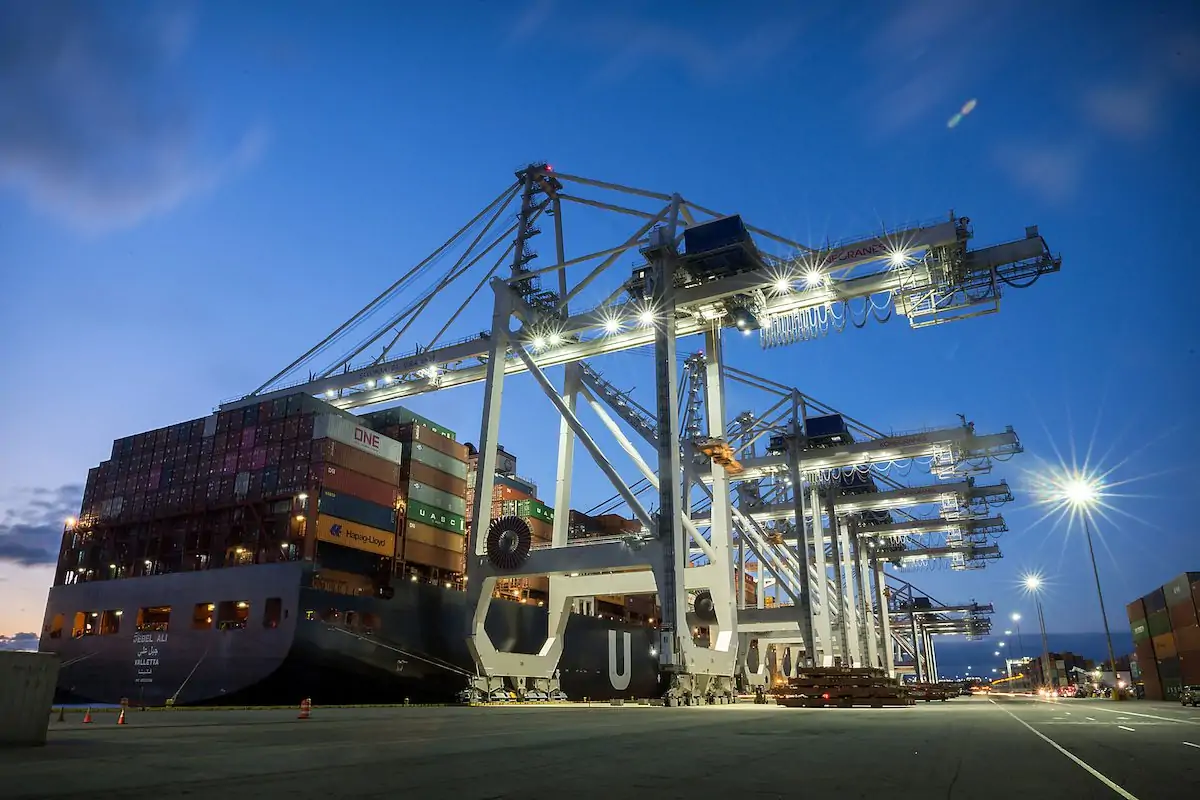
The working conditions of ports and coastal terminals combine harsh conditions such as high salt spray, high humidity, strong wind, and open-air exposure. It is one of the scenarios where gantry cranes are most widely used and have the highest environmental requirements.The equipment can withstand salt spray corrosion, sea breeze impact, rain soaking, and ultraviolet exposure for a long time. Conventional models will experience serious corrosion and frequent failures in 1-2 years, which cannot meet the needs of high-frequency and high-intensity operations in the port.
The design of the Henan Mine Crane Factory supply gantry crane for the port adopts a systematic adaptation scheme to upgrade the marine-grade heavy anticorrosive system to ensure that there will be no large-scale corrosion for 5-10 years.Strengthen the ultra-high wind resistance structure, standard with multiple windproof anchoring and automatic wind speed protection system to resist typhoon weather.Improve the waterproof, moisture-proof, and dust-proof levels of the whole machine, and adapt it to high humidity and rainy environments.Optimize the wear-resistant and fatigue-resistant properties of the structure, adapt to the 24-hour uninterrupted high-frequency operation of the port, while simplifying the operation and maintenance structure, and reducing the difficulty and cost of port equipment maintenance.
Steel mills and high-temperature facilities
High-temperature plants such as steel mills, smelters, and coking plants have high ambient temperatures, strong thermal radiation, large dust, and flue gas corrosion, which are high-temperature composite and harsh working conditions.The equipment has been in a high-temperature thermal radiation environment for a long time. Thermal deformation of the structure, electrical overheating failure, lubrication failure, and flue gas corrosion are the four core problems. Conventional models are prone to deformation of the main beam, motor burning, transmission caton, component corrosion and other failures.
The design of the special gantry crane for high-temperature factories focuses on the three cores of heat resistance, corrosion resistance and dust resistance. The whole machine adopts high-temperature structural steel to optimize the heat dissipation layout and reduce heat accumulation.All electrical systems are equipped with high temperature resistance, flame retardant, and explosion-proof configurations, and are equipped with forced heat dissipation and cooling devices.The hydraulic and lubrication systems use special media for high temperature resistance to prevent high temperature failure.In view of flue gas corrosion, upgrade the anti-corrosion and dust-proof sealing system to isolate corrosive flue gas and dust, and adapt to the harsh operating environment of high-temperature industrial plants.
Cold regions and freezing conditions
In alpine permafrost and extremely cold snow-covered areas, the core working conditions are characterized by long-term low temperature, freezing and thawing day and night, track icing, dry air and large temperature differences. The core risks of equipment are cold and brittle steel, frozen parts, electrical failure, and brake failure.Ordinary gantry cranes cannot start normally in extremely cold environments, the structure is easy to break, the windproof and braking devices are easy to freeze and get stuck, and there are great safety risks.
Customized design in extremely cold areas must implement special low-temperature adaptation, and the main structure adopts low-temperature weather-resistant steel to prevent cold and brittle fracture.All mechanical moving parts and lubrication systems use special accessories and media for antifreeze and low temperature resistance to prevent freezing and blocking.The electrical system is equipped with thermal insulation and preheating devices to ensure normal start-up and operation at low temperature.The track, braking, and windproof devices are optimized for antifreeze and deicing, and are equipped with an anti-snow structure, which is fully adapted to extremely cold and freezing conditions.
Seismic and high-risk areas
In areas with frequent earthquakes and high-risk geological instability, the design of gantry cranes needs to focus on optimizing seismic resistance, sedimentation resistance, and impact resistance.Earthquakes and geological sedimentation can cause track deformation, foundation offset, and imbalance in the center of gravity of the whole machine, causing serious accidents such as structural distortion, derailment and overturning, and component damage. Conventional structural models cannot withstand the impact load caused by geological fluctuations.
The special design of high-risk earthquake areas needs to optimize the seismic resistance structure of the whole machine, increase structural cushioning, strengthen the support system, and improve structural toughness and impact resistance.Optimize the connection structure between the base and the foundation, adapt to minor geological sedimentation, and reduce structural stress damage.Strengthen the track fixation and limit structure to avoid equipment slippage and derailment caused by earthquakes.At the same time, the rigid connection structure is simplified, the flexible buffer design is increased, the seismic impact load is dispersed, and the safety redundancy of the equipment in the geological high-risk environment is maximized.
How to Customize a Gantry Crane for Site Conditions
Assess the operating environment
Environmental survey and evaluation is the first step in the customized design of gantry cranes and the basis for all adaptation plans. Accurate environmental data can avoid equipment adaptation defects from the source and reduce the risk of late failures.Manufacturers need to combine the project site to survey the core environmental parameters in an all-round way, including the site limit high and low temperature, average annual humidity, wind level, maximum wind speed, rain and snow days, dust concentration, corrosive medium type, geological conditions, earthquake intensity and other key indicators.
At the same time, combined with the operating attributes of the site, distinguish scenarios such as ports, mines, steel mills, alpine areas, deserts, chemical parks, sort out the core environmental hazard factors, clarify the protection directions that the equipment needs to be adapted to, and form a complete on-site environmental assessment report to provide accurate data support for subsequent load accounting, material selection, and protection configuration to ensure that the customized plan fully fits the on-site working conditions.
Determine environmental loads and working conditions
Based on environmental assessment data, accurate accounting of environmental loads and operating condition parameters is the core basis for customized design.The technical team needs to calculate various environmental additional loads such as wind load, snow load, temperature stress, corrosion fatigue load, seismic impact load, etc. in strict accordance with the national standards of the industry, and combine the rated lifting weight, span, lifting height, operating frequency, and working level of the equipment to form a comprehensive load parameter of the whole machine.
Through load accounting, the design standards for structural strength, rigidity, and safety redundancy of the whole machine are clarified, and special protection levels such as windproof, anticorrosive, dustproof, temperature control, and seismic resistance are determined, so as to eliminate the waste of costs caused by excessive protection, or the safety risks caused by insufficient protection, and achieve accurate matching of environmental load and equipment performance to ensure that the equipment can operate safely and stably under rated operating conditions and extreme environments.
Select suitable materials and protective systems
The material selection and protection system configuration directly determine the environmental adaptability and service life of the gantry crane, and it needs to fully match the environmental load and working conditions of the site.Structural steel is selected differently according to temperature, geology, and load conditions. Ordinary carbon steel is selected for normal working conditions at room temperature, weather-resistant low-temperature steel is selected for low-temperature and extremely cold working conditions, and corrosion-resistant special steel is selected for high-corrosion working conditions.
The protection system is customized on demand. Marine-grade heavy anti-corrosion system is configured for coastal salt spray conditions, high-temperature heat dissipation protection system is configured for high-temperature conditions, fully sealed dust-proof system is configured for dust-proof conditions, multiple wind-proof protection systems are configured for windy conditions, and antifreeze insulation systems are configured for extremely cold conditions.At the same time, supporting the adapted mechanical and electrical accessories, from the main structure, core accessories to the outer protection, form an all-round and systematic environmental adaptation system to maximize the durability of the equipment.
Match electrical and mechanical components
The precise adaptation of electrical and mechanical core components is the key to ensuring the stable operation of customized gantry cranes. It is necessary to abandon general accessories and fully fit the selection of environmental working conditions.According to temperature, humidity, dust, and corrosion conditions, the electrical system matches the corresponding protection level, temperature resistance, anti-corrosion, dust-proof motors, frequency converters, sensors, control cabinets, cables and other accessories. High temperature is equipped with high temperature electrical parts, high humidity is equipped with waterproof and moisture-proof electrical parts, and corrosive environments are equipped with anticorrosive sealed electrical parts.
Mechanical transmission, braking, walking, and windproof components are adapted as needed. Low temperature is equipped with antifreeze and wear-resistant transmission accessories, high temperature is equipped with heat-resistant sealing accessories, wind and sand conditions are equipped with wear-resistant and dust-proof accessories, and typhoon areas are equipped with heavy-duty windproof anchoring accessories.The parameters, performance, and protection levels of all accessories are matched with each other to form a collaborative adaptation ability of the whole machine, avoid the failure of the whole machine caused by insufficient adaptation of a single component, and ensure the long-term efficient operation of the equipment.
Balance initial cost and long-term operating cost
The customized design of Henan Mine Crane Factory supply gantry crane environment needs to take into account the initial procurement cost and the long-term operation and maintenance cost to achieve the best cost performance in the whole life cycle.The simple pursuit of low cost and the selection of general standard models. Although the initial investment is low, the failure rate is high in harsh environments, frequent operation and maintenance, and the service life is short. The cost of late maintenance, replacement, and shutdown losses is extremely high, and the overall price ratio is extremely low.
The professional customized design will reasonably configure the protection plan according to the level of working conditions, and will not blindly pile up high-end configurations. Under the premise of meeting environmental adaptation and safe operation, the initial investment will be controlled.At the same time, through accurate environmental adaptation design, the equipment failure rate is greatly reduced, the service life is extended, and the downtime loss and operation and maintenance costs are reduced.In the long run, the whole life cycle cost of customized gantry cranes adapted to working conditions is reduced by more than 30% compared with standard models, and the safety, stability, and operating efficiency are comprehensively improved. It is the best choice for all kinds of complex working conditions.
Henan Mine Crane Factory Custom
Environmental conditions are the core variables that determine the design plan, equipment performance, service life, and operating safety of gantry cranes. There is no universal gantry crane model suitable for all scenarios.From the conventional weather effects of temperature and humidity, wind, rain and ice, to the continuous loss of wind loads and corrosive dust, to the extreme working conditions in deserts, ports, steel mills, extreme cold, and earthquake areas, each environmental factor corresponds to its own structural optimization, material selection, protection configuration and system upgrade.For equipment buyers and manufacturers, the customized crane design of Henan Mine Crane Factory, which abandons standardized general thinking and is based on the on-site environment, is the core key to avoiding safety risks, reducing operation and maintenance costs, improving equipment operation efficiency, and achieving long-term stable operation.