
Common Gantry Crane Accidents and How to Prevent Them
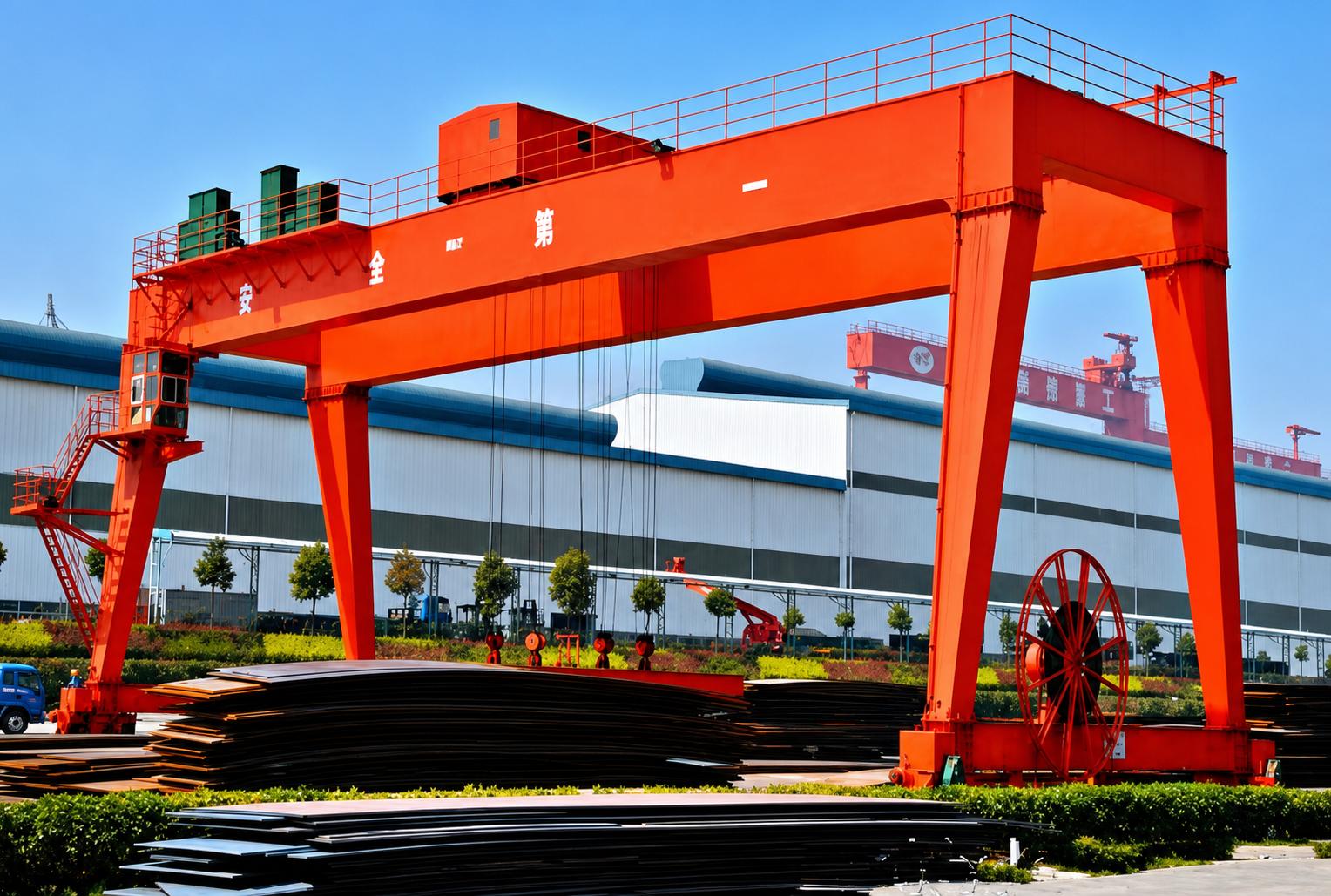
Gantry cranes are widely used in industrial scenarios such as port loading and unloading, construction site construction, and material transfer in factories. They are the core lifting equipment for heavy material handling and hoisting of large components.In long-term outdoor complex working conditions and high-frequency operating environments, gantry crane equipment failures, illegal operations by personnel, harsh environmental interference and safety management loopholes can easily cause common safety accidents such as gantry crane falling objects, equipment collisions, and overturning of the whole machine, which directly cause equipment damage, project downtime, economic losses and casualties.Most industrial gantry crane safety accidents are caused by the accumulation of daily hidden dangers and insufficient safety protection. A good job in the analysis of the causes of gantry crane accidents and the normalization of safety prevention and control are the key to ensuring the stable operation of lifting equipment and avoiding the risks of hoisting operations.
Overloading and Dropped Load Accidents
Exceeding rated capacity
Henan Mine Crane manufactured gantry crane overload operation and load fall are the most common safety accidents, and they are also the main causes of deformation and fracture of the lifting structure and casualties on the site.The rated lifting weight of each industrial gantry crane manufactured by Henan Mine Crane is strictly designed according to the carrying limit of core accessories such as the main beam structure, wire rope, hoist, etc., which is a hard standard for its safe and stable operation.In order to catch up with the construction period, many construction sites are overloaded with luck and violations. The weight of the material is estimated only empirically, ignoring the superimposed effects of wind loads and dynamic impact loads. Long-term overloaded operation will cause deformation of the crane's main beam, wire rope fatigue, broken wire, weld cracking, and ultimately cause heavy objects to fall, the collapse of the whole machine and other major lifting safety accidents.
Improper load rigging
The irregular layout of the lifting rigging of the gantry crane is an easily overlooked cause of the falling object accident of the gantry crane, and the safety hazards run through the entire lifting operation process of the gantry crane.Common illegal operations on the site include the use of worn and broken wires, aging and damaged wire ropes and hoisting slings, the mixing of different specifications of spreader accessories, the offset of the center of gravity of the gantry crane hoisting, the angle between the rigging forces is too large, and sharp heavy-duty materials are not protected against cutting and other issues.This kind of hidden danger will not immediately cause equipment failure, but in the dynamic operation process of gantry crane lifting, horizontal translation, and fixed-point blanking, it can easily cause rigging to fall off and fracture, heavy objects to slip off and offset, greatly increasing the risk of high-altitude hoisting and falling objects. It is an important cause of accidents caused by smashing and squeezing injuries by construction site personnel.
Preventing dropped loads
If you want to completely eliminate the falling accidents caused by overloaded gantry cranes and irregular hoisting, enterprises need to build a complete safety control system for the whole process of gantry cranes.The weight of heavy materials needs to be accurately calculated before the operation of the equipment, so as to eliminate empirical weight estimation, partial load hoisting and various overloading operations, and the old gantry crane equipment needs to reserve sufficient safety load margin.At the same time, the rigging spreader is matched according to the material size, weight, and material, and the integrity of the hoisting accessories is comprehensively checked, the center of gravity of the hoisting is accurately determined, and the angle of force of the rigging is standardized.Safety devices such as overload limiters and weight sensors are activated throughout the process, the equipment triggers an early warning and immediately stops for investigation, and a dedicated gantry crane hazardous operation area is designated, and special personnel are arranged to monitor the whole process, and unrelated personnel are prohibited from entering the hazardous area below the operation.
Gantry Crane Collisions
Collisions with structures
Structural collision accidents of gantry cranes mostly occur in industrial construction scenarios where the site is narrow, multiple gantry cranes cross-operate, and the line of sight of the operation is limited. They are mainly divided into three categories: gantry crane cart walking collision, trolley running sideways collision, and lifting heavy objects swinging collision.During the operation process, the gantry crane in operation can easily hit the plant column, the end limit of the track, the high-altitude pipeline and the surrounding stacking materials, and the swinging lifting heavy objects will also indirectly hit the surrounding machinery and equipment and building structures.Short-term minor collisions will damage the buffer device and walking transmission structure of the gantry crane. Long-term frequent collisions will cause deformation of the steel structure of the gantry crane, track offset, loose fixing bolts, and cause major accidents such as equipment derailment and the collapse of the whole machine. At the same time, it will cause damage to site facilities and delays in the construction period of engineering projects.
Collisions with personnel
Man-machine collision of gantry cranes is a high-incidence safety accident with a very high fatality and injury rate, and it is also a key difficulty in on-site safety control of industrial gantry cranes.The flow of personnel on the construction site is complicated, and some construction personnel have weak safety awareness. There are violations such as crossing the equipment operation track, staying in the blind area of gantry crane operation, and following the lifting of heavy objects.At the same time, the gantry crane operators are inattentive in their operations, the surrounding environment is not observed in place, or the construction at night, the haze, sand and dust weather are blocked from sight, making it difficult to find the surrounding operators in time.When multiple equipment cross-operate at close range, insufficient coordination and cooperation of personnel can easily cause secondary collision accidents. The overall burst is strong and the avoidance time is short, which can easily cause personnel to squeeze, crush, and impact injuries.
Anti-collision systems
To effectively avoid gantry crane collision safety accidents, it is necessary to rely on the three-in-one gantry crane safety prevention and control plan of intelligent equipment protection, construction site control, and collaborative personnel dispatching.Industrial gantry cranes can be equipped with intelligent anti-collision systems such as infrared sensing and laser ranging, and sound and light early warning and forced shutdown protection are automatically triggered when the equipment is close to obstacles or on-site personnel.The site needs to clean up debris on both sides of the gantry crane track in time, divide the independent hoisting operation area and the personnel passage area, set up eye-catching safety warning signs, and strictly prohibit unrelated personnel from entering the blind area of the gantry crane operation.Multi-equipment cross-operation requires the formulation of special safety plans, standardizing the operating spacing and operating sequence of gantry cranes, the night construction is equipped with lighting equipment, the operation is slowed down in bad weather, and professional personnel are arranged to command and dispatch the whole process.
Load Swing and Crushing Accidents
Causes of load swing
Heavy object swing of gantry cranes is a high-frequency dynamic safety hazard. Uncontrolled load swing can easily cause personnel squeezing and heavy object falling accidents. The risk incentives are mainly divided into three categories: operation, environment, and equipment.Equipment operators start and stop abruptly, change direction at high speed, and uneven translation speed will directly break the force balance of lifting heavy objects; open-air gantry crane operations encounter severe weather such as gusts of wind and side winds, and natural airflow will continue to push heavy objects off the preset lifting trajectory.At the same time, equipment failures such as loose wire ropes, stuck pulleys, and insufficient track flatness of gantry cranes will cause uneven lifting force, forming continuous heavy object swing, and greatly increasing the safety risks of industrial hoisting operations.
Personnel in danger zones
The core risk of safety accidents caused by the swing of heavy objects of gantry cranes lies in the illegal detention of on-site personnel in the dangerous operating area of gantry cranes.The swing coverage of heavy objects of gantry cranes, the operating radius of equipment, and the area directly below the hoisting are all restricted areas for high-risk operations, but there are often personnel on the construction site who are lucky enough to cross the gantry crane operation area, and violations such as unreasonable standing positions of command personnel and close-range leaning operations of personnel when the materials are in alignment are very common.Once the suspended lifting heavy objects swing out of control, the on-site personnel cannot quickly avoid them, and safety injuries such as impact, squeezing, and smashing can easily occur. It is the most common personal accident scene in the daily operation of gantry cranes.
Safe load control
Precise control of the swing of heavy objects in Henan Mine Crane manufactured gantry cranes to avoid the risk of personnel squeezing requires a combination of standardized operation, operation area control and intelligent lifting equipment assistance.Equipment operators need to start and stop smoothly and at a uniform speed, change direction slowly, eliminate illegal operations such as emergency stop, rapid rotation, and high-speed translation, and predict the trajectory of the operation in advance to weaken the swing of heavy objects.The hazardous operation area of gantry cranes is strictly delineated on site, and personnel are prohibited from entering the swing radius of heavy objects and the blind area of equipment operation, and the material alignment operation is maintained at a safe distance.At the same time, an intelligent anti-swing system of equipment can be installed to dynamically correct the operating trajectory, and the operation of the open-air gantry crane will be stopped immediately in windy and rainy weather, so as to avoid the safety risks of uncontrolled load swing in all directions.
Gantry Crane Tipping and Structural Failures
Unstable ground conditions
The unstable foundation and track foundation are the core hardware hidden dangers of gantry crane overturning and structural failure, which have a great impact on the safety of outdoor operations of large-span gantry cranes and mobile gantry cranes.Uneven soft and hard foundation of the work site, track settlement deformation, excessive flatness, or temporary work ground is not hardened, the backfill soil is not compacted, and the foundation is soaked in water on rainy days, will cause the overall force of the gantry crane to be unbalanced.When the equipment walks to an unstable ground area, the force of the equipment's outriggers is uneven, the fuselage is tilted, and the hoisting partial load and dynamic load are superimposed, which can easily cause the equipment to roll over and overturn, and it will also cause irreversible structural damage such as distortion of the main beam and cracking of the welds. Structural damage.
Wind and environmental forces
Gantry cranes operating in the open air are highly susceptible to environmental factors such as wind, climate, acid-base corrosion, etc., which can cause structural failure and overturning accidents.The horizontal thrust generated by strong winds and gusts of wind will break the balance of force on the equipment, causing the equipment to slip and heavy objects to fall. Most construction site gantry crane overturning accidents are caused by illegal hoisting operations under Category 6 high winds.In addition, rainwater erosion will soften the foundation of the gantry crane operation and corrode the operating track. Coastal salt spray and industrial dust will corrode the steel structure and fastening accessories of the gantry crane, resulting in a decrease in component strength and loose bolts. Extreme low temperatures will also reduce the impact resistance of steel, induce component fracture, and continue to accumulate major safety hazards.
Structural inspection and maintenance
Normalized structural inspection and professional maintenance of gantry cranes are the key means to avoid accidents of overturning and structural failure of gantry cranes.Before daily operations, it is necessary to check the compactness of the foundation of the gantry crane and the flatness of the track, calibrate the operating parameters of the equipment track regularly, and repair the hidden areas of settlement, loosening, and water accumulation in time.Strictly implement the wind operation standards of gantry cranes, equipped with professional wind speed detectors, stop immediately in windy weather and lock the windproof anchoring device.Regularly carry out non-destructive testing of the core structures of the main beam, outriggers, welds, connecting bolts, etc. of the gantry crane, timely rust removal and corrosion, replacement of damaged parts, and special investigations before and after bad weather, resolutely prevent equipment from carrying out sick operations.
Mechanical and Electrical Failures
Brake and hoist failures
The failure of the gantry crane brake system and the hoist lifting system is a high-incidence mechanical hazard, which can easily cause vicious gantry crane safety accidents such as sliding hooks and falling objects.Problems such as brake pad wear, brake spring fatigue, oil leakage from the oil cylinder, and excessive brake clearance of the gantry crane brake system can lead to insufficient braking force and brake failure, causing heavy lifting objects to fall.At the same time, equipment wire rope broken wire rust, pulley caton, reel deformation, insufficient lubrication of the gearbox and other failures will directly lead to lifting power failure and wire rope fracture.Most mechanical failures of gantry cranes originate from the lack of daily maintenance, and minor hidden dangers accumulate for a long time, and eventually evolve into major lifting safety accidents.
Limit switch malfunctions
The limit switch is an indispensable core safety protection device for gantry cranes. It is mainly used to limit the operating limit position of gantry cranes and eliminate the safety risks caused by over-range operations.High-frequency mechanical vibration, dust accumulation, rainwater erosion and line aging problems on the construction site are likely to cause equipment limit switches to stall, fail, signal failure, and equipment over-range failure without warning or automatic shutdown.The operator fails to investigate the limit failure of the gantry crane in a timely manner, and the continuous over-range operation will cause the safety hazards of the chain gantry crane such as the hook rushing to the top, the trolley hitting the end, the track derailing, and the wire rope breaking. It is an invisible operation risk that can easily be ignored.
Electrical system failures
The failure of the electrical system of the gantry crane is sudden and uncontrollable, which seriously threatens the stability of the operation of the whole machine and the safety of on-site personnel.Dust, humidity, high temperature and continuous mechanical vibration on the construction site can easily cause electrical failures such as aging and damage of equipment cables, short circuit of lines, loose terminal blocks, and failure of contactors.If the fault is light, it will lead to sudden equipment shutdown and failure of operating instructions, and if it is heavy, it will cause dangerous conditions such as equipment malfunction, heavy objects out of control, and electrical fire.At the same time, the gantry crane has poor electrical grounding and insufficient protection, which will cause the risk of leakage and directly threaten the personal safety of the operators.
Common Human Errors That Cause Gantry Crane Accidents
Operator mistakes
More than 70% of gantry crane safety accidents are caused by human error, which is the most important cause of gantry crane accidents.In the operation of gantry cranes on construction sites, operators often experience violations such as overloading and partial-load hoisting based on experience, ignoring the rated load parameters of the equipment, irregular start-stop operation, and forced alignment at high speed.Some personnel are inattentive in their operations, ignoring the hidden dangers of the surrounding environment, forcibly operating with illness after the equipment alarms, and operating lifting equipment in violation of regulations in bad weather and at night.The fault tolerance rate of human error of gantry cranes is extremely low, which is the top priority of safety control on construction sites.
Poor communication
Henan Mine Crane manufactured gantry crane hoisting belongs to the collaborative operation of multiple people. Accurate and smooth personnel communication is the basis for safe operation. Omissions in communication can easily induce safety accidents of gantry cranes.Problems such as substandard command gestures, chaotic walkie-talkie channels, and vague hoisting instructions often occur at construction sites. When multiple people cooperate with the operation, the work is unknown and the information is out of sync.Command personnel are improperly positioned and their sight is blocked. It is easy to issue incorrect operation instructions. Under noisy working conditions, the transmission of instructions is biased, and short-term communication errors can cause serious safety consequences such as misalignment of heavy equipment, equipment collisions, and injuries to personnel.
Inadequate training
Insufficient job training and lack of professional competence of operators are the root causes of frequent man-made accidents of gantry cranes.In order to reduce costs, some enterprises allow undocumented and inexperienced personnel to operate gantry cranes. Such personnel have not systematically learned the parameters of gantry crane equipment, standardized operating procedures, and on-site hidden danger identification knowledge. Based on simple experience, they cannot accurately judge the risks of various hoisting operations, and the ability to deal with equipment failures is weak.At the same time, the lack of normalization of safety training for gantry cranes, the experiential operation of old operators and the dilution of safety awareness have normalized the illegal operation of equipment, and various safety hazards have continued to accumulate.
How to Prevent Gantry Crane Accidents
Daily inspections
The daily inspection of Henan Mine Crane manufactured gantry cranes is the primary line of defense for investigating hidden dangers in equipment and preventing safety accidents of gantry cranes.Before daily operations, operators need to comprehensively inspect the core components of the gantry crane brake system, winch, wire rope, etc., test the sensitivity of the gantry crane limit device, overload warning, and anti-collision equipment, and investigate the operating safety status of electrical circuits and foundation tracks.After the operation is over, clean the equipment in time, record the hidden dangers of the operation of the gantry crane, report the operating status of the equipment, stop and report for repair immediately if a fault is found, resolutely eliminate the sick operation of the gantry crane, and avoid all kinds of hoisting safety risks from the source.
Regular maintenance
Regular maintenance of normalized gantry cranes is the core measure to stabilize equipment performance, eliminate mechanical and electrical failures, and extend the service life of gantry cranes.According to the equipment model, frequency of use, and construction conditions, enterprises need to formulate monthly, quarterly, and annual hierarchical maintenance plans, regularly fill the transmission parts of gantry cranes with special lubricants, and replace worn, aging, and rusted vulnerable parts in time.At the same time, tighten the equipment connection bolts, overhaul the electrical circuits, remove rust and corrosion from the steel structure, calibrate the track accuracy, establish a complete maintenance file, and realize the standardized maintenance of the whole life cycle of lifting equipment.
Safety devices
Equipping and standardizing the use of safety protection devices for gantry cranes is a hard guarantee to avoid sudden equipment accidents.Standard industrial gantry cranes need to be equipped with overload limiters, high and low limiters, emergency stop buttons, windproof anchoring devices, sound and light early warning systems and other safety accessories as standard. Open-air gantry cranes are equipped with wind speed monitoring, dust-proof and rain-proof protection facilities, and multi-equipment cross-operation scenarios supporting equipment intelligent anti-collision and intelligent anti-swing systems.Enterprises need to regularly verify the operating accuracy of the protective equipment, and it is strictly forbidden to shield or dismantle the safety equipment privately to ensure the effective operation of the gantry crane's multiple safety protections throughout the process.
Clear operating procedures
Standardized gantry crane operating procedures are the core management basis for standardizing personnel operating behavior, eliminating human error, and reducing the safety accident rate of gantry cranes.Enterprises need to combine their own gantry crane equipment parameters, construction site working conditions and industry safety standards to formulate refined and landing full-process hoisting operation specifications, clarify equipment start-stop, translation, alignment, blanking and other operation details, and clarify various hazardous operation scenarios and prohibited operation regulations.Strictly implement the licensed induction system for gantry cranes, submit safety technology before operation, eliminate overloading, emergency stops and turns, illegal and risky operations, etc., and standardize and standardize the whole process of hoisting operations.
Emergency response plans
A sound emergency response plan can effectively reduce casualties and property losses after accidents.Enterprises need to formulate special emergency response plans for various high-incidence accidents such as falling objects, capsizing, collisions, and mechanical and electrical failures, and clarify standardized processes for command and dispatch, personnel evacuation, and equipment rescue.Organize regular emergency drills for all staff to enhance the operator's fault handling and emergency risk avoidance capabilities, and equip the scene with first aid, windproof, and emergency materials, and quickly start the plan after the accident to control the spread of risks and reduce accident losses.
Henan Mine Crane Factory Custom
Most safety accidents of gantry cranes are caused by hidden equipment hazards, environmental impacts, operating errors and management omissions. A good job of full-cycle safety control can effectively avoid risks.As a professional crane manufacturer, Henan Mine Crane Factory is deeply engaged in optimizing the safety performance of equipment, from the core structure, safety configuration to stable quality, and at the same time adapts to various complex working conditions to create high-adaptability and high-safety gantry cranes to help enterprises reduce the risk of failures and accidents from the source of equipment, and ensure the safe, efficient and stable operation of hoisting operations.