
How to Evaluate Overhead Crane Painting Quality and Corrosion Protection
The coating of bridge cranes is the first barrier to corrosion of steel structures, not the appearance decoration.If the selection or construction is not in place, rust will start from the edges, welds and dead corners, and emerge in a few months, bringing rework costs, shortened life and safety risks.
This guide is aimed at purchasing leaders, project engineers, and quality inspectors. It gives a complete method for evaluating the coating and anticorrosive effects before factory acceptance: environmental corrosion risk, surface treatment standards, coating matching, dry film thickness detection, construction defect identification, data review, and post-maintenance.
Why Painting Quality Matters for Overhead Cranes
Corrosion is the most common long-term threat to the steel structure of bridge cranes.Once moisture, oxygen or chemical media come into contact with bare steel, the corrosion reaction will continue to accelerate, especially where stress is concentrated and where water is easy to accumulate.
A standardized multi-layer coating system can delay or even block this process. When the selection and construction are in place, it can provide a protection cycle of ten to twenty years or more for steel structures.
Many buyers regard painting as a finishing process, and only when the equipment is put into use will the corrosion problem be discovered.Early inspection in the production plant is much more efficient and saves money than on-site rework later.
Understand the Main Factors Affecting Overhead Crane Corrosion
Environmental conditions and corrosion risks
Indoor warehouses with controllable humidity belong to milder corrosion conditions.Scenes such as outdoor open-air, coastal ports, steel mills, chemical plants, and power stations are much more aggressive.
The main risk factors include:
- The ambient humidity is high, and the temperature continues to fluctuate and change. The surface of the steel can easily condense dew and continue to infiltrate the components.
- The air in ports and coastal areas contains salt, and the salt spray will continue to attach to the surface of the steel structure, inducing corrosion.
- Chemical fumes, acid-base residues, and deposited industrial dust floating in the factory area will cause continuous corrosion and damage.
- The environment repeatedly undergoes the switch between wetting and drying, which will continue to amplify the corrosion effect and speed up the development of corrosion.
The corrosion environment classification (C2 to C5-M) of ISO 12944 is a practical reference framework.The C3 and C4 systems are suitable for most outdoor industrial scenes; in the marine environment and enhanced chemical corrosion conditions, the C5 system is generally used, or a composite system of hot-dip galvanized and coated.
The parts that are most prone to corrosion
Corrosion rarely appears on a large area of flat plate surface first, it prefers to start from these locations:
- Main beam web, flange plate, especially the lower side of the component
- End beam and wheel box
- Welding joints, corners, structural connection nodes
- Support structure of small trolley frame and lifting mechanism
- Electrical boxes, cable trays, fasteners and exposed hardware
These parts are easy to accumulate water vapor, and they are also easy to be damaged by bumps during transportation and installation, making it difficult to spray evenly.
Common corrosion types
- Uniform corrosion: The corrosive medium acts evenly on the surface of the steel, causing the thickness of the steel in the entire area to be slowly reduced synchronously. It is a form of corrosion with wide coverage and relatively gentle development. Long-term accumulation will weaken the bearing capacity of the structure.
- Pitting corrosion: it is a locally concentrated deep corrosion, and it is most likely to occur in salt deposition areas.Corrosion will form holes on the surface of the steel and develop deep into the interior of the material. It is not easy to detect with the naked eye in the early stage and is more dangerous.
- Crevice corrosion: It mostly occurs in small and confined areas such as component lap contact surfaces and bolt assembly gaps. Moisture and dirt are easy to accumulate and stay, and it is difficult to discharge. Corrosion continues to be induced inside the crevices and gradually expands inward.
- Galvanic corrosion: When two metals of different materials are in direct contact with each other, and conductive electrolytes such as water and salt are present at the same time, the reaction of the primary battery will be formed, which accelerates the corrosion loss of the more active metal.
A good coating system will rely on shielding protection and good adhesion at the same time, and the sacrificial anode protection of zinc-rich primers will be added under the required working conditions to deal with the above types of corrosion.
Check Surface Preparation Before Painting
The quality of surface treatment determines more than half of the final performance of the coating.If the substrate treatment is not in place, no matter how good the coating is, it will fail in advance.
Steel surface cleanliness assessment
The surface of steel must be removed from oxide, rust, oil, grease, welding slag and other pollutants.Common methods are solvent cleaning, power tool cleaning, and sandblasting (pill) rust removal.The steel structure of the newly made crane is prioritized for sandblasting and rust removal. The cleaning is completed at the same time in one operation and the surface roughness is marked to provide mechanical bite adhesion for the coating.
Verify surface treatment standards
ISO 8501-1 specifies the visual cleanliness level.Sa 2½ grade (very thorough sandblasting cleaning, near platinum) is the general standard for most high-performance industrial coatings on new steel components.Sa 2 generally cannot withstand long-term corrosion.Manual or power tool cleaning (St 2, St 3) is only suitable for partial repair, or indoor working conditions where corrosion is very light.
The actual level achieved should be photographed against the ISO standard model and written into a written record.
Check the surface roughness and construction environment
The surface roughness should match the requirements of the coating manufacturer. Most epoxy systems commonly use 40-75 µm, which can be compared and tested with copy tape or roughness samples.
Three things must be confirmed before painting starts:
- The surface temperature of steel is at least 3℃ higher than the dew point
- The relative humidity is within the allowable range of the coating manufacturer, usually less than 85%
- Surface dust and soluble salt content do not exceed the limit
Construction in the wrong environment is a common cause of bubbling and falling off of the coating in the later stage.
Evaluate the Crane Paint and Corrosion Protection System
The role of various industrial coatings
A high-performance anticorrosive system usually consists of three layers:
- Epoxy primer or zinc-rich primer: As the bottom layer of the entire coating system, it is firmly attached to the treated steel substrate to lay the foundation for anticorrosive barrier.Among them, the zinc-rich primer contains a high content of zinc powder, which can rely on the principle of sacrificial anode to give priority to corrosion when the coating is damaged to protect the substrate from rust.
- Epoxy intermediate paint: it plays a role in carrying up and down between the primer and the topcoat, increasing the overall dry film thickness, strengthening the shielding effect, effectively blocking the penetration of water vapor, salt and corrosive media, and further enhancing the coating's chemical resistance.
- Polyurethane or polysiloxane topcoat: As the outermost protective layer, it is directly exposed to the external environment. It has excellent anti-ultraviolet aging ability, maintains the color of the paint film for a long time without fading, and has excellent weather resistance. Resist the aging damage caused by wind, rain and temperature difference.
Alkyd paint has a lower cost and is suitable for indoor environments with slight corrosion, but its durability under outdoor working conditions is far inferior to that of epoxy and polyurethane.
Verification of the number of coating layers
Compare the procurement technical specifications or the manufacturer's coating process documents, and check the coating supporting system. The standard plan generally consists of three layers of primer, intermediate paint, and topcoat.
At the same time, it is necessary to verify the compatibility between the coating materials. Mixing different brands of coatings without adaptation verification can easily cause the adhesion between layers to fail.
Match the coating system according to working conditions
- Indoor low-corrosion environment: alkyd or epoxy primer plus topcoat, total dry film thickness 80-120 µm
- Outdoor industrial environment: epoxy primer plus epoxy intermediate paint and polyurethane topcoat, total dry film thickness 150-250 µm
- Coastal and marine environment: zinc-rich primer, thickened paste, epoxy and polyurethane topcoat, total dry film thickness of 250-400 µm or more
- Strong chemical corrosion environment: zinc-rich primer or glass scale epoxy system, total dry film thickness of more than 300 µm
When selecting the type, compare ISO 12944 and the corrosion level corresponding to the project.
Inspect Painting Workmanship and Coating Thickness
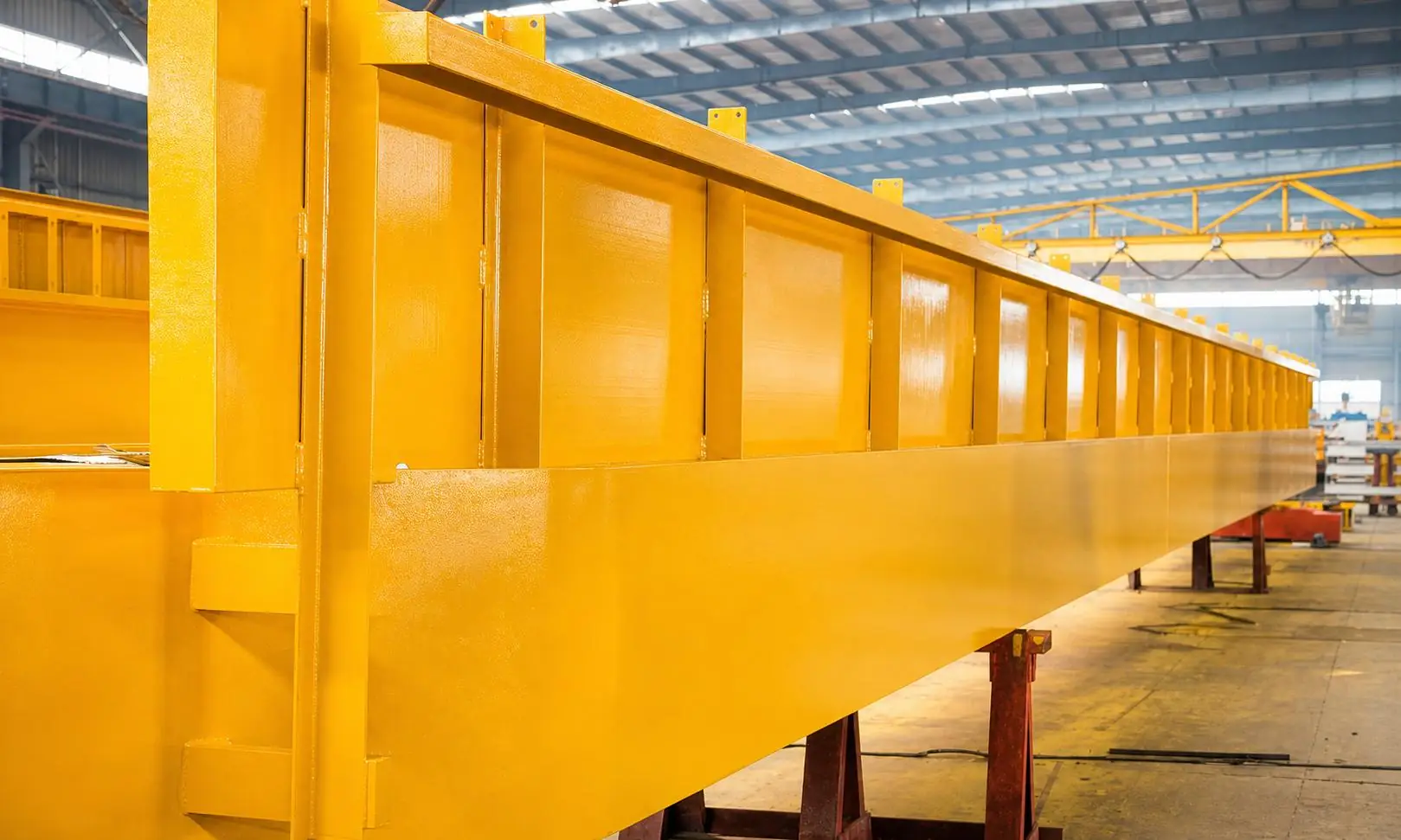
Paint film coverage and appearance inspection
Walk all the surfaces that can be observed under sufficient lighting, focus on:
- Check the overall color and luster of the paint film to ensure that the color of the entire component is uniform, and there is no obvious color difference or flickering luster.
- Carefully check the surface construction defects to prevent sagging, sagging, orange peel, dry spray, and excessive flying paint splashing everywhere.
- Focus on verifying the presence or absence of pinholes and local coating leakage, so as to prevent the steel substrate from being directly exposed, leaving corrosion channels.
- Pay attention to the location of difficult spraying points such as corners and welds to ensure continuous and uniform coating coverage. Such areas usually need to be pre-coated in advance.
Dry film thickness (DFT) detection
The thickness of the wet film is the control index in the spraying process, and the thickness of the dry film is the basis for the final acceptance.Use a calibrated magnetic or electronic thickness gauge, according to the sampling scheme of SSPC-PA 2 or ISO 19840, multi-point readings on the main beam, end beam and key locations, and then compare the minimum and nominal values specified in the technical agreement.Where the paint film is too thin, it is most likely to corrode in advance.
Coating adhesion assessment
Adhesion testing (grid method ISO 2409 or pull method ISO 4624) verifies the binding strength between the coating and the steel and between the layers of the coating.The adhesion is unqualified, and most of the root cause is that the surface treatment is not in place or the substrate is contaminated.After the destructive test is completed, the test site must be repaired and restored.
Special inspection of difficult-to-spray areas
These dead ends have to be seen separately:
- The lower flange of the main beam and the lower side of the web
- Inner corner and component lap position
- Weld and bolt connection nodes
- Surrounding areas of brackets, bridges, and electrical components
The paint film is often thin or even leaking in these locations.
Check Corrosion Protection Beyond Conventional Painting
Hot-dip galvanized and protective coating
Hot-dip galvanized can provide long-term protection for some components (platforms, railings, and small structural parts).Zinc-rich primers can also play a sacrificial protective role of zinc in the coating system.The composite system of galvanized and topcoat has the longest protection life under strong corrosion conditions.
Weld and corner protection
Pre-coating (pre-coating of side seams) is an essential process: before spraying as a whole, use a brush or roller to patch the corners and welds again.Sharp corners and welds are prone to insufficient film thickness when spraying, and less pre-coating will become the starting point for corrosion.Drainage holes should also be left in the structural design to avoid stagnant water and reduce the risk of long-term corrosion.
Protection of mechanical parts
Choose an anticorrosive electrical box (IP protection grade, stainless steel or coated shell), anticorrosive fasteners, and a cable laying system with a protective design.Many of these parts are supplied separately, and the original paint film is too thin, so the protection requirements need to be clarified separately in the inspection plan.
Common Overhead Crane Painting Defects and How to Identify Them
The following defects are most likely to be encountered during factory inspection. Each of them must correspond to the cause and risk before it can be determined whether it needs to be repaired or not.
- Peeling and peeling: Most of them are due to insufficient surface treatment of the steel in the early stage, or insufficient adhesion between the coating layers.Once this defect occurs, the underlying steel will be directly exposed to the corrosive environment, and the corrosion will spread rapidly.
- Bubbling: Water vapor, salt or other pollutants are wrapped inside the paint film, which is a typical signal of the failure of the coating system.Submembrane rust will continue to grow under the blister, and it will gradually develop into a large area of peeling in the future.
- Pinholes and leaking coating: it is generally caused by improper control of spraying operations and insufficient thickness of the local paint film.These tiny holes and blank areas are equivalent to direct channels to the substrate, and corrosive media can directly invade the steel.
- Uneven film thickness: It is mainly caused by unstable spraying techniques and inconsistent control of the position of the spray gun.Areas with thin paint film have weak protective barriers, which will be broken through by corrosive media first, and become the location of early corrosion.
- Rust spots: Most of them are due to incomplete cleaning of the steel substrate, or the coating is bumped and scratched after completion.The rust point is the starting point of local corrosion. If it is not repaired in time, the rust will continue to spread outward.
- Cracking: The common cause is poor compatibility between different coatings, or a single spray paint film is too thick.Cracks will destroy the complete protective layer, water vapor and corrosive substances will penetrate along the gap, and the anticorrosive ability will be completely lost.
If any of the above defects occur, a record of nonconformity must be issued, and acceptance can only be made after the repair is qualified.
How to conduct an Overhead Crane Painting Quality Inspection before delivery
Review of technical documents
Request and check:
- Approved coating supporting plan and product manual: Check the officially approved coating system plan of the project, and at the same time check the original product technical manual of the coating to confirm the coating performance parameters, usage requirements and supporting instructions as the basis for acceptance.
- Surface treatment requirements, including cleaning level and roughness: confirm the surface treatment specifications of steel, clarify the cleaning level of sandblasting and rust removal, and the roughness index of the surface profile. These two items directly determine the adhesion of the coating and are the basic items for anticorrosive inspection.
- The specified dry film thickness, including the minimum value and the nominal value: check the dry film thickness index marked in the technical document to distinguish between the minimum allowable thickness and the design nominal thickness. The subsequent on-site thickness measurement results need to be compared to this standard to determine whether it is qualified or not.
- Construction environment and restrictions on coating operations: Check the environmental control requirements for coating construction in the document, including steel temperature, dew point, air humidity, dust and other restrictions, to avoid late hidden dangers in construction under unsuitable working conditions.
Visual inspection and instrument inspection
Comprehensive visual inspection of all reachable surfaces; multi-point measurement of dry film thickness with calibrated instruments; adhesion testing when required by the inspection plan; take pictures of defects and mark the exact location.
Verify inspection records and quality documents
Need to provide:
- Surface treatment inspection report: Record the test results of steel rust removal grade, surface roughness, cleanliness, etc., which is the core certificate to determine whether the substrate treatment is up to standard and ensure the adhesion of the coating.
- Coating batch number and material certificate of conformity: check the coating batch information, check the original quality certificate, confirm that the specifications and performance of the incoming coating meet the specified requirements of the project, and prevent the mixing of unqualified coatings.
- Coating construction records, including construction date, environment and construction personnel: keep the complete process information of the coating operation, record the operating time, on-site temperature and humidity, dew point and other environmental parameters, as well as the person in charge of construction, to facilitate traceability of construction conditions.
- Dry film thickness test report: summarize the film thickness test data of each measuring point, compare the standard limit value to determine whether it is qualified, and intuitively reflect whether the coating protection thickness meets the anti-corrosion design requirements.
- Nonconformity items and rectification records: register the location of coating defects and the type of problem, record the rework process and re-inspection results, and control quality problems in a closed loop as important information for acceptance and delivery.
The lack of information or incomplete content is a clear high-risk signal.
Confirmation of rework and repainting process
For defective areas, the processing process is fixed as four steps:
- Sanding to remove damaged and poor adhesion coatings, exposing intact paint film or bare steel: Sanding to remove peeling, bubbling, and adhesion failure coating areas, clean up to the surrounding intact paint film or clean the surface of the substrate, and remove all the failed coatings to avoid hidden dangers. Residue.
- Re-surface treatment, and if necessary, produce qualified roughness: Re-surface the ground substrate area, clean up oil stains and floating rust according to specifications, and polish out the surface roughness that meets the requirements of the coating when needed to ensure that the subsequent coating can be firmly attached.
- Repaint with compatible coatings to reach the film thickness specified by the original system: choose coatings that are compatible with the original coating system for repair and coating, layered construction, and the total dry film thickness of the final repair area must meet the original design standards.
- Acceptance after passing the re-inspection: After the repair is completed, the area will be re-inspected for appearance, film thickness and other items, and all indicators will be up to standard before it can be determined that the defect repair is completed and acceptance is granted.
How to Maintain Overhead Crane Paint and Corrosion Protection
After the equipment is put into use, the maintenance actions should form a fixed rhythm:
- Formulate regular visual inspection plans to increase the frequency of corrosion in harsh environments: establish a normalized appearance inspection mechanism to appropriately shorten the inspection interval for strong corrosion conditions such as coastal and chemical industries, and detect signs of coating aging and damage earlier.
- Clean up the surface area of dust, oil and chemical residues in a timely manner: regularly clean the dust, oil and corrosive residues attached to the surface of the components to avoid long-term attachment of pollutants and continuous erosion of the paint film, accelerate the aging and failure of the coating.
- Repair scratches and coating damage immediately, don't wait for corrosion to spread: once scratches, bumps and other paint film defects are found, repair should be carried out as soon as possible to prevent water vapor and salt from invading the substrate and prevent corrosion from spreading to the surrounding area.
- Continuous monitoring of high-risk locations: corners, welds, and lower surfaces of components: Focus on tracking these areas that are prone to water accumulation, salt accumulation, and difficult spraying. They are often the first places where corrosion occurs and need to be focused on.
- Arrange local or overall repainting according to the actual aging state of the coating, not purely relying on a fixed life: do not mechanically apply a fixed refurbishment cycle, based on the actual aging, chalking, and damage of the paint film, choose local repair or overall repainting to improve maintenance economy
Active maintenance can maximize the protection value of the original qualified coating.
Conclusion
The coating quality of bridge cranes directly affects the anticorrosive performance and long-term operating reliability of the equipment.When purchasing and accepting, the surface treatment, coating matching, dry film thickness, and coating quality of welds and corners should be checked, and the inspection standards and quality assurance information should be included in the technical agreement.
For strong corrosion conditions, consider inviting a third-party coating inspector to participate in the acceptance.Henan Mine Crane attaches great importance to the coating and quality inspection in the crane manufacturing process, and can formulate corresponding anti-corrosion coating plans according to the environmental requirements of the project.
Frequently Asked Questions
Q: What is the lowest surface treatment level for the new bridge crane?
Answer: High-performance coating systems generally require sandblasting and rust removal to reach Sa 2½ (ISO 8501-1).Only indoor working conditions or partial repairs with slight corrosion are allowed to have a lower level.
Q: What is the total dry film thickness of the bridge crane coating?
Answer: The conventional total dry film thickness, the mildly corrosive environment is about 120 µm; the coastal and chemical strong corrosive environment is above 200-400 µm, the specific technical specifications approved by the project shall prevail.
Question: Why is the pre-coating of the side seams important?
Answer: The film thickness of the corners and welds is more likely to be insufficient when spraying.Only by pre-coating the whole before spraying can the film thickness of these key locations be guaranteed to meet the standards and long-term anticorrosion can be achieved.
Question: If I see pinholes or the paint film is too thin, can I accept it directly?
Answer: No.This kind of defect is a channel of corrosion intrusion, and it must be repaired, the substrate must be reprocessed, and the coating must be up to standard before acceptance.
Q: After the crane is put into use, how often does the coating be checked?
Answer: The visual inspection of the coating can be included in the routine inspection of the crane.The frequency of outdoor, coastal, and chemical environments should be encrypted, and the damaged location should be repaired in time.
Question: Is hot-dip galvanized better than paint?
Answer: The sacrificial protection ability of hot-dip galvanized is excellent, and the components under strong corrosion conditions are preferred.The composite system of galvanized and topcoat usually has the longest service life.