
How to Choose Between Single-Girder and Double-Girder Overhead Cranes for Specialized Applications
The key to choosing a single-girderl or double-girderl bridge crane is which structure can meet the load, working frequency, working space and special technology at the same time.Projects with light and medium-sized handling, compact space and limited budget are often suitable for single beams; for heavy-duty, complex spreaders or multi-agency collaborative operations, double beams often provide a more suitable layout foundation.However, the number of beams itself does not determine the working level, positioning accuracy or service life of the equipment.
When choosing overhead cranes for special applications, the value of a piece of equipment is reflected in the complete operation cycle: whether the workpiece can be lifted from the reclaiming point, pass through obstacles, move stably, and land accurately.Ladle handling, mold flipping, and aviation component assembly, even if the rated lifting weight is the same, completely different lifting mechanisms and control schemes may be required.
Understanding Single-Girder and Double-Girder Overhead Crane Structures
What Is a Single-Girder Overhead Crane?
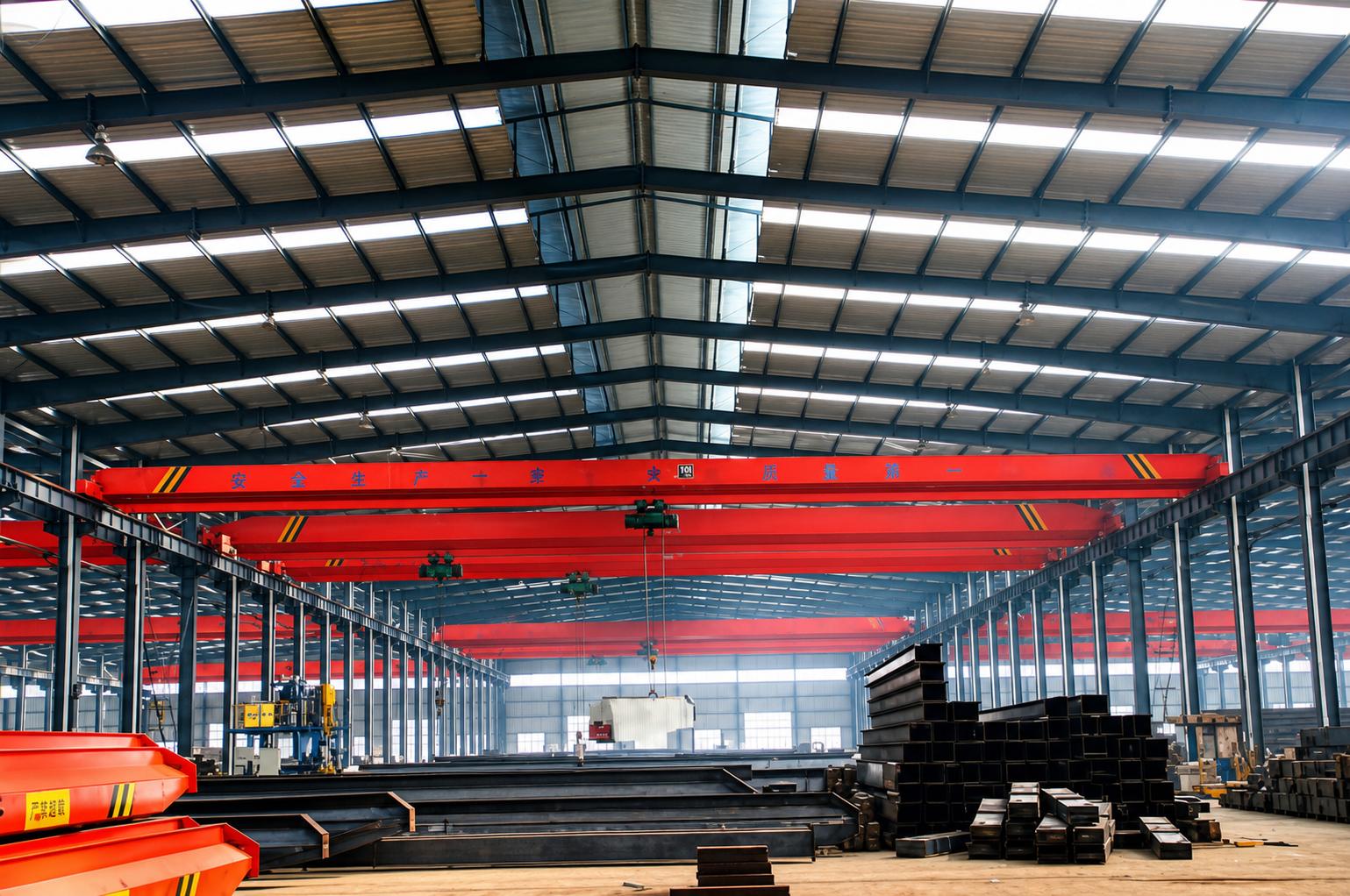
The single-girderl bridge crane consists of a main beam, an end beam, an electric hoist, an operating trolley, and an electrical control system.In a common configuration, the hoist trolley runs along the lower flange of the main beam, while the bridge frame moves along the tracks on both sides of the plant, forming a lifting, horizontal and vertical handling capacity in three directions.
Lighter bridges are usually conducive to controlling equipment input, installation workload and building carrying requirements, so single beams are commonly used in workshops, warehouses, assembly lines and maintenance areas.The lower suspension arrangement of the hoist here is the same as whether the entire bridge frame adopts the upper bearing type or the suspension type; the single beam is not limited to the low-lifting configuration, and its scope of application depends on the specific design.
What Is a Double-Girder Overhead Crane?
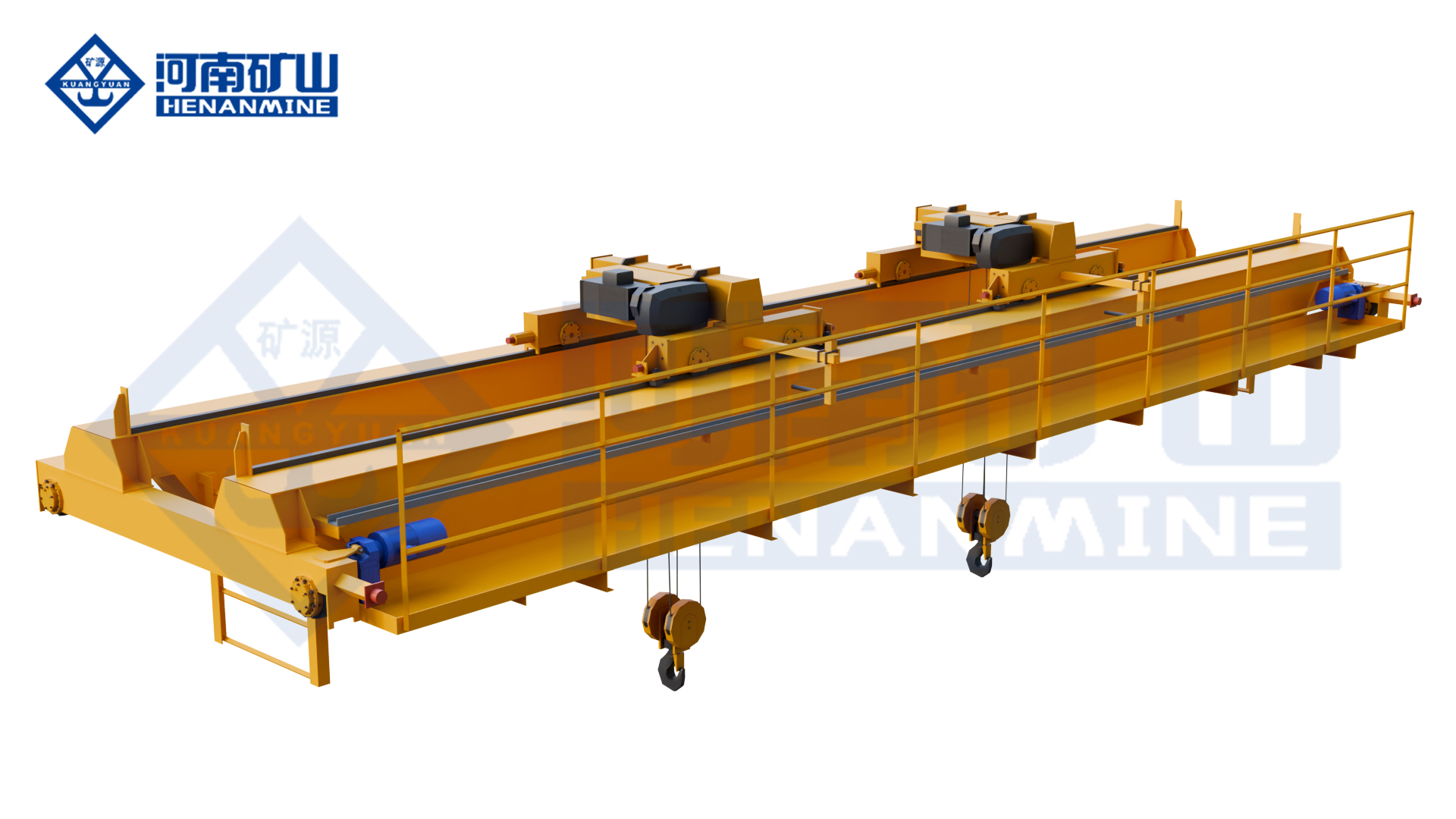
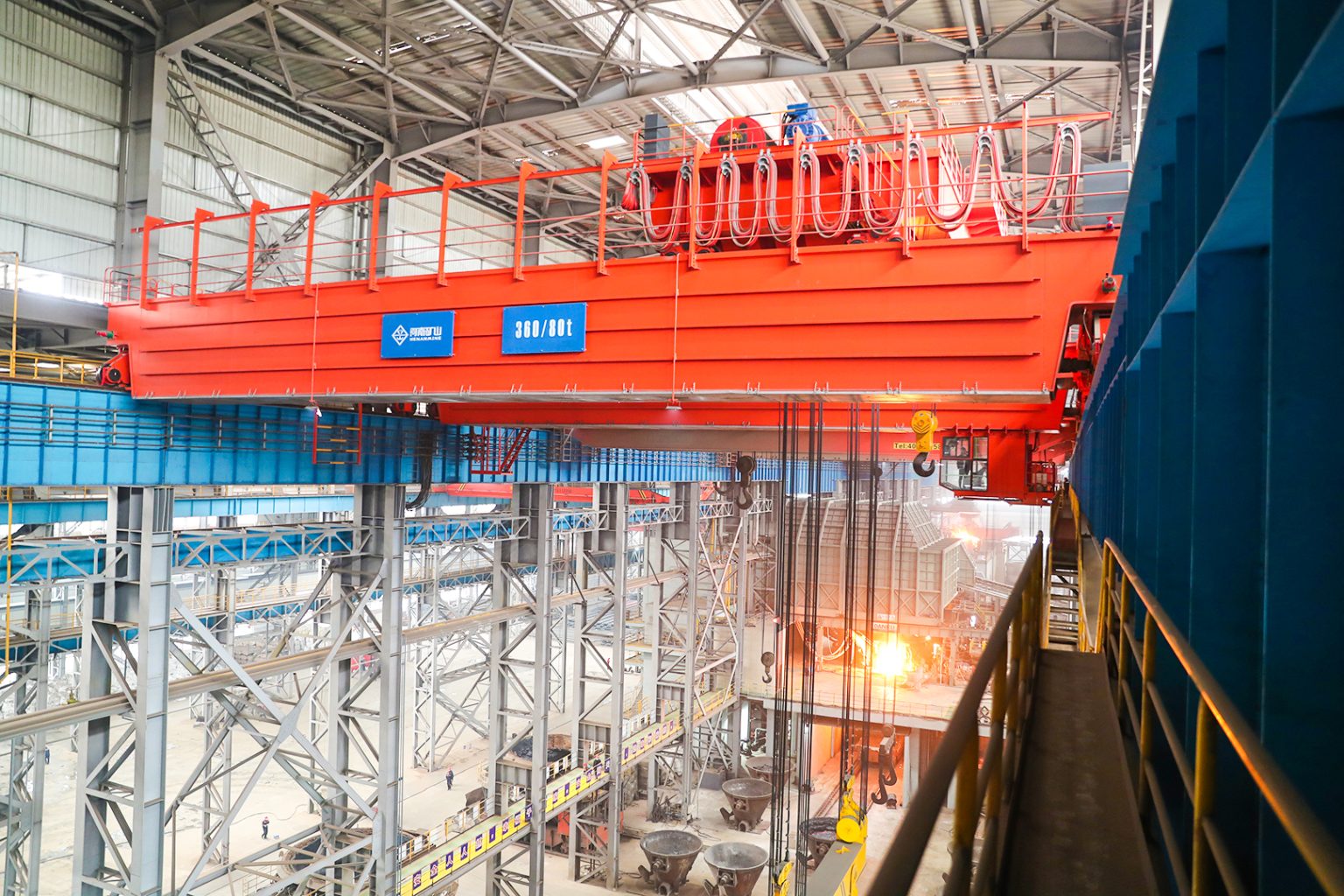
The double-girderl bridge crane adopts two parallel main beams, which are connected by end beams to form a bridge frame.A typical lifting trolley runs along the track above the main beam, and the lifting mechanism can adopt an adapted hoist trolley or hoist structure to provide layout space for larger loads, auxiliary lifting mechanisms, and maintenance platforms.
Under the appropriate structural arrangement, the hook can be raised between the two main beams to improve the available lifting height; however, the roof frame and maintenance clearance must still be reserved above the trolley.Double beams are commonly used in heavy-duty manufacturing, power stations and metallurgical facilities. Their advantages come from the carrying and mechanism configuration capabilities. The whole machine cannot be determined to be more durable or accurate by just two main beams.
Single-Girder vs. Double-Girder Overhead Cranes: Key Differences
The differences between the two types of overhead cranes should be compared under the same lifting weight, span, working level and environmental conditions.Single beams usually use lighter structures to achieve basic handling functions, while double beams are easier to accommodate heavy-duty trolleys and complex process mechanisms.The table below reflects common configuration trends and does not represent fixed boundaries for all products.
| Comparison Factor | Single-Girder | Double-Girder |
| Main girder structure | One main girder | Two parallel main girders |
| Load capacity | Common for light to medium loads | Common for medium to very heavy loads |
| Lifting height | Depends on hoist headroom | Often benefits from hook travel between girders |
| Trolley arrangement | Commonly an underhung hoist trolley | Commonly a top-running trolley |
| Structural weight | Usually lower for comparable duties | Usually higher for comparable duties |
| Installation | Often less complex | Often requires more assembly and lifting work |
| Initial investment | Usually lower | Usually higher |
| Maintenance | Often fewer assemblies | May include more mechanisms and access systems |
| Special attachments | Available with suitable engineering | Often offers more layout flexibility |
Limited headroom does not automatically mean that the single beam is selected, and the requirement for a higher lifting height does not automatically mean that the double beam is selected.The low headroom hoist, the connection position of the main beam and the end beam, the height of the trolley and the limit position of the hook will all change the result.Maintenance costs also depend on the number of institutions, strength of use and accessibility. double-girderl equipment with maintenance platforms is sometimes easier to maintain.
How to Choose the Right Crane for Specialized Industrial Applications
Steel Mills and Metallurgical Workshops
Metallurgical workshops face high temperature radiation, dust, heavy loads and continuous production pressure at the same time.Frequent starting and stopping and operations close to the rated load will exacerbate the heat load and structural fatigue of the mechanism. Double beams are usually easier to configure high-level lifting mechanisms, auxiliary hooks and maintenance channels to support material handling connected to the production process.
In particular, ladle hoisting cannot be understood as ordinary heavy object handling.Molten metal can amplify the consequences of braking, wire rope, or control failures, so thermal insulation protection, critical system redundancy, braking, and motion restriction measures need to be designed for use and applicable specifications.The addition of heat insulation panels to ordinary double beams cannot directly become a qualified ladle crane.
The ambient temperature cannot only use the workshop average.The time the lifting mechanism stays above the heat source, the direction of radiation, and the possibility of dust entering the electrical equipment will all change the protection requirements.Heat insulation, heat dissipation and dust-proof measures need to be coordinated to avoid one protection from hindering another function; these requirements also affect component selection and maintenance arrangements.
In the same steel mill, auxiliary areas for cold-state spare parts, pump sets, and ordinary maintenance tools may still be suitable for single beams.The determinant is the actual load spectrum and environmental exposure of the hoisting point, not the industry name of the entire plant; it is not necessary to copy the ladle handling configuration for intermittent maintenance tasks that are out of the main process of high-temperature production.
Automotive Manufacturing and Assembly Lines
Overhead cranes in automobile manufacturing need to distinguish between assembly handling and stamping die handling.For lighter parts, powertrain assembly and tooling transfer, a single-girderl scheme that matches the beat can be used; its value depends on the coverage of the hanging point, the convenience of operation, and the spatial relationship with the conveyor line and the robot work area.
The hoisting of large molds and production equipment is usually more suitable for double beams, especially when double lifting mechanisms or different lifting point positions are required.Mold flipping will change the direction of force and the load of each lifting point. The mechanism and monitoring measures designed for the flipping process must be adopted. The simultaneous start of two ordinary hoists cannot be regarded as a synchronous flipping system.
The frequency conversion drive can adjust the acceleration and deceleration process to reduce the start-stop impact, but precise coordination also involves position or speed feedback, load distribution monitoring, and interlocking logic.When connecting with automatic production equipment, the handover position, allowable swing, stop conditions, and recovery process after failure often affect the production beat more than simply increasing the operating speed.
For example, the same handling of a set of molds, simply transported from the storage location to the press, and then flipped and aligned with the maintenance support after lifting, are two different working conditions.The latter needs to analyze the load changes and allowable rope angles during the entire operation, but cannot follow the configuration of the former; whether the same equipment can take into account the two tasks should be clarified at the design stage.
Power Plants and Energy Facilities
In steam turbine rooms and large-scale equipment maintenance areas, rotors, generator components or other heavy equipment need to be hoisted. Double beams are usually conducive to the arrangement of carrying and main and auxiliary lifting mechanisms.However, the maintenance of power plants may show the characteristics of large loads and low frequency of use throughout the year. It cannot be directly applied to the working level of the continuous production workshop because of the heavy equipment.
The space requirements for maintenance operations should be pushed back from the disassembly and assembly path: the distance required for the parts to be lifted away from the foundation, the height of the hanging beam and rigging, and the margin over adjacent equipment all occupy effective headroom.Whether the hook can reach the maintenance center line, whether the maintenance platform hinders the operation, and whether the trolley can be accommodated under the roof frame will also affect the feasibility of the plan.
Taking the hypothetical rotor overhaul as an example, the fact that the heaviest parts can be lifted does not mean that they can be sent to the overhaul bracket.If you have to cross the equipment housing halfway, the obstacle crossing position may be the key point to control the height.Only by putting the lifting, translation and landing processes into the same profile can we identify which link produces the additional headroom.
For equipment such as transformers, it is necessary to distinguish between indoor installation and maintenance and outdoor transportation. It cannot be assumed that the same bridge crane can cover the complete logistics route.The specific hoisting tasks of nuclear power facilities may involve additional nuclear safety and special specification requirements, and the configuration of conventional power station cranes cannot be directly used as the basis for their design.
Warehouses and Logistics Centers
The core problem of the warehouse is the cargo handling path and cargo space coverage.For ordinary parts, mechanical spare parts, and small and medium-sized materials, a single beam can usually complete conventional loading and unloading with a lower structural weight; however, the height of the shelf, the location of the loading and the ability of the hook to be close to the wall will determine whether the nominal coverage can be converted into actual available space.
Heavy-duty steel coils, long materials, or storage using grab buckets and electromagnetic spreaders may be more suitable for double beams and special trolleys.The weight and shape of the spreader will occupy the lifting weight and lifting space at the same time, and the gripping method will also affect the time required for a cycle.The selection of storage overhead cranes should therefore be evaluated together with the cargo, spreader, and inventory layout.
The frequency will also change the economy: occasional loading and unloading every day and continuous feeding of the production line, even if the weight of the goods is close, the requirements for work level and equipment availability are different.Increasing the rated lifting weight may not eliminate logistics bottlenecks. Waiting for spreaders, detour obstacles, and unreasonable pick-and-place locations may be the reasons for the long cycle time.
When a crane serves multiple stations, the pick-and-place sequence and waiting for each other will also limit throughput.The evaluation should include a complete cycle of hooking, operation, pendulum elimination, decoupling, and no-load return; only by clarifying the time-consuming links can we judge which one is more suitable for warehouse needs by increasing speed, optimizing cargo space, or adjusting the number of equipment.
Shipyards, Ports, and Heavy Equipment Manufacturing
In the segmented workshops of shipyards, port maintenance plants and heavy equipment manufacturing areas, ultra-long components, large welded parts and eccentric loads are very common.The double beams facilitate the arrangement of auxiliary lifting mechanisms, multiple hanging points and special hanging beams, making it easier for the equipment to adapt to the assembly and positioning process, but the center of gravity of the workpiece, the distance of the hanging point and the motion envelope must still be analyzed separately.
Multiple hanging points do not mean that the load is evenly distributed.The stiffness of the components, the difference in the length of the rigging, and the turning process may all cause a certain lifting point to bear a higher load; the rated capacity of the two hooks cannot be simply added as the combined lifting weight of the whole machine.The boundaries of joint hoisting capacity, allowable combination and synchronous control should be clarified by special design.
The bridge scheme here is mainly suitable for working areas with suitable track support.The loading and unloading of open-air docks and docks may require gantry or other types of lifting equipment, and the indoor single-girderl and double-girderl comparison conclusions cannot be directly followed.When it comes to outdoor operation, wind load, corrosion, protection and parking requirements must also enter the design conditions.
Aerospace and Precision Manufacturing
Aviation structural parts and precision equipment may not be extremely heavy, but they require high surface protection, attitude, and approach speed.The focus of the selection of such overhead cranes is whether the load can be kept controllable when approaching the assembly position, not just how much weight the hook can lift.With proper control, the single beam can also be competent for some precision handling tasks.
The frequency conversion drive improves stability by controlling the movement process, while the anti-shake function limits the swing by adjusting the acceleration and deceleration of the bridge and trolley.Neither can be automatically equivalent to the positioning accuracy of the workpiece; the length of the wire rope, the deflection of the bridge, the shape of the load and the end spreader will all affect the actual position and stability time of the hoisting.
When multi-point posture adjustment, larger spans, or complex tooling are required, double beams may provide a more suitable mechanism arrangement.The acceptance index should clearly correspond to the hook, spreader or workpiece, and specify the load status, stroke and test conditions; only the position resolution displayed by the controller is compared, and the actual assembly capacity cannot be judged.
Position feedback can help the equipment repeatedly reach the target area, but the flexibly suspended workpiece may still continue to swing or rotate.Therefore, precision docking sometimes requires anti-turning spreaders, special tooling or end guidance to distinguish between large-scale handling and final cooperation actions.The control system is designed together with the mechanical interface to avoid attributing all assembly errors to the bridge structure.
Six Critical Factors to Evaluate Before Making a Decision
Rated Load Capacity and Actual Working Load
The selection data should include the maximum single load, common working load and its frequency of occurrence, and be included in the hanging beam, gripper and other under-hook devices according to the definition of the rated load.Assuming that the workpiece weighs 8 t and the detachable spreader weighs 1 t, the static suspension load borne by the hook is 9 t, and the equipment cannot be matched only by the weight of the workpiece.
The dynamic load effect is calculated by the designer according to the applicable specifications and motion conditions, and it is not appropriate for the purchaser to increase a proportion at will instead of calculating.Future demand should also respond to clear product or process changes; excessive expansion of capacity may increase self-weight and construction investment, but the frequency, positioning or headroom issues have not yet been resolved.
Span and Building Structural Conditions
The span is usually defined by the distance between the centerline of the running track on both sides, which is not the same parameter as the spacing between the plant columns.When choosing overhead cranes for existing factories, it is necessary to combine the weight of the bridge, the position of the trolley, the maximum and minimum wheel pressure, and the horizontal action with multiple equipment, and hand it over to the building structure professional for verification.
Double beams are usually heavier, but the role of a single wheel is also affected by the number of wheels, wheel track and trolley arrangement. It is not possible to judge whether reinforcement is required based on the total weight alone.Rail beams, columns, connections and foundations together form a carrying path. Increasing the capacity of the crane or replacing the form of the bridge cannot skip the compatibility check of the entire path.
Lifting Height and Hook Approach
The effective lifting height should be checked in combination with the upper and lower limit positions and actual operating benchmarks; the total height of the plant is not equal to the available height of the hook.After the height of the workpiece, the length of the rigging, the size of the hanging beam and the margin of the obstacle are superimposed, it can be determined whether the lifting range is sufficient, and the low headroom hoist may improve the space utilization of the single beam scheme.
The proximity of the hook affects its ability to approach the end wall and the tracks on both sides, and it needs to be checked at the same time as the height.Some plans have a better upward lifting space, but they cannot cover the cargo space against the wall.By comparing the marked pick-and-place points with the floor plans and cross-sectional views of the obstacles, the differences can be revealed more than just looking at the height parameters.
Duty Classification and Operating Frequency
The working level reflects the intensity of use that the equipment can withstand during the design and use period, and involves conditions such as working cycle, load spectrum, and mechanism operation.ISO 4301-1 provides a framework for the classification of cranes and institutions; when adopting the FEM system, specific rules, versions, and classification objects should also be clarified to avoid direct mixing of different codes.
The classification of the whole machine, lifting mechanism and operating mechanism cannot be replaced by a vague heavy-duty label.Frequent proximity to rated loads, long travel and intensive start and stop will affect fatigue, heat dissipation and wear requirements.Double beams are easier to achieve certain high-strength configurations, but the double-girderl structure itself is not equal to a high working level, and a single beam cannot be judged as a low-frequency device based on its appearance alone.
Installation, Maintenance, and Lifecycle Costs
The cost comparison should cover procurement, transportation, installation, building renovation, inspection, spare parts and maintenance downtime.The initial investment of a single beam is usually low; if the double beam meets the actual high-load cycle or provides better maintenance conditions, it may also form a reasonable full-cycle cost in a specific project, and the equipment quotation cannot be compared only.
Overhead cranes of the same configuration may also have different cost performance in different factories, including spare parts acquisition time, maintenance personnel capabilities, and downtime losses.Maintainability needs to be implemented into whether brakes, wire ropes, motors, and electrical components can be approached and replaced, rather than just judging by the simple or complex structure.
Automation and Future Expansion
Remote control, frequency conversion, anti-collision, load monitoring and automatic positioning are not unique functions of double beams.Both types of equipment can integrate corresponding systems within the appropriate design scope; the specific scheme depends on the motion mechanism, sensor, communication interface and functional requirements, and the level of automation cannot be inferred from the number of beams.
In the future, the expansion of production should distinguish between increasing the frequency of cycles, expanding the coverage and increasing the rated load.The reserved control interface can support some functional upgrades, but it cannot allow the main beam, track beam, or brake system to automatically obtain higher capabilities.It is more meaningful to clarify the future working conditions and then evaluate the structure and electrical parameters than to require the general requirements to be scalable.
Common Mistakes When Selecting Single-Girder or Double-Girder Cranes
The most common mistake is to use a maximum workpiece weight to determine all configurations.In this way, it is easy to miss the weight of the spreader, the eccentric load and the daily load spectrum; another mistake is to only look at the width and height of the plant, ignoring the limit position of the hook, the bearing of the operating track and the actual disassembly and assembly path of the equipment, resulting in the equipment being hoisted but unable to complete the operation.
The frequency of underestimation often does not appear until after it is put into production: the rated capacity is sufficient, but the organization is not suitable for the continuous execution of the expected cycle.If special spreaders and auxiliary lifting mechanisms are added at a later stage, the weight, force, headroom and control logic of the trolley may also be changed, forcing the project to be re-checked instead of simply adding an accessory.
Only pursuing the lowest purchase price, or infinitely expanding capacity for the future, will deviate from actual demand.A more effective comparison is to allow the candidate solutions to adopt consistent work levels, supply boundaries, and acceptance conditions, and then analyze their respective construction inputs, production adaptation, and maintenance costs to avoid mistaking configuration differences for structural differences.
Single-Girder or Double-Girder Overhead Crane: Which One Should You Choose?
Actual decision-making can first determine the load, process, and space conditions that must be met, exclude solutions that cannot complete the task, and then compare the configurations that can achieve the same goal.The following trends are suitable for initial screening, and the final result still depends on the specific design and plant verification.
| Project Requirement | Configuration to Evaluate First | Key Condition |
| Light-duty material handling | Single-girder | Suitable capacity and duty design |
| Limited equipment budget | Single-girder | All operating requirements met |
| Compact workshop lifting | Single-girder | Verified hook coverage and clearance |
| Heavy industrial equipment | Double-girder | Suitable runway and building structure |
| High usable hook position | Double-girder | Verified roof clearance and trolley geometry |
| Frequent heavy-load cycles | Double-girder | Independently specified duty classification |
| Multiple hoists or complex attachments | Often double-girder | Engineered load sharing and controls |
If both types of overhead cranes can meet the task, the lower self-weight and initial investment of a single beam are usually worthy of priority comparison; if heavy loads, multi-mechanism or complex spreader arrangements are required, double beams are often easier to achieve the goal.Any kind of solution must pass the verification of craftsmanship, architecture and work level at the same time before it has practical selection value.
Why Work with an Experienced Overhead Crane Manufacturer?
Experienced manufacturers can transform workpieces, spreaders, work cycles, and environmental information into verifiable design conditions that match lifting weight, span, lifting height, and institutional work level.Professional competence is also reflected in the identification of limitations: which tasks are suitable for standard products, which require special institutions, and which have exceeded the carrying or clearance conditions of the original plant.
The structural calculation, wheel pressure data and general layout plan should support the evaluation of building compatibility; the motor, brake, lifting mechanism and control system should be selected around the same working conditions.The verification of the building structure still requires the corresponding professional participation, and the existing track and plant cannot be determined to be able to carry it based on the manufacturer's equipment quotation alone.
Manufacturing quality control, load testing according to applicable requirements, functional acceptance, installation guidance and after-sales spare parts jointly affect the delivery quality.Special projects must also verify the functions of multi-agency collaboration, protection interlocking, and fault response, so that the design capabilities can be transformed into on-site operational capabilities.
Useful technical solutions should allow the purchaser to clearly see the design prerequisites and delivery boundaries, including whether the equipment under the hook is supplied, who will bear the reinforcement of the plant, how the automation interface is connected, and what working conditions are used for acceptance.The clearer the information, the easier it is to identify the missing work in the quotation, and the more it allows a fair comparison between single-girderl and double-girderl solutions.
Conclusion
single-girderl and double-girderl bridge cranes do not have a unified preferred solution for all industries.The selection should comprehensively consider the load, operating frequency, space constraints, environment and control requirements, and evaluate it in combination with workpiece and spreader data, plant drawings and typical operating procedures.Henan Mine Crane can provide customized solutions for single-girderl or double-girderl bridge cranes according to project working conditions to help customers reasonably determine the equipment configuration.