
20t Double Girder Overhead Cranes: Heavy Bay Material Handling with Optimal Hook Height
In the lifting, transshipment and precise alignment of 20-ton heavy objects in heavy industrial plants, the 20-ton double-girder bridge crane is a stable and efficient core equipment.The selection of equipment cannot only focus on the rated load and the double-beam infrastructure. The parameters such as the lifting height, span, working level, and trolley layout of the hook adapted to the working conditions of the plant are the key to determining the adaptability and operating efficiency of the equipment.
This article is a professional selection guide for 20-ton double-girder bridge cranes. It systematically explains the equipment structure, hook height optimization, core parameters, safety configuration, installation and maintenance, selection misunderstandings and procurement lists. It can provide accurate and practical selection reference for supporting new plant equipment and upgrading old plant equipment.
What Is a 20t Double Girder Overhead Crane
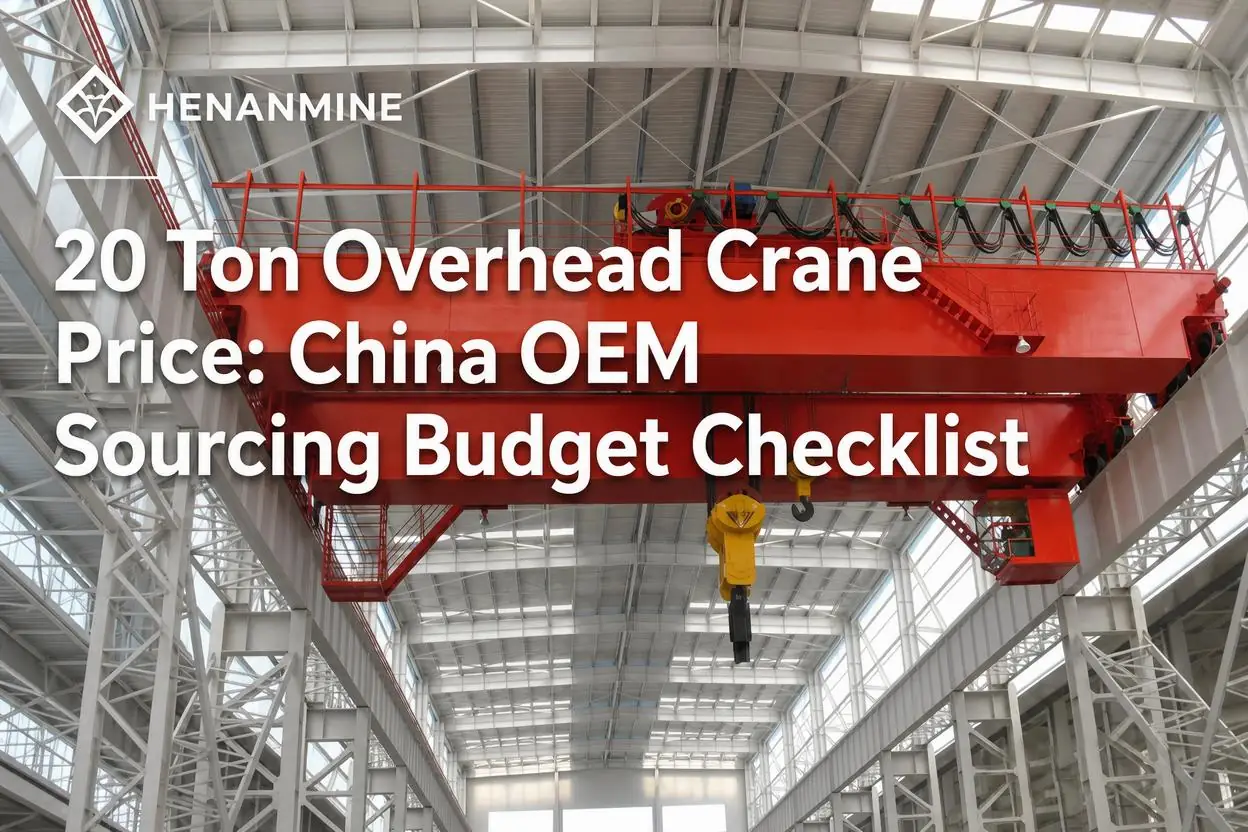
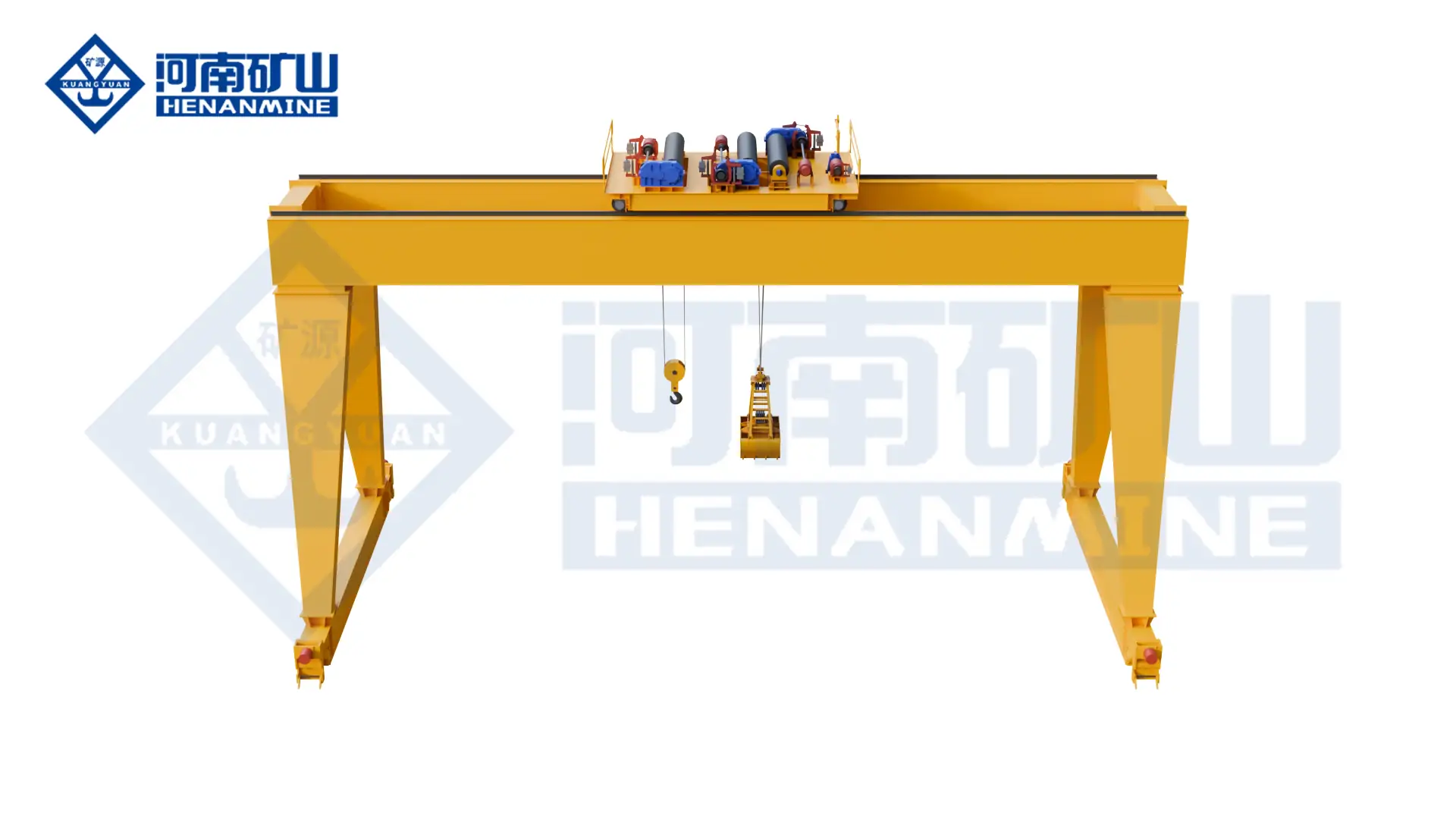
The core structure of the double-girder bridge crane is a rigid bridge frame composed of two parallel main beams and end beams, which spans the working area of the plant and can walk along the longitudinal track of the plant, cooperating with the horizontal operation of the lifting trolley to complete the lifting and translation operations of heavy objects.The core components of the complete set of equipment are as follows:
- Parallel double main beam: The core load-bearing body of the equipment adopts rolled steel or welded box structure to carry all lifting loads, greatly improving the structural rigidity and operating stability of the whole machine, and adapting to 20 tons of heavy-duty working conditions.
- End beam and operating track system: connect the two ends of the double main beam and match the walking wheel assembly to support the smooth reciprocating operation of the entire crane along the longitudinal track of the plant to ensure the walking accuracy and load-bearing balance of the cart.
- Electric hoist/lifting trolley: mounted on the top of the main beam track, it can walk accurately laterally along the main beam to realize the horizontal displacement and alignment adjustment of heavy objects, and flexibly adapt to the needs of multi-station lifting.
- The hook group and the lifting mechanism: directly connect to carry heavy objects, relying on the coordinated transmission of motors, reels, and wire ropes to smoothly complete the core operations of lifting, lifting, and dropping heavy objects. It is the core execution unit of lifting operations.
- Electrical control and safety system: integrated operation control, travel limit, safety protection, sound and light alarm and other multi-function modules to control the operation of the equipment throughout the process, avoid the risk of heavy-duty operations, and ensure the safe and compliant operation of the whole machine.
Compared with the single-beam structure, the overall stiffness of the double-beam bridge is stronger and the force is more uniform. It can be adapted to large-span, high-load, and high-frequency heavy-duty operation scenarios. It is the mainstream structural form of 20-ton lifting operations.
Core advantage
20 tons is a medium- and heavy-duty lifting load. The structural strength and stability of a single-girder crane are difficult to adapt to this working condition for a long time, while the double-girder structure relies on its unique design advantages to perfectly match the 20-ton material handling requirements.:
- Excellent structural rigidity: the symmetrical bearing structure of the double main beam can effectively suppress the deformation and deflection deviation of the bridge frame during operation, and the rigidity, deformation resistance and smooth operation of the whole machine are better than that of single-girder cranes, and it is suitable for long-term heavy-duty working conditions.
- Suitable for large-span and heavy-duty working conditions: The structure has sufficient carrying margin, can be adapted to the layout of the large-span plant, and stably carries a rated load of 20 tons, which perfectly meets the needs of high-frequency handling and assembly of large components and heavy machinery and equipment.
- Higher effective lifting height: the hooks are embedded in the gap position of the double main beam, which is different from the external structure of the single beam, which greatly frees up the vertical working space, maximizes the use of the headroom of the plant, and realizes a higher effective lifting stroke of the hook.
- Strong stability in heavy-duty operation: the whole machine has a small amount of shaking during operation and high load alignment accuracy. It can adapt to high-intensity and continuous heavy-duty material handling operations, with low equipment failure rate and stronger adaptability to working conditions.
Typical application scenarios
The 20-ton double-girder bridge crane has a sturdy structure, sufficient load and stable operation. It has the core advantages of high effective lifting height and high safety redundancy. It can be adapted to large-span, large-workpiece, and high-intensity heavy-duty continuous operation conditions. It is not limited by complex production scenarios and is widely used in various heavy-duty industrial fields. Core application scenarios include:
- Steel structure processing workshop: suitable for the loading, transportation, unloading and finished product stacking of heavy raw materials such as large steel components, steel beams, steel columns, steel plates, etc., to meet the high-frequency hoisting needs of large-size and heavy-weight workpieces.
- Large-scale machinery manufacturing plants: used for parts handling, assembly line assembly, and finished product transportation of heavy machine tools, construction machinery, and complete sets of equipment to ensure the stability and accuracy of precision equipment assembly.
- Foundry workshop: it can withstand harsh working conditions such as high temperature and dust in the workshop, and is suitable for the lifting operations of large castings, steel castings, molds and smelting supporting equipment, and is suitable for harsh heavy-duty production environments.
- Shipyard area: to meet the cross-station transfer and assembly hoisting of hull components, marine supporting heavy equipment, and large segmented structures, and to adapt to the needs of large-span and high-lifting operations.
- Prefabricated concrete component factory: it is specially used for the release, displacement, storage and loading and transportation of prefabricated wall panels, beams and columns, and large concrete components. It has strong carrying capacity and stable operation, and is suitable for mass production conditions.
- Heavy equipment assembly workshop: for the whole machine assembly, alignment installation, and test machine displacement of large-scale heavy industry equipment, electric power equipment, and mining machinery, it effectively solves the problem of precise assembly of heavy and large parts.
- Oversized and heavy-duty cargo storage workshop: responsible for the warehousing and storage of heavy-duty finished products, large-scale spare parts, and industrial raw materials, outbound loading, and cross-regional transshipment, greatly improving the material turnover efficiency of heavy-duty warehousing.
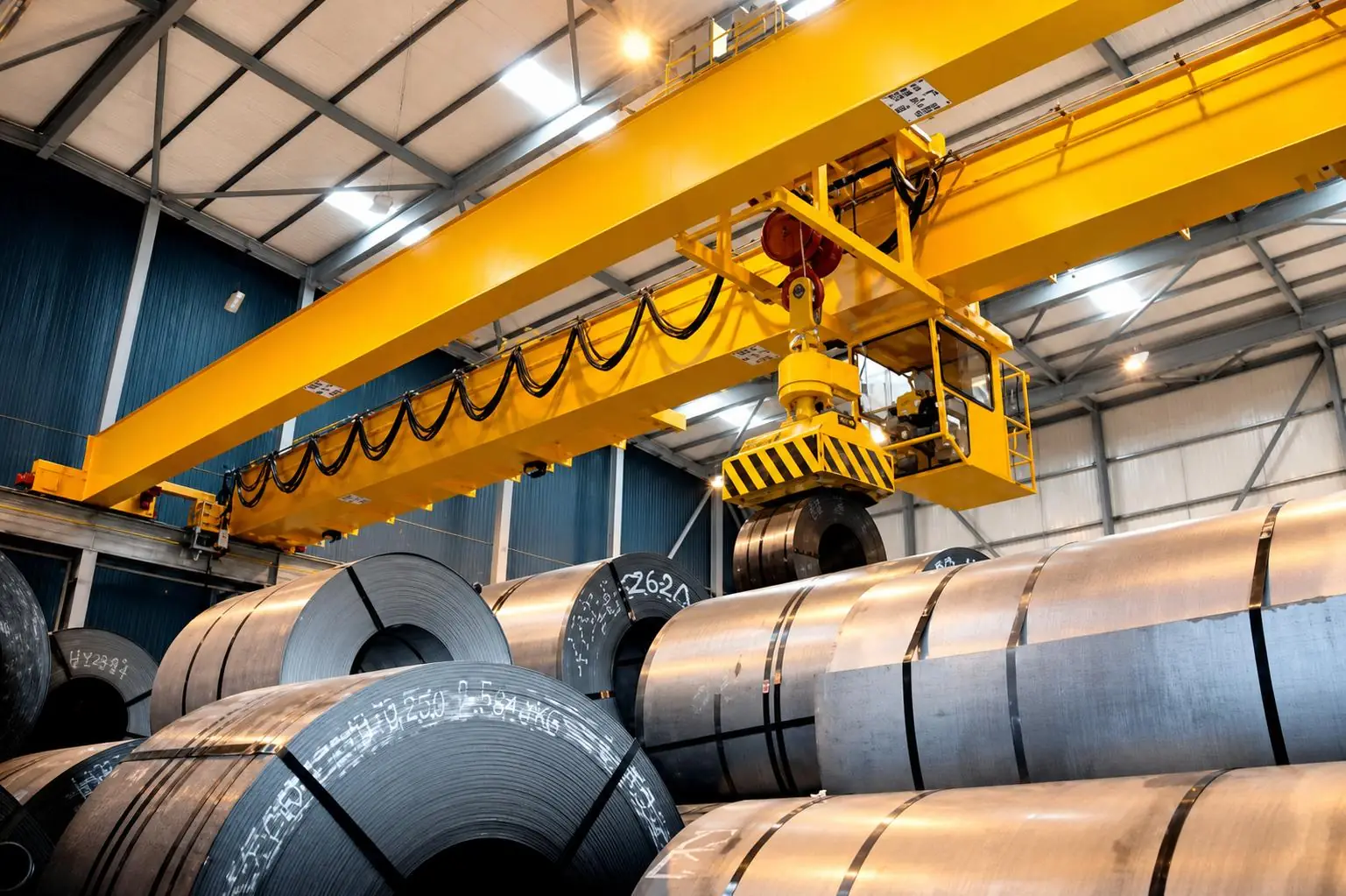
The equipment can efficiently complete the lifting, assembly, and transshipment of steel coils, large castings, prefabricated components, heavy machinery and equipment, and other materials. It is the core supporting equipment for heavy industrial production.
Understanding Optimal Hook Height in a Heavy Industrial Bay
The lifting height of the hook (also known as the lifting height) refers to the vertical distance from the ground of the plant to the centerline of the hook when the hook rises to the highest point.When selecting the type, it is necessary to strictly distinguish between the rated lifting height and the actual available lifting height.:
The rated height marked in the equipment sample is the theoretical parameter, and the roof structure of the plant, the height of the track, the thickness of the main beam, the size of the trolley, the volume of the hook group and the safety gap will compress the actual available vertical working space, and there is usually a significant gap between the two.
The importance of hook lifting height
Reasonable hook lifting height is the key to ensuring efficient operation of the workshop, which directly determines the vertical space utilization rate of the workshop. The core value is reflected in:
- Revitalize the plant space: relying on precisely adapted lifting parameters, the vertical space utilization rate of the plant can be deeply tapped, and the hoisting of ultra-high-size workpieces can be efficiently completed without the need to transform the original plant structure, and the adaptability is extremely strong.
- Ensure operation safety: smoothly lift all kinds of ultra-high and heavy-duty workpieces, effectively avoid the risk of collision between the workpieces and the equipment body and the building structure of the plant, eliminate the safety hazards of high-altitude hoisting from the source, and ensure compliance and safety throughout the operation.
- Eliminate blind spots in hoisting: effectively avoid the problem of spatial interference between heavy objects and various machinery and equipment in the workshop and station facilities, completely remove obstacles to hoisting and blind spots in operation, and realize hoisting operations without dead ends.
- Improve production efficiency: comprehensively optimize the entire operation process of material handling, equipment assembly, and cross-station transfer, streamline redundant processes, shorten hoisting cycles, and greatly improve the overall heavy-duty operation efficiency of the workshop.
Hook lifting height and plant clearance
The total height of the plant is not equal to the available lifting height of the crane. From the headroom of the plant to the actual lifting height of the hook, a number of structural space needs to be deducted. The core influencing factors are as follows:
- Roof structure: The top truss, load-bearing steel beam, roof roof and other components of the plant directly define the upper limit of the maximum vertical operation of the equipment, which is the primary condition that restricts the effective lifting space of the hook.
- Track installation height: The actual erection elevation of the driving track determines the installation reference of the crane bridge, which directly locks the vertical operation baseline of the whole machine, affecting the overall lifting margin.
- Main beam height: The structural thickness of the double-beam main beam will fixedly occupy a part of the vertical headroom of the plant, further compressing the actual effective lifting stroke of the hook.
- Hoist and trolley structure: The structural size gap between conventional trolleys and low-headroom compact trolleys is obvious, which has a great impact on the vertical space occupation, and is the core controllable factor for optimizing the lifting height.
- Hook group size: The structure of the hook group adapted to 20 tons of heavy-duty working conditions is too large, which will occupy part of the vertical lifting space, directly reducing the actual lifting height of the operation.
- Safety reserved gap: The safety spacing between equipment, workpieces and plant structures that are mandatory to be reserved by industry specifications cannot be reduced at will. It is a necessary loss parameter for calculating the effective lifting height.
For conventional 20-ton double-girder wire rope bridge cranes, the clearance under the track needs to be not less than 5.5 meters. If the total height of the plant is only 6 meters and there is excess structural shielding, it will lead to a serious shortage of actual available lifting height, which cannot meet the needs of heavy-duty operations.
How to Determine the Right Hook Height for a 20t Crane
Actual required lifting height
The calculation of the lifting height of the hook needs to be based on the actual operating needs, abandon the one-sided method of simply referring to the parameters of the plant, and accurately count the four core working condition data to provide a reliable basis for parameter customization.:
- The maximum height of the workpiece: the maximum vertical dimensions of various types of workpieces to be hoisted in the workshop;
- Workpiece safety clearance: After the workpiece is lifted into place, the minimum vertical safety distance reserved to avoid obstacles at the top;
- Transit span height: The maximum vertical height of various types of equipment and tooling that need to be crossed during the transit of workpieces across stations;
- Site equipment height: The highest vertical elevation of all fixed equipment and tooling facilities on the workshop floor.
By superimposing the above four parameters and calculating them, the minimum hook lifting height required for the operation can be obtained. On this basis, reasonable safety redundancy is reserved. The final parameters can be used as the core benchmark for crane customization and selection, which is fully adapted to the heavy-duty hoisting conditions of the workshop.
Existing clearance conditions of the plant
It is necessary to accurately survey the overall vertical space of the plant and comprehensively investigate all kinds of top shelter structures.Focus on measuring the vertical height from the ground to the bottom of the roof truss and from the ground to the centerline of the track beam.
At the same time, the installation height of top obstacles such as lighting equipment, ventilation pipes, and various pipelines is counted.Such facilities will occupy effective operating headroom. Only by comprehensive survey and statistics can the actual available lifting height of the crane be accurately calculated.
Confirm the core parameters
In the selection process, it is necessary to accurately distinguish the three core parameters, avoid the problem of parameter confusion and blindly high matching, and reasonably control the cost of equipment. The professional interpretation of each parameter is as follows:
- Lifting height: Refers to the complete vertical stroke that the hook can run, that is, the vertical distance from the lowest working position of the hook to the highest limit position, which is the core parameter that determines the height of the lifting operation.;
- Headroom height: Specifically refers to the vertical spacing from the top surface of the track to the bottom of the load-bearing structure at the top of the plant, which is a hard plant condition that restricts the effective lifting space of the crane.;
- The limit proximity distance of the hook: The minimum horizontal distance at which the centerline of the hook can be close to the end of the track directly determines the operating coverage of the equipment against the wall and against the station.
Do not blindly increase the lifting height parameters. Excessive configuration will increase the main beam specifications, hoist power, and wire rope usage, increase equipment procurement and operation and maintenance costs for no reason, and fail to adapt to the headroom restrictions of the plant, resulting in a waste of resources.
Key Specifications for a 20t Double Girder Overhead Crane
The 20-ton double-girder bridge crane supports the customization of working conditions and parameters, and is suitable for various heavy industry scenarios.The working level of the equipment is A3-A7, the working temperature is -25℃~40℃, and the European-style structure is optional to improve the stability.The following are the general standard parameters, which can be used for reference in procurement and selection:
| Parameter item | General parameter range/value | Remarks |
| Rated lifting weight | 20 tons (20000kg) | Rated load of the main hook, optional auxiliary hook |
| span | 10.5m - 31.5m | Can be customized according to the opening of the factory |
| Lifting height | 6m-30m or more | It is necessary to distinguish between the rated height and the actual available height |
| Track length | Customized on demand | Match the total length of plant operations |
| Main lifting speed | 0.5 - 8m/min | Frequency conversion and speed regulation are recommended for smoother operation |
| Trolley running speed | 2 - 40m/min | Can be adjusted according to the operating accuracy |
| Cart running speed | 10 - 80m/min | Adapt to different track length working conditions |
| Work level | A3 - A7(ISO)/ B-F(CMAA) | Determined by operating frequency and load conditions |
| Power supply method | 380V/415V/480V, three-phase, 50/60Hz | Matching factory power supply standards |
| Control method | Handle control/wireless remote control/cab control | Choose according to working height and working conditions |
| Minimum approach distance of hook | 300 - 600mm | Adapt to the operation requirements of the wall station |
| Operating ambient temperature | -25℃ ~ +40℃ | Special configuration can be customized for extreme environments |
| Executive standard | ISO, FEM, CMAA, GB, EN | Follow local industry norms |
| Single wheel wheel pressure | Changes with span and main beam design | Used for plant track and infrastructure design |
Safety Features for 20t Heavy-Duty Overhead Cranes
The safety system is the core standard configuration of heavy-duty cranes and is not an optional accessory. A full set of protective devices can effectively avoid the risks of heavy-duty operations and ensure the safety of personnel and equipment. The core safety configuration and functions are as follows:
- Overload protection device: dedicated load protection mechanism, real-time monitoring of hoisting weight, automatic triggering of sound and light alarms when the equipment is overloaded, and locking the lifting mechanism at the same time, prohibiting overloading operations, and eliminating safety accidents such as deformation, falling objects, and collapses caused by overload from the root cause.
- Upper and lower limit switches: accurately control the lifting limit stroke of the hook, effectively prevent the hook from rushing to the top and falling hook failure, avoid excessive tightening or relaxation of the wire rope, off-groove, wear and fracture and other problems, and ensure the stable operation of the lifting mechanism.
- Emergency stop device: equipped with a one-button emergency stop function, when encountering sudden dangers such as equipment failure, personnel intrusion, material shaking, etc., the operation power of the whole machine can be instantly cut off, all operating actions can be terminated, and the risk-averse stop loss can be quickly avoided.
- Walking limit switch: limit the operating boundaries of the cart and trolley separately, prevent the equipment from traveling over the range, effectively avoid the crane hitting the limit stops at both ends of the track, and prevent the fuselage from shaking, structural damage, and material offset.
- Anti-collision system: adapted to the working conditions of multi-machine shared track, through induction monitoring of equipment spacing, automatic early warning or restricted operation, to avoid collisions during multiple crane operations, and to ensure the safety of multi-equipment parallel operations.
- Sound and light alarm device: Sound and light warnings are continuously issued during the start and stop, operation and failure of the equipment, and on-site operators and inspectors are reminded to avoid the work area in a timely manner to avoid safety hazards caused by human-machine interference.
- Braking system: Adopts a high-reliability braking structure. When the equipment is powered off, fails to stop or the operation is stopped, the load can be instantly locked, and the position of heavy objects can be firmly fixed to prevent the risk of heavy objects slipping and falling.
- Multiple control modes: it supports three control modes: handle, wireless remote control, and cab. It can be flexibly switched according to operating height, operating conditions, and operating accuracy, and can be adapted to complex operating scenarios, greatly improving operation convenience and safety.
How Optimal Hook Height Improves Workshop Productivity
Maximize the use of vertical space
The precisely matched lifting height of the hook can be fully adapted to the lifting needs of the highest-size workpieces in the workshop. There is no need to transform the plant structure and split the workpieces. The lifting of ultra-high materials can be completed at once to avoid production capacity bottlenecks.
Improve the alignment accuracy of heavy objects
Sufficient lifting space allows the operator to freely adjust the height of heavy objects, and accurately complete high-precision operations such as equipment assembly, component alignment, mold installation, etc., without the need to temporarily raise and adjust the tooling, greatly improving the assembly accuracy and operation quality.
Reduce material handling restrictions
The double-beam structure hook can run close to the end of the track, with a minimum proximity distance of as low as 300mm, and can directly complete the lifting of heavy objects next to the wall station and equipment, avoiding the problem of space interference, and covering all working areas of the workshop.
Optimize the overall workflow
A reasonable lifting height can realize the smooth operation of the whole process of materials from storage, transportation, processing to assembly, without the need to repeatedly adjust the lifting plan, simplify the operation process, shorten the handling cycle, and comprehensively improve the overall production capacity of the workshop.
Common Mistakes When Specifying a 20t Overhead Crane
Various problems such as poor adaptability of workshop cranes, low operating efficiency, and frequent failures are mostly due to misjudgment of parameters and configuration misunderstandings in the early selection.In order to help users select types scientifically and avoid hidden dangers, the main points of high-frequency selection and pit avoidance in the industry are as follows:
- Single focus on the rated load: the selection only focuses on the rated lifting weight of 20 tons, ignoring the core parameters such as the lifting height of the hook, the span of the plant, and the working level of the equipment, resulting in a serious mismatch between the equipment and the actual working conditions, which cannot meet the production needs.
- Misjudgment of the effective headroom of the plant: The total height of the plant is purely used as the basis for selection, and the height of the track installation, the thickness of the main beam structure, and the space occupied by various equipment are not deducted. The actual available lifting headroom is overestimated, resulting in limited operation after the installation of the equipment.
- Redundancy of optional hoist specifications: blindly choose large-size hoists, which take up a lot of additional vertical working space, directly compress the effective lifting stroke of the hook, and waste the inherent headroom resources of the plant.
- Ignoring obstacles to blocking the top: Obstacles such as roof trusses, ventilation pipes, and lighting fixtures are ignored during the survey phase, and problems such as hoisting interference and inability to operate at full load occur after the equipment is installed, which greatly reduces the practicality of the equipment.
- Ignore the proximity performance of the hook: The limit proximity distance parameters of the hook are not considered, and the equipment cannot cover corner stations such as leaning against the wall and equipment. There are fixed blind spots and insufficient coverage of workshop operations.
- Improper selection of working level: the working level is determined only based on the maximum lifting load, and the selection is not combined with the frequency of daily operations and the length of continuous heavy loads, resulting in long-term overloaded operation of the equipment, early aging, and rising failure rate.
- Lack of long-term adaptation planning: the selection only meets the current production needs, and the adaptation space for capacity upgrading and workpiece size iteration is not reserved. The versatility of the equipment is poor, and it is difficult to adapt to the expansion and transformation of the workshop in the later stage.
Installation and Maintenance Considerations
Pre-installation survey and evaluation
Before the equipment enters the field, it is necessary to complete a comprehensive survey: test the load-bearing capacity of the plant's columns, roofing, and infrastructure; verify the existing track specifications, flatness, and alignment accuracy; confirm the power supply voltage and capacity of the plant; accurately measure all headroom dimensions and obstacle locations to ensure that the equipment can be installed smoothly and operate in compliance.
Equipment commissioning and acceptance
After the installation is completed, it must be debugged and accepted in strict accordance with industry standards, and then complete the no-load test operation, static load test, and dynamic operation test in turn, and perform overload detection according to 125% of the rated load.
Comprehensively verify the structural strength, braking performance, limit device, safety system, and smooth operation. All test data are archived and retained as the basis for the compliance operation of the equipment.The acceptance of equipment must comply with the corresponding industry specifications such as ASME, EN, GB, etc.
Preventive regular maintenance
- Wire rope and hooks: Normalize the inspection of wire rope wear, broken wire, corrosion, hook deformation, cracks and other loss problems, and replace aging and failed accessories in time to eliminate hidden dangers of lifting and carrying.
- Braking system: regularly check the wear thickness of the brake pads and the accuracy of the brake clearance, adjust the braking performance, ensure that the locking is stable and reliable when the equipment starts and stops, and the risk of slippage and slippage is eliminated.
- Gear box and walking wheels: check the oil level and oil status of the lubricating oil of the gear box, investigate wheel wear, stagnation, deviation and other faults, and ensure the smooth operation and smooth transmission of the walking mechanism.
- Electrical system: Comprehensively detect the working conditions of frequency converters, contactors, circuits and grounding devices, investigate hidden dangers such as circuit aging, poor contact, and grounding failure, and avoid electrical failures and safety risks.
- Equipment structure body: regularly inspect the core structures such as main beam welds, connecting bolts, and bridge arches to investigate hidden dangers of structural fatigue, loosening, and deformation to ensure the structural stability of the whole machine.
- Regular lubrication of components: regularly fill bearings, reels, gears and other motion transmission components with lubricating grease to reduce mechanical friction losses, extend the service life of equipment, and reduce the probability of abnormal operating noise and failure.
Conclusion
The 20-ton double-girder bridge crane is not a simple standardized equipment. The key to its performance lies in the precise matching of load, span, headroom, lifting height and operating frequency.Reasonable optimization of hook height and overall configuration can make full use of plant space, improve hoisting efficiency and reduce long-term operation and maintenance costs.
When selecting the model, you should avoid only looking at the rated load of 20 tons, but customize the design based on the actual working conditions.Henan Mine Crane can provide customized solutions for 20-ton double-girder bridge cranes according to plant structure and operating needs to help customers achieve safe, efficient and stable heavy-duty handling.