
Port Crane Retrofit vs Replacement: Which Makes More Economic Sense
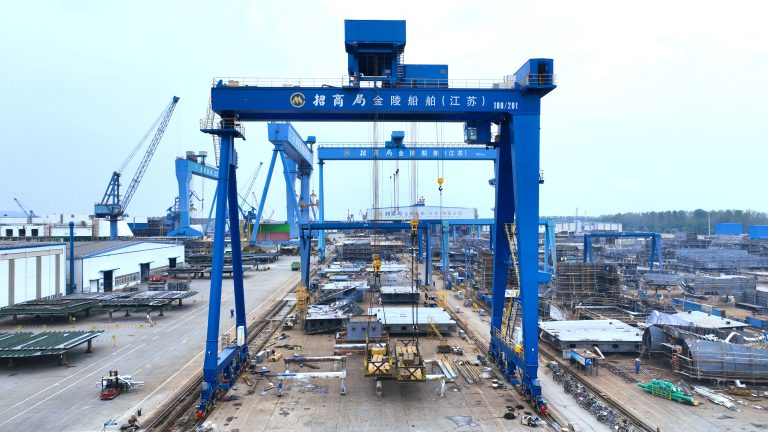
Global port logistics is rapidly upgrading towards intelligence and efficiency. As the core loading and unloading equipment of the terminal, the port crane is directly related to the throughput efficiency, operational stability and operating efficiency of the terminal.The conventional service life of this kind of main equipment is 15 to 25 years, and various problems such as aging of components, declining performance, increased energy consumption, non-compliance with safety standards, and lagging intelligence generally occur in the middle and late stages of operation.In this regard, terminal operators generally face key choices. For old port cranes, whether to adopt equipment transformation and upgrading or port crane replacement to optimize the equipment, the rationality of the choice of the plan directly affects capital investment, downtime loss, operation and maintenance costs, and the long-term market competitiveness of the port.
Port Crane Retrofit vs. Replacement: Key Differences
Port crane transformation and port crane replacement are two completely different equipment upgrade plans. The core differences are reflected in capital investment, equipment life, operating performance, downtime, late operation and maintenance and other key dimensions.It is not that the lower the cost, the more cost-effective, nor is it that the stronger the performance of the new machine, the more suitable it is. Only by combining the port operating conditions, the current situation of equipment, and the comprehensive judgment of the operating budget can the optimal solution be locked in.
Retrofit and replacement costs
Cost is the core consideration in the decision-making of port enterprises, and it is also the most intuitive difference between renovation and renewal.Combined with the measured data of the port machinery and equipment industry in 2026, the total cost of port crane transformation is only 30%-40% of the cost of new machine procurement, and the economic advantages are very significant.Judging from the subdivided models, the procurement cost of the new Panama–type shore bridge machine is as high as 10-18 million euros, while the cost of a full set of refined transformation is only 1.5–3.5 million euros.The cost of the new 80-120-ton port mobile crane is 3.5–8 million euros, and the renovation cost is only 60-1.5 million euros.
On the other hand, the replacement of port cranes, in addition to the high equipment procurement costs, also includes the demolition of old machines, site cleaning, transportation of new machines, hoisting and installation, commissioning and acceptance, qualification reporting and other additional costs, the comprehensive invisible cost is extremely high.The crane transformation is only aimed at the precise upgrading of aging, backward, and substandard components, and the core foundations such as the main steel structure and the frame are preserved in good condition, greatly compressing invalid investment, and the short-term capital pressure is minimal.
Equipment life and performance
The remaining service life and operating performance of the equipment directly determine the long-term value of the plan.Henan Mine Crane manufactured brand new port cranes have a factory standard service life of 20-25 years. They are equipped with the latest intelligent control system, energy-saving power system and high-precision transmission structure. They are suitable for the current needs of large-scale ship loading and unloading, high-stacking, and high-load operations, and the upper performance limit is higher.However, the refined transformatioOOn of old cranes does not only solve surface problems. After the all–round upgrade of the electronic control system, hydraulic system, lifting mechanism, and safety protection device, the service life of the equipment can be effectively extended for 8-12 years, fully meeting the medium- and long-term operation needs of the port.From the performance point of view, the transformed equipment can achieve an increase in operating efficiency by 10%-15%, a reduction in energy consumption by 20%-30%, and a decrease in failure rate by more than 60%. It can fully match the standards of conventional port loading and unloading operations, and some of the intelligent transformed equipment can achieve quasi-new machine operating performance.
Downtime and installation
The port belongs to a continuous operation scenario, and the length of downtime is directly equivalent to economic losses, which is a core cost item that can easily be ignored.The downtime cycle of the two options is very different, which directly affects the short-term operating income.The transformation of port cranes adopts a modular and segmented construction mode, which can arrange peak construction according to port operations, and some transformation projects can realize semi-shutdown operations.The transformation period of conventional port cranes is only 1-3 months, and the upgrading period of small components and electronic control transformation can be compressed to within 1 month, which has minimal impact on port throughput operations.At the same time, the transformation does not require the demolition of the main equipment, and there is no need for large-scale site transformation. The construction process is simple and the landing is efficient.
The downtime and loss of port crane replacement is great. The complete process includes the demolition of the old machine, site leveling, customized production of the new machine, transportation and hoisting, installation and commissioning, and acceptance and preparation. The complete cycle is as long as 6-12 months.For ports with stable daily throughput, long-term downtime will directly cause huge order losses and shrinking production capacity. The hidden economic losses far exceed the price difference of the equipment itself. This is also the core reason why many ports give priority to transformation.
When Is Port Crane Retrofit a Better Option?
The transformation of port cranes is not suitable for all old equipment, but in most conventional old equipment upgrade scenarios, it is the most cost-effective, lowest-risk, and fastest landing solution.When the main structure of the equipment is intact, only the supporting parts are aging, and the performance lags behind, the economic value of the transformation and upgrading far exceeds the replacement.
Aging components
For port cranes that have been in service for 8-15 years, the most common problem is not damage to the main structure, but the aging and failure of vulnerable components, electronic control systems, and hydraulic systems.The core load-bearing structure of the steel structure frame, main beam, outriggers, etc. of this kind of equipment is intact, and there are no structural problems such as deformation, cracks, and excessive corrosion. The basic value of the equipment still exists.If such equipment is directly replaced, it will cause a waste of high-quality main structure resources, and tens of millions of funds will be invested to replace only aging parts, which is extremely cost-effective.The targeted transformation can accurately replace aging motors, reducers, hydraulic valve sets, wire ropes, and limit protection devices, upgrade old electronic control procedures, and completely solve the problems of frequent equipment failures, start-stop caton, and unstable operation.After the transformation, the equipment failure rate has been greatly reduced, and the versatility of spare parts has been significantly improved. It has completely gotten rid of the dilemma of long supply cycles and high prices of imported spare parts, and adapted to the needs of long-term stable operations.
Capacity and safety upgrades
In recent years, port safety regulations and environmental protection standards have been continuously updated. Due to lagging safety configuration and insufficient compliance, a large number of old cranes are facing the risk of failure to pass annual inspections and production restrictions and outages.Many old equipment has a load capacity of up to standard, but lacks modern safety devices such as intelligent limit, anti-overturning, anti-collision, overload protection, and emergency braking, which cannot meet the latest port operation compliance requirements.For this kind of equipment, transformation and upgrading is the optimal solution.By installing a full set of intelligent safety monitoring systems, upgrading brake protection devices, and optimizing the load control system, the equipment can fully comply with the current maritime and port safety operation standards.At the same time, the operating parameters of the equipment can be slightly optimized according to the operation needs, and the adaptability of the equipment can be improved. The compliance upgrade can be completed without replacing the port crane, avoiding the suspension penalty, and ensuring the normal compliance operation of the port.
Improved crane efficiency
High energy consumption, low operating efficiency, and high labor costs are common pain points for old port cranes.Traditional cranes that have been in service for more than 10 years mostly use old power systems and manual control modes. They consume a lot of energy, have a slow pace of operation, have low per capita operating efficiency, and have high long-term operating energy consumption costs.Through energy-saving and intelligent transformation, all-round quality and efficiency improvement of equipment can be achieved.Oil-to-electricity, frequency conversion electronic control upgrade, and intelligent speed control system transformation can reduce the comprehensive energy consumption of the equipment by 30%-40%.The upgrade of the automated auxiliary control and intelligent scheduling docking system can shorten the time of a single loading and unloading operation and improve the overall throughput efficiency of the port.The measured data show that the average annual energy consumption cost of the old crane after the transformation can be saved by more than 4 million yuan, the annual maintenance cost can be reduced by 60%, and the long-term operating income is very considerable.
When Should You Replace Your Port Crane?
Although crane retrofitting is more cost-effective, it is not a panacea.When the equipment has structural damage, the performance is completely lagging, and the operation and maintenance costs are seriously upside down, blind transformation will only invest invalid funds. At this time, the replacement of port cranes is a more economical choice.
Structural damage
The steel structure is the core skeleton of the Henan Mine Crane manufactured port crane, and it is also the fundamental that determines the service life of the equipment.If the crane's main beam, outriggers, walking mechanism, and connecting base have irreversible structural damage, including deep corrosion, deformation of the main beam, cracking of welds, structural fatigue damage, and deformation of the base settlement, it is not recommended to carry out retrofitting and upgrading.Structural damage is a fundamental scrap problem of equipment. Even if high-cost funds are invested in repair and reinforcement, safety hazards cannot be completely eliminated. The load-bearing stability, wind resistance, and operating safety of the equipment cannot be up to standard, and secondary damage can easily occur in the later stage, and there is a risk of major safety accidents.At the same time, the cost of structural repair and transformation is extremely high, close to more than 60% of the procurement cost of new aircraft, and the cost performance of the transformation is completely lost. At this time, the replacement of port cranes is the only safe and economical option.
Insufficient capacity
With the upgrading of the shipping industry, large container ships and super-heavy bulk carriers have gradually become popular, and port operating load standards, stacking heights, and operating radii have continued to increase.If the rated lifting weight, operating radius, and lifting height of the existing crane cannot be adapted to the existing and future operating needs, it is a fundamental lag in performance, and the transformation cannot solve the core problem.The upper load limit and operating radius of the crane are determined by the main steel structure and the design parameters of the port crane, and cannot be greatly improved through local transformation.If the parameter fine-tuning and upgrading are forcibly passed, the equipment will be overloaded, the stability will be insufficient, and there will be great safety risks.For terminals that need to undertake the loading and unloading of large ships and improve the throughput level of the port, brand new intelligent cranes with large tonnage, long span and high adaptability must be replaced to meet the needs of high-end operations and adapt to the long-term port upgrade plan.
High operating costs
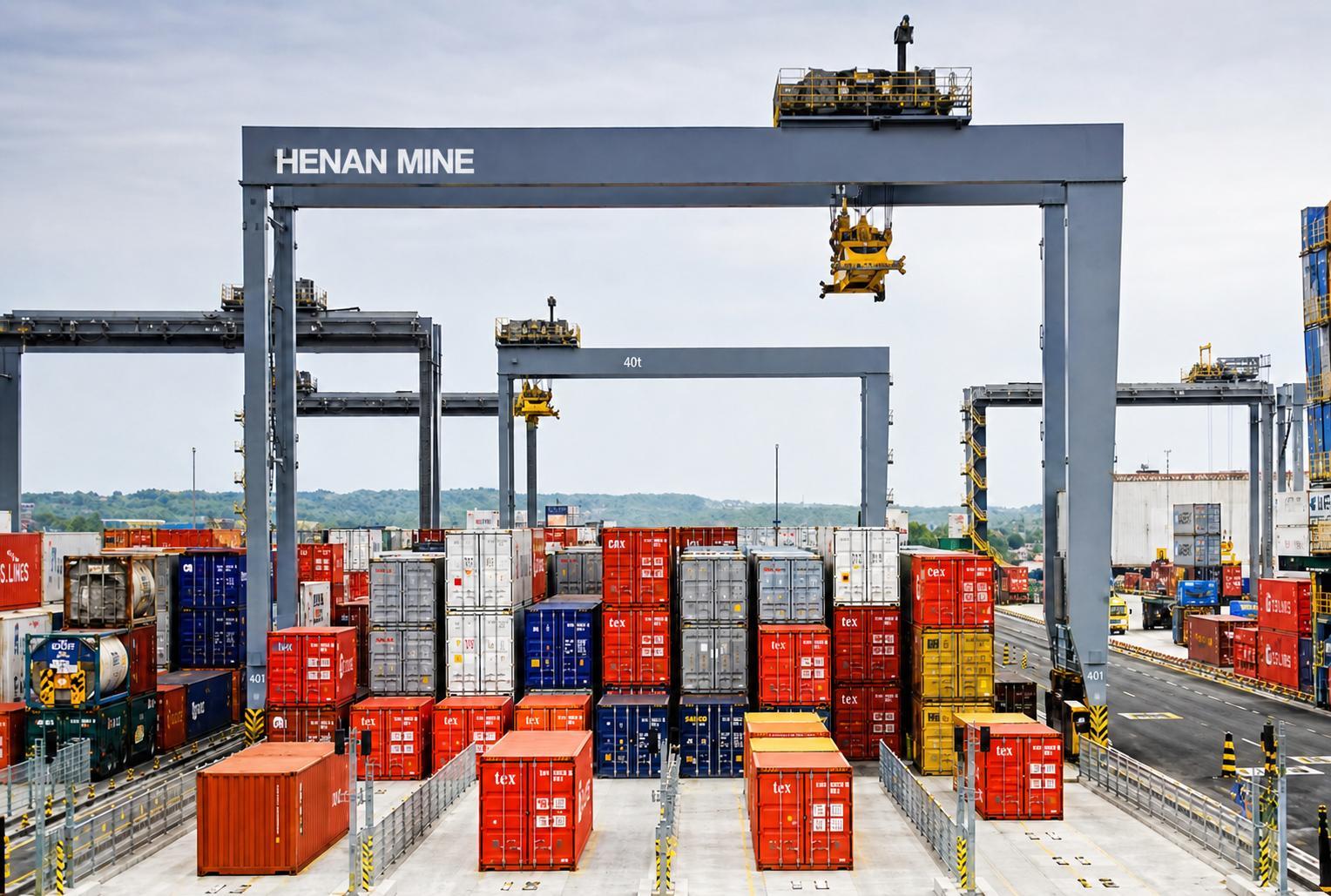
Some old cranes that are out of service will have serious cost upside-down problems, and the operation and maintenance costs far exceed the output value of the equipment.Data show that for 40–ton gantry cranes that have been in service for more than 12 years, the average annual maintenance cost will soar from 150,000 yuan in the initial period to 450,000-600,000 yuan, an increase of as much as 200%-300%.This kind of equipment generally has problems such as the shutdown of spare parts, difficult maintenance, frequent failures, ultra-high energy consumption, and frequent downtime. Frequent maintenance not only consumes high funds, but also frequently interrupts port operations, resulting in loss of orders and reduced production capacity.On the other hand, the average annual operation and maintenance cost of the new intelligent crane is only 120,000–180,000 yuan, and the energy consumption is lower, there are few failures, and the operating efficiency is higher.When the operation and maintenance costs and downtime losses of old equipment have far exceeded the cost of transformation for three consecutive years, decisive replacement can quickly reverse the upside-down situation of costs and achieve long-term cost reduction and efficiency gains.
How to Compare Retrofit and Replacement Costs
To judge the economy of transformation and renewal, we cannot only look at short-term investment. We must rely on the whole life cycle cost (LCC) thinking and comprehensively calculate from the four dimensions of initial investment, long-term operation and maintenance, downtime loss, and return on investment in order to obtain accurate economic comparison results.
Initial investment
Initial investment is the most intuitive cost difference, and it is also a priority factor for small and medium-sized enterprises.The initial investment in the transformation of port cranes is extremely low. It is only for the upgrading of faulty, aging, and backward components. There is no excess loss. The overall investment is 30%-40% of the new machine. The capital return cycle is short, and there is no large capital pressure.The initial investment in the replacement of port cranes is extremely high, including a full set of costs such as equipment customization procurement, demolition of old machines, site renovation, transportation and installation, commissioning and acceptance, and qualification processing. The cost of a single large-scale shore bridge new machine can reach tens of millions or even hundreds of millions. Level.Large-scale investment in fixed assets will take up a lot of working capital of the enterprise, which will cause certain pressure on the short-term capital turnover of the port and the expansion of the project.For ports with limited budgets and only need to upgrade conventional operations, the initial investment advantage of transformation is irreplaceable.
Long-term maintenance
Long-term operation and maintenance costs are the key to bridging the economic gap between the two.For old cranes that have not been retrofitted, the aging rate of spare parts has accelerated year by year. The procurement of non-standard spare parts is difficult and the price is high. There are many maintenance working hours and frequent downtime. Long-term operation and maintenance costs continue to rise, resulting in an undesirable cycle of increasing maintenance costs year by year and equipment failures becoming more frequent.After the standardization and transformation of the cranes, all of them have been replaced with universal and standard spare parts. The procurement cycle of spare parts has been compressed from 5 months to 7 days, the procurement cost has been significantly reduced, the equipment failure rate has been reduced by more than 60%, and the average annual operation and maintenance cost can be reduced by 30%-50%, and huge operation and maintenance expenses can be saved during the life cycle of 8-10 years.The brand new crane has basically zero failures and low operation and maintenance costs in the first 5 years. After 5 years, it enters a stable operation and maintenance cycle. The operation and maintenance costs are stable and controllable, and the intelligent new crane comes with a fault early warning system, which can avoid major failures in advance and has stronger long-term stability, but the high investment in the early stage requires a longer period of amortization of costs.
Downtime and ROI
Downtime loss is the most easily overlooked hidden cost, and it is also the core factor affecting the return on investment (ROI).Crane transformation has a short downtime cycle and can be constructed at peak times, which has very little impact on port throughput, and basically does not produce large revenue losses. The investment return cycle is only 3-5 years, and profitability can be achieved in the short term.The downtime period for the replacement of port cranes is as long as half a year to one year. Long-term downtime has led to the contraction of port production capacity, the loss of customers, and the increase in performance costs. The amount of hidden losses is huge.Although the new machine has a longer service life and better long–term performance, the early investment is large and the downtime loss is high, and the investment return cycle takes 7-10 years.Combined with industry data, it is estimated that in the 10-year life cycle, the comprehensive ROI of the transformation plan is 25%-35% higher than that of the replacement, and the economic advantages are significant.
How to Choose the Right Port Crane Solution
There is no absolute standard answer to the choice of the upgrade plan of Henan Mine Crane manufactured port crane, only the optimal solution adapted to its own working conditions.Enterprises need to combine the current situation of equipment, operational requirements, budget planning, and long-term development strategies, step-by-step evaluation and precise decision-making, taking into account safety, economy and practicality.
Assess crane condition
The first step is to conduct a full range of professional testing and evaluation of existing cranes, focusing on verifying the core structure and operating status.Through professional equipment, the integrity of steel structures such as main beams, outriggers, welds, and bases is tested, and structural hidden dangers such as corrosion, deformation, and cracks are investigated.Test the operating stability of the electronic control, hydraulic, lifting, and braking systems.Statistics on equipment failure rate, operation and maintenance costs, downtime, and energy consumption data in the past three years.If the main structure of the equipment is intact, there is no structural damage, and only the supporting parts are aging, priority should be given to transformation and upgrading.If there is irreversible structural damage, serious equipment aging, and normalization of failures, the port crane should be replaced directly to avoid safety risks and invalid investment.
Consider retrofit options
After confirming the adaptation and transformation of the equipment, it is necessary to customize a refined and targeted transformation plan, refuse to blindly and comprehensively transform, and further control costs.According to the shortcomings of the equipment, modular solutions such as electronic control system upgrade, hydraulic system refurbishment, safety device installation, energy-saving transformation, and intelligent auxiliary system upgrade are selected as needed.Priority is given to the standardized transformation plan, which can not only reduce the transformation cost and shorten the construction cycle, but also ensure the versatility of spare parts and the convenience of maintenance in the later stage.At the same time, it combines the latest safety and environmental protection regulations of the port to ensure that the transformed equipment is fully in compliance, meets the standards of annual inspections and spot inspections, and adapts to the needs of medium- and long-term normalized operations.
Evaluate new crane design
If it is determined that the port crane needs to be replaced after the equipment is tested, the adapted new crane plan needs to be selected in accordance with the port development plan.According to the port's throughput upgrade plan for the next 3-10 years, ship adaptation standards, and automation transformation direction, determine the core parameters of the new machine tonnage, operating radius, intelligent configuration, and energy–saving system.Priority is given to the new crane with low energy consumption, easy operation and maintenance, and high degree of intelligence, taking into account the current operating needs and future upgrade space.At the same time, comprehensively evaluate the procurement cost, operation and maintenance cost, service life, and downtime of the new machine, do a good job of cost accounting for the whole life cycle, and choose the model with the best long-term price ratio to avoid lagging again after the short-term upgrade.
Henan Mine Crane Factory Custom
The core of the transformation and replacement options of port cranes is to fit the working conditions of the equipment and the long-term development of the terminal, taking into account safety, compliance and cost-effectiveness.The main body of the equipment is intact, and the old models with only aging parts can be improved at low cost and efficiency through professional transformation, operate in compliance with regulations, and significantly reduce the energy consumption of operation and maintenance.For equipment with structural damage and insufficient load, replacing a brand new intelligent crane is the long-term solution.As a professional port crane manufacturer, Henan Mine Crane Factory can provide customized transformation and new equipment selection services to meet the needs of various terminal operations and help ports reduce costs and increase efficiency, upgrade and improve quality.