
150t Mining Maintenance Overhead Cranes for Underground Workshops
The space of the underground mine workshop is small, the dust is large, and the load fluctuates violently, and the requirements for bridge cranes are much higher than that of ordinary workshops.The 150-ton mine maintenance bridge crane is dedicated to the disassembly, assembly and overhaul of the core components of large-scale mining equipment such as mining dump trucks, loaders, excavators, electric shovels, etc.
The key to its adaptation to underground working conditions lies in the protective design of peak lifting capacity, compact structure, heavy-duty reliability and dust-proof gearboxes.This paper analyzes the core technology and application value of the crane from the misunderstandings of equipment design, working condition adaptation, selection, operation and maintenance selection.
What Makes a 150t Mining Maintenance Overhead Crane Suitable for Underground Workshops?
Large lifting capacity
The 150t rated load can complete the disassembly, assembly and hoisting of heavy-duty assemblies such as large equipment engines and buckets such as mining dump trucks and excavators. The weight of rigging, hoisting beams, etc. needs to be included in the hoisting.Before operation, the load needs to be reviewed, the spreader is optional, and the 5–20t auxiliary hoist is used to handle small pieces.The selection should be based on the maximum peak load of maintenance, not the average load, and a safety margin should be reserved to avoid heavy-duty overhaul from being unable to be constructed.
Adapt to underground space
Underground clearance, roadways, and tracks are limited. The crane adopts a low clearance design and relies on a compact trolley and a double-beam structure to lift the available height of the hook.The limit distance of the main beam, end beam, and hook affects the operation of the station.The whole machine is modular and split design, and the parts are easy to transport downhole and assemble on site; the installation is adapted to the downhole anchoring conditions, and the alignment and load tests are completed.
Harsh mining conditions
The crane is equipped with fatigue-resistant main beam, heavy-duty lifting mechanism, redundant braking and dust-proof and moisture-proof electrical, which meets the FEM/ISO M5-M7 heavy-duty level.Frequency conversion micro-speed control realizes smooth lifting and precise positioning of the load, and is suitable for continuous overhaul of multiple shifts.Dust protection is the focus of the reliable operation of the whole machine, and the dust-proof sealed gearbox is the core component of longevity and failure reduction.
Why Dust-Sealed Gearboxes Matter in Underground Mining Environments
- The harm of dust to the gearbox: underground hard dust invades the gearbox, contaminates the lubricating oil, wears out the gear bearings, causes overheating, early damage to components, and causes maintenance shutdowns and mine production losses.
- The principle of dust-proof gearbox protection: A fully sealed box, multi-stage sealing and filtration and ventilation device are used to suppress the “breathing effect” of dust.Dustproof does not mean that it is waterproof or completely isolated from dust. The protection effect is determined by the IP rating, design and operation and maintenance.
- Gearbox material, lubrication and heat dissipation: quenched alloy gears are equipped with heavy-duty lubricating oil, and the oil change cycle is set as needed; the heat dissipation structure controls the temperature rise, and the oil and temperature monitoring are used to check for faults in advance.
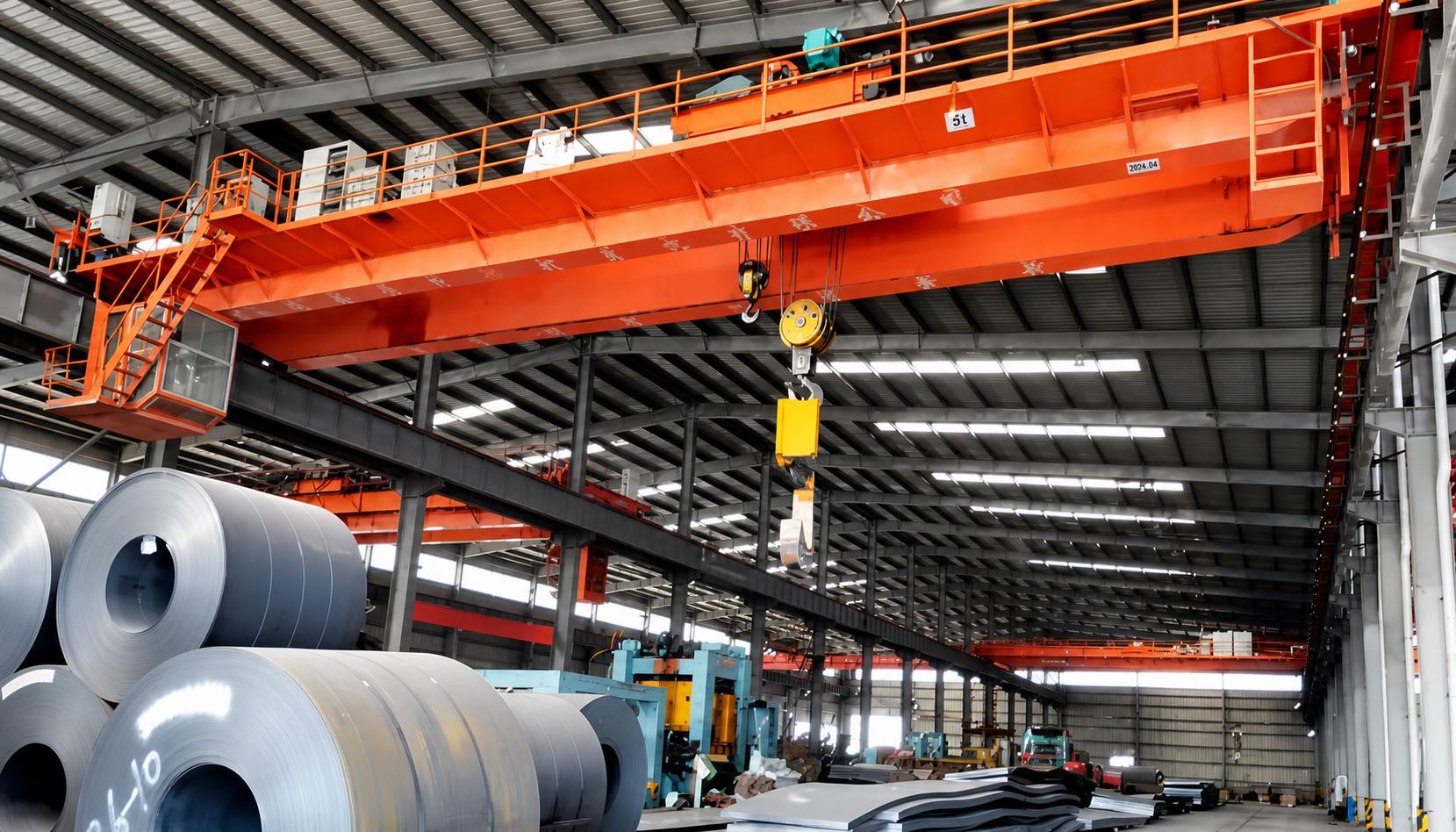
Key Design Features of a 150t Mining Maintenance Overhead Crane
Main lifting mechanism
- The core transmission unit is composed of a high-torque heavy-duty motor, a dust-proof sealed gearbox, a wire rope reel, and multiple redundant braking systems. The transmission is stable and reliable.
- Equipped with frequency conversion speed regulation and micro-speed fine-tuning functions, the lifting starts and stops smoothly, which can realize the precise alignment and installation of large and heavy-duty components, and is suitable for underground overhaul scenarios.
- Built-in load limiting device, which can monitor the hoisting load in real time, and trigger protection immediately once the limit is exceeded, ensuring the safety of underground maintenance operations in all directions.
Main beam and operating mechanism
- The whole machine adopts a double main beam structure, with high overall stiffness and excellent deformation resistance. At the same time, sufficient maintenance space is reserved to facilitate later equipment maintenance.
- With customized heavy-duty wheel sets, after rigorous wheel pressure verification and calculation, it is adapted to the carrying conditions of underground track and roadway support.
- The carts and trolleys are all driven by frequency conversion, which can walk smoothly and smoothly, reducing the shaking of the hanging objects; the whole machine is optimized for fatigue resistance and is suitable for long-term continuous operation.
Electrical and control
- Support three operating modes: suspension handle, cab console, and wireless remote control, which can be flexibly switched according to the layout of the underground site and the field of view.
- Integrated travel limit, overload protection, emergency shutdown, and fault self-diagnosis functions to quickly identify abnormal conditions and reduce operating risks.
- All electrical components are sealed and protected with high IP rating, with dust and moisture-proof capabilities, and effectively resist the erosion of underground dust and humid environments.
Security configuration
- The hardware level is equipped with load protection, stroke limit, dual redundant braking, and multi-machine anti-collision devices to avoid the risks of overload, over-stroke, collision, and slip hook from the source.
- Supporting standardized hoisting operation specifications, clarifying the hoisting restricted area, operation process and on-site communication mechanism, and standardizing the operation behavior of on-site personnel.
- The complete safety system is designed in strict accordance with the relevant standards of mine lifting equipment to meet the compliance and safety requirements of underground high-risk operations.
How Dust-Sealed Gearboxes Improve Maintenance Efficiency and Operating Costs
Reduce early gearbox wear
The dust-proof sealing structure restricts dust from invading the interior of the gearbox from the source, continuously guarantees the cleanliness of the lubricating oil, greatly reduces the grinding and wear of gears and bearings, and delays the aging rate of core components.
Under the premise of standardized sealing maintenance and regular oil changes, component damage and equipment failure maintenance caused by dust pollution can be minimized, and the service life of the gearbox and the core transmission components of the whole machine can be significantly extended.
Reduce the risk of unplanned downtime
The sudden failure of the gearbox is the core factor that causes the maintenance and shutdown of downhole equipment. It will directly interrupt the replacement of heavy-duty components and regular maintenance of equipment, resulting in long-term idle and shutdown of mining equipment.
Relying on the stable performance of the dust-proof gearbox, combined with operation and maintenance methods such as condition monitoring, preventive inspections, and planned oil changes, sudden transmission failures can be completely avoided, cranes can be guaranteed to be on call at any time, and mining equipment maintenance work can be stably supported in an orderly manner.
Optimize the full cycle cost of equipment
Dust-proof heavy-duty gearboxes will slightly increase the initial procurement cost of equipment, but they can significantly reduce the frequency of lubricating oil replacement, parts replacement costs, and labor maintenance costs in long-term operations, especially to avoid high production losses.
Equipment selection needs to focus on the whole life cycle cost (TCO), rather than a single purchase price. Long-term stable reliability can help mining companies achieve cost reduction and efficiency, and create higher long-term operating value.
How to Select the Right 150t Mining Maintenance Overhead Crane
Approved load and hoisting requirements
Before selecting the type, it is necessary to accurately count the maximum weight of the downhole maintenance components, the additional weight of the rigging tooling, the required lifting height, crane span, hook coverage, equipment dimensions and operating frequency.
At the same time, the 150-ton load is clearly defined as the main hoist independent load or the multi-hoist combined load. According to the operation needs of light-duty parts, an auxiliary hoist system adapted to the specifications is selected to achieve full coverage of large and small working conditions.
Assess dust and environmental conditions
On-site investigation of underground dust type, dust concentration, environmental humidity, perennial temperature range, water seepage risk and other working condition parameters, targeted matching of gearbox sealing scheme, electrical protection level, and dust-proof configuration of the whole machine.Abandon the general concept of ”dustproof", and take the specific IP protection level, sealing structure type, and working condition adaptation test data as the basis for selection to ensure that the equipment's protection ability matches the actual working conditions.
Matching equipment operating condition level
According to the average daily operating time of the equipment, the frequency of hoisting, the proportion of full-load operations, and the number of operating cycles, the crane operating condition level is determined, and the FEM M5-M7 and CMAA D/E heavy-duty operating condition models are preferred.
Manufacturers are required to verify the working condition level of the equipment and the service life of the core components according to the actual operating load spectrum of the mine to ensure that the equipment can be adapted to high-intensity underground maintenance operations for a long time.
Verify the convenience of installation, operation and maintenance
Verify the basic parameters such as the effective headroom height of the underground, the bearing capacity and flatness of the track, the size of the equipment transportation channel, the assembly operation space, and the power supply conditions in advance.Plan in advance the downhole maintenance and replacement plans of core components such as gearboxes, motors, and brakes, confirm the manufacturer's spare parts supply capabilities and on-site technical support services, and ensure convenient and efficient operation and maintenance of equipment in the later stages.
Installation, Inspection, and Maintenance Best Practices
- Pre-installation engineering verification: verify the track flatness, installation tolerances, support bearing capacity, power supply and construction space before installation, and confirm that the installation standards are met on site.After the installation is completed, check the equipment configuration and parameters, and then debug and put into operation after it is consistent with the requirements of the drawings.
- Normalization inspection specifications of gearboxes: Daily inspections focus on checking gear box seals, oil levels, oil quality, leakage, abnormal noise and temperature rise, and promptly clean up the seals and dust accumulation in the ventilation valves.Implement the inspection cycle and oil change specifications according to the manufacturer's requirements.
- Preventive operation and maintenance and condition monitoring: establish a maintenance ledger of the whole machine, covering all core components.Vibration, oil, temperature monitoring and other means can be used to identify potential faults in advance and realize predictive maintenance.
- Safety management of maintenance operations: power failure and isolation are implemented during maintenance; the load needs to be supported on the ground for maintenance of heavy-duty components, and floating operations are prohibited.The operators are licensed to take the job, and the operation can only resume after the overhaul is completed and the acceptance is qualified.。
Common Mistakes When Specifying Mining Maintenance Overhead Cranes
- Selection is carried out based on the daily average load, and the peak load of underground maintenance operations is not fully considered, which will cause the crane to have insufficient heavy-duty operation capacity and cannot meet the hoisting needs of the core assembly of large-scale mining equipment.
- One-sided use of the dust-proof seal of the gearbox as a complete environmental protection plan, ignoring the supporting protection systems such as electrical dust-proof, equipment anticorrosion, and vehicle seal, it is difficult to resist the complex and harsh underground environment.
- Ignoring spatial and structural constraints such as underground effective clearance height, hook limit proximity distance, track carrying capacity, equipment transfer and installation conditions, etc., ultimately leads to equipment that cannot be adapted to on-site working conditions.
- Blindly choosing the sealing structure of the gearbox, without combining the comprehensive evaluation of factors such as equipment operating temperature rise, environmental humidity, shaft end speed, and convenience of late maintenance and maintenance, the sealing reliability is greatly reduced.
- The selection does not reasonably match the crane working condition level, and the carrying strength of the equipment cannot be adapted to high-frequency and heavy-duty underground operations, which will accelerate the fatigue loss of the whole machine and cause the equipment to age and fail in advance.
- Equipment acceptance standards, daily inspection specifications, on-site after-sales technical support and spare parts supply services have not been clearly agreed during the procurement phase, and the operation and maintenance guarantee of the equipment after it is put into use is insufficient.
Conclusion
The 150-ton underground mine maintenance bridge crane integrates heavy-duty capacity, compact structure, dust-proof gearbox and multiple safety protections, and is suitable for small underground, high-dust, and high-intensity maintenance environments.Reasonable configuration can meet the needs of large-scale mining equipment hoisting and maintenance, and reduce the risk of downtime caused by equipment failure.
The selection needs to comprehensively evaluate the load, space, dust, and operating intensity, take into account the whole life cycle cost, and cooperate with standardized operation and maintenance to ensure the stability of the equipment.Henan Mine Crane can customize a 150-ton underground bridge crane, supporting heavy-duty, dust-proof and safety solutions, and serving the maintenance of mining equipment.