
What Is a Gantry Crane Definition, Uses, Safety, Inspection and Maintenance Guide
In heavy industry manufacturing, port logistics, construction, storage and transfer and other industrial scenarios, gantry crane is an indispensable core lifting equipment, with independent support structure, flexible operation mode, super load capacity, become the outdoor and large space material handling equipment of choice.Many enterprise procurement, equipment operation and maintenance personnel, engineering practitioners often confuse gantry cranes and overhead cranes, and lack systematic knowledge of their model selection, operation specifications, safety control, inspection and maintenance system.This article will disassemble the gantry crane in all directions to create a one-stop gantry crane practical operation guide.It can not only help beginners get started quickly, but also provide professional reference for enterprises.
What Is A Gantry Crane?
Definition and basic concept
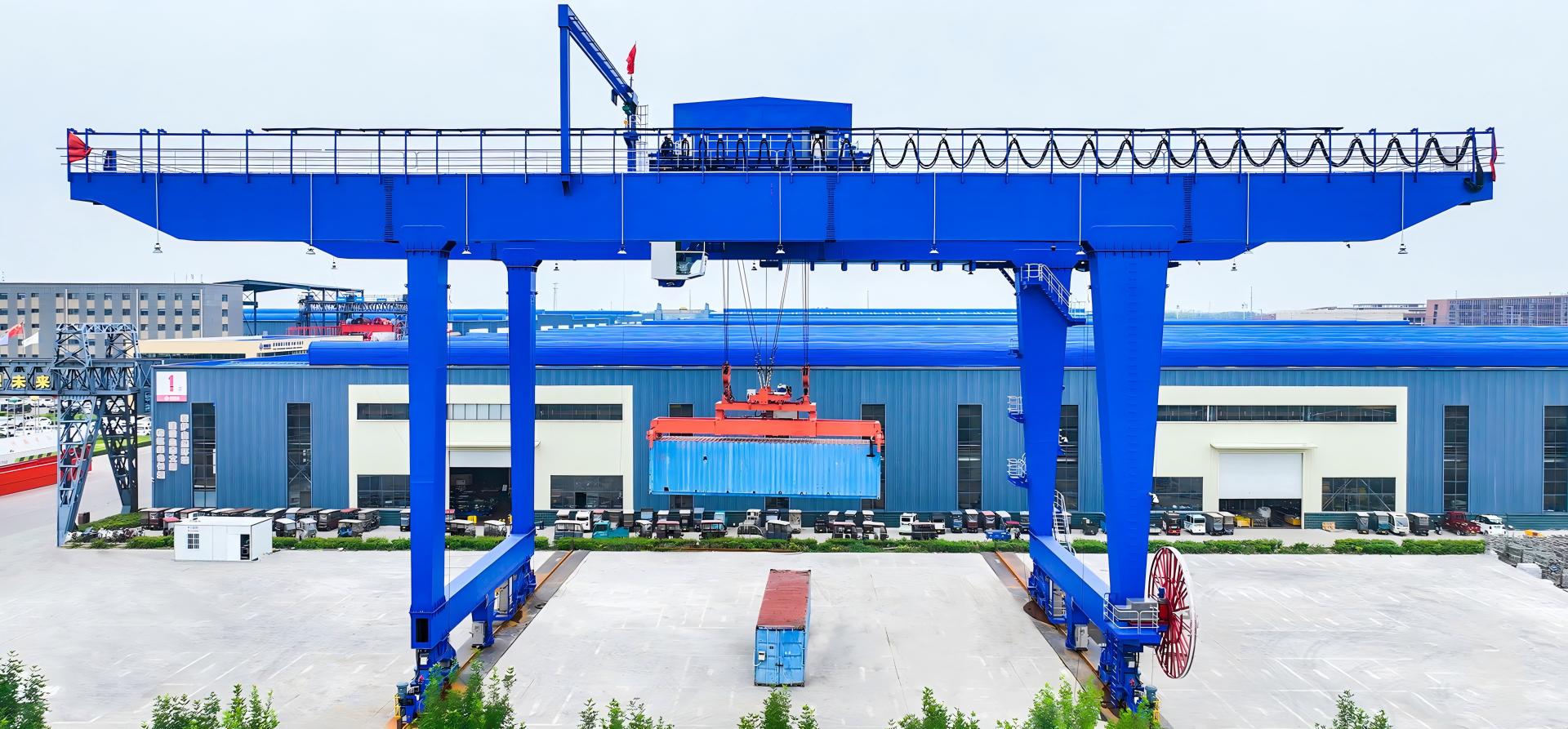
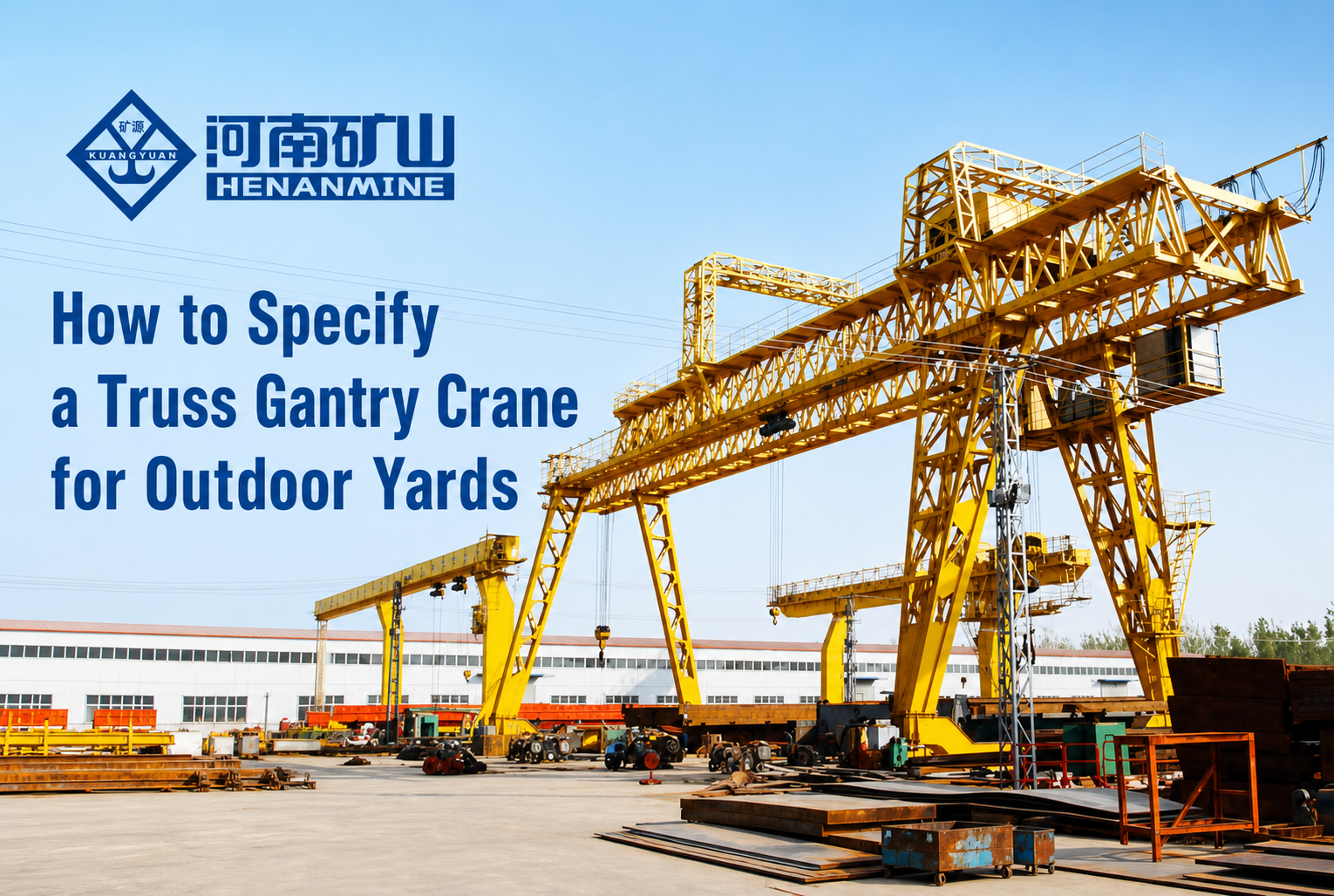
Henan Mine Crane Factory supply Gantry crane is a kind of large crane equipment with supporting legs and independent landing operation, which belongs to the core category of bridge crane.The main structure consists of bridge girder, supporting legs on both sides, walking mechanism, lifting mechanism and electric control system. The whole structure is a door-shaped frame structure. It can directly complete heavy lifting, material translation and span operation under the support of ground track or rubber tire without relying on building carriers such as factory roof and wall.
Compared with traditional lifting equipment, gantry crane is extremely adaptable and compatible with various complex working conditions such as indoor workshops, open storage yards, port terminals, steel plant areas, etc. The load covers from light 3 tons of small equipment to hundreds of tons of heavy industrial models. It is the core equipment for industrial heavy load handling, heavy lifting and batch material transfer. It is widely used in heavy industry production and infrastructure scenarios.
How gantry cranes work
The core work logic of gantry crane is three-dimensional cooperative operation, which completes the complete lifting process through multi-mechanism linkage.Firstly, the vertical lifting of heavy objects is completed by the wire rope and hook assembly of the lifting mechanism, and the lifting height and landing speed are accurately controlled.Then the trolley operating mechanism drives the lifting device to move horizontally along the main beam to realize left and right alignment of materials.Finally, the walking mechanism of the whole machine drives the portal frame to move longitudinally along the ground track or tire track for a long distance to complete the large-scale material transfer.
The whole set of operation process is uniformly regulated by the electrical control system, which can realize manual control, remote control and automatic program control modes. Each mechanism is stable and accurate in coordination, which can effectively avoid the problems of material deviation and hoisting deviation, ensure the continuity and stability of heavy load operation, and meet the requirements of high-frequency and high-intensity industrial operation.
Common Types Of Gantry Cranes
Single girder gantry crane
Single-beam gantry crane is the mainstream crane type with lightweight and high cost performance in industrial field. It adopts simple structure of single main beam with bilateral support legs, and its overall weight is light, installation and debugging are convenient, and the overall cost is economical.This machine has a normal load range of 1-20 tons, moderate span and lifting height, flexible operation and lower energy consumption, suitable for all kinds of light and medium frequency material lifting operations, widely used in small and medium-sized processing plants, workshop material transfer, small warehouses and prefabricated parts storage yards. It is the preferred equipment for lightweight lifting operations in small and medium-sized enterprises.
Double girder gantry crane
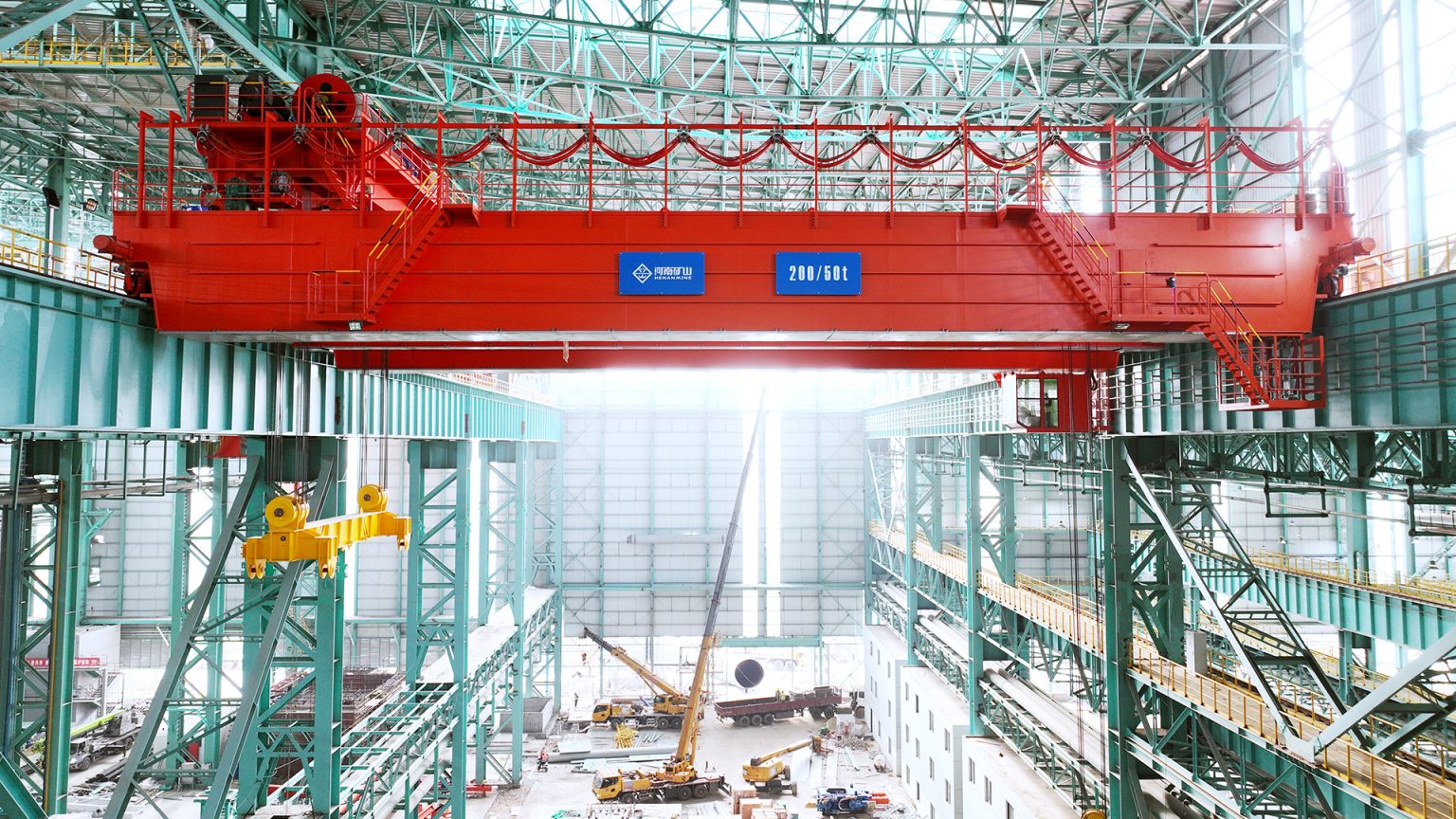
Double-beam gantry crane adopts double-main beam parallel load-bearing structure, the overall structural stiffness, bearing limit and operating stability are far superior to ordinary single-beam models, rated load range can reach 20-500 tons, can meet the requirements of large span, large lifting height, high frequency continuous heavy load operation.The equipment has excellent deformation resistance, impact resistance and fatigue resistance. It is suitable for heavy lifting scenarios such as heavy steel, large mechanical components and large cargo in ports. It is widely used in high-load industrial fields such as large steel mills, port terminals, heavy manufacturing and large infrastructure. It is the core main equipment for industrial heavy load operations.
Semi gantry crane
Semi-gantry crane adopts unique semi-dependent and semi-autonomous hybrid structure, one side of the landing leg walks independently along the ground track, and the other side relies on the fixed support of the workshop column or wall track, which combines the dual advantages of space-saving gantry crane and independent operation of gantry crane.The equipment occupies a very small area, the space utilization rate is extremely high, the installation and commissioning are simple and flexible, and it is specially adapted to the working conditions with limited space. It is mainly used in semi-open areas such as the edge of the plant and the entrance of the workshop, and efficiently solves the problem of small and medium-sized material transfer at the indoor and outdoor connection positions.
Rubber tyred gantry crane (RTG)
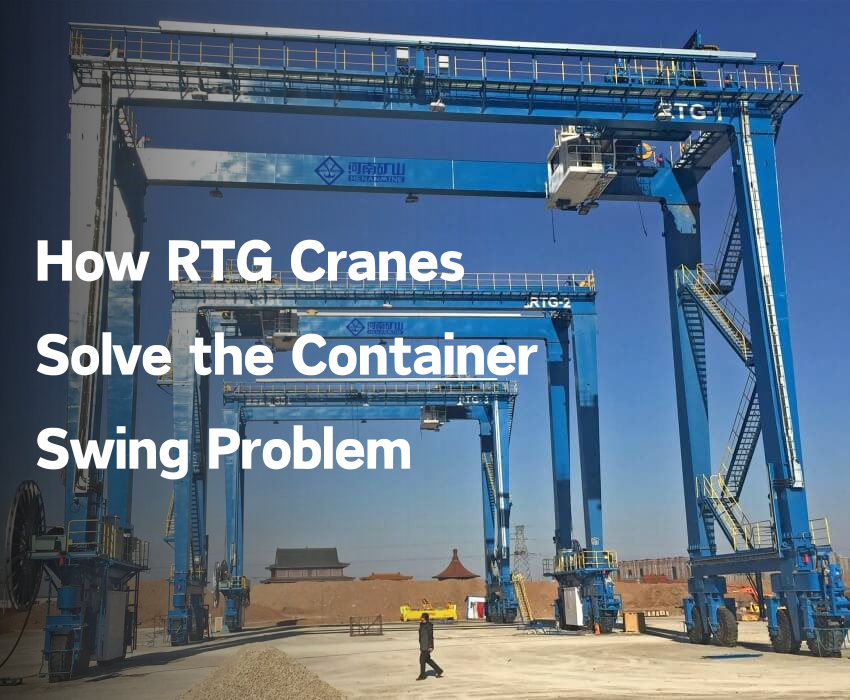
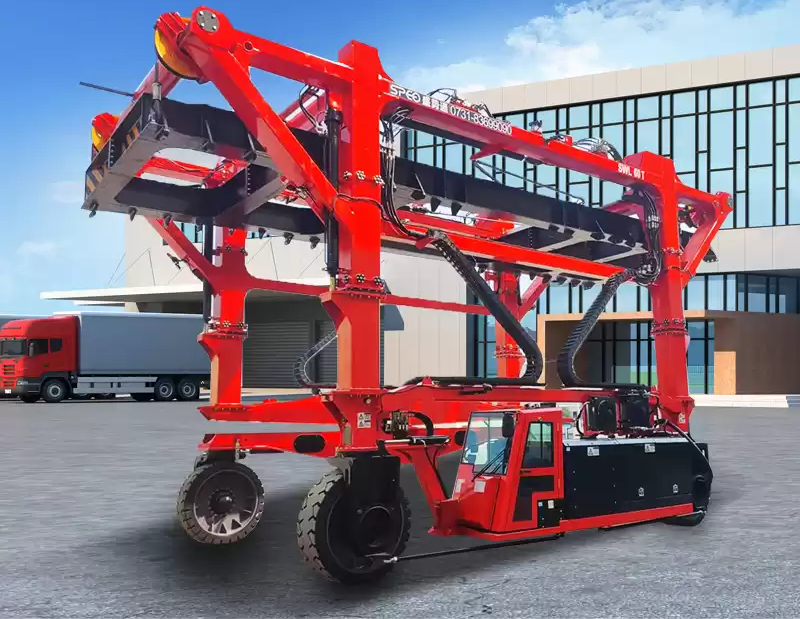
Tire gantry crane (RTG) abandons the traditional fixed track design, adopts wear-resistant solid rubber tires as the core component of the traveling mechanism, does not need complicated track laying and infrastructure transformation, can freely turn, flexible transition, site adaptability is very strong.It can stably operate on hardened pavement, open storage yard, flat open space and other sites, perfectly adapt to temporary construction and multi-site rotation operation scenarios, widely used in site lifting, bulk cargo transfer, municipal engineering and small port cargo stacking, and is the preferred model for industrial mobile lifting operations.
Rail mounted gantry crane (RMG)
Rail-mounted gantry crane (RMG) belongs to fixed heavy industrial lifting equipment, relying on special heavy rail track standard operation, with stable operation, accurate positioning, high load limit, strong structural stability and many other advantages, can support all-weather long-term, high-frequency, standardized continuous heavy load operations.The equipment has low operation noise, small mechanical wear, low failure rate, convenient operation and maintenance, and is highly suitable for large-scale industrial production scenarios. It is widely used in large-scale port container stacking, steel mill raw material transfer, large-scale logistics park and standardized heavy industrial plant area. It is the core equipment for large-scale heavy-duty large-scale operation.
Where Are Gantry Cranes Used?
Manufacturing plants and workshops
In all kinds of industrial manufacturing plants and production workshops, gantry cranes are the core heavy-duty equipment for material flow, equipment assembly and finished product transfer of production lines, adapting to all kinds of industrial processing scenarios.Light single-beam and semi-portal models are suitable for small and medium-sized machining, hardware manufacturing and equipment assembly workshops to efficiently complete the lifting and transfer of raw materials and finished products; heavy double-beam models are specially designed for heavy equipment and steel structure manufacturing enterprises to accurately lift large components and heavy equipment, effectively improving the automation degree of workshop production and overall operation efficiency.
Warehouses and logistics centers
Large storage bases and logistics transfer centers have dense cargo, high circulation frequency and large operation load. Gantry cranes are key equipment to improve storage operation efficiency, which can quickly complete the loading and unloading, stacking and cross-regional transfer of containers, heavy pallet goods and bulk materials.Among them, RTG and RMG special models are adapted to standardized logistics storage yards, which can scientifically utilize storage space, organize cargo stacking, completely replace inefficient manual handling mode, significantly improve logistics turnover speed, and effectively reduce enterprise storage manpower and time operation costs.
Shipyards and ports
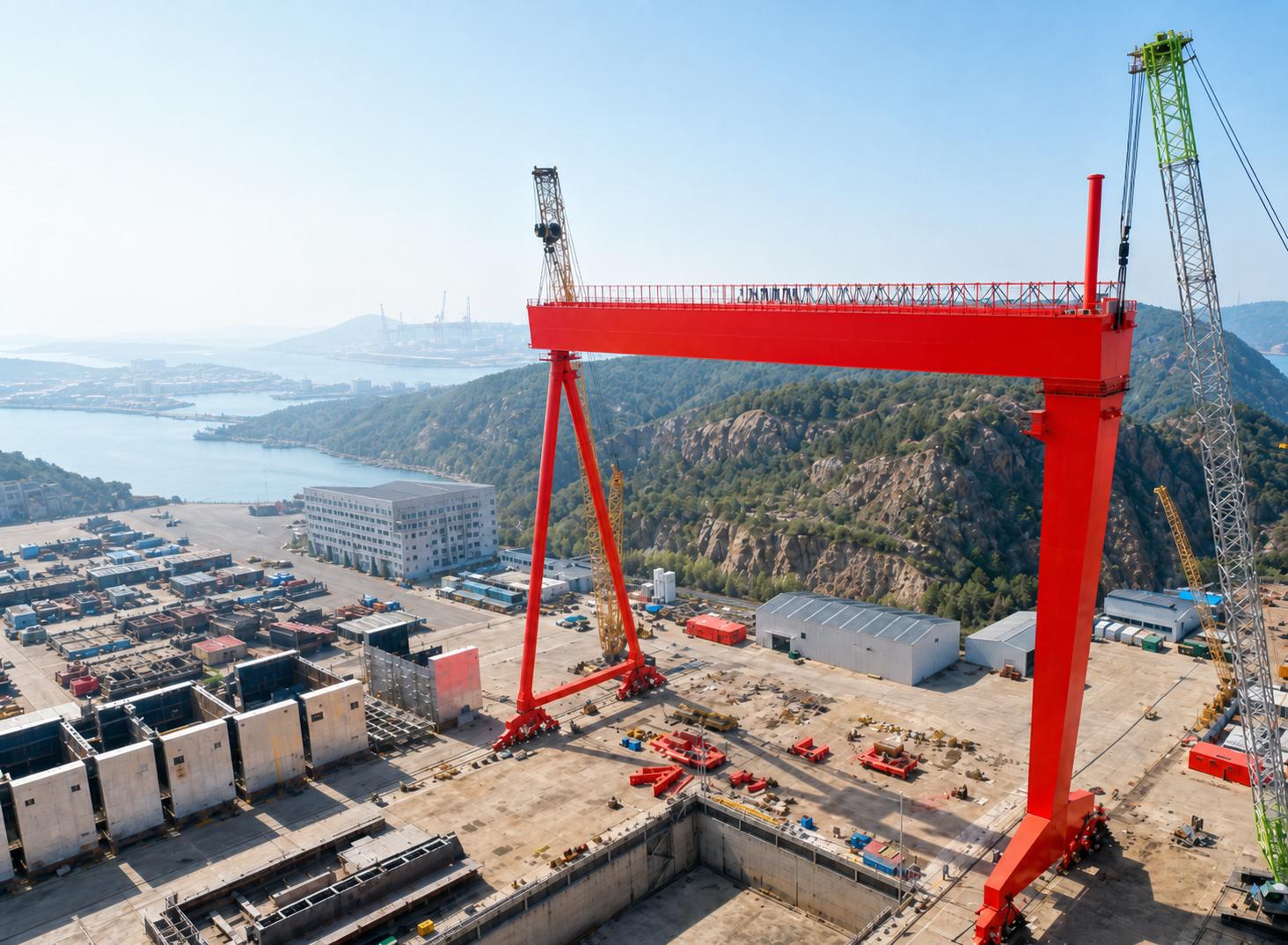
Port and shipbuilding plant is the core application scenario of heavy gantry crane, which has been exposed to sea wind erosion and humid outdoor conditions for a long time.Large double-beam gantry crane and RMG rail gantry crane have the characteristics of super heavy load, corrosion resistance, wind resistance and wear resistance, and can operate continuously and stably 24 hours a day. They mainly undertake heavy load tasks such as ship segment component lifting, hull assembly, port container loading and unloading, bulk cargo transfer, etc. They are the core infrastructure supporting the operation of port shipping and shipbuilding industry.
Steel plants and heavy industries
Steel works, metallurgy and various heavy industry production scenarios have harsh working conditions and large loads, which have extremely high standards for the stability, safety and durability of lifting equipment.Gantry crane with high temperature resistance, dust resistance, heavy load impact resistance, wear resistance excellent performance, can stably complete the lifting, transfer and stacking of steel coils, profiles, heavy castings, metallurgical equipment, can adapt to high temperature, high dust harsh plant environment, continue to ensure continuous uninterrupted stable operation of heavy production line, reduce equipment failure shutdown probability.
Gantry Crane Safety Guide
Henan Mine Crane Factory supply Gantry crane overseas operation strictly follows the global mainstream lifting equipment safety standard system, covering the United States OSHA, EU EN and international ISO and other authoritative specifications, comprehensively avoid all kinds of overseas lifting operation safety risks, effectively meet the equipment access conditions in Europe and the United States, and adapt to the normalization and standardization of overseas engineering projects.
Common safety risks during crane operation
Gantry crane operation conditions are complex, outdoor, heavy load, high frequency operation scenarios are prone to various safety hazards, the core risks are concentrated in four categories:
- Overload operation risk: The actual lifting weight exceeds the rated load of the equipment, which will lead to deformation of the main beam, breakage of the wire rope, deformation of the supporting leg, and serious accidents such as equipment collapse and heavy falling. It is the most common and dangerous illegal operation.
- Risk of load swing: too fast start and stop of equipment, uneven movement speed, deviation of lifting center of gravity and excessive outdoor wind force will cause heavy objects to shake greatly, which is easy to cause material collision, personnel injury and lifting deviation, resulting in damage to equipment and site.
- Mechanical failure risk: wire rope wear and fracture, brake failure, gear box jam, wheel failure, line aging and other equipment problems, will lead to takeoff and landing out of control, walking failure, brake failure, resulting in sudden safety accidents.
- Risk of improper operation of personnel: operators take up posts without certificates, operate illegally, lack of operation proficiency, lack of concentration of operation attention, and fail to investigate hidden dangers on site in a standardized manner, which are the core causes of man-made safety accidents.
Essential gantry crane safety devices
In order to avoid all kinds of operational risks, compliance gantry cranes must be equipped with a full set of safety protection devices, which meet the rigid requirements of OSHA standards. The core protection devices function as follows:
- Overload protection system: strictly comply with OSHA and ISO lifting safety standards, can accurately monitor the lifting load data of gantry crane in real time 24 hours.Once it is detected that the weight of heavy objects exceeds the rated load of equipment, the system will immediately trigger acousto-optic alarm, synchronously cut off the lifting power supply, lock the lifting action, completely prohibit overload operation, and eliminate major safety risks such as structural deformation, wire rope fracture and equipment overturning caused by overload from the source.
- Emergency Stop System: This is the core emergency safety feature of gantry cranes and complies with EU EN safety regulations for lifting equipment.The equipment body and operation terminal are equipped with one-button emergency stop button. In case of sudden hidden dangers such as mechanical failure, personnel intrusion, heavy object shaking out of control, etc. during operation, all power supplies can be cut off instantly, so that the equipment can be shut down immediately and locked, and dangerous working conditions can be quickly blocked, so as to effectively avoid accident expansion and ensure the safety of equipment and on-site personnel.
- Limit switches: international general safety configuration, including lifting height limit, operating stroke limit, operating range limit three core devices.It can accurately limit the maximum operating range of gantry cranes, monitor the running stroke of equipment in real time, and automatically shut down once it is close to the limit position, so as to eliminate problems such as over-travel operation, component collision, structural pulling deformation, etc., and comprehensively protect the structural safety of equipment.
- Anti-collision devices: equipped with high-precision infrared and radar dual sensing system, suitable for various indoor and outdoor operation scenarios.It can intelligently identify obstacles, operators and peripheral equipment within the operation range all day long. When collision risk is detected, the system will automatically slow down and warn, and force shutdown in case of emergency, effectively avoiding safety accidents such as mechanical collision, equipment damage and personnel injury.
- Wind protection systems: It is a necessary compliance device for outdoor gantry cranes, which meets overseas outdoor lifting operation standards.The whole system includes wind speed detector, rail clamp and windproof anchoring device, which can monitor the environmental wind speed in real time, automatically send out early warning and lock the walking mechanism in windy weather, fix the position of the whole machine, effectively prevent the equipment from being blown by strong wind, sliding and overturning, and adapt to complex outdoor weather conditions.
Gantry Crane Inspection Checklist
Regular inspection is the key to troubleshooting in advance, prolonging equipment life and ensuring compliance operations. The graded daily, monthly and annual inspection system can accurately identify potential faults, improve equipment operation reliability and avoid sudden downtime and safety accidents.
Daily inspection before operation
Basic inspection must be done before starting up every day, all-round investigation of hidden dangers in real-time operation, core inspection items:
- Hook and wire rope condition: Carefully check the overall state of the hook every day to ensure that there are no defects such as deformation, cracks, severe wear, etc., and the hook anti-drop spring and buckle device are complete and effective.At the same time, check that the wire rope is free from broken wire, broken strand, corrosion and extrusion deformation, keep the rope body lubricated sufficiently and arranged orderly, prevent rope clamping damage, and avoid potential lifting and falling hazards from the source.
- Brake and limit switch testing: During the no-load test run of equipment, it is necessary to comprehensively detect the working state of the brake to ensure that the brake response is sensitive, the engagement is stable, and there is no slip, jamming or abnormal noise.At the same time, check the high and low limit switches and travel limit switches one by one to ensure accurate triggering, timely shutdown due to power failure, no failure delay, and eliminate the risk of over-travel operation.
- Electrical system inspection: daily comprehensive inspection of the appearance of the electric control cabinet, operating handle, external cable, to eliminate cable damage, aging, leakage and other safety hazards.Confirm that the indicator lamp, display screen and various sensing elements of the equipment operate normally, and all wiring terminals are firmly connected without looseness, so as to ensure the stable and safe operation of the electrical system.
- Structural component checks: check the core structures such as main beam, supporting leg and key weld through visual inspection to ensure no damage such as cracking, deformation, unwelding and corrosion.Carefully check the fastening state of all kinds of fixing bolts and connecting parts, and ensure that there is no loosening and falling off, so as to ensure that the whole machine structure is stable, and there is no abnormal shaking and deviation during operation.
Monthly inspection items
Carry out in-depth special inspection every month to investigate hidden faults and ensure long-term stable operation of equipment:
- Wheels and travel mechanism: monthly inspection shall carefully check the wear state of walking wheels to ensure uniform wear without partial wear, crack, jamming and other damage problems.Comprehensively detect the operating conditions of the traveling transmission mechanism to ensure that the whole machine runs smoothly without abnormal noise and jitter, the wheels and rails fit closely and smoothly, and the traveling system operates stably for a long time.
- Motors and gearboxes: Regularly detect the operating conditions of the motor, check whether the operating temperature and working noise of the equipment are within the standard range, and eliminate abnormal heating, abnormal noise and other hidden dangers.At the same time, check that the lubricating oil level of the gearbox is sufficient, the oil quality is clean, and there is no leakage, dryness and blocking problem, so as to ensure the efficient operation of the transmission system.
- Control systems: monthly comprehensive commissioning of the whole machine electronic control system, check the control gear accuracy, sensitive response, no operation delay, failure, jamming and other problems.Simultaneously check the status of equipment operating procedures to ensure that automated control and manual control functions are stable and normal, and ensure the safe and compliant operation of the equipment control system.
- Safety devices: Check the complete set of safety devices of gantry crane item by item, including overload protection, emergency stop, limit switch, collision prevention and wind protection equipment.Comprehensively check the sensitivity and operation status of the device, repair hidden dangers in time, ensure that all safety components function in good condition, trigger accurately, and meet overseas safety operation standards.
Annual inspection and load testing
Carry out comprehensive whole machine inspection and load test every year, conform to the industry compliance annual inspection standard, and ensure the compliance operation of equipment:
- Structural integrity assessment: annual inspection needs to comprehensively check the structural strength of gantry crane girder, outrigger and overall frame, focusing on metal fatigue, structural deformation and hidden damage caused by long-term heavy load operation.Evaluate the structural stability and load-bearing performance of the whole machine through professional testing means, investigate structural hidden dangers in advance, and avoid major safety problems such as equipment deformation and collapse caused by long-term strain.
- Welding and connection inspection: All key welds, bolts, pin shafts and various connection accessories of the equipment shall be inspected comprehensively every year, and hidden dangers such as weld cracking, desoldering, metal corrosion, bolt loosening and accessory wear shall be carefully investigated.Repair, reinforce or replace the defective connection parts in time to ensure that the whole machine is firmly connected and meets the international lifting equipment compliance operation standards.
- Load performance testing: carry out rated load and overload simulation test in strict accordance with OSHA and ISO industry standards, and comprehensively inspect the core performance of equipment such as vertical takeoff and landing, lateral walking, brake locking, etc.Accurately verify the rated load of the equipment, the operation positioning accuracy and the operation status of the complete set of safety protection devices to ensure that the load performance of the whole machine meets the standard and can be put into operation safely and in compliance.
Inspection record documentation: annual inspection shall record all inspection data, load test results and hidden danger rectification details, and establish standardized equipment electronic and paper inspection files.The annual inspection report, maintenance records and fault rectification ledgers shall be properly kept to meet the compliance verification requirements of overseas industries, and accurate data support shall be provided for equipment maintenance, parts replacement and equipment upgrading in the later stage.
Gantry Crane Maintenance Guide
Scientific full-cycle maintenance system can greatly reduce equipment failure rate, prolong equipment service life, reduce enterprise equipment replacement and maintenance costs, and ensure long-term efficient, safe and stable operation of equipment.
Preventive maintenance practices
Preventive maintenance is the core of equipment operation and maintenance, with the core principles of early protection, early investigation and early replacement to avoid failures.Regularly maintain the moving parts, transmission parts and electrical parts of the equipment, fill lubricating grease on time, replace worn parts and monitor operating parameters.Regularly monitor equipment operation noise, temperature, energy consumption, operation status, timely discover abnormal hidden dangers, achieve early detection and early treatment of faults, and prevent small faults from evolving into major equipment problems.
Mechanical maintenance
Mechanical maintenance is mainly aimed at the normal maintenance of high-loss core parts of portal cranes. It is necessary to regularly clean wire rope dirt, add special lubricating grease, check wire breakage and corrosion hazards, and simultaneously detect the wear deformation of hooks and the effectiveness of anti-drop devices.At the same time, timely clean up wheel and bearing sundries, regularly supplement grease maintenance and correct wheel alignment accuracy, check gear box oil level and oil quality, change oil on time, adjust brake clearance and brake pad state, and comprehensively ensure stable operation of mechanical structure and sensitive braking.
Electrical maintenance
Gantry crane electrical system maintenance focus on accurate control, power safety and stable operation, daily cleaning of motor dust, detection of insulation performance and operating temperature, fastening terminals to avoid motor failure.At the same time, comprehensively check the cable circuit and electric control cabinet, clean up the dust accumulation, check the aging damage and poor contact hidden danger of the circuit, eliminate the leakage short circuit problem, calibrate the sensor and various safety devices regularly, and ensure the sensitive and stable operation of the electrical and safety system.
Henan Mine Crane Factory Custom
As the core equipment of industrial heavy load operation, gantry crane's selection adaptability, equipment quality, safety performance and maintenance system directly determine the production efficiency, operation safety and long-term operation cost of enterprises.Different working conditions, load requirements, site conditions, corresponding to different types of gantry cranes, only matching the exclusive design scheme, can maximize the performance of the equipment, avoid equipment idle, overload loss, safety hazards and other problems.
Henan Mine Crane Factory professional crane manufacturers can not only provide standardized high-quality gantry crane equipment, but also rely on rich industry experience to provide personalized customization, working condition adaptation, safety optimization, full-cycle maintenance one-stop solutions for enterprises.From equipment structure design, parameter customization, intelligent upgrading, installation and debugging, operation training, regular inspection and fault repair, all-round guarantee of equipment safety, stability and efficient operation, and adaptation to manufacturing, port, construction, logistics, heavy industry and other industrial scenarios.