
Underhung Bridge Crane Buyers’ Guide: What Need to Know Before Purchasing
Bridge crane is the core lifting equipment in industrial scenarios such as material handling in factory buildings, loading and unloading in production lines, and cargo transfer in warehouses.Among them, Underhung Bridge Crane has become the preferred lifting equipment for small and medium-sized factories, remodeling workshops and precision machining workshops by virtue of its advantages of not occupying floor space, adapting to low-rise workshops, flexible installation and outstanding cost performance.
However, most purchasers often face problems such as wrong model selection, parameters inconsistent with plant conditions, budget overspending, poor equipment adaptability, high operation and maintenance costs in the later period, which not only affect production efficiency, but also have potential safety hazards.In order to help enterprises accurately select models, avoid procurement errors, and adapt to their own working conditions, this article comprehensively analyzes underhung bridge crane, which is a complete authoritative guide for industrial enterprises to purchase underhung bridge crane.
What Is an Underhung Bridge Crane?
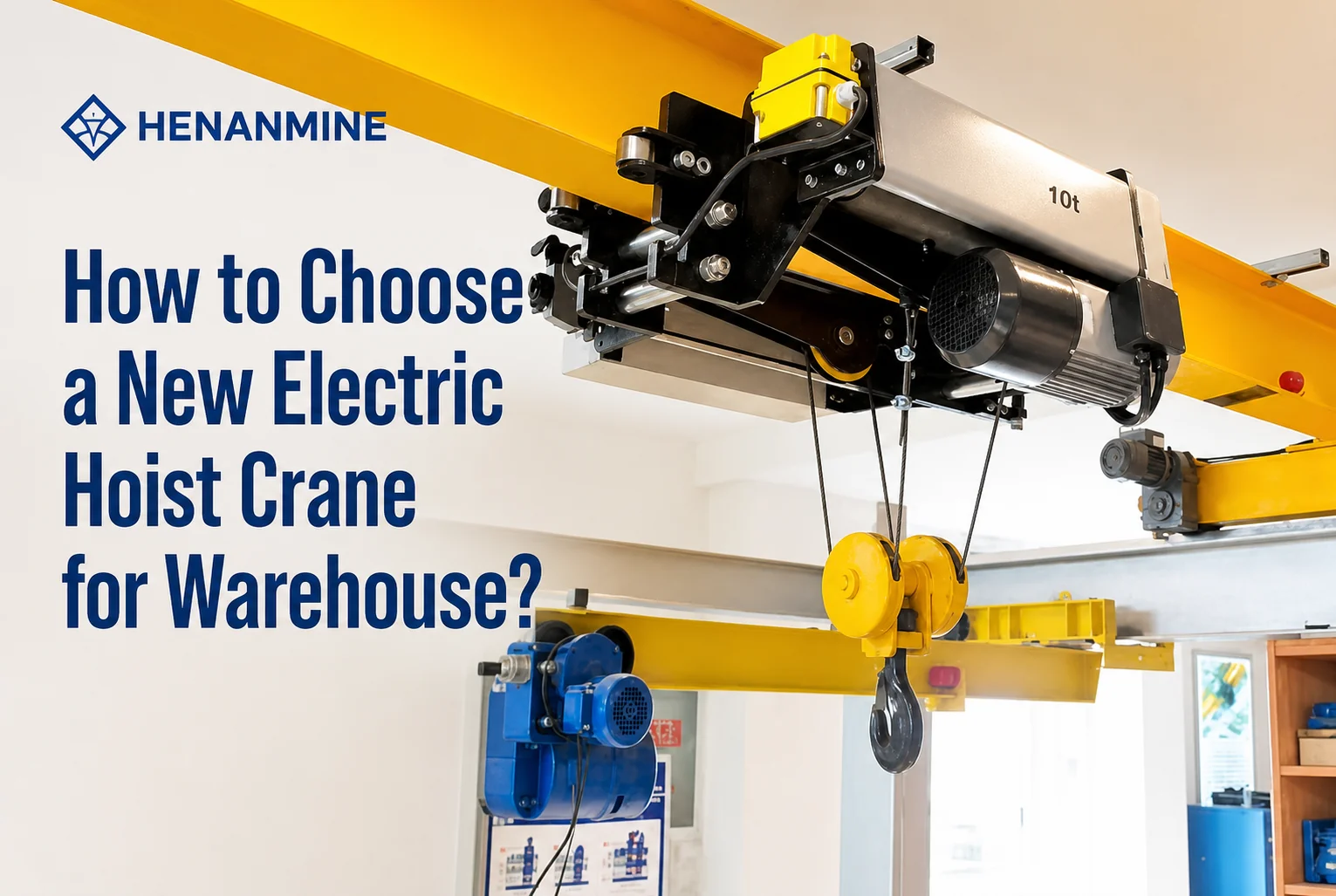
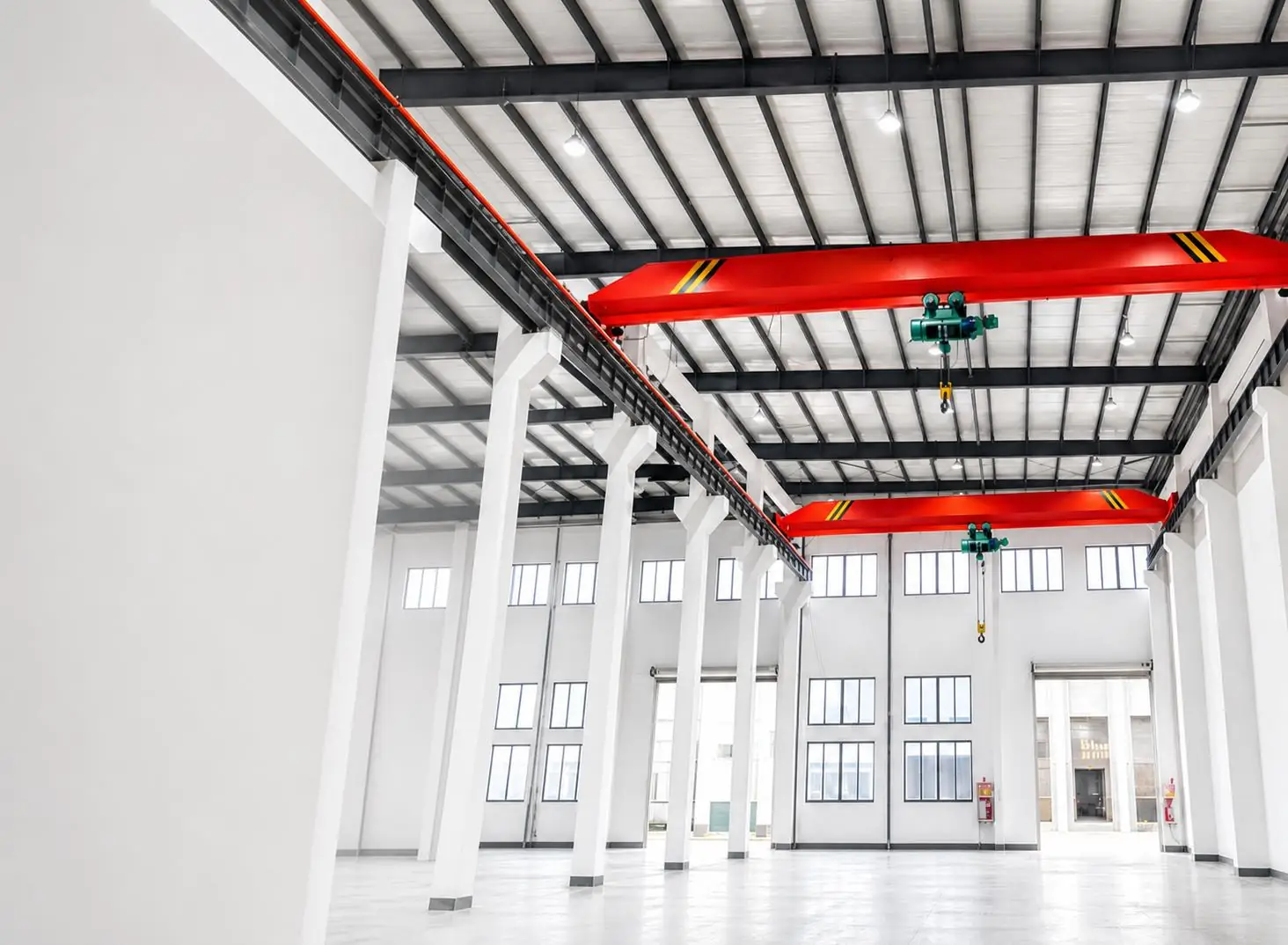
Henan Mine Crane manufactured underhung bridge crane is also often referred to as underhung bridge crane, underlung bridge crane, is a suspended installation in the workshop roof steel beam, suspended ceiling rail below the light bridge crane equipment, different from the traditional overhead crane, its main beam, walking mechanism, hoist lifting system all suspended in the fixed rail below the operation.
Its core working principle relies on the roof bearing structure to carry the weight and lifting load of the equipment, drives the main beam to move along the longitudinal track of the plant through the end beam traveling mechanism, and the lifting hoist runs transversely along the main beam. With the lifting mechanism, the vertical lifting and horizontal transfer of materials can be completed. It can realize the all-round material handling operation without dead angle in the workshop. It is a special equipment suitable for lightweight, high-frequency and small-span lifting operations.This equipment does not require ground column support and completely relies on the original steel structure of the building, which greatly revitalizes the available space of the factory building.
Why Choose an Underhung Bridge Crane for Material Handling?
Maximize headroom
The effective lifting height of the factory building is the core of the lifting operation, especially in the low-rise factory building, the workshop with suspended ceiling and the factory with dense lower equipment. The traditional crane will greatly compress the effective lifting space due to the limitation of the fuselage structure and track installation height, resulting in the normal lifting of materials.
Underhung bridge crane adopts sinking suspension design, track is installed close to the bottom of roof steel beam, no redundant height of top structure is occupied, and vertical clearance height can be released to the maximum extent.Under the same plant height condition, compared with overhead cranes, it can increase the effective lifting height by 15%-30%, which is perfect for low-rise plants, warehouses and assembly line workshops with a floor height of less than 6 meters, and completely solves the problem of low-space lifting operations.At the same time, its compact end structure allows the hook to run close to the wall and the end of the track, greatly reducing the operation blind area.
Reduce installation costs
Traditional bridge cranes need customized columns, brackets, special track foundation, civil construction, steel structure transformation engineering quantity is large, installation cycle is long, comprehensive cost is high, old factory buildings may also be unable to install due to structural constraints.
Henan Mine Crane manufactured underhung bridge crane can be installed directly by relying on the original roof steel structure of the plant without adding new columns and civil foundations, greatly saving the cost of steel structure customization, civil construction and foundation reinforcement.Modular design of equipment, standardization of accessories, simple installation process, 2-3 days to complete the commissioning of a single equipment, installation period shortened by more than 60%.At the same time, the equipment is light in weight, the load pressure on the original structure of the plant is small, and no additional reinforcement is needed. The investment cost of the enterprise is reduced from the aspects of equipment procurement, installation and transformation, and the cost performance advantage is remarkable.
Improve workflow efficiency
In industrial production, material transfer efficiency directly determines production line capacity.Underhung bridge crane adopts full-range suspension operation mode, without column obstruction and ground equipment obstruction, which can realize lifting operation without dead angle inside workshop.The equipment moves accurately, starts and stops smoothly, adapts to the high-frequency, short-distance and high-precision material handling requirements, and can perfectly interface with the production line loading and unloading, mold lifting, finished product transfer, equipment maintenance and other processes.
At the same time, the equipment is flexible to control, supports wired handle and wireless remote control dual-mode operation, fast response speed, high positioning accuracy, effectively reduces material handling waiting time and dislocation adjustment time, assists the workshop to realize assembly line continuous operation, greatly improves the overall material turnover efficiency, and reduces manual handling costs and operation errors.Lightweight operation structure can also reduce equipment start-stop impact, reduce material collision loss, adapt to precision workpiece handling scenarios.
Underhung Bridge Crane vs Top Running Overhead Crane: How to Choose?
Structural differences
The core structural difference between Underhung bridge crane and top running overhead crane is reflected in the support and operation system.Suspended model is upper hanging structure, track fixed under roof steel beam, end beam suspended at the bottom of the track, the whole machine suspended without ground support, lightweight structure, modular, less parts, low failure rate.
Top running overhead crane is a jacking structure. The track is laid above the column bracket. The main beam is erected on the top of the track. It needs a complete supporting system composed of supporting columns, brackets and reinforced steel structures. The structure is heavy and strong, but the structure is complex, occupying a large space and inconvenient to disassemble.Simply put, the suspended structure is simple and flexible, and the overhead structure is stable and heavy. The structural characteristics of the two directly determine the difference in adaptation conditions.
Space requirements
At the spatial adaptation level, Henan Mine Crane manufactured underhung bridge crane focuses on small space, low-rise and pillar-free scenes.The equipment does not need to be installed on the ground, does not block the workshop passage and equipment placement, and has a wide range of floor heights. The minimum can be adapted to 4.5-meter-high workshops, especially for old workshops, compact workshops, and multi-storey workshops.
Top running overhead crane has extremely high space requirements, requiring column installation spacing, track operation space, top safety redundancy height, plant height of not less than 8 meters, and workshop is open without dense equipment.For production workshops with compact space, limited floor height and fixed layout, overhead cranes cannot land on the ground, while suspended models can be perfectly adapted, and the flexibility of space adaptation is far more than traditional models.
Capacity and application
Load and application scenario are the core basis for selection, and the division of labor between them is clear and does not replace each other.Underhung bridge crane is mainly used for light and medium loads. The conventional lifting capacity covers 0.5 tons to 10 tons, and the maximum span can reach 18 meters. The working level is mainly A1-A3 light. It is suitable for high-frequency, light load and high-precision handling scenarios. It is widely used in machining, precision manufacturing, electronic workshops, small warehouses, assembly line loading and unloading.
Top running overhead crane mainly focuses on medium and heavy loads, lifting capacity can cover 5 tons-50 tons or even larger, span can reach more than 30 meters, working level can reach A6-A8 heavy, suitable for heavy machinery manufacturing, steel structure processing, blind equipment assembly, large warehouse heavy load handling and other large loads, long span, high intensity operation scenarios.Enterprises can accurately match models according to their own lifting capacity, operation intensity and workshop space.
Key Factors to Consider Before Buying an Underhung Bridge Crane
Lifting capacity
Lifting weight is the first core parameter of model selection. Overload use is strictly prohibited, and safety redundancy must be reserved.When purchasing, it is necessary to accurately calculate the maximum material weight + fixture weight, and reserve 10%-20% safety margin on this basis to avoid equipment aging, deformation and safety accidents caused by long-term full-load and overload operation.Conventional workshop light handling optional 0.5 tons-3 tons model, mold lifting, medium-sized workpiece transfer optional 5 tons-10 tons model.Don't blindly pursue large tonnage and waste budget, and don't select small tonnage equipment to save costs, which will cause equipment overload, shortened service life, safety hazards and other problems.
Span and runway layout
Span refers to the distance between the track centers at both ends of the crane, which directly determines the scope of equipment coverage and affects the equipment cost and structural stability.Before purchasing, it is necessary to accurately measure the actual effective operation width of the workshop, determine the equipment span in combination with the production line layout and material transfer area, and avoid the operation blind area caused by insufficient span, or increase the equipment cost and reduce the operation stability due to large span.At the same time, it is necessary to plan the track laying scheme, give priority to relying on the original H-shaped steel and I-steel layout of the plant roof, confirm the bearing parameters, spacing and straightness of steel beams, and customize the suitable suspension brackets and track length.For special-shaped workshops and non-standard span sites, manufacturers supporting customization must be selected to ensure regular track layout and smooth operation of equipment.
Lifting height
Lifting height refers to the vertical distance from the lowest position to the highest position of the hook, which directly determines the range of lifting of materials.When purchasing, comprehensive accounting shall be carried out in combination with plant floor height, stacking height, equipment height and operation requirements, not only to meet the lifting of conventional materials, but also to reserve redundant height for maintenance and ultra-high material transfer.Low-rise buildings focus on effective clearance height, taking advantage of the height advantage of suspended models to maximize lifting height.High-level warehouse, three-dimensional operation workshop, can be customized to lengthen the lifting wire rope, increase the lifting stroke, adapt to high-level stacking, high-altitude installation requirements.Parameter selection errors will directly lead to equipment can not meet the production needs, resulting in rework transformation.
Duty class
The work level (working condition level) determines the operating intensity, service life and adaptation scenarios of the equipment. It is a key parameter that is easily ignored by the purchaser and directly affects the long-term operating stability of the equipment.Henan Mine Crane manufactured underhung bridge crane in the industry is divided into light A1-A3, medium A4 two-stage working conditions:
Light A1-A3: suitable for 2-4 hours per day, intermittent operation, low-frequency handling scenarios, such as small warehouses, intermittent equipment maintenance, sporadic material transfer, high cost performance, to meet basic production needs.
Medium A4: suitable for more than 8 hours a day, continuous high-frequency operations, assembly line supporting handling scenes, such as precision machining production lines, batch production workshops, equipment structure strengthening, wear resistance, long-term high-intensity operation, not easy to damage.
Working environment
The workshop operation environment directly determines the material configuration, protection level and customized scheme of the equipment. Different environments need to match the exclusive model to avoid corrosion, aging and frequent failure of the equipment.Normal temperature, dry ordinary workshop, select standard models to meet the needs.In wet and wet workshop, rust-proof and waterproof treatment shall be done for motor, electrical box and metal accessories to improve equipment protection level.Dust, particulate matter more conditions, need to install dust cover, prevent impurities into the transmission structure affect operation.Chemical, corrosive gas environment, anti-corrosion coating, stainless steel accessories, sealed electrical system.Low temperature cold factory, need to choose low temperature resistance motor, antifreeze lubricating oil, prevent equipment start-up failure.
Types of Underhung Bridge Cranes Available
Single girder underhung crane
Henan Mine Crane manufactured single girder underhung bridge crane is the mainstream popular model in the market. It adopts single girder suspension structure, simple structure, light weight, low cost and convenient installation. It is the first choice for light load material handling.The lifting capacity of this model covers 0.5 tons to 10 tons, the maximum span is 18 meters, the lifting height is suitable for conventional workshops, the operation is flexible, the energy consumption is low, and the maintenance is simple.It is mainly suitable for low and medium frequency light working conditions such as small and medium-sized machining workshops, electronic manufacturing workshops, small warehouses, equipment maintenance, sporadic material transfer, etc. With super high cost performance and low operation and maintenance cost, it has become the preferred model for most small and medium-sized enterprises, with a market share of more than 80%.
Double girder underhung crane
The Double girder underhung Bridge crane adopts a double main beam parallel suspension structure. Compared with the single beam model, the structure has stronger bearing capacity, smoother operation, better rigidity, and stronger deformation resistance.The lifting capacity of the equipment covers 5 tons to 20 tons, the span can reach more than 20 meters, the working level is higher, and it can adapt to long-term, high-intensity and high-precision operations.This model makes up for the short board of single beam model with large span and easy to shake and deform under large load. It is suitable for medium and heavy load material handling, high precision mold lifting, continuous assembly line heavy load loading and unloading, medium equipment assembly and other working conditions.Although the cost is higher than that of the single-beam model, the stability, durability and operation accuracy are greatly improved, and it is suitable for medium and high intensity industrial production scenarios.
Manual and electric systems
According to the driving and control system, underhung Bridge crane is divided into manual and electric types, which can adapt to different operation frequencies and manpower configuration requirements.Manual underhung crane relies on manual push-pull walking, manual hoist lifting, no electric drive, simple structure, extremely low cost, almost zero failure rate, no electrical maintenance, only suitable for ultra-low frequency, intermittent operation scenarios, such as small workshops, equipment sporadic maintenance, low frequency material handling.Electric underhung crane is equipped with electric walking and electric lifting system, one-button control, labor-saving operation, high operation efficiency, accurate positioning, support long-term continuous operation, adapt to industrial normal production scenarios, is the mainstream selection of industrial enterprises at present, can be equipped with wireless remote control, variable frequency speed regulation system, further improve the stability and convenience of operation.
Essential Safety Features for Underhung Crane Systems
Overload protection
Overload is the most important safety hazard of crane operation, which is easy to cause major safety accidents such as girder deformation, wire rope fracture and machine falling.Regular underhung Bridge cranes must be equipped with intelligent overload protection system to accurately monitor lifting loads in real time.When the lifting weight exceeds 95% of the rated load of the equipment, the system automatically warns.When the load reaches 100% of the rated value, the system immediately forcibly cuts off the lifting power supply, prohibits the lifting action, only allows the load to fall to the ground, eliminates the risk of overload operation from the root, comprehensively guarantees the safety of equipment and operators, and conforms to the national safety specifications for lifting equipment.
Emergency stop systems
Emergency stop system is the core life-saving device under emergency conditions, all suspension cranes must be standard.Independent emergency stop buttons are set on the equipment control handle, remote controller and main beam of the fuselage. In case of emergency such as equipment jamming, material shaking, personnel approaching, sudden failure, etc., press the emergency stop button, the equipment can instantly cut off all power supplies, immediately stop all lifting and translation actions, and prevent the accident from expanding.The system has fast response speed, strong stability, and is not affected by the conventional control system. It is the last line of defense for the safe operation of equipment. All regular manufacturers 'equipment will be standard, and it is also an essential configuration for workshop safety acceptance.
Anti-collision devices
In the scene of parallel operation of multiple cranes, dense workshop equipment and compact working space, equipment walking collision is easy to cause damage to the fuselage, material damage and personnel injury.The anti-collision device monitors the distance between equipment and walls, other cranes and workshop equipment in real time through infrared sensing and laser ranging technology.When the equipment runs to a preset safe distance, the system automatically slows down and warns.Forced shutdown when the distance is too close, effectively avoiding collision accidents.At the same time, polyurethane buffers are standard at both ends of the equipment, soft buffer noise reduction and shock absorption, prevent hard contact collision damage, prolong the service life of the equipment, and adapt to intensive workshops and multi-machine parallel operation scenarios.
Maintenance Tips to Extend Underhung Crane Service Life
Daily inspections
Daily inspection is the core basis for timely troubleshooting, avoiding small problems from evolving into major failures and prolonging the service life of equipment. It is recommended that operators complete standardized inspection before starting up every day.Focus on checking whether the wire rope is worn, broken wire, rust, hook deformation, cracking, buckle is sensitive.Check whether the traveling wheels and tracks are stuck, offset and worn.Test whether the emergency stop, limit, and overload protection devices work normally.Check whether the electrical circuit and remote controller are sensitive and reliable.If minor faults, wear and looseness are found during inspection, stop immediately, prohibit equipment from running with faults, avoid fault risk from daily links, and greatly reduce overhaul probability.
Component lubrication
The transmission, walking and rotating parts of lifting equipment must be lubricated regularly to reduce metal wear, reduce operating noise and avoid component jamming, which is the key maintenance procedure to extend the service life of the equipment.Core components requiring regular lubrication include traveling wheel bearings, reducers, lifting pulleys, hook bearings, transmission chains, etc.Lubricate once a month in the conventional drying workshop, and lubricate once every half month in the dust and wet workshop. Select special wear-resistant lubricating oil and grease for equipment to eliminate the corrosion and wear of parts caused by inferior oil.Lubricate and clean the dust and oil on the surface of the parts to ensure smooth transmission and effectively reduce equipment running loss.
Regular maintenance
In addition to daily inspections, it is necessary to establish a monthly, quarterly and annual three-level regular maintenance system to achieve full-cycle health management of equipment.Monthly maintenance focuses on tightening fixing bolts, checking track flatness, calibrating electrical control system and cleaning dust in electrical box.Quarterly maintenance focuses on detecting the wear degree of wire rope, brake sensitivity, motor operation status, integrity of buffer device, and timely replacement of slightly worn parts.The annual comprehensive maintenance shall be carried out by the professional personnel of the manufacturer to carry out all-round inspection on the main beam structure, load-bearing track, drive system and safety protection system, correct the accuracy of the equipment, replace the aging accessories, do the anti-rust coating of the whole machine, and investigate the potential hidden dangers.Standardized maintenance can extend the service life of equipment by more than 30%, significantly reducing long-term replacement costs.
How to Select a Reliable Underhung Bridge Crane Manufacturer
Manufacturing capability
The manufacturer's production strength directly determines equipment quality, process accuracy and delivery capabilities, and is the primary consideration for procurement and selection.High-quality suspension crane manufacturers need to have independent R & D, production, processing, testing full process capacity, with standardized production workshops, professional processing equipment, complete machine testing equipment, can independently complete the main beam bending, welding, grinding, assembly, debugging full process.Avoid small workshops, OEM manufacturers, such manufacturers have no standardized production process, equipment welding rough, poor structural accuracy, bearing standards, frequent failures in the later period.Priority shall be given to the source manufacturers with many years of experience in lifting equipment production, stable production capacity, non-standard customization and rapid delivery, so as to ensure that the equipment technology meets the standards and the quality is stable.
Certifications and quality control
Regular lifting equipment belongs to special equipment, must have complete qualification certification, can pass the workshop safety acceptance, legally put into use.Reliable manufacturers need to hold a full set of qualifications such as special equipment production license, product type test report, ISO quality system certification, etc. Each equipment has undergone load testing, safety testing, precision debugging before leaving the factory, with complete certificates, test reports, and instructions.At the same time, manufacturers need to establish a strict quality control system, from raw material procurement, processing production, factory inspection to control the quality of the whole process, to prevent unqualified products from leaving the factory.When purchasing, the manufacturer's qualification must be verified. Equipment without qualification cannot not only pass the safety supervision acceptance, but also cannot be held accountable after safety accidents occur, resulting in great risks.
Customization options
The factory structure, working environment and operation requirements of different enterprises are different, and standardized equipment often cannot be perfectly adapted, so the customization ability of manufacturers is very important.High-quality manufacturers can support non-standard span, special lifting height, anti-corrosion explosion, low temperature adaptation, irregular track layout and other personalized customized services.For special working conditions such as low workshop, special-shaped workshop, corrosive environment, high-precision operation, high-frequency sub-assembly line operation, etc., the equipment structure, configuration and protection scheme can be optimized accordingly, and the appropriate lifting solution can be customized to avoid the problems of poor equipment adaptability, waste of budget and inability to meet production needs.
After-sales support
Lifting equipment belongs to long-term use of industrial equipment, perfect after-sales service is the key to ensure long-term stable operation of equipment.High-quality manufacturers need to provide free site survey, program design, on-site installation and commissioning, operator training, life-long technical consultation, regular return visit maintenance, rapid after-sales maintenance and other one-stop services.At the same time, it is necessary to guarantee the local parts warehouse and quick on-site service. After failure, it can respond 24 hours a day and quickly repair the door, so as to avoid long-term downtime of equipment affecting production.Refuse manufacturers without after-sales, after-sales prevarication, and only sell without service, so as to avoid no maintenance after equipment failure and difficult procurement of accessories, resulting in long-term shutdown losses.
Henan Mine Crane Factory Custom
Underhung Bridge crane procurement selection, the core is to adapt to working conditions, accurate parameters, safety compliance, optimal cost performance, after-sales improvement.As the core equipment of lightweight industrial lifting, its advantages of high space utilization, low installation cost and flexible operation can perfectly meet the material handling needs of most small and medium-sized industrial workshops.
If you want to choose an underhung Bridge crane that suits the working conditions of the plant and has high cost performance, you don't need to repeatedly step on the pit comparison.As a professional source crane manufacturer, Henan Mine Crane Factory can customize the exclusive selection scheme free of charge according to your workshop span, lifting height and operation intensity, providing standard and non-standard customized equipment with compliance and durability.One-stop installation and commissioning, after-sales maintenance services, strict control of equipment quality, eliminate hidden charges, help enterprises reduce handling costs, improve production efficiency.