
How to Select a Explosion-Proof Overhead Crane for Hazardous Zones
Flammable and explosive gases, steam and combustible dust are common in petrochemical, pharmaceutical, grain and oil, coating and other industries.Ordinary bridge cranes are prone to electric sparks, electric arcs and high-temperature surfaces when they are running, which can easily ignite dangerous media and cause explosions and fire accidents.
Explosion-proof bridge cranes are special equipment for high-risk working conditions. Through the structure, material, electrical and sealing explosion-proof design, the ignition risk is eliminated from the source and the safety of lifting operations in hazardous areas is guaranteed. The core advantage is the explosion-proof protection of the whole area and all parts, not the lifting tonnage.
The key to the selection of explosion-proof cranes is that the explosion-proof grade is accurately matched with the hazardous area on the site, and the tonnage and size are for reference only.This article systematically explains the main points of a full set of explosion-proof crane selection to help enterprises comply with the selection and avoid safety risks.
What Is an Explosion-Proof Overhead Crane
Explosion-proof bridge cranes are special lifting equipment specially designed for hazardous environments of explosive gases, steam, and combustible dust. The whole machine has undergone explosion-proof modified design from electrical systems, mechanical components, structural materials to control systems, and can safely complete material lifting, translation, and transfer operations in designated hazardous areas, eliminating various ignition sources such as electric sparks, high temperature, and friction sparks throughout the process.
Core anti-ignition principle
The safety hazards of ordinary cranes are concentrated in the three dimensions of electrical sparks, mechanical high temperature, and friction static electricity, while explosion-proof cranes completely avoid risks through multiple protection mechanisms.:
- Fully sealed explosion-proof electrical system: All electrical components such as motors, control cabinets, junction boxes, limit switches, etc. Adopt explosion-proof, increased safety, and intrinsically safe explosion-proof housings, which are completely sealed and isolated, which can accommodate sparks and arcs generated by internal short circuits, and prevent flame and high temperature leakage from igniting external explosive media.
- Precise control of surface temperature: the surface temperature of all operating components is strictly limited to below the spontaneous combustion temperature of the on-site medium to eliminate the risk of spontaneous combustion at high temperature and adapt to dangerous working conditions of different temperature levels.
- Anti-static and anti-friction spark design: The easy-to-friction parts are made of non-spark alloy material, and the whole machine is equipotential connected and reliably grounded to eliminate the accumulation of static electricity; the structure of the wheels, hooks, wire ropes and other components is optimized to avoid sparks from hard impact.
- Flame-retardant and anticorrosive protection: The cable is made of thickened flame-retardant insulation material, and the equipment shell is treated with anticorrosive sealing, which is suitable for dangerous working conditions such as moisture, corrosion, and dust, so as to avoid safety hazards caused by aging and failure of components.
Core applicable industry scenarios
Explosion-proof bridge cranes are designed for flammable, explosive and high-risk working conditions, and are widely adapted to hazardous operating scenarios in multiple industries. The core application areas are as follows:
- Oil and gas industry: suitable for offshore operating platforms, onshore refineries, LNG gas storage stations and oil and gas storage areas to meet the needs of equipment maintenance, pipe and material transfer operations.
- Petrochemical and chemical industry: it covers petrochemical processing plants, fine chemical workshops, hazardous chemical production and storage plants, and is suitable for all kinds of flammable and explosive chemical media working conditions.
- Pharmaceutical manufacturing industry: it is used in clean production workshops with combustible vapors such as API synthesis and organic solvent processing, taking into account safety and clean production standards.
- Coating industry: suitable for high-risk environments filled with flammable and explosive volatile vapors such as painting workshops, coating and ink blending workshops, etc.
- Dust explosion-proof industry: it can be used in grain storage and processing, wood grinding, pulverized coal treatment, plastic powder processing, etc., which are prone to combustible dust and have the risk of dust explosion.
Understand Hazardous Zone Classification Before Selecting a Crane
The selection of all explosion-proof cranes must be based on the on-site hazardous area classification report as the primary basis.In hazardous areas of different levels, the length of time and probability of risk of explosive media exist are different, and the corresponding explosion-proof levels and protection requirements of equipment are also very different, and they are not universal.At present, the industry uniformly divides hazardous areas into two categories: gas vapor hazardous areas and combustible dust hazardous areas.
Gas and steam hazardous area (Zone 0/1/2)
It is suitable for working conditions of combustible gases and volatile vapors such as oil and gas, chemical industry, coating, etc., and is graded according to the length and probability of the explosive atmosphere.:
- Zone 0: The explosive gas/steam atmosphere persists, long-term or frequently, with the highest risk level, and the equipment is required to have the highest level of explosion-proof protection. It is mostly used in closed workshops for hazardous chemicals that continue to evaporate inside closed storage tanks.
- Zone 1: During normal operation, there is an intermittent and occasional explosive atmosphere. It is the most common high-risk operation area in industry. Most industrial explosion-proof cranes are adapted to this area level.
- Zone 2: There is no risk of explosion in normal operation, and only a brief explosive atmosphere occurs under abnormal circumstances such as equipment failure and operation errors, and the protection level requirements are relatively moderate.
Hazardous area for burning dust (Zone 20/21/22)
Suitable for dust conditions such as grain, wood, pulverized coal, plastic powder, etc., the dust explosion has stronger concealment and faster combustion and explosion speed. The classification standards are as follows:
- Zone 20: Combustible dust clouds persist or frequently exist in the working space, with the highest risk, and are more common inside closed crushing and screening equipment.
- Zone 21: There is a high probability of dust clouds during normal operation, which is the main operating hazard area of the dust factory area.
- Zone 22: Dust clouds are generated briefly under abnormal working conditions, and the risk of daily operations is low.
Equipment under dust conditions must meet IP6X fully sealed protection, strictly limit the surface temperature of the components, and avoid dust accumulation, heat storage, smoldering and explosion.
The key significance of regional classification for selection
The electrical explosion-proof level, mechanical protection standard, and temperature level of the crane must match the on-site regional level one by one.Zone 1 equipment cannot be adapted to Zone 0 high-risk environments, and dust explosion-proof equipment and gas explosion-proof equipment cannot be mixed.
It is absolutely not possible to select the type based only on the lifting tonnage. The mismatch of tonnage only affects the operating efficiency. The mismatch of explosion-proof level will directly cause major safety accidents, and at the same time lead to equipment compliance failure and failure to pass acceptance.
Identify the Required Explosion Protection Standard
Explosion-proof cranes are special compliance equipment and must hold authoritative explosion-proof certification in the corresponding area. Equipment without certification, inconsistent certification, or expired certification is strictly prohibited from being put into use.The global mainstream explosion-proof certification system is divided into three categories, which are adapted to different landing areas.
Mainstream explosion-proof certification system
- ATEX certification (EU standard): Mandatory access standards for the EU market, subdivided equipment protection levels, and adapted to the compliance requirements of equipment in hazardous areas throughout Europe.
- IECEx certification (international general standard): The most universal explosion-proof certification in the world, mutual recognition among multiple countries, suitable for cross-border projects and equipment selection in international factories.
- CNEX/GB certification (Chinese national standard): Mandatory compliance standards for domestic industrial projects, implemented in accordance with GB3836 series standards, all domestic explosion-proof lifting equipment must have this certification, and at the same time comply with JB/T 5897 industry-specific standards.
Interpretation of core certification parameters
When selecting the type, you need to focus on checking the four core parameters, which are indispensable.:
- Explosion-proof category of equipment: Category II corresponds to the gas explosion-proof environment, and Category III corresponds to the dust explosion-proof environment. It is strictly distinguished and cannot be mixed.
- Gas/dust category: Gas is divided into IIA, IIB, and IIC (IIC contains high-risk media such as hydrogen and acetylene, with the highest protection level); dust is divided into IIIA, IIIB, and IIIC, which are suitable for different flammable and explosive media.
- Temperature level (T1-T6): Define the maximum surface temperature of the equipment, the highest T6 temperature level, the lowest surface temperature, and the strongest safety, which must be lower than the minimum spontaneous combustion temperature of the on-site medium.
- Explosion-proof protection method: common explosion-proof type Ex d, increased safety type Ex e, intrinsically safe type Ex i, match the corresponding protection method according to the level of the hazardous area.
Compliance verification requirements
The equipment certification must match the country of the project landing and the level of the hazardous area on the site. After the selection, a professional explosion-proof engineer must verify the authenticity of the certificate and the matching of the parameters to eliminate problems such as the application of certificates, inconsistent parameters, and expired certificates.
Determine the Required Crane Capacity and Duty Class
The tonnage and working level of the explosion-proof crane directly determine the service life and operating safety of the equipment. Too small parameters will lead to overload, overheating, and accelerated aging of the equipment. Too large parameters increase procurement and operation and maintenance costs, which need to be accurately accounted for.
Accurately calculate the rated lifting weight
The selection of lifting tonnage should not only refer to the maximum material weight. It needs to be comprehensively calculated in combination with actual working conditions to fully cover static loads, dynamic loads and long-term needs:
- Limit operating load: accurately calculate the maximum material weight on site as the upper limit of the rated lifting weight of the equipment to eliminate the risk of overload operation.
- Auxiliary self-weight load: The self-weight of a full set of spreaders such as hooks, beams, clamps, suction cups, etc. is included in the total load calculation to avoid false marking of effective lifting weight and ensure accurate selection and compliance.
- Normal operating load: count the conventional lifting weight of daily high-frequency operations, match the adapted crane working level, and avoid the hidden dangers of long-term light load loss or overload operation.
- Long-term expansion margin: Combined with long-term planning such as plant capacity upgrading and equipment iteration, the lifting tonnage margin is reasonably reserved to improve the versatility and service cycle of equipment, and avoid short-term equipment elimination and repeated investment.
Match the adapted work level
The crane working level (A3-A8) is the core parameter that matches the frequency of operation, load strength and equipment design life, and it is also the key index for the selection of explosion-proof working conditions. The adaptation levels of different working conditions are divided as follows:
- A3-A4 light-level working conditions: suitable for daily short-term operation, low-frequency start-stop maintenance scenarios, mainly used for non-continuous operation scenarios such as regular maintenance of storage tanks and production equipment.
- A5-A6 intermediate working conditions: suitable for normal and continuous production operations in factories, and extremely versatile. It is the standard selection for mainstream explosion-proof factories such as chemical industry, grain and oil, and coating.
- A7-A8 heavy-duty working conditions: suitable for high-frequency, heavy-duty, and harsh working conditions of uninterrupted operation, it is widely used in high-risk continuous production lines such as oil and gas refining and chemical industry, fine heavy industry and chemical industry.
The actual selection needs to comprehensively consider the core factors such as the daily operating time of the equipment, the frequency of start and stop per hour, and the range of load fluctuations, so as to accurately match the working level, effectively avoid the dual problems of high-configuration redundancy and waste, low-configuration overload and aging, and ensure the long-term safe and stable operation of the equipment.
Select the Right Explosion-Proof Hoist and Electrical Components
Explosion-proof wire rope hoist
Explosion-proof wire rope hoist has strong bearing capacity and stable operation. It is suitable for large tonnage, large lifting height and high-frequency heavy-duty operating conditions. It is often used in double-beam explosion-proof bridge cranes and is widely used in high-intensity heavy-duty explosion-proof scenarios such as oil and gas refining and chemical industry and heavy industry.
Explosion-proof chain hoist
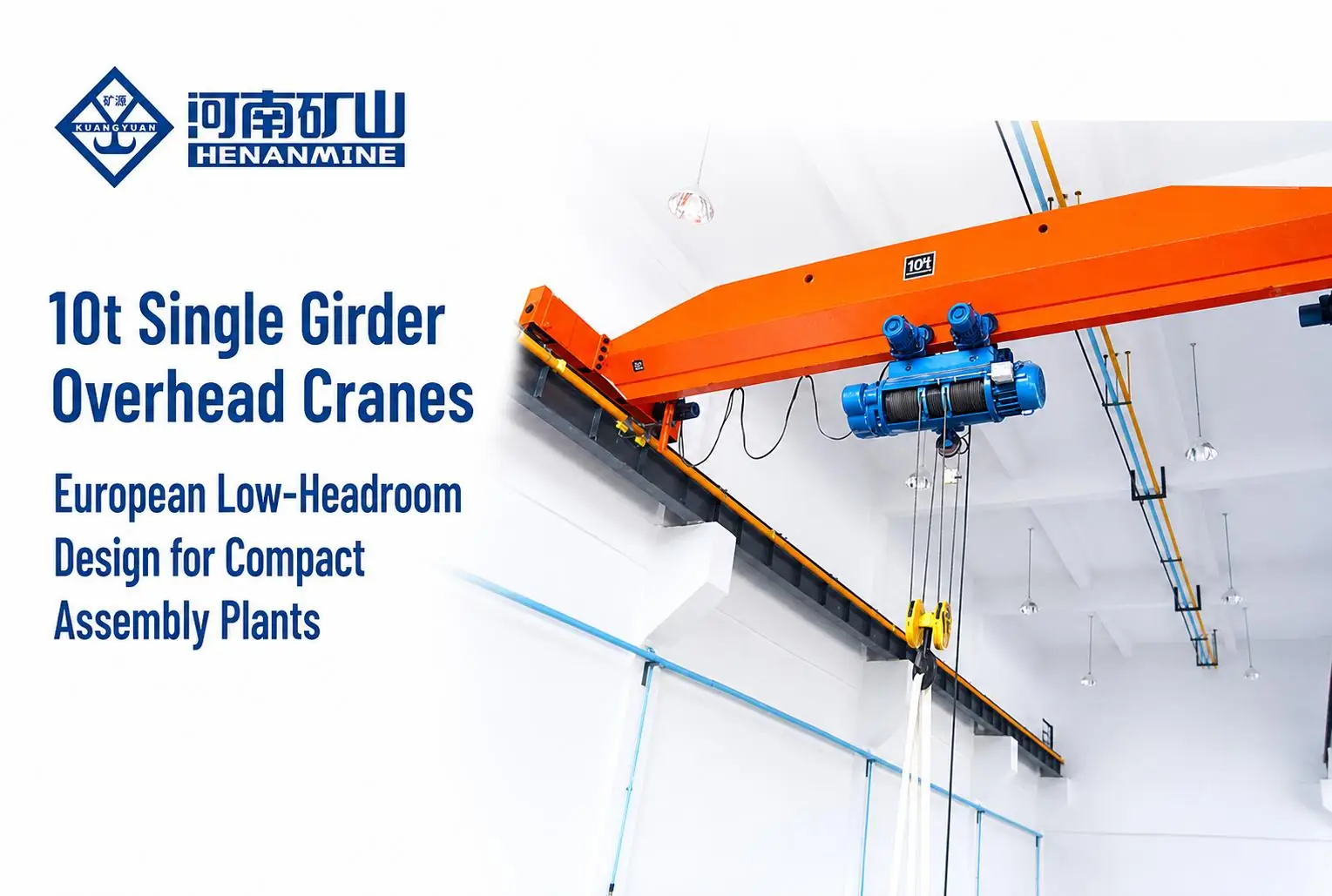
The explosion-proof chain hoist has a compact structure, a lightweight body, and a small headroom. It is suitable for small tonnage, low lifting height, and restricted plant floor height. It is often used in single-beam explosion-proof bridge cranes, which are suitable for the normal transfer of light materials in the workshop.
Configuration of key explosion-proof electrical components
All components of the complete electrical system must have formal explosion-proof qualifications, and the explosion-proof level is accurately matched with the hazardous area on site. The core configuration requirements are as follows:
- Explosion-proof motor: The dual explosion-proof structure of explosion-proof and safety-enhancing is adopted, and the sealing and insulation process is used to eliminate the problem of operating sparks and overheating of components from the root cause.
- Explosion-proof control cabinet and wiring box: an integrated fully sealed protective shell with dust-proof, explosion-proof and flame-retardant properties, which effectively blocks internal arc leakage and avoids the risk of ignition.
- Explosion-proof limit switch and operation button: It adopts intrinsically safe explosion-proof design, with sensitive control and accurate limit, which can achieve safe and stable operation in high-risk environments.
- Explosion-proof power supply system: equipped with a closed conductive rail, a special explosion-proof cable and a sealed cable connector, abandoning the traditional open sliding contact line, and completely eliminating the hidden dangers of arc flash explosion.
- Explosion-proof braking and emergency stop components: The redundant safety design of dual brakes is adopted to realize automatic self-locking of power failure, and there is no spark and no high temperature during emergency shutdown to ensure the safety of extreme working conditions.
Evaluate Crane Structure and Layout Requirements
The structural form and dimensional parameters of the crane need to be adapted to the plant structure and working space, otherwise there will be problems such as restricted installation, blind spots in operation, and waste of space, which will affect the stability of explosion-proof protection at the same time.
Single beam VS double beam explosion-proof crane selection
- High-temperature heat storage of transmission components: Bearings, gears and other transmission components operate at high frequencies for a long time. If the lubrication is insufficient, friction heat accumulation will occur, causing the surface temperature of the components to exceed the standard.
- Explosion-proof single-beam bridge crane: compact structure, low cost, light weight, suitable for scenes with small tonnage of 1-20t, low-frequency operations, and limited net height of the plant, it is mostly used in light chemical, coating, and grain and oil workshops.
- Hidden dangers of static electricity accumulation and discharge: The lack or failure of the grounding protection of the equipment will cause the continuous accumulation of static electricity, which will eventually cause sparks of electrostatic discharge and cause explosions.
- Risk of overheating of the brake system: Frequent start-stop braking of the equipment will continue to generate frictional heat energy, which will cause the surface of the brake assembly to be high temperature and touch the ignition threshold of flammable and explosive media.
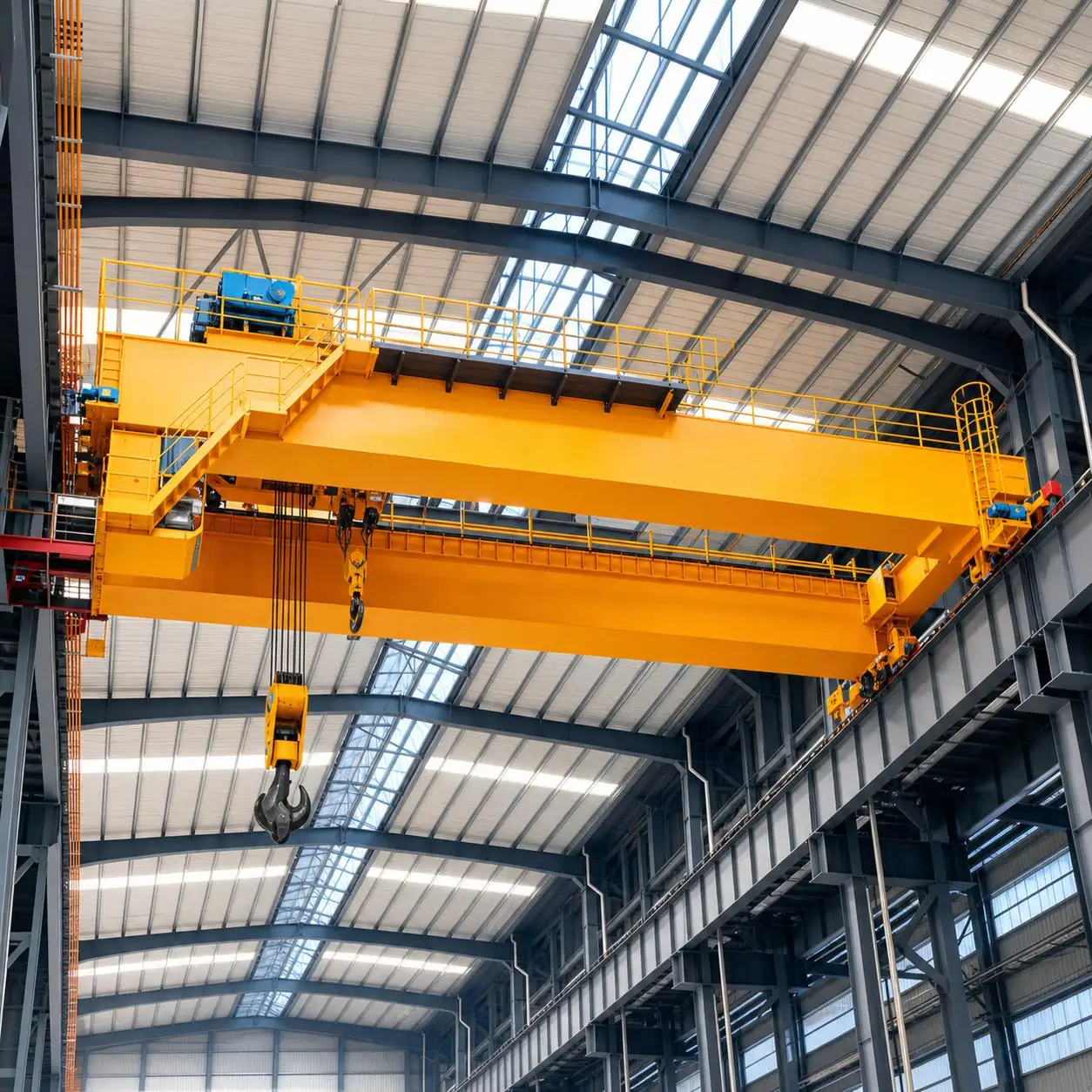
- Explosion-proof double-girder bridge crane: strong bearing capacity, high stability, good fatigue resistance, suitable for 5-75t large tonnage, high-frequency heavy-duty, long-span operation scenarios, mostly used in oil and gas refining and chemical, heavy-duty chemical high-risk plants.
Check the core layout parameters
In the selection stage, it is necessary to accurately check the spatial layout parameters to ensure that the equipment is perfectly adapted to the working conditions of the plant, no installation interference, and no blind spots in operation. The core verification items are as follows:
- Plant span: Refers to the distance between the center of the crane track, which determines the coverage of equipment operations.The selection needs to strictly match the span of the measured plant to ensure that the running stroke of the cart fits the working area, the equipment translation is smooth, and the problems such as operation caton and insufficient working range caused by span deviation are avoided.
- Rated lifting height: it is the maximum safe vertical lifting stroke of the hook, which determines the vertical lifting capacity.It is necessary to combine on-site material stacking and equipment hoisting height approval, and reserve a safety margin to take into account the daily routine hoisting and large-scale components and ultra-high equipment hoisting requirements.
- The clearance height of the workshop: it is the effective space from the load-bearing structure at the top of the workshop to the ground, which is the core restriction condition for the installation of equipment.The selection of the type needs to comprehensively consider the structural height of the main beam, hoist, limiting device, etc., and reserve a safe buffer distance to avoid interference and collision between the equipment and the plant structure.
- End distance and hook coverage: The end distance is the safe distance from the end of the cart to the end of the track, which directly affects the coverage area of the operation.Reasonable optimization of the end distance parameters can effectively reduce the blind spots around the walls and columns, realize the global coverage of the workshop, and improve the flexibility of material transfer and operating efficiency.
- Adaptability of track and column: The crane track needs to be accurately matched with the plant column and roof load-bearing structure to ensure smooth laying and uniform force.Compliance and adaptation can make the equipment run stably without offset and shaking, reduce mechanical wear and friction sparks, and meet the safe operation standards of explosion-proof working conditions.
Differentiated design of indoor and outdoor working conditions
Indoor explosion-proof cranes are designed with dust-proof, sealing and explosion-proof protection as the core design focus, and are suitable for the operating environment of closed workshops; outdoor models need to be equipped with additional windproof, rainproof, UV-resistant, anticorrosive and anti-aging protective structures to resist outdoor extreme weather erosion, protect the integrity of the explosion-proof structure of the equipment in all directions, and ensure long-term safe and compliant operation.
Review Safety Features and Control Systems
Qualified explosion-proof bridge cranes must be equipped with a full set of redundant safety protection devices to realize fault self-inspection, active protection, emergency risk avoidance, and avoid the risks of dangerous working conditions in all directions.
Essential basic safety equipment
- Overload protection device: equipped with a high-precision load detection module, it can instantly sound and light alarm and lock the lifting action when it is overloaded, effectively avoiding component deformation, motor overheating, wire rope fracture and other failures, and eliminating the hidden dangers of explosion under high-risk working conditions.
- Upper and lower limit and walking limit devices: equipped with explosion-proof limit switches to accurately limit the lifting of the hook and the walking stroke of the equipment, prevent problems such as rushing to the top, falling to the bottom, and offside collisions, and avoid ignition sparks caused by mechanical impact and friction.
- Fail-safe brakes: The redundant design of power-off self-locking is adopted, and the braking is stable during normal operation. The load can be instantly locked in the event of sudden power failure or failure, so as to prevent safety accidents such as sliding hooks, sliding cars, and falling heavy objects.
- Multi-point explosion-proof emergency stop device: Intrinsically safe explosion-proof emergency stop buttons are set in multiple places on the fuselage and operation console. In emergency conditions, one-button power-off and shutdown can be turned off and all actions can be locked, and the loss can be stopped quickly to prevent the accident from expanding.
- Anti-collision system: suitable for multi-machine operation scenarios on the same track, real-time monitoring of equipment spacing through explosion-proof infrared induction, automatic deceleration, early warning and shutdown at close range, to avoid friction sparks and high temperature caused by equipment collisions, and to ensure explosion-proof and safe production in intensive workshops.
Intelligent adaptation configuration
The frequency conversion speed control system (VFD) needs to adopt an explosion-proof sealed cabinet to achieve smooth start and stop, accurate positioning, and avoid component friction sparks caused by impact loads; it is equipped with an intelligent monitoring system, which can monitor the temperature, load, operating frequency, and fault code of the equipment in real time to achieve preventive operation and maintenance, and does not destroy the equipment's explosion-proof certification compliance throughout the process.
How to Choose a Reliable Explosion-Proof Crane Manufacturer
The core of equipment selection depends on parameter matching and half on the strength of manufacturers. High-quality manufacturers are the guarantee of equipment safety, compliance and long-term stable operation. The selection of manufacturers needs to focus on 7 dimensions of verification.:
- Industry-specific experience: deeply engaged in high-risk industries such as oil and gas, fine chemicals, dust explosion-proof, etc., has rich experience in on-site project implementation, and is familiar with the compliance norms, working conditions, pain points and safety selection standards of various hazardous areas.
- Customized R&D capabilities: With exclusive program R&D and design capabilities, it can be customized on demand according to plant space parameters, operating frequency, explosion-proof level and on-site environmental conditions, and can be applied to general models to meet the needs of personalized high-risk working conditions.
- A full set of compliance certification: The manufacturer has complete qualifications and compliance. The whole machine and the core components such as motors, hoists, and electrical components all hold valid and traceable explosion-proof certifications. The parameters are accurately matched with the working conditions to eliminate hidden compliance risks such as certification, expiration, and undocumented.
- Complete technical data output: A full set of compliance technical data can be provided, including equipment drawings, factory inspection reports, explosion-proof qualification certificates, operation and maintenance manuals, etc., which fully meet the requirements of equipment acceptance, annual inspection and safety production verification.
- Strict quality inspection system: establish a standardized factory quality inspection process, and strictly complete all tests such as load performance testing, electrical explosion-proof testing, and safety function verification before the whole machine leaves the factory, so as to prevent the delivery of unqualified equipment from the source.
- Perfect after-sales guarantee: equipped with a one-stop after-sales service system, covering professional installation and commissioning, operator skills training, regular inspection and maintenance, original factory certified parts supply and other services to ensure the long-term safety, compliance and stable operation of equipment.
- Design ability to adapt to all working conditions: it can accurately match customized design plans for different lifting tonnage, plant span, work level, explosion-proof level and complex environmental working conditions, and adapt to various high-risk production scenarios.
Conclusion
The selection of explosion-proof bridge cranes cannot only depend on tonnage and price, but must be combined with on-site explosion-proof grade, media characteristics, working condition parameters, compliance, and operation and maintenance requirements for comprehensive selection.Enterprise procurement should abandon the misunderstanding of low prices, verify the explosion-proof qualification of equipment, configuration quality and the technical capabilities of manufacturers, accurately match working conditions, avoid safety risks, and control full-cycle costs.
Henan Mine Crane can provide explosion-proof bridge cranes and customized solutions for hazardous environments such as petroleum, chemical industry, and natural gas. It is tailored according to on-site explosion-proof requirements, working conditions and plant conditions to balance safety, reliability and economy to ensure safe production under hazardous working conditions.