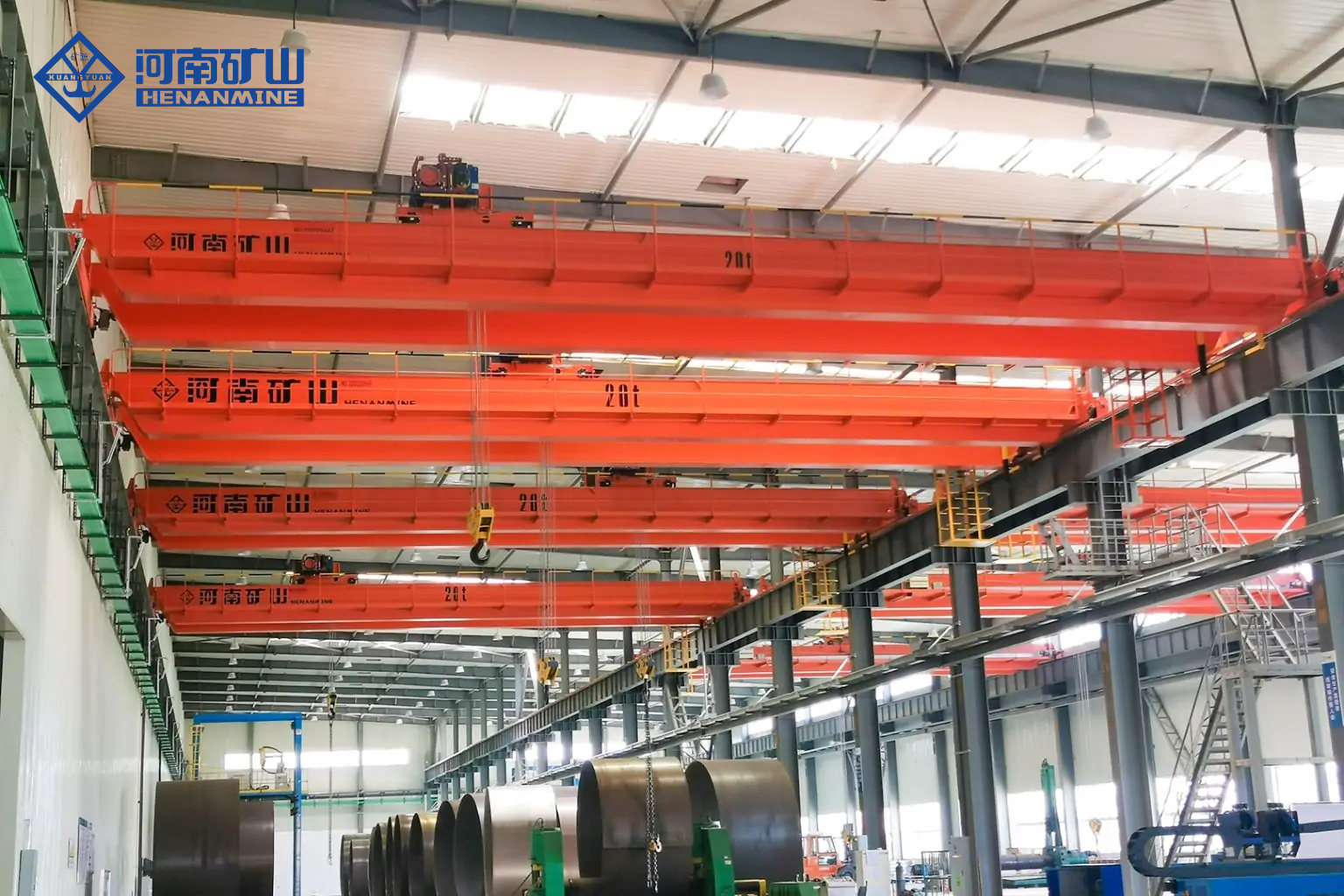

How to Choose an Overhead Crane for Frequent Start-Stop Operations
In industrial scenarios such as metallurgical processing, assembly line transportation, and heavy-duty assembly, industrial bridge cranes have been in high-frequency start-stop operation conditions for a long time. Such high-frequency operation bridge cranes can start and brake repeatedly hundreds of times a day, which can easily cause motor overheating, brake wear, structural fatigue, positioning offset and other problems, greatly increasing the probability of failure and maintenance costs.The core reason for the premature aging and frequent downtime of most bridge crane equipment is not the quality defect of bridge crane equipment, but the use of ordinary light-load models in the selection of bridge cranes, which does not match the high-frequency operating conditions.Combining the start-stop operation characteristics to accurately match the parameters of the bridge crane, the configuration of the bridge crane and the operation and maintenance plan of the bridge crane is the key to ensuring the stable operation of the equipment, extending the service life of the equipment, and reducing production losses.
Key Factors When Choosing a Crane
The selection of bridge cranes with frequent start-up and stop conditions should not only focus on the rated lifting weight of bridge cranes, but also on the fatigue resistance, dynamic operating stability, and start-stop carrying capacity of the equipment.Conventional cranes focus on static load adaptation, while high-frequency start-stop bridge crane equipment needs to take into account dynamic impact, continuous cycle operation, thermal stability and braking reliability. This is the core selection standard for high-performance bridge cranes.The following four core elements are the core basis for selection, which directly determine the equipment failure rate and service life.
Duty class and load capacity
The working level and load capacity are the basic core of the selection of high-frequency start-stop bridge cranes, the key indicators of the adaptation of industrial bridge cranes to working conditions, and the key parameters that are most easily overlooked.According to the national standard GB/T 3811-2008, industrial bridge cranes are divided into eight working levels A1-A8. Different specifications of bridge cranes are adapted to different operating intensities. Different levels correspond to different operating frequencies, load states and fatigue life, and are fully adapted to the needs of different starting and stopping conditions.A1-A3 is a light-level work system, which is suitable for warehouse maintenance and spare hoisting scenarios with low average daily start-stop times and intermittent operations. It is completely unsuitable for high-frequency start-stop conditions. Forced use will quickly cause fatigue of the main beam, motor burning, and brake failure.
A4-A5 is an intermediate work system, suitable for conventional production in ordinary workshops, with an average of 8 hours of uninterrupted operation per day, which can meet the needs of moderate start and stop.For high-frequency start-stop continuous operation scenarios, the A6-A8 heavy-duty work system must be selected. The total number of cycles designed for this type of equipment can reach up to 4 million times, and the structural safety factor and load-bearing fatigue strength are greatly improved, and it can withstand the dynamic impact of long-term repeated start-stop.The selection of load capacity must follow the principle of dynamic adaptation, and cannot only refer to the peak load.In high-frequency operations, the equipment can withstand the impact of variable loads for a long time. It is recommended to reserve 1.2-1.5 times the safe load margin to avoid structural deformation and component aging caused by frequent start and stop at full load.At the same time, it is necessary to distinguish between conventional operating loads and extreme loads, and take the daily high-frequency hoisting weight as the core selection basis, so as to eliminate the heavy-duty and high-frequency operation of small-level bridge cranes, and effectively extend the service life of Henan Mine Crane manufactured bridge cranes.
Motor performance and braking system
The motor and brake system are the core power and safety barriers for high-frequency start-stop operations of bridge cranes, as well as the core vulnerable system of bridge cranes under high-frequency operating conditions, and they are also high-failure components.Ordinary fixed-speed motors have a large current shock at the moment of start and stop, and the speed changes violently. Repeated start and stop will quickly cause the coil to heat up, the insulation layer to age, and the motor to burn down. It is completely unable to adapt to high-frequency operating conditions.For cranes that are suitable for frequent start-and-stop, special motors with high frequency resistance, high heat dissipation, and overload resistance must be selected. They have strong instantaneous overload capacity and continuous start-and-stop resistance, which can effectively reduce the impact of start-and-stop current and reduce heat accumulation.
At the same time, the motor needs to be equipped with an independent heat dissipation structure to ensure temperature stability under long-term high-frequency operation and avoid thermal shutdown failures.The braking system is directly related to operation safety and equipment loss. It is strictly forbidden to use ordinary monolithic brakes in high-frequency start-stop conditions.Repeated opening and closing of conventional brakes will quickly cause problems such as brake pad wear, brake lag, and brake failure.Professional high-frequency start-stop cranes are equipped with wear-resistant hydraulic brakes or electromagnetic dual-braking systems as standard. The braking response speed is fast, the fit is stable, and the amount of wear is small. It can achieve accurate slow-stop, eliminate start-stop frustration and load shaking, and avoid structural shocks caused by emergency braking, greatly improving operation safety and component durability.
Hoisting and traveling speed
The reasonable matching of the lifting and operating speed of the bridge crane is the key to balancing the production efficiency of high-frequency start-up and stop conditions with the loss of bridge crane equipment.The speed is too fast, the start-stop impact is large, the load swing is serious, and the wear of components is accelerated.If the speed is too slow, it will directly reduce the transfer efficiency of the assembly line and affect the overall production capacity.The lifting speed needs to be adapted according to the attributes of the hoisting material: precision parts, fragile materials, and high-precision assembly scenarios. Priority should be given to the low-speed and smooth lifting mode to avoid material bumps and positioning deviations caused by start-stop shaking.For heavy-duty bulk materials and conventional batch transfer scenarios, medium and high-speed lifting can be selected to improve operational efficiency.
The industry's general adaptation standard is that the lifting speed of light-duty high-frequency equipment below 5 tons is adapted to about 8m/min, and heavy-duty equipment above 10 tons is adapted to low-speed parameters of 7m/min and below, ensuring stability is a priority.The operating speed of carts and trolleys also needs to be adjusted in a targeted manner.Under high-frequency start-stop conditions, the operating speed needs to support stepless speed regulation to achieve a smooth transition from low-speed start-up, uniform-speed operation, and gentle braking.For high-frequency operations in conventional workshops, the operating speed of the cart is recommended to be controlled at 20-30m/min, and the precision operation scenario can be lowered to 15-20m/min, which completely solves the problems of fuselage tremor, load offset, and track wear caused by frequent start and stop of bridge cranes, and improves the operating stability of bridge cranes.
Crane Components for High-Frequency Operations
The standard accessories of ordinary bridge cranes are only suitable for low-frequency intermittent operations, which cannot meet the operating needs of bridge cranes under high-frequency operating conditions, and cannot withstand the continuous impact and heat loss of high-frequency start and stop.To ensure the long-term stable operation of the equipment, it must be equipped with special core accessories for high-frequency working conditions, upgraded from multiple dimensions of transmission, braking, electronic control, and protection, and targeted to solve the pain points of high-frequency operations.
Variable frequency drive systems
The frequency conversion drive system is the standard core device for frequent start and stop cranes, and it is also the key to improving the operating conditions of the equipment and reducing losses.Traditional resistance speed regulation and two-speed motor speed regulation have problems such as large start-stop impact, stiff speed switching, and severe current fluctuations, which are the main causes of motor burn-out and structural fatigue in high-frequency operations.The frequency conversion drive system can realize stepless and smooth speed regulation of crane lifting, trolley operation, and cart operation, slowly speeding up when starting, and slowly decelerating when braking, completely eliminating the mechanical shock and current peak at the moment of start and stop.
Under the working conditions of hundreds of start-stop cycles per day, the frequency conversion system of Henan Mine Crane manufactured bridge crane can effectively stabilize the working current of the bridge crane motor, reduce the heat accumulation of the coil, and reduce the fatigue loss of the motor, reducer, main beam, and track.In addition, the high-quality frequency conversion system has overload protection, stall protection, and fault self-test functions, which can monitor the operating status of the equipment in real time, and warn of downtime in time when high-frequency operations are abnormal, so as to avoid major failures caused by the operation of the equipment with diseases, and greatly improve the operating stability and safety of the equipment. It is the core configuration for cost reduction and efficiency enhancement in high-frequency start-up and shutdown conditions.
Hoist gearbox and mechanical brakes
The hoist reducer and mechanical brake are the core transmission and braking components of the bridge crane, which determine the reliability of the high-frequency operation of the bridge crane. It can withstand alternating loads for a long time under high-frequency start-stop conditions, and has extremely high requirements for material accuracy, wear resistance, and fatigue resistance.Ordinary reducer gear accuracy is low, lubrication stability is poor, and repeated start and stop are prone to gear wear, abnormal noise, caton, transmission failure and other problems.The special hoist reducer for high-frequency working conditions adopts high-strength alloy gears and precision gear grinding technology. It has the characteristics of high wear resistance, impact resistance and low noise. It can withstand the transmission load of continuous and repeated start and stop. The transmission efficiency is stable, and it is not prone to gear failure, oil leakage and other failures.
At the same time, it is equipped with a forced lubrication system to continuously supply oil to cool down during high-frequency operation to avoid excessive oil temperature and lubrication failure caused by high-speed circulating operation.The supporting special mechanical brakes use thickened wear-resistant brake linings and integrated brake structure. Compared with ordinary brakes, the wear-resistant life is increased by 2-3 times, the braking response is more accurate, and the opening and closing are more stable.The dual mechanical braking design can realize redundant protection, and the other group can intervene immediately when a single set of brakes fails, eliminating the safety hazards of sliding hooks and sliding in high-frequency start-stop operations of bridge cranes, and ensuring the safety of bridge crane operations.
Electrical control and thermal protection
The most common hidden fault in high-frequency start-stop operations is the overheating of the motor and electronic control system. Long-term heat accumulation will accelerate circuit aging, insulation failure, and component burning, greatly shortening the service life of the equipment.Therefore, a professional electronic control system and a perfect thermal protection mechanism are indispensable configurations for high-frequency bridge cranes to ensure long-term continuous operation of bridge cranes.The high-frequency dedicated electronic control system adopts a modular and integrated design, with a regular circuit layout and strong anti-interference ability. It can be adapted to frequent signal switching of high-frequency start and stop, eliminating signal delay, command confusion, malfunction and other problems.
At the same time, it is equipped with an intelligent control system, which can accurately regulate the start-stop rhythm and operating speed, adapt to the operating needs of different working conditions, and improve the accuracy of hoisting and positioning.The thermal protection system adopts multiple protection design, and the core components such as motors, frequency converters, and reducers are equipped with temperature sensors, which can monitor the operating temperature in real time.When the temperature of the equipment exceeds the standard during high-frequency operation, the system will automatically trigger load reduction, cooling, early warning and even shutdown protection to avoid high temperature burning of the equipment from the root cause.At the same time, it is equipped with a forced cooling fan and a cooling duct structure to actively accelerate the cooling and ensure the stable operation of the equipment for 24 hours of continuous high-frequency operation.
Selecting the Right Overhead Crane Configuration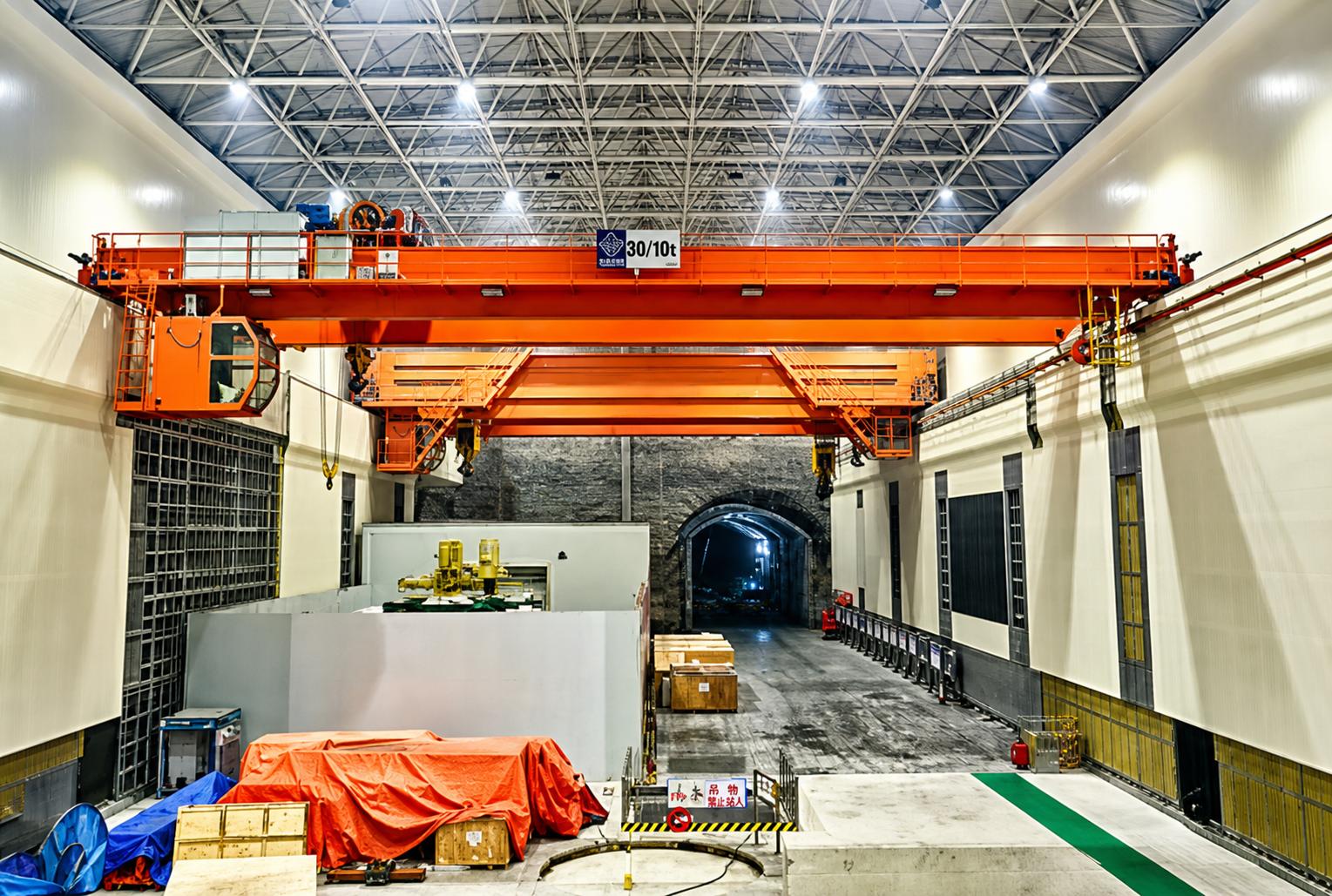
Depending on the fuselage structure and lifting mechanism configuration of the bridge crane, the high-frequency start and stop conditions of the adapted bridge crane are greatly different.The selection of single and double beam structure, electric hoist and hoist mechanism directly determines the carrying capacity, fatigue resistance, operating efficiency and applicable scenarios of the equipment.Combining workshop working conditions, lifting weight, operating frequency, and span height to select the appropriate configuration, in order to achieve the best price/performance ratio and the longest service life.
Single girder vs. double girder
Single-beam bridge cranes are lightweight in structure, lower in cost, and easy to install. They are commonly used models for high-frequency bridge cranes in small and medium-sized working conditions. They are suitable for small and medium-tonnage and medium-frequency start-up and stop-down conditions.For conventional workshops of 1-10 tons, with an average daily start-stop frequency of 100-200 times, and a small operating span, A5-A6 single-girder cranes can be used to meet the needs. The equipment has flexible operation, lower energy consumption, easy maintenance, and outstanding cost-effective advantages.
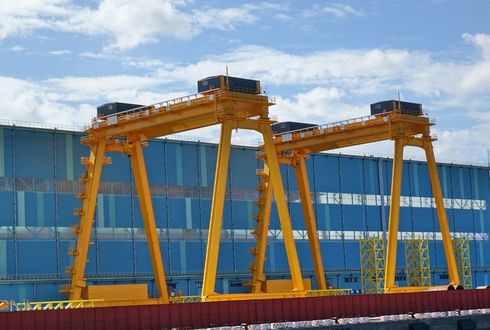
The double-girder bridge crane adopts a double-girder load-bearing structure, which has stronger overall rigidity and better fatigue resistance. It is the preferred model for heavy-duty and high-frequency bridge cranes with higher carrying limits. It is the first choice for large tonnage, ultra-high frequency, and continuous operating conditions.For heavy loads of more than 10 tons, average daily start and stop of more than 200 times, 24-hour uninterrupted operation, and large-span plant scenes, A6-A8 double-girder cranes must be selected.Its structure has small deflection, no tremor in operation, can withstand long-term dynamic shocks, and will not cause deformation of the main beam or loosening of the structure due to frequent start and stop. The stability and safety far exceed that of single-beam models.
Electric hoist vs. open winch
The electric hoist lifting mechanism has a compact structure, light start and stop, and accurate positioning, which is suitable for small and medium-sized tonnage and refined high-frequency start and stop operations.It is widely used in machining, parts assembly, and light material transfer scenarios. It has the advantages of stable speed regulation, low noise, and simple operation and maintenance. It is suitable for high-frequency start-stop conditions of light and medium-load bridge cranes, and can effectively control the start-stop impact of bridge cranes to ensure the accuracy of precision hoisting operations.
The open winch has high structural strength, high transmission torque, and strong impact resistance. It is specially designed for heavy-duty, high-strength, and ultra-high-frequency start-and-stop conditions.For large-tonnage and continuous cycle start-stop scenarios such as metallurgy, heavy industry, heavy equipment assembly, and bulk material transfer, the hoist lifting mechanism can withstand continuous heavy-duty shocks, and is not prone to slippage, wear, and transmission failure. The stability of continuous operation is stronger, and the safety of heavy-duty start-stop is higher. It is the core configuration of high-frequency bridge crane operations in heavy industry, which greatly improves the operating stability of heavy-duty bridge cranes.
Customized crane specifications
Standardized bridge crane parameters are difficult to adapt to all complex high-frequency start-up and shutdown conditions. Henan Mine Crane manufactured customized bridge cranes can be accurately adapted to special production scenarios. Customized parameters are the key to ensure the adaptability of equipment for special workshop environments and special operating needs.Professional manufacturers can customize the core parameters of the equipment in all directions according to the actual working conditions of users to accurately match the needs of high-frequency operations.Customizable content includes exclusive work level upgrade, frequency conversion speed regulation parameter adjustment, start-stop buffer program optimization, precise matching of lifting/operating speed, thermal protection system upgrade, high temperature and dustproof and waterproof configuration, long-span reinforced structure, non-standard lifting height, special track adaptation, etc.For example, high-temperature workshops can be customized with high-temperature motors and sealed protective structures, high-dust workshops can be equipped with dust-proof and noise-reducing configurations, and ultra-high-frequency assembly lines can optimize the start-stop logic to further reduce equipment losses and improve operating efficiency.
Maintenance Requirements for Frequent Start-Stop Cranes
High-frequency start-stop bridge cranes have been in a state of high-load and high-cycle operation for a long time. The loss rate of such industrial bridge cranes is much higher than that of conventional equipment, and the loss rate of components is much higher than that of ordinary cranes. Conventional maintenance standards cannot meet their operating needs.Targeted special maintenance can greatly reduce the probability of failure, delay the aging of components, effectively extend the overall service life of equipment, and reduce enterprise operation and maintenance costs.
Reducing motor and brake wear
Motors and brakes are the components with the fastest loss in high-frequency operations, and they are also the core focus of maintenance.In daily operation and maintenance, it is necessary to regularly clean the motor cooling air duct and check the operating status of the cooling fan to avoid dust accumulation and heat accumulation and aging caused by poor heat dissipation.At the same time, the motor insulation resistance and coil temperature are regularly tested, and the circuit aging and virtual connection problems are investigated in time to prevent the instantaneous current impact of start and stop from burning down the motor.The brake system needs to be inspected daily, focusing on the degree of wear of the brake lining, brake clearance, hydraulic system pressure, and electromagnetic coil status.The lower lining of high-frequency operation is a vulnerable part, and it is necessary to replace the worn-out parts in time, and adjust the brake clearance regularly to ensure stable and accurate braking.At the same time, regularly clean up the dust of the brake mechanism and fill it with special lubricating grease to prevent brake caton, lag, and failure, reduce the start-stop loss of the bridge crane from the root cause, and extend the service life of the core components of the bridge crane.
Inspection and preventive maintenance
For high-frequency start-stop cranes, it is necessary to establish a preventive maintenance system, abandon the passive operation and maintenance mode of post-mortem maintenance, and take regular inspections, early investigations, and early maintenance as the core to avoid sudden failures.
- Daily pre-shift inspection: check the start and stop operation status of the equipment, whether there is abnormal noise and tremor, whether the braking is sensitive, whether the electronic control indicator light is normal, and deal with minor abnormalities in a timely manner.
- Weekly special inspections: detect the fastening status of the main beam, end beam, and track, investigate the hidden dangers of structural fatigue, check the oil level and oil quality of the reducer lubricating oil, and replace the deteriorated lubricating oil.
- Monthly in-depth inspection: verify the parameters of the frequency conversion system, the sensitivity of the thermal protection system, the operating current of the motor, and the performance of the braking system, and tighten the wiring and connecting bolts of the whole vehicle.
- Annual comprehensive flaw detection: non-destructive flaw detection of the main beam, welds, and transmission components to investigate fatigue cracks and structural deformation, and eliminate major safety hazards.
Extending crane service life
If you want to maximize the service life of high-frequency start-stop bridge cranes, you need to standardize the operation and maintenance process of bridge cranes, and you need to start with standardized operation, regular maintenance, adaptation of working conditions, and multi-dimensional comprehensive control of parts replacement.First of all, strictly standardize the operation process, eliminate savage start-stop, emergency stop, and overload operation, and reduce unnecessary mechanical shocks and load losses.Secondly, adapt the operating frequency in strict accordance with the operating conditions of the equipment, and do not use the equipment under excessive or overloaded loads.
At the same time, we insist on regular replacement of the original supporting wearing parts to avoid the problem of insufficient matching and increased loss caused by inferior accessories.Regularly optimize the operating parameters of the equipment, fine-tune the frequency conversion speed regulation and start-stop buffer parameters according to the operating frequency, and adapt to actual working conditions.Do a good job of dust-proof, waterproof, and rust-proof protection of the equipment, and install exclusive protective devices under harsh working conditions to delay the aging of the equipment in all directions, and increase the service life of the high-frequency start-stop crane by more than 30%.
How to Choose a Reliable Overhead Crane Manufacturer
The precise selection of bridge cranes adapted to the working conditions of Henan Mine Crane manufactured is inseparable from the technical support of professional manufacturers. Bridge cranes with high-frequency working conditions have higher design process requirements.High-frequency start-stop cranes are customized industrial equipment. The manufacturer's design capabilities, production technology, quality inspection standards, and after-sales system directly determine the stability, durability, and use experience of the equipment.Choosing a reliable source manufacturer is the core prerequisite for avoiding selection errors, reducing failure rates, and ensuring long-term stable operations.
Engineering design and customization
High-quality crane manufacturers must have professional working condition survey and customized engineering design capabilities, and can issue exclusive selection plans and equipment design drawings one-on-one according to the span of the user's workshop, lifting height, lifting tonnage, average daily start-stop frequency, and operating environment.In view of the high-frequency start-and-stop conditions of bridge cranes, the professional design team will upgrade the structural strength of bridge cranes in a targeted manner, optimize the start-and-stop control logic, match the dedicated frequency conversion and heat dissipation system, and avoid various hidden dangers of high-frequency operations from the source of the design.
At the same time, it has mature non-standard customization capabilities, which can solve the adaptation problems of special working conditions and special sites, refuse to standardize equipment and hard-set complex working conditions, and ensure that each equipment accurately matches the user's high-frequency start-stop operation requirements, so as to achieve efficient, stable and low-loss operation.
Factory testing and quality assurance
High-frequency start-stop cranes have extremely high requirements for production technology and quality inspection standards. Ordinary small factories lack special testing processes, and the equipment is prone to high-frequency operation failures after leaving the factory.Reliable source manufacturers have a perfect standardized production system and strict factory inspection process, and have professional load testing, start-stop cycle testing, temperature testing, and braking performance testing equipment.
All Henan Mine Crane manufactured special cranes for high-frequency working conditions will undergo tens of thousands of simulated start-stop cycle tests, overload tests, and continuous thermal stability tests before leaving the factory, and comprehensively test the tolerance performance of motors, brakes, frequency conversion, and structures to ensure that bridge crane equipment can be adapted to long-term high-frequency start-stop operations, and ensure that the bridge crane's factory quality is up to standard.At the same time, it has a complete qualification certification and quality assurance system, strictly follows the national standard production, and the quality of the equipment can be traced and guaranteed.
After-sales service and spare parts
The maintenance frequency of high-frequency start-stop bridge cranes is high, and the replacement of wearing parts is frequent. Perfect service is the guarantee of the long-term operation of bridge cranes, and a perfect after-sales service system is an important guarantee for the long-term stable operation of equipment.High-quality manufacturers have a national after-sales team that responds quickly, and can provide one-stop services for on-site investigation, installation and commissioning, regular maintenance, and emergency repair of faults. For sudden failures in high-frequency operations, they can respond quickly and solve them quickly, minimizing the loss of production.
At the same time, it has sufficient reserves of original parts, and core parts such as motors, brakes, frequency conversion modules, and reducers can be supplied quickly to avoid long-term downtime caused by out-of-stock parts.In addition, professional manufacturers will provide customers with free operation and maintenance training on working conditions, guide operators to standardize use, daily inspections, and basic maintenance, and help enterprises reduce equipment failure rates, extend equipment service life, and achieve long-term cost reduction and efficiency gains.
Henan Mine Crane Factory Custom
The core logic of the selection of bridge cranes with frequent start-up and stop conditions is based on the adaptation of working conditions as the core, focusing on anti-fatigue, stable start-stop, and strong protection, and abandoning the single selection misunderstanding of only looking at tonnage.From the working level, power brake configuration, speed parameters, special accessories, fuselage structure, to late maintenance and manufacturer screening, every link directly affects the safety, efficiency and service life of the equipment.
The high-frequency special bridge crane adapted to working conditions can not only perfectly adapt to the continuous start-stop operation requirements of the bridge crane, greatly reduce the failure and shutdown rate and maintenance costs, but also ensure the production efficiency of the workshop for a long time and create sustainable value for the enterprise.If you have crane customization, selection, and transformation needs for high-frequency start-stop conditions, you can consult us at any time. Henan Mine Crane Factory provides one-to-one exclusive working condition solutions.