
40t Wind Power Crane for Nacelle Assembly & Installation
In the fan assembly workshop, the hoisting of the engine room and generator directly affects product quality, production efficiency and operation safety.The 40-ton fan assembly crane is a special equipment adapted to large-size and high-precision fan components. It integrates variable speed control, anti-shake positioning, and safety protection functions. It is an integrated precision hoisting system with high precision and high safety.
This article comprehensively combs the main points that need to be mastered in the purchase and application of a 40-ton fan assembly crane from equipment positioning, accuracy requirements, key specifications, design points, assembly process to selection list.
What Is a 40t Wind Power Assembly Crane?
Unlike the lifting equipment used for on-site installation of wind farms, the 40-ton fan assembly crane mainly works in the manufacturing workshop and pre-assembly plant, and is responsible for a series of handling and assembly operations of components before leaving the factory.Its typical tasks include:
- Hoisting the cabin shell and internal assembly parts.Key components such as generators are integrated in the cabin, and the crane is required to provide stable and controlled support during the assembly and sequencing process.
- Handling generators, gearboxes, wheels and transmission chain components.The main transmission chain of the fan covers the hub, spindle and bearing, the generator, and the transmission mechanism between the shaft and the generator. These components need to be handled carefully during the pre-assembly stage.
- Support pre-assembly and maintenance operations.The cabin will be hoisted multiple times during the production process, from the production station to the storage area, from the storage area to the transportation equipment, and then to the subsequent logistics links, every handling must be completed reliably.
Actual meaning of 40 tons in the selection
"40 tons" refers to the rated lifting weight of the crane, which is 40 metric tons.However, the rated tonnage itself does not determine whether a crane is suitable for a certain application scenario, and the actual available lifting weight is usually lower than the nominal value.:
- The weight of suspension equipment such as hook groups, hooks or lob balls, slings, and beams must be deducted from the rated lifting weight, which means that the actual weight of the parts that can be hoisted must be less than 40 tons.
- Dynamic loads cannot be ignored.The cabin hoisting beam must not only bear static weight, but also the dynamic load caused by the installation process, crane operation and position adjustment also need to be included in the calculation.
- Factors such as lifting height, span, duty rating, control accuracy and plant layout are as critical as the rated tonnage.A crane whose tonnage is up to standard but does not match the geometry of the workshop or the frequency of operations does not apply regardless of the nominal tonnage.
Main model configuration
There are three common configurations in the fan assembly workshop:
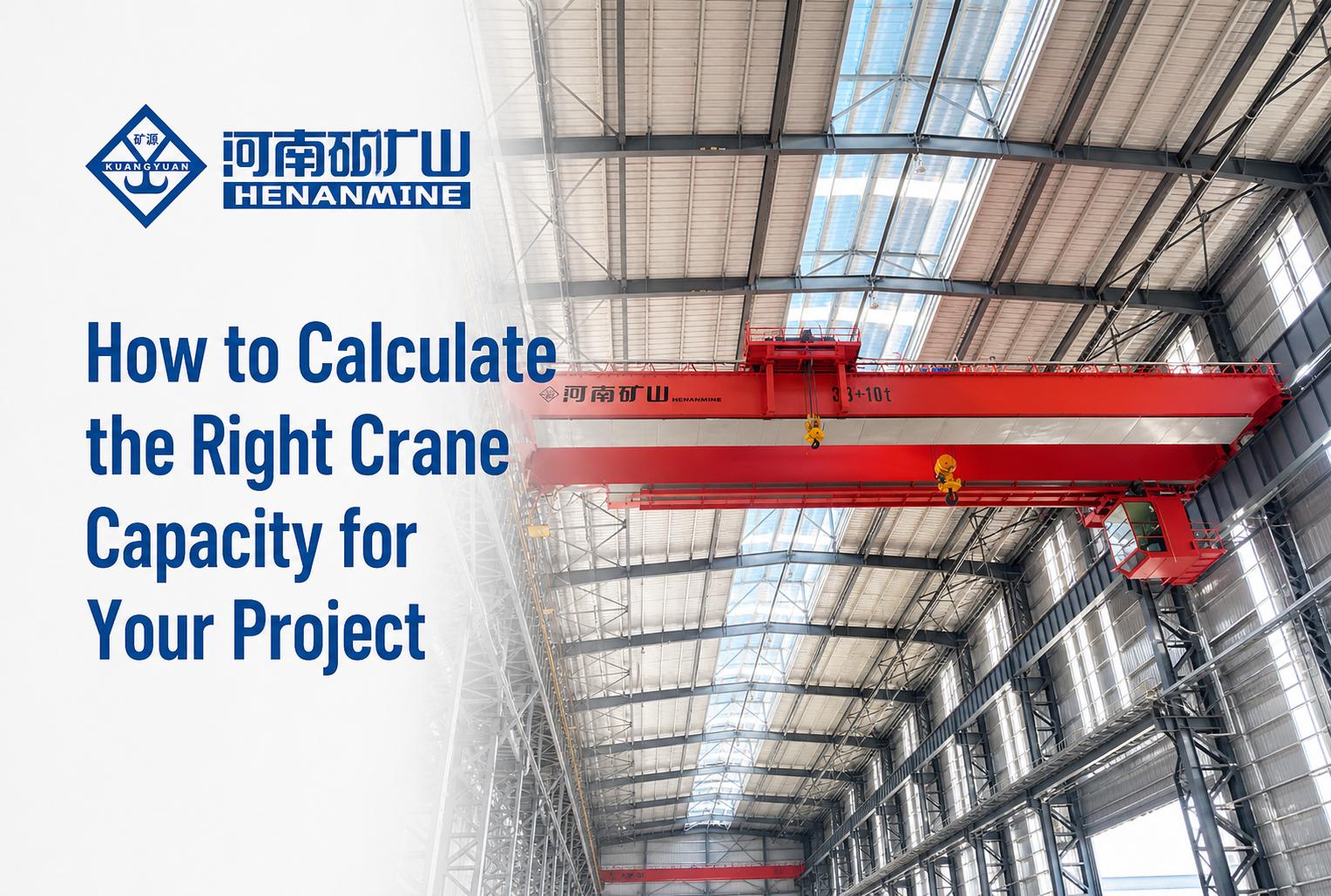
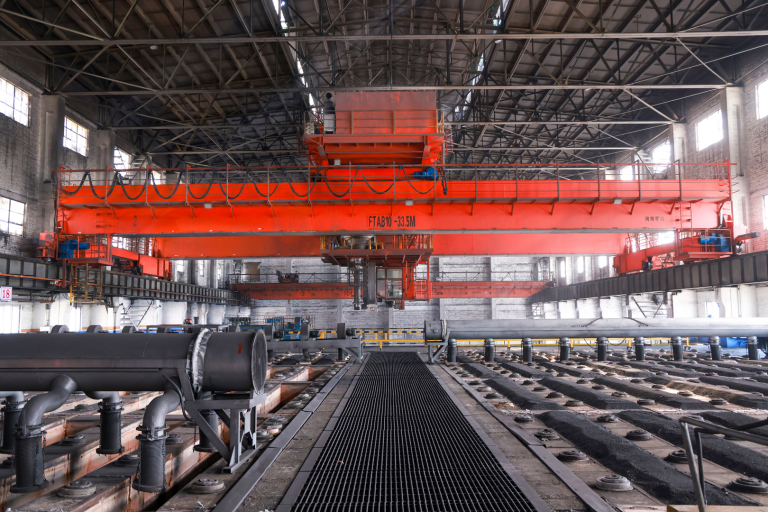
- Bridge crane: the preferred solution for indoor fan manufacturing workshops, which runs along the track on the plant structure and can cover the entire workshop work surface.
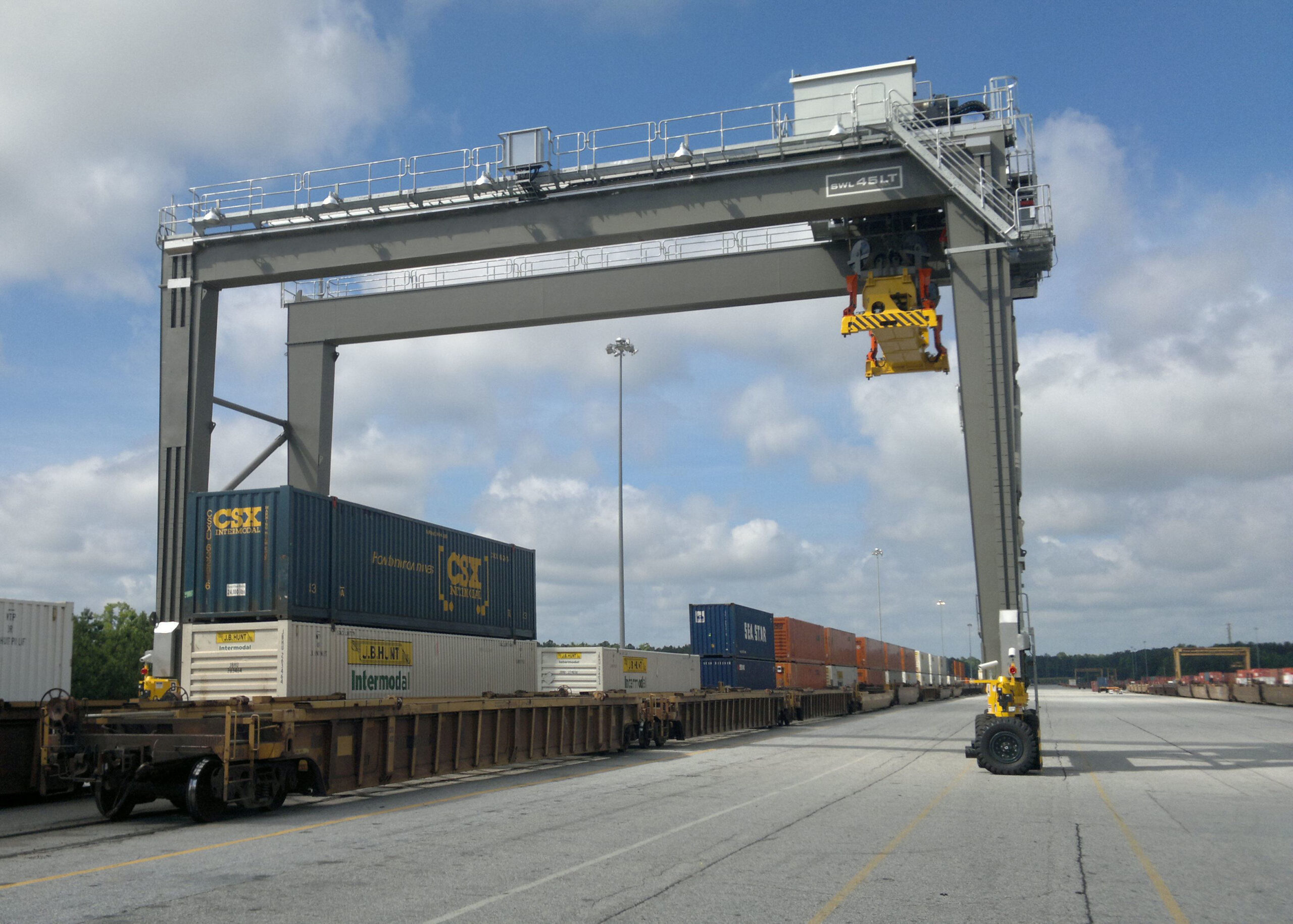
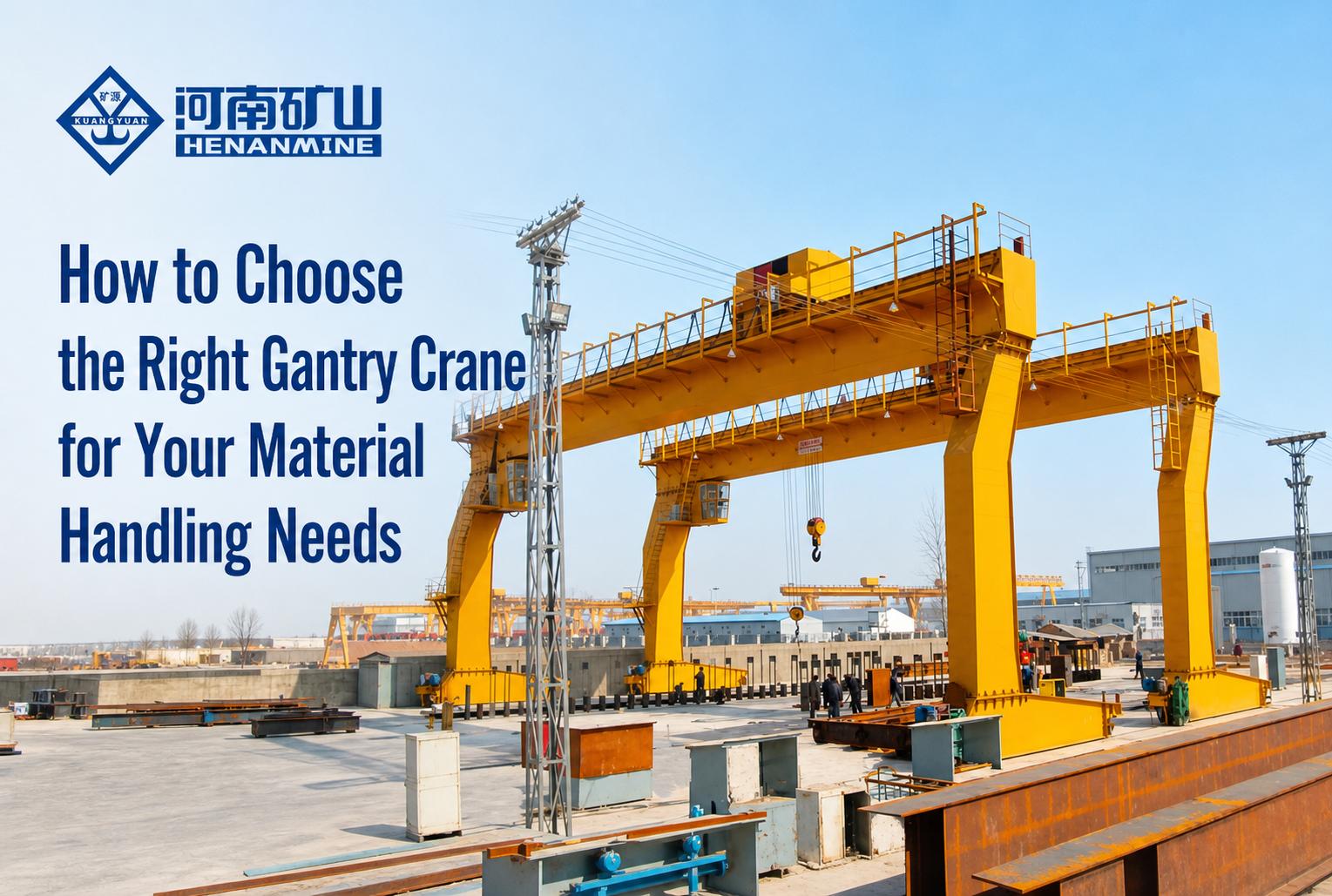
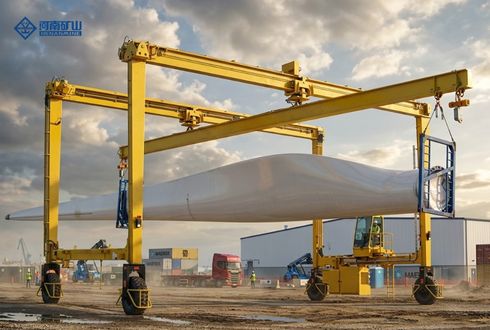
- Gantry crane: used in open-air or semi-open-air pre-assembly sites, suitable for occasions where the track cannot be installed on the structure of the plant.
- Customized heavy-duty crane system: The lifting weight of the whole machine of the modern fan engine room can reach up to 100 tons or more, and the customized crane for the pre-assembly of the workshop is specially designed according to the specific production line layout, which can be hoisted by the whole machine, or the main components of the engine room can be hoisted piece by piece to the assembly position.
Why Nacelle and Generator Lifting Requires High Precision
Difficult to locate large components
The length, height and width of a typical cabin are about 15,000 mm × 4,000 mm × 3,300 mm, and the weight of the whole machine is usually between 50 and 150 tons depending on the specifications and materials of the unit.For 40-ton workshop cranes, even if only sub-parts or cabin segments are hoisted, the challenges posed by size are still significant.:
- Long and wide parts are easy to swing when moving horizontally, making precise positioning difficult.
- The surrounding headroom of the assembly station is limited, which requires the operation of large vehicles and small cars to be highly controlled.
- The larger the size of the parts, the more difficult it is to accurately align them.
Generator precision hoisting control
The loading of the generator into the cabin frame is one of the links with the highest accuracy requirements in the pre-assembly process, which is specifically reflected in:
- Precise horizontal positioning to ensure the accurate alignment of the installation flange.
- Low-speed lifting and descending are used in the final approach stage.
- Eliminate rapid acceleration and impact loads, and protect parts from misalignment and damage.
The engine room is usually the heaviest single component in the whole fan machine. Its weight, size, center of gravity position and installation height are superimposed together, making every hoisting a strict test of equipment and solutions.
Avoid component hoisting impact
Once the load is unbalanced during the hoisting of the cabin, dangerous working conditions will form.A weight shift of 2% to 3% occurs at a height, which can produce a significant lateral force.Therefore, in the workshop environment, controllable acceleration and braking, smooth operation of small cars and carts, and active suppression of load swing are all basic requirements in the design of 40-ton assembly cranes.
Key Specifications for a 40t Wind Power Assembly Crane
The selection is not just based on the rated tonnage, but requires the system to define multiple parameters:
| Specification Item | Why It Matters |
| 40 t rated capacity | Covers target wind turbine components within a safety margin |
| Lifting height | Determines the available vertical assembly space |
| Span | Must match the workshop width |
| Lifting speed | Balances production efficiency and positioning accuracy |
| Travel speed | Controls component movement within the workshop |
| Duty rating | Supports high-frequency repeated assembly without overload |
| Control system | Enables precise positioning |
| Power supply | Must match plant infrastructure |
| Safety devices | Protects personnel and equipment |
The parameters that must be clarified before placing an order also include: the maximum weight of the component (including the weight of the spreader below the hook), the maximum lifting height required, the crane span, the operating frequency and the number of daily lifting cycles, indoor or outdoor installation, ambient temperature and working conditions, and the required positioning accuracy.
Crane Design for High-Precision Nacelle Handling
Variable speed lifting
Variable speed lifting achieved by variable frequency drive (VFD) provides two key operating modes: the load is off the ground or runs at a faster speed after assembling the tire frame; the final alignment stage is switched to a low speed to reduce the risk of component impact or misalignment.This two-speed capability also reduces the mechanical impact of the transmission chain components, which are very sensitive to impact loads.
Smooth operation of small cars and carts
The controllable acceleration and deceleration of the trolley and the trolley during the journey directly determines the swing amplitude of the load.In a workshop with dense assembly stations and limited headroom, even a small uncontrolled swing may cause component collisions or positioning deviations.
Anti-shake and positioning technology
Modern 40-ton fan assembly cranes are usually equipped with:
- Anti-shake control system, which actively cancels the movement of the pendulum during operation.
- The drive system based on the frequency converter realizes stepless smooth speed regulation of the three mechanisms of lifting, trolley and cart.
- Remote control or handle (follow-up) operation options, allowing the operator to choose the best observation position when aligning.
- On-demand configuration of the position monitoring function to meet the requirements of production accuracy.
A dedicated hanging beam with multiple hanging points is a prerequisite to ensure balanced lifting, while the smooth and predictable movement of the control system cooperates with the hanging scheme to ensure the safety and accuracy of the entire hoisting.
How a 40t Crane Handles Generator Assembly
Loading preparation and working condition verification
Before the formal hoisting, strictly check the weight, shape parameters and position of the standard hoisting point of the generator to ensure that the hoisting plan matches the actual workpiece.Comprehensively check the integrity and rated carrying capacity of a full set of spreaders such as hanging beams, slings, hooks, shackles, etc., to prevent damage, aging, and overload of the spreaders from being put into use.
Focus on controlling the angle of lifting force. Cable-stayed and partial lifting will greatly reduce the bearing capacity of the spreader. For example, the carrying capacity of the shackle will be lost by about 25% when it is forced diagonally at 45°. Standardize the force state of the lifting point in advance to avoid hidden safety risks.
Vertical and smooth lifting operation
The lifting stage follows the principle of ”first steady rise, then translation", and slowly lifts the generator so that the workpiece is completely detached from the supporting tire frame, and then performs subsequent displacement operations.Operations such as rapid acceleration, emergency stop, and instantaneous change of direction are prohibited throughout the process, effectively suppressing load swing and inertial offset.
Maintain a uniform and stable lifting speed, ensure the balance of the initial lifting attitude, avoid tilting and bumping of the workpiece, and lay the foundation for subsequent precise alignment.
Smooth shift and transfer of stations
The frequency conversion and controllable operation functions of crane carts and trolleys are used to smoothly transfer the generator to the assembly station.The anti-shake control system is turned on throughout the process to actively offset the swing of the workpiece and minimize the lateral displacement deviation.
The speed reduction and slow travel near the assembly area in advance eliminates the inertial shaking caused by high-speed operation, ensures the stability of the workpiece attitude, and improves the controllability and accuracy of the station in place.
Low-speed fine alignment calibration
Enter the final assembly link, switch to the low-speed precision control mode, and complete the precise alignment of the generator and the engine room installation flange by fine-tuning the position of the large and small parking spaces to ensure that the installation hole position and the end face fit accurately.
It adopts handheld remote control or manual operation to flexibly adjust the operating viewing angle, avoid blind spots in the field of vision, and ensure the effect of high-precision assembly alignment.
Controlled drop hook and safe decoupling
After the alignment is completed, the workpiece will be smoothly dropped to the installation base surface in a low-speed controlled manner, eliminating shocks and bumps throughout the process, and protecting the precision structure of the generator from damage.
After the workpiece is fully fitted to the mounting surface, the force is balanced, and the alignment accuracy is verified to be correct, the hook can be slowly loosened and the decoupling operation can be completed to ensure the assembly quality and hoisting safety.
Safety Features for 40t Wind Power Assembly Cranes
For hoisting heavy-duty, high-value fan components in a densely populated workshop, the safety system is not an option but a basic requirement. A fully equipped 40-ton crane should include:
Core safety protection device
In order to ensure the stability, controllability and zero accidents of large-scale fan hoisting operations, the 40-ton fan special assembly crane is equipped with a full set of systematic safety protection devices as standard to protect equipment, workpieces and on-site personnel in all directions.:
- Overload protection device: real-time monitoring of real-time lifting load, once it approaches or exceeds the rated tonnage, it will automatically warn and limit the lifting action, so as to eliminate the risk of structural deformation, wire rope damage and overturning caused by overload operations.
- Upper and lower limit protection switch: accurately limit the maximum lifting and descending stroke of the hook, avoid extreme working conditions such as the hook rushing to the top and falling to the bottom, and prevent the spreader, wire rope and the whole machine structure from being hard hit.
- Emergency stop system: equipped with global emergency stop control, in the event of emergencies such as sudden abnormality, proximity of personnel, shaking of workpieces, etc., the operating power can be cut off instantly and all mechanism actions can be terminated.
- Cart travel limit device: Hard limit protection is set at both ends of the track to prevent the crane from running over-range, hitting the rail, and derailing, and to avoid the displacement of the whole machine from getting out of control.
- Anti-release safety device of the hook: The spring self-locking anti-release structure is adopted to prevent accidental slippage of the sling and hanging beam during the swing of the hoisting, and to ensure the stability of large-scale hoisting.
- Real-time load monitoring system: dynamically displays the actual weight of the hoisting, helps the operator determine the load balance state, and finds hidden dangers such as partial load, weightlessness, and load offset in time.
- Power-off safety braking system: It has a power-off self-locking braking function, and automatically locks the lifting and operating mechanism in the event of a sudden power failure or line failure to ensure that heavy objects do not fall or slip.
- Sound and light early warning and alarm device: lights and sound prompts are triggered synchronously during the start and stop, walking, and lifting of the crane to warn surrounding personnel to avoid and standardize the order of on-site operations.
Long-term safe operation and maintenance system
The safety performance of equipment depends on normalized maintenance and management, which is an important guarantee for long-term high-precision hoisting operations.:
- Regular special inspections: conduct periodic inspections of brake systems, wire ropes, electrical control systems, limit devices, and anti-shake systems to investigate hidden faults in a timely manner.
- Preventive maintenance and maintenance: carry out maintenance work such as lubrication, fastening, calibration, and electrical testing according to the frequency of equipment working conditions to avoid safety hazards caused by aging and failure of components.
- Working condition recording and condition monitoring: long-term recording of hoisting cycle, load data, and operating status, accurate evaluation of equipment health, and extension of crane service life.
Common Problems When Choosing a 40t Wind Power Crane
Load parameters
- Maximum lifting weight: The maximum lifting load of the whole machine needs to be calculated, including the weight of the workpiece, the hook, the beam, the sling, etc. All the weight of the lower spreader, and the dynamic load safety margin is reserved to eliminate the problem of false standard of rated tonnage and insufficient actual load.
- Component dimensions: accurately record the length, width, and height of the core components such as the fan cabin and generator, which are used to check the workshop passage space, hoisting headroom, and alignment operation range to avoid collision and interference with large-scale movement.
- The position of the center of gravity of the component: Clarifying the actual center of gravity of the component is the core basis for formulating a balanced hoisting plan, selecting a hoisting point, and debugging an anti-shake system, which can effectively avoid risks such as partial load, rollover, and swing offset.
- Available hanging point layout: count the number, location and load-bearing specifications of the standard lifting points of the workpiece, and match the lifting method with the structure of the hanging beam to ensure uniform force and stable lifting, and meet the requirements of precision assembly alignment.
Workshop site parameters
- Crane adaptation span: Determine the standard span of the crane according to the actual width of the workshop to ensure that the operation of the cart covers the entire working area, while matching the track foundation and column structure of the workshop, and adapting to on-site installation conditions.
- Effective lifting height of the hook: combined with the height of the assembly tire frame, the maximum size of the workpiece, the transfer and loading requirements, determine sufficient vertical lifting stroke to ensure that large pieces can be smoothly removed from the station, free lifting, and barrier-free transfer.
- Effective track length: calculate the overall laying length of the plant track, match the arrangement of production stations in the workshop, and ensure that the operating itinerary of the crane cart meets the needs of the whole workshop for sequencing, assembly, warehousing and handling.
- Available headroom under the roof: measure the effective operating headroom under the roof steel beams, pipelines, and ceilings to avoid interference with the superstructure and ensure the operation of the crane and the safety of large-scale hoisting.
Equipment performance parameters
- Dual-mode lifting speed: configure the conventional fast handling and low-speed precise alignment dual-gear speed, taking into account the workshop production and transportation efficiency and the low-speed fine-tuning needs of the precision assembly of the generator and the engine room, and reduce the impact of alignment.
- Trolley running speed: Set the walking speed of the trolley that can be adjusted with frequency to achieve smooth start and stop, low-speed fine-tuning, control the amount of lateral swing, and ensure the precise alignment and assembly of large pieces.
- The operating speed of the cart: The operating speed of the cart is set to match the work beat of the workshop. The high speed is used for cross-zone transfer, and the low speed is used for precise positioning of the station, effectively suppressing the inertial swing of large parts.
- Assembly positioning accuracy: According to the requirements of the precision assembly process of the fan, clarify the horizontal and vertical alignment accuracy standards to meet the high-precision operation requirements of generator flange docking and engine room assembly assembly.
Operating environment parameters
- Type of installation scenario: It is clear that the equipment is installed in an indoor workshop or outdoor semi-open-air installation, and the protection level, structural design and operating configuration of the whole machine are matched in a targeted manner.
- Working condition temperature range: combined with the selection and design of the extreme high and low temperature environment in the four seasons of the factory, the steel structure, electrical components, and braking system are guaranteed to work stably at the limit temperature, and low-temperature brittleness and high-temperature failures are eliminated.
- Environmental working conditions: comprehensive consideration of workshop dust, air humidity, water vapor condensation and other working conditions, sealing and protecting electrical cabinets, motors, and control systems to extend the service life of equipment.
- Outdoor wind load conditions: open-air operating equipment needs to account for normal and extreme wind loads, strengthen the wind-resistant structure of the whole machine, and configure wind-proof protection functions to avoid shaking and instability in windy weather operations.
Control and safety configuration
- Three-mechanism frequency conversion drive system: lifting, cart, and trolley are all frequency conversion and speed regulation, to achieve stepless smooth start and stop, impact-free operation, and completely solve the problem of inertial swing and misalignment of large hoisting.
- Intelligent anti-shake control system: Through algorithms, the pendulum movement of large hoisting is actively offset, the operation swing is effectively suppressed, and the alignment accuracy and operation safety of high-precision components such as engine rooms and generators are greatly improved.
- Fully automatic overload protection function: real-time monitoring of hoisting loads, automatic early warning of overload, locking operation, to prevent structural damage, wire rope fracture and safety accidents caused by overload operations.
- Multiple limit protection devices: equipped with multiple protections such as the upper and lower limits of the hook, the travel limits of the cart, etc., to limit the limit operating stroke of the equipment and prevent dangerous working conditions such as rushing to the top, falling to the bottom, and hitting the rail.
- Emergency stop control system: Set up a global emergency stop function, in case of emergency situations such as abnormal equipment, shaking of workpieces, and intrusion of personnel, all power can be cut off instantly and all operating actions can be terminated.
- Real-time load monitoring display: dynamic display of real-time hoisting weight, real-time monitoring of partial load, weightlessness, and load offset, so that operators can control the hoisting status in real time to ensure stable and controllable operations.
Conclusion
The 40-ton fan assembly crane needs to take into account the requirements of heavy-duty handling and high-precision assembly.Affected by the weight, size and center of gravity of the engine room and generator, the selection of equipment cannot only refer to the rated tonnage, but also needs to match the stability and precise control capabilities.
The actual project needs to comprehensively evaluate the load, workshop space, operating frequency, accuracy and working conditions, and support frequency conversion, anti-shake and safety systems.Henan Mine Crane can customize the 40-ton fan assembly crane according to the workshop layout and hoisting process, which is suitable for the assembly of the engine room and core components.