
How to Choose a Dedicated Crane for Cross-River Bridge Construction
In the construction of bridges across rivers, most of the problems such as time delay, rework, safety accidents and cost overruns stem from unreasonable crane selection.How to choose a crane for cross-river bridge constructionCombined with practical engineering experience, this paper teaches the construction party to select the best crane for bridge girder installation from the aspects of equipment advantages, selection points, model comparison and construction problem solutions, so as to effectively improve construction efficiency and engineering quality.
The construction conditions of bridges across rivers, lakes and coastal areas are far more complicated than those of land construction.The river surface is open and strong wind is strong, which easily leads to shaking and displacement of hoisting components.The foundation of the water area is soft, the water level fluctuates greatly, and the equipment operation stability is poor.At the same time, the navigation control of river course is strict, and the construction equipment shall not occupy the navigation channel and affect navigation.These special construction conditions make the special bridge construction crane become the necessary equipment for the construction of cross-river bridges and the key to the smooth progress of the project.
Why Dedicated Cranes Are Critical for Cross-River Bridge Construction
Heavy segment lifting
Modern river-crossing bridges mostly adopt prefabricated box girders, steel truss girders, heavy bridge tower segments and other large-tonnage components. The weight of a single component generally reaches dozens to hundreds of tons. The tonnage of ordinary civil cranes is insufficient, and the bearing capacity of load-bearing structures is limited, so it is impossible to complete the one-time hoisting operation of heavy components.Henan Mine Crane Factory supply heavy lifting crane for bridge projects is specially designed for heavy lifting scenarios of bridges. It adopts high-strength alloy main beams, thickened load-bearing bearings and synchronous lifting systems, which can stably carry ultra-large tonnage bridge segments, realize overall lifting without subsection disassembly, reduce splicing gaps from the source, improve the integrity of bridge structure, and greatly reduce the safety risks and labor costs of subsection construction.
Long-span operations
The main span of river-crossing bridges is often hundreds of meters, and the main span of some super-large-span Yangtze River and sea-crossing bridges exceeds 1000 meters. During the construction process, cranes need to complete long-distance and large-radius hoisting operations across wide river surfaces and high-altitude piers.The boom length of ordinary crane is insufficient and the working radius is limited, so it cannot cover the whole construction surface.The special bridge erection crane is equipped with retractable super-long boom and optimized moment balance system, which can still maintain stable lifting performance under long-span operation scenarios, perfectly adapt to the construction requirements of Henan Mine Crane Factory supply dedicated crane for long-span bridge projects, solve the problems of long-distance high-altitude hoisting and alignment, and adapt to various long-span river-crossing bridge construction projects.
Waterway constraints
The river channel bears important shipping functions, and the maritime department has strict navigation control requirements for cross-river construction: construction equipment shall not occupy the main channel, shall not obstruct the passage of ships, and the construction hoisting operation shall avoid the navigation peak period.Ordinary crane equipment is large in size, fixed in operation range, cumbersome in disassembly, easy to occupy channel resources and affect navigation order.The customized crane for river-crossing bridges can optimize the equipment structure and operation mode according to the channel width and navigation height, adopt modular layout and retractable operation structure, complete construction in limited shore and pier top areas, avoid channel restrictions to the maximum extent, realize two-way consideration of construction and navigation, and meet the compliance requirements of water construction.
Improved construction safety
High-altitude hoisting in water area belongs to high-risk operation. Multiple factors such as suspended construction, strong wind on river surface, fluctuation of water level and unstable foundation are superimposed, which is easy to cause safety accidents such as component falling, equipment overturning and hoisting deviation.Special crane for bridge construction is equipped with a full set of water construction safety protection system, with overload protection, torque limit, emergency braking, anti-overturning warning and other multiple protection functions, while the fuselage structure has been specially optimized for wind resistance, shock resistance and corrosion resistance, adapting to wet and windy water environment.Compared with ordinary cranes, special equipment can greatly reduce the risk of high-risk construction by more than 90%, and build a safe defense line for high-altitude and heavy lifting operations.
Key Project Factors That Influence Crane Selection
Bridge structure
Bridge structure is the core premise for determining crane selection for bridge construction.The construction technology, component parameters and hoisting points of different types of bridges across rivers are very different. The hoisting of single-section box girder and T-beam is the main type of simply supported bridge, and the operation points are scattered and the single hoisting weight is moderate.Continuous girder bridge, cable-stayed bridge and suspension bridge involve heavy bridge tower, main cable and long-span steel truss girder hoisting, which requires extremely high hoisting accuracy and complex operation conditions.There are many hanging scenes of rigid frame bridge, and the working space is narrow.During project selection, it is necessary to match the corresponding model according to the bridge structure form, avoid excessive equipment performance or insufficient parameters, and ensure the adaptability and economy of construction.
Lifting capacity
Lifting tonnage matching is the core index of type selection, which directly determines the construction feasibility.The model selection shall accurately calculate the maximum component dead weight, hoisting dynamic load coefficient, wind load additional load and hoisting radius loss load of the bridge, so as to avoid blind model selection.50-200 ton lifting equipment can be selected for hoisting of T-beams and small box girders of small river-crossing approach bridges.The hoisting of large-tonnage box girder, steel truss girder and bridge tower sections of the main bridge shall be matched with 300-1200 ton heavy-duty crane for river bridge erection.Strictly abide by the principle of "tonnage redundancy and parameter adaptation", not only avoid potential safety hazards caused by overload operation of small tonnage equipment, but also prevent idle waste of oversized tonnage equipment and increase construction costs.
Span requirements
Bridge main span, side span directly determines the crane boom length, operating radius and erection mode.Small span bridge across river (less than 50 meters), conventional lifting equipment can cover the working surface.100-500 Meter-long span bridge across river shall be equipped with long arm frame, bridge erecting machine with large working radius and crawler crane.For super-long span bridges over 500 meters, special long-span erection equipment must be selected and equipped with variable amplitude adjustment system to ensure the stability and accuracy of long-distance hoisting.At the same time, it is necessary to combine the height of bridge pier and match the lifting height of equipment to avoid problems such as insufficient arm length and insufficient lifting height.
Site conditions
The environment of river-crossing construction site is complex and changeable, which is the key factor that can not be ignored in type selection.Site flatness, foundation bearing capacity and site space size shall be considered for shore construction. Modular and compact lifting equipment shall be selected for narrow shore to avoid insufficient space for outrigger deployment.Water construction needs to adapt to water level rise and fall, water flow impact, wet corrosion environment, priority should be given to anti-corrosion, waterproof, anti-overturning water special equipment.Open the windy area of the river surface, check the wind resistance grade of the equipment, and put an end to the shaking and overturning risks of the equipment in windy weather.At the same time, it is necessary to take into account the conditions of equipment approach and transfer passage, and adapt to the traffic restrictions on the construction site.
Construction schedule
Construction period directly affects crane type selection and configuration scheme.For short-term construction projects, priority shall be given to the selection of general-purpose heavy cranes with convenient disassembly, fast approach and high operation efficiency, so as to quickly put into construction and shorten the preparation period.Long-term large-scale river-crossing bridge projects are suitable for special customized erection equipment, which has stronger stability and continuity, can adapt to all-weather high-intensity continuous operation, and reduce equipment failure downtime.At the same time, for multi-process cross construction projects, multi-functional equipment suitable for multi-scene operation shall be selected to take into account the hoisting requirements of various components, so as to ensure the steady progress of the construction period.
Comparing Different Crane Types for Bridge Construction
The common lifting equipment for bridge construction across rivers has its own adaptation scene, core advantages and inherent short board. The selection does not need to be entangled with the popularity of the equipment, and the core is to fit the project working conditions.The following focuses on comparing the actual engineering application value of the five mainstream models, without repeating the basic definitions, focusing on the adaptation scenarios, advantages and disadvantages, and assisting in accurate selection.
Gantry cranes
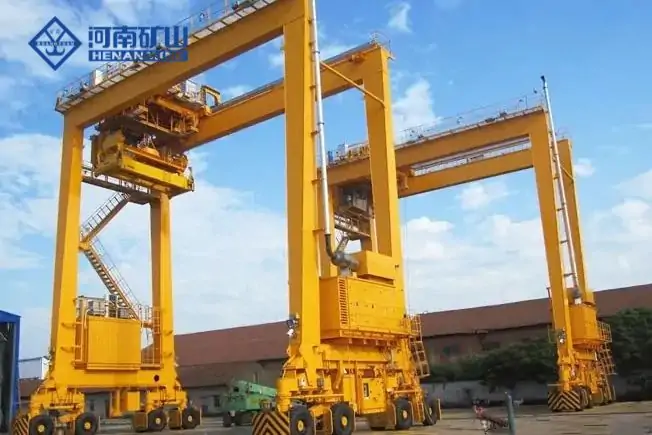
- Suitable applications: It is mainly suitable for component transfer, pier top low-level hoisting, approach bridge small box girder and T-beam installation, especially suitable for batch hoisting operation at shallow water area and fixed point of shore foundation. It is the core equipment of bridge prefabricated construction.
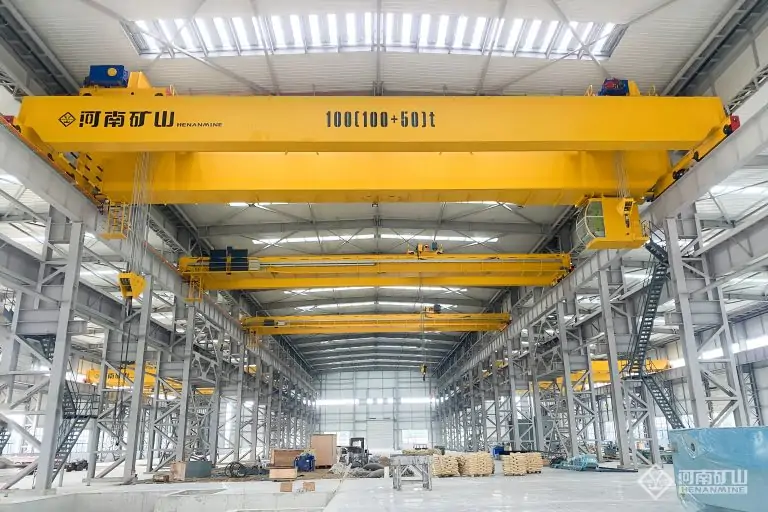
- Advantages: Double girder rigid structure, strong overall stability, excellent wind resistance, earthquake resistance, anti-bump performance, suitable for windy environment along the river.High hoisting precision, micro-alignment can be realized through frequency conversion speed regulation, meeting the precise splicing requirements of bridge components.Stable load-bearing capacity, 50-500 tons tonnage coverage, can complete the lifting of small and medium-sized components in batches.Electric drive, low energy consumption, low operating noise, low operation and maintenance costs.
- Limitations: Fixed scope of operation, poor mobility, unable to move with bridge span extension.The span adaptability is limited, which is not suitable for long-distance hoisting of super-long-span main bridge.The equipment is large in size, long in installation and disassembly cycle, inconvenient in transition, and only suitable for long-term operation in fixed sites.
Launching gantries
- Suitable applications: specially designed for the erection of box girders and T beams of highway and railway bridges across rivers. It is the core special equipment for the installation of main girders of medium and long span bridges across rivers and approach bridges, and is suitable for batch erection of standardized prefabricated beams.
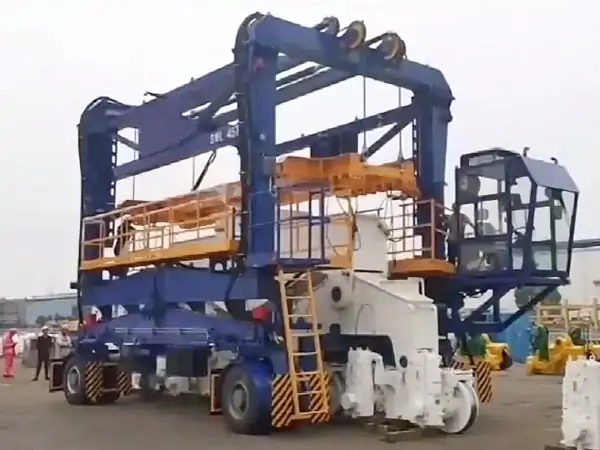
- Advantages: Targeted adaptation of bridge erection technology, self-drilling, automatic alignment, synchronous beam drop, construction efficiency far more than ordinary cranes.The structure of the whole machine conforms to the pier spacing and span design of the bridge, and the adaptability is very strong.Batch operation stability is high, multi-span beam erection can be completed continuously, greatly shortening the construction period.The construction does not need to occupy a large amount of land on the shore, and directly operates on the top of the pier to avoid the restriction of the water area.
- Limitations: high degree of customization of equipment, poor versatility, can only be used for beam erection, can not adapt to heavy bridge tower, steel truss girder hoisting.The heavy weight of the equipment has certain requirements for the bearing capacity of piers.It is difficult to disassemble and transfer, which is only suitable for large-scale standardized bridge construction. The cost performance of small scattered projects is extremely low.
Floating cranes
- Suitable applications: The core is suitable for the hoisting of ultra-large tonnage components with deep water main span and no shore operation conditions, including heavy lifting operations such as main tower, large steel truss girder, integral box girder and pier foundation of river-crossing bridge. It is the key equipment for the construction of river-crossing and sea-crossing bridges in deep water.
- Advantages: There is no restriction on the operation site, and it can be moved in the whole river, which perfectly solves the construction problem of deep water main span that cannot be covered by shore equipment.The upper limit of lifting tonnage is extremely high, which can realize the overall lifting of thousand-ton super-large components and adapt to super-large bridge projects.The height and radius of operation are flexible and adjustable, which is suitable for high-altitude construction scenarios in complex waters.
- Limitations: The operation is greatly restricted by hydrological and meteorological conditions. Construction cannot be carried out under strong wind, big wave and sudden rise of water level. The operation window is limited.Equipment leasing, procurement and operation and maintenance costs are extremely high.The positioning accuracy is relatively low, and it is difficult to align fine components, so it needs to be equipped with auxiliary precision adjustment system.
Crawler cranes
- Suitable applications: suitable for pier column, bridge tower, steel component and small box girder hoisting of river-crossing bridge, taking into account shore, shoal and temporary construction platform operation. It is the most versatile heavy equipment for bridge construction, suitable for most small and medium-sized, medium-sized and large-sized river-crossing bridge projects. Advantages: Crawler-type grounding structure, low grounding pressure, suitable for soft foundation along the river, temporary construction platform, not easy to settle and overturn.Stable lifting performance, small moment loss under large radius and large height lifting conditions.The mobility is better than that of bridge erecting machine and gantry crane, and it can be moved in short distance to adapt to multi-point scattered construction.The tonnage coverage is comprehensive, and the 100-1200 ton model can meet the lifting needs of various bridges.
- Limitations: Long-distance transitions require disassembly and transportation, and the preparation cycle is long.High altitude precision alignment ability is weaker than special bridging equipment.The stability is slightly insufficient in strong wind environment, and the operation load needs to be reduced in strong wind weather.
Derrick cranes
- Suitable applications: mainly used for high-altitude hoisting and auxiliary construction of high-rise towers, stay cable accessories and small heavy accessories of river-crossing bridges, suitable for special hoisting scenarios with narrow overhead working space.
- Advantages: Compact fuselage structure, small footprint, suitable for pier top, high altitude narrow operation area.The boom is flexible in amplitude and accurate in aerial operation coverage, which can complete the construction of points that ordinary equipment cannot reach.Simple structure, low failure rate, convenient operation and maintenance, long-term high-altitude continuous operation stability.
- Limitations: The rated lifting tonnage is too small to bear the hoisting of core components such as main beams and large-tonnage steel trusses.The scope of operation is limited, and it can only be used as auxiliary construction equipment, but not as main erection equipment.Construction efficiency is low, not suitable for large-scale batch lifting operations.
Essential Crane Features for Cross-River Bridge Projects
Wind resistance
The biggest environmental problems in cross-river construction are no obstruction on the river surface, turbulent airflow, instantaneous gust and frequent turbulence.Henan Mine Crane Factory supply cross-river bridge crane adapted to cross-river bridge project must have high strength wind resistance performance. The fuselage adopts integral rigid welding structure, equipped with widened counterweight and windproof locking device. At the same time, it is equipped with intelligent wind speed monitoring system, which can monitor the wind speed of river surface in real time and automatically trigger overload warning and shutdown protection.The equipment shall meet the industry high standard of normal construction in Grade VI wind and emergency locking in Grade VIII wind for aerial operation, and thoroughly solve the risks of equipment shaking, component deviation and overturning caused by strong wind on the river surface.
Precision positioning
Modern river-crossing bridges require extremely high construction accuracy, and the error of main beam splicing, bridge tower docking and steel truss beam assembly should be controlled at millimeter level.Henan Mine Crane Factory supply special bridge crane is equipped with high-precision frequency conversion control system and micro-motion adjustment device, which can realize stepless speed regulation of lifting, amplitude variation and rotation, stable micro-motion at low speed, and accurately complete alignment and splicing of high-altitude components.At the same time, it is equipped with three-dimensional positioning auxiliary system to calibrate lifting points in real time, eliminate alignment errors caused by high-altitude visual deviation, and ensure bridge construction accuracy and structural stability.
Anti-sway technology
In the process of hoisting at high altitude on water, wind load, equipment start-up and shutdown, water current vibration are easy to cause hoisting component swing, which not only affects construction progress, but also causes component collision and structural damage, resulting in potential safety hazards.High-quality bridge construction lifting equipment is equipped with intelligent anti-swing system, which can correct the swing amplitude of lifting tools in real time through algorithm, actively suppress lateral and longitudinal shaking, keep heavy components stable in high altitude and strong wind environment, greatly improve lifting safety and alignment efficiency, and reduce rework loss.
Remote monitoring
The environment of high-altitude construction across the river is complex, and it is difficult and risky to monitor the whole process of manual site.The new generation of special cranes are equipped with Internet of Things remote monitoring system, which can collect core data such as lifting torque, wind speed, inclination angle, operating temperature, fault code, etc. of equipment in real time. Managers can remotely view equipment operation status and construction conditions through terminals.The system has the functions of automatic early warning, fault traceability and data retention, which can realize all-weather unattended monitoring, avoid equipment failure and illegal operation risks in advance, and ensure the whole process of construction can be controlled.
Heavy-duty reliability
The construction period of bridges across rivers is long and the operation intensity is high. The equipment needs to withstand severe working conditions such as heavy loads, high altitude, humidity, wind, and corrosion for a long time. It requires extremely high durability and stability of the equipment.Special heavy-duty crane adopts high-strength wear-resistant steel and sealed protective structure. The core transmission parts have been strengthened to have waterproof, rust-proof, anti-corrosion and anti-fatigue properties. It can adapt to 24 hours of continuous heavy-duty operation. The failure rate is extremely low. It effectively avoids the delay caused by frequent downtime of equipment and meets the long-term high-intensity construction requirements of large-scale bridge projects.
Common Lifting Challenges and Practical Engineering Solutions
Strong river winds
- Challenge: The temperature difference between day and night on the river surface is large, gusts are frequent, and the wind speed at high altitude is far higher than that on the ground, which is easy to cause large shaking of hoisting components and overload of equipment torque. In serious cases, overturning and component falling accidents are caused, which is the most frequent problem in cross-river construction.
- Solution: Henan Mine Crane Factory supplyHeavy-duty crane for river bridge correction with standard professional wind-resistant structure and intelligent wind-proof system shall be preferred.Real-time monitoring of river meteorological data before construction to avoid extreme gale weather operations.When lifting heavy components, auxiliary wind-proof cables shall be matched, and double stability shall be controlled in coordination with equipment anti-swing system.Optimize hoisting technology, reduce operation radius during strong wind period, reduce hoisting load, and comprehensively eliminate wind load risk.
Limited installation space
- Challenge: The construction area along the river-crossing bridge bank is narrow, piers, guardrails and navigation facilities are dense, equipment mobilization, outrigger deployment and operation space are severely limited, and ordinary large-scale equipment cannot be arranged and operated normally.
- Solution: Select modular compact special crane, equipment structure can be flexible contraction, disassembly assembly, adapt to narrow site.Eccentric outrigger and narrow working layout are adopted to avoid pier and channel obstacles.Plan the equipment approach route and lifting points in advance, adopt small-radius precise lifting technology, complete the whole process construction in limited space, do not occupy the navigation channel, and do not affect the surrounding construction.
Heavy girder handling
- Challenge: box girder and steel truss girder of large-span river-crossing bridge have large dead weight, narrow volume, uneven stress in hoisting process, easy deformation and inclination, high altitude alignment difficulty, extremely low fault tolerance rate, and easy splicing deviation.
- Solution: accurately match rated lifting tonnage and working radius according to component weight, and reserve sufficient lifting redundancy.Double lifting point synchronous hoisting technology is adopted, and the balance beam is matched to evenly distribute the force.Relying on the high-precision micro-positioning and anti-swing technology of the equipment, the high-altitude alignment is slowly completed, and the splicing gap is accurately controlled to ensure the stable hoisting, accurate alignment and no deformation of heavy beams.
Continuous operation
- Challenge: The construction period of large-scale river-crossing bridge project is tight, multi-process cross construction requires all-weather continuous operation of cranes, and the stability of ordinary equipment is insufficient and easy to malfunction, which seriously delays the overall construction period.
- Solution: Select heavy-duty high-reliability special equipment, core components through enhanced durability test, adapt to long-term continuous heavy-duty operation.Equipped with remote fault diagnosis system to predict equipment hidden dangers in advance and maintain them in advance.Formulate normal equipment inspection and maintenance plan to avoid sudden failure shutdown, ensure stable operation of equipment in all weather, and adapt to high-intensity continuous construction requirements.
Henan Mine Crane Factory Custom
Every cross-river bridge project presents unique engineering challenges, from heavy girder lifting and long-span construction to complex site conditions and demanding safety requirements. Henan Mine Crane Factory supply Crane delivers customized crane solutions tailored to different bridge structures, lifting capacities, and construction environments. Backed by advanced manufacturing facilities, strict quality control, and extensive experience in heavy-duty lifting equipment, our cranes are engineered to provide reliable performance, precise operation, and long service life for critical infrastructure projects.
Whether your project involves highway bridges, railway bridges, sea-crossing bridges, or large river crossings, Henan Mine Crane Factory engineering team works closely with customers to develop practical lifting solutions that improve construction efficiency and reduce project risks. From equipment selection and customized design to installation support and responsive after-sales service, Henan Mine Factory Crane is committed to helping contractors complete bridge construction safely, efficiently, and with greater long-term value.