
How Much Does a 10-Ton Overhead Crane Cost in 2026?
Many manufacturing plants, warehousing workshops, and assembly companies will list 10-ton bridge cranes (also known as cranes and carriages) as key selection objects when planning material handling plans.But most buyers will encounter the same problem: it is also a 10-ton bridge crane, and the quotations given by different suppliers are huge.
Based on the industry market situation in 2026, this article analyzes the definition, price range, core cost impact factors, single and double beam selection comparison, hidden expenses, cost reduction plans, and manufacturer screening criteria of 10-ton bridge cranes to help companies get accurate and reasonable budgets and avoid procurement traps.
What Is a 10-Ton Overhead Crane?
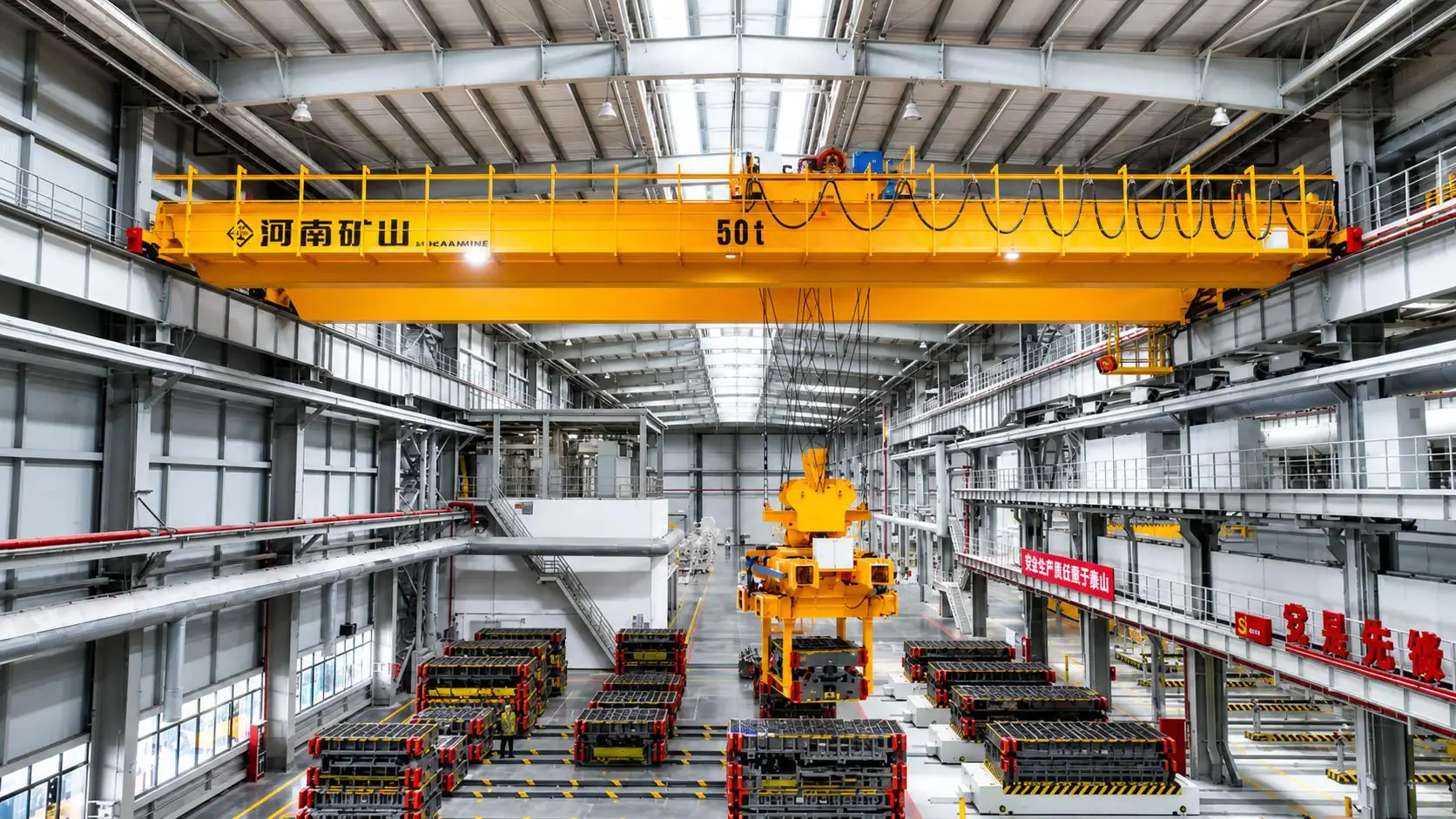
A 10-ton bridge crane, also often referred to as a bridge crane, is a special lifting equipment in an industrial plant. It has a rated maximum safe lifting weight of up to 10 tons, which is converted into about 9072-10000 kg. It is the tonnage specification with the highest frequency of use in manufacturing, warehousing and logistics, steel structure workshops, and steel mill assembly lines.It takes into account the load-bearing capacity and flexibility of use, and is suitable for the handling needs of heavy objects in most workshops.
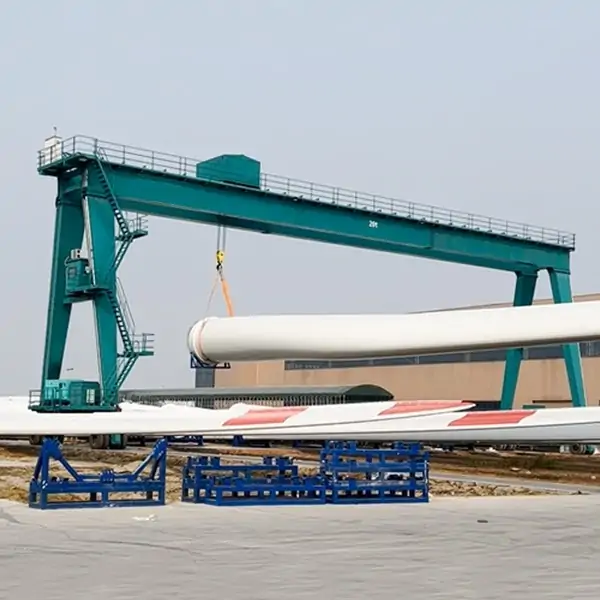
Unlike forklifts and mobile cranes, bridge cranes rely on elevated tracks on both sides of the plant to operate, and will not occupy ground work space. They can complete the lifting, unloading and horizontal transfer of heavy objects over the workshop.
Working principle and core components
The complete set of equipment relies on the parallel track in the upper part of the plant to operate, and the main parts include:
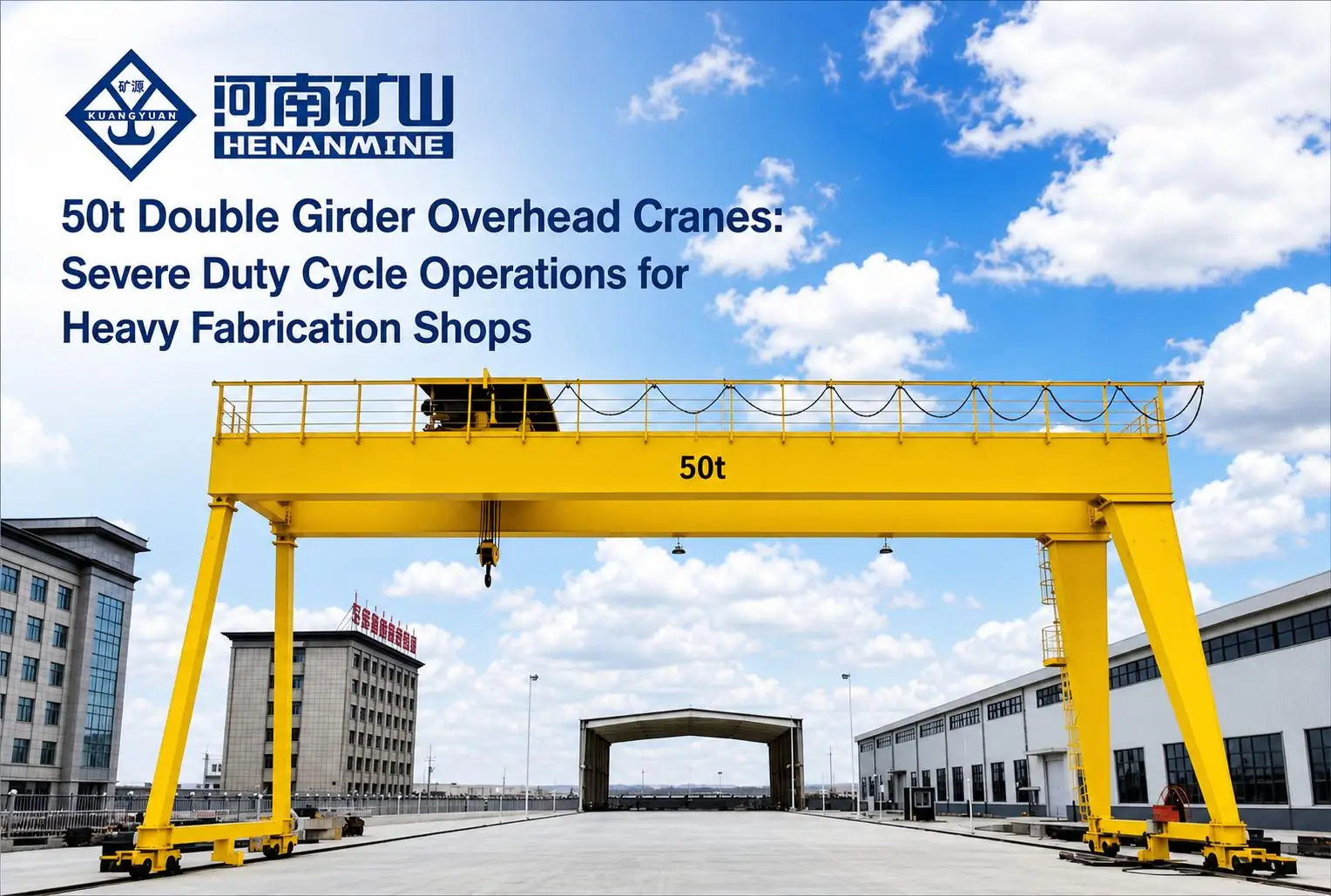
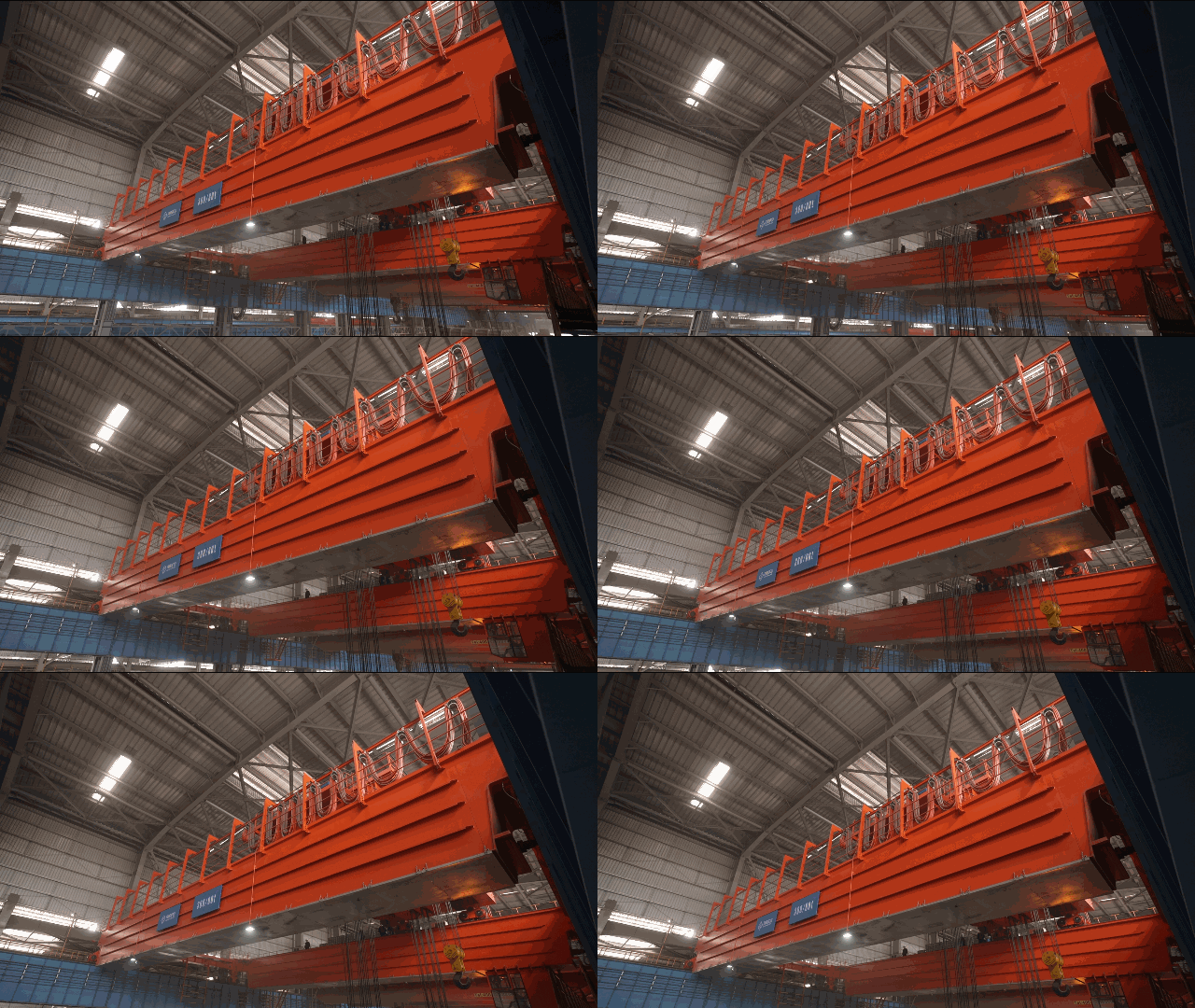
- Main beam: As the core load-bearing structure of the crane, it is divided into two categories: single main beam and double main beam. It spans the workshop work area and relies on the end beams at both ends to travel along the track as a whole.Among them, the single main beam has light weight and outstanding economy, which is suitable for conventional medium-load operation scenarios; the double main beam has stronger structural strength and stability, which is specially designed to meet the needs of large-span, high-frequency and heavy-duty industrial operations.
- Lifting trolley: integrated with the moving components of the electric hoist, it can move accurately laterally along the main beam to realize the lateral position adjustment of heavy objects. It is the core component of the crane's flexible positioning.
- Lifting hoist: The core lifting actuator of the equipment, the mainstream configuration of the 10-ton bridge crane is a wire rope electric hoist, with strong carrying capacity and good operating stability, responsible for completing the lifting of various heavy objects, fully adapted to the operation requirements of the 10-ton rated load.
- Track and end beam: The track provides a fixed path for the operation of the crane, and the end beam is connected to the main beam and the track to jointly support the weight of the whole machine, ensuring that the cart travels smoothly back and forth along the track, carrying the operating load of the whole machine.
- Control system: It supports three mainstream modes of wired handle, wireless remote control, and cab control. With VFD frequency conversion drive technology, it can realize accurate speed regulation of equipment start and stop, fast and slow speed, and greatly improve the stability and control accuracy of hoisting operations.
- Safety components: standard overload protection, travel limit switch, emergency stop device, buffer and anti-collision system, all-round avoidance of overload, over-range, collision and other operating risks, to ensure the safety of equipment and personnel operations.
The equipment is uniformly powered by an industrial three-phase power supply, and the installation forms are divided into two types: upper rail type and lower suspension type. The installation plan can be flexibly adapted according to the load-bearing conditions of the steel structure of the plant and the layout of the workshop.
General technical parameter reference
The parameters will change according to the manufacturer, work level, and customization requirements. The parameter range of the mainstream 10-ton model on the market:
- Rated load: the standard rated safe lifting weight is 10 tons, which is suitable for conventional industrial heavy lifting operation standards
- Working span (track center spacing): The general adaptation span range is 6-35 meters, which can meet the layout needs of different workshop sites.
- Maximum lifting height: the conventional adaptation height is 6-30 meters, which can be customized and adjusted according to the height of the plant and the operation requirements.
- Operating speed: the lifting speed of the hoist is 1–5m/min, the horizontal operating speed of the trolley is 10–30m/min, and the vertical operating speed of the trolley is 10–40m/min, taking into account the operating efficiency and the stability of hoisting.
- Work level: intermittent work scenarios such as conventional warehouses and assembly workshops are adapted to B-level medium working conditions; high-frequency, continuous heavy-duty production scenarios, high-work-level models of C-level and above can be selected
- Equipment structure: it supports two mainstream structural schemes, single beam and double beam, and can be equipped with wireless remote control, frequency conversion speed regulation, dual hoist collaborative operation and other functional configurations as needed.
How Much Does a 10-Ton Overhead Crane Cost in 2026
In 2026, a complete set of 10-ton bridge turnkey system can be put into use, and the overall price is roughly 50,000-100,000 US dollars or more.Only bare metal equipment is purchased, and the minimum imported basic models can be as low as US 2 20,000-60,000; locally manufactured in North America, a full set of customized double-beam models, the price generally exceeds US 1 100,000.
2026 reference price range (USD)
Only the main body of the equipment (crane + hoist + trolley)
- Conventional single-beam model (span 15 meters, lifting height 6 meters, standard working conditions): 35,000-70,000 US dollars
- Standard double-beam model (suitable for 12-24-meter span conditions): 65,000-100,000 US dollars
- The general price range of bare metal for 10-ton bridge cranes: 20,000-100,000 US dollars and above, depending on the configuration, brand, and customization requirements.
- Turnkey all-inclusive plan (track, power supply, delivery, installation and commissioning, testing, operation training)
For example: a single beam of 10 tons of upper rail, with a span of 14 meters and a total length of 45 meters, busbar power supply, wireless remote control, and frequency conversion drive, the whole set is about 57,900 US dollars.
The double gourd version (two independent 5-ton gourds) is about 69,500 US dollars.
The installation cost needs to be calculated separately: the starting price of the installation cost of a single crane body is 3000-7000 US dollars; if the structure of the entire system is complex and the construction difficulty is high, the overall installation cost can reach 15,000–25,000 US dollars and above.If additional supporting configurations are required, including the laying of rail steel structures, the reinforcement of plant structures, and the installation of independent support columns, an additional engineering investment of 10,000–60,000 US dollars will be generated.
Factors That Affect the Price of a 10-Ton Overhead Crane
There are two cranes on the market that are also marked with 10 tons. The final quotation is very different. The root cause comes from the eight interacting variables. Combined with the 2025-2026 manufacturer quotation data description:
- Rated load and spreader configuration: Even if the rated is 10 tons, accessories such as hooks, beams, slings, etc. will occupy the payload.If the selection amplifies or underestimates the actual working conditions, it is necessary to upgrade the motor, main beam steel and safety protection system, which directly increases the cost.Load is the most important driving factor in crane pricing.
- Span (track spacing): The larger the span, the larger the cross-section of the main beam is required, the amount of steel used has increased significantly, and the cost has increased almost linearly with the span.With a span of more than 28 meters, most of them must choose a double-beam structure to further increase the overall budget.
- Lifting hoist type: ordinary single-speed wire rope hoist has the lowest price, suitable for low-frequency operations; two-speed, low-clearance compact hoist, European FEM high-level hoist, compared with the basic model, the price has risen by 25%-55% or even more.The selection should match the requirements of on-site hoisting frequency and positioning accuracy.
- Work level (FEM /CMAA): If the number of hoisting times per day is large and the average load is high, a higher work level must be selected.The motor, gearbox, brake, and main beam must all be strengthened.Upgrading from A5 to A6 level, equipment prices increased by 30%-40%.The real operation cycle must be counted to avoid excessive selection and waste of budget, or insufficient selection leads to rapid damage to equipment.
- Control system: The standard configuration generally includes a wired handle; upgrade the wireless remote control to increase by 800-2000 US dollars; advanced functions such as cab control, PLC intelligent functions, anti-swing, and load monitoring, the investment reaches more than 5,000-15,000 US dollars.Long-span, high-frequency operations are more suitable for advanced control systems.
- Parts brand: ordinary export configuration, CE certification, with Schneider and Siemens components, the best price/performance ratio.European high-end brands such as Demag and Kony have seen the price of the whole machine rise by 20%-60%. The advantage lies in the perfect traceability of parts and a global service network.
- Special customized functions: explosion-proof ATEX, electromagnetic suction cups, grabs, high temperature protection, anticorrosive coatings, etc., are mostly used in chemical plants, steel mills, and marine-related working conditions. Depending on the function, the overall cost increases by more than 15%-100%.
- Installation and on-site conditions of the plant: Installation-related expenses often account for 15%-30% or even higher of the value of the whole machine.It covers track procurement, plant steel structure reinforcement, electrical wiring, equipment calibration and commissioning, on-site labor, logistics and transportation.The original structure of the plant does not meet the load-bearing requirements, which will bring large additional expenses.
The selection of single and double beams is essentially determined by the span, lifting height, and working level, which are the derivative results of the above factors.When purchasing, be sure to provide complete working condition parameters in order to get a reliable quotation.
Additional Costs Buyers Should Consider Before Purchasing
The equipment quotation, even if it is a turnkey quotation, is not equivalent to the full investment of the project.Many companies easily ignore hidden expenses. This part can account for 20%-50% of the total investment, and the proportion will be higher in the long-term life cycle.Combined with 2025-2026 industry data, it is divided into one-time upfront costs and long-term use costs.
One-time additional expenses in the early stage
- Installation, commissioning and on-site transformation costs: The overall construction cost accounts for about 15%-35% of the bare metal price of the equipment, covering processes such as track laying, load-bearing reinforcement of the plant, equipment calibration and commissioning of the whole machine.Among them, the starting price of pure manual installation costs is US55,000–30,000, and for old factories and non–standard renovation projects, the overall renovation cost can reach up to US110,000-50,000.
- Logistics and transportation costs: The logistics freight of imported crane equipment accounts for a relatively higher proportion. The procurement contract needs to clarify the FOB trade terms, clearly divide the rights and responsibilities of buyers and sellers in the transportation and delivery links, and the boundaries of expenses to avoid subsequent cost disputes.
- Approval survey and compliance testing costs: The landing of the project requires a series of costs such as construction approval, plant structure survey, equipment load testing, and annual industry compliance inspection. In the early stage of procurement, the cost bearers of various procedures need to be clarified in advance to avoid hidden increases.
- Plant structure reinforcement and transformation costs: If the bearing capacity of the steel structure of the original plant cannot meet the equipment installation standards, supporting projects such as new load–bearing columns and independent track brackets need to be added. The overall renovation investment is about 10,000-60,000 US dollars, depending on the current situation of the plant.
- Tax costs: Cross-border procurement needs to focus on accounting for customs duties, product sales taxes and various local additional taxes. This is also an indispensable and important part of the imported equipment procurement budget.
- Operator training and evidence collection costs: In order to ensure the compliance and safe operation of the equipment, professional operator skills training and qualification certification are required. The starting price of related costs is US5500-2000.
- The cost of maintenance and commissioning services for the first year: Some equipment manufacturers do not include the first year of maintenance and fine commissioning services for the whole machine free of charge. This part of the service needs to be purchased separately, and the scope of the service needs to be confirmed in advance before purchasing.
Continuous cost of the whole life cycle
A 10-ton bridge crane worth US660,000, within the full 10–year service cycle, the continuous comprehensive cost of operation and maintenance, loss, service, etc. can reach US2200,000-350,000, and the whole life cycle investment is much higher than the initial purchase price of the equipment, which is also a key point that can be easily overlooked in the procurement budget planning.
- Annual maintenance and overhaul costs: Under normal operating conditions, the annual maintenance cost is 2000-10000 US dollars, and the maintenance costs of high-frequency heavy-duty and continuous operating conditions will be further increased.It mainly covers routine maintenance items such as equipment lubrication, wire rope replacement, brake maintenance, and replacement of wearing parts.
- Annual compliance inspection and testing costs: In order to meet OSHA, CMAA and other industry safety regulations, the equipment needs to carry out compliance testing and qualification verification every year. The cost of a single inspection is 500-2000 US dollars to ensure the compliance and safe operation of the equipment.
- Daily power loss: There is no fixed standard for the energy consumption of equipment operation. It is mainly based on the daily running time of the equipment, the energy efficiency level of the motor, and the frequency of operations. It is a long-term continuous operating cost.
- Special insurance costs: special liability insurance for lifting equipment, property insurance and other types of insurance need to be configured separately to avoid safety risks and property losses during equipment operation and operation.
- Spare parts reserve and equipment upgrade costs: it includes the investment of standing inventory of core wearing parts and key parts, as well as the cost of upgrading and upgrading of later equipment intelligence and performance optimization.
- Equipment downtime and loss costs: hidden economic losses such as equipment failure maintenance, production line downtime, and production capacity interruption during annual overhaul.
- Extended warranty and exclusive service costs: equipment can be purchased on demand to extend the warranty service and annual exclusive maintenance contract to further reduce the risk of equipment failure and ensure the stable operation of the equipment.
10-Ton Single Girder vs Double Girder Overhead Crane: Which Is More Cost-Effective?
Under most conventional working conditions, when the parameter conditions permit, the comprehensive cost of single-beam bridge cranes is better, and the total investment of the whole machine and the project is 15%-40% lower than that of double-beam.But this does not mean that the single beam in all scenarios is the optimal solution, and it must be judged in combination with the working conditions.
Take the span of 20 meters and the lifting height of 6 meters as a reference (USD):
- Single beam bare metal: The standard configuration is priced at US220,000–30,000, and the economical basic model is only US33,900–20,000, which is cost-effective and suitable for conventional use scenarios with limited budgets and standardized operating processes.
- Double-beam bare metal: The price of standard conventional models is 25,000–40,000 US dollars. If high-end functions, special structures or customized configurations need to be installed, the overall price of the equipment will be increased accordingly.
After accounting for supporting projects such as track laying, equipment installation, and plant reinforcement, the cost gap between single-girder and double-girder cranes will be further widened.
The single-beam model has a lighter weight and a smaller load on the load-bearing structure of the plant, which can save 10,000-40,000 US dollars in structural transformation costs, and it is easy to install, has a short construction cycle, and has lower logistics landing costs. The overall price ratio has significant advantages.
Suitable for scenarios where single girder cranes are selected
- Conventional small and medium-span working conditions: The working span of the workshop is controlled within 26-28 meters, which belongs to the general span range of the standard workshop. There is no need for reinforcement of the double-beam structure. The single-beam crane can fully meet the rigidity, smooth operation and safe load-bearing requirements of the whole machine. It is the most suitable mainstream working condition for single-beam models.
- Medium-frequency operating conditions: The daily hoisting frequency is moderate, mostly intermittent and non-continuous operations, suitable for A3–A5 medium-level working standards, no multi-shift high-intensity heavy-duty requirements, the structural strength and operating performance of the single-beam model are sufficient to match the production rhythm, and there are no hidden dangers such as overload and fatigue loss.
- Standard lifting space working conditions: the lifting height of the workshop is conventional, there is no ultra-high lifting requirement, and there is no special hook stroke, low headroom is limited or extreme working space requirements. The hook operating range and lifting parameters of the standard single-girder crane can be fully adapted to the needs of on-site operations.
- The load-bearing conditions of the plant are limited: the original load-bearing and leg load of the old plant or the light steel structure plant are limited, and it cannot carry the weight and operating load of the double-girder crane. The lighter single-girder model does not require large-scale structural reinforcement and can be perfectly adapted to the existing plant conditions.
- Controllable budget and no upgrade requirements: the project procurement budget is limited, mainly to meet the current standardized production, no later equipment expansion, heavy-duty upgrade, high-frequency continuous operation transformation plan, the selection of single-girder cranes can achieve low-cost, high-adaptability landing effect.
Suitable for ordinary workshops, warehouses, processing and assembly plants.Advantages: Low initial investment, low pressure on the plant, simple maintenance, and meet most standard working conditions.
Suitable for scenarios where double girder cranes are selected
- Large-span, high-rigidity operation scenarios: When the span of the workshop exceeds 25-28 meters, the single-beam structure is easy to shake and the deflection exceeds the standard, which cannot meet the safety accuracy requirements.The double-girder crane has strong stiffness and excellent bending resistance, which can effectively suppress long-span deformation, ensure stable operation of the equipment, and have a higher safety factor.
- High-frequency, multi-shift, heavy-duty working conditions: suitable for high–level work levels of A5-A6 and above, to meet the continuous production needs of two and three shifts.The structure, motor, brake and transmission components of the whole machine have been strengthened to resist fatigue and wear, and can withstand high-frequency and heavy-duty operations stably for a long time, with a very low failure rate.
- Ultra-high lifting and extreme space requirements: The double-beam model adopts the upper layout of the hoist, and the headroom utilization rate far exceeds that of the single-beam model. The effective lifting height is greater and the hook operation range is wider. It is suitable for special working conditions such as high-level factories, high-level assembly, and deep hoisting.
- Multi-function operation and upgradeable scenarios: The equipment has excellent expandability, and can be equipped with high-end configurations such as auxiliary hoists, electromagnetic suction cups, intelligent anti-swing, and automatic positioning, which are adapted to complex hoisting processes to meet the needs of intelligent and multi-functional upgrading and transformation in the later stages of the production line.
- High precision, high durability and harsh working conditions: equipment operation deviation is small, braking is accurate, the structure is stable, long-term operation is not easy to deform, and it can fully meet the strict production requirements of high precision and high load such as precision assembly and heavy mold alignment.
Overall, double-girder cranes operate more smoothly, have higher space utilization and greater expandability than single-girder cranes, and have low failure rates, less downtime and longer service life for long-term heavy-duty operations.
Although the initial procurement cost is higher, the whole life cycle stability and comprehensive price ratio are better, which is suitable for large-scale and normalized heavy-duty production enterprises.
Key decision-making points other than price
- Full life cycle cost: The selection decision cannot only focus on the initial purchase price of the equipment. It is necessary to comprehensively account for the long-term expenses such as late maintenance, annual compliance inspection, plant structure renovation, and replacement of spare parts, and comprehensively evaluate the overall input cost.
- Plant adaptation conditions: Old factories and light steel structure factories have limited load-bearing loads, and most of them cannot be adapted to double-girder cranes with larger weight. They are only suitable for the installation of single-girder models. The selection needs to give priority to matching the original structural conditions of the plant.
- Actual operating conditions: combined with the real operating needs of the workshop, accurately calculate the core parameters such as hoisting frequency, equipment span, effective lifting headroom, and special spreader configuration, and use this as a basis for selection to avoid excess selection or insufficient adaptation.
How to Reduce the Purchase Cost of a 10-Ton Overhead Crane
Without sacrificing safety and performance, through scientific selection, the overall project can achieve cost savings of 15%-40%. The following are the proven practical methods in the industry.
- Accurately match the working conditions and refuse to over-select the type: don't blindly enlarge the tonnage, working level, span, and lifting height.Many purchases will directly choose a higher level of work, resulting in unnecessary expenses.Most conventional working conditions A3‑A5 are sufficient, and the rated load is calculated according to the real lifting weight and spreader weight.
- Conditions permit priority to be given to the single-beam scheme: the span is within 26-28 meters, and the working conditions are medium. Compared with the double-beam, the steel, transportation, installation, and plant reinforcement will save a lot of budget. For some projects, the steel structure transformation alone will save more than 40,000 US dollars.
- Ask for detailed itemized quotations from 3-5 regular manufacturers: compare horizontally, see clearly the inclusiveness and exclusions of the quotations, and distinguish equipment, logistics, installation, testing, and training.Don't simply choose the lowest price, and comprehensively evaluate product quality, after-sales, and long-term reliability.
- Rational choice of hoists and components: choose CE certification standard configuration for ordinary working conditions, so you don't have to blindly choose high-end European components; give priority to compact low-clearance hoists to improve the hook stroke without increasing the plant.The gourd speed can match the actual operation frequency.
- Carry out a comprehensive plant survey in the early stage: before the implementation of the project, the load-bearing structure, track installation site and workshop clearance size of the plant need to be fully surveyed, so as to avoid additional expenses such as site rectification and structural reinforcement in the later stage in advance. The cost of such retrofits can reach up to US660,000.
- Streamline non-essential optional configuration: equipment functions are selected on demand, and customized accessories such as explosion-proof structures, automation systems, and special spreaders are only configured when working conditions require it.Conventional industrial scenarios can meet the needs of production and use by using standard wired handles or wireless remote controls, and effectively control equipment procurement costs.
- Package and negotiate a full set of supporting services: In the equipment procurement stage, logistics and transportation, on-site installation and commissioning, operation training, first acceptance and inspection services can be uniformly packaged and negotiated, and the two cooperation models of bare metal procurement and turnkey general contracting can be compared simultaneously, and cost-effective solutions can be selected from the best.
- The optimal selection of the lower suspension model scheme: Combined with the actual structural conditions of the plant to evaluate the model, compared with the traditional upper rail crane, the lower suspension model has stronger adaptability and lower comprehensive cost, and the economy of using it with the monorail system is particularly prominent.
Additional tips: You can inquire in the off-season of industry procurement; evaluate second-hand refurbished equipment from reliable suppliers, but you must complete a comprehensive inspection.Always take the whole life cycle cost as the criterion for judgment, rather than just staring at the initial quotation.In the selection stage, it is recommended that structural engineers and crane manufacturers participate together.
How to Choose a Reliable 10-Ton Overhead Crane Manufacturer in 2026
The service life of bridge cranes is generally 20-25 years, which is a long-term heavy asset investment.Choosing the wrong manufacturer will bring safety risks, frequent downtime, and no spare parts in the later stage.Evaluate suppliers from seven dimensions when purchasing.
- Verify qualification and compliance certification: ask for the original traceable certificate, and pay attention to local standards such as CE, ISO9001, FEM, and ASME.Refuse suppliers who only have logo pictures and cannot get official certificates.
- Evaluate the ability of self-research and design and the level of customization: confirm that the manufacturer has internal structural calculation capabilities, can provide finite element FEA analysis reports, and deliver complete drawings, electrical schematics, and spare parts lists.Can give mature solutions for your span, environment, and special spreaders.
- Manufacturing quality and transparency: pay attention to the welding in line with the ISO3834 standard, the raw materials are accompanied by material certificates, the key welds are non-destructive testing NDT, the core components are selected from well-known components, and the load test of 125% of the rated load is completed at the factory, and a test report is issued.Large orders can apply for on-site inspections or online factory inspections.
- Focus on after-sales technical support: the crane is not over when it is bought.Confirm whether local licensed technical personnel, after-sales response timeliness, local spare parts inventory, support remote diagnosis, and provide operation training and commissioning services.See clearly the warranty period and the warranty scope of key parts.Give priority to manufacturers that can guarantee the supply of spare parts for more than 10 years.
- Refer to project cases in the same industry: ask for past projects similar to your working conditions, industry, and work level, and contact old customers to understand the delivery cycle, on-site installation experience, failure conditions, and spare parts response speed.
- Business stability of enterprises: Priority is given to enterprises that have been established for more than 10 years and have global supply capabilities.Large-scale purchases, confirm the operating status of the enterprise, and ensure that services can be provided for many years to come.
- The quotation is transparent and the commercial terms are clear: get the itemized disassembly quotation, see the equipment, logistics, installation, training, and quality assurance clearly, and distinguish which ones are not included.Confirm the delivery cycle, payment node, change, and extension responsibilities.
Conclusion
The 10-ton bridge crane is the core equipment of the factory to improve the handling efficiency, but the price has no fixed value.In the market in 2026, there will be bare metal, turnkey complete sets, domestic, imported, single beam and double beam, with huge price spreads.
The procurement of Henan mining cranes and other leading brands in the industry is preferred, with complete qualifications, reliable quality and perfect after-sales system.The selection should be based on the comprehensive benefits of the whole life cycle, taking into account equipment stability, energy consumption and maintenance costs, and not only pursuing low prices.
If you need a precise project budget, you can organize the parameters of the workshop span, lifting height, operating conditions, etc., and submit it to the Henan mine crane professional team for on-site survey, and issue an exclusive customized quotation and adaptation plan.