
A Practical Guide to MG Crane Winch System Maintenance
As the core lifting mechanism of the whole machine, the hoist system directly determines the operating safety, operating stability and service life of the equipment, and is the top priority of daily maintenance.In order to standardize the equipment maintenance process, reduce the risk of failure, and ensure the long-term compliance operation of the equipment, this article combines the characteristics of the original Henan mining equipment to organize a complete set of standardized maintenance and operation guidelines for the MG crane hoist system that can be landed.
Understanding the MG Crane Winch System
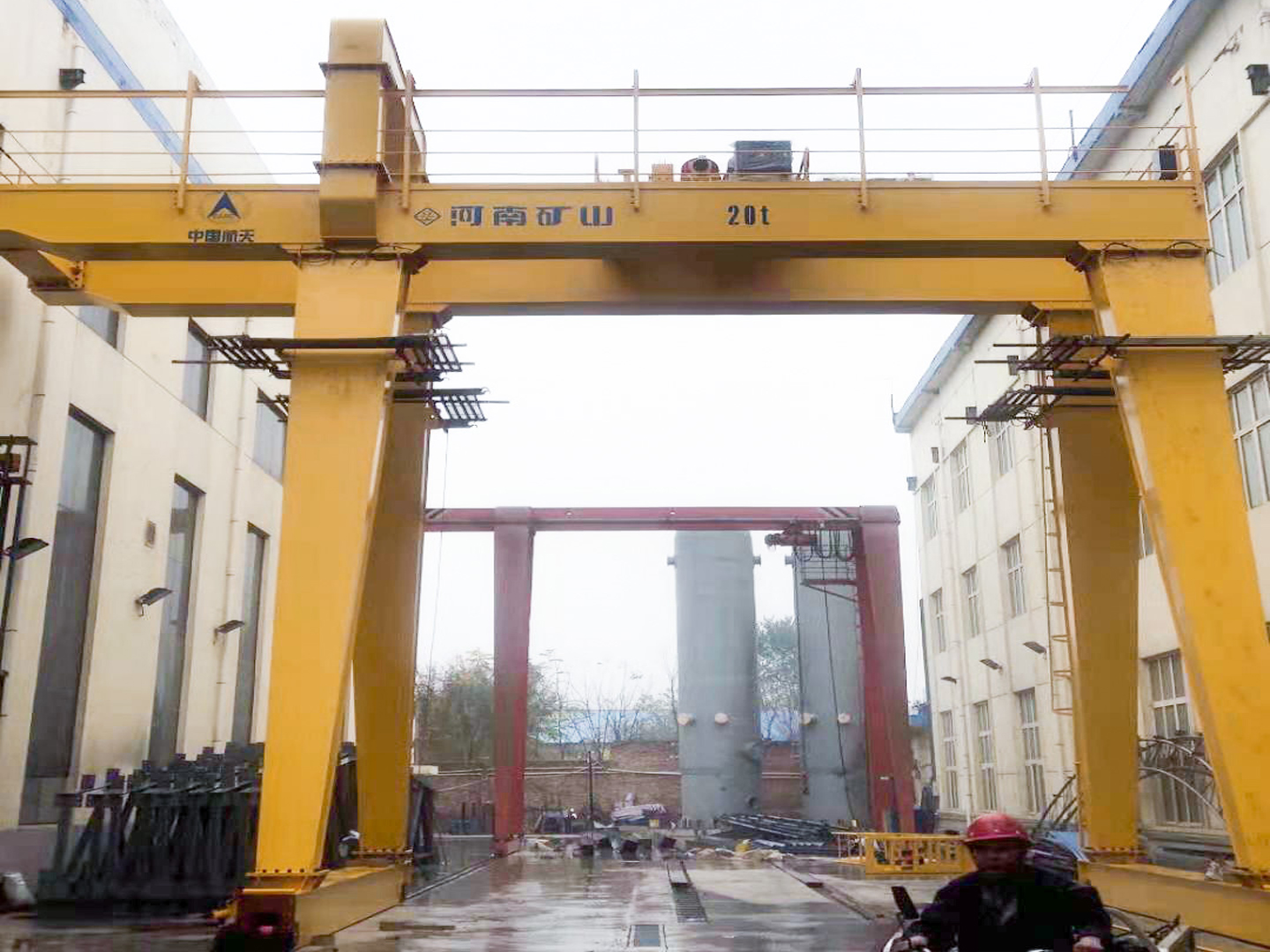
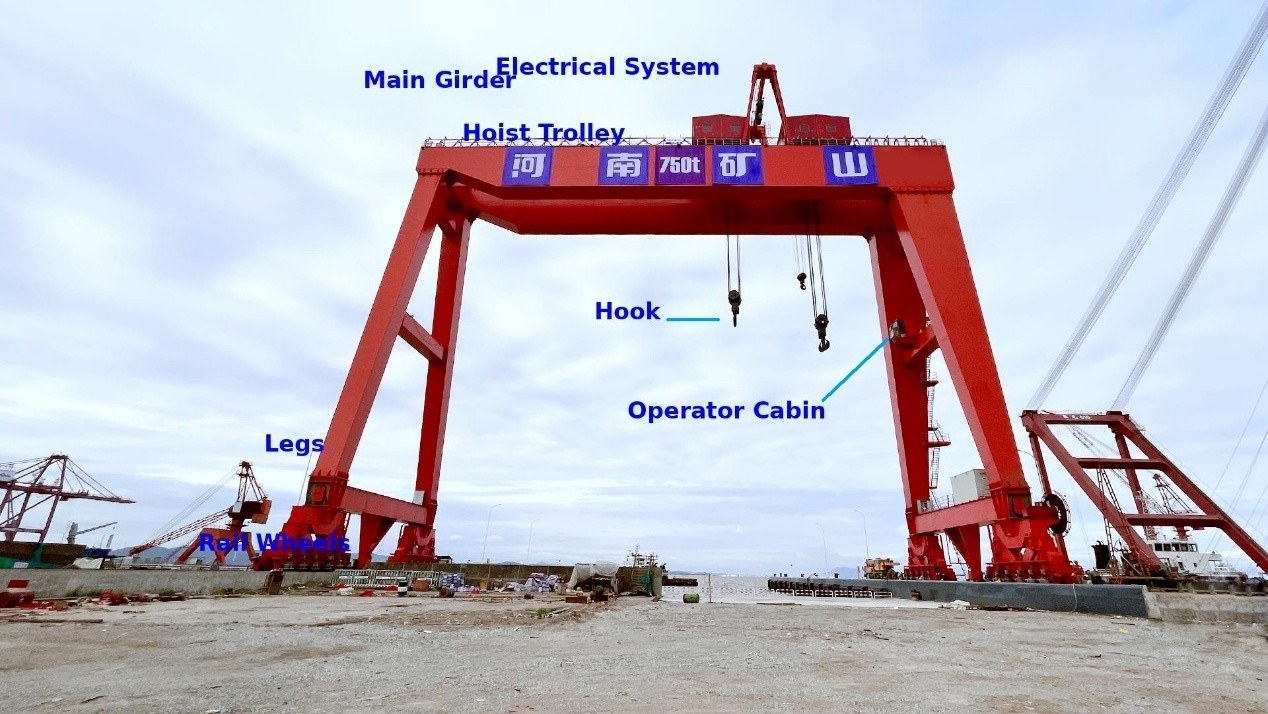
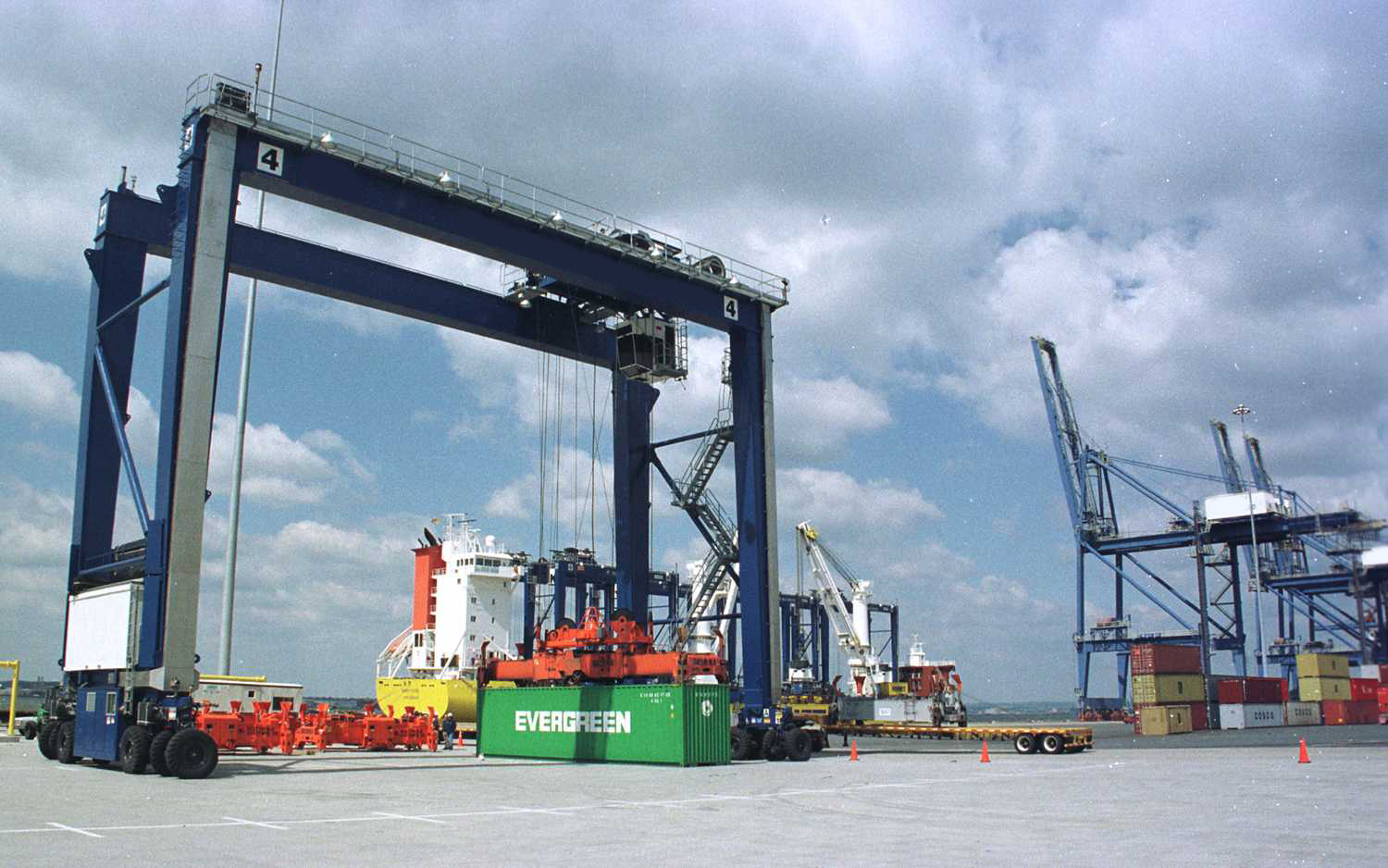
MG type crane refers specifically to double-girder gantry crane, which is the mainstream equipment for industrial heavy-duty handling. The core structure includes double main beams, A-shaped/U-shaped outriggers, cart operating mechanism, hoist trolley and electrical control system. It relies on cable reel or sliding contact line for power supply, which can realize the vertical walking of the cart, the horizontal walking of the trolley, and the vertical lifting of the hook. Three-axis linkage industry, widely adapted to various indoor and outdoor heavy material handling scenarios.
Its core operating parameters: the rated lifting weight is 5-75 tons (the heavy-duty version can reach 500 tons), the operating span is 18-35 meters, and the working level is A5-A7. It has the advantages of high strength, high battery life and high stability.
How the Winch System Works
The lifting core of MG crane is an open hoist trolley, which is different from the integrated design of compact hoist. Its motor, gearbox, reel, brake and other core components are installed independently on the trolley frame, which is convenient for maintenance and disassembly, and has stronger adaptability to heavy loads. It is the exclusive configuration of medium and heavy gantry cranes.
Core components of hoist system:
- Drive motor: to provide power for lifting operations, mostly industrial-specific motors, adapted to the continuous work system;
- Deceleration gearbox: reduce the speed, amplify the torque, balance the lifting speed and carrying capacity;
- Wire rope reel: slotted drum, responsible for the regular retracting and discharging of wire rope;
- High-strength steel wire rope: the core load-bearing component, which directly carries the operating load;
- Safety braking system: spring failure-protected brakes, automatic locking after power failure, to prevent the load from falling;
- Auxiliary parts: trolley frame, walking wheels, hook set, rope guide, outdoor rain cover, etc.
Working principle: The motor drives the gearbox to run, drives the reel to rotate forward and reverse, realizes the retraction of the wire rope, and completes the lifting operation of the hook.The gear ratio determines the ratio of lifting speed and torque, the braking system is protected in real time throughout the process, and the load is locked instantly during power failure and shutdown to eliminate the risk of free fall.
Why Regular Winch System Maintenance Matters
Many companies have the misunderstanding of “heavy use and light maintenance”. As everyone knows, the hidden wear and tear of the hoist system is the primary cause of lifting safety accidents.Normalized maintenance is not a redundant cost, but the core guarantee for the safe, efficient and long-term operation of equipment.
Avoid security risks
Hidden faults such as broken wire ropes, worn brake pads, and gear failures cannot be intuitively predicted by the naked eye. Once a sudden failure occurs, it will directly lead to major safety accidents such as falling loads, equipment damage, and casualties.Normalized maintenance can investigate hidden dangers in advance, and at the same time comply with industry safety regulations such as OSHA, which is the basic requirement for compliance operations.
Reduce downtime
Sudden failure of the hoist system will directly cause the production line and material handling operations to stagnate, resulting in delays in construction and loss of production capacity.Preventive maintenance can eliminate failures in the bud, transform emergency downtime and maintenance into planned downtime and maintenance, and maximize equipment attendance.
Extend equipment life
Timely lubrication, component adjustment, and replacement of consumables can greatly reduce the wear rate of high-intensity operating parts, delay the aging of equipment, and avoid the early replacement of core large parts such as gearboxes, motors, and reels.Compared with the high cost of emergency repair of faults and equipment replacement, daily maintenance investment is extremely cost-effective.
Stable operating performance
Neglect of maintenance will lead to wire rope stretching, gearbox lubrication failure, reel groove wear, and then uneven lifting speed, positioning deviation, and reduced carrying capacity, greatly reducing safety redundancy.Standardized maintenance allows the equipment to always maintain the factory rated performance.
Compliance management
Lifting equipment is special equipment, and industry regulations clearly require daily and regular maintenance records to be archived.Missing maintenance records and operating equipment in violation of regulations will not only lose the rights and interests of equipment warranty, but will also face strict compliance penalties and legal responsibilities after the accident.
Hierarchical operation and maintenance plan
In view of the operating characteristics of the MG crane hoist system, we have compiled a standardized and hierarchical maintenance process, which is simple to operate and has strong landing properties, and is suitable for the daily operations of operators and maintenance personnel.All maintenance work needs to be recorded and archived, and hidden faults need to be stopped and rectified immediately.
Daily Inspection Checklist for MG Crane Winch Systems
It is completed by a licensed operator before starting up every day, focusing on visual inspection and functional testing to quickly investigate obvious hidden dangers.
- Safety pre-inspection: confirm that the equipment has no shutdown warning labels, the rated load identification and safety warning signs are clear and complete; there are no personnel or obstacles in the operation area, and the emergency stop button and safety protection device are intact and available; outdoor operations confirm that the lighting and weather conditions meet the requirements of safe operations.
- Functional inspection of hoist mechanism: check that the motor, gearbox, brake, and reel are free of oil leakage, oil seepage, and abnormal stains; no noise, vibration, caton, and hysteresis during no-load trial operation; test the braking function, and the load does not slip after shutdown; the upper and lower limit switches are sensitive and effective, and can be accurately limited to stop; the bolts of the trolley frame are not loose, cracked, or deformed.
- Inspection of wire rope and reel: visually check that the wire rope has no broken wires, loose strands, kinks, extrusion deformation, corrosion, and diameter wear; the wire rope is neatly arranged on the reel, without overlap or entanglement; the reel groove has no wear, burrs, or damage; the fixed fixture at the end of the rope is firm and not loose.
- Inspection of the hook and pulley block: the hook has no cracks, deformation, and increased opening, and the safety buckle is flexibly closed; the pulley and bearing rotate smoothly, without caton, wear, and cracks; the pins, nuts, and fasteners are complete and fastened.
- Electrical control system inspection: the handle, remote control, and cab control are responsive, and the hand is automatically returned to the center position; the emergency stop button can instantly cut off the power; the cable and junction box are not damaged, exposed, or aging, and there are no signs of burning or moisture.
- Trolley walking and structural inspection: the trolley walking wheels and main beam tracks are free of wear, clogging, and deformation, and the walking is stable and no noise; the anti-collision device and the limit device function normally; the frame and main beam have no obvious structural damage, corrosion, or loose parts.
Weekly Maintenance Procedures
On the basis of daily inspections, maintenance personnel will complete refined inspections, oil replenishment, cleaning and functional retest, focusing on minor wear and insufficient lubrication.
- Lubrication and maintenance operations: check the oil level of the gearbox and replenish the original designated lubricating oil when it is insufficient; fill the reel bearings, pulley bearings, and trolley walking bearings with special grease; check the lubrication status of the wire rope, and replenish the permeable wire rope lubricating oil when it is dry and astringent to clean up excess oil and avoid dust accumulation and wear.
- In-depth inspection of the mechanism: carefully check the motor, gearbox, and brake housing for cracks, oil spills, and loose bolts; test the braking performance at light load, without slippage or drift; re-test the limit switch and walking mechanism functions to ensure smooth operation.
- Cleaning and anticorrosive treatment: clean up dust, oil, and debris on the surface of the hoist mechanism, reel, and trolley; outdoor equipment focuses on checking the corrosion of steel structures, and does simple protective treatment for minor paint loss and corrosion.
- Retest of the function of the whole machine: light load test the whole process of hoist lifting, trolley traverse, and cart walking, confirm that there are no abnormalities, and record the operating status and maintenance of the equipment this week.
Monthly Preventive Maintenance
Monthly maintenance is the core of in-depth maintenance, including oil replacement, wear measurement, component adjustment, and electrical overhaul. Professional maintenance personnel are required to power off and lock operations to comprehensively investigate hidden faults.
- Comprehensive lubrication and oil change: replace the lubricating oil of the gearbox according to the working conditions of the equipment, and check whether the old oil has metal debris and water inlet deterioration; fully fill all bearings, hinge joints, pulleys, and hook rotation parts with grease; after thoroughly cleaning the wire rope, spray special protective lubricating oil globally.
- Wear detection of core components: multi-point measurement of the diameter of the wire rope, the wear exceeds 5%-6% and needs to be replaced immediately; accurately check the wear thickness of the brake pad, and replace and adjust in time if it exceeds the standard; measure the opening of the hook to investigate the hidden dangers of deformation and cracks; check the degree of wear of the reel groove and pulley groove to prevent burrs from damaging the wire rope.
- Mechanism and electrical maintenance: tighten all mechanism fixing bolts, correct the coaxiality and verticality of the trolley; comprehensively inspect electrical circuits and terminal blocks, fasten loose joints, and clean up dust and moisture in the electric control box; test all safety interlocking functions such as overload protection, limit, and emergency stop.
- Calibration of structure and working conditions: check that the connecting parts of the trolley frame and main beam are free of cracks, deformation, and loosening; calibrate the lifting speed and positioning accuracy of the hoist to ensure that the equipment meets the rated working conditions.
- Record archiving and rectification of hidden dangers: record wear data, oil change information, and internal adjustment content in detail, classify and register the hidden dangers found, formulate rectification plans, and prevent sick operations.
Common MG Crane Winch Problems and Troubleshooting
Combined with the high-frequency failures of the MG crane hoist system, organize the causes and troubleshooting plans of targeted failures, quickly locate the problems, repair them efficiently, and avoid the expansion of failures.
Wire rope damage
Fault phenomenon: the wire rope is broken, kink, bulging, corrosion, diameter shrinkage and wear, and the reel wire rope is wound, stacked, and arranged in a chaotic manner.
Cause of failure: natural wear and tear caused by long-term heavy-duty operation, insufficient lubrication of the wire rope, damage to the rope guide, crooked lifting of the hoisting cable-stayed, wear and deformation of the rope wheel, resulting in abnormal cable.
Solution: Check the status of the wire rope in time and replace it immediately if it meets the scrap standard; correct the position of the rope guide and adjust the angle of the rope wheel to ensure the regularity of the cable; apply special lubricating oil to the whole area of the wire rope; standardize hoisting operations, and it is strictly forbidden to cable-stayed crooked hoisting to avoid cable failures from the source.
Brake lock failure
Fault phenomenon: After the equipment is shut down, the load slips and falls, the brake operation is abnormal, the heat generation is serious, and the locking ability decreases.
Cause of failure: The wear of the brake pads exceeds the limit, the brake friction surface is contaminated with oil, the tension of the brake spring is attenuated, and the brake system overheats and fails due to frequent start and stop.
Solution: Thoroughly clean the oil stains on the brake surface and replace the worn and aging brake pads; accurately adjust the tension of the brake spring to restore braking performance; strictly control the frequency of equipment start and stop, and overload operations are strictly prohibited; before the brake failure is completely repaired, the equipment is prohibited from being put into use.
Abnormal gearbox noise
Fault phenomenon: The gearbox is polished and roars abnormally during the hoist operation, and the whole machine vibrates violently and runs unsteadily.
Cause of failure: insufficient lubricating oil for the gearbox, deterioration of the oil and impurities; wear and aging of gears and bearings; offset of the coaxiality between the motor and the gearbox; loose equipment fixing bolts.
Solution: Replace all new lubricants in time to ensure adequate and clean lubrication; fasten all fixing bolts of the equipment and correct the coaxiality between the motor and the gearbox; if abnormal noise and vibration continue, the machine needs to be disassembled to detect gear and bearing wear, and the damaged parts should be replaced in time.
Motor overheating
Fault phenomenon: the motor body is abnormally hot, frequently overloaded and tripped, the operation is stuck, abnormal noise, and the power output is insufficient.
Cause of failure: illegal overload operation, unstable power supply voltage, blockage of motor cooling duct, brake drag resistance is too large, and poor line contact.
Solution: Operate in strict accordance with the rated load to prevent overload; detect the power supply voltage and line connection to investigate circuit failures; clean up the motor's heat dissipation dust and clear the air duct; accurately adjust the brake clearance to eliminate drag resistance and ensure the normal operation of the motor.
Limit switch failure
Fault phenomenon: The hook does not stop when it exceeds the upper and lower limit positions, and the limit switch is unresponsive and cannot be reset normally.
Cause of failure: shift and offset of the limit switch, caton of the transmission structure, wear and failure of the contacts, and failure of the control line.
Solution: Clean up the debris stuck in the limit mechanism, and re-accurately adjust the limit position; overhaul the control circuit, and replace the worn and aging switches directly; it is strictly prohibited to short and shield the limit device to ensure that the safety protection function is effective.
Maintenance Safety Tips
Lubrication is the core means to extend the service life of the hoist system and reduce failures. Incorrect lubrication methods will accelerate equipment wear and cause safety hazards. The following specifications must be strictly followed:
General lubrication principle
- Uniform oil product compliance: strictly select the lubricants and greases supporting the original equipment, and prohibit the mixing of different types and brands of oils to prevent the failure of the lubrication system and cause abnormal wear and tear of parts.
- Oil selection adapted to working conditions: For outdoor open-air operating equipment, priority is given to the use of special oils that are waterproof, rust-proof, and high and low temperature resistant to adapt to complex and changeable outdoor working conditions to achieve long-term anti-corrosion protection of parts and components.
- Cleaning and lubrication operations: Before formally filling the lubricating medium, thoroughly remove dust, oil and impurities from the surface of the parts, and prohibit dirty lubrication to ensure the adhesion and lubrication effect of the oil.
- Control the amount of lubrication: follow the principle of “proper lubrication” to prevent excessive filling.Excess grease can easily absorb impurities such as dust and sand, forming a grinding medium, which accelerates the wear and aging of machine parts.
Lubrication specifications for key parts
- Wire rope: regular monthly lubrication, weekly maintenance under dust, humidity, and high temperature conditions; special permeable wire rope lubricating oil is selected, and it is evenly sprayed under low-speed operation to allow grease to penetrate into the rope core, and the excess grease on the surface is wiped in time.
- Gear box: Check the oil level every week, and change the oil thoroughly for 6-12 months or according to the number of operating hours; drain the oil while it is hot during replacement, check for oil impurities, and choose industrial gear oil with extreme pressure additives to keep the vent holes smooth, waterproof and moisture-proof.
- Bearings and articulated parts: reel bearings, pulley bearings, trolley walking bearings, and hook slewing bearings are filled with NLGI1/2 extreme pressure grease every month, and can be filled until the new grease overflows. Excessive filling is prohibited.
Signs Your MG Crane Winch Needs Immediate Repair
Once the MG crane hoist system has high-risk abnormal working conditions, it must adhere to the principle of “safety first, immediate shutdown”.If any of the following signs of failure occur, the power supply needs to be shut down immediately, listed and locked, and the power supply must be cut off. It is strictly prohibited to operate with illness or fluke. It must be repaired by professional maintenance personnel before it can be restored to use.:
- Brake locking failure, lifting slippage: After the operation is stopped, the brake cannot be locked normally, heavy objects appear to slip and fall slowly, the brake response is slow, the brake is abnormal or the brake heating is abnormal, and the stable carrying capacity is completely lost. Accidents may occur at any time, which is the highest level of safety hazards.
- Structural damage to the wire rope: The wire rope has concentrated broken wires, partial bulging, severe corrosion, extrusion deformation, significant wear of the rope diameter, or frequent slotting, chaotic rope, and stacking rope on the reel and pulley. The overall structural strength of the wire rope has decreased significantly, and there is a significant risk of sudden fracture and load fall.
- Abnormal failure of the power mechanism: severe metal noise occurs during the operation of the hoist motor and gearbox, the whole machine vibrates abnormally, the fuselage is fuming, and the local high temperature is hot, which indicates that the internal gears, bearings, rotors and other core components are seriously damaged, and continuous operation will cause the whole machine to be scrapped or even scrapped.
- Electrical system failure is out of control: the electronic control system of the equipment is frequently overloaded and tripped, the line is on fire, the outer skin of the cable is damaged and leaked, the operation button/remote control fails, the action response is chaotic, and the electrical control is completely unstable. It can easily cause safety accidents such as short circuit, electric shock, and equipment malfunction.
- Limit limit protection failure: The upper and lower stroke limit switch is completely out of order, and the hook cannot be automatically stopped when it is raised and lowered to the limit position, and the over-range protection function is lost, which can easily cause equipment damage accidents such as wire rope breaking, reel damage, trolley impact, and structural deformation.
- Safety defects of the hook assembly: The hook body has cracks, obvious deformation, excessive opening, torsional deformation, and the supporting safety buckle is stuck, cannot be closed, or completely fails. As the final load-bearing component, the hook is at risk of breaking and decoupling, which directly threatens the safety of hoisting.
- Oil leakage from the gearbox pollutes the braking system: The gearbox has serious oil seepage and oil leakage problems, and the oil flows into the brake friction surface along the housing, resulting in a significant attenuation of brake friction, brake slippage and failure, completely destroying the brake safety system, and causing a crash accident at any time.
- The operation of the hoist is out of control: the hook is frequently stuck during the lifting process, the speed is fast and slow, the operation jitter is offset, the movement is uncontrolled, and the lifting operation state of the whole machine is disordered, reflecting that there is a composite failure of the transmission, braking, and electronic control system, which cannot guarantee stable operation.
Conclusion
As the core of heavy-duty lifting equipment, the open hoist system of MG crane is directly related to production safety and operating efficiency.Different from ordinary light lifting equipment, MG hoist system is suitable for high strength
Henan Mining MG gantry crane relies on seiko quality to create a high-quality hoist system, which is suitable for all kinds of high-intensity, heavy-duty, all-weather industrial operation scenarios.Strictly implement the hierarchical maintenance system of daily inspection, weekly maintenance, and monthly maintenance, and standardize lubrication and maintenance, troubleshooting, and emergency shutdown operations, which can effectively avoid safety hazards and comply with production operations.