
What Are the Hidden Costs of Buying the Wrong Port Crane?
As the core equipment for loading and unloading operations at terminals and logistics hubs, port cranes directly affect site throughput efficiency, operating costs and overall revenue.Most purchasers focus on the low price of the initial purchase of the machine when bidding for the selection of models, blindly compressing the procurement cost, ignoring the adaptability of equipment working conditions and long-term use value.The short-term savings in machine purchase costs will often be doubled in subsequent operation and maintenance, energy consumption, and operating losses. Equipment with poor adaptability will continue to reduce operating efficiency, increase operation and maintenance expenses, and bury security risks. It has become a core invisible loophole that restricts the long-term stable profitability of ports.
Hidden Costs of Buying the Wrong Port Crane
The procurement cost of Henan Mine Crane Factory supply port cranes accounts for only about 20% of the total cost of the entire life cycle of the equipment, and the remaining 80% of the cost comes from hidden expenses such as late operation, maintenance, energy consumption, and downtime losses.Once the selection is wrong and the equipment does not match the working conditions of the terminal, all kinds of hidden costs will continue to accumulate, becoming a huge drag on the profitability of the terminal.The following are the five hidden costs that are the most important and easily overlooked when choosing the wrong port crane.
Lower productivity and longer handling times
Insufficient equipment adaptability is the most obvious problem of choosing the wrong port crane, which directly leads to a significant decrease in terminal loading and unloading efficiency and a prolonged cargo handling cycle.Many small and medium-sized ports and general-purpose terminals purchase large-tonnage heavy-duty cranes to handle ordinary bulk cargo and containers, with slow equipment start-stop response and poor operational flexibility.On the contrary, in heavy-duty and high-frequency operation scenarios, small-tonnage and low-configuration models are selected. The equipment frequently runs at full load, and the single loading and unloading capacity is insufficient, which requires repeated take-off, landing and displacement, which greatly increases the length of invalid operations.
In the standardized port operation process, the loading and unloading efficiency is directly related to the berth utilization rate and the ship turnover speed.Unsuitable crane single-box and single-cargo operations take more than 30% more time. Ship loading and unloading tasks that could be completed in 24 hours require delayed overtime operations, which not only compresses the total daily throughput of the terminal, but also leads to problems such as ship stagnation and queuing for berthing.For foreign trade ports and cross-border logistics terminals, failure to meet the operating timeliness standards will also cause customer complaints and loss of cooperation, which will directly weaken the competitiveness of the terminal market.
Higher maintenance and spare parts costs
For port cranes with non-standard adaptation, overloaded working conditions, and unpopular models, the cost of late maintenance and replacement of accessories will far exceed that of standard adaptation equipment, which is the core source of long-term invisible expenditure.Equipment with poor adaptability is overloaded and operated under excessive working conditions for a long time. The wear rate of core components such as steel structures, wire ropes, reducers, and electrical control systems has doubled, and the frequency of failures has been greatly increased. The frequency of daily maintenance and regular maintenance and the consumption of consumables continue to increase.
More importantly, the versatility of spare parts for niche models, miscellaneous equipment, and non-standard customized cranes is extremely poor. Many core accessories are only supplied by a single manufacturer, and the purchase price of accessories is high and the delivery cycle is long.Regular well-known crane manufacturers can realize the spot supply of commonly used accessories and the continuous guarantee of accessories for more than ten years, while the waiting period for inferior non-standard equipment accessories can reach several weeks, and the premium is serious.In the long run, the annual maintenance cost of such equipment is 40%-60% higher than that of standard adapted models. Accumulated over the years, the total cost of maintenance far exceeds the difference saved by the initial purchase.
Excessive energy consumption
Port cranes are 24-hour high-frequency continuous operation equipment. Energy consumption costs are one of the core expenses of the daily operation of the terminal. Selection errors will cause continuous energy waste.Cranes with redundant tonnage, old models, and backward transmission systems have extremely low energy consumption and utilization rates during no-load and light-load operations, which are ineffective and consume power and cause serious losses.However, low-power models are selected for heavy-duty scenarios, and the equipment needs to be operated at high loads to complete the operation. The motor continues to overload and the energy consumption soars. At the same time, it will accelerate the aging of the equipment.
Compared with the equipment adapted to the same conditions, the energy consumption of cargo loading and unloading units of port cranes with the wrong model is 20%-50% higher.For medium-sized and large-scale ports, multiple cranes operate continuously throughout the year, and the accumulated excess energy consumption is a huge expense.Under the current industry trend of cost reduction and efficiency enhancement in ports and dual-carbon control, ultra-high energy consumption not only increases operating costs, but also leads to non-compliance with terminal energy consumption indicators, affecting corporate compliance operations and ratings.
Downtime and lost revenue
The failure rate of non-adapted port cranes is high, the stability is poor, and frequent sudden shutdowns and troubleshooting will cause huge downtime losses and loss of revenue. This is also the hidden cost that is most easily ignored by buyers.The port terminal belongs to an assembly-line continuous operation scenario. The shutdown of a single core crane will directly lead to the stagnation of the corresponding berth operation, the accumulation of cargo, the retention of ships, and the paralysis of the entire loading and unloading assembly line.
According to statistics on the operation and maintenance of port equipment, a single major failure and shutdown of a large port shore bridge, including demurrage fees, order liquidated damages, and loss of vacant berths, can reach a single loss of more than 300,000 yuan.The average annual failure and shutdown time of non-standard equipment with poor adaptability can reach more than 1,200 hours, far exceeding standard equipment.Long-term frequent shutdowns not only directly reduce terminal throughput and reduce annual revenue, but also disrupt port operation plans, delay cargo delivery, damage corporate reputation, and cause hidden losses in long-term customer loss.
Costly modifications and retrofitting
After many companies find that the adaptability of cranes is insufficient and cannot meet the operating needs, they will choose on-site transformation, equipment renovation, and functional upgrading. The cost of transformation and modification of port cranes is extremely high, and most of the transformation is invalid investment.The steel structure dimensions, power systems, control systems, and walking mechanisms of non-standard and mismatched models do not match the working conditions of the terminal. If you want to improve operating efficiency and adapt to the on-site environment through modification, you need to change the core structure, replace the entire electronic control system, and upgrade the transmission components.
This kind of modification project not only has a long construction cycle and high cost, but the cost of a single modification often reaches 30%-50% of the purchase price of the new machine, and the stability of the modified equipment is greatly reduced, and the probability of failure is further increased. , Unable to meet the original factory standard operating performance.More importantly, port cranes that are privately modified or non-standard retrofits will lose the original equipment warranty, and there will be no after-sales guarantee for subsequent failures, and they will fall into a vicious circle of “broken, broken and modified”, which will continue to consume corporate funds and labor costs.
How the Wrong Port Crane Affects Long-term Operations
The harm of choosing the wrong port crane is not a short-term cost loss, but will run through the full service cycle of the equipment for 15-20 years, and will continue to affect the long-term operation planning, safety management, capacity upgrading and expansion of the terminal.In the short term, it seems that it is only low efficiency and high cost. In the long term, it will form operational bottlenecks and restrict the overall development of the port.
Reduced equipment service life
The standard design service life of port cranes is generally 15-20 years. Equipment adapted to working conditions and standardized operation can be stably served to the design life, and even used in compliance with the expiration date.However, the crane with the wrong selection is operating under overload, over-working conditions, and mismatched environments for a long time. The fatigue damage of the steel structure, the wear of core components, and the aging rate of the electrical system are greatly accelerated, and the overall aging rate of the equipment is 1.5-2 times that of standard equipment.
The actual service life of equipment with frequent failures, repeated repairs, and forced modifications will be shortened to 8-10 years, which is much lower than industry standards.The early scrapping of equipment means that enterprises need to invest a large amount of money in advance to replace new machines, and the depreciation cost of equipment has increased significantly. The original long-term fixed asset investment has become a short-term loss expenditure, which seriously disrupts the enterprise's equipment renewal budget and long-term investment planning.
Safety and compliance risks
Port lifting machinery is a special equipment, with high-risk operating scenarios and strict supervision. Incorrect selection will bring great safety risks and compliance risks, which are a major hidden danger in terminal operations.Cranes with insufficient tonnage, substandard performance, and unsuitable working conditions are prone to safety accidents such as load imbalance, structural deformation, brake failure, slip hook, and overturning during operation, which threaten the personal safety of operators and cause major losses such as cargo damage and equipment scrap.
At the same time, non-standard mismatched models and privately modified equipment cannot meet the port special equipment testing standards, maritime supervision norms and safety production requirements, and the annual inspection pass rate is extremely low.Once there is a problem of non-compliance, the terminal will be ordered to stop work for rectification, restrict operations, and face administrative penalties.In the event of a safety accident, the company will also have to bear huge compensation and legal responsibilities, which will have an irreversible impact on the company's brand and business qualifications.
Limited future expansion
Modern ports are in the pace of continuous upgrading, capacity expansion, and business expansion. Equipment selection needs to take into account current working conditions and future expansion needs.When purchasing, many companies only adapt to the current cargo type, operating tonnage, and berth size, and choose low-profile, fixed-parameter mismatched models. After the terminal is upgraded, the throughput is increased, and the cargo category is expanded, the existing cranes are completely unable to adapt to the new working conditions.
The old mismatched equipment is not compatible with automation upgrades and intelligent dispatching systems, and cannot be adapted to large-tonnage cargo and high-density loading and unloading operations, which directly limits the expansion of terminal production capacity.If you want to upgrade the throughput of the terminal and expand new business, you can only eliminate all the old equipment and re-purchase new machines. This not only wastes the investment in the original equipment, but also increases the time and capital costs of secondary procurement, installation, and commissioning, which seriously restricts the long-term development plan of the port.
How to Choose the Right Port Crane for Your Application
To avoid the pitfalls of port crane procurement and reduce the hidden costs of the whole life cycle, the core lies in on-demand selection, adaptation to working conditions, and long-term consideration.According to different terminals, different working conditions, and different operating needs, the four core selection principles are summarized to help enterprises accurately select the right port cranes to achieve cost reduction, efficiency enhancement, and long-term operation.
Match capacity to cargo requirements
Tonnage matching is the core basis of Henan Mine Crane Factory supply port crane selection. Equipment parameters must be determined strictly according to the main cargo type of the terminal, the maximum load of a single piece, the tonnage of conventional operations, and the average daily throughput.The special container terminal needs to match the standard container load and stacking height parameters, the bulk cargo terminal needs to be adapted to the loading and unloading tonnage of ore, coal, grain and other bulk cargo, and the grocery terminal needs to take into account the lifting needs of special-shaped cargo and large-tonnage equipment.When selecting models, reject the misunderstandings of small tonnage utilization and large tonnage blindly, accurately calculate the peak operating load and high-frequency operating interval, and reserve a reasonable safety margin, not only to avoid overload loss and insufficient efficiency of small-tonnage equipment, but also to eliminate the waste of no-load energy consumption of large-tonnage equipment.At the same time, it combines the frequency of cargo loading and unloading and the rhythm of operations to match the working level of the equipment to ensure that the equipment is adapted to the needs of 24-hour high-frequency continuous operation.
Choose the right crane type
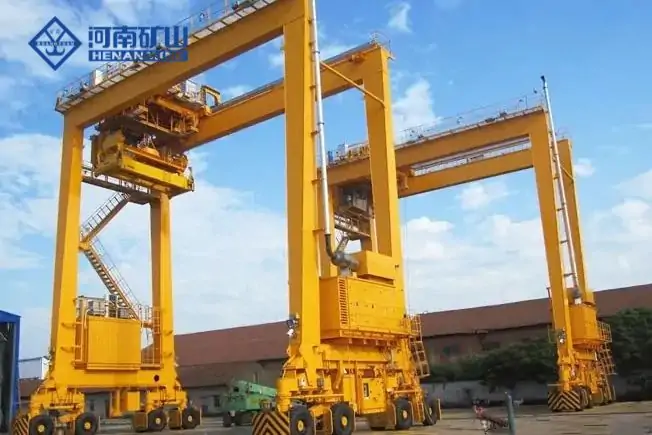
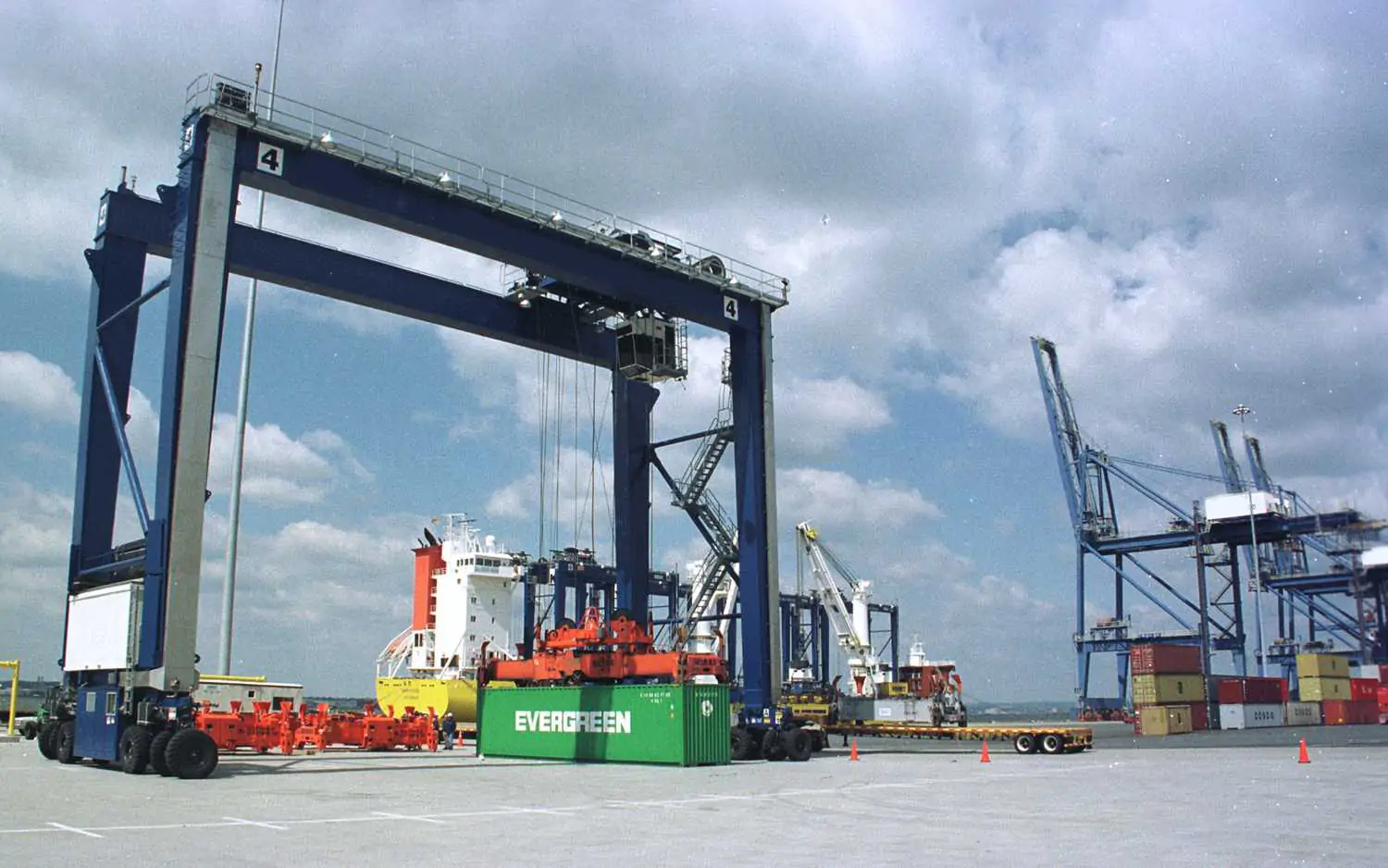
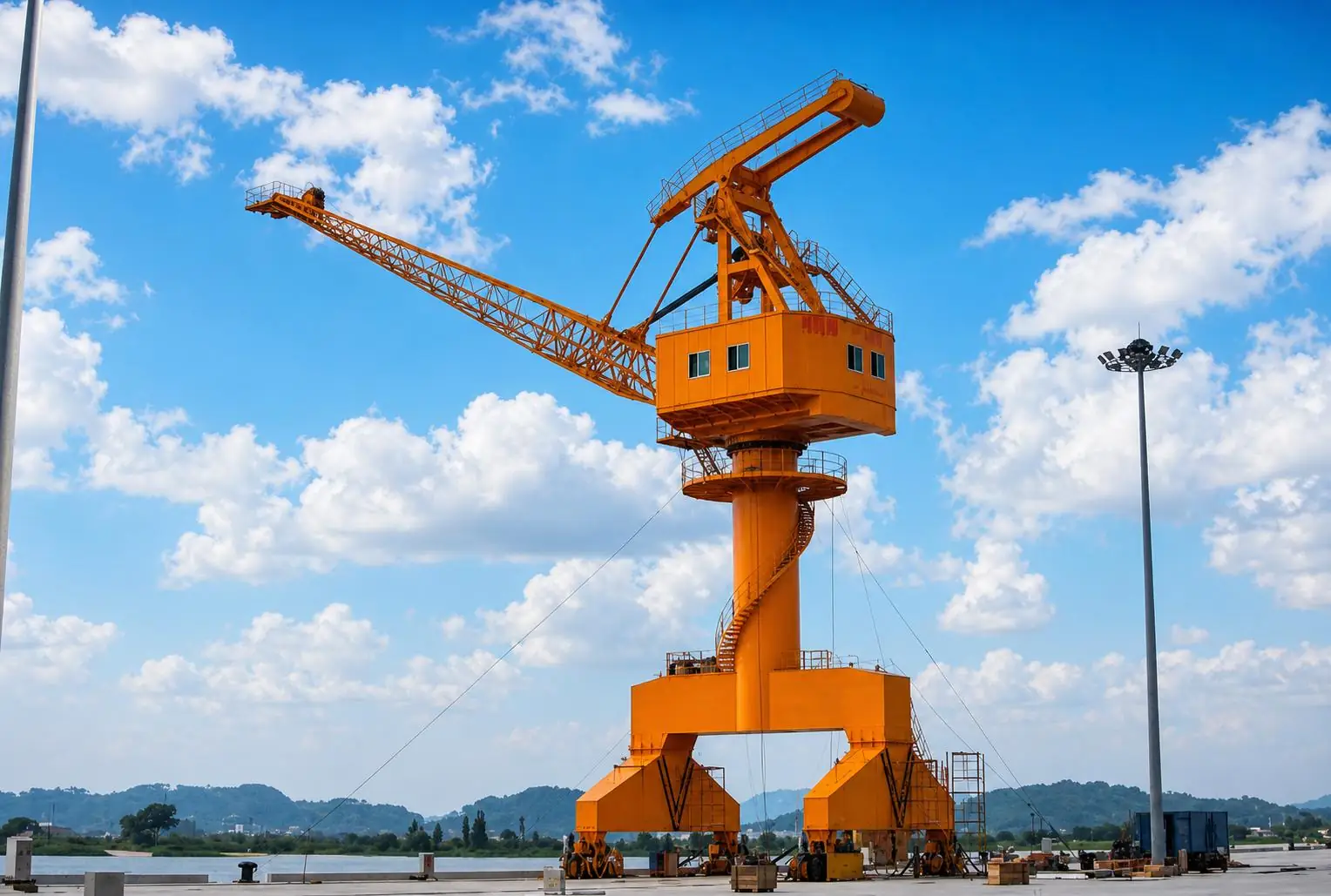
The adaptation scenarios of different types of Henan Mine Crane Factory supply port cranes are very different. The wrong model is selected, and no matter how accurate the parameters are, efficient operation cannot be achieved.Mainstream port cranes include shore bridges, gantry cranes, rail gantry cranes, tire gantry cranes, mobile port cranes and other models, which are adapted to different berths, operating modes and site conditions.
Shore bridge equipment is preferred for shore container loading and unloading, gantry cranes are suitable for yard stacking operations, and gantry cranes and mobile cranes are suitable for small and medium-sized general-purpose terminals and multi-category cargo operations.Automated intelligent terminals need to be equipped with intelligent electronic control and remote dispatching adaptation models, while traditional artificial terminals can choose high-stability conventional models.Only by accurately matching the model according to the operation scenario can the performance of the equipment be maximized and the efficiency shortcomings and waste of resources be eliminated.
Consider port environment and conditions
The port operates near the sea and the river, and the environment is complex and special. Harsh environments such as salt spray corrosion, high humidity, high winds, heavy rains, and alternating high and low temperatures require extremely high anti-corrosion properties, windproof capabilities, waterproof and dustproof grades, and structural strength of cranes.When choosing Henan Mine Crane Factory supply port cranes, the geographical location, climatic conditions, and operating environment of the port must be fully considered, and the equipment configuration must be selected in a targeted manner.
In coastal high-salt spray ports, anticorrosive models with hot-dip galvanized, heavy anticorrosive spraying, and stainless steel core accessories need to be selected to avoid equipment corrosion and aging.Windy and high-altitude ports need to strengthen windproof anchoring and anti-overturning structures, and be equipped with intelligent windproof early warning systems.In rainy and humid areas, the waterproof and dustproof level of the electronic control system needs to be upgraded to prevent circuit short circuits and equipment failures.The selection of models that fit the environmental working conditions can greatly reduce the equipment failure rate and extend the service life of the equipment.
Evaluate manufacturer support and customization
The hardware parameters of the equipment are only the basis. The manufacturer's technical strength, after-sales guarantee, and customization capabilities directly determine the long-term operating cost and stability of the equipment.A high-quality port crane manufacturer can provide process services such as working condition survey, program customization, equipment production, installation and commissioning, operation and maintenance training, and life-long maintenance.
When selecting models, priority is given to manufacturers with large-scale port equipment production qualifications, rich terminal supporting cases, and perfect after-sales system, focusing on the manufacturer's parts supply capacity, fault response speed, and equipment customization capabilities.Regular manufacturers can provide more than 10 years of parts guarantee, 24-hour on-site after-sales response, and support the customization of exclusive equipment according to the terminal site, operation requirements, and automation planning, so as to avoid problems such as poor adaptability, difficult maintenance, and difficult upgrades from the source, and significantly reduce the hidden cost of the whole life cycle of the equipment.
Henan Mine Crane Factory Custom
When purchasing port cranes, the short-term purchase price has never been the core consideration. The comprehensive cost of the whole life cycle and the long-term operating value are the key to determining the return on investment of equipment.Choosing the wrong port crane seems to save the initial purchase cost, but it will cause a series of hidden costs such as low operating efficiency, excessive energy consumption, surge in maintenance costs, frequent downtime losses, and waste of transformation investment. At the same time, it will bring long-term operating problems such as shortened equipment life, safety compliance risks, and future capacity expansion constraints, which will continue to drag down terminal profitability and development.
Port crane procurement should not only value low prices and ignore the long-term operating losses caused by equipment adaptability.Port cranes that are accurately adapted to working conditions can effectively avoid all kinds of hidden costs and stabilize terminal operation efficiency and production safety.As a professional port crane manufacturer, Henan Mine Crane Factory is deeply engaged in equipment customization and supporting services. It can customize and adapt equipment according to various port operation scenarios and environmental conditions, and provide perfect after-sales operation and maintenance support to help major terminals reduce operating costs, improve overall operating efficiency, and achieve long-term stable and efficient operation of equipment.