
Ship-to-Shore Crane: Specs, Outreach & Procurement Checklist
The Ship-to-Shore Crane is the core loading and unloading equipment of the port and terminal. It mainly undertakes the container transshipment work between the ship and the terminal. Its selection parameters, performance configuration and automation level directly determine the port's throughput capacity, ship turnover efficiency and long-term operating competitiveness.
This paper systematically disassembles the working principle, structural composition, core technical parameters, extension distance selection, production capacity design and intelligent safety configuration of the Ship-to-Shore Crane. At the same time, it is equipped with a complete procurement checklist, manufacturer selection criteria, procurement pit avoidance points and cost influencing factors to provide professional and practical reference for port operation and maintenance, equipment procurement and engineering planners.
What Is a Ship-to-Shore Crane
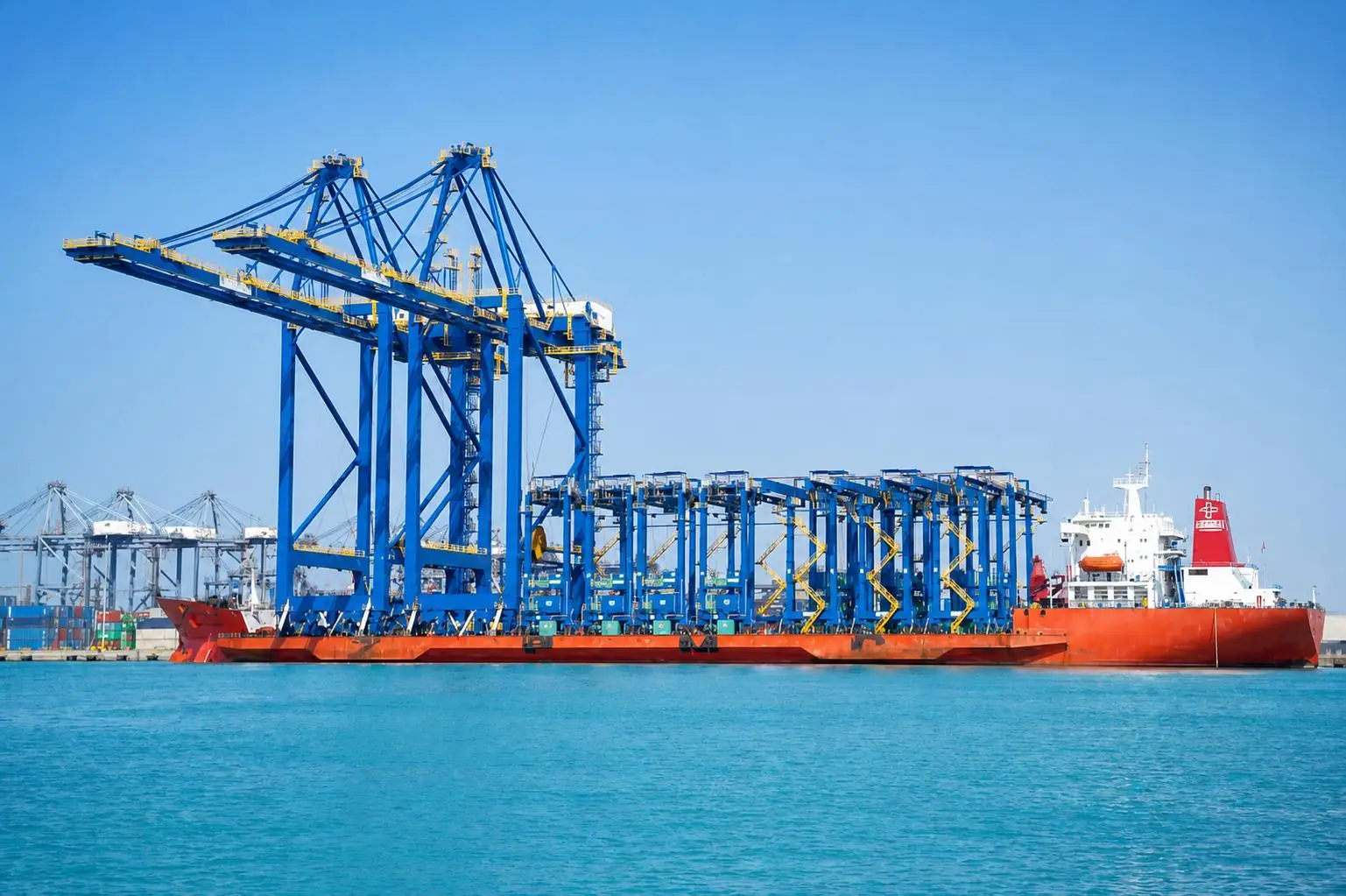
Ship-to-Shore Crane is a large-scale gantry crane with a leading-edge rail type at the terminal. The whole machine walks along a track parallel to the shoreline of the terminal, relying on a pitchable front girder, a trolley running laterally, a lifting system and a container spreader to complete the two-way loading and unloading of containers on the shore. It is the only port core equipment suitable for berthing operations of large container ships.
Unlike yard lifting equipment, STS shore bridges are designed for high-altitude, long-span, and heavy-duty continuous operation on the side of the ship. They have large outstretched distances, ultra-high lifting heights, and precise positioning capabilities. They can be adapted to the needs of all types of ship operations from feeder ships and Panama-type ships to ultra-large container ships (ULCV).
Principle of collaborative working of core institutions
The efficient operation of Ship-to-Shore Crane relies on the precise coordination of the four core institutions to form a standardized and closed-loop container transshipment system:
- The cart walking mechanism drives the whole machine to travel smoothly along the dock track, accurately calibrates the position and aligns the ship's container space, and completes the preliminary positioning of the whole machine.;
- The trolley drive system is equipped with a lifting mechanism and a special spreader, which slides smoothly laterally along the main beam to achieve high-precision horizontal positioning of the container.;
- The lifting mechanism relies on the wire rope transmission system to lift smoothly and complete the precise take-off and landing operations in the vertical direction of the container.;
- The container spreader locks the box body through a four-corner automatic rotary locking mechanism, which effectively guarantees the operating stability and safety under heavy-duty conditions.
At the same time, the beam pitch system can adjust the angle according to the height of the ship and the changes in tides, adapt to ships with different draft depths and stacking heights, and adapt to complex terminal operation scenarios throughout the process.
Main Components of an STS Crane
Ship-to-Shore Crane is a large-scale integrated lifting equipment. The structure of the whole machine, mechanical transmission, electronic control system, and safety protection system are highly coupled. The core components cover nine modules, which directly determine the stability and service life of the equipment.
Door frame structure and legs
As the load-bearing main body of the whole machine, the main beam of the gantry and the sea and land side outriggers are welded with high-strength steel structure to carry the weight of the whole machine and heavy-duty operating loads.
The dual-track support structure on the land and sea side guarantees the lateral stability of the equipment, and the outriggers reserve sufficient clearance for passage, which can meet the barrier-free passage of terminal card collection, AGV, and stacking equipment, and adapt to the intensive operation scenarios at the forefront of the terminal.
Girder and pitch system
The girder is divided into a front extension arm and a rear tie rod structure. The front girder is the core span structure covering the operation of the ship. It can be lifted and put away through the pitch system to meet the storage needs of the ship's departure and windy weather equipment.The pitch hydraulic/mechanical system has stable speed regulation and overload protection functions, which can be adapted to different ship heights to avoid the risk of hull collision.
Trolley and trolley drive system
The trolley is equipped with a lifting mechanism, a spreader and a driving device to move horizontally at high speed along the girder track, which is the core component of the horizontal transfer of containers.Using frequency conversion drive technology, it has the characteristics of stable start and stop and accurate positioning, which can effectively reduce load shaking and shorten the operating cycle time.Unlike ordinary cranes, the power transmission system of Ship-to-Shore Crane is mostly arranged in the machinery room instead of the trolley body, which reduces the weight of the trolley and improves operating efficiency.
Lifting mechanism
The lifting mechanism is the core power unit of the STS shore bridge, which consists of a drive motor, a reducer, a reel, a wire rope, and a pulley block, and is responsible for the vertical lifting of containers.Equipped with an electromagnetic +mechanical dual braking system, it has overload self-locking and emergency braking functions to eliminate the risk of load slipping.It can be adapted to single-box, double-box, and multi-box operations in series to meet the operating needs of different throughput terminals.
Special spreader for containers
Mainstream STS spreaders are divided into telescopic single box spreaders, double 20-foot double box spreaders, and 40/45-foot series spreaders, which are suitable for standard ISO container specifications.
The spreader is equipped with four-corner automatic rotary locks, anti-false locking sensors, and tilt correction devices, which can be automatically adapted to container misalignment and tilt scenes without manual assistance, greatly improving operation safety and efficiency. The special spreader for refrigerated containers can also be adapted to the needs of cold chain container operations.
Electrical and control system
The core adopts PLC programmable control system + distributed bus technology, with optical fiber communication system, strong anti-interference ability and high operating stability.The whole machine is equipped with a frequency conversion drive system (VFD) to realize stepless speed regulation of each mechanism, and at the same time it is equipped with an energy feedback device to reduce energy consumption.Transformers, control cabinets, and drive modules are centrally arranged in the computer room to facilitate operation, maintenance, and overhaul.
Operating cab
The cab is arranged in the optimal observation position under the gantry, and the field of view covers the deck of the ship and the working area of the dock.The automated model can be equipped with a remote control system, without on-site duty, and the operation can be completed only through the remote console, which is suitable for the construction needs of unmanned intelligent terminals.
Orbital walking mechanism
The whole machine walks along the preset track of the pier, and the four corners are equipped with balanced walking trolleys. The load is evenly distributed by hinged balanced beams to avoid local force overload.The trolley adopts a combination design of driving wheel + driven wheel, which can walk smoothly and accurately locate, which can meet the needs of long-distance and high-frequency alignment walking.
Safety and anti-collision system
Multiple safety protection devices are standard, including the anti-collision system of the whole machine, the travel limit of the trolley, the lifting height limit, the wind speed monitoring device, the emergency shutdown system, and the overload protection device.It can realize anti-collision between aircraft, anti-collision of personnel, and self-locking of stroke overrun. At the same time, it has the functions of automatic locking in high winds and anchoring in storms, and is suitable for the complex outdoor operating environment of the port.
Key Ship-to-Shore Crane Specifications to Evaluate
Ship-to-Shore Crane is a long-term heavy-asset equipment with a service life of up to 25-30 years. The selection of core parameters needs to take into account the current operating needs and the future trend of large-scale ships. The five core parameters directly determine the adaptability of the equipment and the operating capacity.
Rated lifting load
The rated lifting load refers to the effective safety load (SWL) under the spreader. It is necessary to distinguish between the total gross load of the whole machine and the Net payload. The weight of the spreader itself (8-20 tons) needs to be deducted, which is the core benchmark for selection.
Mainstream operating load adaptation standards: single box operation 40-65 tons, double 20-foot parallel box operation 50-80 tons, 40-foot double box series operation 80-120 tons.The selection needs to be combined with the mainstream container specifications of the terminal, the branch terminal focuses on the load of a single box, and the hub port needs to give priority to adapting to double-box and series operations to increase the hourly operation volume.At the same time, it is necessary to match the actual weight of the stacker to avoid cost waste caused by insufficient load redundancy or excessive redundancy.
The number of job columns and the span of the whole machine
The span of the whole machine refers to the spacing between the center lines of the sea and land side tracks. The mainstream standard gauge in the industry is 30.48 meters. Some large terminals use a 35-meter widened gauge, which can be adapted to more traffic lanes and AGV operating paths.
The number of operating columns of ship containers is determined by the outer extension distance, not the span.With the iteration of large-scale ships, the number of container columns for ultra-large ships has reached more than 24 columns. The selection needs to match the maximum number of columns of the ship, and at the same time combine the layout of the terminal shoreline and the spacing of berths to avoid blind spots in equipment operations.
Lifting height and lowering depth
The vertical operating parameters of the Ship-to-Shore Crane are divided into two core indicators, which directly determine the ship's adaptability.:
Lifting height above the rail surface: the mainstream large-scale models are 35-55 meters, which are used to empty the ship's deck, hatch circumference and upper stacking boxes, and are suitable for high-stacking operations of ultra-large ships; the depth of lowering below the rail surface: conventional 18-20 meters, which can go deep into the bottom of the ship's cargo hold to complete the loading and unloading of the bottom container in the cabin.
The selection of the type requires additional consideration of the tidal gap of the terminal. The port area with large tidal changes needs to reserve a height margin to avoid the impact of high and low water levels on the operation. At the same time, it is necessary to predict the future needs of large-scale ship upgrades in advance and reserve redundant parameters.
Mechanism operating speed (core production capacity)
The operating speed of the equipment directly determines the amount of work per hour (MPH). It is necessary to distinguish between the no-load speed and the full-load speed. The full-load speed is generally 30%-50% lower than the no-load, which is the key to evaluating the real production capacity.
| Operating parameters | No-load standard speed | Full load standard speed |
| Lifting/descending speed | 80-120m/min | 40-60m/min(up)、60-90m/min(down) |
| Trolley walking speed | 180-240m/min | 120-180m/min |
| Cart walking speed | 30-45m/min | 20-30m/min |
The speed parameters directly affect the operation cycle time, and reasonable speed matching can greatly increase the hourly operation volume of the stand-alone machine, reduce the waiting time for the ship to dock, and improve the overall throughput efficiency of the terminal.
Track gauge and overall dimensions of the whole machine
The track gauge determines the compatibility of the equipment with the terminal infrastructure. The standard 30.48-meter track gauge is suitable for most mature terminals. The existing track elevation, track gauge, and basic carrying capacity need to be strictly checked for the transformation of the terminal to avoid the equipment from being unable to land.
The height of the whole machine (in the stowed state of the girder) is 80-120 meters, and the clearance height of the outriggers is 14-16 meters, which can meet the all-weather access of the terminal collection card, AGV, and operating equipment. The selection needs to strictly match the existing infrastructure parameters of the terminal to prevent transformation and rework.
STS Crane Outreach: How Much Outreach Do You Need
The extension distance is the most critical selection index of the STS shore bridge, which directly determines the tonnage and width of the ship that the equipment can be adapted to, and determines the ship access capacity of the terminal in the next 20 years.
Three core definitions of extension distance
Water-side outer extension distance: the maximum operating horizontal distance from the centerline of the water-side track to the front end of the girder, the core is suitable for ship operations; land-side rear extension distance: the extension distance from the centerline of the land-side track to the yard side determines the coverage of terminal stacking and transshipment operations; total operating range: the horizontal operation coverage range of the whole machine is the core basis for the full coverage of equipment operations.
Extension distance and ship type adaptation standard
The width of the ship and the number of container columns continue to increase with the upgrade of the ship type, and the selection of the outer extension distance must match the ship type grade:
| Extension distance level | Extension range | Suitable for ship type | Maximum number of container columns |
| Short extension model | 30-40m | Offshore feeder ships, small cargo ships | ≤13 columns |
| Medium and long-distance models | 40-50m | Panama-type ship, regional trunk ship | 13-16 columns |
| Long extension model | 50-60m | Super Panama ship | 16-20 columns |
| Large extension model | 60-75m | 10,000-box super-large container ship (ULCV) | 20-24 columns and above |
Accurate extension distance calculation method
It is strictly forbidden to apply common parameters to the extension distance. It must be calculated in combination with the real-world engineering of the terminal. The core steps:
- Figure out the hull width of the largest berthing ship in the port area, and accurately locate the limit position of the outermost container column of the ship;
- Superimposed calculation of on-site working condition parameters such as the compression margin of the ship's fender, the standard distance from the leading edge of the dock to the centerline of the track, etc.;
- Reserve a dedicated safety operation gap of 1-2 meters to completely avoid the safety risk of collision between the equipment and the hull;
- Combined with the trend of large-scale iteration of ships in the industry, equipment parameters are reasonably reserved for redundancy to ensure long-term use value;
- Complete the parameter calibration through standardized engineering calculations, abandon the common parameter application mode, and completely eliminate the blind spots in the operation.
Productivity Specifications: Designing for Container Moves per Hour
Difference between total production capacity and net production capacity
The industry's production capacity is divided into total hourly work volume (GMPH) and net hourly work volume (NMPH): the total work volume counts all work actions, and the net work volume removes invalid working hours such as weather delays, equipment waiting, and manual adjustments, which are more in line with the real throughput efficiency of the terminal, which is usually 15%-30% lower than the total production capacity.At present, the average effective production capacity of a single terminal in the world is 26 boxes/hour, and the high-end automated terminal can reach 35-40 boxes/hour.
Core factors affecting the job cycle
The cycle of single-box operation is restricted by multiple factors such as working conditions and equipment configuration, and can be divided into two categories: objective working conditions and equipment technical configuration. The core influencing elements are as follows:
Objective working conditions
Such factors are the inherent external conditions of terminal operations, which directly determine the time-consuming of basic operations, and are the core constraints of the cycle.It mainly includes the operating height difference, the walking distance of the trolley, the frequency of frequent alignment of the trolley, the weight of the container and the ship's stowage plan.
The greater the height difference of the operation, the wider the walking span of the trolley, the more frequent the repeated alignment of the cart, and the longer the time it takes for the transfer of a single box; the larger the weight of the container, the more obvious the speed limit of the mechanism; unreasonable ship stowage scheme will increase the difficulty of alignment and retrieval of the box, further lengthening the operation cycle time.
Equipment technical configuration
The technical configuration of equipment is the core upgradeable element for optimizing operating efficiency and compressing the cycle, which mainly covers the three dimensions of operating mode, anti-shake system accuracy and automation level.The high-precision intelligent anti-shake system can suppress the shaking of the box, reduce the time-consuming alignment, and shorten the cycle time of a single box by 10%-15%.;
The dual-box and series multi-box operation modes can break through the bottleneck of single-box efficiency, significantly increase the hourly operation volume, and adapt to high-throughput hub terminals; high-end automated configuration can reduce manual intervention, avoid operating errors, effectively stabilize the operation beat, and improve operation efficiency.
Matching production capacity with terminal throughput
The capacity of the Ship-to-Shore Crane must match the RTG/RMG equipment and AGV/collection card transfer capacity of the yard. If the capacity of the shore bridge is too high and the transfer of the yard lags behind, it will cause congestion at the forefront of the terminal; on the contrary, it will waste the ship's berthing window period.Large hub ports need to be equipped with high-efficiency models of 25-40 boxes/hour, and small and medium-sized branch terminals can be adapted to standard models of 20-25 boxes/hour to achieve full-link production capacity balance.
Electrical, Automation & Control Requirements
Power supply and electrification configuration
The mainstream of large-scale STS shore bridges adopts 6kV/10kV high-voltage power supply, and the power supply methods are divided into cable reel type and sliding contact line type.The cable reel is suitable for the transformation of old docks and is easy to install; the sliding contact line operation and maintenance cost is lower, the power supply stability is stronger, and it is suitable for the newly built automated docks.
The whole machine is equipped with a regenerative braking system as standard, which recycles excess energy during braking and braking, reduces energy consumption by 20%-30%, and has significant advantages in energy saving and environmental protection.
Automation and remote work functions
The modern Ship-to-Shore Crane automation system includes four core functions: automatic trolley alignment, intelligent anti-shake control, automatic container positioning, and remote unmanned control.Among them, intelligent anti-shake is divided into feedforward and feedback dual control.
It can accurately suppress the shaking of the load, greatly improving the alignment accuracy and operating efficiency.The equipment can be seamlessly connected to the terminal TOS system to realize automatic reception, execution, and data return of operation instructions, and the positioning accuracy can reach ±15mm.
Digital integration of smart ports
The high-end models are equipped with a condition monitoring system (CMS) and an equipment operation and maintenance management system (CMMS), which can monitor equipment operating parameters, fault early warning, and remote diagnosis in real time to achieve predictive maintenance and reduce unplanned downtime.
Access the port smart platform through data networking, complete the real-time synchronization of operation data, energy consumption data, and equipment status data, and adapt to the digital construction needs of smart ports.
Safety and Environmental Requirements
Core security protection system
The whole machine comes standard with multiple safety protection devices: global emergency shutdown system, real-time load monitoring and 110% overload self-locking, inter-machine/equipment anti-collision system, full-stroke limit protection, real-time wind speed monitoring, spreader rotary lock interlocking protection, redundant braking system, all-round elimination of safety accidents caused by equipment failures and human operation errors.
Wind load and meteorological adaptation design
The upper limit of conventional operating wind speed is 20m/s, and the wind speed of the storm can reach 72m/s.The equipment is equipped with automatic locking in high winds, track clamping, and storm anchoring devices. The whole machine can be quickly fixed in windy weather to prevent slippage and overturning.At the same time, for the marine salt spray environment, heavy anticorrosive coating and IP68 waterproof electrical accessories are used to resist seawater corrosion and extend the service life of the equipment.
Energy-saving and environmentally friendly design
Fully frequency conversion drive and regenerative energy feedback technology can greatly reduce energy consumption and equipment mechanical loss.The pure electric operation mode realizes zero emissions from operations, and the low-noise drive structure meets the environmental protection and noise reduction standards of the port area, and adapts to the increasingly stringent environmental protection control requirements of global ports.
Ship-to-Shore Crane Procurement Checklist
- Verification of basic information about terminal berths: verify the length of the coastline, the spacing of available berths, the track gauge and parameters, the compatibility of existing equipment interfaces, the carrying capacity of the terminal foundation, the power supply voltage and capacity, the perennial wind speed of the port area, the salt spray corrosion level, the tidal gap and other basic parameters to ensure that the equipment is fully adapted to the terminal infrastructure.
- Verification of ship adaptation parameters: confirm the maximum berthing width of the port area, the maximum number of container columns, the number of decks and container stacks in the cabin, and the future ship type upgrade plan, accurately approve the required extension distance, lifting height, and depth parameters, and reserve long-term adaptation redundancy.
- Verification of equipment performance parameters: clarify the rated load under the spreader, the type of spreader (single/double/series), the no-load/full-load operating speed, the target hourly operating volume, and the adaptability of multi-box operations, quantify all performance indicators, and eliminate vague parameters.
- Automation and control configuration verification: confirm the PLC control architecture, remote control function, anti-shake system type, positioning accuracy, TOS system docking protocol, remote monitoring and diagnostic functions, clarify the automation configuration standards, and avoid later transformation and upgrading.
- Verification of compliance and acceptance data: clearly adapt to FEM, EN, ISO and local port standards, verify structural calculations, electrical drawings, load test reports, factory acceptance (FAT), on-site acceptance (SAT) data, and a full set of operation and maintenance manuals to ensure equipment compliance and traceability.
Conclusion
Ship-to-Shore Crane is the core equipment for terminal loading and unloading operations. The selection needs to integrate the ship type, extension distance, lifting parameters, operation throughput, automation configuration, terminal foundation and full life cycle costs, taking into account the current operation needs and long-term expansion planning, and cannot only refer to the lifting weight and procurement costs.
Henan Mine Crane can provide adapted Ship-to-Shore Crane equipment and customized port lifting solutions based on terminal ship type, efficiency indicators and on-site working conditions, balancing equipment performance, input costs and long-term operating value, and can provide professional selection guidance and customized quotations for various shore bridge projects.