
100t Ultra-Heavy Gantry Cranes: Shipyard Hull Block Assembly and Off-Shore Yard Operations
The value of a 100t gantry crane is not just to lift heavy objects off the ground, but to allow the hull segments, steel structures and marine components suitable for its capabilities to flow in a controlled manner between manufacturing, transportation and closing.Whether it is applicable depends on the actual lifting weight, spreader, center of gravity, working space and environment, and cannot be judged only by the rated tonnage.The shipyard already has an actual project to adopt a 100t Goliath door machine, but this does not mean that it can undertake all large hulls or marine modules.
The 100t in this article refers to 100 metric tons; the Ultra-Heavy in the title is used to describe the application scenario and is not used as a unified working level.The selection discussion revolves around land-based shipyards and offshore manufacturing sites, and does not equate on-site hoisting with offshore installation.
Why 100t Gantry Cranes Are Important for Shipyards and Offshore Yards
Handling Heavy Components in Shipbuilding
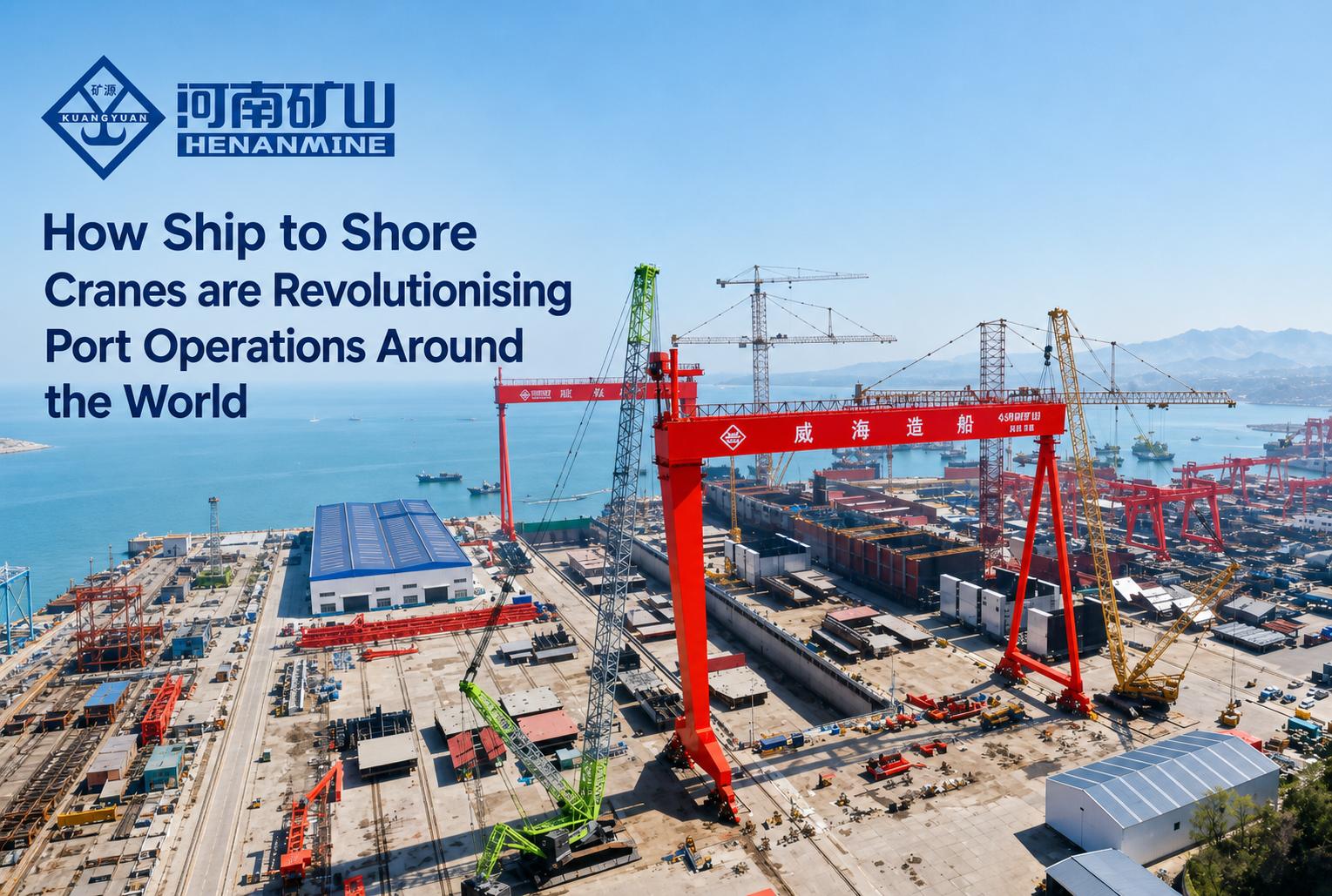
After the hull segment enters the assembly area from the prefabricated area, the crane is not only responsible for the transfer, but also cooperates with the alignment, positioning and assembly before welding.From the perspective of process layout, it is deduced that when the coverage of the door machine matches the production station, there is an opportunity to reduce the intermediate landing and re-hanging cables.The shipyard lifting equipment data lists segmented flipping as a special functional configuration, indicating that the process action itself will affect the selection, not just the maximum lifting weight.
Supporting Offshore Fabrication Projects
The support frame, local structure and module sub-components in offshore manufacturing can become candidate loads for 100t door machines, but only if the complete hoisting configuration is accounted for.Large-scale offshore ship modules may far exceed this ability; the reasonable positioning is to serve the screened components and manufacturing stations, rather than assuming the final assembly task of the complete platform or all modules by default.The selection of equipment for complex loads must return to the weight, shape, center of gravity and hanging point conditions.
Improving Yard Productivity and Logistics
From the perspective of production organization, the effective output of the crane should be evaluated according to the complete hoisting cycle, including hanging cables, transfer, positioning, decoupling and waiting, rather than just comparing the operating speed.Incorporating welding completion, inspection and release, transportation vehicles and landing stations into the same plan is a feasible way to evaluate the convergence of production; only if the upstream and downstream have the conditions at the same time, reducing the waiting for lifting can be transformed into a stable manufacturing cycle.
Applications of 100t Gantry Cranes in Shipyard Hull Block Assembly
Lifting and Positioning Prefabricated Hull Blocks
The first engineering work of segmented hoisting is to confirm the weight and center of gravity in the current manufacturing state, rather than directly following the early estimates.After the pre-installed equipment and temporary accessories are changed, the original hanging point configuration may need to be reviewed.The angle of the sling, the connecting parts, and the edge protection also affect safety; the rated capacity of the sling is related to the specific form of the sling and the angle of force, and cannot be simply added by a single nominal tonnage.
When the segments approach the closed position, the focus shifts from rapid to stable approach.Micro-speed, jog, and anti-shake functions can help control movement, but the accuracy of hook movement is not directly equal to the accuracy of weld assembly.In the end, the alignment should be completed by the designed support, positioning tooling and assembly measurement, so as to avoid replacing the station support with continuous suspension.
Supporting Sectional Shipbuilding
Segmented construction enables different areas to be pre-manufactured, and then enter the hull closing process in the order of the assembly.The lifting system must serve this order: the site has not been released in the previous process, and even if the latter stage has been completed, it may not be eligible for hoisting.Derived from this process relationship, the hoisting plan and the production plan should be arranged simultaneously, and the completion of the component manufacturing cannot be equated with the acceptance conditions on site.
A complete process review should also cover the normal assembly route and the rework exit route.Especially after the adjacent segments are gradually closed, whether the initially unblocked channel is still available should be confirmed through the phased layout plan, rather than only once in the empty field state.Such a phased verification can expose the subsequent blocking and re-hanging problems in advance.
Handling Large Steel Assemblies
Even if the weight of the deck components and the wide steel structure meets the requirements, they may be limited by hook coverage, headroom between the outriggers, and sling space.The lifting height must be determined in combination with the load, spreader and obstacles; the installation location of the equipment should also avoid buildings, power facilities and other adjacent hazards.Therefore, qualified weight is only a filter condition, and the spatial adaptation of the complete lifting path is equally important.
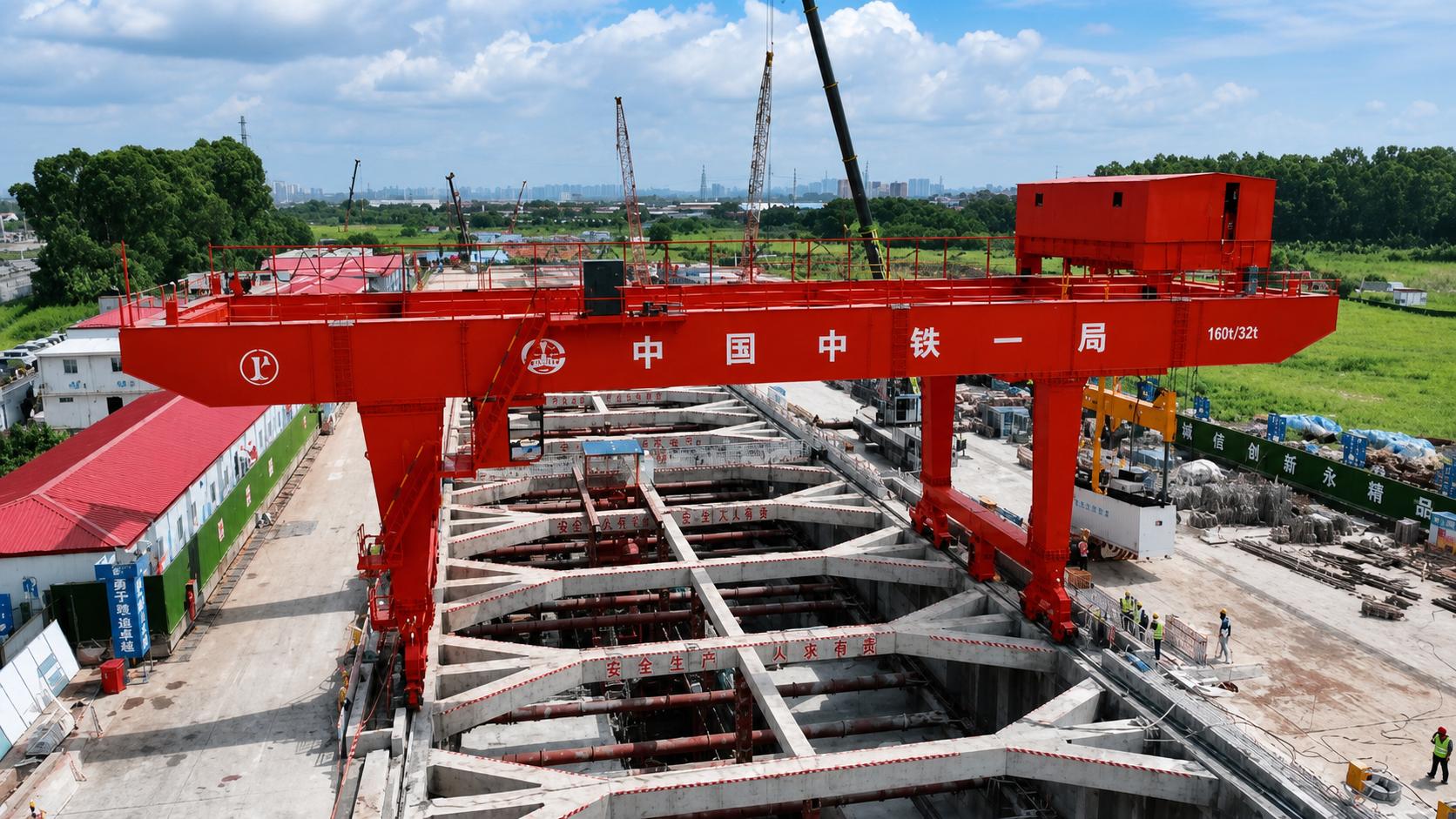
Applications of 100t Gantry Cranes in Offshore Yard Operations
Offshore Platform and Module Fabrication
Offshore frames are often irregularly shaped, and hoisting evaluation needs to track the load path from the hoisting point to the main structure.Multiple hanging points do not mean that the load must be evenly distributed; the sling arrangement, component attitude and local force must all be included in the engineering accounting.The shipyard's material handling rules also emphasize reliable hanging cables before lifting, and appropriate protection is used where the slings pass through sharp corners.
For such components, the main transfer tasks between cutting, welding, inspection and stacking can be classified first.Standardized spreader schemes can be used for conventional frames, and components with special shapes or manufacturing conditions that have changed are reviewed separately to avoid using a successful lifting as the basis for all subsequent working conditions.
Offshore Wind and Marine Energy Projects
Mobile door machines have been used for the handling of manufacturing sites of wind power components, including long-size components and blade-related operations.However, whether a certain wind power component is suitable for a 100t configuration still depends on its weight, length, designated hanging point and required working height, and cannot be summarized by industry name.The manufacturer's green energy solution also reflects that the size of the spreader and equipment needs to be adjusted according to the specific load.
There must be a distinction between hoisting on land sites and offshore installation.Offshore operations may be affected by ship movement and waves. Some professional offshore cranes use active lifting compensation to control the load.The anti-shake function of ordinary on-site door machines does not mean that they have the ability to handle such maritime sports conditions.
Outdoor Lifting in Coastal Environments
The protection of the coastal environment cannot be simplified to thickening paint.The coating of steel structures should be selected according to the actual corrosion environment, and the protection of electrical housings belongs to another type of technical requirements; ISO 12944-2 discusses the classification of environmental corrosion, and IEC 60529 discusses the protection level of housings. The two cannot replace each other.The project plan should clarify the layout of coating, electrical protection and easy inspection and maintenance respectively.
Anticorrosive specifications cannot only write one environmental category.Surface treatment, coating system, edge and weld treatment, construction inspection and damage repair can be included in the delivery requirements separately, and then correspond to the actual exposure conditions.Under saline and humid conditions, the maintenance focus also includes locations that are prone to water accumulation, shading, and inaccessible; if there is no inspection space left in the design phase, subsequent discovery and repair of defects will be more difficult.
The available time of outdoor equipment is also limited by the weather window.It is advisable to reserve time for the production schedule to stop hoisting, move into the parking location, and implement windproof measures, rather than writing the weather restrictions into the operation manual and then disconnecting from the production plan.
Key Technical Specifications of a 100t Gantry Crane
Rated Lifting Capacity and Load Configuration
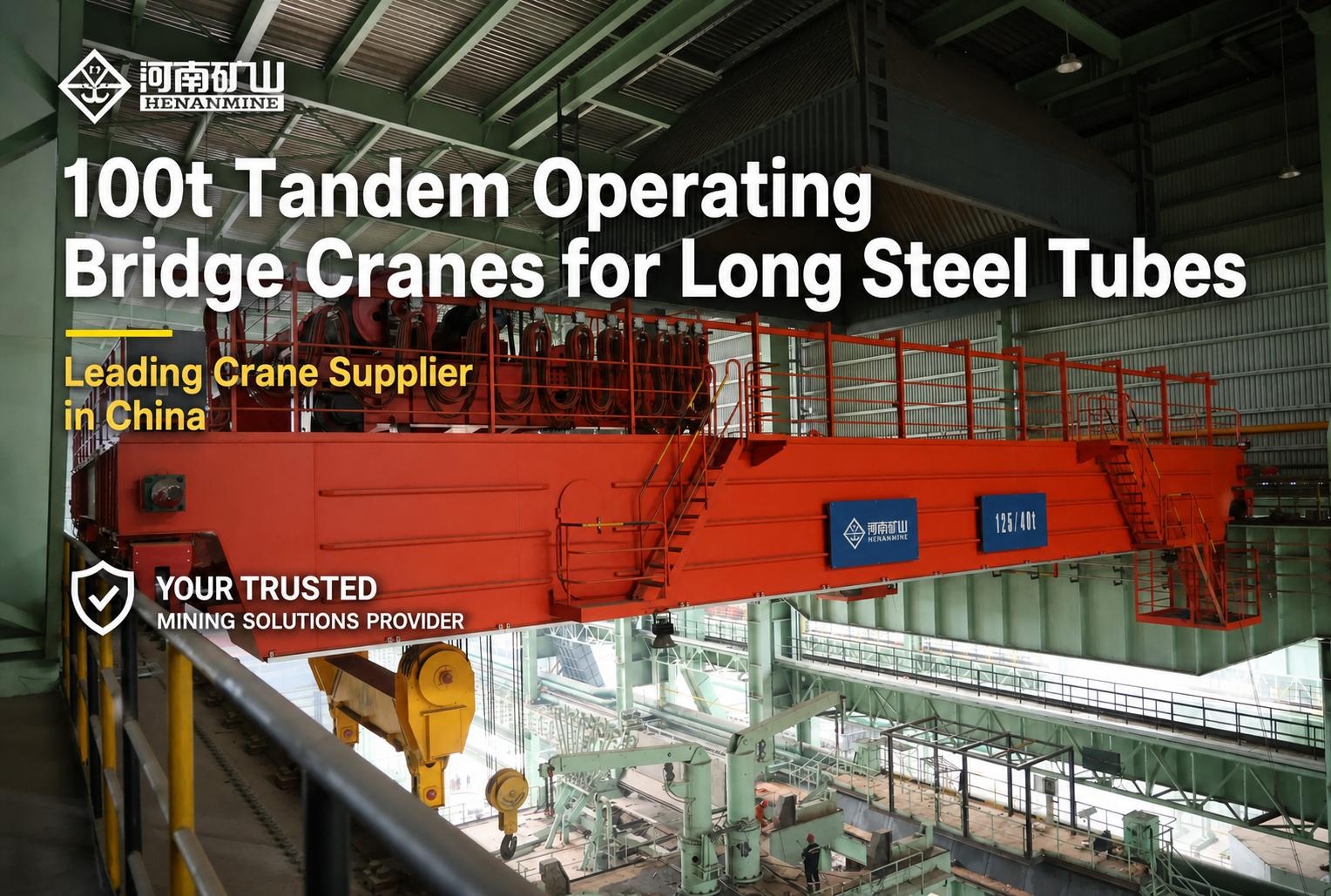
100t is the rated capacity under the specified configuration, which does not mean that any combination of hooks can independently bear 100t.Multi-lifting mechanism equipment needs to clarify the rating value and combined use restrictions of each mechanism.The load accounting must also be included in the relevant spreaders and accessories according to the manufacturer's definition; the load-bearing performance under test conditions cannot be interpreted as a license for daily overload operation.
Assuming that a certain segment weighs 92t and the total number of hanging beams and rigging to be included is 9t, the static total has reached 101t.This hypothesis only describes the calculation boundary and does not constitute a hoisting scheme; even if the total is less than 100t, the center of gravity, configuration restrictions, and other actual working conditions still need to be verified separately.
Span and Lifting Height
The span corresponds to the coverage of the site, and the lifting height must accommodate the components, slings, hanging beams and operating headroom.The two cannot be determined in isolation: increasing the span or changing the hook arrangement will affect the structure and site interface.The space review should establish a model with the most unfavorable hoisting posture, check the highest landing site, the transfer location of the transportation vehicle, and the surrounding facilities, rather than just using the height of the component body to determine the height of the equipment.
Duty Classification and Operating Frequency
The classification of ISO 4301-1 considers the total number of design work cycles, load spectrum, and average displacement.Occasional hoisting and continuous high-frequency operation every day, even if the rated lifting weight is the same, it does not mean that it has the same design tasks.Therefore, the work level should be determined based on actual production records or reasonable forecasts, and 100t itself cannot be regarded as a durability indicator.
Hoisting Speed, Travel Speed, and Positioning Accuracy
The transit stage pays attention to the cycle, and the placement stage pays attention to the steady approach.The anti-shake control can limit the swing by adjusting the acceleration and deceleration of the cart and the trolley, and the micro-speed and jog help fine movement; the dual lifting synchronization coordinates the operating speed of the two hooks.These functions have their own functions, so it is advisable to define them around the specified load and operation process, rather than just listing the function name or generally promising positioning accuracy.
Structural Design and Environmental Protection
The structural design of the door machine involves the load and its combination, rather than just checking the static lifting weight.ISO 8686-1 provides general principles for the calculation and combination of related loads, and wind loads also need to distinguish between working and non-working states.For the project interface, the main beam, trolley, wheels, track and basic information should be reviewed as a continuous design chain, and the responsibilities of all parties to provide data and complete the review should be clarified.
The basic interface should at least meet the wheel pressure and related horizontal action, track and installation requirements under approved working conditions, but not only provide the equipment's own weight and rated lifting weight.When equipment supply and civil construction are purchased separately, a unified interface review node can be set up; any changes in span, track gauge, or usage tasks will reconfirm the impact on existing calculations.
How to Choose the Right Gantry Crane Configuration
Single-Girder vs. Double-Girder Gantry Cranes
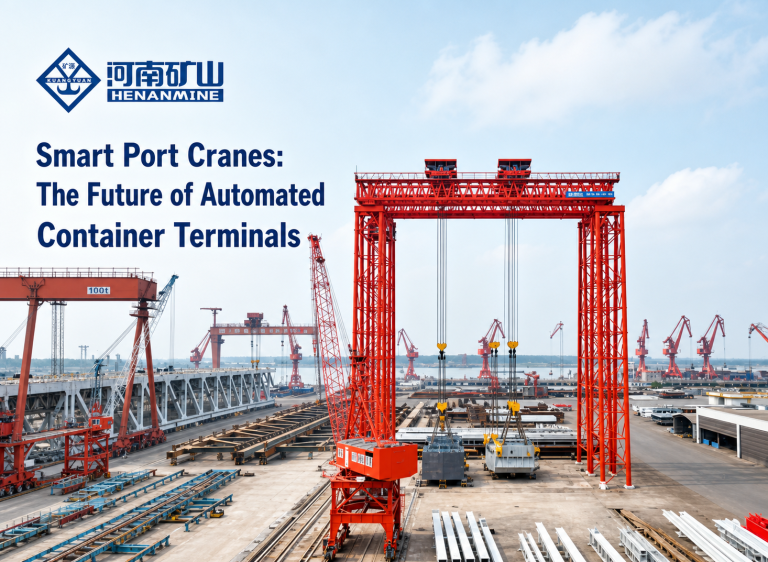
Double-girder schemes often enter the comparison range of heavy-duty projects, but single beams cannot be directly equivalent to low lifting weight or low working level.There are already two engineering designs for large-scale door machines in shipyards, single-girder and double-girder, and the manufacturer has also clearly pointed out that the two are not in the general sense of the relationship between advantages and disadvantages.Reasonable comparison should cover the calculation results, hook arrangement, headroom, maintenance channel and wheel pressure, rather than just relying on the number of beams to make decisions.
Rail-Mounted vs. Rubber-Tired Gantry Cranes
The orbital scheme is suitable for organizing coverage along a given route; the tire-type mobile door machine can provide steering and cross-station handling flexibility.The latter does not mean that the site does not need to be evaluated, and the location, stability and adjacent hazards of the equipment are still part of the hoisting plan.It is appropriate to compare and evaluate the track foundation and pavement conditions, transportation channels, steering space, and respective maintenance projects at the same time.
Hoisting and Control System Selection
Lifting mechanism, braking and limit are the basis, while remote control, load monitoring, anti-collision and synchronous control should be configured around the task.Especially for multi-hook operations, maintaining a high degree of consistency is not the same thing as maintaining load distribution.The technical agreement can define normal action, abnormal alarm, loss of contact handling and stop logic respectively, and verify the combined functions with actual working conditions.
What to Look for in a Gantry Crane Manufacturer
Heavy-Duty Engineering and Manufacturing Capability
When evaluating the manufacturer, you can verify the span, load and use environment experience similar to this project, and ask for an explanation of who is responsible for the structure calculation, mechanism selection, and control integration.Engineering capabilities should be reflected in the review of project results and interface management, rather than just judging by the display photos or the maximum tonnage; the same tonnage does not represent the same work task.
Quality Assurance and Testing
The quality review should track whether the materials, welding, inspection and test documents can correspond to specific equipment and components.If the project adopts ISO 3834-2, it can be used as the basis for the comprehensive quality requirements of metal melting and welding, but the function of the whole machine and on-site acceptance cannot be omitted accordingly.Procurement review should clarify the certificate, traceability records, inspection scope and final delivery documents in accordance with the contract, so as to avoid only verifying the system identification.
Installation, Commissioning, and After-Sales Support
During the procurement phase, it is appropriate to determine the scope of installation guidance, commissioning testimony, personnel training, spare parts list and service response, and explain who will review it after the load or production system changes.The value of long-term support is not only post-failure maintenance, but also includes maintaining a traceable connection between use records, inspection results, and design tasks to provide a basis for follow-up special assessments.
Conclusion
The selection of a 100t gantry crane needs to comprehensively consider the hoisting task, site conditions and operating frequency, and formulate a plan based on the weight of the components, the center of gravity and the site layout to ensure that the equipment meets the needs of the hull segmented assembly and offshore site.
Henan Mine Crane can provide crane capacity increase evaluation, transformation plan and customized design support based on existing equipment parameters, target lifting weight and port operating conditions to help customers take into account equipment safety, operating efficiency and long-term operating needs.