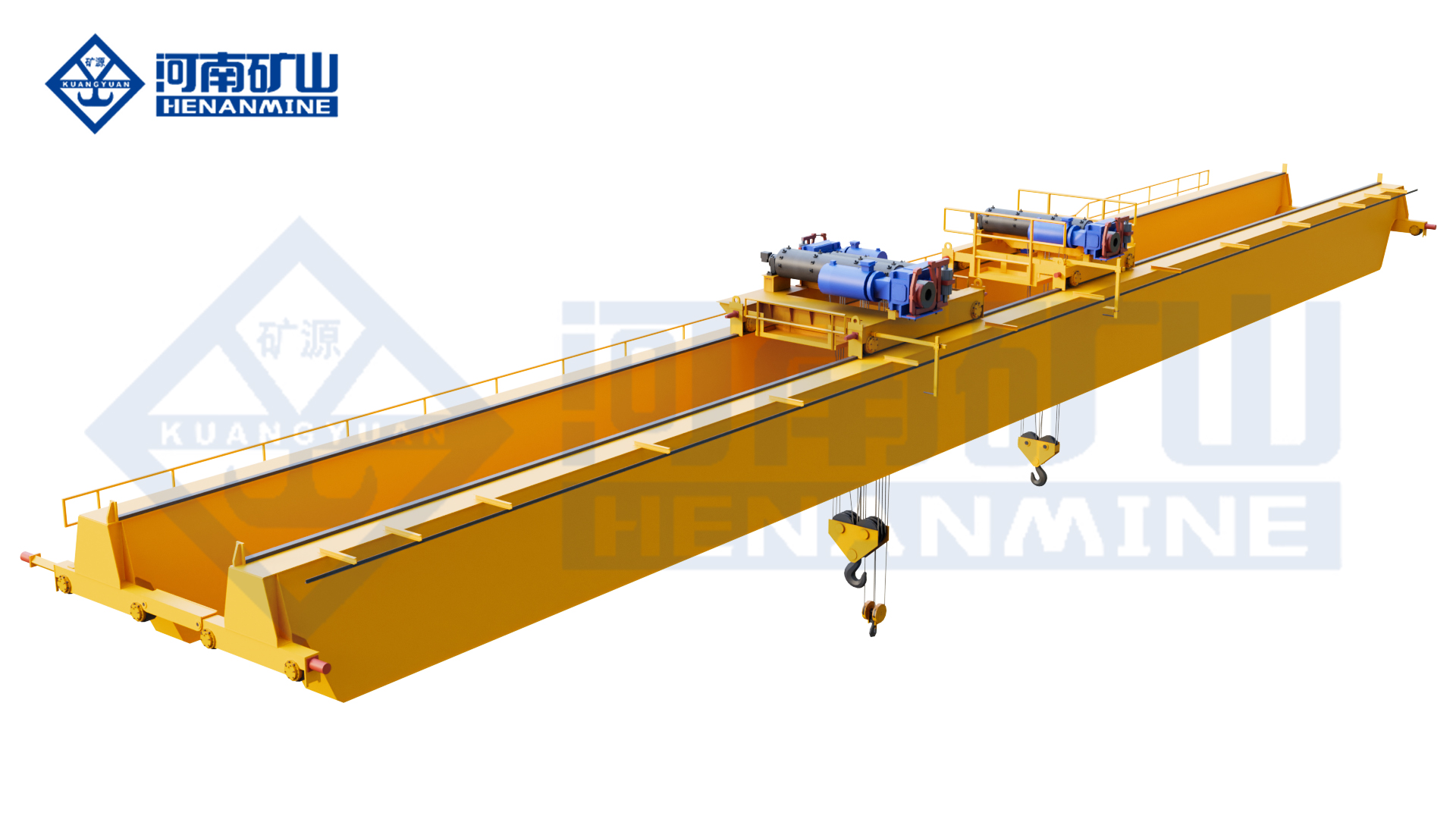

How to Choose a 500t Crane for an Offshore Wind Project?
When choosing 500t crane for offshore wind power projects, it must first prove that it can complete the target hoisting under the specified ship, working range, hook height and environmental conditions.The 500-ton equipment may be suitable for port loading and unloading, pre-installation or some offshore construction tasks, but it cannot be determined by tonnage alone that it can install all the fans and basic components in the project.The tonnage in this article refers to metric tons, and the actual capacity is based on the load gauge of the corresponding configuration and working conditions.
The starting point for selection is the project hoisting conditions, followed by the model, ship interface, certification and cost comparison.Meeting the lifting weight is only one of the conditions; if the blade cannot control the attitude, the hull cannot withstand the basic reaction force, or the boom cannot avoid the adjacent structure, no matter how sufficient the nominal capacity is, an executable solution cannot be formed.
Define the Actual Lifting Requirements Before Choosing a 500t Crane
Identify the Heaviest Components to Be Lifted
Hoisting objects may include towers, nacelles, blades, transition sections, duct frame related equipment, and offshore booster station components.The list must distinguish the weight of the component body, the transport bracket and the accompanying accessories, and record the lifting point, center of gravity and allowable attitude.Single piles or large upper blocks may exceed the scope of application of 500-ton equipment, and cannot be classified into the same capacity level because they belong to the same wind power project.
The heaviest components do not necessarily form the most difficult working conditions.Lighter blades may be more difficult to control due to the large windward area and high hoisting height; the consequences of failure of ordinary deck transshipment and critical heavy hoisting are also different.The classification of working conditions is determined by weight, geometric conditions, operational complexity and risk, which determines the depth of subsequent analysis and the configuration of the spreader.
Calculate the Required Lifting Capacity at the Working Radius
The maximum rated lifting weight of 500t crane usually corresponds to a specific small range and configuration, and cannot be extended to all operating locations.The working range is the horizontal distance from the center of rotation to the line of action of the hoisting; when the range increases, the overturning torque generated by the hoisting increases. At the same time, it is also limited by the structure, stability and institutional capacity, so the lifting weight cannot be calculated in a fixed proportion.
Assuming that a certain component weighs 300t, and the hanging beam and rigging total 25t, these two items alone form a static lifting weight of 325t.This figure is not the final allowable lifting weight determination. Deductions such as hook groups must be processed according to the load gauge instructions, and the dynamic impact should be considered according to the applicable design method.If the relevant dynamic factors have been included in the sea condition load gauge, the same coefficient cannot be superimposed again without verification; a unified increase of a certain percentage cannot replace the analysis of working conditions.
Determine Required Hook Height and Outreach
The height of the hook is determined by the installation elevation, the height of the components, the vertical height of the rigging and the necessary clearance.The top of the boom reaches the installation height, which does not mean that the components under the hook can be in place, because the hook group, hanging beam and sling will all take up space.Changes in the load deflection of the boom and the attitude of the hull will also change the actual headroom.
The horizontal coverage is affected by the position of the base, the distance from the side of the ship, the stacking of the deck and the avoidance of the structure.There may be different control points for lifting, overboard, rotation and landing. The verification of the complete path is more meaningful than just checking the final installation location.
Compare Different 500t Crane Configurations for Offshore Wind Applications
Offshore Vessel-Mounted Cranes
Ship-mounted offshore cranes transmit loads to the hull through bases or special structures, which are suitable for installation ships, engineering ships and corresponding offshore platforms.Its rotation range, deck occupation, on-board energy supply and maintenance path need to be arranged together.The lifting state of fixed platforms, jack-up ships and the supporting conditions of floating ships are different, and the same nominal tonnage cannot represent the same offshore operating capacity.
Heavy-Lift Crawler Cranes for Onshore Wind Component Handling
Crawler cranes are suitable for port depots, component pre-installation and shore transshipment, but the large grounding area of the crawler does not mean that the foundation naturally meets the requirements.The carrying pressure will vary with the lifting weight, amplitude and direction of rotation. It is also necessary to check the edge of the pier, underground facilities, distribution and transfer areas and assembly spaces.On-board walking must also be within the approved configuration and route conditions.
After the ordinary crawler 500t crane is on board, the original land load gauge cannot directly become the basis for offshore operations.The tilt of the hull, acceleration of movement, track constraints, and local deck forces have changed the original boundary conditions. Only by completing targeted engineering verification and corresponding approval can it be determined whether it is applicable.
Floating Crane and Specialized Offshore Heavy-Lift Solutions
Floating cranes and special offshore heavy lifting systems consider ships, cranes and positioning systems as a whole.For large-scale heavy loads, complex cross-ship transshipment, or high-level installations, dedicated systems may be more suitable than standard 500-ton solutions, but they are still subject to stability, motion response, and environmental constraints.The installation of floating fans also involves the movement of the target structure itself, and it cannot only analyze the side of the lifting ship.
| Configuration | Typical Role | Main Selection Constraint |
| Vessel-mounted offshore crane | Offshore handling and installation | Marine load chart and vessel integration |
| Land-based crawler crane | Port handling and pre-assembly | Ground capacity and assembly footprint |
| Integrated floating heavy-lift system | Complex offshore lifting | Relative motion and vessel stability |
Evaluate Key Technical Specifications for Offshore Operation
Rated Capacity and Load Chart
The object of technical comparison should be the available capabilities under each control condition, not the maximum value on the promotional page.The load gauge needs to correspond to the boom combination, counterweight, magnification, operating area and applicable sea conditions.The tension of the main hook, auxiliary hook and single rope is limited respectively, and the speed of the auxiliary hook does not mean that it can bear the heavy load of the main hook; the coordinated operation of the double hook requires clear permission and analysis.
The role of the additional margin is to cover the uncertainty and operating requirements specified by the project, and cannot compensate for misconfiguration or missing dynamic analysis.The comparison of the two 500t cranes is best based on the same set of hoisting paths, load definitions, and environmental inputs, so as to avoid one scheme reporting static capabilities and the other reporting offshore allowable capabilities.
The definition of net load and total lifting weight also affects the comparison results.Some materials list the allowable total amount of specific spreaders, while others need to deduct attachments from the listed capabilities; specific processing must be returned to the manual.Working conditions may also be limited by the length of the rope, the capacity of the reel, and the working system of the mechanism. The lifting that can be completed at a certain time does not automatically mean that it can be continuously operated at the same beat.
Boom Length, Hook Height, and Working Radius
The arm length, amplitude and lifting height restrict each other, and the longest boom is usually not equal to the most favorable heavy-duty configuration.Lengthening the boom will change its own weight, stiffness and available capacity, and the luffing boom or other special combinations also have their own load gauges.For the installation of high-level components, the spatial model should also include the blade sweep range, ship pile legs and adjacent structures to verify the spacing under load.
Hoisting Speed and Operational Efficiency
The lifting efficiency depends on the entire cycle, including hanging rope, lifting, rotation, attitude adjustment and placement.The maximum speed of the empty hook cannot represent the heavy-duty speed, and changing the magnification of the wire rope will also affect the speed of the hook.Fine speed regulation and smooth start and stop help to control the movement close to the installation surface, but cannot eliminate the influence of wind and waves; the effective weather window must cover the time required to complete or safely abort the operation.
Power System, Controls, and Monitoring
The choice of electric drive, hydraulic or electro-hydraulic system depends on the crane design and ship conditions.The comparison content includes peak demand, simultaneous action ability, heat dissipation, fault isolation, and load retention and disposal methods after power loss.The electric drive scheme must also check the voltage, frequency and power management of the ship's network, and cannot only compare the rated power of the motor.
Load monitoring, amplitude display, limiter, emergency stop and necessary redundant configuration constitute the operation support system.The key lies in how the system responds when the sensor fails, communication is interrupted, or the main power supply is lost, not how much the screen functions.Monitoring and protection devices are also not a substitute for approved hoisting plans and on-site commands.
Assess Offshore Environmental and Operating Conditions
Wind Speed and Weather Limitations
Large-area blades will convert the wind load into lifting swing and lateral action, and the lighter weight of the components may also be limited by the wind speed first.When other conditions are the same, the wind speed increases with the square of the wind speed; the windward area, shape, and attitude will change the wind load.Therefore, the allowable wind speed suitable for compact heavy objects cannot be directly used for blades.
The operating wind limit of the 500t crane must correspond to the actual boom and lifting conditions, and clearly define the measurement height, gust of wind and average wind.The wind speed near the deck cannot simply represent the high-altitude wind conditions, and the weather forecast is not equivalent to on-site measurement.The window planning should include early warning, time to stop lifting and safe landing, so that the components will not be forced to hover after the weather deteriorates.
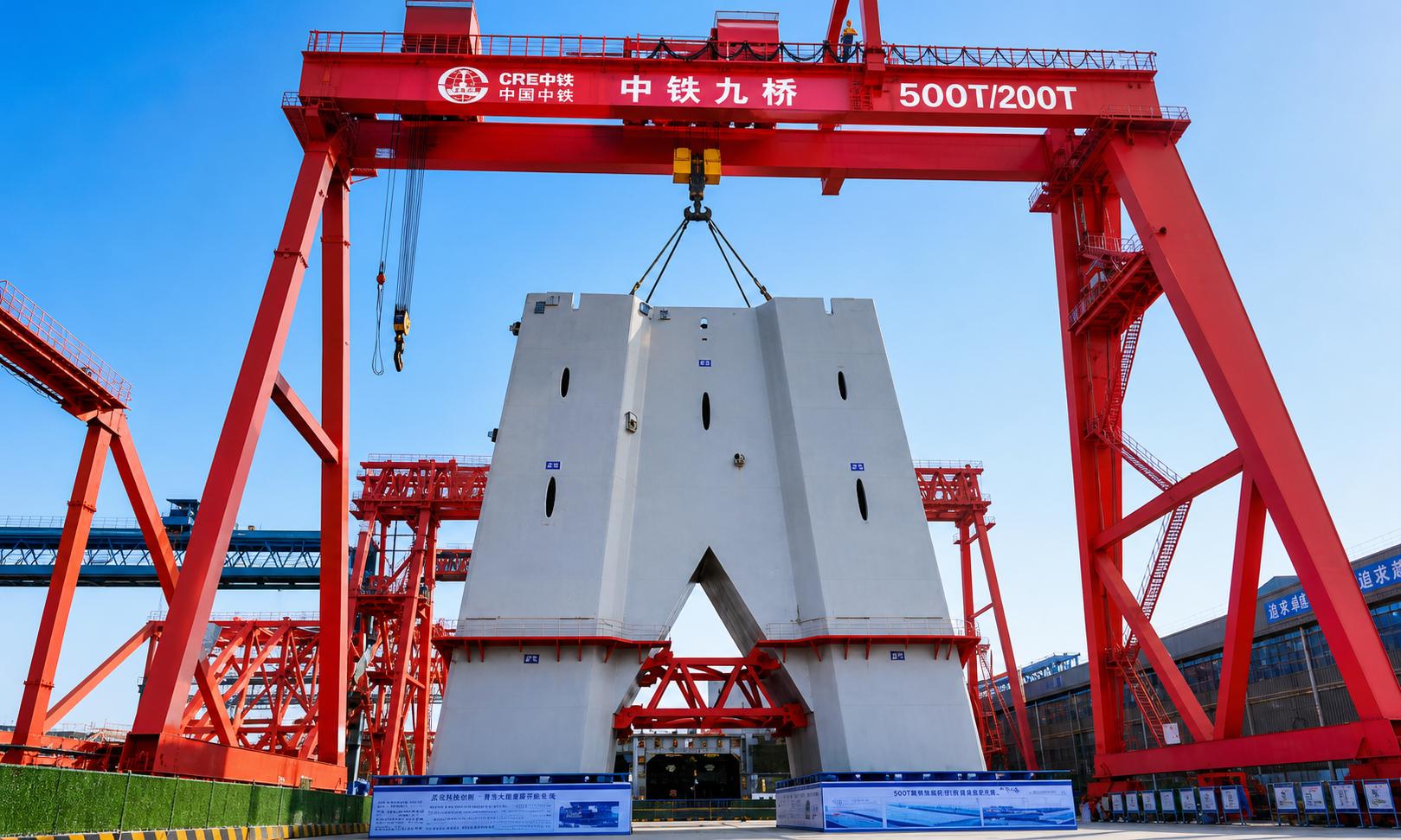
Different restrictions may also be applied to the waiting state before lifting, the floating state of the crane, and the parking state of the equipment.Being able to withstand the same wind conditions does not mean that it can be hoisted at the same wind speed.For components with high installation accuracy requirements, the project may also need to stop operating before reaching the equipment limit due to attitude control and docking difficulties.
Corrosion Protection and Marine Durability
Salt content and continuous wetting will promote corrosion of steel structures and connection parts, and coating damage, water accumulation in gaps, and contact with dissimilar metals are of particular concern.Marine protection is not only a topcoat, but also involves surface treatment, a complete coating system, drainage, sealing and repairability.The construction quality of welds, fasteners and hard-to-reach boom areas will directly affect the difficulty of subsequent maintenance.
The protection level of the electrical box needs to match the actual exposure conditions, but the waterproof and dustproof level itself is not equal to the salt spray or condensation resistance.Connectors, seals, temperature and humidity management in the cabinet, and wire rope lubrication jointly affect long-term reliability.The anticorrosion plan must be accompanied by an inspection and repair system, and cannot be exempted from offshore maintenance by one-time factory processing.
Vessel Motion and Dynamic Loads
The rise and fall, roll and roll cause the tip of the arm to move, and the inertia and relative displacement of the hoisting will change the tension of the rope.When the component leaves the support surface of the transport ship or approaches the fixed mounting surface, the load transfer is particularly sensitive; the re-tensioning of the rope after relaxation may form an impact.When evaluating sea conditions, only the effective wave height is not enough, and the wave period, direction, ship response, and relative position will also affect the results.
Active lift-sink compensation reduces the vertical relative movement under specific conditions by measuring the movement and controlling the winch retractable rope; passive systems rely on their mechanical or hydraulic characteristics to respond to load changes.Whether compensation is used depends on the task, and the stroke, speed, load, and reference target must be checked.Lift-sink compensation cannot automatically solve the lateral swing, rotation error, or movement of the target structure, let alone make heavy lifting beyond the ability feasible.
Temperature, Vibration, and Long-Term Reliability
Low temperature will change the fluidity of hydraulic oil and grease, and may also affect material, sealing, and start-up performance; high temperature will increase the cooling burden.Repeated work cycles and hull vibration may cause loose connections and fatigue of components, so the temperature range, work level and inspection arrangements should cover the real task.Whether the filter element, brake, and sensor are easily accessible will affect the downtime caused by a minor failure.
Check Vessel Integration, Structural Loads, and Stability
Crane Foundation and Structural Interface
The hull verification cannot only look at the uniform load marked on the deck.The crane foundation can withstand vertical force, horizontal force, bending moment and torque, and the load needs to be continuously transmitted through the base, reinforced structure and hull skeleton.Local stress, welds, and fatigue problems may still exist when the average deck pressure is qualified, so interface verification requires clear load combinations and structural boundaries.
The basic reaction force provided by the manufacturer must indicate whether the configuration, coordinates, direction and dynamic factors have been included.The shipyard and the ship engineering party complete the structural analysis accordingly, and the inspection or classification requirements are then implemented into the design and construction.Only when the load input and the responsibility boundary are consistent can the crane capacity be converted into the available capacity on board.
Vessel Stability and Ballast Management
When a floating ship is hoisted off the deck, crosses the side of the ship, and moves to the maximum amplitude, the center of gravity and tilting torque are constantly changing.The stability analysis should cover the entire process and consider the ballast, free liquid level and applicable abnormal operating conditions.The ballast system also has flow and response restrictions, and it cannot be assumed that it can immediately offset all load changes.
When the jack-up ship is raised for operation, the focus of the verification is turned to the conditions of pile legs, lifting system, and seabed support; the state of floating or entering and leaving the field still involves the stability of the ship.The boundaries of the two states are different, and the verification results of one cannot be used to overwrite the other.
Installation Space and Transport Requirements
The layout of the 500t crane is also limited by the weight of the transportation block, port hoisting resources, counterweight storage and maintenance channels.The parking of the boom takes up the same space as the fixing of maritime transportation, which may affect the cargo capacity of the deck.The delivery plan needs to go through manufacturing, transportation, on-board installation, commissioning and witness inspection. The factory date cannot be directly equivalent to the date when it can be put into construction.
Verify Offshore Crane Safety Standards and Certification
The applicable requirements are determined by the type of equipment, flag state, operating area, ship class and contract.DNV-ST-0378, API Spec 2C and related ISO standards have their own scope, and the standard names cannot be simply accumulated into a general certification list.The qualification documents for land-use equipment, product type approval, and acceptance documents for specific ship installations cannot be replaced by each other.
The document review should correspond the certificate, load test, inspection record, safety device test and operation manual to the actual configuration, especially to check the sea conditions, uses and restrictions.Personnel training, hoisting planning, communication command, isolation areas and emergency response implement equipment conditions into on-site capabilities.After the modification or configuration change occurs, whether the original documents continue to be valid also needs to be reviewed.
Compare Total Cost of Ownership, Not Just Purchase Price
Initial Purchase and Customization Costs
In addition to the basic quotation, offshore adaptation may involve boom adjustment, coating, control, energy supply, basic design and verification costs.When comparing the quotation of 500t crane, the technical scope and delivery boundary must be the same, otherwise the low price may just leave the installation interface, commissioning or inspection work to the owner to bear separately.
Transportation, Installation, and Mobilization
Transportation, port loading and unloading, auxiliary cranes, assembly and ship mobilization will all form costs.Modular design may reduce the difficulty of transporting a single piece, but it will also increase the connection, assembly, and on-site inspection work; whether it is cost-effective depends on the route, port resources, and the number of migrations between projects.
Maintenance, Spare Parts, and Technical Support
The cost of offshore failures includes accessories, personnel going to sea, waiting for construction ships, and missing weather windows.The spare parts strategy should consider the consequences of failure and the delivery cycle. Remote diagnosis can help locate some problems, but it cannot replace mechanical maintenance and on-site resources.The value of the service commitment depends on the response mechanism, the actual coverage area, and the enforceable spare parts arrangement.
Operational Efficiency and Project Return
Higher configuration can only offset additional investment if the target operating conditions, availability, or cycle time are improved.Economic evaluation can compare the cost of ship days, maintenance and transition under different weather scenarios, so as to avoid directly converting the theoretical fastest speed into income.When the project task is limited, excessive tonnage may also increase its own weight, deck occupation and integration burden.
Practical Checklist for Selecting a 500t Offshore Wind Crane
The technical specification or inquiry document can use the following entries to check whether the input is complete, and each conclusion should correspond to the project drawing, calculation or delivery document.
- The maximum component weight, center of gravity and hanging point have been confirmed, and the hanging beam, rigging and other accompanying accessories have been summarized, and it is clear which weights will be deducted separately according to the load gauge.
- The working range, hook height and boom combination of lifting, overboard and landing have been determined, and the obstacles and headroom of the complete path have been checked in the spatial model.
- The load gauge corresponding to the configuration and environmental conditions has been used to verify all key working conditions, and the handling methods of dynamic factors have been recorded to avoid omissions or double calculations.
- The crane form has been matched with the support state of the ship or platform, indicating the applicable boundaries of port operations, floating hoisting and jack-up hoisting operations.
- The windward area of the hoisting, the definition of wind speed and the movement conditions of the ship have been evaluated, and specific arrangements for weather windows, suspension of lifting and safe suspension of operations have been formulated.
- The complete basic load has been obtained and the hull interface and corresponding stability analysis have been completed. At the same time, it is confirmed that the ballast capacity or pile legs, seabed and other supporting conditions meet the requirements.
- Marine anticorrosion, electrical protection and temperature ranges have been clarified, coating inspection, lubrication and repair arrangements have been given, and key maintenance locations can be reached.
- Safety protection, applicable certification, load test and inspection records have been reviewed, and the confirmation documents cover the intended purpose, actual configuration and corresponding operating restrictions.
- Transportation block, auxiliary hoisting, on-board installation and commissioning plans have been implemented, and the inspection and document delivery time have been included in the progress of the equipment being put into construction.
- Maintenance resources, key spare parts delivery cycles, and full life costs have been compared, and the impact of ship waiting, failure recovery, and missed weather windows has been included in the assessment.
How to Choose the Right Crane Manufacturer for an Offshore Wind Project
- The value of the manufacturer is reflected in whether it can transform the hoisting requirements into verifiable equipment and interface solutions.Similar performance should compare the load, range, ship type and sea conditions, rather than just the sales quantity; the customization ability is reflected in the collaborative design of the boom, drive, control and basic interface, as well as a clear description of the capability boundary.
- Quality evaluation can fall on material and component traceability, welding quality, inspection plan and factory acceptance records.Delivery information needs to include load sheets, basic loads, environmental restrictions, and maintenance manuals, and clarify who is responsible for on-board verification.Installation and commissioning, operation training and long-term spare parts support should also be implemented into the scope of the contract, so that the technical responsibilities after delivery are well documented.
- Factory acceptance can verify the agreed manufacturing quality and function, but the ship's power supply, installation deformation and control interface still need to be confirmed after integration.Writing out the items covered by the factory testing and on-board acceptance in advance can reduce the situation where the test conditions or lack of attribution of responsibility are only discovered after the equipment arrives in Hong Kong.
- Submitting project-specific hoisting condition information to the manufacturer is more valuable than just asking for the price of 500 tons of equipment.The more complete the input of weight, lifting point, path, ship type and environment, the easier it is to obtain a comparable solution, and the earlier it is found that tasks that require larger tonnage, different ships or special systems are required.
Conclusion
Choosing a 500t offshore crane requires matching the actual load, lifting geometry, marine conditions, vessel capacity, and lifecycle costs. Before requesting a quotation, prepare the component list, layout drawings, required lifting radius and height, vessel details, and operating sea conditions.
Comparing solutions under the same working conditions helps identify the right configuration.Henan Mine Crane can provide customized crane solutions based on project requirements, lifting conditions, and site constraints.